
Technology
May 14, 2025
Influence of agile work on the motivation of technology professionals
DOI: 10.22167/2675-6528-2025006
E&S 2025, 6: e2025006
Vlademir Lenin Donato Batista e Paulo Roberto Palauro
One of the central challenges in people management, especially in the dynamic information technology (IT) sector, is to cultivate and sustain team motivation. Ensuring that professionals remain productive, engaged, and satisfied with their work is fundamental to guaranteeing constant, high-quality deliveries, a competitive advantage in a market characterized by rapid innovation and significant retention challenges – globally, high levels of work-related stress are observed, and more than half of workers express an intention to seek new employment opportunities, which reflects gaps in professional engagement[1].
In this context, agile methodologies have gained prominence not only as efficient approaches for project management but also for incorporating principles and practices that can positively influence professional motivation. These methodologies propose team structures that value the assignment of shared responsibilities, collaboration among diverse profiles, frequent communication, and joint celebration of achievements[2].
In line with this trend, there is a growing corporate investment in agile models, particularly in the IT area. As Moser[3] points out, this adoption aims for greater integration between business and technology areas, with the objective of fostering more collaborative and cohesive work environments, essential for the dynamics of modern software development.
Agile philosophy, consolidated in the Agile Manifesto, values ‘individuals and interactions over processes and tools’ and ‘responding to change over following a plan’, among other points[4]. Its fundamental principles emphasize building projects around motivated individuals, the importance of direct communication (face-to-face conversations), the power of self-organizing teams, and the need for regular reflection to refine effectiveness[5]. The emphasis on self-organization fosters greater autonomy and self-management capacity in teams, factors often linked to increased professional commitment[6].
The constant collaboration between team members and with the client, along with short cycles that generate frequent deliveries of value (agile principle), can strengthen team cohesion, sense of belonging, and perception of accomplishment, which nurtures intrinsic motivation. For this collaborative and autonomous dynamic to thrive, an environment of psychological safety is essential, where leadership supports the team and provides conditions for it to adapt and face the unpredictability inherent in agile development[7].
To systematically analyze how these agile work characteristics – such as autonomy, collaboration, and opportunities for accomplishment – can influence the satisfaction and intrinsic motivation of IT professionals, this study adopts Herzberg’s Two-Factor Theory[8] as its main theoretical framework. This theory offers a robust and empirically validated model for understanding the elements of work that lead to satisfaction, with its relevance in the contemporary organizational context evidenced by several studies[6,9,10].
Herzberg[8] postulates that genuine motivation arises from intrinsic factors of the task and personal growth, termed ‘motivators’. These include opportunities for achievement, recognition for performance, perceived meaning in the work itself (significance), the level of responsibility assigned, career advancement prospects, and growth possibilities. Distinctly, there are ‘hygiene’ or extrinsic factors – such as administrative policies, quality of supervision, interpersonal relationships, working conditions, remuneration, and job security. According to the author, these hygiene factors are essential for preventing dissatisfaction but do not act as direct drivers of motivation. Given this study’s focus on the positive influence of agile work, the analysis concentrated on the motivating factors.
By integrating Herzberg’s two-factor theory[8] with agile principles and practices, this work seeks to analyze how the adoption of agile methodologies can influence the motivation of technology professionals. The focus lies in relating intrinsic motivational aspects with the collaborative and interactive foundations and practices promoted by the agile movement.
This study is characterized as an exploratory-descriptive research[11], conducted through a survey with a quantitative approach. For data analysis, descriptive statistics (frequencies and percentages) were used. The data were collected in January 2024, through an online questionnaire developed on the Google Forms platform[12] and applied to technology professionals in the city of São Paulo. The instrument consisted of 14 questions in total, all objective (with Likert scales and/or multiple choice). Although technically available, the optional open-ended response fields were not used by the participants, resulting in an exclusively quantitative dataset.
The questionnaire was developed based on the works of Correa and Pereira[13], Luiz et al.[14], Monteiro et al.[15], Morais[6] and Thomsen[2]. The study included 12 software engineering professionals or those directly involved in technology, selected by convenience among professionals accessible to the researcher. The invitation was sent individually via WhatsApp. It should be noted that the sample size (N=12) is considered relevant for the exploratory nature of this work[11].
Perception about Agile Practices and Motivation
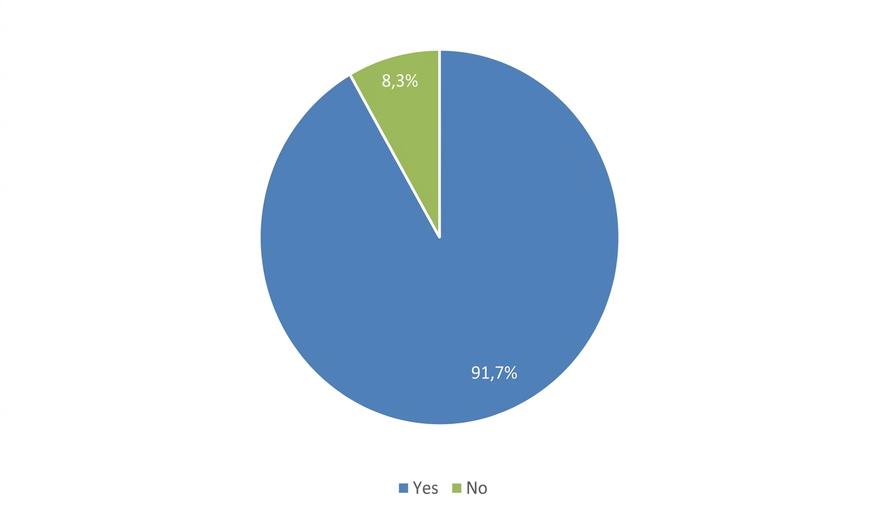
At the beginning of the analysis of the collected data, the participants’ general perception of the influence of the agile work model on their professional satisfaction was investigated. Specifically, it was questioned whether the agile model contributes in any way to work motivation. The results, presented in Figure 1, indicate that a vast majority of respondents (91.7%) perceive this positive contribution.
Source: Survey data.
This positive perception can be associated with the adaptive nature of agile methodologies. The model frequently exposes professionals to new challenges, which encourages a cycle of experimentation and continuous learning, aligned with the principles of responding to change and reflection to improve effectiveness[4,5]. This iterative process of ‘test, fail, and learn’, valued in environments of high technological uncertainty, seems to foster not only adaptation but also maturation and skill acquisition, factors relevant to intrinsic motivation linked to mastery and professional growth[16,2].
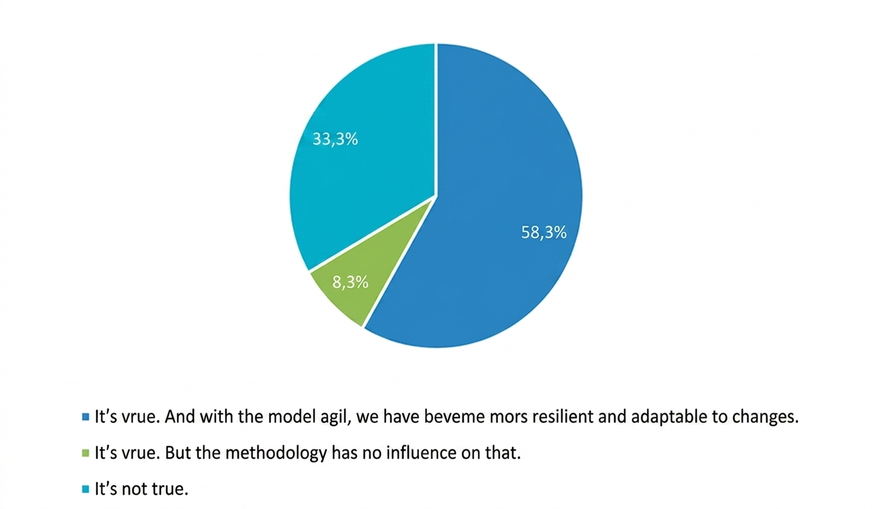
Next, the perception of adaptability to changes within the participants’ organizations and its possible relationship with agile work was investigated. Respondents were asked about the statement “In my organization, employees readily accept changes”, with options
linking this acceptance (or lack thereof) to the agile methodology. The answers are presented in Figure 2.
Source: Survey data.
They agree and associate (58.3%) that acceptance of change is related to the agile work model and pointed out that there is a relationship between the adoption of the agile methodology and the possibility of becoming a more prepared professional, through the adaptability and resilience that agility promotes, which indicates that being in this context promotes maturation in the field of uncertainty. Although 33.3% denied that people in their company accept changes, there was no relationship with the use or not of the methodology. Professional and personal growth is achieved through constant learning and challenge, opening up to changes and resilience for the current work context. The “Growth” factor of Herzberg[8] is perceived, pointing to the achievement of personal maturity through the functional attitudes of the professional at work[14].
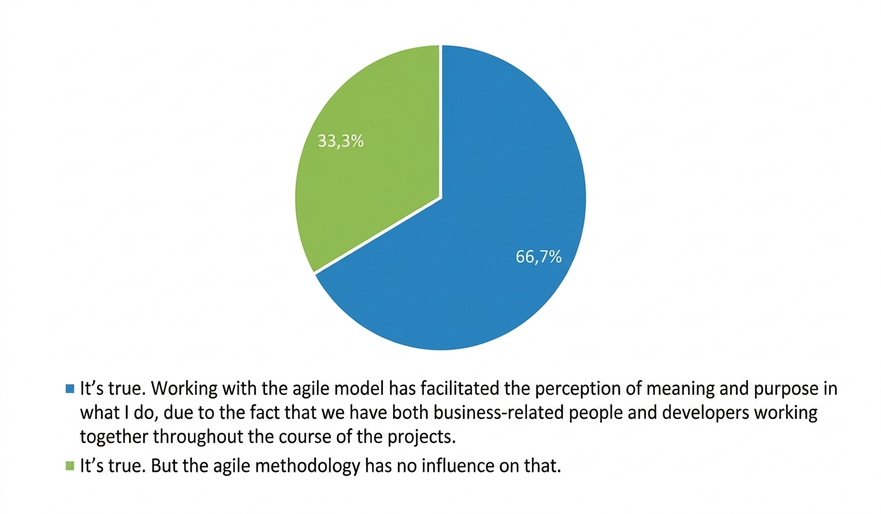
Subsequently, the study investigated the perception of meaning that professionals attribute to their daily activities, and the influence of the agile model in this aspect was also considered. Participants evaluated the statement “The daily activities of my profession are very meaningful to me” and indicated whether the agile model facilitated this perception. The results are in Figure 3.
Source: Survey data.
Dois terços (66,7%) dos entrevistados concordam, associando a percepção de significado no trabalho à utilização do modelo ágil. Essa afirmação foi utilizada como referência a um dos princípios ágeis: “tanto pessoas relacionadas a negócios como desenvolvedores devem trabalhar em conjunto durante todo o curso do projeto”, o que indica a metodologia como facilitadora no alcance de significado no trabalho, ao proporcionar a interação constante entre profissionais, o que estimula o envolvimento desses perfis técnicos no propósito do produto final[5]. Isso leva os profissionais a adotarem uma visão integrada, alinhando negócio com tecnologia. O alinhamento cria um ambiente colaborativo e multidisciplinar, onde os profissionais trabalham em conjunto e a interação legitima o significado do esforço aplicado, além de estimular o entusiasmo, mesmo em situações desafiadoras[5].
When technology and business are united in a squad (term for agile team), the team mobilizes towards a common objective, regardless of who is from which area and what role they play, the unity of that diversity of knowledge prevails.
In the agile model, there are daily touchpoints, scope refinements where opinion is valid, your questions are considered, and it becomes important from the conception of the business, which strengthens the meaning of your work within the group as a whole[13].
The factor “Significance”[8] is perceived, which highlights the purpose the work has for the professional and which arises as a consequence of the methodology, promoting an understanding of what is being built, homogeneously for everyone, regardless of the role played. This clarity leads each individual to a common understanding. This is relevant for profiles that, in previous models, did not participate in the initial project discussions[14].
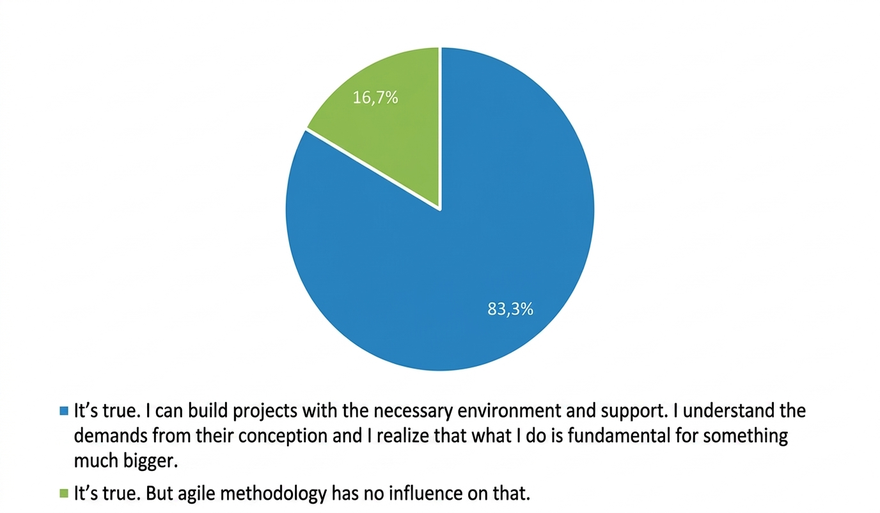
The professionals’ level of understanding of the connection between their tasks and the organization’s strategic objectives was additionally investigated. The statement “I understand how my work affects the organization’s business goals” was presented, the results of the participants’ agreement with which are shown in Figure 4.
Source: Survey data.
For 83.3%, your work can affect the corporation’s outcome. Roles become clear, with activities unfolding into individual and/or collective ones, integrating into a whole, visualized from its conception. Responsibility becomes evident, one part depends on another, and all are fundamental to achieving the final goal. According to Santos and Gonçalves[17], the visibility of each professional’s work expands, which provides greater motivation to contribute to the success of the projects.
Individual responsibilities are shared collectively, eventual impediments are identified so that the team can mobilize and resolve them, reinforcing: “build projects around motivated individuals, giving them the environment and support they need, trusting them to get the job done”[5]. Autonomy is at the core of the method, individual responsibility is highlighted by this autonomy. At the same time, all pressure must be accompanied by support, not control, in order to establish a safe environment for the work to be carried out.
One of Herzberg’s factors[8] is perceived, which, highlighted by Luiz et al.[14], implies having autonomy and responsibility at work. Without this, it becomes difficult to build a high-performance team, capable of taking ownership of the problem and contributing to the solution. The professional needs to feel responsible for their share of work and be autonomous to make decisions within the group, express their opinions freely, be aware that there is an expectation that their work will be well executed, complementary, and integrated. Establishing an environment of autonomy requires the professional to have the freedom to make mistakes, react quickly, learn, and get it right[5].
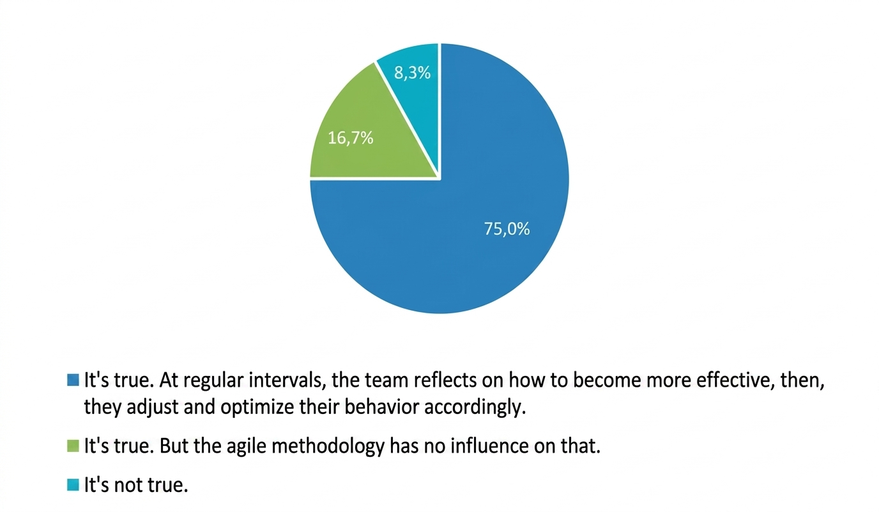
Finally, in this analysis focused on agile practices, the participation of professionals in feedback mechanisms was examined. It was investigated whether the respondents participated in feedback meetings or cycles and whether this practice was associated by them with agile methodology. The results are consolidated in Figure 5.
Source: Survey data.
The majority, 75.0%, participate in feedback meetings, 8.3% do not participate, and 16.7% participate but do not associate it with the use of agile methodology. This section concludes with the perception of feedback as a method associated with recognition, a principle highlighted by Herzberg[8], emphasizing the importance of recognizing the work done by professionals through frank conversations or continuous feedback, which is also emphasized by the agile manifesto for project success. Feedback should be provided at regular intervals to allow for reflection on improving its effectiveness, adjusting and optimizing performance. These practices demonstrate the importance of these moments as opportunities to recognize successes as well as areas that need improvement, while each professional participates and shares responsibility in this context[5,14].
Moments provided by the methodology are called ceremonies, examples: sprint review and sprint retrospective (Scrum practices). They provide opportunities for feedback, recognition, and formulation of action plans for necessary improvements. This recognition comes not only from external sources but from the team. They promote individual and collective self-awareness, favor self-assessment and self-organization, a space to review mistakes and successes. Those who participate are recognized not as isolated individuals, but as contributors to a greater objective, part of a mechanism[5,6].
In this work, recognition is not understood in the individual context, which could generate competition and harm the spirit of cooperation. The focus is on encouraging ideation and innovation, which strengthens intrinsic and cooperative motivation and generates a positive impact on team performance. Successful projects are achieved through teamwork, driven by behaviors and motivations that go beyond external stimuli[5].
For Pink[16], models based on intrinsic motivations have been more successful than those that rely on rewards and punishments. We cannot discard past movements, which have made us learn and transform them into new ways of motivating people. It is also cited that experiences without promised reward seem to lead the individual to use their creativity and achieve better performance. Praise and feedback end up being more valued than monetary or material rewards.
This establishes a connection with Herzberg[8], who distinguishes between motivational (intrinsic) and hygienic (extrinsic) factors, aligned with the collective behavior model proposed by the agile manifesto. This alignment promotes a cycle of smaller, frequent achievements, with a clear purpose in the tasks to be performed and a commitment to individual and shared responsibility, such as the desire to contribute to a greater purpose, the pursuit of excellence in teamwork, rather than relying on extrinsic incentives.
Costa Júnior and Nunes[18] show the importance of professional recognition from belonging to a group, and how these aspects motivate, a crucial factor for achieving organizational goals.
Herzberg’s Motivational Factors in the Agile Context
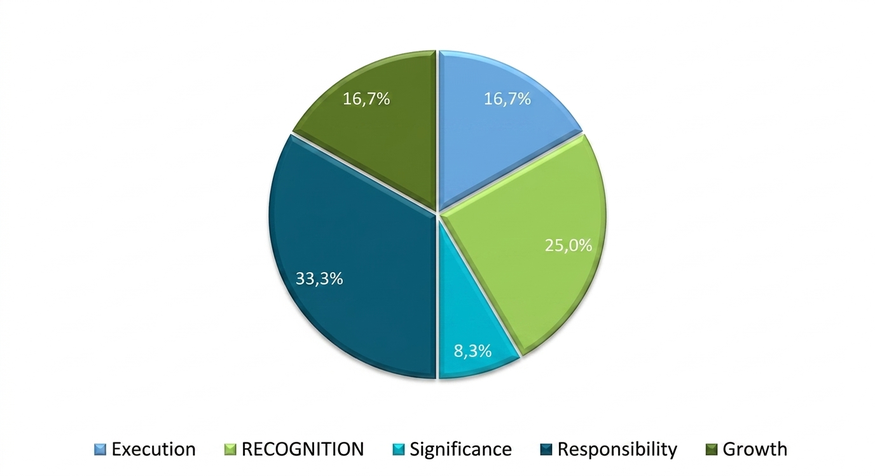
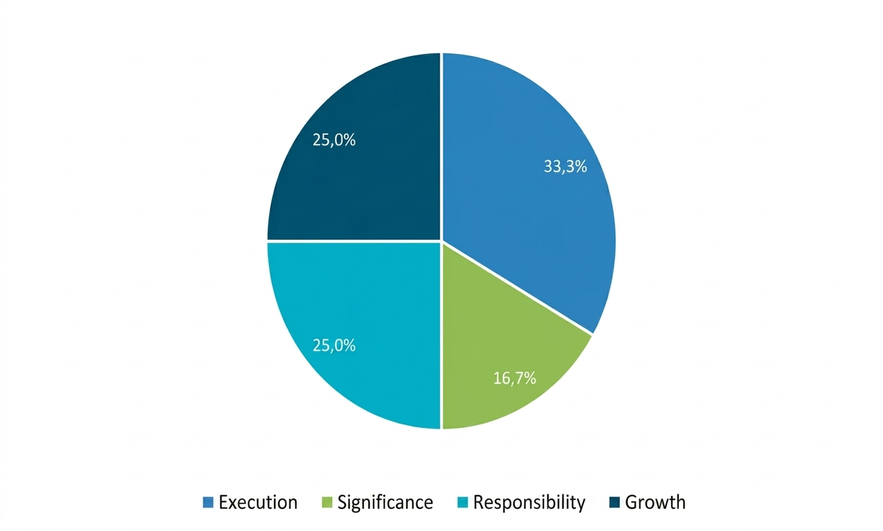
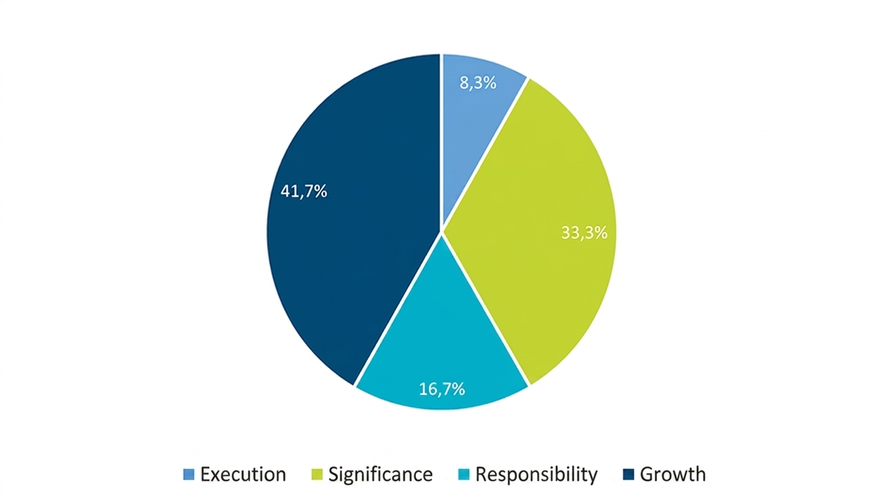
To deepen the understanding of which motivational aspects are most valued by participants in the agile context, the following section of the questionnaire sought to directly relate perceptions of motivation and the importance/meaning of work to Herzberg’s proposed motivating factors[8]. Three key questions were asked, requesting participants to select the Herzberg factor that best represented: a) their personal definition of motivation; b) the characteristic most highlighted by the importance of agile teamwork; and c) the characteristic most highlighted by the significance of agile teamwork. The consolidated results of these three questions are presented jointly in Figures 6, 7, and 8.
Source: Survey data.
Source: Survey data.
Source: Survey data.
The joint analysis of these results (Figures 6, 7, and 8) shows that the understanding of motivation expressed by the participants is in accordance with that indicated in a motivator from Herzberg’s theory[8]. Next, the perceptions of the most highlighted factors are detailed:
For “Growth”, it was observed that professionals are becoming more resilient and adept at handling changes. The ability to accept and adapt throughout the entire project cycle is fundamental for agility; the market demands continuous adjustments to meet client needs. Preparing for a competitive market is essential to stand out and thrive in a constantly evolving environment.
“Significance” was revealed to be linked to collaboration between technical and business teams, with the exchange of information and learning opportunities that were not always present before. This highlights adherence to an agile principle, which advocates that “people who are involved with business aspects as well as developers should work together daily throughout the entire duration of the project”.
Regarding “Responsibility”, the professional’s perception in this regard is related to the holistic view promoted by agile methodology. Interactions between professionals from different areas of knowledge result in the sharing of information for the effective completion of work, which highlights the impact that each individual can have in the overall context. This collaborative and interdisciplinary approach strengthens the sense of
individual responsibility and promotes a more complete understanding of each person’s role in achieving the common goal.
The research sought to explore the relationship between Herzberg’s motivators[8] and agile principles, evaluating how agile methodology can influence the motivation of technology professionals. The results identified motivating factors, such as Growth, Significance, and Responsibility, in their experiences within agile teams, suggesting that agile methodology contributes to the perception of work motivation. The three identified motivational factors highlighted that agile methodology has the potential to be an effective tool in promoting a more motivating work environment, which can facilitate leadership work and bring better results in people management, in addition to promoting the rapid results expected by the methodology. For future studies, it is recommended to increase the number of participants and include qualitative interviews to capture more detailed perceptions. Furthermore, it would be interesting to conduct a more robust quantitative analysis of the relationship between agile principles and motivational factors, as well as consider the application of other motivational theories.
References
[1] Gallup. 2023. State of the Global Workplace: 2023 Report. Disponível em: https://www.gallup.com/workplace/349484/state-of-the-global-workplace-2023-report.aspx. Acesso em: 30 abr. de 2025.
[2] Thomsen, W.B. 2017. As contribuições da metodologia ágil SCRUM para a motivação de equipes de desenvolvimento. Trabalho de Conclusão de Curso (Tecnologia em Gestão da Tecnologia da Informação). Florianópolis: Instituto Federal de Santa Catarina. Disponível em: https://repositorio.ifsc.edu.br/handle/123456789/671. Acesso em: set. 2023.
[3] Moser, P.C. 2023. F-PAT: um framework para a gestão de pessoas em equipes de desenvolvimento de software. Tese (Doutorado em Ciência da Computação) Recife: Universidade Federal de Pernambuco. Disponível em: <https://bdtd.ibict.br/vufind/Record/UFPE_4c81adee178de940d705c82
aad31a3af>
[4] Beck, K. 2001. Manifesto for agile software development. Disponível em: http://agilemanifesto.org. Acesso em: 30 set. 2023.
[5] Cobb, C.G. 2023.The project manager’s guide to mastering Agile: Principles and practices for an adaptive approach. John Wiley & Sons. Hoboken.
[6] Morais, C.P.; Ferreira, M.E.M. 2023. O impacto do Empowerment na motivação e produtividade dos colaboradores International Journal of Professional Business Review, 10(2), e05309. https://doi.org/10.26668/businessreview/2025.v10i2.5309.
[7] Trindade G.M.; Souza, D.R. 2021. O uso do Método Ágil Scrum para o Gerenciamento de Equipes de Softwares em uma Atividade de Extensão Universitária: Um Relato de Experiência. Anais da Semana de Informática CESIT/UEA.
[8] Herzberg, F. 2002. One more time: How do you motivate employees? Harvard Business School Publishing Corporation.
[9] Rocha, A. R. Goncalves, W. 2023. Motivação na gestão pública: A perspectiva de Herzberg sob a análise multicritério. EnGPR, São Paulo. Disponível em: https://www.researchgate.net/publication/371599650. Acesso em: set. 2023
[10] Santos, B.P.; Brito, D.M.; Pereira, N.S.A.C.; Carvalho, Y.B. 2023. Uma análise bibliométrica da literatura sobre motivação segundo as Teorias de Maslow, Herzberg, Skinner, McGregor: Fenômeno motivação. Revista Humanidades e Inovação. Disponível em: https://revista.unitins.br/index.php/humanidadeseinovacao/article/view/3482. Acesso em: set. 2023
[11] Gil, Antonio Carlos. 2008. Métodos e técnicas de pesquisa social. 6. ed. Atlas: São Paulo.
[12] Dillman, D.A.; Smyth, J.D.; Christian, L.M. 2014. Internet, phone, mail, and mixed-mode surveys: The tailored design method. 4ed. John Wiley & Sons. Hoboken.
[13] Correa A.P.A.; Pereira, S.M.M. 2022. Implementação da Cultura de Agilidade no setor administrativo de uma empresa do ramo tecnológico. Brazilian Journal of Business. 4(3): 1526-1542.
[14] Luiz, S.D.; Bertoni, F.A.; Machado, G.B. 2019. Análise do grau de motivação comparando os fatores expostos por Herzberg: Estudo de caso em uma empresa de formação de condutores. Revista de Carreiras & Pessoas. 9(1), 28-45. https://doi.org/10.20503/recape.v9i1.37224.
[15] Monteiro, J.J; Santos E.A.; Lunkes R.J.; Schnorremberger, D. 2019. Efeitos da agilidade organizacional no comprometimento organizacional: O papel mediador do Empowerment Psicológico. Revista de Ciências da Administração. 21(55), 101–114. https://doi.org/10.5007/2175-8077.2019v21n55p101.
[16] Pink, D. 2019. Motivação 3.0. Sextante. Rio de Janeiro.
[17] Santos, A.C.C.; Gonçalves, J.M. 2023. Desafios e Benefícios da Adoção do Scrum: Um Estudo de Caso em uma Equipe de Desenvolvimento de Software. Universidade Anhembi Morumbi, São Paulo. Disponível em: https://repositorio-api.animaeducacao.com.br/server/api/core/bitstreams/a1553400-8a74-4661-9ac4-5a3ea42b527f/content. Acesso em: 30 set. 2023. [18] Costa Júnior, R.A.; Nunes, T.S. 2023. O impacto da transformação ágil na cultura organizacional: das práticas e valores organizacionais a gestão da mudança. Perspectivas em Ciência da Informação. 28: e-29487. Belo Horizonte. DOI: http://dx.doi.org/10.1590/1981-5344/29487.
Como citar
Batista, V.L.D.; Palauro, P.R. Influência do trabalho ágil na motivação de profissionais de tecnologia. Revista E&S. 2025; 6: e2025006
About the authors
Vlademir Lenin Donato Batista – Specialist in New Technologies, Digital Transformation and Agility. Rua Professor Alceu Maynard Araújo, 43, 114B, Vila Cruzeiro, 04726-160, São Paulo/SP, Brazil Paulo Roberto Palauro – Doctor in Business Administration from Methodist University of Piracicaba. Travessa Amália Dedini, 82, Jardim Europa, 13416-510, Piracicaba, São Paulo, Brazil