
Data Science Analytics
Technology
September 26, 2025
The churn and data science: new frontiers in customer retention
Predictive approaches capture subtle behavioral patterns and allow anticipating signs of dissatisfaction
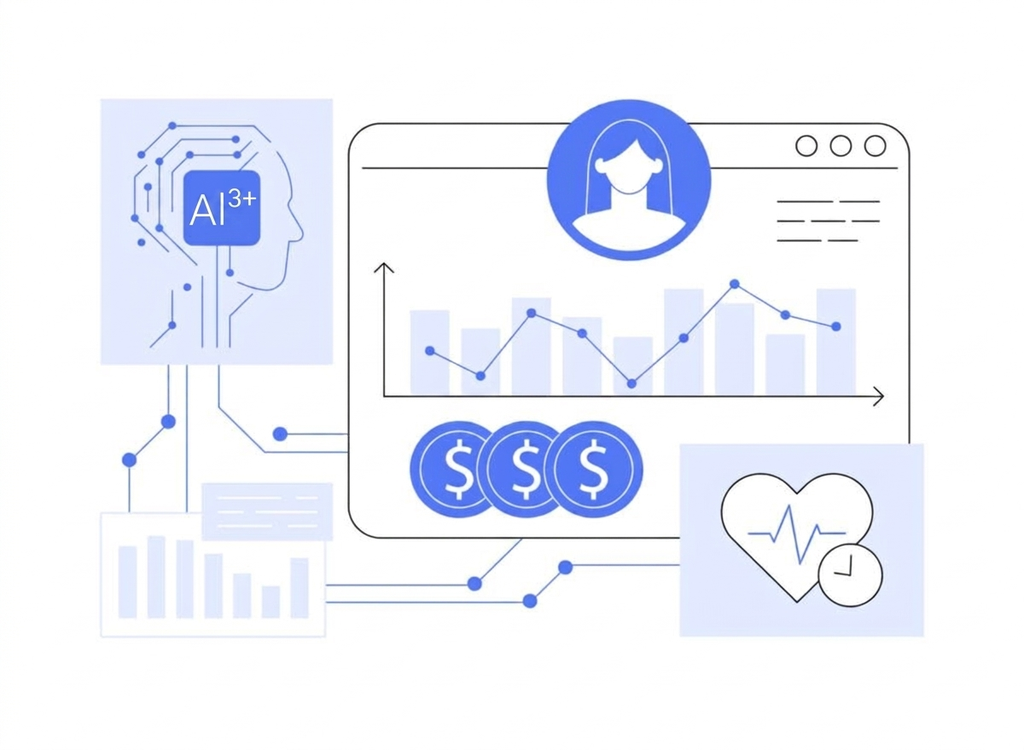
The retention of clients has become one of the pillars for the sustainability and growth of companies in the face of contemporary competitiveness. The loss of clients, or churn, represents not only the interruption of a revenue stream but also additional costs associated with acquiring new consumers.
In this context, advances in data science and artificial intelligence are transforming the way organizations face this challenge, using tools capable of anticipating churn and guiding personalized retention strategies.
The ability to predict churn is no longer just a competitive differentiator and has become a strategic necessity. Through statistical models and machine learning algorithms, large volumes of data can be converted into information that guides decisions, allowing the identification of at-risk customers before they decide to cancel.
This transformation is not just theoretical. Several studies prove how predictive approaches can capture subtle patterns of behavior. One example is the use of Hidden Markov Models (HMM) to predict user exits in complex networks, i.e., digital environments with thousands of interconnected and constantly changing points, as occurs in distributed platforms or large-scale services. With this technique, it was possible to achieve high levels of accuracy and reduce maintenance costs, demonstrating how statistical modeling can increase the efficiency of dynamic systems (Kaur, 2022).
The results also appear in sectors directly linked to consumption, such as e-commerce. In this area, hybrid models that combine logistic regression with advanced techniques like XGBoost showed superior performance in predicting cancellations. By integrating transactional data, customer profiles, and post-sale behavior, these models achieved accuracy rates above 85%, reinforcing the importance of multifaceted analyses (X. Li & Li, 2019).
Applications in Strategic Sectors
The telecommunications sector, historically impacted by high churn rates, has been a fertile ground for the use of data science. Recent research reveals that variables such as viewing habits, content consumption, and payment regularity are strong predictors of customer retention or churn. Models using algorithms like Random Forest or XGBoost have achieved accuracy close to 99%, standing out for their robustness and applicability in large-scale scenarios (Y. Li et al., 2021; Wagh et al., 2024; Pamina et al., 2019).
Deep learning approaches are also being explored. Models that integrate recurrent neural networks, such as BiLSTM, with convolutional neural networks (CNNs) can capture both temporal and contextual patterns in consumer behavior, achieving significant gains in accuracy (Khattak et al., 2023). Another promising front is the use of sentiment analysis on social media, such as X (Twitter), which allows for the identification of real-time dissatisfaction signals and preventive action (Almuqren et al., 2021).
Beyond telecommunications, other sectors also benefit from these techniques. In the insurance market, ensembles of deep learning improved by search and optimization algorithms have achieved almost 98% accuracy in predicting churn, evidencing the potential of more sophisticated models (Jajam & Challa, 2023). In gamified systems — which are platforms that use typical game elements, such as points, rankings, and rewards, applied in contexts like education, mobility, or loyalty programs — and in retail, studies have shown that even minimal data, such as usage time and regularity of participation, are sufficient to train effective predictive models (Dingli et al., 2017; Loria & Marconi, 2021).
The advance of data science has transformed churn prediction into a strategic discipline, capable of guiding companies in building more effective and personalized retention plans. Whether through statistical models, machine learning algorithms, or deep learning, the objective is always the same: to anticipate customer departures and act before they happen.
In an environment where acquiring new consumers is increasingly expensive, investing in data-based solutions to retain those who are already part of the base has ceased to be just a competitive advantage; it has become a necessity for long-term sustainability and success.
| To access the references of this text click here |
Who wrote this column
José Erasmo Silva