
September 10, 2026
Challenges of Assertive Communication in Multidisciplinary Teams: How to Ensure Effective Collaboration for More Satisfactory Results
Erika Edington Anselmo Santos; Gleison De Souza
DOI: 10.22167/2675-6528-202602209
Article derived from a Course Conclusion Work (TCC), with content based on the student’s original work and adapted to the editorial format of the Revista E&S with the support of the ResumeAI tool, an artificial intelligence solution developed by the Pecege Institute for textual synthesis and organization.
Abstract
The study analyzed the importance of assertive communication and its influence on project success, especially in multidisciplinary teams, and identified the main impacts of communication failures in the organizational environment. To this end, a survey was conducted through the application of a questionnaire, which sought to understand professionals’ perceptions of communication between teams. The results indicated that the majority of participants considered assertive communication extremely important at work, but the evaluation of current communication between areas showed an intermediate level of practical application. It was observed that the requirements gathering phase presented a higher propensity for communication failures, and rework was identified as one of the main impacts. As alternatives to mitigate these problems, participants pointed to the adoption of standardized documentation, improved clarity, and the involvement of all team members in promoting assertive communication. It was concluded that assertive communication is an essential factor in the project context, requiring the implementation of practices that ensure clarity, alignment, and efficiency to mitigate failures, rework, and negative impacts on activities.
Keywords: Organizational environment; Communication failures; Project Management; Requirements gathering; Rework.
1. Introduction
Communication is an essential means for human interaction, allowing the exchange of information and the construction of common understanding. However, this process does not always occur smoothly, and the presence of noise can distort the original message, as in the analogy of “telephone game” (Bertolani and Souza, 2024; Matos, 2024). Such interferences compromise the clarity and effectiveness of transmission, hindering understanding between the parties involved (Quirino, 2008).
In the organizational environment, communication has ceased to be an isolated resource and has become a fundamental pillar of daily operations and processes (Kunsch, 2016; Torquato, 2015). In projects, clear and objective communication is paramount for success, requiring its practice in all stages to ensure that information is transmitted and understood by all team members. This need intensifies in multidisciplinary teams, formed by professionals from diverse areas with distinct cultures and experiences, where the potential for misunderstandings is high.
The ineffectiveness of communication in multidisciplinary teams generates significant challenges, as a lack of clarity can compromise any process and lead to failures (Bianchi, 2018). Unsuccessful projects often present communication failures as one of the main contributing factors, resulting in misinterpretations, lack of clarity in instructions, and difficulties in meeting deadlines (Litz and Souza, 2024; Dickel et al., 2018; PMI, 2017; Freitas et al., 2018). These failures can lead to rework, schedule delays, and financial losses, compromising the quality of deliverables and the overall project performance (Silva, 2016).
In this context, assertive communication emerges as a crucial skill, characterized by the ability to express ideas clearly, respectfully, and objectively, without aggression or omissions. It is fundamental to ensure that the message is understood according to the real intention (Souza and Souza, 2023). Historically, predictive project management limited communication, making it bureaucratic and hindering expectation alignment. However, agile and hybrid methodologies, which promote daily communication and flexibility, have proven effective in mitigating failures and rework (Bianchi, 2018).
The relevance of assertive communication is as important as technical skills for project success (Coutinho and Souza, 2024). The absence of effective communication practices, especially in the requirements gathering phase, is a critical factor that demands attention, as it is where most communication noise occurs and directly impacts the quality of deliverables (Sommerville, 2019). Given this scenario, the present research is justified by the need to understand and address communication challenges in multidisciplinary teams. Thus, the main objective of the research is to identify the communication challenges among multidisciplinary teams and propose assertive communication practices that can be applied with the aim of increasing productivity and optimizing project performance.
2. Material and Methods
The research methodology comprised a bibliographic survey and the application of a form. The bibliographic survey aimed to theoretically ground the concepts of assertive communication, communication noise, and the performance of multidisciplinary teams in projects, based on scientific articles and academic publications relevant to the topic.
The form consisted of 10 questions, 9 objective and 1 open-ended question, with the purpose of identifying participants’ perceptions of communication failures in projects and their impacts on team performance. The open-ended question allowed for the free expression of experiences and interpretations, enriching the understanding of the data.
The analysis of the collected data included a quantitative approach to identify and classify communication problems in multidisciplinary teams, and a qualitative analysis of the content of the open-ended question responses, organizing the information into patterns and thematic categories. This analysis allowed for the correlation of the theoretical foundation with the practical reality experienced by professionals.
From the analysis of the data and the literature review, it was found that communication in multidisciplinary teams must be structured clearly, objectively, and continuously validated. For its effectiveness, the precise definition of responsibilities, alignment of expectations, formal recording of requirements, and constant validation with the “stakeholders” involved are essential. Communication must be supported by structured processes that ensure shared understanding between areas.
To promote organization, traceability, and transparency of information, the use of instruments such as project management platforms (task tracking and scope control systems), collaborative documentation tools for recording requirements and decisions, and formal corporate communication channels is recommended. Thus, assertive communication, combined with the appropriate use of structured tools and processes, is configured as a strategic element for improving team performance and delivering more satisfactory results in projects.
3. Results and Discussion
The qualitative analysis of the responses obtained indicated that the majority of participants have already experienced situations where communication failures negatively impacted project development. The reports highlighted recurring patterns of noise, especially related to ambiguity of requirements, lack of validation with stakeholders, and misalignment between technical and business areas. According to the classic communication model by Shannon and Weaver (1949), a predominance of semantic and structural noise was observed, characterized by divergent interpretations and incomplete information. Such failures resulted in significant rework, schedule delays, and financial losses.
The data obtained reinforced the importance of communication as a critical success factor in projects. Several reports indicated the need for complete refactoring of functionalities and reallocation of teams, confirming that failures in communication management directly compromise organizational results. Furthermore, as highlighted by the PMI (2017), the absence of structured processes for collecting and validating requirements contributes to scope instability. This phenomenon was widely observed in the reports that mentioned late changes and functionalities not initially foreseen.
Regarding assertive communication, the data indicated that its absence favors conflicts, insecurities, and rework, highlighting the importance of clarity and objectivity in internal communication for the good performance of teams and organizational alignment. Thus, the results demonstrated significant convergences between theory and practice, showing that assertive and structured communication constitutes a strategic element for the efficiency of multidisciplinary teams.
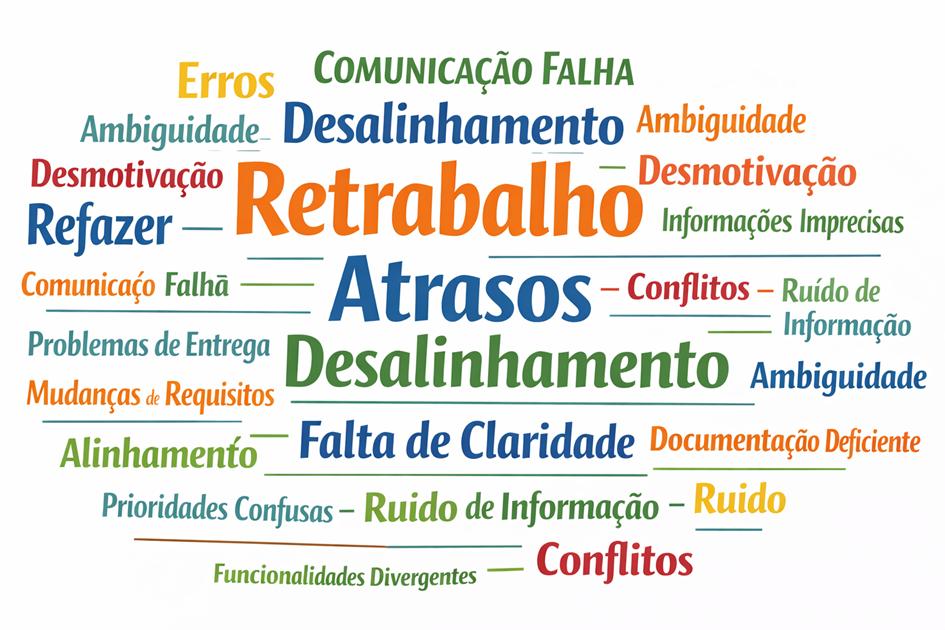
Figure 1. Word cloud
Source: Original research results
Figure 1 presents a word diagram constructed from the responses to the open-ended question of the form, highlighting the recurrence of the main terms associated with communication noise, such as “Rework”, “Delays”, “Conflicts”, and “Misalignment”.
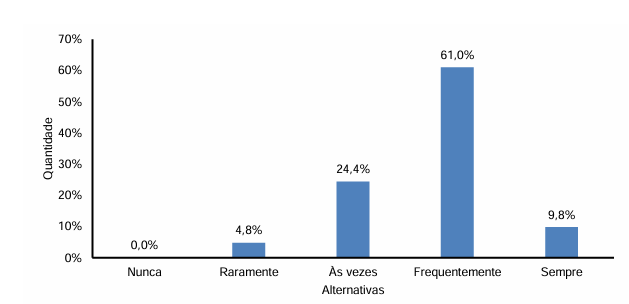
The majority of participants (61.0%) perceive communication problems between areas (business, QA, design, and development) “Frequently”, and 24.4% “Sometimes”, according to Figure 2. This result highlights the presence of failures in the communication flow between multidisciplinary teams, which can directly impact the alignment of activities, the efficiency of processes, and the quality of deliverables. According to Souza and Souza (2023), clear and well-understood communication contributes directly to the organization and alignment of activities throughout project development.
Figure 2. How often do you notice communication problems between areas (e.g., business, QA, design, development)?
Source: Original research results
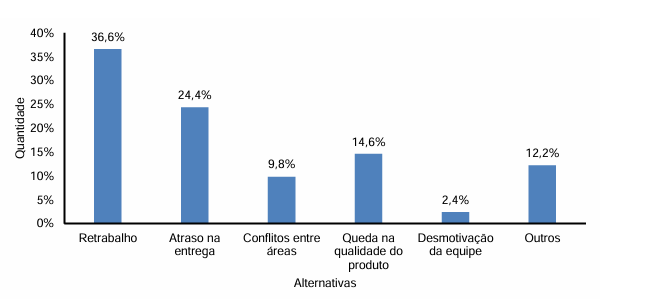
Regarding the impacts generated by communication failures, rework was the consequence most frequently pointed out by participants (36.6%), followed by delivery delay (24.4%) and drop in product quality (14.6%), according to Figure 3. Silva and Souza (2025) suggest that rework may be related to gaps in the definition of responsibilities, lack of clarity in communication, and insufficient monitoring of activities.
Figure 3. When communication failures occur, what is the main perceived impact?
Source: Original research results
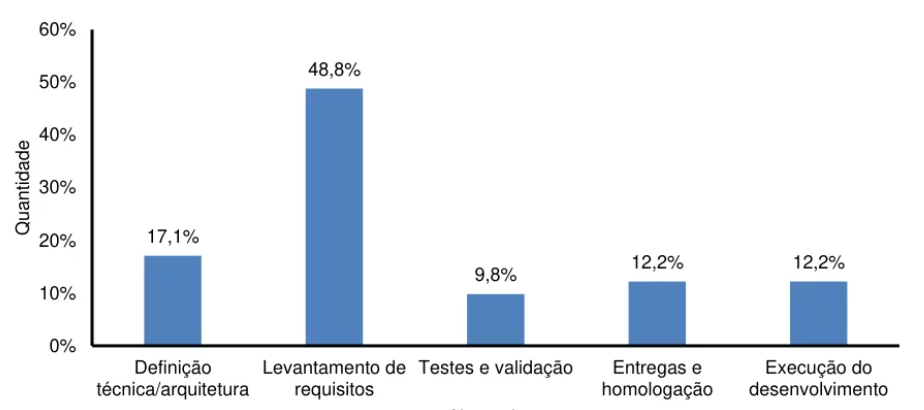
The requirements gathering stage was identified by the majority of respondents (48.8%) as the most susceptible to communication noise, as illustrated in Figure 4. This phase is essential for project success, as it establishes the foundations that guide the entire development (Sommerville, 2019). The lack of effective integration of the technical team in this process can contribute to misunderstandings. According to PMI (2017), communication failures negatively impact project performance, making assertive communication, combined with continuous feedback practice, essential to ensure alignment and reduce errors.
Figure 4. In which stage of the project are communication noises most common?
Source: Original research results
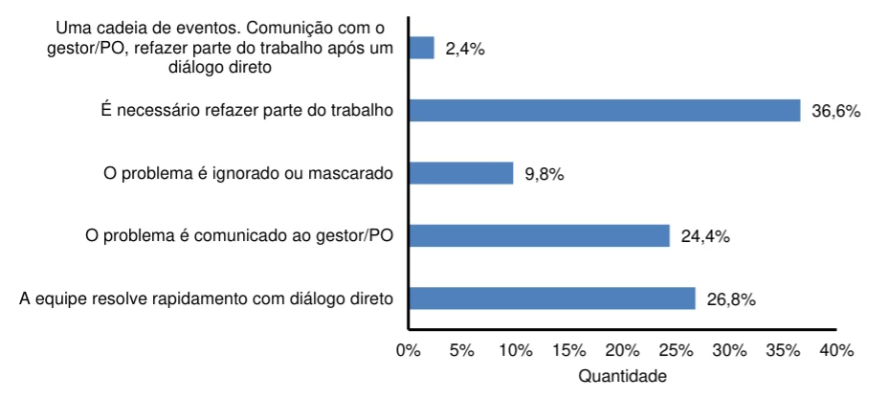
When a communication failure is identified, the most common practice is the need to redo part of the work (36.6%), followed by communicating the problem to the manager/PO (24.4%) and quick resolution with direct dialogue (26.8%), according to Figure 5. This result shows that ineffective communication leads to rework, implying an increase in time, effort, and cost. The absence of assertive communication directly contributes to rework, while its application can reduce interpretation errors, improve alignment among stakeholders, and increase efficiency in carrying out activities.
Figure 5. When you identify a communication failure, what usually happens in practice?
Source: Original research results
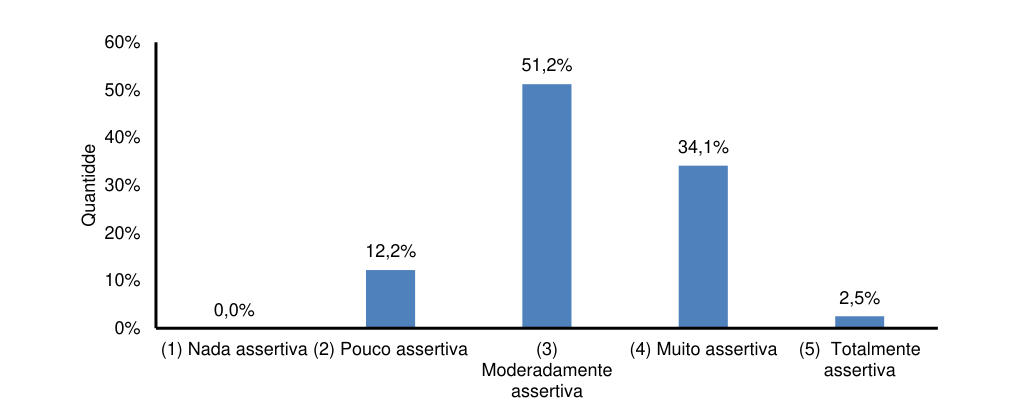
The evaluation of current communication between areas in the workplace revealed a median perception, with 51.2% of respondents assigning a score of 3 (“Moderately assertive”) on a scale of 1 to 5, and 34.1% assigning a score of 4 (“Very assertive”), as shown in Figure 6. This suggests that, although established practices exist, there is significant room for improvement in clarity and assertiveness, reinforcing the need to enhance assertive communication practices between areas.
Figure 6. On a scale of 1 to 5, how assertive and clear is the current communication between areas in your workplace?
Source: Original research results
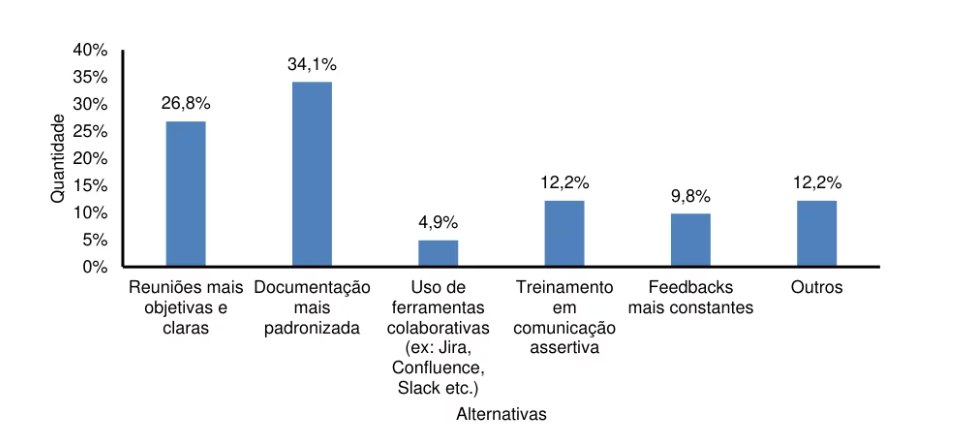
Among the practices that could improve communication, the majority of respondents (34.1%) pointed to the need for more standardized documentation, followed by more objective and clear meetings (26.8%), according to Figure 7. The absence of standards and lack of documentation can contribute to misunderstandings and inconsistencies. PMI (2017) highlights the importance of structured communication processes and adequate documentation to ensure clear and consistent information transmission. Wiegers (2013) adds that standardization and proper definition of requirements documentation contribute to reducing errors and rework, promoting greater clarity and traceability. Documentation standardization is directly related to assertive communication, promoting greater clarity, objectivity, and alignment among stakeholders, reducing noise and increasing efficiency.
Figure 7. What practice do you believe could improve communication between areas in project development?
Source: Original research results
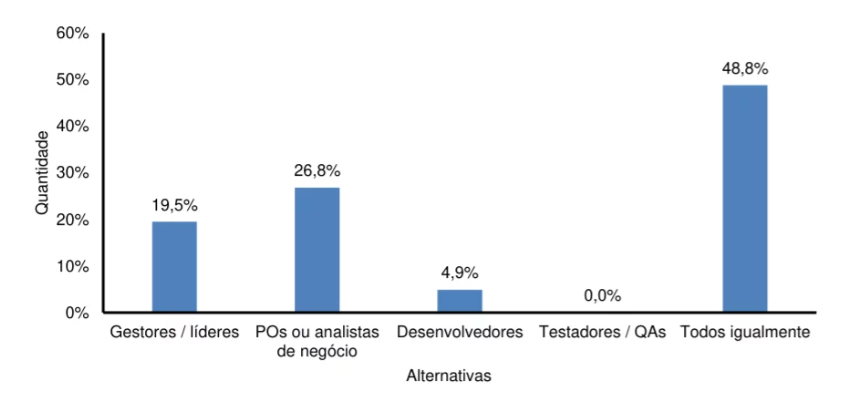
The responsibility for improving communication clarity within the team was equally assigned to all members by 48.8% of respondents, according to Figure 8. This demonstrates a collective understanding that communication in the project environment is not the responsibility of a single individual or area, but rather of all participants. According to Shannon and Weaver (1949), communication is subject to the occurrence of noise, which highlights the importance of all involved prioritizing clarity and accuracy in the transmission and interpretation of messages. Thus, improving communication should be treated as a shared responsibility, with all members adopting assertive practices to reduce noise, rework, and failures.
Figure 8. In your perception, who most needs to improve clarity in communication within the team?
Source: Original research results
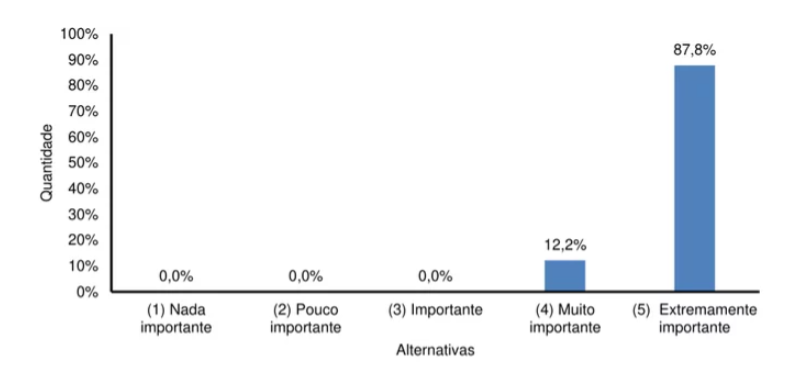
The importance of assertive communication in the workplace is widely recognized, with 87.8% of respondents assigning the maximum score (5 – “Extremely important”) and 12.2% assigning a score of 4 (“Very important”), as presented in Figure 9. The predominance of maximum ratings indicates that participants recognize assertive communication as an essential factor for good team performance. However, the results show that, although its importance is recognized, practical application still requires attention, considering the impacts observed in other analyzed aspects, such as the occurrence of noise and rework.
Figure 9. On a scale of 1 to 5, how important do you consider assertive communication to be in today’s work environment?
Source: Original research results
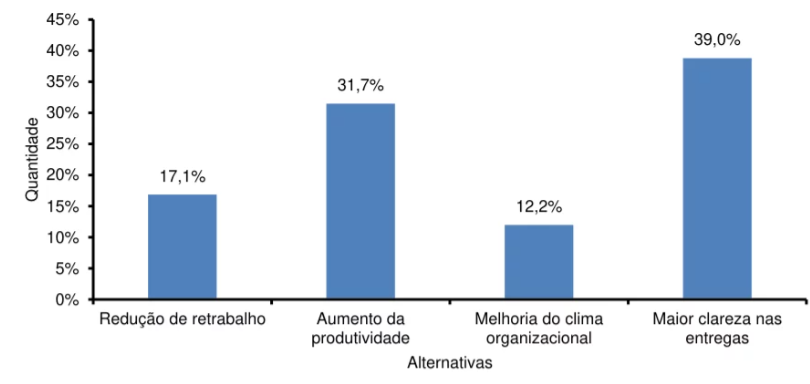
The direct benefits of assertive communication for development teams were highlighted, with the majority of respondents pointing to “Greater clarity in deliveries” (39.0%) as the main advantage, followed by “Increased productivity” (31.7%) and “Reduction of rework” (17.1%), according to Figure 10. This result shows that assertive communication contributes directly to the adequate understanding of demands, reducing ambiguities and ensuring that activities are executed as expected. Clarity in deliveries is associated with the quality of information transmission and comprehension, favoring a more precise definition of requirements, tasks, and expectations, promoting greater efficiency in activity execution and minimizing rework.
Figure 10. In your opinion, what direct benefits does assertive communication bring to a development team?
Source: Original research results
In summary, the research results showed that assertive communication is a crucial element for the success of projects in multidisciplinary teams. Although widely recognized as important, its practical application still presents gaps, especially in the requirements gathering phase, where the absence of clarity and validation generates rework and delays. Improving communication is a shared responsibility, which can be achieved through standardized documentation, frequent alignments, and continuous feedback, aiming to reduce noise and optimize project efficiency.
4. Conclusion
This study analyzed the challenges of communication in multidisciplinary teams and sought to propose assertive practices to optimize project performance. It was found that assertive communication is widely recognized as an essential factor in the work environment, although its practical application was evaluated as intermediate by professionals. It was identified that the requirements gathering phase is the most susceptible to communication noise, and rework emerged as the main negative impact resulting from these failures. The findings indicated the predominance of semantic noise, related to ambiguity in language and lack of clarity in requirements, and procedural noise, associated with the absence of adequate documentation and validations. These problems compromise alignment, efficiency, and the quality of deliverables, generating delays and losses.
The main contribution of this work lies in the explicit statement that assertive communication transcends a mere interpersonal skill, configuring itself as a strategic element for project success. To mitigate the identified challenges, the study pointed out the need to implement practices such as documentation standardization, frequent alignment meetings, encouragement of continuous feedback, and the development of assertive communication skills. It was observed that improving communication is a shared responsibility of all team members, not an isolated assignment. The adoption of these practices is fundamental to reduce noise, minimize rework, and consequently, increase productivity and optimize the overall performance of projects.
Bibliographic References
Bertolani, J.G.N.; Souza, G. 2024. Comunicação Efetiva: Como diminuir os ruídos e barreiras de comunicação no ambiente de trabalho. Trabalho de Conclusão de Curso. Especialização em Gestão de Projetos. Escola Superior de Agricultura “Luiz de Queiroz”, Universidade de São Paulo, Piracicaba, SP, Brasil.
Bianchi, I. 2018. Gestão Ágil de Projetos. Editora Atlas, São Paulo, SP, Brasil.
Countinho, J.O.; Souza, G. 2024. Comunicação Assertiva como Potencializadora do Sucesso em Projetos de Implementação de Softwares. Trabalho de Conclusão de Curso. Especialização em Gestão de Projetos. Escola Superior de Agricultura “Luiz de Queiroz”, Universidade de São Paulo, Piracicão, SP, Brasil.
Kunsch, Μ.Μ.K. 2016. Comunicação Organizacional Estratégica: Aportes Conceituais e Aplicados. Summus Editorial, São Paulo, SP, Brasil.
Project Management Institute [PMI]. 2017. Um guia do conhecimento em gerenciamento de projetos. 6ed. Project Management Institute, Newtown Square, PA, EUA.
Shannon, C.E.; Weaver, W. 1949. The Mathematical Theory of Communication. The University of Illinois Press, Urbana, Library of Congress Catalog Card, United States of America.
Silva, M.C.; Souza, G. 2025. Diagnóstico do impacto do plano de comunicação interna no cronograma da implantação do controle de acesso. Trabalho de Conclusão de Curso. Especialização em Gestão de Projetos. Escola Superior de Agricultura “Luiz de Queiroz”, Universidade de São Paulo, Piracicaba, SP, Brasil.
Sommerville, I. 2019. Engenharia de Software. 10ed. Pearson, São Paulo, SP, Brasil.
Torquato, G. 2015. Comunicação nas Organizações. Summus Editorial, São Paulo, SP, Brasil.
Wiegers, K.; Beatty, J. 2013. Software Requirements. 3ed. Microsoft Press. Redmond, Washington, EUA.
Article originating from the Final Course Work of the Specialization in Project Management of the MBA USP/Esalq
To learn more about the course, click here and access the MBX Academy platform