The school is not a casino: when trading cards become currency in the playground

Column

School Management

October 06, 2026

The school is not a casino: when trading cards become currency in the playground

Why, for certain students, does school manage to offer so few experiences of achievement?

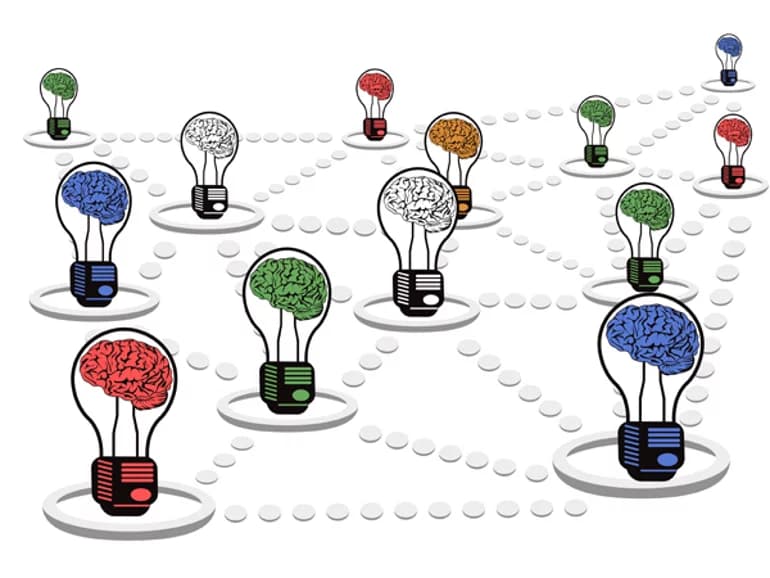
Image generated with the help of ChatGPT

The World Cup is over. Brazil left the competition, the school holidays came, the final was played, and the football calendar moved on. It would be reasonable to imagine that, with the end of the tournament and the return to classes, one of its parallel fevers would also begin to disappear. It did not disappear.

There is a new old sound that keeps echoing through the corridors and courtyards of some schools. It is dry, loud, repetitive. A muffled “thump” that is heard during recess and, when supervision allows, also inside the classroom.

It’s the ‘bafo’, an old game in which stickers are stacked on the ground or on a surface and hit with the palms of the hands. Those that flip over with the hit stay with the player who managed to flip them.

During the World Cup, there was nothing particularly surprising about it. The official album became, as periodically happens, a phenomenon among children and collectors. As published by Folha de S.Paulo, on May 14, even before the competition began, São Paulo schools were already establishing schedules and rules for exchanges, seeking to prevent the game from interfering with the school routine and causing conflicts. The ‘bafo’ then emerged as one of the main sources of disagreements.

The curious thing is that the World Cup ended on July 19, the fever, not. None of this is really new.

The players changed, the stars featured on the small paper rectangles, and the price of the packages increased considerably. The game, however, has crossed generations.

And perhaps precisely because we know him since childhood we are inclined to consider him harmless. In principle, he is. Collecting stickers provides encounters, conversations, and negotiations. A duplicate sticker for one child may be just the one missing from another’s album. Trading brings people closer, requires conversation, and produces an experience of sociability that is quite welcome at a time when we are so concerned about children isolated in front of screens.

The problem begins when the sticker travels a few steps forward in its value chain.

It is born as a commodity. Someone paid for the pack. Once the envelope is opened, however, those small rectangles cease to have equivalent values. A repeated one is worth little to someone who already owns it, but can be worth a lot to someone who is looking for it. Certain national team players are more desired, there are special stickers, and, quickly, a kind of informal quotation is established among collectors.

At this stage, we basically have a negotiation. The breath adds another element to the chain: the bet. The stickers are put into dispute. The participants know that those that are flipped will change owners. It is no longer a matter of exchanging something I have for something I desire, but of risking what I own to conquer what belongs to the other. This is where the comparison with a small casino begins to make some sense.

Naturally, it has limits. Blowing is not a purely random game. There is skill involved, and a lot of it. Practitioners perfect hand position, strike intensity, and the way to produce the air displacement capable of flipping the stickers. They train constantly and, in the absence of them, try to flip erasers, sheets, small notebooks, and other objects.

With practice, some become very good. They start accumulating considerable amounts of stickers, while others enter the game with a few and leave with none. The collection then begins to function as a small parallel economy, in which there is wealth, risk, gain, loss, accumulation, and also a certain prestige associated with the player’s skill.

It is at this point that what happens on the patio floor begins to reach the teachers’ lounge and the administration.

The report by Folha already registered schools concerned about skill differences, unfair trades, and conflicts arising from the ‘bafo’. Some began to establish specific times for the stickers; others sought to differentiate between recreational play and that in which bets actually occur.

A child may agree to put their stickers in the game and discover, minutes later, that they have lost everything. They may regret it or believe that some rule was broken. The winner, in turn, will hardly agree to return what they consider to have legitimately won.

When this happens, it is up to the school to decide what to do with a relationship that arose between the students themselves. Should the one who lost and regretted it get the stickers back? Should the result of the match be respected? To what extent can the school allow a child to leave with dozens of stickers that came from others’ backpacks?

These are seemingly small issues, but they can generate big problems. Discussions proceed in the form of provocations and threats and, in more serious situations, can escalate to fights and assaults. Evidently, the sticker does not produce violence spontaneously. The bet, however, creates another opportunity for conflict and adds a delicate component: the gain of one necessarily depends on the loss of the other.

There is still another aspect of this phenomenon that seems more worrying to me. In everyday school life, very different relationships with games are observed. There are students who trade some cards during recess, occasionally participate in a game, and when the bell rings, they put everything away in their backpacks. Others remain involved with them for practically the entire period they are at school.

They play before class, during breaks, and after school. They arrange matches during activities, organize their decks, look for opponents, and practice their moves. And there is a coincidence that deserves reflection: not infrequently, some of the most dedicated players are also among those who dedicate themselves least to school activities.

I do not present this as a result of scientific research. It is an observation of daily teaching and does not allow for establishing a cause-and-effect relationship. It would be hasty to say that bad breath drives these students away from their studies. Perhaps it is worth considering the opposite movement.

Statement

Students who have already drifted away from learning may find in games what they no longer find in the classroom. A student who has accumulated difficulties in reading, writing, or mathematics deals daily with activities that demand precisely what they find most challenging to do. Over time, studying can turn into a succession of frustrating experiences.

In the heat of the moment, the situation can be different. He knows the rules, masters the technique, faces opponents, wins matches, collects stickers, and becomes recognized for a skill that others respect. While in school activities he frequently needs help, in the game he can become a reference among his peers. It is an important difference.

For some students, perhaps there lies part of the explanation for the game turning into a refuge. Besides entertainment, they find affirmation, belonging, and a concrete experience of competence. The student who hardly stands out in a reading activity can become a respected opponent in the game of ‘bafo’ (card flipping). In this case, prohibiting the trading cards solves the immediate problem, but not what lies behind it.

The issue becomes particularly interesting after the restriction on cell phones in schools. We removed sophisticated devices from students’ hands, connected to global networks and powered by algorithms developed to permanently compete for their attention. Now we find that some pieces of paper are also capable of mobilizing them intensely.

Such a finding should at least serve to relativize the idea that the problem of school attention was born with the smartphone.

In 2014, a school in São José dos Campos was already facing students exchanging and hitting trading cards during classes. Instead of simply prohibiting the game, it created a championship of bafo during breaks, seeking to give the activity a specific place and time.

It is an interesting experience because school does not need to pursue everything that entertains a child. The question is not to decide whether stickers are good or bad, but to realize when a certain game begins to persistently interfere with the time allocated for learning, especially among students who already have a fragile relationship with it.

There is an important difference between the rewards offered by the two experiences. Learning to read takes time. Writing well also does. Mastering calculations requires practice, error, resumption, and persistence. In bafô, the result comes in a few seconds: the cards are placed on the ground, the hand is prepared, you hit, and you soon know who won.

We do not need to demonize this satisfaction to understand its power. Perhaps we need to ask why, for certain students, school manages to offer so few experiences of achievement that can compete with it. The World Cup is over and, at some point, the sticker craze will also end. Another game, another trend, or another object will probably take its place.

Therefore, simply prohibiting may be an insufficient answer. When we take away from a child’s hands what distracts them from school, it remains to be seen what we have to put in its place. School is not a casino. But closing the gaming tables does not solve everything if some of its players no longer find, outside of them, sufficient reasons to be interested in what happens in the classroom.

Who wrote this column

Roberto Munhoz

Roberto Munhoz é roteirista, educador e artista gráfico com 35 anos de experiência, 20 deles na Turma da Mônica (Estúdio Mauricio de Sousa). Também colaborou em obras como Menino Maluquinho, de Ziraldo, e Sítio do Picapau Amarelo, de Monteiro Lobato. Participa de ações formativas e culturais de promoção à leitura e valorização das linguagens visuais como ferramentas educativas. Licenciado em Artes Visuais pela UNIP e pós-graduado em Gestão Escolar pela USP/ESALQ, atua como professor de artes no Ensino Fundamental I e II.

You may also like

November 17, 2026

Detection and Diagnosis of Diseases in Corn and Rice in Mozambique with Deep Learning

Mozambican agriculture depends on corn and rice, fundamental crops for food security, but their productivity is strongly affected by phytosanitary diseases, whose early and accurate identification remains a challenge in resource-limited contexts. The study aimed to develop and compare Deep Learning-based models for the automatic detection and diagnosis of diseases in corn and rice leaves in Mozambique. Three approaches were used: a classic Convolutional Neural Network (CNN) developed from scratch, and two transfer learning models, ResNet50 and MobileNetV2. The dataset consisted of images from public databases and collected in the field, which underwent cleaning, balancing, and artificial augmentation steps. The models were trained and evaluated with standard performance metrics, including accuracy, precision, recall, F1-score, Log Loss, and Cohen’s Kappa. The classic CNN presented the best overall performance, with 94% precision, recall, and F1-score, and 93% accuracy and Cohen’s Kappa. MobileNetV2 achieved 91% F1-score and 90% accuracy, standing out for its lower Log Loss (0.30) and training time (6h32min59s). ResNet50 reached 80% F1-score and 79% accuracy. It was concluded that Deep Learning techniques have high potential to support phytopathological diagnosis in real agricultural contexts, contributing to faster and more accurate decisions in the management of corn and rice diseases.

Keywords: Deep learning; Rice; Plant diseases; Corn; Computer vision.

November 17, 2026

Artificial intelligence in accounting operational routines and financial efficiency

The incorporation of Artificial Intelligence (AI) and automation tools has reconfigured the routines of Brazilian accounting offices, impacting productivity, error mitigation, and financial efficiency. These impacts were analyzed in a small accounting firm, specialized in serving service providers in the medical field in São Caetano do Sul, São Paulo. The research adopted a qualitative approach, with a single case study design and incorporated units of analysis. Data were collected through a structured questionnaire, applied via Google Forms between January and February 2026, to five professionals in the operational structure of the firm in a census survey. The treatment followed content analysis with a priori and emergent categories. All respondents declared the use of automated tools or tools with AI resources. The perception of reduced execution time, decreased operational errors, rework, and better use of the team’s time converged in 80% of affirmative responses and 20% partial responses. The most benefited activities were bank reconciliation, import of fiscal documents, and tax assessment, with visible gains on typing errors, duplicate entries, and incorrect classification. Human intervention remained indispensable in tax planning, scenario analysis, and verification of ancillary obligations. The overall evaluation of AI’s contribution was predominantly favorable, with moderation linked to the complexity of fiscal regulations.

Keywords: Content analysis; Process automation; Accounting 4.0; Small business; Digital transformation.

November 17, 2026

Factors influencing schedule management in sewage treatment plant “retrofit” projects

Projects involving “retrofit” in Sewage Treatment Plants (STP) are characterized by high complexity, operational restrictions, and multiple technical interfaces. The study analyzed the perception of the professionals involved regarding the management and adherence to deadlines in “retrofit” projects for sewage treatment plants, considering technical, operational, and organizational factors. The research was characterized as an applied study, with a quali-quantitative approach, designed as a field survey. Data analysis was performed using descriptive statistics and qualitative categorization, employing SWOT, risk matrix (Probability x Impact), and 5W2H action plan tools. The results indicated a high perception of clarity (77.8%) and realism of deadlines (100% agreement), evidencing consistent initial planning. However, 77.7% of respondents pointed out that rework and scope changes directly impacted deadline adherence. The integration between engineering, manufacturing, and Production Planning and Control (PPC) showed an intermediate evaluation (77.7% partial/total agreement), indicating fragility in interfunctional coordination. The risk matrix highlighted as critical: scope changes, operational limitations of the STP, and technical complexity, all with a high level. As a central improvement, the standardization of scope change control, analysis, and approval was proposed, aiming to reduce rework and increase schedule predictability.

Keywords: Performance; Integration; Planning; Rework; Risk.

November 17, 2026

B2C Acquisition in diagnostic medicine: strategic partnerships with specialized medical offices

The diagnostic medicine sector in Brazil operates with high dependence on health plan providers, which limits the financial autonomy of service providers. This study proposed and analyzed a direct patient acquisition model (B2C) for a highly complex diagnostic medicine institution, structured through partnerships with Oncology and Cardiology practices and operationalized by a personalized customer service called concierge. The investigation adopted a mixed-methods approach in three phases: a field survey with a structured questionnaire applied to 87 patients, mapping of the operational flow using “Service Blueprint”, and analysis of the conversion rate from 312 medical referrals registered in the pilot project. The results indicated that trust in medical referral achieved 92.0% agreement, establishing itself as the main factor for adherence. The convenience of performing the exam on the same day reached 78.2%, and the willingness to pay directly was 55.2%, with polarization associated with the predominance of health plan users. The “Service Blueprint” identified three critical points in the transitions between stages of the patient journey. The overall conversion rate was 51.0%, with superior performance in Oncology (58.2%) compared to Cardiology (45.0%), and the greatest loss was concentrated in the acceptance and scheduling stage (28.3%). It was concluded that the model demonstrated possible operational viability and indications of patient acceptance, conditioned by price transparency and a reduction in the interval between consultation and approach by the concierge.

Keywords: Direct payment; Patient journey; Supplementary health; Concierge service; Conversion rate.

November 17, 2026

The role of the school manager in promoting an inclusive culture: leadership and educational policies

The research analyzed the school manager’s performance in promoting an inclusive culture, considering the need to transform legal guidelines and pedagogical foundations into effective institutional practices. It was assumed that school inclusion requires planning, organization, and strategic leadership in the school’s daily operations. A qualitative approach of an applied nature was adopted, developed in three complementary stages: documentary analysis of Brazilian legislation on inclusive education, bibliographic review on school leadership and management, and data systematization using management tools such as SWOT analysis and the PDCA cycle. The results indicated that the school management’s performance directly influenced the consolidation of inclusive environments, especially in the organization of processes, continuous team training, and strengthening of a collaborative institutional culture respectful of diversity. Structural, pedagogical, and relational challenges that demanded planned interventions were also identified. Finally, a Practical Guide for School Managers was developed, with guidelines, protocols, and operational orientations for decision-making and the organization of inclusive processes. It was concluded that the construction of an inclusive culture depended on the management’s ability to articulate public policies, pedagogical practices, and institutional processes, consolidating inclusion as a permanent commitment in the school context.

Keywords: educational accessibility; educational equity; participatory management; strategic planning; institutional processes.

November 17, 2026

An AI artifact based on Design Thinking to support the elicitation of software requirements from user needs

The development of software oriented to user needs frequently faces challenges in requirements elicitation, stemming from ambiguities in natural language and communication failures. Given this, an intelligent artifact integrating Design Thinking and Artificial Intelligence was proposed and validated, focusing on the Empathy and Definition stages, to support the collection, interpretation, and structuring of user needs. The research, of an applied, qualitative, and exploratory nature, conducted a Proof of Concept in a controlled environment, employing hypothetical scenarios. The artifact operated through guided natural language interviews, organizing information into elements such as pain points, context, and impact, and generating traceable problem syntheses. The results indicated that the system organized unstructured reports, reduced ambiguities, and preserved the meaning of the original information in most cases. The ability to reorganize logically in complex scenarios was also observed, although with limitations in separating multiple problems and dependence on instructions. It was concluded that the artifact has potential as a support for requirements elicitation, improving the clarity and structuring of information, but requires supervision and contextual control.

Keywords: Design Thinking; Requirements Elicitation; Requirements Engineering; Artificial Intelligence; Natural Language Processing.

November 17, 2026

The Extinction of the Monophasic Tax System in the Pharmaceutical Industry in Light of the Tax Reform

The consumption Tax Reform, established by Constitutional Amendment No. 132/2023, introduced structural changes to the Brazilian tax system, with the replacement of the Social Integration Program (PIS) and the Social Security Financing Contribution (COFINS) by the Contribution on Goods and Services (CBS), in a dual Value Added Tax (VAT) model. The objective was to analyze the impacts of the extinction of the single-stage system on the pharmaceutical industry, in light of the new regulatory design and its economic and legal effects. A qualitative, exploratory research was conducted through a case study and documentary analysis of legislation and specialized doctrine. It was examined whether the end of the single-stage system would imply a relevant increase in the tax burden for the sector. The results indicated that, although the formal overcoming of the single-stage system has occurred, the material exemption of medicines has been preserved, mainly due to the application of reduced rates of 60% and, in certain cases, a zero rate of the Tax on Goods and Services (IBS) and CBS. The change in model may cause occasional variations in revenue collection, without characterizing a structural increase in the tax burden, tending towards neutrality over time. It was preliminarily concluded that the Tax Reform reorganized the taxation technique in the pharmaceutical industry, replacing a concentrated regime with more transparent exemption mechanisms. This approach proved compatible with the principles of neutrality, full non-cumulativeness, and fiscality, maintaining tax protection for essential medicines and aligning fiscal policy with the fundamental right to health.

Keywords: CBS; COFINS; IBS; Dual VAT; PIS.