
October 22, 2026
Digital Observatory of the Amazon: Data Science Applied to the Analysis of Social, Economic, Environmental, and Health Indicators
João Carlos Silva de Oliveira; Igor Pinheiro de Araújo Costa
DOI: 10.22167/2675-6528-202603759
Article derived from a Term Paper (TCC), with content based on the student’s original work and adapted to the editorial format of the E&S Magazine with the support of the ResumeAI tool, an artificial intelligence solution developed by the Pecege Institute for textual synthesis and organization.
Summary
The state of Amazonas faced historical challenges in consolidating the Unified Health System (SUS), stemming from geographical barriers, socioeconomic inequalities, and structural limitations. This study described the development and implementation of a health information geoportal, designed to support monitoring, evaluation, and planning in the Amazonian context. A descriptive case study approach was adopted, based on documentary analysis and secondary data, covering the mapping of functionalities, technical infrastructure, and the tool’s validation stages. The Portal was developed with open technologies and integrated multiple national databases, offering interactive dashboards, thematic maps, and a digital document repository. Among the results, highlighted were the georeferenced visualization of key indicators, the possibility of temporal comparative analyses, and the platform’s use in reviewing health plans and redirecting strategic actions. The portal can represent an advance in digital governance and evidence-based management, with potential for replicability in other highly complex territories, provided it is accompanied by investments in technological infrastructure, professional training, and inter-institutional coordination.
Keywords: Amazon; Health Assessment; Digital Health; Health Information Systems.
1. Introduction
The Unified Health System (SUS) represents a historical milestone for health in Brazil, consolidating the principles of universality, integrity, and equity in access to health. Based on the Federal Constitution of 1988 and the Organic Law of Health (Law nº 8.080/1990), the model was designed to ensure that every citizen has access to quality services, regardless of their social condition, geographical location, or epidemiological profile.
Despite the structural advances achieved, the SUS still faces significant challenges, especially in peripheral regions characterized by low demographic density and complex logistical barriers. The Legal Amazon, with its continental extension and unique environmental characteristics, imposes direct limitations on the formulation and execution of public policies, demanding innovative and adaptive approaches.
In the state of Amazonas, these challenges are accentuated by the geographical dispersion of its 62 municipalities. Regional integration depends heavily on a vast hydrographic network with over 25,000 kilometers of navigable rivers and, to a lesser extent, air routes. Logistics are frequently compromised by the seasonality of floods and droughts, impacting the continuity of healthcare and the effectiveness of surveillance actions (Fausto, 2022; IBGE, 2024).
Amazonas has a Municipal Human Development Index (HDI-M) average of 0.700, classified as medium human development. Data from the United Nations Development Programme (UNDP, 2021) indicate that 55% of the population lives in poverty and 34.7% resides in slum areas. The regional economy is vulnerable to cyclical crises and extreme environmental events, such as the 2023-2024 drought, which aggravated structural vulnerabilities and compromised the supply of essential inputs (IBGE, 2022; UNDP, 2024). The population profile, marked by ethnic and cultural diversity, with indigenous, quilombola, and riverside communities, demands differentiated care models. Factors such as social inequality, low schooling, and insufficient basic infrastructure contribute to high morbidity and mortality rates from preventable causes (IBGE, 2022).
The municipality of Manaus, capital of Amazonas, registered expressive population growth between 2010 and 2022, with an increase of approximately 14.5%, becoming the seventh most populous capital in the country and the largest in the North Region (Agência Brasil, 2023; IBGE, 2022). This accelerated growth generates significant structural and social challenges, especially in the expansion of urban infrastructure and the provision of essential public services, such as health, sanitation, and housing. The demographic density of 181.01 inhabitants per square kilometer reflects a territorial occupation that often occurs in a disordered manner, contributing to socio-spatial vulnerabilities and the formation of precarious settlements (Agência Brasil, 2023; IBGE, 2022).
Faced with this complexity, the development of this work is based on the need to strengthen health management through instruments that expand analytical capacity, promote data integration, and qualify evidence-based decision-making. The growing complexity of health systems demands the incorporation of technological solutions to ensure greater efficiency, transparency, and responsiveness, especially in territories with high social vulnerability and logistical challenges, such as the Amazon. Health information is a strategic field, supporting manager decisions and technoscientific development (Brazil, 2016). Health technologies, although they do not replace comprehensive care, enhance it by qualifying diagnosis, planning, and monitoring (Brazil, 2011).
The incorporation of Information and Communication Technologies (ICT) is recognized as strategic for modernizing management and strengthening Primary Health Care (Brazil, 2016; Ministry of Health, 2023; WHO, 2021). Initiatives such as those led by the Department of Science and Technology (DECIT) and Fiocruz reinforce the importance of research applied to the SUS (Guimarães, 2019). Health evaluation, in turn, is consolidated as an essential governance tool (Hartz & Vieira-da-Silva, 2005). In the Amazonian context, the World Health Organization (WHO, 2021) recommends expanding the use of ICT as a structuring axis of digital health, dialoguing with the need for solutions adaptable to territorial dynamics, especially in a “liquid territory” (Haesbaert, 2011).
In this scenario, the relevance of this study lies in its contribution to the advancement of digital health in the SUS, by proposing and analyzing a technological solution capable of integrating multiple databases, promoting territorial intelligence, and supporting more qualified clinical and managerial decisions. The object of study is the development and implementation of the GESP Portal (Strategic Management in Public Health), conceived as an integrated health data platform, with functionalities for georeferenced analysis, interactive dashboards, and decision support, focused on the reality of the state of Amazonas. The general objective of the present study is to describe the development, implementation, and use of the GESP Portal as a tool to support monitoring, evaluation, and health planning, contributing to the strengthening of evidence-based management within the SUS.
2. Material and Methods
Study Design and Setting
This study adopted a descriptive case study methodological approach, focused on the detailed analysis of the development, implementation, and operationalization of the GESP Portal (Strategic Management in Public Health) in the state of Amazonas. The research focused on the application of the portal as a tool for monitoring and supporting evidence-based decision-making, with an emphasis on tracking strategic indicators of Primary Care and Health Surveillance, such as the vaccination coverage of Inactivated Polio (VIP) and Pentavalent vaccines. The study was developed within the institutional context of the Amazonas State Health Secretariat (SES-AM), considering the Amazonian territorial complexity and its logistical and connectivity challenges.
Data Source and Collection Strategy
The investigation was based on the use of secondary data and official institutional documents made available by the Amazonas State Health Secretariat (SES-AM), complemented by technical records produced during the development and maintenance of the GESP Portal. The main sources analyzed included epidemiological and managerial reports, state health plans, minutes of technical and administrative meetings, normative documents, system specifications and requirements, versioning records and automated scripts, portal interfaces and operational flows, as well as validation and approval documents with managers. The collection was conducted through three complementary strategies: systematic documentary analysis, technical survey of the platform, and data triangulation, recorded in technical notes for integrated and interpretive analysis.
Technological Development of the Portal
The development of the digital system was conducted using the Content Management System (CMS WordPress), combined with the PHP programming language and the MySQL database management system. The application architecture was structured with hosting on an institutional server, ensuring governance and operational autonomy. Documents related to the approval process with public managers were considered to identify adjustments and guarantee adherence to the needs of state management.
The portal incorporated interoperability mechanisms with national SUS systems, including CNES, e-SUS APS, SINAN, and SISAB, aiming to favor the integration, standardization, and automated updating of information. Among the implemented functionalities, interactive data visualization resources stand out, with dynamic panels, thematic maps, personalized dashboards, and filters by municipality, health region, and time series. The portal also integrated the structured provision of normative documents and planning instruments through panels developed in Power BI.
Information security and compliance with the General Data Protection Law (LGPD/Law No. 13.709/2018) were ensured by profile-based access control, secure authentication, encryption of sensitive information, log recording and operation traceability, in addition to the definition of institutional policies for privacy and responsibility.
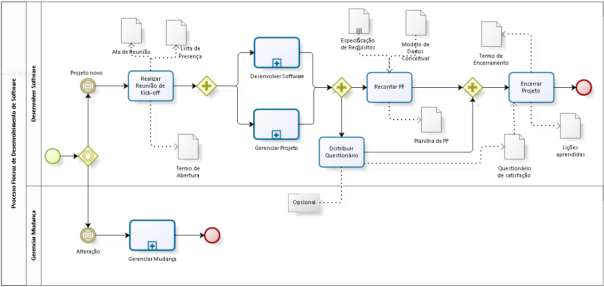
The project management followed a hybrid model, combining agile practices and traditional management principles, as illustrated in Figure 1.
Figure 1 – Flowchart of the portal development method.
Source: Original research results
The validation steps involved meetings with municipal managers and state technicians to test navigability, understand demands, and adjust the system to health planning routines. At the end of the process, the collected data were organized into thematic categories for systematization of results and performance of interpretive qualitative analysis.
3. Results and Discussion
The implementation of the GESP Portal has consolidated itself as a strategic digital innovation to strengthen management, monitoring, evaluation, and planning in health within the scope of the Unified Health System (SUS) in the state of Amazonas.
Developed to meet the territorial and operational specificities of the Amazon region, the portal provides public managers with an interactive, analytical, and georeferenced visualization of the main health performance indicators, expanding the capacity for evidence-based decision-making. The platform is available at: https://gespfiocruz.com.br/.
The initiative resulted in the creation of the first Geoportal of Health Information of Amazonas, conceived as a virtual situation room. This platform allows real-time monitoring of various health indicators of Amazonian municipalities and enables the generation of thematic maps, graphs, and dynamic reports, for both technical and general audiences. Its objective is to support the monitoring of primary care, characterize the conditions of health care networks, analyze access to services, and estimate the performance and resilience index of local systems.
By using open and easily accessible technologies, the system strengthens the digital inclusion policy and allows its replication and integration with other state or municipal systems. The use of free software also enhances interoperability and reduces technical barriers for adoption in new contexts, promoting the technological sustainability of the tool.
From a technical point of view, the portal was developed on the WordPress platform, using PHP language and a MariaDB database. It has its own server infrastructure and features such as a real-time automatic translator for 108 languages, which expands its accessibility. In addition to health indicators, the portal houses a digital repository with normative documents, epidemiological bulletins, news, documentaries, experience reports, and information on scientific events and publications.
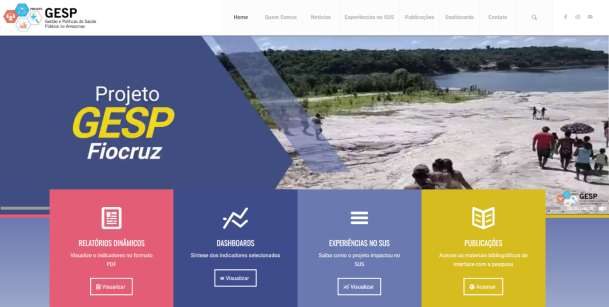
Figure 2 shows the screenshot of the homepage of the Management and Public Health Policies in the Amazon (GESP/FIOCRUZ) portal, with the main resources available for consulting health data. The interface highlights four main modules: Dynamic Reports (visualization of indicators in PDF), Tables (synthesis of selected indicators), Graphs (comparison between municipalities and health regions), and Maps (georeferenced visualization of indicators).
Figure 2 – GESP/FIOCRUZ portal homepage.
Source: Original research results
The GESP/FIOCRUZ portal provides a set of strategic indicators for monitoring primary care and health surveillance, offering essential subsidies for public health management. Among the primary care indicators, metrics related to hypertension and diabetes are included, such as the percentage of diabetics with a request for glycated hemoglobin, which are fundamental for clinical follow-up and complication prevention. Vaccination coverage is also monitored, both in general terms and segmented, as in the cases of inactivated poliovirus and pentavalent vaccines, allowing for the evaluation of immunization campaign effectiveness and the collective protection of the population.
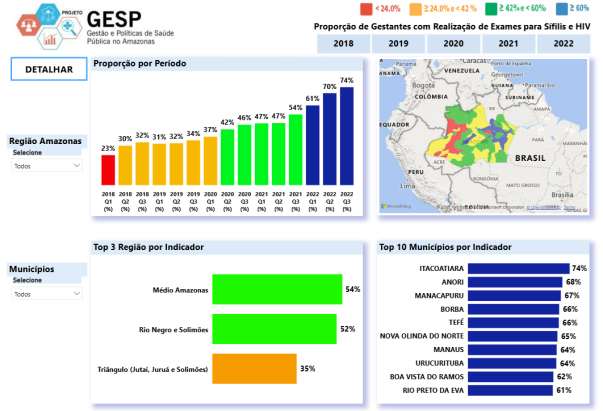
In women’s health care, the portal provides relevant indicators for prenatal care and early detection of adverse events. One example is the proportion of pregnant women who have undergone tests for syphilis and HIV (Figure 3), which clearly presents the percentages achieved by municipality or health region, making it possible to identify areas that require greater attention. This type of information is crucial for guiding public policies and prevention actions, contributing to the reduction of vertical transmission of these infections.
Figure 3 – Proportion of Pregnant Women Undergoing Tests for Syphilis and HIV.
Source: Original research results
Other equally relevant indicators include the coverage of cytopathological examination, aimed at screening for cervical cancer, the proportion of pregnant women with dental care provided, and those who had at least six prenatal consultations, starting by the 20th week of gestation. Together, these data provide a comprehensive overview of the coverage and quality of primary care, allowing managers to monitor the performance of health teams and direct resources more efficiently.
One of the most prominent features is the possibility of carrying out temporal comparisons between data from the 2010 and 2022 Demographic Censuses. This tool allows for the analysis of trends and changes in the population structure, providing valuable subsidies for health planning. Managers can, for example, monitor the population growth of municipalities such as Iranduba, Manacapuru, or Itacoatiara and re-evaluate the adequacy of health infrastructure in the face of new demographic demands, such as population aging or increased population density. These analyses enable the strategic repositioning of human and material resources, as well as the redefinition of investments in health. Municipalities that showed marked growth or transformations in their age profile began to demand greater attention in state and municipal plans.
The portal also offers functionalities for building customized dashboards, advanced filters, and generating comparative charts, facilitating data interpretation by managers, researchers, and citizens. Furthermore, it allows associating social, economic, and environmental indicators with health outcomes, expanding the situational diagnostic capacity of the territories.
In practice, the GESP Portal has demonstrated concrete impacts on municipal and state management. Usage reports indicate that the data made available were used to revise Municipal Health Plans, redirect epidemiological surveillance actions, and justify requests to the Ministry of Health, such as the accreditation of new Family Health Strategy teams.
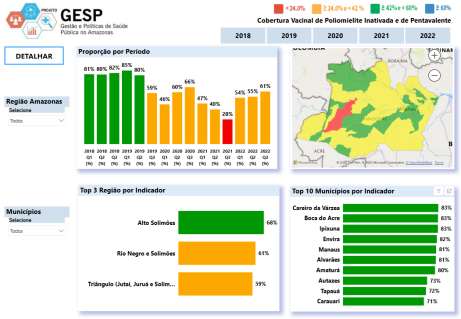
The vaccination coverage indicator for Inactivated Polio and Pentavalent vaccines (Figure 4) is fundamental to assess the effectiveness of immunization actions and the healthcare system’s capacity to protect the child population against preventable diseases. High coverage rates ensure the maintenance of collective immunity, preventing outbreaks and reducing the circulation of infectious agents, which is essential for preserving the progress achieved in controlling and, in some cases, eradicating diseases. Furthermore, systematic monitoring of this indicator allows for the identification of regional inequalities, the direction of resources, and the planning of more efficient interventions, contributing to equity in healthcare access and to the strengthening of public prevention policies.
Figure 4 – Vaccination coverage of Inactivated Polio and Pentavalent between 2018 and 2022.
Source: Original research results
Indicators also play an essential role in identifying risk areas, monitoring and evaluating ongoing public policies, in addition to enabling predictive and prognostic analyses. This ranges from estimating the burden of disease to projecting clinical outcomes for specific population groups, supporting strategic decisions at different management levels.
The digital repository and the public health policy observatory associated with GESP, developed in partnership between SES-AM and Fiocruz, represent a contribution with long-term benefits. The consolidation of this technical and institutional infrastructure reinforces the commitment to digital health governance and the strengthening of the monitoring and evaluation culture in the state of Amazonas.
The results show that the GESP Portal represents a milestone in the institutionalization of health assessment in the Amazonian context, by offering a technological solution capable of integrating dispersed data, transforming complex information into accessible analyses, and concretely supporting public health management. In a scenario marked by territorial inequalities, socioeconomic vulnerabilities, and logistical challenges, GESP symbolizes a significant change in the way health policies are planned and monitored, prioritizing local evidence and an approach sensitive to the specificities of the territory.
The platform also stands out for promoting a culture of continuous monitoring and evaluation, by enabling the georeferenced visualization of key indicators of primary care and health surveillance. The integration of national databases such as e-SUS AB, CNES, and SINAN into a single interactive digital interface provides public managers with valuable technical subsidies for informed decisions, strategy readjustment, and more efficient allocation of resources, both human and material.
Interoperability is consolidated as one of the main technical differentiators of the tool. GESP’s ability to articulate distinct databases, present comparative analyses, and allow information cross-referencing with a user-friendly interface favors not only institutional use but also its appropriation by different user profiles, including local managers, researchers, and citizens. This informational architecture, combined with the adoption of free software, makes the system scalable, replicable, and sustainable, enabling its expansion to other states, regions, and municipalities.
However, the portal’s implementation trajectory was not without obstacles. The resistance of some local managers to adopting new technologies, the lack of minimal infrastructure in remote areas, such as stable internet access, equipment, and technical support, and the constant need for professional training represent real challenges to the consolidation and full use of the tool. These factors demonstrate that digital transformation in health management requires, in addition to innovation, structural investments and public policies that value technical training and digital equity.
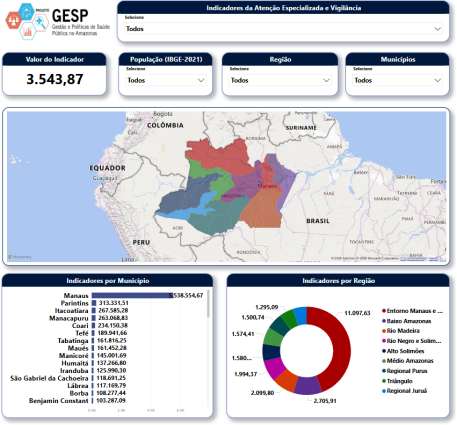
When compared to similar experiences developed in other federative units, such as in the states of Goiás and the Federal District, GESP stands out due to its territorialized conception and for having been designed from the outset with a focus on overcoming Amazonian barriers, such as geographical dispersion, low population density in remote areas, and scarcity of connectivity. While many national platforms follow a centralized and homogeneous logic, GESP presents itself as a flexible and adaptable model to regional realities, thus being more suitable for territories of high complexity like the Legal Amazon (Figure 5).
Figure 5 – Screen of indicators with Amazon territories.
Source: Original research results
Another highlight is the incorporation of the portal into the logic of a digital observatory for public policies. The possibility of gathering real-time indicators, normative documents, epidemiological bulletins, census data, and technical reports in a sustainable and accessible repository expands the tool’s potential use beyond bureaucratic management, strengthening transparency and social control. In this sense, GESP also contributes to the democratization of information and the empowerment of communities and civil society organizations.
The GESP Portal represents an institutional transformation strategy, symbolizing the convergence of technology, territorial planning, and collective intelligence, while also pointing to concrete paths to strengthen digital health in the SUS. Its conception and results reinforce the importance of evidence-based solutions built with a focus on the local context, especially in regions historically overlooked by major national strategies. Consolidating this experience and expanding it requires a continuous commitment to innovation, equity, and professional training, in addition to policies that favor technological sustainability in the public sector. The articulation between different spheres of government and institutions like Fiocruz, allied with the strategic use of information, can be the key to a new cycle of health planning and management in the Amazon, one that is more effective, more participatory, and more connected to the reality of the territories.
4. Conclusion
This study described the development and implementation of the GESP Portal as a tool to support health monitoring, evaluation, and planning in the state of Amazonas. It was found that the portal has consolidated itself as the region’s first health information geoportal, conceived as a virtual situation room. The platform was developed with open technologies and integrated multiple national databases, such as e-SUS AB, CNES, SINAN, and SISAB, offering interactive dashboards, thematic maps, and a digital repository of documents. Among the main findings, the georeferenced visualization of key primary care and health surveillance indicators stood out, as did the possibility of temporal comparative analyses between the 2010 and 2022 Demographic Censuses, and the use of the platform in reviewing Municipal Health Plans and redirecting strategic actions. The study’s main contribution lies in strengthening health management through a technological solution that promotes territorial intelligence and qualifies evidence-based decision-making, adapted to the complexities of the Amazonian context.
Despite the advances, the implementation of the GESP Portal faced limitations, such as the resistance of some local managers to adopting new technologies, the lack of minimal infrastructure in remote areas, including stable internet access and equipment, and the continuous need for professional training. For the consolidation and expansion of this initiative, investments in technological infrastructure, increased professional training, and strengthened inter-institutional coordination are suggested. The study indicates that the strategic incorporation of information technologies, guided by evidence and sensitive to territorial specificities, represents a promising path for building a more efficient, equitable, and responsive Unified Health System to the demands of the Amazonian population, with potential for replication in other complex territories.
Bibliographic References
Agência Brasil. Manaus é a capital que mais cresceu no Brasil entre 2010 e 2022. 2023. Disponível em: https://agenciabrasil.ebc.com.br/geral/noticia/2023-06/manaus-e-capital-que-mais-cresceu-no-brasil-entre-2010-e-2022. Acesso em: 15 abr. 2026.
Brasil. (2024, abril). Saúde recebe contribuições sobre planejamento de saúde para Amazônia Legal até 8 de maio. Ministério da Saúde. https://www.gov.br/saude/pt-br/assuntos/noticias/2024/abril/saude-recebe-contribuicoes-sobre-planejamento-de-saude-para-amazonia-legal-ate-8-de-maio
Fausto, M. C. R. (2022). Sustentabilidade da Atenção Primária à Saúde em territórios rurais remotos na Amazônia fluvial: Organização, estratégias e desafios. Ciência & Saúde Coletiva, 27(4), 1605-1618. https://www.scielo.br/j/csc/a/zZdBtL6QPw35vSPYz75XRPv
Guimarães, 2019 [Referência completa não encontrada no documento original]
Haesbaert, R. (2011). Ο mito da desterritorialização: Do “fim dos territórios” à multiterritorialidade. Bertrand Brasil.
Hartz, Z. M. A., & Vieira-da-Silva, L. M. (2005). Avaliação em saúde: Dos modelos conceituais à prática na análise da implantação de programas. Editora Fiocruz.
Instituto Brasileiro de Geografia e Estatística – IBGE. (2022). Indicadores sociais do Amazonas. https://www.ibge.gov.br/cidades-e-estados/am.html
Ministério da Saúde. (2023). Programa Informatiza APS. Secretaria de Atenção Primária à Saúde.
Organização Mundial da Saúde – OMS. (2021). Global strategy on digital health 2020–2025. World Health Organization.
Programa das Nações Unidas para o Desenvolvimento – PNUD Brasil. (2024, junho). Construir caminhos, pactuando novos horizontes: 25 anos do IDH no Brasil. https://www.ibge.gov.br/geociencias/organizacao-do-territorio/estrutura-territorial/15819-amazonia-legal.html
Article originating from the Final Course Work of the Specialization in Data Science and Analytics of the MBA USP/Esalq
To learn more about the course, click here and access the MBX Academy platform