
Digital Consumer
Education
Virtual Events
February 01, 2023
Critical analysis of the benefits associated with virtual scientific events
DOI: 10.22167/2675-6528-20230005
E&S 2023,4: e20230005
Rafael Barty Dextro; Beatriz Luna Figueiredo; Endrews Delbaje; Gláucia Peregrina Olivatto
Scientific dissemination allows the general public to access current debates and knowledge produced by researchers. Its objective is to inform and update society about the results of scientific production by professionals working in the most diverse reference centers, whether in private institutes or public universities[1]. With the popularization of the internet in the last two decades, scientific dissemination has begun to be disseminated through virtual platforms.
Pinheiro[2] discusses that the use of electronic resources brings society and the academic community closer, generating a confluence between information and communication processes. However, the author highlights the Brazilian reality in the context of technological infrastructure, which still constitutes a serious impediment to universal access to educational resources and virtual scientific events. Even though this scenario has improved in recent decades through the widespread use of mobile phones, regional pockets without internet access can still be found throughout Brazil[3].
Different digital tools have been used to create open educational resources (OERs), allowing the universalization of knowledge in various disciplines[4]. Thus, scientific events that bring together specialists in an area for debates on relevant topics can be understood as OER and can benefit from adaptation to the virtual remote format.
Social distancing to contain the SARS-CoV-2 virus pandemic highlighted the relevance of digitally conducted scientific dissemination practices. Through adaptations and experiences by individuals, groups, and organizations, it was possible to keep dialogue channels active, reaching larger scales than before, which were limited by physical factors, such as space and financial resources[5].
This can be exemplified through the knowledge acquired from the annual scientific symposia of the postgraduate students’ association (APG) of an institute (objects of this research). They were reformulated and converted into the I and II Postgraduate Scientific Webinar in the years 2020 and 2021. An attempt was made to critically discuss the empirical experiences of holding these scientific events in virtual formats.
The events were broadcast for free via YouTube, taking place on September 21 and 22, 2020, and on the same days and month in 2021. The repetition of the period was intentional, in order to celebrate the anniversary of the organizing institution. The 2020 event’s central theme was “Adaptations in academia and the valorization of Science as effects of the pandemic”, discussing in two round tables: the use of digital tools in teaching and research (day 1) and the relevance of Science and public management in combating the pandemic and mental health in academia (day 2). Professors and postgraduate students from various higher education institutions, a psychologist, and the secretary of health of the institute’s host city were invited to participate in the debates.
The 2021 edition had as its central theme “Multidisciplinarity in Science”, debating in four sessions of lectures and round tables, the importance of national and international scientific partnerships for scientific production and presenting several research groups from the institute’s three major areas of expertise: Energy (day 1), Chemistry and Biology (day 2). All guests were professors from the institute, in addition to the director of international cooperation from the University of São Paulo. As a differential compared to the previous year, enrolled postgraduate students could submit abstracts to make oral presentations of their work.
The entire organization of both events was carried out respecting social distancing measures, through remote meetings between APG members, maintaining contact with the institute’s board and with the faculty who make up the Postgraduate Committee (CPG). The dissemination of both Webinars, using digitally created images, was carried out on APG’s official social media (Facebook and Instagram) and through emails from educational institutions and partner student associations, mainly from the state of São Paulo. This is because the target audience of the event has always been researchers and higher education students from the region near the institute, in order to attract possible local partnerships and contributions to the campus research groups.
The evaluations of the 2020 and 2021 editions of the Scientific Webinar, which underpinned this work, were carried out by APG members based on the knowledge acquired through the planning and execution of these events.
The perception of both events was positive according to the receptiveness shown by participants during the events and their spontaneous comments received post-event. In the I Webinar of 2020, 75 people received the certificate of participation in the event (through the email registered during registration). In the II Webinar of 2021, the certificates were sent digitally to 90 participants.
The constant praise received during the event activities, added to the extremely positive feedback (critical opinions), allows us to conclude that both editions were successful in their objective of including participants in the discussions. Highlighted as relevant points of the round tables were the mastery and knowledge of the subject demonstrated by the participants, and also that the participants of the round tables of each session of both events were diverse and complementary in their speeches.
Although it is a personal matter and represents an intrinsic motivation for each participant, it is believed that the reasons for participating in virtual scientific events revolve around some main reasons or a combination thereof, such as: (a) central theme of the event relevant to experience and learning; (b) possibility of hearing a specific speaker out of admiration or desire for proximity; (c) free participation; (d) issuance of a certificate with evidentiary value. Whatever the reason, fostering and stimulating student participation in these discussions has a reflection on the performance of postgraduate students, as observed by Toro-Huamanchumo et al.[6], who positively correlated participation in student associations and events with the rate of article publication during the training period.
The receptiveness of virtual events, in general and as perceived throughout both events, was that this format has a simplified elaboration and organization compared to in-person events and that they could continue to occur even after the pandemic. Furthermore, virtual events generate less waste and are therefore ecologically more sustainable.
It is relevant to highlight that digital events and meetings have been perceived and described in the literature as incapable of replicating all aspects of face-to-face communication, reducing effective contact between participants[7], representing a disadvantage that was perceived in both editions of the Webinar.
Critically analyzing the post-event impacts and the subjective results expressed by those who participated in the Webinars, six central aspects related to remote scientific events were listed and discussed. Firstly, we can cite the increased reach of knowledge dissemination (also pointed out by Martin[8]), reaching audiences that, in person, might have been unable to participate for various reasons (locomotor, financial, or logistical limitations). In the more than 10 years of the in-person Symposium, there was a physical limit of 100 registered participants related to the maximum capacity of the institute’s amphitheater, the venue used every year for the event. This limitation was no longer a factor in the virtual editions of 2020 and 2021, reaching more than 100 registrations in both. With the live broadcast of round tables and presentations via YouTube, we obtained more than 300 views on each day of the event, demonstrating the considerable increase in the number of people included in the proposed debates. This new scale and scope allowed the dialogues and information discussed at the event to reach a larger number of people beyond municipal, state, and even national borders, one of the central principles of scientific dissemination[1].
Added to this is the fact that the institute alone has about 100 postgraduate students, being located on a campus with several other postgraduate programs. In the in-person format, practically all available spots for the event were filled by local participants. On some occasions, students and researchers from universities near the host city region could participate in the event, but the symposium rarely received registrations from outside the state of São Paulo, for example. In the digital format, we obtained hundreds of registrations from students, staff, and faculty from 43 universities in 18 Brazilian states plus the Federal District (São Paulo, Rio de Janeiro, Espírito Santo, Minas Gerais, Rio Grande do Sul, Mato Grosso, Mato Grosso do Sul, Pernambuco, Alagoas, Maranhão, Ceará, Paraíba, Sergipe, Rio Grande do Norte, Tocantins, Rondônia, Pará, and Amazonas) and 6 international universities from four countries (Argentina, Peru, Mexico, and Portugal). Therefore, the scale of the event changed from local to international (Figure 1).
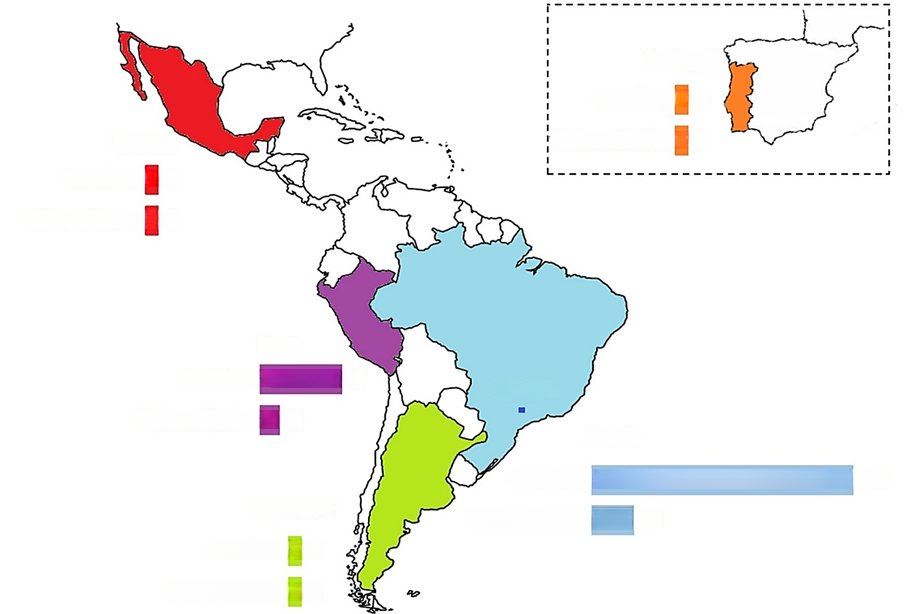
Figure 1. Number of universities and participants in virtual events in 2020 and 2021
Source: Prepared by the author.
The participation of other countries was a pleasant surprise, especially considering that the official language of both editions of the Webinar was Portuguese. Perhaps this is why the international participants are from Latin American countries and Portugal. This indicates that the entirely virtual dissemination reached universities and people who might never have been able to participate in the in-person editions of the symposium.
The second highlight was the event’s transmission, broadcast live on APG’s official YouTube page, as it allowed for the creation of a quality audiovisual record, remaining available in the future to be revisited or watched by new people (all speakers verbally agreed to the use of their images and speeches). The use of digital tools for scientific debates is a global trend, as it democratizes access to information, mainly thanks to the platforms used and the audiovisual records captured. In the Brazilian scenario, the relevance of this advantage and access to digital records are still associated with regional limitations in internet access[9]. In-person discussions can also be recorded and disseminated, but unfortunately, in the more than ten years of the institute’s scientific symposium, for example, we do not have this record due to the burden related to recording, editing, and storing these files. In the live transmission of the virtual event, the copy is created automatically, containing all the event’s content without the need for additional costs for recording or storing the videos, which could consume a considerable amount of data. This more permissive and open use of intellectual property, an advantage of virtual remote events, is one of the characteristics of open educational resources (OER), which creates a collaborative network of public access knowledge[4].
The third benefit perceived with the execution of the Webinar was the reduction of environmental impacts associated with holding this type of event, when compared to its in-person format. These impacts would be associated with the displacement by various means of the more than 100 registered participants, reducing the emissions of gases related to the means of transport that would be used. Fracassi[10] also discusses the need to develop a solid waste management plan for in-person events, ranging from plastic items used in “coffee breaks” to the use of paper in providing schedules and certificates. In the virtual event, all communications occur “paper-free” and there is no additional waste production, contributing to a sustainable execution.
Another advantage that was significant from the beginning of the elaboration and definition process of both remote events was the reduction of financial expenses to execute the remote virtual Webinar when compared to the in-person symposium. In 2020, due to inexperience and little planning time caused by the establishment of quarantine, it was decided that the creation of the logo for the I Webinar 2020 would be done by a professional graphic designer, being the only financial expense associated with the event. Although no registration fee was charged, this expense was affordable enough to be supported by APG’s current cash flow and was incurred only because it was considered important to create visual appeal for something advertised solely through virtual platforms. In the literature, it is discussed that visual aspects have a direct impact on the success of dissemination, creating the desire to participate and consume something[11]. Among the expenses listed for the in-person event that did not occur in the Webinar, one can cite the printing of schedules and certificates, the costs of the “coffee break” (intermission), daily allowances paid to speakers from other cities, and the rental of a venue for closing ceremonies or post-event gatherings. Although these costs bring gains in terms of the perception of a “successful event” and favor “networking” (building professional relationships), hybrid formats could be considered in the future that bring the advantages of remote events (reduction of expenses and waste), but still incorporating some form of physical contact. It was noticed that remote events can reduce human contact, thus losing important aspects of in-person communication, which adequately represents what is cited in the literature as the main disadvantage of virtual scientific events, as socialization can be compromised[12].
One way to try to reduce this gap between in-person and virtual was the initiative taken at the II Webinar 2021, accepting abstracts and presentations from students during the event. Thus, participants could ask live questions to the students who presented their work, which was constantly encouraged through messages in the live “chat” area. As there were questions for all fourteen presentations, we consider this initiative to have been successful. Unfortunately, the virtual platforms used in carrying out digital events are really unable to emulate all aspects of in-person communication, which richly complements scientific debates. Recently, Salgado[13] reported in his research that tools such as virtual “chats” and forums are still characterized by limited dialogue that does not satisfactorily bring tutors and students closer. This disadvantage, shared with virtual events, constituted a challenge that was not entirely overcome.
Finally, one can cite a logistical facilitation in executing virtual events, when compared to in-person ones. This advantage was listed because the four members of the APG, without vast prior knowledge, were able to conduct a webinar in four months of planning. For the II Webinar, in 2021, there was already the necessary experience and knowledge to organize the event, adding new challenges such as the increase in workload (from 6 hours in the 2020 Webinar to 12 hours in the 2021 edition) and the planning for the reception of abstracts, organizing them into presentation sessions with defined order and presentation time. In in-person symposia, the task list is very extensive and requires a larger team of people to segment the functions. In Webinars, the focal working groups involved event promotion, contact with speakers, and technical preparation of the digital tools that were used. Thus, smaller groups of people are capable of organizing large-scale events, including international ones, as was the case in the example described in this work. Additionally, the possibility of inviting distant speakers, including international ones, who will not need to travel and will not incur accommodation costs, is highlighted.
Based on the knowledge acquired through the realization of the 1st and 2nd Postgraduate Scientific Webinars (2020 and 2021 editions) and comparatively analyzed with the literature discussed, it is concluded that scientific events in a virtual remote format present several benefits compared to the traditional in-person mode of holding events, such as the reduction of financial costs, the generation of a reliable and public audiovisual record, reduced execution logistics, considerable decrease in environmental impacts, and expansion of the scope of the discussed knowledge. A challenge that still needs to be faced is the reduction of human contact, causing a certain impersonality that can affect the way information is received and will be memorized. It is recommended that research groups, student associations, and universities use this event model or its partially in-person hybrid forms even in the post-pandemic future, expanding the reach of scientific dissemination initiatives.
References
[1] Albagli S. Divulgação científica: informação científica para cidadania. Ciência da informação. 1996; 25(3).
[2] Pinheiro L.V.R. Comunidades científicas e infra-estrutura tecnológica no Brasil para uso de recursos eletrônicos de comunicação e informação na pesquisa. Ciência da Informação. 2003; 32(3): 62-73.
[3] Campos A.C. IBGE: celular se consolida como o principal meio de acesso à internet no Brasil. 2016. Disponível em: <https://agenciabrasil.ebc.com.br/geral/noticia/2016-12/ibge-celular-se-consolida-como-o-principal-meio-de-acesso-internet-no-brasil>.
[4] Jacques J.S. Potencialidades dos REA no ensino-aprendizagem mediado por tecnologias em rede. EaD em Foco. 2017; 7(1).
[5] Santos A.C.O.; Almeida D.D.R.B.; Silva T.A.A.T. Comunicação pública e divulgação científica em tempos de Covid-19: ações desenvolvidas na Universidade Federal de Uberlândia-Brasil. Revista Española de Comunicación en Salud. 2020: 279-292.
[6] Toro-Huamanchumo C.J., Failoc-Rojas V.E.; Díaz-Vélez C. Participación en sociedades científicas estudiantiles y en cursos extracurriculares de investigación, asociados a la producción científica de estudiantes de medicina humana: estudio preliminar. FEM: Revista de la Fundación Educación Médica. 2015; 18(4): 293-298.
[7] Sá M.J., Ferreira C.M.; Serpa S. Virtual and face-to-face academic conferences: comparison and potentials. Journal of Educational and Social Research. 2019; 9(2): 35-35.
[8] Martin V. Manual prático de eventos. 1ed. Rio de Janeiro (RJ): Elsevier Brasil; 2017.
[9] Nakane A. Eventos Virtuais–Fato Ou Tendência No Cenário Brasileiro? Revista de investigación en turismo y desarrollo local. 2012; 5(13): 1-13.
[10] Fracassi L.B. Gestão e Gerenciamento de Resíduos Sólidos em Eventos Sustentáveis: Estudo de Caso do II Simpósio sobre Resíduos Sólidos da USP-São Carlos [Tese Doutorado]. São Paulo: Universidade de São Paulo; 2012.
[11] Van Rompay T.J.; Pruyn A.T. When visual product features speak the same language: Effects of shape‐typeface congruence on brand perception and price expectations. Journal of Product Innovation Management. 2011; 28(4): 599-610.
[12] D’Anna G.; D’Arco F.; Van Goethem J. Virtual meetings: a temporary choice or an effective opportunity for the future? Neuroradiology. 2020; 62(1): 769-770. [13] Salgado, R. Ferramentas digitais, chat e fórum, em tutoria on-line em educação a distância. Revista de Educação do Vale do Arinos-RELVA. 2021; 8(1): 109-129.
Como citar
Dextro R.B.; Figueiredo B.L.; Delbaje E.; Olivatto G.P. Análise crítica dos benefícios associados a eventos científicos virtuais. Revista E&S. 2023; 4: e20230005.
Sobre os autores
Rafael Barty Dextro, Mestre em Ecologia e Recursos Naturais, Especialista em Gestão de Pessoas, Piracicaba, SP, Brasil.
Beatriz Luna Figueiredo, Mestre em Geologia e Geoquímica, Piracicaba, SP, Brasil.
Endrews Delbaje, Mestre em Microbiologia Agrícola, Piracicaba, SP, Brasil
Gláucia Peregrina Olivatto, Mestre em Química, Piracicaba, SP Brasil
Link para download: https://cms.revistaes.com.br/wp-content/uploads/2023/02/ES_23017.pdf