
Communication
Education
Teaching
Learning Process
July 18, 2024
Communication profile in the early childhood education process
DOI: 10.22167/2675-6528-20230072
E&S 2024, 5: e20230072
Ana Mary González Montoya; Maria Cecília Perantoni Fuchs Ferraz; Rosebelly Nunes Marques
The banking and traditional education is a practice in the teaching and learning process that should be avoided, giving space for student-focused learning, involving them, motivating them, and establishing dialogues[1],[2],[3],[4],[5]. In processes that occur in an individualized manner — even more so in standardized assessments —, the student finds themselves vulnerable, tense, and under pressure, which can influence the results. In view of this, the importance of the education professional communicating assertively in such situations is highlighted. The model of the authoritarian teacher in classes leads to an inadequate situation to ensure good learning and the personal, social, and emotional development of students; the traditional teaching schemes, conceived from the teacher’s perspective, are saturated with inflexible and decontextualized authoritarian relationships from social, economic, and political events[6].
Communication can be defined as the act of understanding the other, with the sharing of common motives and objectives, resulting in mutual agreement. This communication can occur through different forms and gestures, including verbal, written, or sign language [7],[8]. Communication can also be understood as a social practice that arises from the interaction between people, manifesting itself through verbal aspects (spoken language) and non-verbal aspects (writing, gestures, bodily behaviors, physical proximity between people, and touch)[8],[9].
Sampaio and Laniado[10] report that communication is fundamental to enabling positive changes within a social organization, as knowing how to communicate contributes to its success. Information may not be visible, but it is materialized in practice through actions developed by people who are part of the organization. Marchiori[11] adopts a view that assumes communication as part of an organization’s strategic process, enhancing innovations and embracing changes for each individual to adapt to the environment in which they are inserted, in order to achieve the intended results. It is fundamental to have a strategic communication plan established by management — whatever the organization or institution — so that it can sustain the existence of the organization itself. In this sense, school organizations also have a vision focused on results that materializes, in most cases, in the evaluation of processes.
The school is a social organization, and in it knowledge is transmitted and shared; in this context, each teacher becomes a communicator inside and outside the classroom. The teacher is the closest entity to the student and is who the student will turn to if they need to clarify any doubts. It is important that communication is in accordance with the students’ age groups, which will allow for greater comfort at all times, especially during evaluation processes in which the student feels more pressured. In this sense, communication is important to provide a process of active participation, in which students feel more confident at all times, even during evaluations.
Since communication is an important factor in different processes in children’s lives, such as in teaching and learning processes, personal, social, and emotional development, the study of this topic in Early Childhood Education is necessary, as this phase is the basis for the cognitive, emotional, and social development of individuals. Given the importance of communication and how it occurs in Early Childhood Education, this work aimed to systematize the communication profile, carrying out a systematic mapping of the literature on how communication occurs in the Early Childhood Education process.
For the research, primary studies were used, that is, research that presents results in the first instance, allowing for a broad overview of a given area or topic. From the primary data, it is possible to generate evidence in the area of study by conducting quantitative and qualitative analyses. This methodology integrates systematic methodologies due to its characteristic of being transparent and rigorous in the search for primary studies[12].
The mapping was initiated with the construction of the research protocol, based on the protocols presented by Petersen et al.[13], Petersen et al.[14] and Arthur[15], and consisted of six steps, described below.
1) Definition of the research question: how does communication happen in the teaching-learning process in early childhood education?
2) Organization of search keywords from the descriptors: “systematic mapping”, “communication”, “dialogue”, “teaching-learning process”, “totalizing approach” and “early childhood education”.
3) Search in the database “Google Scholar”.
4) Linguistic parameter: Portuguese Language (Brazil).
5) Inclusion criterion: primary studies presenting communicative pedagogies in the teaching-learning process in early childhood education between 2010-2021.
6) Exclusion criterion: primary studies that present communicative pedagogies in the teaching-learning process in elementary education or other areas of knowledge.
The selected works, based on the protocol carried out, were analyzed considering the percentage of publications per year, types of publications, universities involved, and the region where these institutions were located. The works were grouped into three categories, taking into account their approaches. After organizing the categories to be extracted from the selected studies, the works were read in full in order to identify the chronological parameter of the different media, considering their historical evolution and the current importance of this evolution.
In this research, the chronological parameter was the interval from 2010-2021. For this period, 64 works were initially selected, including articles, theses, dissertations, final course projects (TCC), and monographs related to the subject. Of these works, 50 were excluded because they did not directly meet the protocol of the key question. The approach of these works referred to issues of physical health, specific subject themes that did not focus on the communicational sphere as the main cause of problems in evaluating the teaching-learning process. In the end, 14 works were selected that directly addressed the problem raised by this research and were read in full for analysis. Table 1 summarizes the selected texts.
Table 1. Selected studies for reading
| Author(s) and year | Title |
| Carvalho, 2013[16] | Social representations of education students and professionals on the reflection of television media in early childhood education children |
| Chaves et al., 2014[17] | Historical-cultural theory and pedagogical interventions: possibilities and achievements of good teaching education |
| Nakashima, 2014[18] | The dialectic of pedagogical knowledge of technological contents and its contributions to teaching action and the learning process supported by a virtual environment |
| Castro, 2015[19] | The school organization for the integration of new information and communication technologies into the teaching and learning process |
| Tonello, 2015[20] | Portfolios in early childhood education: an intervention project based on formative action |
| Godoi, 2015[21] | Peer educational practices: study of the daily work of teachers in a São Paulo early childhood education center |
| Perini, 2016[22] | Analysis of internal communication in a public school |
| Martins, 2016[23] | From early childhood education and the Reggio Emilia experience |
| Oliveira, 2016[24] | Assessment in early childhood education: the possibilities of formative assessment in early childhood education |
| Gomes, 2016[25] | The said and the lived: evaluative conceptions and practices in early childhood education in the municipal network of Fortaleza |
| Quinquiolo, 2017[26] | The role of the teacher as a mediator of conflicts between children in early childhood education |
| Matos e Silva, 2019[27] | Proposal of a theoretical model for the evaluation of the school organizational climate |
| Araújo, 2020[28] | Digital educational games as promising tools in the learning process of the fields of experience in early childhood education |
| Melo, 2021[29] | The influence of communication networks in early childhood education |
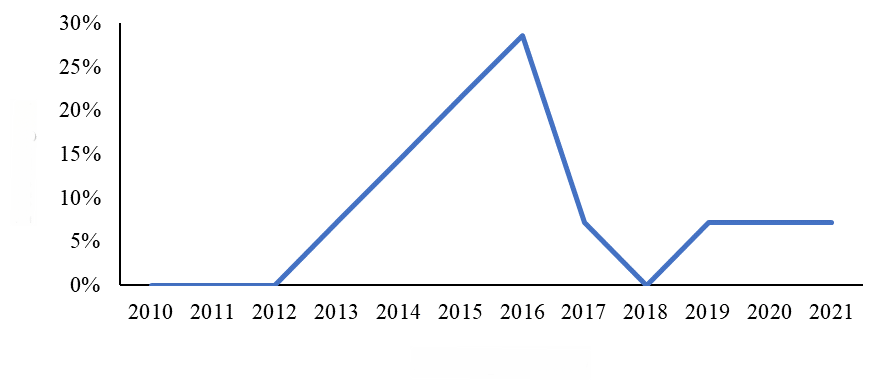
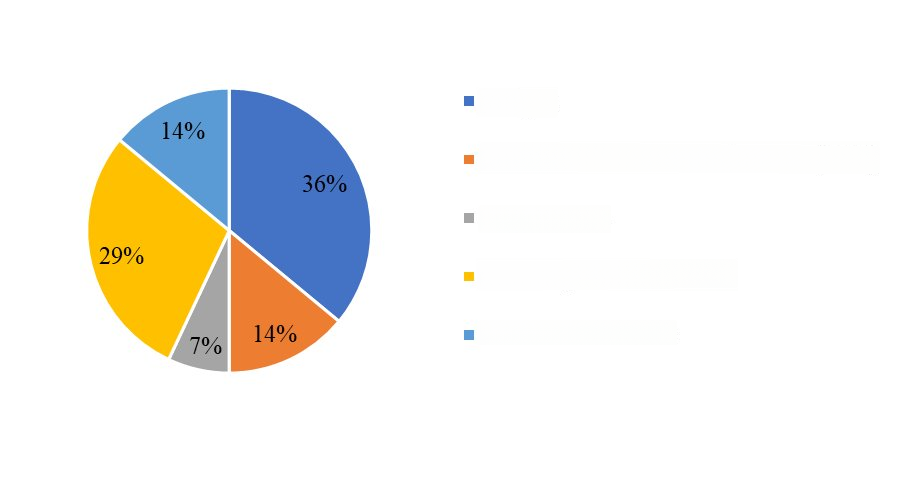
The analysis of the publication year of the works indicated that the majority were concentrated in the years 2014 (14%), 2015 (21%), and 2016 (29%) of the total, which reveals that between 2017-2021 the percentage level decreased to 7% (Figure 1). In addition to the reduction in the number of publications on the subject from 2017 onwards, the absence of articles following the criteria of the protocol until the year 2013 was also observed. Regarding the types of publication, the analysis showed that the highest percentage of publications were scientific articles (36%), followed by master’s dissertations (29%). Course completion papers and doctoral theses had a percentage of 14% each, and monographs represented the lowest index (7%) (Figure 2).
Source: Original research results.
Source: Original research results.
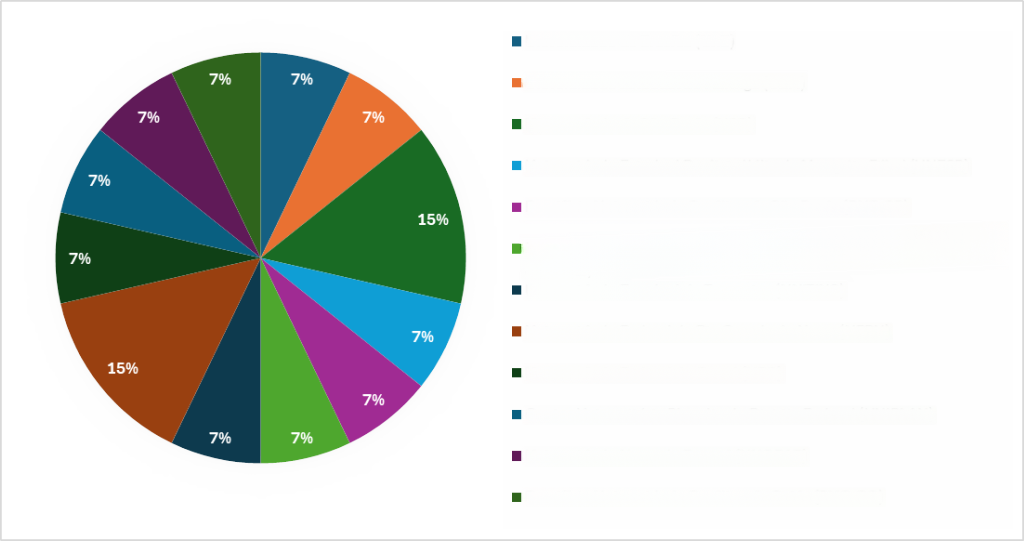
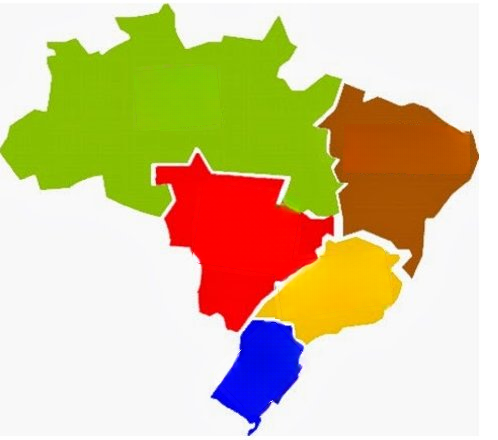
The selected publications involved several universities from Brazil, which are presented in Figure 3. Those with the highest representation were the University of São Paulo (USP) and the Federal University of Rio Grande do Norte (UFRN), with 15% each; the others had the same result of 7%. The universities involved were located in different regions of the national territory, as presented in Figure 4, with the Southeast region having the highest percentage at 30%; followed by the Northeast, Center-West, and South regions, each with 21%; and the North region with 7%. This result allowed us to infer a greater interest in the studied area in the Southeast region, which could impact the quality of teaching and the vision for contemporary trends. This result also demonstrated the need to encourage studies on the area in question in the regions with lower representation.
Source: Original research results.
Source: Original research results.
The articles allowed us to think about communication not as an isolated process, but as a process linked to life and contemporary educational trends, such as active methodologies, dialectical dialogue, group work, teacher-student and student-student relationships, and relationships between teachers, in which new teaching possibilities are mixed that respond to the interests of the majority and the demands of society, contributing to the formation of critical and reflective students. This means that communication in education goes beyond simply transmitting information, content, and knowledge that the student is capable of reproducing.
The reading allowed for division into three groups, according to the approach type of each work (Table 2). Group I consisted of six works that referenced the media and the integration of new technologies with the aim of obtaining an education that associated new learning possibilities with what the student was already familiar with. Furthermore, they addressed how to adopt Information and Communication Technologies (ICTs) in the classroom, including through games, encouraging the use of more attractive practices.
Table 2. Analysis of the works according to their approaches
| Groups | I | II | III |
| Works | Carvalho (2013)[16]; Nakashima (2014)[18]; Chaves et al. (2014)[17]; Castro (2015)[19]; Araújo (2020)[28]; Melo (2021)[29] | Oliveira (2016)[24]; Gomes (2016)[25]; Matos e Silva (2019)[27] | Tonello (2015)[20]; Godoi (2015)[21]; Perini (2016)[22]; Martins (2016)[23]; Quinquiolo (2017)[26] |
| Approach | They referred to the media and the integration of new technologies. | They addressed the evaluative processes in schools, which were often authoritarian and generated conflicts. | They thematized communication, the role of teachers as mediators of conflicts in early childhood education, and the elaboration of projects based on constructive actions. |
The impacts of technological progress influence all spheres of society. Therefore, it is necessary that society as a whole, and not just a privileged group, be prepared to adequately use the available technological tools. It is important to highlight that the use corresponds not only to devices, but also to communication methods, improving quality of life. The use of natural (phonovocallic apparatus) and manufactured (internet, smartphones, etc.) communication devices by humans towards the construction of citizenship, well-being, and the dignity of the species itself, through work and empathy[8],[30] is noteworthy.
Regardless of age, today’s children have direct contact with technological devices. Even before entering school, they have already had various learning experiences within the family environment, which involves the use of media[31]. According to data from the Brazilian Institute of Geography and Statistics (IBGE)[32], in 2021, 84.4% of the population owned mobile phones. Furthermore, in the same year, the internet was used in 90% of Brazilian households, meaning that nine out of ten households had access to this resource. Therefore, it is necessary to identify and utilize the influence of media in school settings from an early age, that is, from early childhood education. This includes developing critical awareness in students regarding the benefits that new technologies can bring[31].
The use of technologies in the teaching and learning process of children is seen as something new and still unknown by teachers. Most do not identify how technologies can be used to facilitate the school’s mission, which is to reframe concepts[31]. In this aspect, the role of the school manager is essential for the training and development of their team. As managers, it is necessary to value human resources, train them so that they can provide information with greater assertiveness in communication with their students, aiming for a favorable teaching process for all, based on respect for others.
Group II consisted of three papers, which addressed evaluative processes in schools, which are often authoritarian and generate conflicts. Duarte[33] defined classroom communication as the set of information exchange processes between the teacher and the student and among students themselves, with the aim of maintaining personal relationships and the teaching-learning process. The author understands that, through communication, interpersonal relationships of security and trust are established for students, which makes it possible to create a favorable climate for each student to feel comfortable asking questions. In this way, all content becomes clearer, which will be reflected in the applied evaluations. Therefore, valuing assertive communication in the classroom proves to be necessary.
Being assertive means having the ability to convey messages about one’s own or others’ feelings, beliefs, or opinions honestly, promptly, and with deep respect, in order to achieve satisfactory communication as far as the human relationship process makes it necessary[34]. Therefore, it is essential to defend the pedagogy of dialogue through assertive communication that favors student assessment processes.
The imperative approach to knowledge transmission, which characterizes the traditional teaching model, perpetuates cultural and political domination, preventing the awareness and change of all[35]. In this sense, Paulo Freire[35],[36] highlights dialogue as the safest path to education and liberation for all, both oppressors and oppressed. The juxtaposition of ideas in a dialogue fosters the emergence of new ideas[35],[36]. This dialogue is linked to assertive communication between sender, receiver, and communication channel based on respect to minimize or avoid conflicts.
Finally, group III consisted of five papers that addressed different topics: (i) the role of teachers as mediators of conflicts in early childhood education; (ii) the development of projects based on constructive and formative actions that added value; and (iii) actions that could be carried out in institutions with a team working for a common good. From the perspective of teamwork in school, when seeking to build a participatory process based on cooperative relationships, collective work, and power sharing, it is necessary to practice the pedagogy of dialogue and respect for differences. Thus, it is ensured that freedom of expression and the experience of democratic coexistence processes are effectively implemented in daily life, in pursuit of the construction of collective projects[37].
Assertive communication is essential, as it is through it that organizational projects become transparent, promoting great positive impacts on the organization’s productivity and success. It is necessary to understand different points of view and establish consensus among the parties involved, thus allowing for greater assertiveness and achieving people’s engagement for the sake of a common good that reflects communication based on respect for the thinking of others[38].
The work identified three groups of approach for communication in Early Childhood Education, making it possible to conclude that communication has different aspects for Early Childhood Education, it being important to highlight the role of the manager in the entire communicative process in early childhood education institutions, because, for the processes to make sense in organizations, they need to exercise leadership, engage people, and establish bonds between the school community and society, enabling changes and enhancing relationships. Managers have the responsibility to establish their practices in a way that allows them to perform their function with greater quality and effectiveness, providing an environment of motivation and comfort for their collaborators through constant dialogue, fostering a culture of organizational alignment that empowers people through empathy and constructive feedback that allows for the professional growth of their teachers and collaborators. Thus, it is possible for the manager to reduce errors and place themselves in better conditions to face emerging processes, as the success or failure of an organization is linked to the communication process.
Once the foundations of a humanistic pedagogy and more assertive communication in schools have been established, the dynamics of relationships become positive, and school projects are more successful in fostering learning. Therefore, assertive communication is one of the essential social skills for promoting human development and preventing psychosocial problems. This element should be valued in all schools and at all levels of education, as each school, like any organization, has objectives that must be achieved with good results, and communication is an important factor to consider.
References
[1] Dewey J. A escola e a sociedade: a criança e o currículo. Lisboa: Relógio D’Água; 2002.
[2] Freire P. Pedagogia da autonomia. 36ed. São Paulo: Paz e Terra; 2009.
[3] Rogers C. Liberdade para aprender. Belo Horizonte: Interlivros; 1973.
[4] Novak J.D.; Gowin D.B. Aprender a aprender. 2ed. Lisboa: Plátano Edições Técnicas; 1999.
[5] Correa, E. S.; Shinaigger, T. R. Smartfone como alicerce de metodologias ativas no ensino e aprendizagem da geografia. Educationis, v.8, n.2, p.19-28, 2020.
[6] González L.S.H.; Morales C.V. Selección de lecturas de comunicación educativa. Revista Espacio Logopédico; 2007. Disponível em: https://www.espaciologopedico.com/revista/articulo/1409/seleccion-de-lecturas-de-comunicacion-educativa-parte-i.html. Acesso em: 25 mai. 2024.
[7] Zarifian P. Objetivo competência: por uma nova lógica. São Paulo: Atlas; 2012.
[8] Lima, E. P. As consequências de uma comunicação ineficaz no ambiente interno de trabalho: uma revisão sistemática [Trabalho de Conclusão de Curso]. Palmas (TO): Centro Universitário Luterano de Palmas; 2019.
[9] Fermino, T.Z.; Carvalho, E.C. A comunicação terapêutica com pacientes em transplante de medula óssea: perfil do comportamento verbal e efeito de estratégia educativa. Cogitare Enfermagem. 2007; 12(3): 287-295.
[10] Sampaio R.M.; Laniado R.N. Uma experiência de mudança da gestão universitária: o percurso ambivalente entre proposições e realizações. Revista de Administração Pública. 2009; 43: 151-174.
[11] Marchiori M. Cultura e comunicação organizacional: um olhar estratégico sobre as organizações. 2ed. São Caetano: Difusão Editora; 2011.
[12] Kitchenham B.; Charters S. Guidelines for performing systematic literature reviews in software engineering — version 2.3. Keele: EBSE; 2007.
[13] Petersen K.; Feldt R.; Mujtaba S.; Mattsson M. Systematic mapping studies in software engineering. In: Anais da International Conference on Evaluation and Assessment in Software Engineering; 2008. Bari, Itália. p. 68-77. Disponível em: https://www.scienceopen.com/document_file/5c16e1ce-c17c-4035-b7db-080757194d49/ScienceOpen/001_Petersen.pdf. Acesso em: 25 mai 2024.
[14] Petersen K.; Vakkalanka S.; Kuzniarz L. Guidelines for conducting systematic mapping studies in software engineering: an update. Information and Software Technology. 2015; 64: 1-18.
[15] Arthur T. ; Maniero F.R.B. ; Castro F.P. ; Miranda M.C.R. ; Marques R.N. Metodologias ativas: um mapeamento sistemático presente na formação de professores de ciências. Latin American Journal of Science Education. 2019; 6: 1-9.
[16] Carvalho J.L.D.S.M. Representações sociais de estudantes e profissionais da educação sobre o reflexo da mídia televisiva em crianças da educação infantil [Monografia]. Brasília (DF): Universidade de Brasília; 2013.
[17] Chaves M.; Tuleski S.C.; Lima E.A.D.; Girotto C.G.G.S. Teoria histórico-cultural e intervenções pedagógicas: possibilidades e realizações do bom ensino. Educação UFSM. 2014; 39: 143-158.
[18] Nakashima R.H.R. A dialética dos conhecimentos pedagógicos dos conteúdos tecnológicos e suas contribuições para a ação docente e para o processo de aprendizagem apoiados por um ambiente virtual [Tese]. São Paulo (SP): Universidade de São Paulo; 2014.
[19] Castro M.F. A organização escolar para a integração das novas tecnologias de informação e comunicação ao processo de ensino e aprendizagem [Dissertação]. Araraquara (SP): Universidade Estadual Paulista Júlio de Mesquita Filho; 2015.
[20] Tonello D.M.M. Portfólios na Educação Infantil: um projeto de intervenção fundamentado na ação formativa [Dissertação]. São Paulo: Pontífica Universidade Católica de São Paulo; 2015.
[21] Godoi L. Práticas educativas entre pares: estudo do trabalho diário de professoras em um centro de educação infantil paulistano [Tese]. São Paulo (SP): Universidade de São Paulo; 2015.
[22] Perini V. Análise da comunicação interna em uma escola pública [Trabalho de conclusão de Curso]. Feliz (RS): Instituto Federal de Educação, Ciência e Tecnologia do Rio Grande do Sul; 2016.
[23] Martins T.C. Da educação infantil e a experiência de Reggio Emilia. Revista Sustinere. 2016; 4: 27-46.
[24] Oliveira D.A. Avaliação na Educação Infantil: as possibilidades de avaliação formativa na Educação Infantil [Trabalho de Conclusão de Curso]. Macau (RN): Universidade Federal do Rio Grande do Norte; 2016.
[25] Gomes L.K.D.S. O dito e o vivido: concepções e práticas avaliativas na educação infantil da rede municipal de Fortaleza [Tese]. Fortaleza (CE): Universidade Federal do Ceará; 2016.
[26] Quinquiolo N. O papel do professor como mediador de conflitos entre crianças da educação infantil. Revista Ciências Humanas. 2017; 10: 116-125.
[27] Matos S.F.D.; Silva F.L. Proposta de modelo teórico para avaliação do clima organizacional escolar. Revista de Ensino, Educação e Ciências Humanas. 2019; 20(2): 162-169.
[28] Araújo L.C. Jogos educacionais digitais como ferramentas promissoras no processo de aprendizagem dos campos de experiências da educação infantil [Dissertação]. Natal (RN): Universidade Federal do Rio Grande do Norte; 2020.
[29] Melo L.C.T.D. A influência das redes de comunicação na educação infantil [Trabalho de Conclusão de Curso]. Goiânia (GO): Pontifícia Universidade Católica de Goiás; 2021.
[30] Mello G.N. Políticas públicas de educação. Estudos Avançados. 1991; 5: 7-47.
[31] Marengo, I.C.B. Uso das TICs na educação infantil. Revista SL Educacional. 2019; 10(10): 276.
[32] Instituto Brasileiro de Geografia e Estatística (IBGE). PNAD Contínua — Pesquisa Nacional por Amostra de Domicílios Contínua. 2021. Disponível em: https://www.ibge.gov.br/estatisticas/sociais/trabalho/17270-pnad-continua.html. Acesso em: 08 ago. 2023.
[33] Duarte J. Communication and school coexistence in the city of Medellín, Colombia. Ibero-American Journal of Education. 2005; 37: 135-154.
[34] Chaux E.; Lleras J.; Velásquez A.M. Citizen competencies: from standards to the classroom: a proposal for integration into academic areas. Bogotá: Ediciones Uniandes-Universidad de los Andes; 2012.
[35] Santiago, R.F.; Luz, M.H.B.A. Health education practices for elderly caregivers: a nursing perspective from Freire. REME-Revista Mineira de Enfermagem, v. 16, n. 1, 2012.
[36] Freire P. Education as the practice of freedom. 12th ed. Rio de Janeiro: Paz e Terra; 1981.
[37] Brazil. School councils: democratization of the school and construction of citizenship. In: National Program for Strengthening School Councils. Brasília: Ministry of Education/Basic Education Secretariat; 2004.
[38] Maingueneau D. Analysis of communication texts. São Paulo: Cortez; 2002.
How to cite
Montoya A.M.G.; Ferraz M.C.P.F.; Marques R.N. Communication profile in the early childhood education process. Revista E&S. 2024; 5: e20230072.
About the authors
Ana Mary González Montoya – Specialist in School Management – Vali Street, 154 – Jardim Dinorah – Postal Code 06703-125 – Cotia/SP, Brazil.
Maria Cecília Perantoni Fuchs Ferraz – Doctor of Science, Associate Researcher – Institute of Research and Continuing Education in Business Economics and Management – Pecege – Rua Cezira Giovanoni Moretti, 580 – Santa Rosa – Postal Code 13414-157 – Piracicaba/SP, Brazil.
Rosebelly Nunes Marques – PhD in Education, Professor at the “Luiz de Queiroz” Higher School of Agriculture (Esalq) – University of São Paulo (USP) – Department of Economics, Administration and Sociology – Pádua Dias Avenue, 11 – Agronomy – Postal Code 13418-900 – Piracicaba/SP, Brazil.