
Education
January 09, 2026
STEAM and Station Rotation: inclusive methodological strategies in Early Childhood Education
Authors: Ana Cláudia Assunção Cruz and Bárbara Solana Scarlassara
DOI: 10.22167/2675-6528-2025044
E&S 2026, 7: e2025044
Inclusive education is still a challenge; in the school context, inclusion goes beyond the mere insertion of students, as it involves the adoption of new methodologies, the review of attitudes and practices to offer students the necessary means to achieve academic progress. Education is a right for all, guaranteed by laws that must be respected, encouraged, and practiced by all involved, without prejudice, discrimination, or any act that could harm pedagogical practice[1],[2].
In the case of children with Autism Spectrum Disorder (ASD), these needs are even more specific as they often present difficulties in communication, social interaction, and restrictive and repetitive behaviors, requiring educational approaches that consider these characteristics to promote effective learning.
Some behaviors negatively interfere with the schooling process and may be related to difficulties in sensory processing, such as, for example, very uninterested and apathetic children, as well as others who are very agitated and unfocused. In this context, the application of STEAM (Science, Technology, Engineering, Arts, and Mathematics) methodologies and Station Rotation are promising strategies to promote effective learning for all students, especially those with special needs, as they allow for more dynamic and interactive activities[3].
The STEAM approach offers a multidisciplinary framework that integrates various areas of knowledge, encouraging critical thinking, problem-solving, and creativity[4]. The effectiveness of this methodology’s approaches in promoting critical thinking, problem-solving, and creativity in neurotypical children is presented, as according to the author, STEAM activities can provide enriching sensory experiences, promoting engagement and aiding in the regulation of sensory responses, frequently observed in children with ASD[5].
In the Station Rotation methodology, students move between different stations or activity areas within the classroom, each focused on a specific task or theme[6]. This approach offers a clear and predictable structure, it is beneficial for children with ASD, as predictable routines and spaces help create more comfortable learning environments. The activities proposed by Station Rotation can be modified to promote guided social interaction, as they are tasks planned in detail, with clear objectives and defined steps, which provide a predictable and organized learning environment[1],[7].
The use of multidisciplinary approaches allows children to learn concepts in diverse ways, which can be adapted to individual learning needs. Specifically, in the context of Early Childhood Education for ASD children, STEAM and Station Rotation offer unique learning and growth opportunities[8].
In this sense, the STEAM approach can be a valuable tool to enrich these experiences, allowing students to explore interconnections between disciplines and apply their knowledge. Furthermore, the implementation of Station Rotation can facilitate students’ access to different activities that address the various aspects of STEAM, promoting experimentation, collaboration, and creativity. These practices are especially important in early childhood education, where the focus on the holistic development of children is fundamental to establishing solid foundations for their lifelong intellectual and emotional growth.
Inclusive education should be understood as a continuous process, in which the school needs to adapt its physical structure, its conceptions and pedagogical practices to guarantee the access and participation of all students. Given this, this work aimed to present the use of STEAM and Station Rotation as a methodological strategy to promote the learning and inclusion of children with ASD in Early Childhood Education[9].
Therefore, the objective of this work was to present the use of STEAM and Station Rotation as methodological strategies to promote the learning and inclusion of children with ASD in Early Childhood Education.
An experience report was carried out, this approach enables researchers to understand pedagogical dynamics in their real context, reflecting on the impacts on student development and focusing on the detailed description and analysis of the experience within an educational context. The data presented came from observation, which allowed the researcher to capture nuances that would hardly be perceived through other methods, enriching the analysis and enabling more effective pedagogical interventions, providing a deeper understanding of the pedagogical dynamics implemented and the impacts on children’s development[10].
This type of approach is essential for understanding and improving inclusive practices in schools, in addition to valuing students’ experiences and considering individual needs to promote a more accessible and effective educational context[11].
The context studied was a school in the S system in the city of Itajaí, located in Santa Catarina. The choice of institution is justified by the researcher being part of the pedagogical team and having the possibility to observe the application of STEAM and Station Rotation strategies in Early Childhood Education, considering the existing infrastructure and the support provided by the pedagogical team. The classroom team consisted of the Lead Teacher, responsible for planning and developing pedagogical activities, and two Teachers, focused on monitoring the children, especially those with ASD, and on implementing the pedagogical proposals. The classroom housed children aged 4 to 5 years, with a total of 25 students divided into groups of 5 to optimize learning. Of these, 7 were diagnosed with ASD.
For data collection, observations were made and carefully recorded in field diaries and photographic records of classroom activities. These methods allowed for detailed insights into the benefits and challenges of these approaches in pedagogical practice. The use of detailed data collection methods, such as observations and records, is crucial for understanding the benefits and challenges of pedagogical practices and promoting continuous improvement in education[12]. The analysis of the observations was conducted through a qualitative approach, in order to describe how the methodologies used are relevant for the development of inclusive and effective pedagogical practices for children with ASD in Early Childhood Education.
In the first stage of the research, internal school documents were analyzed, including the Political Pedagogical Project and specific documents of the inclusion program, in order to highlight how inclusive practices are organized. The second stage aimed to describe the physical space of the classroom and how STEAM strategies and Station Rotation were planned and integrated within the context addressed in the class. Finally, the development of the methodological proposals was described in the third stage.
The analysis of the results sought not only to describe the effects of the STEAM and Station Rotations approaches, but also to reflect on how these strategies contributed to the integral development of children and to the improvement of the social and educational dynamics in the classroom. The data obtained were discussed in light of the existing literature, considering the practical implications and potential areas for adjustments and improvements. The benefits that stood out from the applied methodologies were: greater engagement, social interaction, and communication among children.
STEAM and Station Rotation offer an inclusive and diverse approach to learning, which can be especially beneficial for children with ASD. These strategies provide meaningful learning opportunities, promoting engagement, social interaction, and the overall development of these children in the school context. The teacher’s role is crucial in promoting an educational scenario that encourages meaningful learning and the integral development of students, integrating curricular content with life experiences and real contexts[13].
First stage – Institutional guidelines and practice related to inclusion
In this first stage of the research, internal school documents were analyzed, focusing on the Political Pedagogical Project (PPP) and specific documents of the institution’s inclusion program, with the objective of understanding how inclusive guidelines and practices are applied, especially for children with ASD, as an inclusive school is one that organizes itself to reduce learning and participation obstacles, expanding the resources that support these processes[14].
The school adopts an inclusive approach that aims to guarantee the right to quality education for all students, regardless of their physical, sensory, cognitive, or emotional conditions.
In the reading of institutional documents, we sought to identify which guidelines orient inclusive practices and how educators’ continuing education takes place. It was also assessed how the planning of activities considers the specific needs of children, identifying whether there are clear strategies to adapt activities, promoting playfulness and social interaction. Finally, we sought to understand how pedagogical practices reflect the principles of Inclusive Education, analyzing how the proposed activities foster the participation of all students, respecting their individualities and promoting interaction among them. In Table 1, the institutional practices identified in the documents with a focus on inclusion were presented.
Table 1. Guiding axes of inclusive practices
| Guiding Axis | Proposal |
| Physical and digital accessibility | The school is concerned with ensuring its facilities are accessible to all students, including access elevators, visual and tactile signage, and adapted restrooms for the use of assistive devices. Furthermore, it promotes digital accessibility through teaching materials in alternative formats and assistive technologies, facilitating the inclusion of students with sensory and motor disabilities. |
| Individualized pedagogical support | The institution adopts pedagogical practices that respect the individual needs of students, with the development of Individualized Educational Plans (IEP), considering specific skills, interests, and needs, especially for students with disabilities or disorders such as ASD. Teachers and the pedagogical team work together with specialized professionals, such as psychopedagogists and inclusion specialists, to adapt activities to each student’s profile. |
| Continuing education of teachers | Teachers receive continuous training to work in inclusive contexts, with training in teaching strategies aimed at students with special needs and in the use of active methodologies that promote the participation and engagement of all, including those with sensory and learning difficulties. |
| Partnerships with the community and multidisciplinary support | The school maintains partnerships with institutions and professionals in the health and education areas, offering support to students who need specialized care. The joint action with families, therapists, and other professionals aims to build a context of comprehensive support for the student, both inside and outside the school environment. |
| Active and inclusive methodologies | Promotes the use of active methodologies, such as STEAM, adapted to enable the participation of all students. Strategies like Station Rotation allow interaction in small groups and activities adjusted to different learning paces and styles, fostering a collaborative and inclusive environment. |
| Promotion of coexistence and respect for diversity | It encourages the construction of a culture of respect for diversity and inclusion in the formal curriculum and extracurricular activities. It develops awareness campaigns, interdisciplinary projects on inclusion and diversity, and spaces for listening and dialogue, sensitizing the school community to the importance of an inclusive environment. |
From the analysis of the data presented in Table 1, it was identified that the planning of activities was carried out weekly, based on one or more themes worked on semestrally and aligned with the learning rights established by the National Common Curricular Base (BNCC). Furthermore, in reading the documents, it was possible to note that the institution highlights the importance of forming a qualified pedagogical team, capable of recognizing and meeting individual needs. The focus on collaboration between educators, families, and specialists was also highlighted, being vital for developing an educational plan that truly meets the demands of children with ASD. For inclusive and effective education to occur, the participation of the school, family, and society is necessary, all with the same objective of making school a place without prejudice and discrimination, strategies that are evidenced in the institution’s documents[14].
School inclusion in the education systems must ensure the access and permanence of students with disabilities, global developmental disorders, and high abilities/giftedness, in regular education, actively participating and continuously learning up to the most advanced levels[15]. To this end, it is fundamental that inclusive education be promoted in an integrated manner from early childhood education to higher education, through the offering of specialized educational support and the training of teachers and education professionals. The collaboration of family and community is also crucial. Finally, it is important to have coordination between different sectors to implement public policies that guarantee effective inclusion.
The professor’s role as a pedagogical strategy is of vital importance, and their function is to prepare a welcoming, stimulating, and meaningful context that provokes challenging situations where one can experiment, explore, and act. This implies choosing a physical space where the experience will take place, selecting materials that are rich for these contexts, and opportunities that allow children to engage in manual work autonomously[16].
In summary, this first stage not only consolidated the theoretical and practical basis for inclusion in schools, but also offered valuable insights into how institutional guidelines can be effectively translated into pedagogical actions that favor the learning and integral development of children with ASD. From this analysis, it is evident that the combination of careful planning and an inclusive approach are fundamental to creating an educational scenario that promotes equity and the engagement of all students[2].
The organized structure, adapted to the individual needs of children, including those with ASD, corroborates the idea that reviewing postures and practices is fundamental for inclusion. This alignment with the BNCC and the emphasis on playfulness reinforce the concept that meticulous planning can facilitate a more inclusive and engaging environment for all students[4].
Pedagogical documentation allows us to learn to look at children and give them visibility. Observing the way they occupy spaces, the choice of materials, the development of their work, and the way they relate to their peers. This is an indispensable resource for making them know the world, explore it, inquire about it, question it, and learn[17].
Observation and pedagogical documentation are an inseparable binomial when investigating children’s knowledge processes, how they acquire the new, the cognitive, how they relate to the materials proposed to them and the challenges presented, and also how social learning is constructed in these contexts, how they communicate with other children, build friendships, complicity, knowledge exchange, confrontations, and different points of view. Documenting means taking on the task of observing, reflecting, interpreting to share and transform our daily work[16].
Additionally, it is essential to consider the strategic role of continuous teacher training and school management in the effectiveness of inclusive practices. Inclusive pedagogical strategies demand teachers prepared to adapt methodologies to students’ needs, while efficient management of technological, financial, and human resources enables these adaptations in daily school life[11],[12]. Thus, an integrated approach between teacher training and school management strengthens the foundations for the implementation of inclusive methodologies.
Second stage – Exploring space and creating learning stations
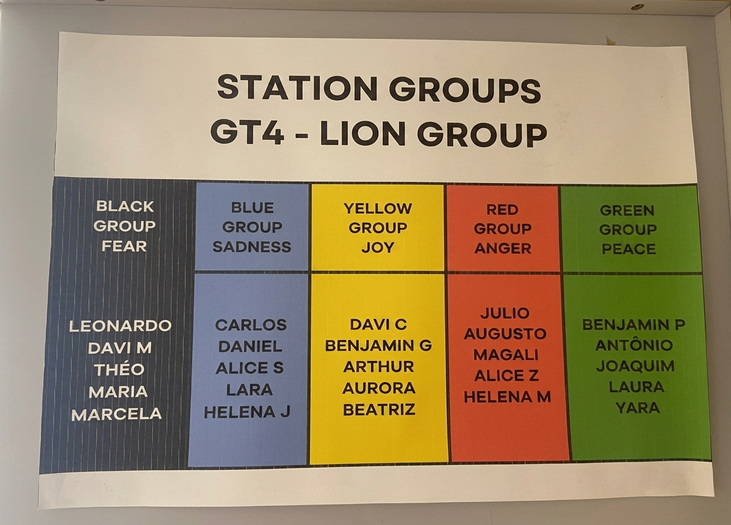
The objective of this stage was to describe the physical space of the classroom with STEAM and Station Rotation strategies, where they were planned and integrated into the context of the activities. The structure of the physical classroom space should be dynamic and open, allowing children to actively investigate, discover, and connect knowledge[3]. Figure 1 shows how the groups were divided in the classroom.
Source: Original research results.
For inclusive education to happen, it is necessary for all children to learn together, without being subject to personal, social, skills or cultural conditions, a structure adopted by the team, as illustrated by Figure 1[6]. The differences presented by everyone in a class constitute a wealth of possibilities and exchanges and learning. The valorization or negation of these differences depends, in large part, on the teacher’s performance, who, by highlighting the power of human diversity and by practicing inclusive pedagogy, plants the seed of a more just and less unequal society[9].
The remainder of the classroom space was dedicated to STEAM stations, with structured sensory activities that aid in students’ emotional and behavioral regulation, contributing to better academic and social performance[3]. These stations encouraged children to investigate, discover, connect, create, and reflect, promoting an active and exploratory approach.
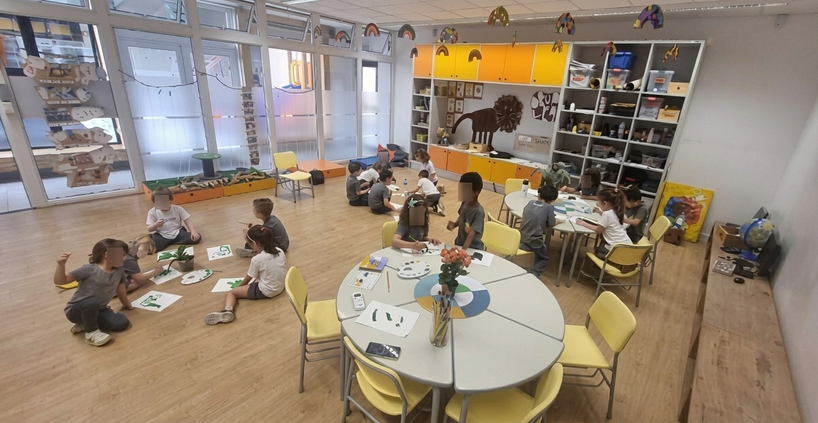
It is essential to expand the experiences that offer children a variety of contexts and materials to carry out constructions that allow them to recreate with intentionality, actions linked to doing, such as designing, exploring, drawing, recognizing different types of materials, granting children a leading role in the creations of these constructive spaces[16]. Figure 2 shows the physical space of the classroom.
Source: Original research results.
The STEAM and Station Rotation strategies were carefully planned to create a dynamic, interactive learning environment with a thoughtfully designed setting to benefit children with ASD, as shown in Figure 2. The theme arose from the children’s curiosity about the story of the Three Little Pigs. Each Station was designed to address different aspects of the “Three Little Pigs” theme, integrating science, technology, engineering, art, and mathematics.
The project about the three little pigs was developed over a two-month period, allowing students to investigate the houses, the types of materials, and the literary context, as well as reflect on familiar formats. The projects were adapted according to the children’s interest and curiosity, ensuring meaningful and engaging learning. Four Stations were created, each with a specific plan, according to Table 2.
Table 2. The Seasons and their proposals
| Station | Title | Proposal | Objective |
| Station 1 | Building with the three little pigs | After experimenting with different materials, such as straw, wood, and bricks, the students were challenged to build houses for the little pigs. | Explore the properties of each material and how they influence the resistance of structures to external forces tested by students with a hairdryer. |
| Station 2 | Design | Students explored artistic expression through drawing and were encouraged to visually represent their own homes. | Consolidate students’ understanding of the materials used and their characteristics. The integration of art with practical learning reinforced the connection between theory and practice, allowing students to express themselves in unique ways. |
| Station 3 | Building with clay and popsicle sticks | The children explored building structures using clay and popsicle sticks. When working with clay, students learned about the material’s physical properties and how to manipulate it to achieve the desired shape. This Station focused on the creative use of materials to build sturdy and functional houses, encouraging experimentation and students’ fine motor skills. | Encourage creativity and experimentation, allowing children to design and build their own houses, considering aspects such as stability and design. |
| Station 4 | Building with cardboard box and rolls | Students used cardboard boxes and rolls to create their houses, exploring sustainability concepts by working with recyclable materials. They were challenged to plan their constructions, considering the efficiency and functionality of the structures. This hands-on approach to mathematics, by measuring and calculating dimensions, complemented the learning experience. The tactile nature of the activity allowed children to engage actively, facilitating the understanding of concepts of force and resistance. The interaction among students during the construction process also contributed to the development of social and collaborative skills. | This activity not only promoted creativity but also encouraged reflection on the responsible use of resources. |
As presented in the table above, the organization of these Stations followed careful planning, where each was prepared with the necessary materials and adapted to meet the different skills and interests of the students, including those with ASD. The structuring of the Station Rotation was designed to promote an active and exploratory approach, with adapted materials, as well as providing predictability that helped increase children’s confidence during activities, facilitating their full and effective participation. A predictable and structured environment is beneficial for children with ASD, as it helps improve participation in activities[3].
The organization of the room and the planning of the stations reflect a practical application of STEAM methodologies and Station Rotation. The structure of the stations provided a dynamic environment, which facilitated student exploration and engagement[6].
In this context, it is observed that nowadays, in early childhood education, children spend more time with activity sheets than with building blocks and crayons, becoming more like the rest of the school, highlighting the need to return to more playful and exploratory practices in early childhood education[19].
Third stage – investigating and exploring: engagement and inclusion of children with ASD
In this stage, the development of the methodological proposals implemented in the learning stations will be presented, focusing on the practical experiences lived by the students, especially those with Autism Spectrum Disorder.
It was observed how the activities were conducted and how the students interacted with the materials and with each other. The active and exploratory approach enabled the children to investigate the properties of the materials, collaborate in groups, and express their ideas creatively. Social interaction, engagement, and communication were central aspects, allowing the children to feel more comfortable participating and sharing their discoveries.
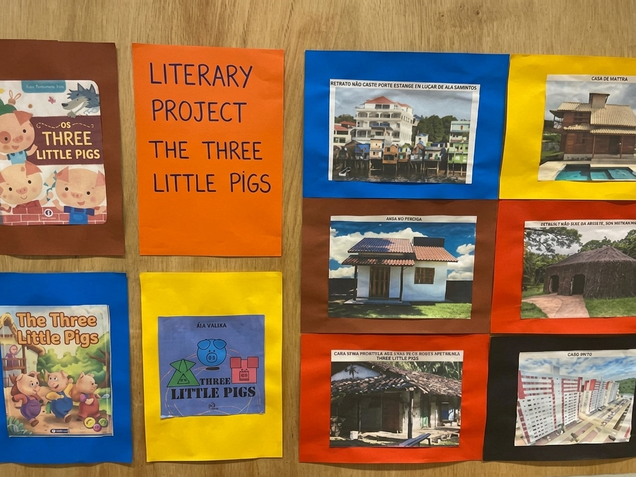
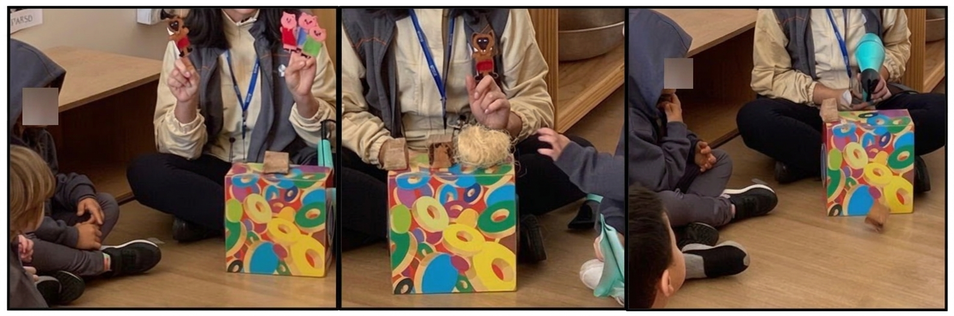
The activity began with images of different classics from the story of the Three Little Pigs, as shown in figure 3, and with the reading of the story of the Three Little Pigs, providing an enriching and motivating context for learning. The teacher used various materials, such as felt finger puppets, straw, wood, bricks, a hairdryer, and a box that served as a stage, illustrating the narrative in an engaging way, as shown in figure 4. Figure 3 shows how the activity began at the “Building with the Three Little Pigs” Station.
Source: Original research results.
From the images presented in Figure 3, the teachers began the activity by reading the classic story of the Three Little Pigs to the students, providing an enriching and motivating context for learning.
In Figure 4, it is shown how the teacher told the story to the students, highlighting the materials used.
Source: Original research results.
After reading, students were introduced to the Learning Stations, presented in Table 2, each designed to explore different aspects of STEAM. The materials included straw, wood, bricks, clay, and popsicle sticks, along with simple and safe tools. Students were challenged to build a house for the little pigs using the materials, which allowed for the exploration of physical and sensory properties, response patterns can expressively influence how children with ASD engage in activities and how they interact with the resources[19].
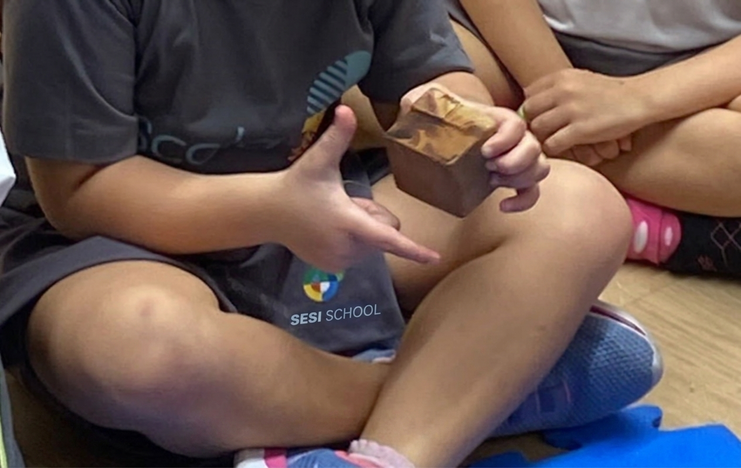
In the first stage of the activity, students were divided into groups and challenged to build houses for the little pigs using different materials such as straw, wood, and bricks. Figure 5 illustrates how some students interacted with the activity materials.
Source: Original research results.
During the construction process, students demonstrated enthusiasm and engagement in experimenting with different materials, applying their ideas to the construction of the pigs’ houses, as highlighted in the figure above. This process involved planning, design, and construction, encouraging students to apply engineering concepts in practice. During this phase, teachers provided guidance and support as needed, adapting instructions to meet the diverse needs and learning styles of the students, including those with ASD. At the end of the construction, the houses were tested for their resistance using a hairdryer, simulating the wolf’s blow from the story, and they observed how each material reacted to external forces.
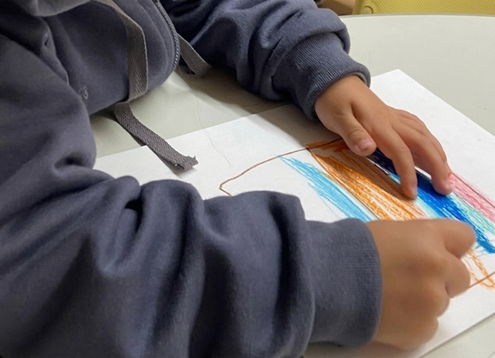
After the construction phase, students moved on to the My House, My Design Station, where they were encouraged to draw their houses, being prompted to visually represent their ideas, as illustrated in Figure 6.
Source: Original research results.
The use of artistic materials such as colored pencils, crayons, and markers stimulated creative expression and consolidated students’ understanding of the materials used in constructions. Children with ASD, in particular, stood out for their attention to detail and artistic individuality, reflecting their perceptions of the project.
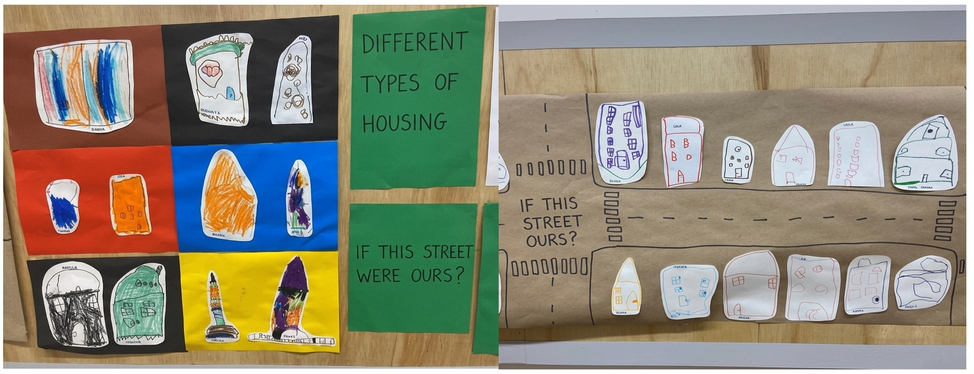
It was observed that the children had an idea of what a construction was like from different points of view, as shown in the figure below.
Source: Original research results.
Figure 7 illustrates some of the drawings produced by the students, where each one can present their vision of the ideal house. The records were used as a form of registration and as a strategy to interweave the children’s knowledge. This proposal favored organization, negotiations for group work, and each one drew their house.
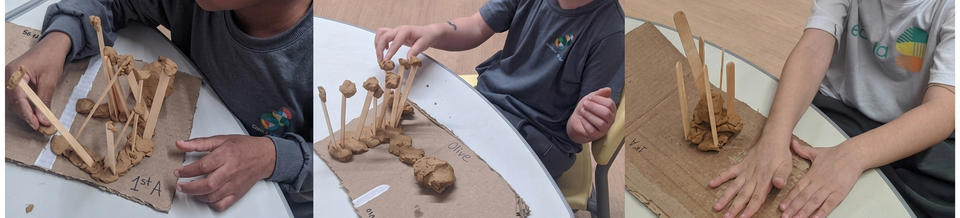
Subsequently, the students were directed to the Clay Architects Station, represented in Figure 8, where they had the opportunity to work with clay, exploring its texture and manipulative properties. According to Figure 8, we observe the houses developed by the students, through their sensitivity, spatial awareness, and ability to capture the characteristics of objects.
Source: Original research results.
This Station focused on the creative use of materials to build robust and functional houses, encouraging experimentation and fine manual skills in students. They felt challenged and excited to work with materials that allowed for greater manipulation and creativity in construction, as they delved into different aspects.
When working with clay, they knead, roll, shape, smooth, and cut it; these movements help develop fine motor coordination, as well as allowing them to explore creativity and sensory experiences. Despite the complexity, the children managed to make stable constructions.
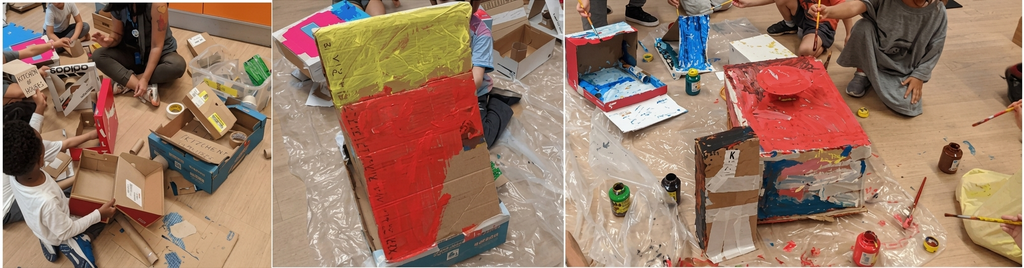
To finalize, students participated in the Creative Houses Project Station, where they created houses using recyclable materials. This stage encouraged sustainable planning and construction, as well as promoting environmental awareness through the use of reusable resources. Figure 9 presents the last Station, named “Sustainable Houses Project”.
Source: Original research results.
Students felt inspired to explore innovative ways of building, as well as developing a sense of environmental responsibility by reusing materials.
It is important to offer children opportunities to explore their motor skills through constructions with materials of different sizes. The activities provide the development of motor skills, while also enabling the exploration of characteristics such as weight and volume, in addition to encouraging cooperative work. These experiences, both in macro and micro constructions, allow children to develop their attention to detail and make careful choices of the materials used[16].
Throughout all seasons, students with ASD demonstrated active and unique participation, benefiting from the structured environment and adapted activities that facilitated their interaction and learning. These experiences not only promoted the development of practical and cognitive skills but also strengthened inclusion and a sense of accomplishment among all participating students. When children build with interest, explore, experiment, and test boundaries, they develop into thinkers and agents of their knowledge[19].
Once the Three Little Pigs project, developed by the students, who were satisfied with each work, was finalized, the opportunity was given to share the creations with colleagues and professors. This moment not only reinforced the students’ self-esteem and sense of accomplishment, but also promoted social interaction and effective communication. During the presentations, the professors facilitated discussions about the techniques used, the challenges faced, and the solutions found by the groups, further enriching the educational and collaborative experience.
Throughout all stages, meticulous planning and careful adaptation of activities ensured that all students, including those with ASD, could fully participate and benefit from the STEAM experiences offered. This process highlights the pedagogical team’s commitment to inclusive education and the promotion of each child’s integral development, providing a stimulating and accessible learning atmosphere for everyone.
During the execution of the activities, a high level of engagement from children with ASD was observed at the STEAM stations. The activities provided opportunities for sensory exploration, artistic expression, creativity, and to promote more active participation.
The results highlight the effectiveness of STEAM approaches in promoting engagement and skill development in children with ASD[5],[8]. The station structure and variety of activities allowed students to apply engineering and art concepts in a practical and accessible way. Predictable and structured environments are beneficial for children with ASD[7]. The active participation of children with ASD was also facilitated by the adaptation of activities[1].
Teachers reported an increase in student enthusiasm and active participation during STEAM exploration, evidencing the effectiveness of the approaches. The STEAM stations promote the development of cognitive, social, and motor skills. The participation of students with ASD was facilitated by the adaptations made to the activities, and an improvement in social interaction and communication among children was also observed, especially during group activities[1]. The Station Rotation contributed to greater predictability, which favored student participation[8].
One of the main challenges observed was the need to continuously adapt activities to meet the sensory preferences and developmental levels of students with ASD. Some of them presented difficulties in transitioning between stations, which required additional strategies to facilitate this change of focus. However, these adaptations were essential to ensure that all students could fully participate in the activities and benefit from the STEAM experiences offered.
The results indicate that the implementation of STEAM strategies and Station Rotation not only promoted the inclusion and integral development of students, but also generated a positive impact on the school environment as a whole. Children with ASD show themselves to be more engaged, confident, and participatory[5]. The interaction between neurotypical children and children with ASD was facilitated by the structured activities at the stations, promoting an atmosphere of collaboration and mutual support[3].
Children’s involvement in projects based on their passions and interests stimulates creative thinking and autonomy, preparing them for future challenges [19]. This concept is relevant to the observed practices, where creation and experimentation were fundamental to the engagement of children with ASD. Inclusion requires reducing the obstacles to learning and participation and expanding the resources that support these processes [6]. Recognizing differences is essential to remove the barriers that prevent access, permanence, and the right to autonomous learning for students[9].
The applied methodologies proved effective both for promoting sensory and motor development, in addition to creating an inclusive and stimulating learning environment for all students, especially those with ASD. Despite some identified challenges, such as the difficulty in adapting activities to the different sensory needs and developmental levels of children with ASD, and difficulties in transitions between stations, the report shows that STEAM and Station Rotation methodologies contributed significantly to the development of inclusive pedagogical practices in Early Childhood Education.
Furthermore, the implementation of these methodologies highlights the importance of investments in continuous teacher training, providing regular professional development that prepares educators to deal with diversity in classrooms and to use inclusive pedagogical strategies.
The structure of the stations and the practical approach adopted were well received and indicate a promising path for future inclusive pedagogical practices. In conclusion, the results suggest that the combination of STEAM and Rotation methodologies can offer valuable insights for inclusive educational practice and for the promotion of children’s integral development.
References:
[1] Almeida, Almeida M.; Rodrigues V. 2017. Modelagem em Vídeo para o Ensino de Habilidades de Comunicação a Indivíduos com Autismo: Revisão de Estudos. Revista Brasileira de Educação Especial. 23.
[2] Araujo L.A. 2018. A inclusão escolar e os desafios da prática pedagógica no ensino regular. Dissertação de Mestrado em Direito. Universidade Federal do Ceará.
[3] Mattos, J.C. 2019. Alterações sensoriais no transtorno do espectro autista (TEA): implicações no desenvolvimento e na aprendizagem. Revista Psicopedagogia. 36.
[4] Bacich L.; Geraldi A.; Holanda L. 2022. STEAM: integrando as áreas para desenvolver competências. STEAM em sala de aula: a aprendizagem baseada em projetos integrando conhecimentos na educação básica. 1ed. — São Paulo : Tríade Educacional. Disponível em; https://ligasteam.com.br/uploads/ligasteam_coorte_e-book_completo_final_item_269.pdf.
[5] Dougherty, D. 2017. Free to Make: how the maker movement is changing our schools, our jobs, and our minds. 2.ed. Berkeley, Califórnia, EUA. North Atlantic Books.
[6] Silva R.A.D. 2020. Rotação por estações como proposta de práticas educativas para a formação integral na educação de jovens e adultos. Dissertação de Mestrado. Instituto Federal Goiano, Morrinho, GO.
[7] Oliveira, K.M. 2020. Inclusão escolar de crianças autistas: o que acontece quando família e docentes dialogam. Dissertação de Mestrado. Universidade Federal do Ceará. Fortaleza, CE.
[8] Rennie, L.; Venville, G.; Wallace, J. 2012 Integrating science, technology, engineering, and mathematics: issues, reflections, and ways forward. Routledge. New York, NY, EUA.
[9] Medeiros, J.L.; Mattos, M.M. 2021. Educação inclusiva: um desafio contemporâneo. Revista Educação Inclusiva. 6.
[10] Ludke, M.; André, M. 2018. Pesquisa em Educação: Abordagens Qualitativas. 2ed. São Paulo: E.P.U.
[11] Góes, M.C.R.; Laplane, A.L.F. 2013. Políticas e práticas de educação inclusiva. 4.ed. São Paulo: Editora Autores Associados.
[12] Gatti B.A. 2010. Gestão e práticas pedagógicas: o papel dos dados e da análise na melhoria da educação.1ed. São Paulo, SP: Editora Moderna.
[13] Zabala A. 2010. A prática educativa: como ensinar. Porto Alegre: Penso.
[14] Moraes F.M.S.; Cerdeira V.A.A. 2018. Os desafios contemporâneos da inclusão. Revista Científica Eletrônica de Ciências Aplicadas da FAIT. 12.
[15] Brasil. Ministério da Educação. 2008. Política Nacional de Educação Especial na Perspectiva da Educação Inclusiva. Brasília, DF: MEC. Disponível em: http://portal.mec.gov.br/arquivos/pdf/politicaeducespecial.pdf. Acesso em: 01 jan. 2025.
[16] Dubovik, A.; Cippitelli, A. 2018. Construction and Constructiveness: Natural and artificial materials in construction games (translation by Bruna Heringer de Souza Villar). 1st ed. São Paulo: Phorte.
[17] Dubovik, A.; Cippitelli, A. 2020. A Linha como Linguagem (translated by Bruna Heringer de Souza Villar). 1st ed. São Paulo: Phorte.
[18] Resnick, M. 2020. Lifelong kindergarten: how to foster creativity and critical thinking (translation Mariana Casetto Cruz, Lívia Rulli Sobral). 1st ed. Porto Alegre: Penso.
HOW TO CITE
Assunção A.C.; Scarlassara B.S. STEAM and Station Rotation: inclusive methodological strategies in Early Childhood Education. E&S Journal. 2026; 7: e2025044.
ABOUT THE AUTHORS
Ana Cláudia Assunção Cruz – Specialist in Inclusive Education. Pedagogue and Physiotherapist. Rua Henrique Borba dos Santos, 110, Apartment 33, Block 01, Cordeiros Neighborhood, 88310-380, Itajaí, Santa Catarina, Brazil.
Bárbara Solana Scarlassara – PhD in School Education. Occupational Therapist and Professor. Rua Estevam Maturana Alcarrea 12-45, Jardim Altos do Alvorada, 17280-570, Pederneiras, São Paulo, Brazil.