
Communication
Covid-19
Education
Management
Learning Process
September 27, 2024
Impacts of covid-19 on communication for education and learning
DOI: 10.22167/2675-6528-20240019
E&S 2024, 5: e202400019
Patrick de Morais Silva; Karina Tonelli Silveira Dias Junqueira
Over the years, the world has become increasingly technological, requiring quick and objective responses, where conversing, writing, and using computer interfaces are some important communication methods for daily life[1]. With the emergence of the covid-19 pandemic, people’s daily lives have been affected in various ways, creating the need for changes and rapid adaptations of routine and new forms of remote communication[2].
Work and study routines were altered, with an increase in the “home office” work arrangement in Brazil[3]. With social distancing, universities and other higher education institutions offering in-person courses were forced to adapt, offering remote classes so that activities would not be paralyzed and teaching would not be harmed[4]. This generated several consequences.
According to the census conducted by the National Institute for Educational Studies and Research Anísio Teixeira (Inep)[5], Higher Education Institutions (IES) had to make changes to the academic calendar due to the suspension of in-person classes. Furthermore, according to Inep[5], 87% of IES adopted as a management strategy during the pandemic period the revision of communication plans with the academic community, with part of this plan being the promotion of COVID-19 preventive campaigns, social support for students, technical training for the adoption of remote activities for collaborators and students, psychological incentives and support, among others.
The use of technology has promoted advances in the management of educational projects. For teachers, the main benefits were in planning and organizing classes, in the use of presentation and illustration programs for classes, and in the management of assessments through the use of spreadsheets. In the case of students, technology has allowed the use of tools such as text programs, internet browsing, and communication programs in virtual environments, which are important for the development of learning in the technological context[6].
Despite the benefits in educational projects derived from technology, it should be considered that the ineffective use of these tools can compromise the pillar of communication[7]. Benatti and Becker[8] state that establishing assertive communication is the way to build interpersonal relationships, having empathy and understanding of the other to convey the message clearly. Assertive communication promotes increased self-esteem and satisfaction, directly influencing performance, commitment, and absenteeism[9].
Effective communication in different scenarios, whether during a pandemic or not, is not an easy task. It is worth noting that the human factor, as the main attribute in question, highlights that establishing perfect communication is unattainable, but establishing strategies in pursuit of effectiveness can satisfy the established objectives[10].
As education is a dynamic reality, Alves[11] points out that the form of communication existing between student and professor for the sake of learning is also subject to adjustments. With the resumption of in-person teaching or even the establishment of hybrid teaching methods, readaptations in communication in educational projects have become necessary. Furthermore, a solid teacher-student relationship can lead to increased student engagement, the construction of a classroom environment where positive relationships and interactions are promoted, which also generates a positive effect for the professor[12].
Given the foregoing and highlighting the difficulties experienced over more than 2 years of the pandemic, the research problem is the following question: what are the impacts of covid-19 on communication and teaching in Higher Education Institutions (HEIs) that offer in-person courses? Thus, the objective of the work was to analyze the impacts of the covid-19 pandemic on communication and teaching in HEIs that offer in-person courses. The present research sought to analyze the perception of students and professors in this new communication environment of higher education institutions. Through this exploratory study, social interactions, particularities about communication[2] and possible suggestions for a good learning environment were analyzed.
To this end, a questionnaire with 33 questions was applied, summarized as follows: demographic profile (8 questions); forms of communication between student and professor before the pandemic (7 questions); forms of communication between student and professor during the pandemic (9 questions); and post-pandemic communication methods (9 questions).
The research was sent to students and professors from a public state university, obtaining 36 responses. Only students and professors who carried out their activities in the three periods analyzed: before, during, and after the pandemic, thus framing the year 2019 or earlier, were qualified to answer the questionnaire. As a filter, a question was inserted to identify the participant’s graduation year, with 21 responses being discarded, leaving 15 valid responses. The objective was to map communication between professors and students and explore the challenges, impacts, and assertiveness in the scope of educational communication at the university after a period of more than 2 years of pandemic, also highlighting the quality of teaching and student performance. The invitation to participate was sent by email through the digital platform “Google forms”.
The answers were organized into the most prevalent themes[13] establishing thematic patterns developed in the dataset generated through the case study.
The study participants were initially classified by gender; education level; year of enrollment in the course; and average gross income. Based on the analysis of 15 respondents, it was observed regarding gender aspects that 56.3% identify as men and 46.6% as women. Among the participants, 93.3% stated they were pursuing higher education and 6.6% stated they had completed higher education. Regarding enrollment, 6.6% entered the university in 2017, 26.6% in 2018, and 66.6% in 2019. In relation to gross income, 73.3% have an income of up to 2 minimum wages, 13.3% from 2 to 4 minimum wages, and 13.3% stated they have an income of 4 to 10 minimum wages. 100% of the participants stated they have access to the internet, computers, tablets, or smartphones.
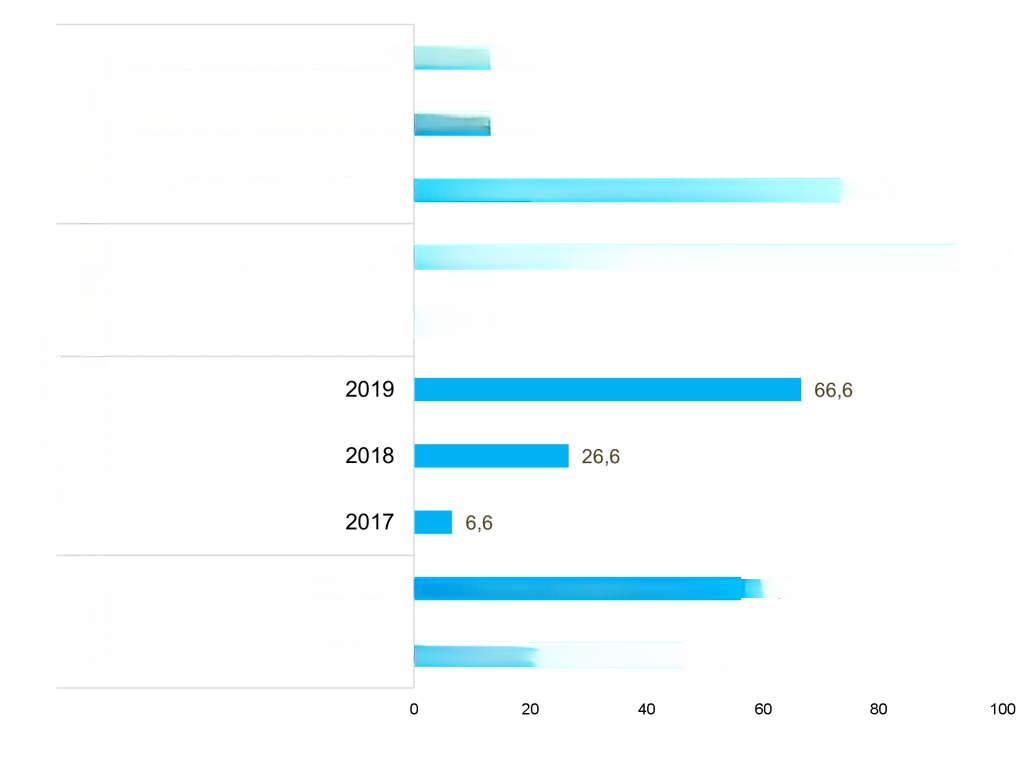
Source: Original research results
Subsequently, we sought to understand the participants’ main communication tools in their daily lives. Four means were specified: phone calls; instant messages; emails; and personal communication.
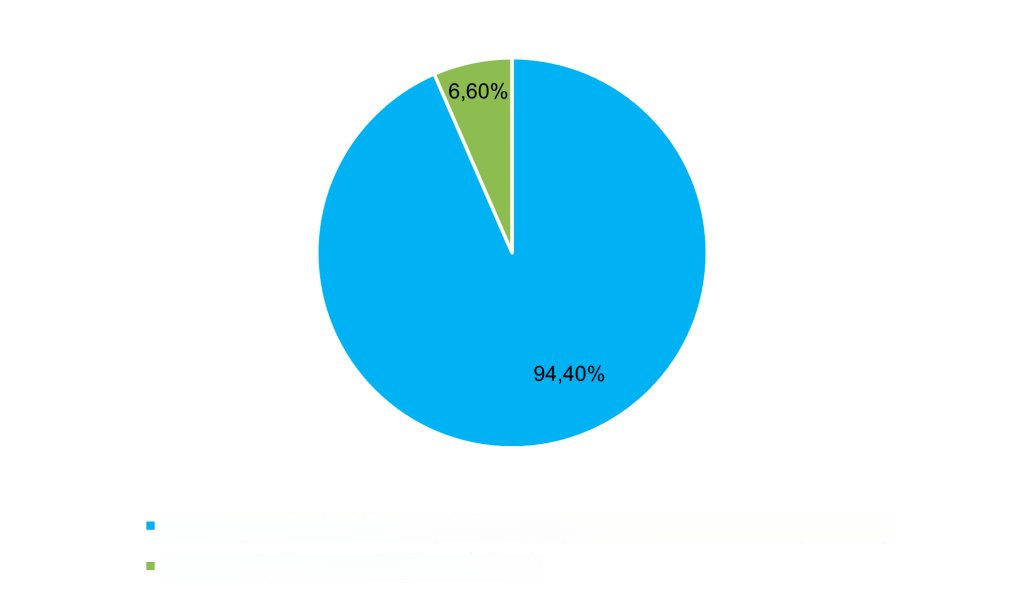
Source: Original research results
The most used communication channels by participants in their daily lives are instant messaging, such as Whatsapp®, Telegram®, Messenger® among others. The explanation for this data points to the popularity of these platforms, the agility in communication, and the free nature of the applications[2].
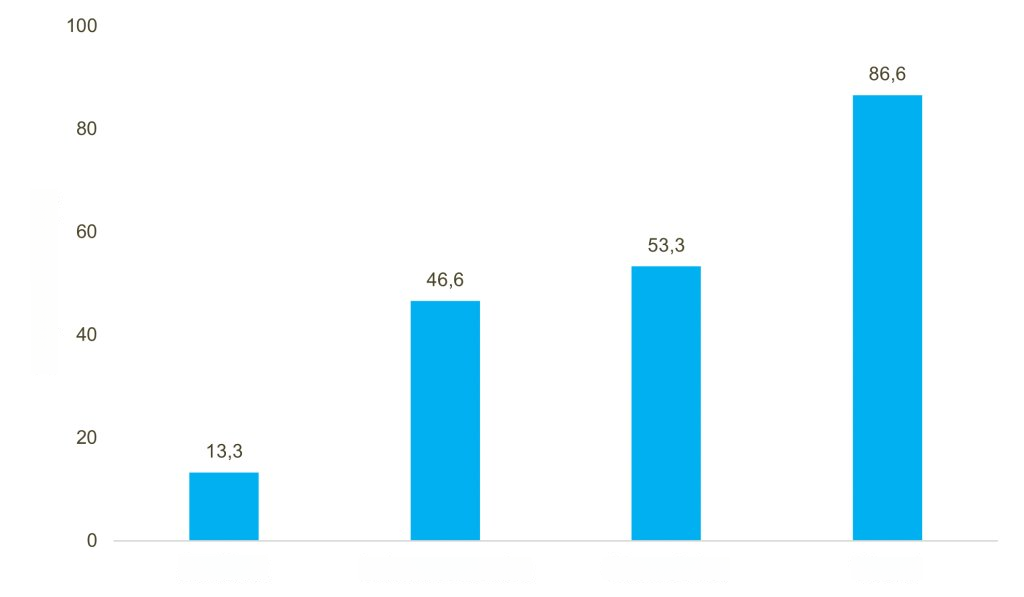
Besides the communication medium, it is important to identify the most effective learning style for the participants, in order to subsequently understand if the means employed in the evaluated periods were effective for learning. Based on the responses, four main styles were identified: auditory; reading and writing; kinesthetic; and visual (Figure 3).
Source: Original research results
Cited by 86.6% of participants, the visual form highlights the importance of images, graphs, diagrams, and lists as aids for better learning and content transmission. For Silvino[14], with technology being part of our daily lives, it is increasingly necessary to deal with the visual information available in the most diverse environments.
Following visual learning, there is, secondly, the kinesthetic form, which relates to more practical learning. This indicates people who perform well in practical laboratory classes, presentations, physical activities, or theatrical performances[15]. Of similar importance, reading and writing were cited as learning methods by more than 46.0% of participants and, of lesser importance, the auditory method was cited, not being efficient in an individualized way, but rather, associated with the other cited methods.
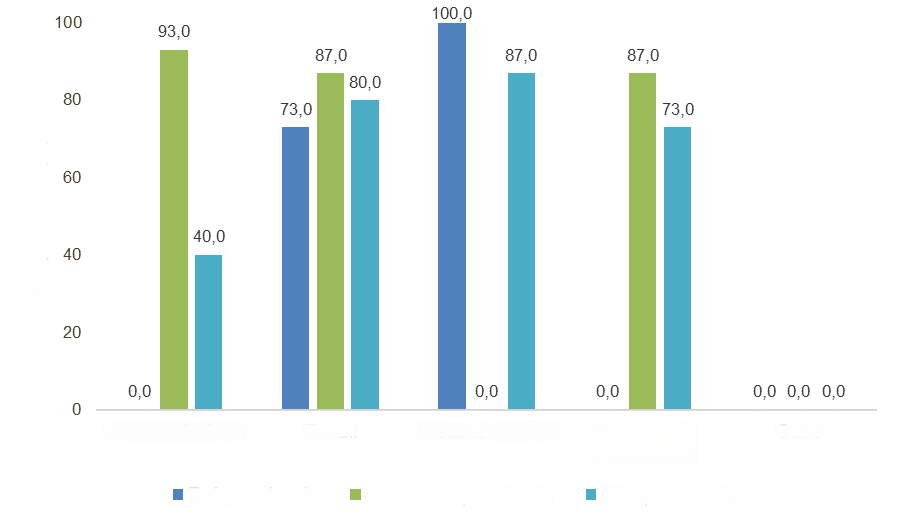
The identification of learning methods served to confront the preferred methods with the teaching scenarios practiced and possibly applied before, during, and after the pandemic. This, considering that communication at the university underwent several changes during this period, causing students and professors to adapt to the new reality[4]. Given the constant scenario of transition, the research questioned what the main means of communication between students and professors was in the studied period.
Source: Original research results
It was observed, from the data obtained, that the communication channels used by teachers and students differed significantly between the analyzed contexts. In the period before the pandemic, communication occurred only by email or in person, while during the pandemic, there was a migration to remote channels, such as email, instant messaging, and videoconferencing. It is noted that after the pandemic, the communication channels merged, and although in-person still prevails, the importance given to digital channels is notorious. This fact shows an adaptation and good absorption, by education, of technological resources, thus corresponding to the study by Santos[16] which mentions that the pandemic and quarantine made it possible to discover new alternatives and new lifestyles.
This change also extended to how students ask their questions about the subjects studied, since, before the pandemic, most of them were resolved in person, in classrooms or scheduled appointments. After the pandemic, the scenario is different, with students resorting to emails, video conferences, and instant messaging, in addition to in-person methods. This led to other less-used communication channels becoming part of the relationship between students and faculty.
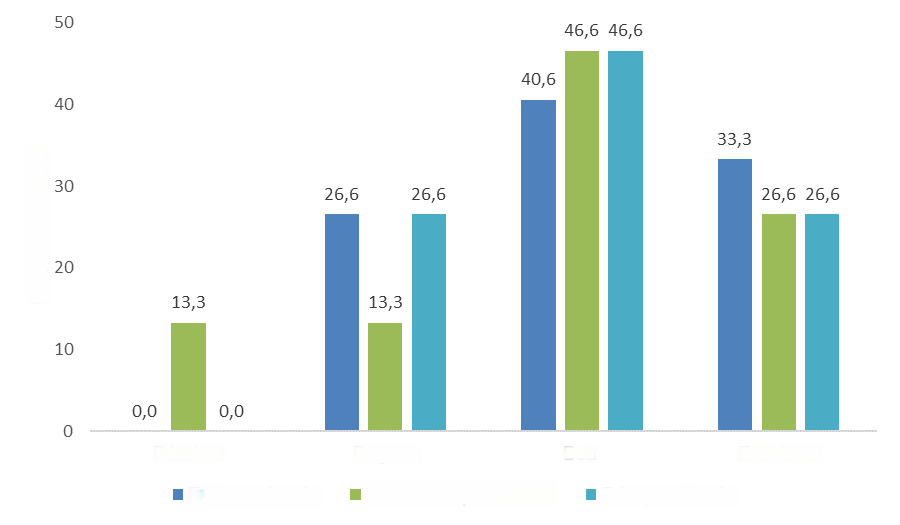
Next, we sought to understand how participants perceived the quality of communication between students and professors in the three stages of analysis (Figure 5).
Source: Original research results
Before the pandemic period, it is perceived that communication was mainly considered good (46.6%), with equivalence between regular and excellent, both at 26.6%. During the pandemic, the drop in communication quality was evident, reaching even poor and very poor levels, as well as an increase in regular evaluations. Some participants signaled challenges that impacted communication, such as the difficulty in scheduling meetings to clarify doubts, internet instability, and some classes not being live. Thus, in a way, the abrupt change caused by the pandemic caused interruptions in daily social interaction[2].
It is noted that the quality of communication between students and professors returned to excellent, good, and regular levels after the pandemic. Before the pandemic, 26.6% rated communication as excellent, 46.6% as good, and 26.6% as regular. After the pandemic, 33.3% rated communication as excellent, 40.6% as good, and 26.6% as regular. An increase of 6.7% in the excellent rating was observed, while there was a decrease of 6.0% in the good rating, and the regular rating remained stable. It is perceived that communication between students and professors is currently better than before and during the pandemic.
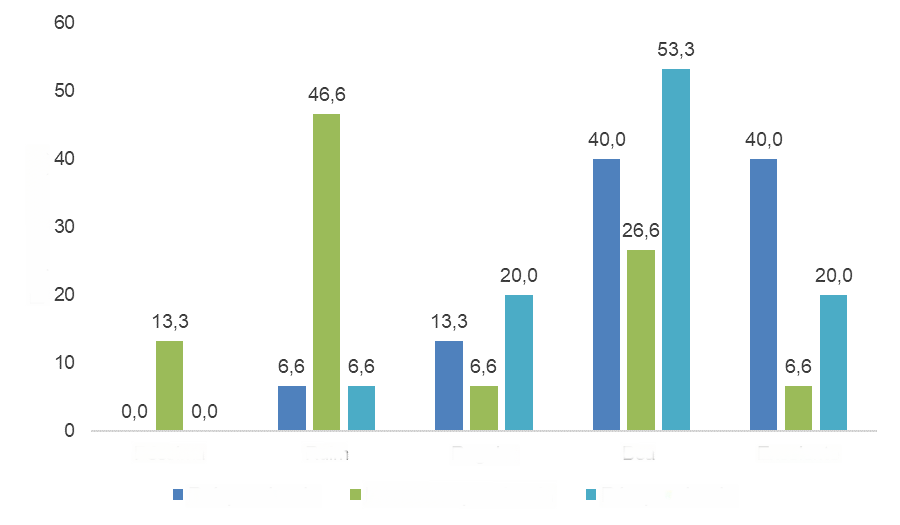
Subsequently, we sought to understand how participants would classify their performance in relation to learning (Figure 6).
Source: Original research results
The data showed that, during the pandemic, 26.6% rated their learning as good, 6.6% rated it as excellent and regular. On the other hand, 46.6% rated their learning as poor and 13.3% as terrible, indicating that more than half of the respondents evaluated their performance negatively.
In one of the open-ended questions, it was asked what the biggest challenge was to maintain communication and learning during the pandemic. Distractions, lack of focus, and discipline were mentioned, in addition, mental exhaustion and lack of interest due to the drop in teaching quality were other mentions made by the participants, corresponding to the study by Vercelli[4]. One participant said that, at the beginning of remote classes, his performance was compromised because he did not have a good notebook, nor internet. To attend classes, it was necessary for him to go to the sidewalk in front of his house to connect to the neighbor’s network. Furthermore, the student used a long extension cord to keep the notebook on. Thus, the lack of comfort, the noise of cars and people passing on the street hindered him.
Before the pandemic, 40.0% rated their learning as excellent, 40.0% as good, 13.3% as fair, and 6.60% as poor. After the pandemic, 20.0% rated their learning as excellent, 53.3% as good, 20.0% as fair, and 6.60% as poor. Although, after the pandemic, the number of people who consider their learning excellent decreased, it was possible to have a positive perception in the evaluation, as more than 50% of the respondents consider their learning good. It was noted that the poor and very poor ratings, which appeared during the pandemic, did not reappear in the respondents’ evaluation.
Another open question was about what they liked most regarding teaching during the pandemic. The answers varied between: they didn’t like anything (2); they highlighted the importance of classes being recorded, allowing free access to content (2); they liked the teachers’ commitment to maintaining the quality of classes, citing their attention and the university’s assistance in lending equipment so students could attend classes (4).
We also sought to understand what challenges hinder communication between students and professors after the pandemic. The responses highlighted: the possible lack of closeness between students and professors caused during the pandemic (1); lack of interest in in-person classes (1); improvement in communication between students and professors after the pandemic, due to the tools available upon the return to in-person classes, in addition to the openness of professors regarding students (4)
The study carried out showed that communication is a fundamental piece in learning and highlighted how the emergence of covid-19 caused instability in various segments of daily life, including the education system. The abrupt change forced a rapid adaptation to less conventional means, challenging students and teachers to maintain good quality in communication and learning.
The use of technology was fundamental during this period, establishing new communication channels between students and professors. Furthermore, both students and professors had to learn or improve their skills in using the new communication channels. Naturally, the university’s concern in providing adequate support to students — such as computers, mobile phones, or tablets — combined with the professors’ commitment to expanding communication branches, are extremely relevant factors for this research.
Even with all the adversities that in-person higher education has faced, the pillar of communication is stronger. Participants even show an improvement in learning performance due to the joint effort of students and professors in readjusting the teaching environment. In general, it is perceived that the impacts generated by the pandemic have expanded forms of communication and established greater acceptance of technology use, boosting communication and teaching.
Despite the current good aspects in communication and learning, the development of communicative projects, such as online forums, is suggested. These projects generate opportunities for greater interaction between students and professors beyond the classroom, allowing students to get to know each other better and create good connections. Therefore, further studies may consider such an approach and bring new perspectives to understand all the impacts generated by the covid-19 pandemic.
References
[1] Pandarinath, C.; Nuyujukian, P.; Blabe, C.H.; Sorice B.L.; Saab, J.; Willett, F.R.; Hochberg, L.R.; Shenoy K.V.; Henderson J.M. 2017. High performance communication by people with paralysis using an intracortical brain-computer interface. eLife (21)6: 1-27. https://doi.org/10.7554/eLife.18554.
[2] Michereff Junior, V; Feuerschütte, S. G.; Sánchez, P.B. 2021. Comunicação nas organizações no contexto da Covid-19. Revista Gestão Organizacional 14(1): 54-76. https://doi.org/10.22277/rgo.v14i1.5752.
[3] Carvalho, M.; Souza, D.L.B; Delgado, D.B.M.; Lima, K.M.; Cancela, M. C.; Siqueira, C.A. 2021. Effects of the Covid -19 on the brazilian electricity consumption patterns. International Journal of Energy Research. https://doi.org/10.1002/er.5877.
[4] Vercelli, L. C. A. 2020. Aulas remotas em tempos de Covid-19: a percepção de discentes de um programa de mestrado profissional em educação. Revista @ambienteeeducação 13(2): 47-60. https://doi.org/10.26843/v13.n2.2020.932.p47-60.
[5] Brasil. Instituto Nacional de Estudos e Pesquisas Educacionais Anísio Teixeira (Inep). 2022. Relatório de pesquisa: resposta educacional à pandemia de covid-19 no brasil – educação superior – 2020. Brasília, DF, Brasil.
[6]Moran, J. M. 2007. A educação que desejamos: novos desafios e como chagar lá. 2ed. Papirus, Campinas, SP, Brasil.
[7] Sartori, A. S. 2004. Gestão da Comunicação: relações entre educação e comunicação na educação a distância. IV encontro dos Núcleos de Pesquisa da Intercom.
[8] Benatti, C., & Becker, A. (2021). Comunicação assertiva: o que você precisa saber para melhorar suas relações pessoais e profissionais. Literare Books.
[9] Dasgupta, S.A.; Suar, D.; Singh, S. 2013. Impact of managerial communication styles on employees atitudes and behaviours. Employee Relations 35(2): 173-199. https://doi.org/10.1108/01425451311287862.
[10] Fiz, P.F.R.; Cunha, P.H.B. 2020. O desafio da comunicação organizacional frente a pandemia do Covid-19 sob a ótica de uma empresa varejista. Boletim do gerenciamento 17(17): 51-60.
[11] Alves, R. M. 2014. Gestão educacional e novas tecnologias da informação e comunicação: atualizações necessárias disponíveis para a cultura educacional. e-curriculum PUC/SP 12(2): 1366-1390.
[12] Hagenauer, G.; Violet, S.E. 2014. Teacher-student relationship at university: an important yet under-researched field. Oxford Review of Education 40(3): 370-388. https://doi.org/10.1080/03054985.2014.921613.
[13] Braun, V.; Clarke V. 2006. Using thematic analysis in psychology. Qualitative research in sport 3(2): 77-101.
[14] Silvino, F. F. 2014. Letramento Visual. Texto livre: Linguagem e Tecnologia 7(1): 167-170. https://doi.org/10.17851/1983-3652.7.1.167-170.
[15]Rodrigues, A; Schimiguel, J. 2018. Learning styles in an information systems course. Revista Observatorio de la Economia Latinoamericana.
[16]Santos B. S. 2020. A cruel pedagogy of the virus. Coimbra: Almedina Publishing House.
How to cite
Silva P.M.; Junqueira K.T.S.D. Impacts of covid-19 on communication for education and learning. Revista E&S. 2024; 5: e20240019.
About the authors
Patrick de Morais Silva – Project Management Specialist. Mattel do Brasil – Avenida Dr. Chucri Zaidan, 296 – Vila Cordeiro – CEP: 04583-110 – São Paulo/SP, Brazil.
 Karina Tonelli Silveira Dias Junqueira – Doctor of Administration. Rua Brasil, 172 – Vila Espanha – Postal Code: 17607-090 – Tupã/SP, Brazil.