
Education
April 15, 2025
Digital accessibility as a competitive differential: a study with Brazilian e-commerces
DOI: 10.22167/2675-6528-2024049
E&S 2025, 6: e2024049
Talita Matos dos Santos Gonçalves e Demétrio de Mendonça Júnior
Digital accessibility is the elimination of barriers on the web to ensure equal access, understanding, and interaction for all people. At first glance, one might think that accessible digital environments are beneficial only to people with disabilities, especially visual impairments. However, their scope can positively impact scenarios unrelated to disabilities — such as, for example, elderly people with sensory and motor limitations, or temporary situations, like injuries or surgeries. Therefore, it is important to emphasize that accessible digital technologies benefit not only people with disabilities, but all people, at some point or specific situation in life[1].
Despite approximately 18.6% of the Brazilian population having declared some disability[2], a 2020 survey[3] conducted jointly by BigData Corp. and Movimento Web Para Todos (MWPT), indicated that only 0.89% of the more than 14.65 million Brazilian websites succeeded in all applied accessibility tests.
According to the Brazilian Law of Inclusion of Persons with Disabilities – Statute of Persons with Disabilities[4], the social exclusion of persons with disabilities violates their rights, preventing them from fully participating in society, depriving them of access to services and information, just like any other citizen.
Investing in digital accessibility can be a smart strategy for companies because deeply understanding the market in which they operate and adopting strategies that are difficult for competitors to imitate can provide a [5]competitive advantage[5]. According to research conducted by Gartner[6], by the end of 2023, digital products that are in full compliance with the Web Content Accessibility Guidelines (WCAG)[7] will outperform market competitors by 50%. The research report[6] lists ways in which accessibility compliance offers companies a competitive advantage over those that ignore accessibility, namely: maximization of the total addressable market, brand appreciation, higher Search Engine Optimization (SEO) rankings, and reduction of legal action risks.
According to research by the Brazilian Society of Retail and Consumption[8], consumers with disabilities move around BRL 5.5 billion annually and, according to a sample survey, 95% prefer to buy online. These data indicate, once again, that digital accessibility is a topic of great importance and relevance with numerous advantages from both a social and an economic point of view.
In this context, the present research aimed to analyze digital accessibility in companies that stand out in e-commerce in Brazil. To this end, it was structured as a documentary research, which covered books, academic articles, market research, and other relevant physical and digital materials for the topic in question. Furthermore, a quantitative approach was used, in which, through accessibility and performance analysis tools, data were obtained that allowed highlighting some differences between companies, regarding accessibility, by comparing the number of errors presented during the purchase journey of the same product on each of the websites. However, the interpretation and discussion of the results also included qualitative aspects
For the case studies, three companies from the same sector were selected: Americanas, Magazine Luiza, and Mercado Livre. These companies are direct competitors and are among the largest in e-commerce in Brazil. Furthermore, they are in line with the consumption profile identified in the sample survey of the Brazilian Society of Retail and Consumption[8], which was used as a data source to obtain the consumption panorama of people with disabilities in the country.
For data collection, the IBM Equal Access Accessibility Checker[9] tool was used — which allows tests to be performed according to the Web Content Accessibility Guideline (WCAG)[7] guidelines. With it, it was possible to evaluate the accessibility of the websites of the selected companies in relation to different aspects, such as: font size, use of alternative images, contrast, and information hierarchy. A summary of the operationalization of this stage is presented below (Figure 1):
Source: Original research data.
Manual tests were also performed following the same purchase flow for the three websites studied. The criteria chosen for this testing phase involved the need to use the keyboard and a screen reader. VoiceOver, a native assistive technology from an Apple MacBook Pro laptop from 2019, was used as the screen reader. A native tool of the Google Chrome browser, called Google Lighthouse, was used to previously identify points that would have to be manually tested. The following is a summary of the tool’s operationalization (Figure 2):
Source: Original research data.
The research was organized (Table 1) into four phases, each with specific objectives and appropriate tools for its execution. Initially, documentary research aimed to collect information from existing documents, such as financial reports, laws, and market research. In the second phase, manual testing was used to identify possible accessibility violations, employing tools like Google Lighthouse, screen reader, and keyboard. Automated testing followed, with the aim of quantifying violations and assessing their criticality, using the IBM Accessibility Checker. Finally, the discussion and conclusion phase integrated the results obtained in the previous phases, promoting critical analysis to formulate the study’s conclusions.
Tabela 1. Síntese da operacionalização da pesquisa
| Execution Order | Research Phases | Objectives | Tools |
| First | Documentary research | Collection of information through existing documents | Analysis of financial reports, laws, market research, and bibliographic references |
| Second | Manual test | Identify possible accessibility violations | Google Lighthouse, Screen reader and keyboard. |
| Third | Automated test | Identify the quantity of accessibility violations and their criticality levels | IBM Accessibility checker |
| Room | Discussion and conclusion | Analysis of results and formulation of conclusions | Comparison of general results collected in the survey and discussion of implications |
In the census conducted in 2022[20] by the Brazilian Institute of Geography and Statistics (IBGE), the Brazilian population was estimated at 203.1 million people. The Continuous National Household Sample Survey (PNAD) conducted in 2022[2] considered about 18.6 million Brazilians as people with some type of disability. A survey conducted in 2024[8] by the São Paulo Consumer Protection and Defense Foundation titled “Behavioral Research: People with Disabilities x Consumer Market” interviewed 957 consumers with disabilities, revealing that 77.02% of participants usually make purchases online. When asked if their disability had prevented them from purchasing any product and/or hiring any service in virtual stores, 66.67% stated that it had.
Thinking about accessible digital technologies means thinking about guaranteeing equal access to information and knowledge for all people, regardless of their abilities or skills. According to the Brazilian Law on Inclusion of Persons with Disabilities – Statute of Persons with Disabilities[4], the social exclusion of persons with disabilities violates their rights, preventing them from fully participating in society and depriving them of access to services and information, like any other citizen.
The aforementioned law identifies as technological barriers those that hinder or prevent people with disabilities from accessing technologies. The absence of digital accessibility can lead not only to ethical consequences, negatively affecting the company’s reputation, but also legal implications, with possible financial sanctions, directly impacting its economic health.
The Gross Merchandise Value — Gross Merchandise Value (GMV) in Portuguese — plays a fundamental role in e-commerce, as it is used to evaluate business performance by summing the gross values of sales made in a given period. The report for the second quarter of 2022[10][11][12], made available to investors, shows the high performance of the three main companies in the e-commerce sector in Brazil (Table 2). Analyzing the data, it is evident that there is intense competition in the sector, as the indicators show very close values. Considering the potential economic impact of digital accessibility, companies could leverage a probable competitive advantage to further boost their results and create distance from their competitors.
Tabela 2. Gross Mass Value (GMV) referente ao segundo trimestre de 2022
| Electronic commerce | GMV¹ |
| Lojas Americanas | BRL 10.4 billion |
| Magazine Luiza | BRL 10.0 billion |
| Mercado Livre | BRL 8.5 billion* |
Note: ¹GMV: Gross Mass Value; *Quota referring to Brazil
To understand the evaluated criteria, it is first necessary to know what the Web Content Accessibility Guidelines (WCAG)[7] are and how they work, a set of guidelines created by the initiative of the web standardization organization, the World Wide Web (W3C). Such guidelines are considered a global standard and used to guide accessibility evaluations, being structured, according to the organization itself[7], in four pillars of accessibility:
- Perceivable: The content must be presented in a way that can be perceived by the senses, such as sight and hearing. This includes providing alternatives for non-textual content, such as images, audio, and video.
- Operable: Users should be able to interact with and navigate the site easily, using different devices and input methods, such as keyboard, mouse, voice, or other assistive devices.
- Understandable: The content and operation of the site must be understandable, with logical organization, clear language, and minimization of errors.
- Robust: Web content must be robust enough to be consistently interpreted by a variety of technologies, such as browsers, screen readers, and mobile devices, ensuring it remains accessible as technology evolves.
WCAG[7] also explains that its success criteria are detailed guidelines on how to meet the four pillars of accessibility mentioned above, being classified into three levels of compliance:
- Level A: This is the basic level of compliance and includes the most essential criteria for improving a website’s accessibility. Meeting these criteria is considered the starting point for making a website accessible.
- Level AA: This is the intermediate level of compliance and includes additional criteria beyond level A. Meeting these criteria increases the website’s accessibility, covering a broader set of requirements.
- Level AAA: This is the highest level of compliance and includes even more rigorous and comprehensive criteria.
In summary, each success criterion has a criticality level, anchored in the pillars of accessibility, and they address specific aspects, such as color contrast, video captions, semantic structure, among others.
For a succinct exemplification of the performance of the flows evaluated in this study, and their compliance with accessibility guidelines, priority was given to violations within Level A, that is, those essential for an application or platform to be minimally accessible.
Manual Tests
To evaluate the digital accessibility of the platforms, a standard purchase flow was adopted, applied to the same product, starting navigation from the homepage and then proceeding to the product listing page after performing a search using the keyword “Robot vacuum cleaner”. From the selection of one of the products, the product detail pages, checkout page, and finally, the payment page were analyzed.
The initial phase of the process involved conducting a manual evaluation on each of the websites, with special attention to keyboard navigation, as the experience would happen, in a simulated way, from the perspective of a person with a visual impairment.
According to Cunningham[13], most efforts to make a website accessible focus on visual accessibility, which is not surprising, given that the internet is predominantly visual. Therefore, users with visual impairments or difficulties are particularly more affected by technologies that do not respect accessibility standards. Among the assistive access technologies is the use of screen readers. These readers, as defined by the Electronic Government Accessibility Model[14], are software that provide information about the elements presented on the computer screen through voice synthesis. They interact with the operating system, navigating the page to capture the displayed information and return it in spoken form, which requires adequate semantics and robust code structure to function properly.
Before actually starting the manual tests, a tool called Google Lighthouse was used, available in the developer options of the Google Chrome browser. It is a widely used tool, mainly for measuring page performance regarding speed, SEO, security, and accessibility. For the purpose of this stage of the work, the tool was used to suggest points of attention for manual review of probable failures related to digital accessibility. These points of attention do not offer details of specific accessibility violations for each of the mapped pages, but rather a fixed list of items that automated tests usually do not cover.
The WCAG Level A success criterion 2.4.3, named “Focus Order”, guides that the tab order of page elements follows a logical sequence. This ensures that navigation is structured in a way that screen readers can present the content in a comprehensible and comfortable manner for the user, promoting an accessible and efficient navigation experience.
Based on the results obtained in the manual test, the platforms’ compliance with criterion 2.4.3 Success (Table 3) was evaluated. Navigation between elements was analyzed to verify if there was coherence in the information returned by the screen reader, which would only be possible if the page structure was organized to allow fluid navigation. With the exception of Magazine Luiza, the other journeys analyzed did not meet the success criterion of focus order throughout the entire journey covered for the research.
Tabela 3. Avaliação manual do critério de Sucesso 2.4.3 Ordem de Foco
| E-commerce | Main page | Product listing page | Product detail page | Order confirmation page | Payment page |
| Americanas | It did not pass | Passed | Passed | Passed | Passed |
| Magazine Luiza | Passed | Passed | Passed | Passed | Passed |
| Mercado Livre | Passed | Passed | Passed | It did not pass | It did not pass |
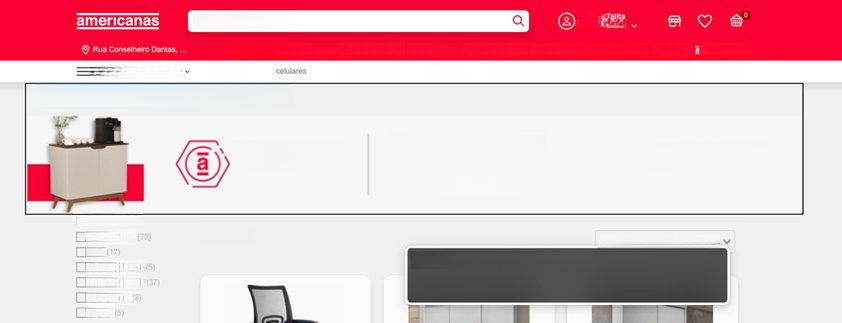
In addition to the accessibility failure observed (Table 3) on the main page of Lojas Americanas, regarding the focus order success criterion, an accessibility failure was also identified (Figure 3) in criterion 1.1.1 of level A, named “Non-text Content”, in which the WCAG recommends that any “non-text” content relevant to understanding the information must provide an alternative text description (visible or not) to identify the content, again allowing assistive technology to play its role. From the manual test, it was possible to observe (Figure 3) that the text transmitted by the screen reader for the banner was limited to only the text ‘Offers for you’, while visually the banner contained other important information to be conveyed to the user.
Source: Original search results.
If a user utilizing the assistive technology of a screen reader, when interacting with the keyboard, cannot navigate through all clickable elements without any blockage or interruption, then they cannot succeed in their journey. This accessibility violation is denominated by WCAG as criterion 2.1.2 of level A called “No Keyboard Trap”. The tests performed showed how each of the companies performed in this regard (Table 4).
Tabela 4. Avaliação manual do critério de Sucesso 2.1.2 Sem armadilha de teclado
| E-commerce | Main page | Product listing page | Product detail page | Order confirmation page | Payment page |
| Americanas | Passed | Passed | Passed | Passed | Passed |
| Magazine Luiza | Passed | Passed | Passed | Passed | Passed |
| Mercado Livre | Passed | Passed | It did not pass | It did not pass | It did not pass |
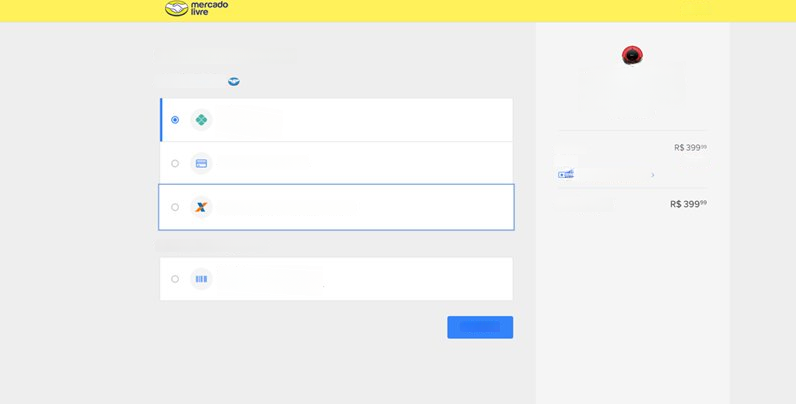
According to the results, the e-commerces Lojas Americanas and Magazine Luiza met the requirement on all analyzed pages, while Mercado Livre, in turn, did not fully meet it (Figure 4).
Source: Original search results.
The observed accessibility issue (Figure 4) is related to criterion 2.1.2 of the operable pillar, in which WCAG recommends that when interacting via keyboard, navigation through all clickable elements should occur without any blocking or interruption. However, on the Mercado Livre payment page, once the PIX payment option was selected, it was not possible to switch to debit card payment using only the keyboard. The only way to perform this operation was by using the mouse, which restricts the user’s accessibility and navigation capabilities.
The manual tests carried out in this study considered the purchase flow of the same product in the three e-commerce platforms analyzed. With this, it was possible to conclude that, even if a website is accessible for most of its journey, a single major failure at some point in the purchase flow — failures that WCAG guidelines call level A — compromises the entire user experience, potentially leading to the loss of customers to competitors who provide a more efficient browsing experience. At this stage, it can be inferred that Lojas Americanas and Magazine Luiza would gain a significant competitive advantage with the target audience that requires accessible resources. This is because high criticality success criteria were met, allowing the purchase flow to proceed to checkout — considered in this study as the final stage in the purchase flow.
Automated Tests
For the automated testing stage, a tool called Accessibility Checker, developed by IBM, was used. This tool aims to assist in the evaluation and correction of accessibility issues and provides their categorization, offering not only WCAG guidelines but also guidelines with local particularities.
Digital accessibility guidelines have been developed, and are constantly updated, with the aim of making the web a more democratic environment, covering visual, auditory, physical, speech, intellectual, learning, language, and neurological disabilities. Although these same guidelines cover a wide diversity of situations, they are not capable of addressing the needs of people with all types, degrees, and combinations of disabilities[15].
Therefore, in this study, the automated test was used to obtain quantitative results and serve as a basis for discussions, rather than delving into each of the failures presented.
The collected data refer to the total number of accessibility failures and how many of these failures were classified as level A, considering a complete purchase journey on the websites of the stores Americanas, Magazine Luiza, and Mercado Livre (Table 5). The journeys included the main page, search listing page, chosen product details page, order confirmation page, and payment page.
Tabela 5. Consolidado do número de problemas mapeados na jornada de compra
| Electronic commerce | Total number of issues | Total of A-level problems |
| Americanas | 771 | 509 |
| Magazine Luiza | 1917 | 992 |
| Mercado Livre | 1076 | 825 |
Recently, the federal government launched the Guide to good practices for digital accessibility[16], which presents a series of concepts, information, and recommendations, and represents an important milestone in encouraging accessible digital transformation. One of the key messages of the guide is the emphasis on the importance of considering accessibility from the conception of a project, as it is a more beneficial approach than correction in later stages.
The result of the mapping of the e-commerces studied shows a high volume of critical-level violations — reaching up to 76% of the total failures, as in the case of Mercado Livre. This means an unmitigated accessibility risk that can unfold into various problems for the user and the company. Considering the risks in question, it is noted the relevance of what is proposed by the federal government’s guide, since if they were considered from the conception of the websites, such risks would not exist. This finding also reinforces the thesis that digital accessibility should not be seen only as a responsibility of some specific areas within the company, but rather as an integral part of the business strategy, making accessibility an acceptance criterion in the development of digital products.
In the mapping done with the automated test, it was observed that there was a majority repetition of some accessibility violations, and with this, it was possible to describe what impacts such violations have on the user and what the technical solution for correction would be (Table 6).
Tabela 6. Principais violações de acessibilidade, seus impactos e soluções
| Violation | Impact | Solution |
| Contrast between screen text and background below WCAG minimum requirements | The user has difficulty reading the textual content of the website due to insufficient contrast | Adjust the contrast between text and background |
| Absence of form input labels | The screen reader becomes unable to convey the instructions of what is expected to be filled in each form field. | Associate description (label) for each of the form fields |
| Absence of alternative text for images | The screen reader becomes unable to describe the website’s images. | Inclusion of image description |
| Empty links and buttons | The screen reader becomes unable to inform the user whether the component is a button or a link. | Use of correct attributes so that the screen reader can correctly convey the function of links and buttons |
It is also highlighted that the identified violations (Table 6) do not only affect people with disabilities. This is because anyone can be impacted by the lack of available resources. The proposed solutions demonstrate that the resolutions to these problems are simple, especially if these practices were widely adopted by companies from the initial development phase of websites.
Based on the quantitative results of the automated tests, Americanas stands out as the platform that presented the fewest accessibility barriers in the mapped purchase journey, followed by Mercado Livre and, lastly, with the worst performance, Magazine Luiza.
Although the internet is not a basic physiological need in Maslow’s hierarchy[17], its increasingly relevant role in the areas of information, education, communication, and work is undeniable; therefore, promoting digital accessibility is an important social responsibility as it allows everyone to have equal opportunities to satisfy social, educational, and self-realization needs.
Barney[18] argues that a company must possess valuable, rare, inimitable, and non-substitutable resources and capabilities to achieve and maintain a competitive advantage. These resources and capabilities are called strategic resources and can be a source of sustainable competitive advantage. By hypothetically applying Barney’s concept to the theme presented in this work and considering that digital accessibility goes beyond technical issues, it can be inferred that the advantages in creating a consistent ecosystem of strategic resources, with digital accessibility being a crucial factor, would not only be effective for the user but could also result in sustainable long-term growth for the company/e-commerce that did so.
In this study, it was found that, in the three e-commerces analyzed — Lojas Americanas, Mercado Livre, and Magazine Luiza — there are critical accessibility flaws. However, the flaws identified in Mercado Livre are of high criticality, as they have a direct impact on product metrics, by preventing a user from completing a purchase due to dependence on assistive technology. In contrast, the other players studied achieved slightly better results (though not ideal), which gives them an initial advantage, allowing them to focus on building a solid strategy without the need to address critical points that would require immediate adjustments. Measures such as adjustments for better screen reader functionality, insertion of alternative texts, and other accessibility measures would not only provide a more satisfactory experience for consumers with disabilities but also boost financial growth.
It is concluded that in an increasingly competitive and volatile market, by considering accessibility measures in their strategies, all the studied companies can obtain a competitive advantage, distinguishing themselves from their competitors. Investing in digital accessibility, therefore, is not only a smart strategy but, above all, a shared responsibility to build a more inclusive society, allowing everyone to participate fully in the digital age.
References
[1]Ferraz, R. 2020. Acessibilidade na Web. Casa do Código, São Paulo, SP, Brasil.
[2]Instituto Brasileiro de Geografia e Estatística [IBGE]. 2022. Pesquisa Nacional por Amostra de Domicílios Contínua. Disponível em: https://biblioteca.ibge.gov.br/index.php/biblioteca-catalogo?view=detalhes&id=2102013. Acesso em: 22 maio 2023.
[3]Bigdata Corp., Movimento Web para Todos. 2023. Estudo de Acessibilidade do Movimento Web para Todos nos Sites Brasileiros. Disponível em: https://mwpt.com.br/2o-estudo-de-acessibilidade-do-movimento-web-para-todos-nos-sites-brasileiros/. Acesso em: 10 fev. 2023.
[4]Brasil. Lei nº 13.146, artigo 3º, no inciso IV – F, de 6 de julho de 2015. Institui a Lei Brasileira de Inclusão da Pessoa com Deficiência (Estatuto da Pessoa com Deficiência). 2015. Disponível em: https://www.planalto.gov.br/ccivil_03/_ato2015-2018/2015/lei/l13146.htm. Acesso em: 16 mar. 2023.
[5]Porter, M.E. 1989.Vantagem competitiva: criando e sustentando um desempenho superior. Editora Campos, Rio de Janeiro, RJ, Brasil.
[6]Gartner. 2021. A CIO’s Guide to IT Accessibility: Making IT Accessible for All Users. Disponível em: https://www.gartner.com/en/documents/3986300. Acesso em: 16 mar. 2023.
[7]Web Content Accessibility Guidelines [WCAG]. 2022. Accessibility Fundamentals [Internet]. Disponível em: https://www.w3.org/WAI/standards-guidelines/wcag/. Acesso em: 04 maio 2023.
[8]Sociedade Brasileira de Varejo e Consumo [SBVC]. 2019. O varejo e o consumidor com algum tipo de deficiência. Disponível em: https://sbvc.com.br/estudo-o-varejo-e-o-consumidor-com-algum-tipo-de-deficiencia-fisica/. Acesso em: 22 maio 2023.
[9]International Business Machines Corporation [IBM]. 2021. IBM Accessibility Requirements. Disponível em: https://www.ibm.com/able/requirements/requirements/. Acesso em: 30 ago. 2023.
[10]Americanas S.A. 2022. Relatório financeiro consolidado do segundo trimestre de 2022. Disponível em: https://ri.americanas.io/. Acesso em: 04 maio 2023.
[11]Magazine Luiza S.A. 2022. Relatório financeiro consolidado do segundo trimestre de 2022. Disponível em: https://ri.magazineluiza.com.br/. Acesso em: 04 maio 2023.
[12]Mercado Livre S.A. 2022. Relatório financeiro consolidado do segundo trimestre de 2022. Disponível em: https://investor.mercadolibre.com/. Acesso em: 04 maio 2023.
[13]Cunningham, K. 2012. Accessibility Handbook: Making 508 Compliant Websites. O’Reilly Media, Sebastopool, CA, USA.
[14]Governo Eletrônico [eMAG]. 2023. Modelo de Acessibilidade em Governo Eletrônico. Disponível em: https://emag.governoeletronico.gov.br/. Acesso em: 29 maio 2023.
[15]Sales, M. 2023. Guia WCAG. Disponível em: https://guia-wcag.com. Acesso em: 31 jan. 2023.
[16]Governo Digital. Guia de Boas Práticas para Acessibilidade Digital. Disponível em: https://www.gov.br/governodigital/pt-br/acessibilidade-digital. Acesso em: 26 set. 2023.
[17]Maslow, A.H. 1943. Theory of Human Motivation. BN Publishing, Araras, SP, Brasil.
[18]Barney, J. 1991. Firm resources and sustained competitive advantage. Journal of Management 17(1):99-120. Disponível em: https://josephmahoney.web.illinois.edu/BA545_Fall%202022/Barney%20(1991).pdf. Acesso em: 10 fev. 2023.
[19]Fundação de Proteção e Defesa do Consumidor de São Paulo [PROCON-SP]. 2024. Pesquisa Comportamental: Pessoa com Deficiência x Mercado de Consumo. Disponível em: https://www.procon.sp.gov.br/as-dificuldades-das-pessoas-com-deficiencia-na-hora-de-consumir/. Acesso em: 18 fev. 2025.
[20]Instituto Brasileiro de Geografia e Estatística [IBGE]. 2022. Censo. Disponível em: https://censo2022.ibge.gov.br/. Acesso em: 18 fev. 2025.
Como citar
Gonçalves, T.M.S.; Mendonça Júnior, D./ Acessibilidade digital como diferencial competitivo: um estudo com e-commerces brasileiros. Revista E&S. 2025; 6: e2024049.
About the authors
Talita Matos dos Santos Gonçalves – Specialist in Digital Business. Avenida Paulista, 300, Bela Vista, 01310-300, São Paulo/SP, Brazil Demétrio de Mendonça Júnior – Doctor of Administration. Rua Urbano Lopes, 60, Cristo Rei, 80050-520, Curitiba, Paraná, Brazil