
September 15, 2026
Profile of Collaborators Acting in Software Implementation for Industry
Júlia Moraes Dornelles; Ewerton Mauro Visotto Faria
DOI: 10.22167/2675-6528-202602242
Article derived from a Final Course Work (TCC), with content based on the student’s original work and adapted to the editorial format of the Revista E&S with the support of the ResumeAI tool, an artificial intelligence solution developed by the Pecege Institute for textual synthesis and organization.
Abstract
The advancement of Industry 4.0 and industrial digitalization have driven the demand for qualified professionals for software implementation. With the objective of mapping the profile of these professionals, it was sought to subsidize people management practices, with an emphasis on talent recruitment and retention. A descriptive quantitative research was conducted, applying a structured questionnaire to 35 professionals in Brazil. Data were collected and analyzed using descriptive statistics. The results revealed a predominant profile of professionals with a background in Engineering and Information Technology, significant experience, and familiarity with management by objectives and schedules. A strong demand was identified for interpersonal skills, such as communication and empathy, in addition to knowledge in project management, Industry 4.0, and emerging technologies. The preference for hybrid work models, collaborative environments, and practical learning was also observed. It was concluded that the clear definition of the professional profile and the adoption of individual development strategies contribute to the reduction of turnover and to the efficiency of implementations.
Keywords: People management; Industry 4.0; professional profile; digital transformation.
1. Introduction
The technological advancement and the Fourth Industrial Revolution (Industry 4.0) drive the digitalization of industries, leading to the search for technological solutions to optimize productive and internal processes. This digital transformation directly impacts workers, who need to develop new skills to keep up with the advances (Aires et al., 2017).
With the accelerated emergence of new software solutions and the popularization of Software as a Service (SaaS), the demand for qualified professionals for the implementation of these systems grows significantly. The role of software implementer, especially for industrial applications, requires a diverse set of skills. This includes technical knowledge of production processes and machinery, interpersonal skills, project time management, problem-solving ability, and adaptability to different environments, always aligned with client needs.
The identification of the ideal profile of these professionals is crucial to guide recruitment and selection processes, as well as to direct talent retention policies. Mapping this profile not only contributes to more effective hiring but also aims to reduce voluntary turnover, known as “turnover”, which significantly affects software companies. “Turnover” results in loss of knowledge, schedule delays, and increased total project costs (Carvalho et al., 2024), in addition to involving expenses for hiring and training new employees (Bianchet and Mahl, 2018). Employees who do not identify with the job requirements are more likely to voluntarily leave (Tamayo, 2010), which underscores the importance of aligning the professional profile with the job responsibilities.
Within this context, a deep understanding of the characteristics and competencies of software implementers becomes a strategic differentiator for organizations, justifying the relevance of this study. Thus, the present work aims to map the profile of professionals who work in the role of software implementation for industries, focusing on people management guidelines, such as recruitment and selection of new employees and retention strategies for these talents.
2. Material and Methods
This work is characterized as a quantitative and descriptive research. The quantitative approach aimed to test theories by identifying and analyzing numerically measured variables examined with statistical procedures (Creswell, 2010; Richardson, 1999). The study is descriptive, seeking to map the profile of software implementers for the industry, identifying patterns and relationships between variables (Gil, 2008).
The research design used the field study technique, or “survey”, with the application of a structured questionnaire. The target population was composed of professionals hired under the Consolidation of Labor Laws (CLT) regime, acting as software implementers in private organizations in Brazilian territory. The sampling was non-probabilistic by convenience, with no prior restrictions on age range, schooling, or gender.
Data collection was carried out between May and August 2025, through a questionnaire with 30 questions, created on the “Google Forms” platform. The questionnaire included 28 multiple-choice and mandatory questions, and two free-text and non-mandatory questions, aiming for objectivity and obtaining additional information. Participant anonymity was preserved. The questionnaire was disseminated through “Whatsapp” groups and social media pages.
The data analysis was conducted with percentage calculations, and the results were presented through graphs and tables to aid in visualization.
3. Results and Discussion
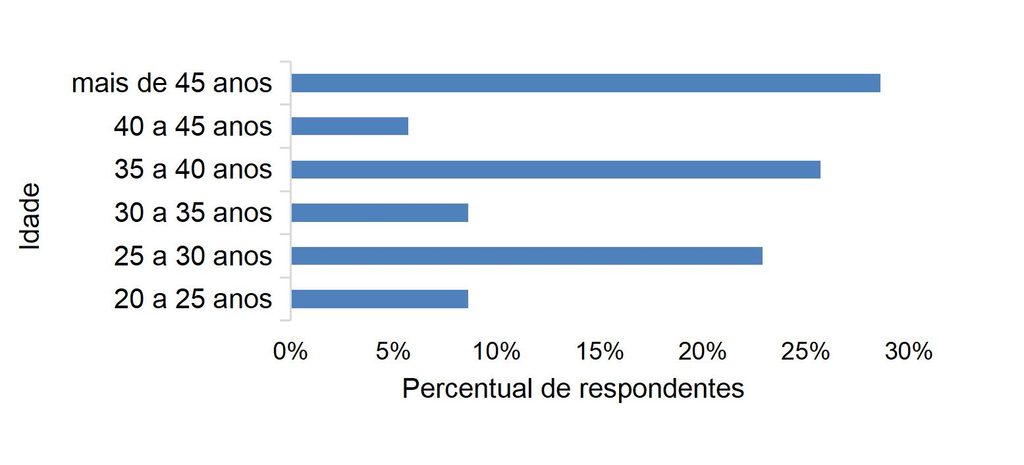
The analyses presented are the results obtained from the responses of 35 professionals working in software implementation for the industry. The sociodemographic profile of the participants revealed that the majority identified as male (65.7%), while 34.3% identified as female. Regarding age, most (28.6%) are over 45 years old, followed by 25.7% in the 35 to 40 age group and 22.9% between 25 and 30 years old. The 20 to 25 years and 30 to 35 years age groups represented 8.6% each, and 5.7% were between 40 and 45 years old.
Figure 1. Percentage composition of the sample by age group
Source: Original research results
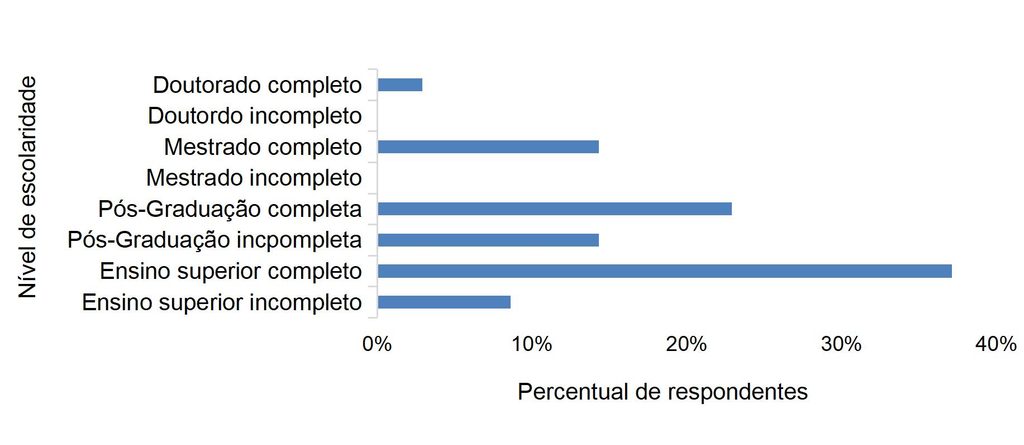
Regarding education, 37.1% of participants have completed higher education, and 22.9% have completed postgraduate studies. Completed master’s degrees or incomplete postgraduate studies each represented 14.3%. Only 8.6% do not have completed higher education, and 2.9% have completed doctorates.
Figure 2. Percentage composition of the sample by schooling
Source: Original research results
The predominant training area (88.6%) is Information Technology, Engineering, and related areas, with 11.4% of respondents coming from Administration, Human Resources, Law, Finance, and areas related to business management. There was no training in health and education areas. In terms of experience in the role of software implementer, 40% have more than 10 years, 31.4% work between 3 and 6 years, 20% between 1 and 3 years, 5.7% for less than 1 year, and 2.9% between 6 and 9 years.
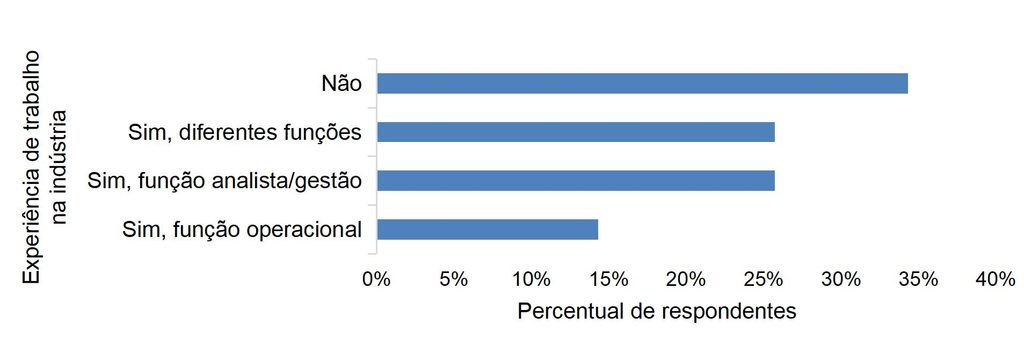
Regarding previous experience in industries before working as a software implementer, 34.3% had no experience. Those with experience as analysts or in administrative roles represented 25.7% each, while 14.3% worked directly on the factory floor.
Figure 3. Percentage composition of the sample in relation to work experience in the industry
Source: Original research results
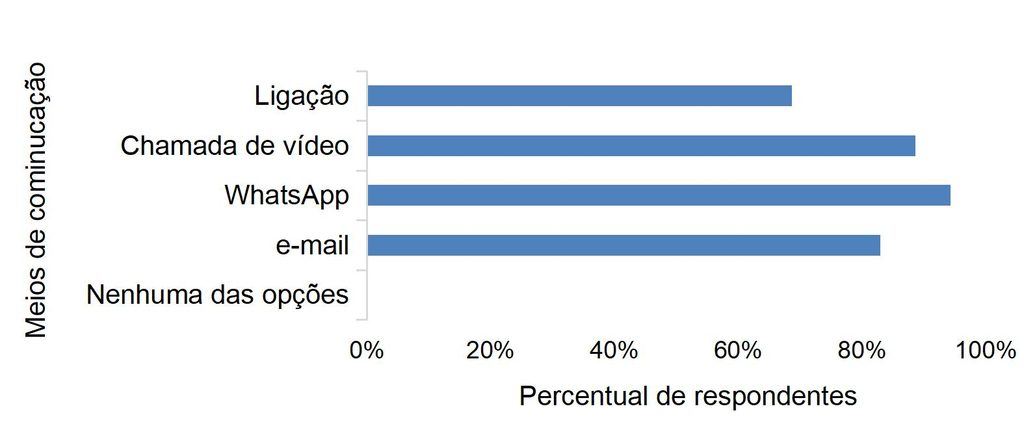
The predominant work modality is hybrid (42.9%), with up to 3 in-person days, followed by remote work (37.1%) and in-person (20%). The majority of respondents (91.4%) are accustomed to working with clear goals, and almost all (97.1%) use structured schedules to manage implementation deadlines. Effective communication with clients is a crucial task, especially in remote implementations (Charam et al., 2018). The most used and comfortable communication channels are WhatsApp (94.3%), video calls (88.6%), email (82.9%), and phone calls (68.6%).
Figure 4. Media in which respondents feel comfortable using for communication with clients during software deployment work
Source: Original research results
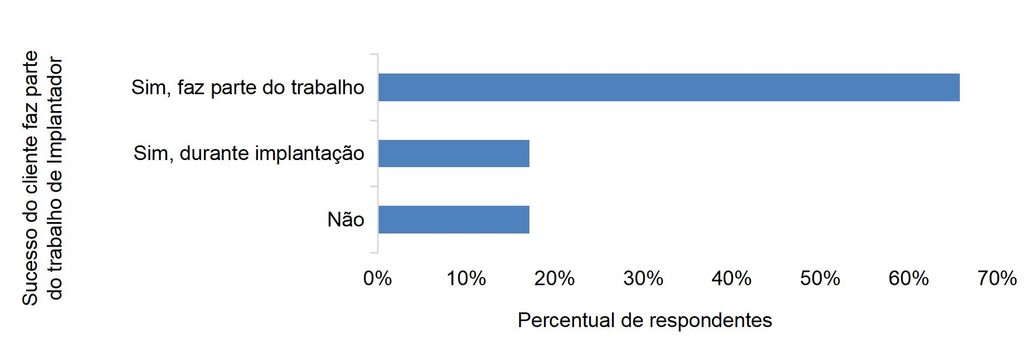
Regarding deployment trips, 57.1% perform both remote and in-person, 22.9% do 100% remote deployments, and 20% conduct all in-person. The majority (74.3%) of deployers provide training both in-person and online, 14.3% only online, and 8.6% only in-person. Only 2.9% do not provide training. Technical support and Customer Success (CS) are often part of the responsibilities: 57.1% of respondents provide support during and after deployment, 31.4% only during deployment, and 11.4% do not consider it part of their duties. For 65.7%, ensuring customer success is a responsibility that extends beyond the deployment project.
Figure 5. Percentage composition of the sample regarding the implantor’s responsibility to execute Customer Success activities
Source: Original research results
The predominant profile of software implementers is male, over 45 years old, with a higher education in Engineering or Information Technology, and more than 10 years of experience in the role, with a history of working in the industry. These professionals demonstrate familiarity with goal and schedule management, prefer hybrid work, and use remote communication, especially WhatsApp. Furthermore, they perform training, technical support, and customer success activities, indicating a multifaceted scope of work.
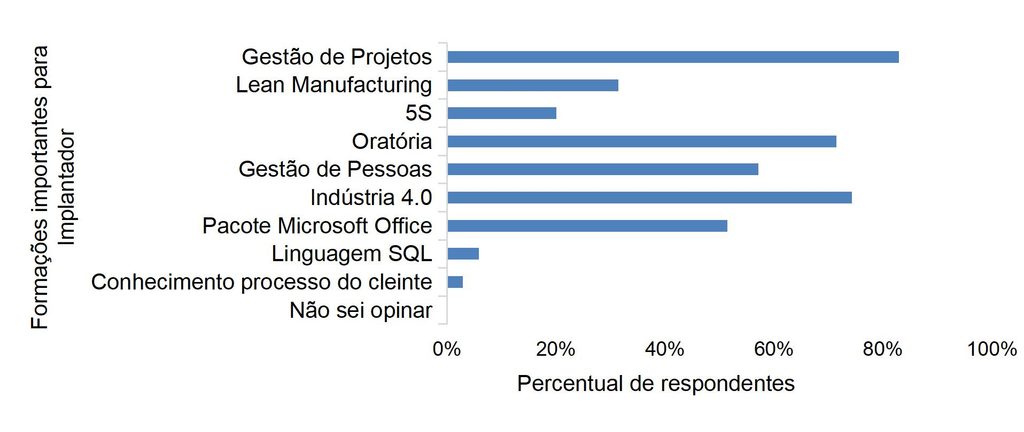
Regarding technical knowledge, 45.7% of respondents have no experience or training in Lean Manufacturing, while 28.6% have taken a course and 17.1% have practical experience. The training considered most important for the role are Project Management (82.9%), Industry 4.0 (74.3%), Public Speaking (71.4%), and People Management (57.1%). Knowledge of the Microsoft Office Suite (51.4%), Lean Manufacturing (31.4%), and 5S (20%) were also mentioned. SQL language (5.8%) and knowledge of the customer management process (2.9%) were added as other relevant training.
Figure 6. Percentage composition of the sample regarding knowledge considered important for the software implementer
Source: Original research results
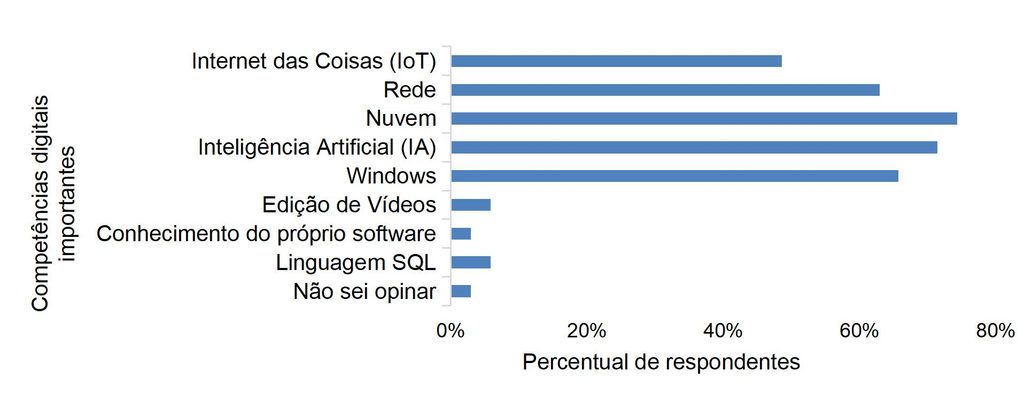
Important digital skills include knowledge about cloud (74.3%), Artificial Intelligence (71.4%), Windows (65.7%), networking (62.9%), and Internet of Things (48.6%). Video editing (5.7%), knowledge of the software itself (2.9%), and SQL language (5.8%) were mentioned as other skills.
Figure 7. Percentage composition of the sample regarding digital skills considered important for the software implementer
Source: Original research results
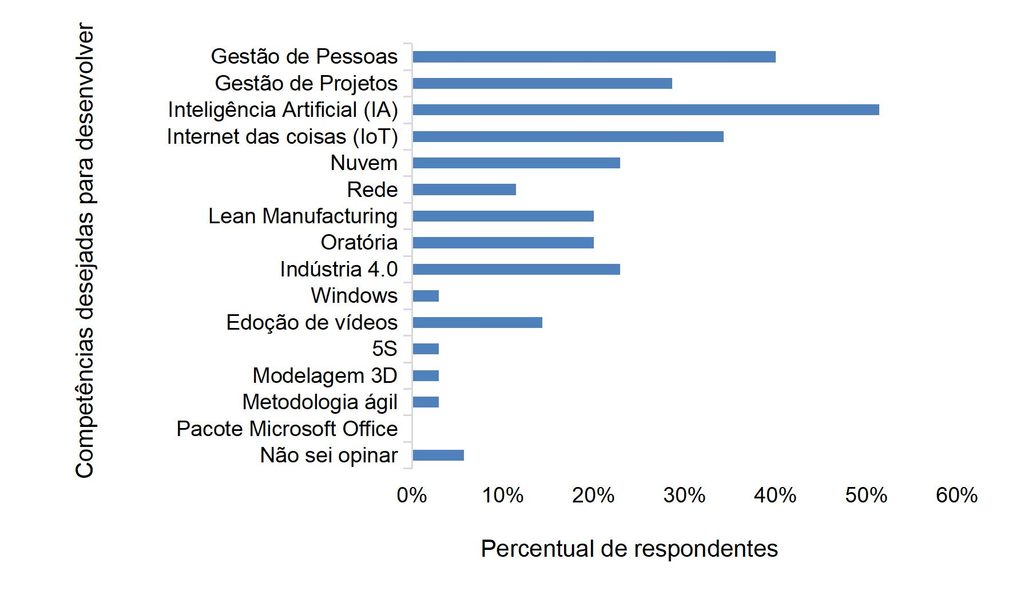
Respondents showed interest in developing skills in Artificial Intelligence (51.4%), People Management (40%), Internet of Things (34.3%), and Project Management (28.6%). Cloud and Industry 4.0 were desired by 22.9% each. Other desired skills included Public Speaking (20%), Lean Manufacturing (20%), video editing (14.3%), networking (11.4%), 5S (2.9%), and Windows (2.9%). 3D Modeling and Agile Methodology were cited by 2.9% each. There was no interest in developing skills in the Microsoft Office Suite.
Figure 8. Percentage composition of the sample regarding the skills and training they would like to develop
Source: Original research results
The skills considered extremely important for the role, according to free-text responses, were categorized and included interpersonal relationships, communication and expression, psychology and body language, analytical skills and problem-solving, tools and organization, management, empathy and customer focus, creativity and innovation, and technical knowledge.
Table 1. Competencies used in the software implementer’s job and considered of extreme importance by the respondents
| Category | Competence |
|---|---|
| Interpersonal Relationship | Interpersonal relationship |
| Interpersonal Relationship | Transferable skills, interpersonal abilities |
| Interpersonal Relationship | Conflict Management between System Need and Adherence in Sectors |
| Communication and Expression | Communication, persuasion, technical knowledge |
| Communication and Expression | Communication and projects |
| Communication and Expression | Oratory |
| Communication and Expression | Listen and understand |
| Psychology and Body Language | Body language and psychology |
| Analytical Capacity and Resolution | Problem Solving and quick answers |
| Analytical Capacity and Resolution | Mathematical modeling and programming |
| Tools and Organization | Tool for controlling meetings and monitoring implementation |
| Tools and Organization | Agile methodologies |
| Management | Project management |
| Management | Conflict Management |
Source: Original research results
The analysis of the skills cited by respondents reinforces the importance of a versatile profile, which integrates technical knowledge in programming languages and analytical capacity with interpersonal relationship, communication, and management skills.
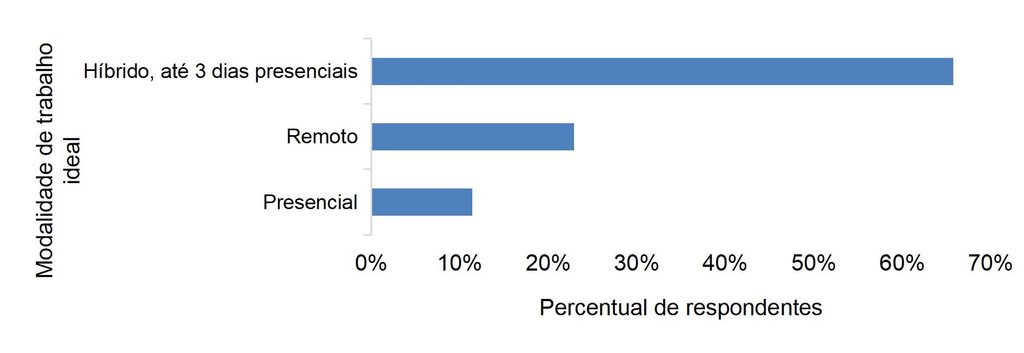
The ideal work modality for the software implementer role, according to 65.7% of respondents, is the hybrid model with up to 3 days in person. Remote work was considered ideal by 22.9%, and in-person by 11.4%. The preference for the hybrid model is notable, given that 37.1% of respondents already work remotely.
Figure 9. Percentage composition of the sample regarding the ideal work modality for the software implementer role
Source: Original research results
The main soft skills listed by respondents, in categories such as Leadership and Management, Problem Solving and Critical Thinking, Communication and Relationship, and Resilience and Adaptability, highlight the need for interpersonal and behavioral skills.
Table 2. Main soft skills listed by survey respondents
| Category | Competence |
|---|---|
| Leadership and Management | Leadership |
| Leadership and Management | People Management |
| Leadership and Management | Process Management |
| Leadership and Management | Project Management |
| Leadership and Management | Team Management |
| Leadership and Management | Didactics and teaching ability |
| Leadership and Management | Organization and time management |
| Resolution and Critical Thinking | Problem solving |
| Resolution and Critical Thinking | Critical thinking |
| Resolution and Critical Thinking | Curious |
| Resolution and Critical Thinking | Persistent |
| Resolution and Critical Thinking | Analyst |
| Communication and Relationship | Clarity in communication |
| Communication and Relationship | Empathy |
| Communication and Relationship | Networking |
| Communication and Relationship | Negotiator |
| Communication and Relationship | Communication |
| Communication and Relationship | Altruism |
| Communication and Relationship | Patience |
| Communication and Relationship | Parsimony |
| Communication and Relationship | Organized |
| Communication and Relationship | Dynamic |
| Communication and Relationship | Listen |
| Communication and Relationship | Oratory |
| Communication and Relationship | Teamwork |
| Resilience and Adaptability | Resilience |
| Resilience and Adaptability | Adaptability |
| Resilience and Adaptability | Flexibility |
Source: Original research results
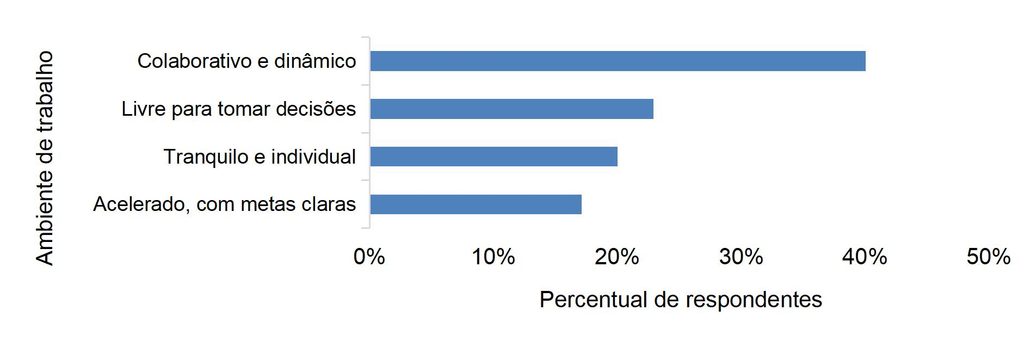
Regarding the work environment, 40% of respondents feel more productive in a collaborative and dynamic environment, 22.9% with the freedom to make decisions, 20% in a quiet and individual environment, and 17.1% in a fast-paced environment with clear goals.
Figure 10. Percentage composition of the sample regarding the work environment in which they feel most productive
Source: Original research results
To deal with work stress, 42.9% seek relaxation and well-being activities, 28.6% practice physical activities or hobbies, and 20% seek support from colleagues and superiors. Only 8.6% isolate themselves and seek individual solutions. The majority (57.1%) consider execution and organization as their main area of strength, while analysis and planning, and creation and innovation, represent 17.1% each. Leadership and People Management were cited by 8.6%.
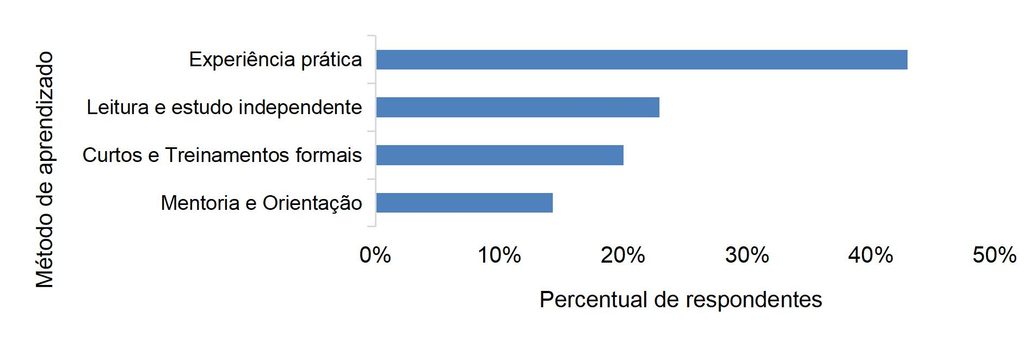
The preference for learning new things at work is led by practical experience (42.9%), followed by independent reading and study (22.9%), formal courses and training (20%), and mentoring and guidance (14.3%).
Figure 11. Percentage composition of the sample regarding preference for new teaching methods at work
Source: Original research results
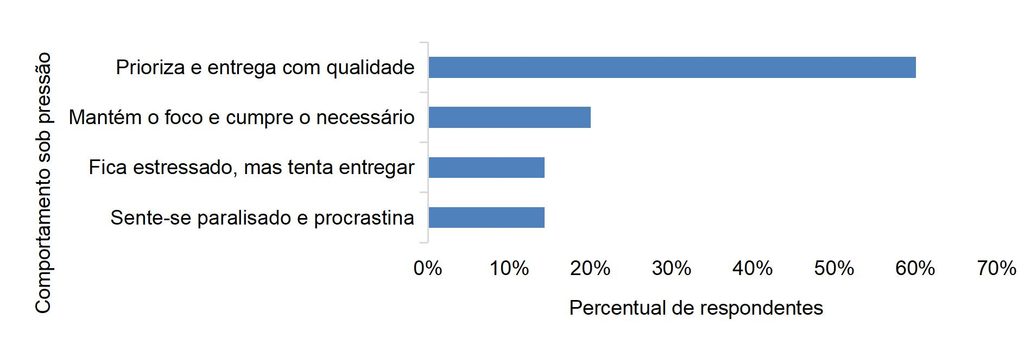
When faced with problems at work, 82.9% of respondents propose solutions to their manager before acting. In teamwork, 82.9% have a participatory and active stance. Faced with short deadlines and high pressure, 60% manage to organize priorities and deliver with quality. Regarding task and deadline management, 60% use their own methods and meet most deadlines, and 28.6% plan well. When under pressure, 42.9% communicate clearly and try to maintain a good atmosphere, and 40% maintain good humor and help colleagues.
Figure 12. Percentage composition of the sample regarding the reaction to short delivery times and high work pressure
Source: Original research results
The results show that the majority of respondents work in an organized, resilient, and proactive manner, seeking solutions and actively contributing to the team. Attracting and retaining talent for the software implementer role depends on a clear and realistic job description (Thakur and Israel, 2025; Shinde, 2025), which aligns the professional’s expectations with the demands of the role and promotes a collaborative and organized environment.
The ideal profile of the professional sought in the market is one with a degree in engineering or related areas, who integrates knowledge of software and production processes, masters emerging digital technologies, possesses Project Management, communication, and collaboration skills. They are a proactive, resilient, autonomous problem-solver with a strong predisposition for continuous learning. Although technical backgrounds are predominant, the demand for interpersonal skills is strong, being essential for interaction with clients, project management, and conflict resolution. For most, client success is a direct responsibility of the implementer, expanding the scope of the role and the importance of interpersonal skills.
The interest of professionals in developing diverse skills points to the need for well-defined growth and development paths (Shiri et al., 2024). The preference for the hybrid work model is a consolidated trend and a strategic factor for attracting and retaining talent (Tahlyan et al., 2024; Choudhury et al., 2022). Previous industry experience is a differentiator, contributing to problem-solving and greater identification with clients.
Proposal of Competencies to be incorporated into the Individual Development Plan (IDP)
The proposal aims to integrate strategic organizational and functional competencies with employee interests, making the IDP attractive and functional. It is based on research findings, highlighting technical competencies (Industry 4.0, Project Management), interpersonal skills, and digital knowledge (Artificial Intelligence, cloud computing), in addition to valuing autonomy, collaborative work, and practical learning. The 70–20–10 model of development is recommended: 70% from practical experiences, 20% from mentoring and team exchanges, and 10% from formal training.
Table 3 presents the proposed themes for the PDI, organized by priority level and relevance for the performance of the function.
Table 3. Proposed skills to be incorporated into the Individual Development Plan of the software implementer
| Competency axis | Competence | Interest/Importance for respondents | Priority level | Development objective |
|---|---|---|---|---|
| Project Management | Project Management | 82,9% | Very High | Plan, execute, and control industrial and technology projects |
| Digital Transformation | Industry 4.0 | 74,3% | Very High | Apply concepts of digitalization and manufacturing integration |
| Professional Communication | Oratory | 71,4% | Very High | Improve communication, presentations, and professional influence |
| Management and Leadership | People Management | 57,1% | High | Develop leadership, team management, and engagement |
| Emerging Technologies | Artificial Intelligence | 51,4% | High | Apply AI for industrial data analysis and process automation |
| Industrial Technology | Internet of Things (IoT) | 34,3% | Average | Integrate industrial devices, sensors, and systems |
| Process Improvement | Lean Manufacturing | 31,4% | Average | Apply continuous improvement and waste elimination |
| Digital Infrastructure | Cloud Computing | 22,9% | Low | Understand cloud architecture and systems integration |
Source: Original research results
The results indicate that the profile of the software implementation professional in the industry is characterized by a balanced combination of technical competencies and interpersonal skills, highlighting the complexity and multidisciplinary nature of the role. The implementer acts as a strategic agent in digital transformation, integrating technology, production processes, and customer relationships. Although technical backgrounds predominate, success in the role is strongly associated with the mastery of behavioral competencies, such as communication, empathy, problem-solving, and adaptability. The performance of these professionals often extends beyond the technical scope, including support, training, and ensuring customer success, which reinforces the need for a systemic and results-oriented vision. The valuation of competencies related to Industry 4.0, Project Management, and emerging technologies, such as Artificial Intelligence and cloud computing, highlights the demand for continuous updating and professional development. The implementation of structured Individual Development Plans (IDP) is fundamental to align organizational interests and needs, contributing to talent engagement and retention. The preference for the hybrid work model and collaborative environments indicates a consolidated trend, which should be considered by organizations as a strategic factor in attracting and retaining qualified professionals. The mapping of this profile contributes to People Management, providing subsidies for more assertive recruitment, selection, and development processes, aiming to reduce turnover, increase project efficiency, and strengthen competitiveness in the context of industrial digital transformation.
4. Conclusion
The present study aimed to map the profile of professionals involved in the implementation of software for industries, seeking to support people management guidelines, such as recruitment, selection, and talent retention. A predominant profile was found among professionals with a background in Engineering and Information Technology, significant experience in the role, and familiarity with management by objectives and schedules. It was identified that these implementers play a multifaceted role, encompassing training, technical support, and ensuring customer success. The valuation of knowledge in Project Management, Industry 4.0, and emerging digital technologies, such as Artificial Intelligence and cloud computing, was observed. Additionally, a strong demand for interpersonal skills was noted, including communication, empathy, problem-solving, and adaptability, essential for client interaction and project management. The professionals demonstrated a preference for hybrid work models, collaborative environments, and practical, experience-based learning.
The main contribution of this work lies in providing concrete subsidies for people management, allowing organizations to develop more assertive recruitment, selection, and development strategies. By aligning the professional’s profile with the job requirements, it is possible to reduce turnover and increase the efficiency of implementation projects. The proposal of competencies for the Individual Development Plan (IDP), based on the findings, integrates employee interests with organizational needs, promoting engagement and talent retention. The valorization of the hybrid work model and collaborative environments constitutes a strategic factor for attracting and retaining qualified professionals, reinforcing competitiveness in the industrial digital transformation scenario.
Bibliographic References
Aires, R. W. A.; Moreira, F. K.; Freire P. S. 2017. Indústria 4.0: competências requeridas aos profissionais da quarta revolução industrial. VII Congresso Internacional de Conhecimento e Inovação, Foz do Iguaçu, PR, Brasil.
Bianchet, V.; Mahl, A. C. 2018. Causas e consequências do alto índice de rotatividade organizacional. Anuário de Pesquisa e Extensão UNOESC, São Miguel do Oeste, SC, Brasil.
Carvalho, M. L. L.; Cruz, P. S.; Almeida, E. S.; Neto, P. A. M. S.; Priklandnicki, R. 2024. Please don’t go: understanding turnover of sofware engineers from different perspectives.
Charan, R.; Drotter, S.; Noel, J. 2018. Pipeline de liderança: o desenvolvimento de líderes como diferencial competitivo. Sextante, Rio de Janeiro, RJ, Brasil.
Choudhury, P.; Khanna, T.; Makridis, A.; Schirmann, K. 2022. Is hybrid work the best os both worlds? Evidence from a field experiment, Revista Harvard Business School, Working paper 22-063.
Creswell, J. W. 2010. Projeto de pesquisa: métodos qualitativo, quantitativo e misto. 3. ed. Artmed, Porto Alegre, RS, Brasil.
Gil, A. C. 2008. Métodos e técnicas de pesquisa social. 6. ed. Atlas, São Paulo, SP, Brasil.
Richardson, R. J. 1999. Pesquisa social métodos e técnicas. 3. ed. Atlas, São Paulo, SP, Brasil.
Shinde, S. 2025. Role ambiguity and employee well-being: The critical need for clear job descriptions. Revista KIJAHS, Índia. ISNN: 2348-4349. V12: 6-13.
Shiri, R.; El-Metwally, A.; Sallinen, M.; Pöyry, M.; Härmä, M.; Toppinen-Tanner, S. 2023. The Role of Continuing Professional Training or Development in Maintaining Current Employment: A Systematic Review. Healthcare 2023, 11, 2900. https://doi.org/10.3390/healthcare11212900.
Tahlyan, D.; Mahmassani, H.; Stathopoulos, A.; Said, M.; Shaheen, S.; Walker, J.; Johnson, B. 2024. In-person, hybrid or remote? Employers’ perspectives on the future of work post-pandemic, Transportation Research Part A: Policy and Practice, Volume 190, ISSN 0965-8564, https://doi.org/10.1016/j.tra.2024.104273.
Tamayo, A. 2020. Prioridades Axiológicas e Satisfação no Trabalho. Revista de Administração, São Paulo, SP, Brasil. 35 (2): 37-47.
Thakur, U.; Israel R. A. 2025. From clarity to competence: The role of information qualityin job descriptions on attracting the right talent. Revista Accountancy Business and the Public Interest, UK. ISSN: 1745-7718: 106-139.
Article originating from the Final Course Work of the Specialization in People Management of the MBA USP/Esalq
To learn more about the course, click here and access the MBX Academy platform