
October 15, 2026
The Role of People Analytics in the Strategic Evolution of People Management
Ana Caroline Marçal Rezende; Simone Kunde
DOI: 10.22167/2675-6528-202602352
Article derived from a Term Paper (TCC), with content based on the student’s original work and adapted to the editorial format of the E&S Magazine with the support of the ResumeAI tool, an artificial intelligence solution developed by the Pecege Institute for textual synthesis and organization.
Summary
The Human Resources area has undergone significant transformations, driven by digitalization and technological advances in management, seeking to reposition itself strategically. In this context, People Analytics has emerged as an approach to support decisions with data and analysis, replacing intuition. It was analyzed how the use of People Analytics contributes to the evolution of the HR role from an operational to a strategic function, identifying benefits and barriers based on the perception of professionals working in different organizations. An applied, descriptive, and predominantly quantitative research was conducted, complemented by qualitative analysis. A structured questionnaire was used, disseminated on professional networks and HR and People Analytics communities. The non-probabilistic convenience sample consisted of 127 HR, People Analytics, and People Management professionals, whose data were analyzed by descriptive statistics and content analysis. The results indicated that larger companies and more digitized sectors concentrated more structured People Analytics practices, while medium and small organizations remained in the initial phases. Among the main benefits, support for leadership in decision-making and greater assertiveness in recruitment and selection processes stood out. The most mentioned barriers involved the absence of a data-driven culture, the lack of skilled professionals, and the lack of integration between systems. It was concluded that, despite the observed advances, the consolidation of People Analytics remains conditioned by cultural, technological, and leadership factors, essential for transforming data into strategic decisions.
Keywords: Data Analysis; Strategy; People Management; People Analytics; Human Resources.
1. Introduction
In recent decades, the Human Resources (HR) area has undergone significant transformations, driven by both technological advancements and the increasing complexity of organizations. Traditionally, HR was seen as an essentially administrative and operational function, focused on executing bureaucratic processes. This framework reinforced the image of HR as a support area, with limited action in routine control and distant from the formulation of organizational strategies (Becker et al., 2001). However, as the corporate environment became more competitive, globalized, and volatile, the need emerged to reposition the area as a strategic partner, capable of contributing to high-impact decisions and the sustainable development of companies (Ulrich, 1997; Ulrich et al., 2009).
This transformation process did not occur immediately or linearly. One of the factors that hindered this transition was the historical inability to measure HR’s concrete contribution to business results. The absence of consistent metrics prevented the area from proving its value, resulting in decisions based on intuition and individual experiences, rather than on analytical evidence (Marler and Boudreau, 2016). In this context, People Analytics emerges as an innovative approach, which uses data and analysis to transform People Management and provide strategic legitimacy to HR.
People Analytics can be defined as the systematic use of statistical methods, algorithms, and technological tools to collect, organize, and interpret data related to people in the organizational environment. More than generating reports, the proposal is to transform data into actionable insights that help leaders and managers make more precise, evidence-based decisions aligned with business strategy (Marler and Boudreau, 2016). It is a movement that seeks to overcome intuitive decision-making, replacing it with objective analyses capable of anticipating scenarios, reducing risks, and improving talent allocation. The effectiveness of People Analytics, however, depends on a cultural and mindset change. Data needs to be analyzed from the organization’s strategic issues, with clear governance, competencies, and purposes, and not just collected in a scattered manner (Angrave et al., 2016).
The adoption of People Analytics has been consolidated in various companies around the world. Marr (2018) shows that the main contribution of People Analytics is to transform HR into a relevant player in strategic discussions, legitimizing its decisions before senior management. However, the implementation of this practice does not occur homogeneously. Marler and Boudreau (2016) argue that People Analytics should be understood as a maturity spectrum. At the most basic level, analyses are essentially descriptive, limited to indicators such as absenteeism and turnover. At the intermediate stage, diagnostic analyses emerge, capable of identifying causes for certain phenomena. The more advanced levels involve predictive analyses, which anticipate risks and trends, and prescriptive analyses, which suggest specific actions to be taken. Van den Heuvel and Bondarouk (2017) add that maturity in this practice depends on the integration of three dimensions: technological infrastructure, data-driven culture, and alignment with organizational strategy. Another point highlighted by the literature is the distinction between operational indicators and strategic metrics. While the former measure internal processes and administrative routines, strategic metrics evaluate the impact of people management on business results. Becker et al. (2001) maintain that HR effectiveness should be measured by its direct contribution to organizational performance. Rasmussen and Ulrich (2015) observe that many companies still remain stuck in measuring activities, without fully exploring the potential of data to support strategic decisions. This limitation reinforces the need to evolve towards indicators that demonstrate real impact, such as the cost of turnover on profitability, the correlation between engagement and innovation, or predictions of attrition risk in critical areas.
Despite the advantages, the literature points to several obstacles to the consolidation of People Analytics. Angrave et al. (2016) identify that, even in organizations with a large volume of data and access to advanced tools, the absence of an evidence-oriented culture can compromise the success of the practice. Managers’ resistance to replacing their experience with statistical analyses and a lack of trust in the data are recurring barriers. Another difficulty is the scarcity of qualified professionals to transform information into relevant analyses. Often, HR professionals lack sufficient statistical training or technical knowledge, which limits their ability to interpret data strategically. Davenport et al. (2010) highlight that the presence of leaders with an analytical mindset is decisive in overcoming these barriers and making People Analytics an organizational routine.
Given this panorama, the present study sought to contribute to the academic literature and, at the same time, offer practical subsidies for managers and professionals in the area, broadening the understanding of the role of data usage in building an HR more aligned with the strategic demands of the business. The objective was to analyze how the use of People Analytics contributes to the evolution of the HR role from an operational function to a strategic one, identifying benefits, barriers, and critical success factors from the perception of professionals from different companies.
2. Material and Methods
This study is characterized as an applied research, descriptive in nature, with a predominantly quantitative mixed approach, complemented by qualitative analysis. The descriptive research sought to detail the characteristics of the use of People Analytics in people management, identifying patterns, practices, and perceptions of professionals from different sectors and organizational sizes (Gil, 2019; Lakatos and Marconi, 2017). The mixed approach, according to Creswell (2014), integrated numerical data and textual interpretations for an expanded understanding of the phenomenon, without configuring a fully mixed design. The quantitative analysis provided an overview of the adoption of People Analytics, while the qualitative analysis explored subjective perceptions (Flick, 2009; Bardin, 2011).
The methodological design adopted was the survey (data collection), used to gather information from a specific group of professionals over a given period (Yin, 2015). The data collection instrument was a structured questionnaire, developed from a literature review on People Analytics and strategic Human Resources management. The questionnaire was organized into thematic blocks: (i) professional profile and organizational characteristics; (ii) data usage practices in people management; (iii) perceptions of the impacts of People Analytics; and (iv) main barriers and critical success factors. At the end, an open-ended question was included for descriptions of experiences and recommendations.
The instrument was developed on the Google Forms platform and disseminated online, mainly on professional networks such as LinkedIn and in HR and People Analytics communities. The invitation was shared within the researcher’s contact network and in thematic communities, without prior segmentation by sector or size. The data collection process lasted 37 days, targeting professionals active in HR, People Analytics, or people management at the time of the research.
The sample consisted of 127 valid respondents, being configured as non-probabilistic by convenience, due to voluntary participation and dependence on accessibility. Although it does not allow for statistical generalization, the sampling was adequate for the descriptive objectives of the study (Gil, 2019). The greater representativeness of segments such as technology, services, and financial, and of some areas of action in HR, was a consequence of the dissemination channel and is recognized as a limitation of the study, despite having broadened the diversity of perspectives.
Regarding the ethical aspects, all participants were informed about the research objectives and invited to agree to the Free and Informed Consent Form (FICF). The questionnaire explicitly stated the voluntary nature of participation, the guarantee of anonymity and confidentiality, and the exclusive use of information for academic purposes, without requesting personally identifiable data.
The data analysis occurred in two stages. Firstly, the quantitative analysis used descriptive statistics, with tables of absolute and relative frequencies, bar charts, and descriptive cross-tabulations between variables such as company size, People Analytics adoption stage, sector, impacted HR areas, position, and perception of HR’s strategic role. This stage sought to map trends and patterns without resorting to inferential techniques. Subsequently, the qualitative analysis was performed using the content analysis technique (Bardin, 2011), comprising pre-analysis, content exploration with categorization into thematic axes (benefits, barriers, and future perspectives of People Analytics), and treatment and interpretation, relating the categories to the theoretical framework. The articulation between descriptive statistics and content analysis allowed for quantifying the adoption stage and understanding professionals’ interpretations of benefits, challenges, and success factors.
3. Results and Discussion
The research involved the participation of 127 Human Resources, People Analytics, and People Management professionals, from technical specialists to leaders, allowing for a multifaceted understanding of the application and use of data, both in traditional HR operations and in the emerging specialization in data analysis, which strategically repositions the area.
Among the participants, 40.9% were HR professionals, 38.6% were People Analytics specialists, 18.1% were managers or leaders, and 1.6% were C-level executives. This profile indicated the incorporation of analytical skills in HR, aligned with the vision of Ulrich et al (2009) and Becker et al (2001) regarding HR’s legitimacy through influence at different hierarchical levels. The technology sector predominated in the sample (29.9%), followed by services (18.9%), industry (15.7%), and finance (8.7%). Technology professionals (71%) reported frequent use of data for strategic decisions, surpassing healthcare (43%) and industry (51%), suggesting that digitized environments internalize analytical practices more rapidly (Marler and Boudreau, 2016). A respondent from the technology sector mentioned the adoption of predictive dashboards for greater accuracy in talent allocation. Organizational size also proved relevant, with 60.6% of participants in large companies, and 18.9% in medium and small ones. Large companies (64%) showed higher structured adoption of People Analytics, in contrast to small (22%) and medium (28%) ones. Small companies (31%) were often restricted to operational indicators, and 17% did not use analytics, corroborating the relationship between analytical maturity and structural resources (Van den Heuvel and Bondarouk, 2017). A participant from a small company reported the difficulty in “organizing basic information in spreadsheets, without the capacity to evolve into something more predictive.” The complete sample profile is detailed in Table 1.
Table 1. Sample profile: position, sectors, and sizes
| Position | % | Sector | % | Bearing | % |
|---|---|---|---|---|---|
| People Management/HR Professional | 40,9% | Technology | 29,9% | Large (500+ employees) | 60,6% |
| People Analytics Professional | 38,6% | Services | 18,9% | Medium (100-499 employees) | 18,9% |
| Leader/Manager | 18,1% | Industry | 15,7% | Small (up to 99 employees) | 18,9% |
| C-Level/Executive | 1,6% | Financial | 8,7% | Not active in the market | 1,6% |
| Others | 0,8% | Health | 7,1% | ||
| Education | 3,1% | ||||
| Retail | 3,1% | ||||
| Others (<1% each) | 13,5% |
Source: Original research results
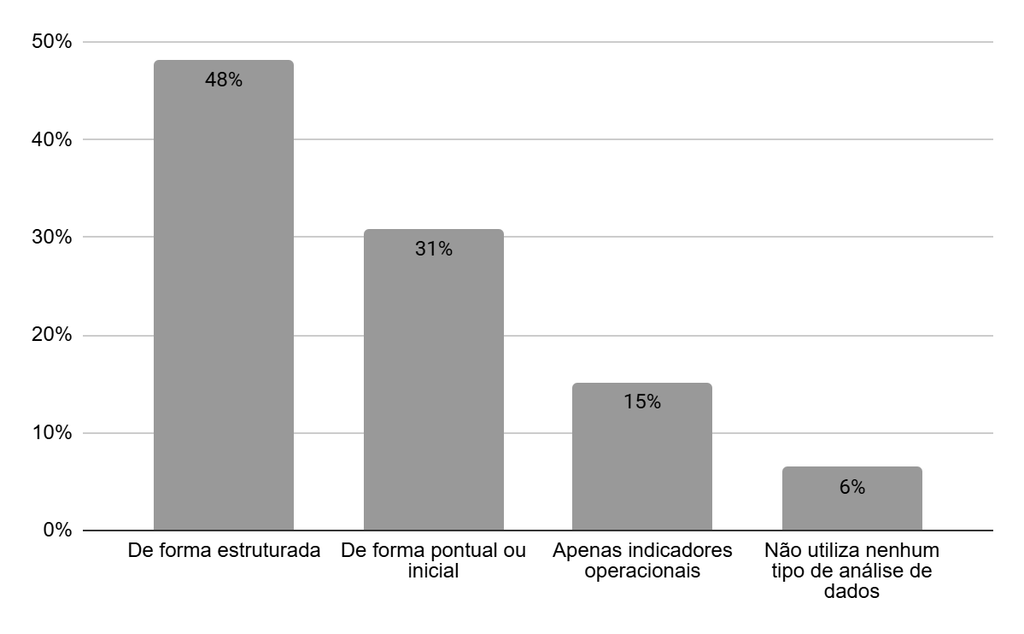
The analysis of the general stage of People Analytics adoption revealed that 48% of respondents used structured practices, 30.7% applied them initially or occasionally, 15% were limited to basic indicators, and 6.3% did not use any analysis. This heterogeneity reflects different maturity levels, according to the model by Davenport, Harris, and Shapiro (2010), which describes the progression from descriptive to prescriptive analytics. While large companies reported the use of predictive models in Python and dashboard construction, small companies highlighted the difficulty in organizing basic data. Figure 1 illustrates this distribution.
Figure 1. People Analytics adoption stage by the research sample
Source: Original research results
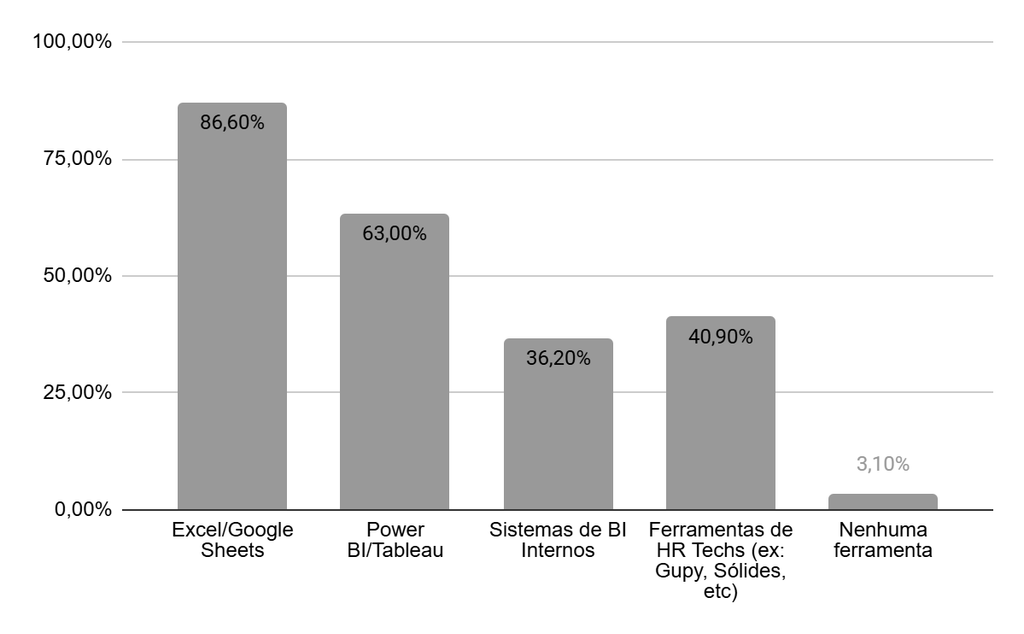
Regarding tools, 86.6% of participants used Excel or Google Sheets, although 63% also cited Power BI and Tableau. HR Tech tools (40.9%) and internal BI systems (36.2%) were also mentioned. This coexistence of advanced tools and traditional spreadsheets highlights the “analytics paradox” (Levenson, 2015), where technological availability does not ensure methodological maturity. One respondent noted that, even with licenses for robust tools, Excel still dominated usage. Figure 2 details the tools used.
Figure 2. Tools for data extraction and manipulation used
Source: Original research results
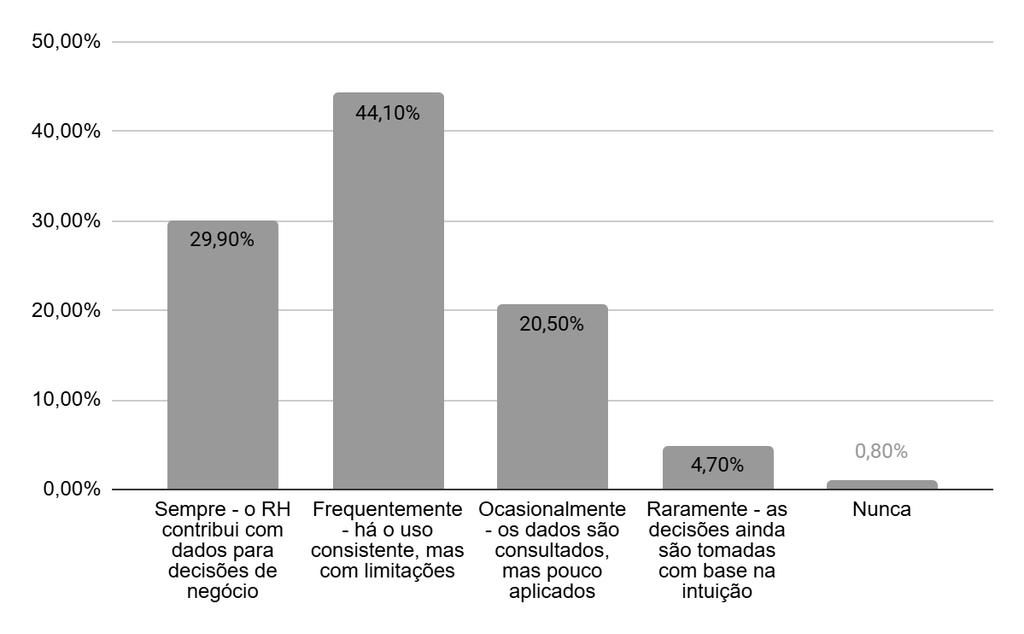
Regarding the use of data in strategic decisions, 74% of respondents stated that HR data is used always or frequently, 20.5% occasionally, and 5.5% rarely or never. These results indicate the perception of the strategic value of the practice, aligned with Ulrich et al (2009)’s vision on the influence of HR in critical decisions. Figure 3 illustrates this distribution. Analyzing the cross-tabulation between position and data usage, managers (82%) and People Analytics specialists (77%) showed a higher perception of integration, while HR professionals in operational roles presented lower frequency (63%). Sectors such as technology and finance exceeded 80% of frequent use, while healthcare remained below 45%. Table 2 details this relationship. Qualitatively, participants reported that decisions became more agile and informed, and that HR gained a strategic voice by presenting evidence, highlighting the cultural nature of the transformation.
Figure 3. Use of HR data in strategic decisions
Source: Original research results
Table 2. Position x Data usage in strategic decisions
| Position | Always or Frequently | Occasionally | Rarely or Never |
|---|---|---|---|
| C-Level/Executive | 100% | 0% | 0% |
| Leader/Manager | 82% | 18% | 0% |
| People Analytics Professional | 77% | 20% | 3% |
| HR Professional | 63% | 21% | 16% |
| Others | 100% | 0% | 0% |
Source: Original research results
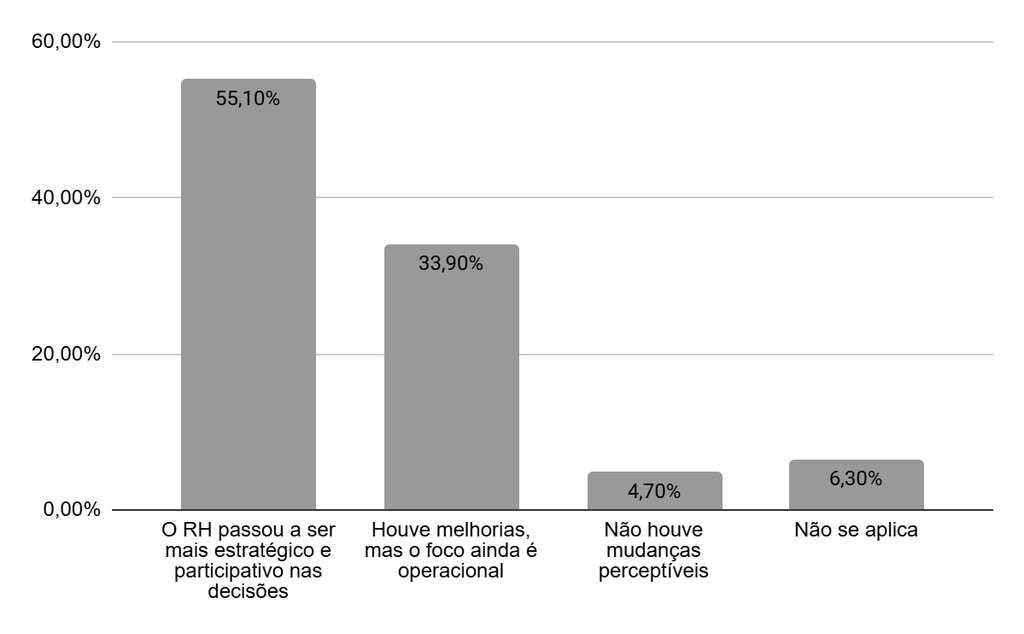
The perception of HR repositioning was also significant. Among those who use People Analytics in a structured way, 75.4% stated that HR has become more strategic and participatory. This percentage decreased to 38% among those who use only basic indicators and to 12% among those who do not use data. This suggests that People Analytics acts as a catalyst in valuing HR, transforming it from an operational to a strategic function, as discussed by Becker, Huselid, and Ulrich (2001). Figure 4 presents this perception.
Figure 4. Perception of the change in the role of HR with the use of data
Source: Original research results
The main perceived benefits included leadership support in decision-making (81.1%), improvement in hiring assertiveness (45.7%), increased productivity (29.9%), and reduced turnover (26%). These findings corroborate Levenson (2011) on cost and risk reduction through talent analytics. Qualitative testimonials indicated that the data assists leadership in focusing on critical areas and makes candidate selection more assertive. Table 3 summarizes these benefits. Cross-analysis revealed that large companies prioritized leadership support, while small and medium-sized ones valued hiring assertiveness. The technology sector emphasized retention and engagement, and the industry focused on productivity, demonstrating that the gains adapt to sectoral demands. Content analysis (Bardin, 2011) reinforced that leadership support is linked to quick and justifiable decisions, and hiring assertiveness stems from evidence-based profiles. Productivity gains and turnover reduction were associated with guiding analyses towards prioritizing demands and talent allocation. However, the effectiveness of these gains depends on reliable data, strategic clarity, and analytical skills.
Table 3. Perceived Benefits of People Analytics
| Benefit | Percentage (%) |
|---|---|
| Support for leadership in decision-making | 81,1% |
| Improvement in hiring assertiveness | 45,7% |
| Productivity increase | 29,9% |
| Turnover reduction | 26% |
| Not applicable | 3,2% |
| Others |
Source: Original research results
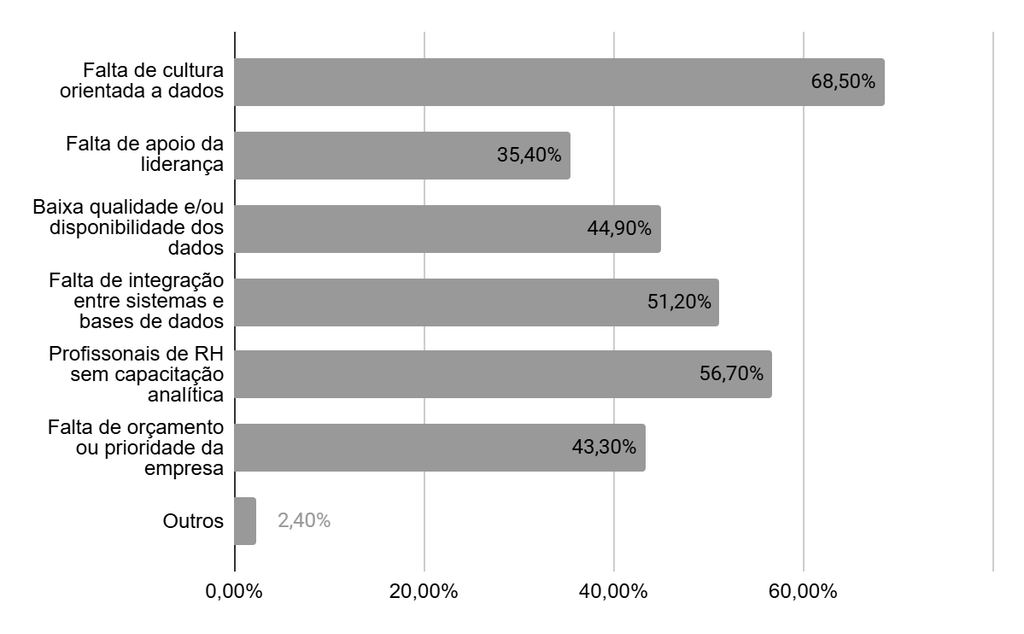
The barriers to adopting People Analytics were significant, with 68.5% of participants pointing to the absence of a data-driven culture. Other obstacles included a lack of skilled professionals (56.7%), lack of integration between systems (51.2%), low data quality (44.9%), budget constraints (43.3%), and lack of leadership support (35.4%). These obstacles, presented in Figure 5, indicate that the difficulties are predominantly cultural and organizational, according to Angrave et al (2016). Large companies reported more integration and quality problems, while small and medium-sized ones focused on budget constraints. Industry and healthcare highlighted cultural resistance, and technology, the lack of qualified professionals. Qualitative testimonials reinforced the lack of people to interpret data and the leadership’s preference for decisions based on personal experience. Table 4 details the barriers by size and sector.
Figure 5. Barriers to People Analytics adoption
Source: Original research results
Table 4. Size and sector x Barriers
| Barriers | Small (%) | Average (%) | Large (%) | Tech (%) | Services (%) | Industry (%) | Health (%) | Financial (%) |
|---|---|---|---|---|---|---|---|---|
| Lack of data-driven culture | 75% | 68% | 65% | 58% | 70% | 72% | 80% | 55% |
| Untrained professionals | 58% | 55% | 54% | 66% | 50% | 45% | 56% | 55% |
| Lack of integration between systems | 42% | 49% | 58% | 50% | 48% | 55% | 40% | 45% |
| Low data quality | 41% | 47% | 46% | 44% | 43% | 47% | 39% | 41% |
| Budget Constraint | 52% | 46% | 40% | 32% | 38% | 40% | 78% | 46% |
| Lack of leadership support | 33% | 31% | 36% | 30% | 35% | 38% | 29% | 33% |
Source: Original research results
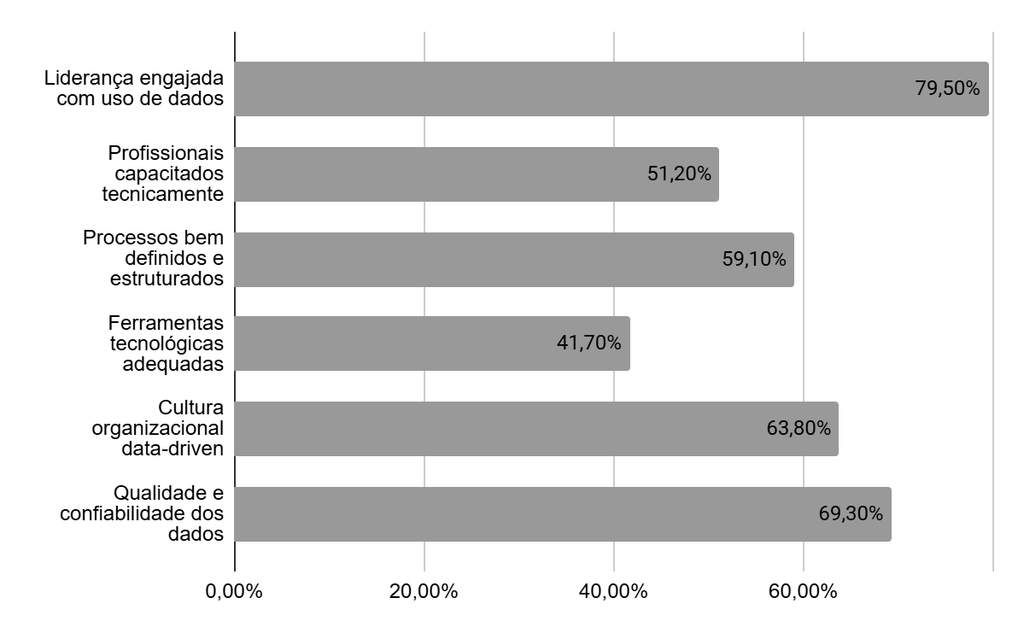
The critical success factors, presented in Figure 6, highlighted engaged leadership with data usage (79.5%), data quality and reliability (69.3%), and data-driven organizational culture (63.8%). This combination underscores the importance of executive sponsorship and methodological credibility, according to Davenport, Harris, and Shapiro (2010) and Minbaeva (2018). Managers valued leadership, specialists focused on data quality, and large companies prioritized culture and integration, while small and medium-sized enterprises emphasized team empowerment.
Figure 6. Critical success factors
Source: Original research results
The HR areas most impacted by People Analytics were recruitment and selection (79.5%), performance appraisal (67.7%), compensation (62.2%), climate and engagement (61.4%), and talent retention (55.9%). These results, detailed in Table 5, indicate a prioritization of functions that directly impact organizational competitiveness. The sectoral cross-analysis revealed that technology prioritized recruitment and retention, industry focused on performance and productivity, and services on engagement and compensation, aligning with the observation by Rasmussem and Ulrich (2015) that People Analytics is consolidating in strategic areas. Table 6 presents this distribution. The qualitative analysis (Bardin, 2011) reinforced that HR has gained a strategic voice and hiring has become more evidence-based, although cultural resistance and difficulty in consolidating data from different systems persist as barriers.
Table 5. Impacted HR Areas
| Impacted Area | Percentage (%) |
|---|---|
| Recruitment & Selection | 79,5% |
| Performance Evaluation | 67,7% |
| Compensation | 62,2% |
| Climate/Engagement Management | 61,4% |
| Talent Retention | 55,9% |
| Training & Development | 49,6% |
| Leadership Management | 48% |
| Succession Planning | 29,9% |
| None | 2,4% |
| Others (<1% each: journey, occupational health, DP, benefits and safety) | 0,8% |
Source: Original research results
Table 6. Sector x Impacted Areas
| HR Area Impacted | Technology (%) | Services (%) | Industry (%) | Financial (%) | Health (%) |
|---|---|---|---|---|---|
| Recruitment & Selection | 84,2% | 75% | 80% | 72,7% | 77,8% |
| Performance Evaluation | 76,3% | 54,2% | 65% | 90,9% | 66,7% |
| Compensation | 55,3% | 54,2% | 70% | 72,7% | 55,6% |
| Climate/Engagement Management | 60,5% | 54,2% | 55% | 81,8% | 55,6% |
| Talent Retention | 60,5% | 37,5% | 65% | 81,8% | 55,6% |
| Training & Development | 44,7% | 41,7% | 60,0% | 63,6% | 55,6% |
| Leadership Management | 44,7% | 41,7% | 60% | 45,5% | 66,7% |
| Succession Planning | 23,7% | 16,7% | 45% | 54,5% | 44,4% |
Source: Original research results
Regarding future perspectives, participants were emphatic in stating that companies that do not use data in people management will fall behind, and that the future of HR will be based on evidence, not intuition. These perceptions demonstrate the recognition of the current and future value of People Analytics for people management.
In summary, People Analytics is in a consolidation phase, with varying maturity among organizations, being more advanced in large companies and in the technology sector. Tangible benefits include support for leadership in decision-making and greater assertiveness in hiring, in addition to gains in productivity and reduction of turnover. However, barriers such as the absence of a data-oriented culture, lack of skilled professionals, lack of system integration, and budgetary constraints are still challenges, especially in smaller organizations and traditional sectors. The critical success factors pointed out were committed leadership, data quality and reliability, and the construction of a data-driven culture. The results indicate that People Analytics is perceived as a competitive differentiator and an irreversible trend for aligning people management with business strategies, contributing significantly to the strategic repositioning of HR, despite persistent cultural and structural barriers.
4. Conclusion
This study sought to analyze how the use of People Analytics contributes to the evolution of the HR role from an operational function to a strategic one. It was found that the adoption of People Analytics is in a consolidation process, with unequal levels of maturity among organizations. It was observed that large companies and the technology sector presented more structured practices, while smaller organizations and more traditional sectors are still in initial phases or restricted to basic indicators. Among the main findings, it was identified that People Analytics offers significant support to leadership in decision-making and improves assertiveness in recruitment and selection processes. Additionally, gains in productivity and reduction in turnover were observed, which reinforces the perception that the practice strengthens HR’s legitimacy and expands its participation in critical business decisions.
However, the research revealed significant barriers to the full consolidation of People Analytics, notably the absence of a data-oriented organizational culture, the lack of skilled professionals, and the lack of integration between systems. Such challenges, predominantly cultural and organizational, are more pronounced in smaller companies and traditional sectors. In contrast, the critical success factors pointed out included engaged leadership with the use of data, the quality and reliability of information, and the construction of a data-driven culture. The study contributes by mapping the current scenario of People Analytics adoption and by offering practical subsidies for managers. Limitations are recognized as the non-probabilistic nature of the sample, reliance on self-reported data, and the absence of longitudinal follow-up. For future studies, it is suggested to expand research on the topic and encourage practices that strengthen evidence-based people management, including longitudinal investigations to assess the evolution of analytical maturity.
Bibliographic References
Angrave, D.; Charlwood, A.; Kirkpatrick, I.; Lawrence, M.; Stuart, M. 2016. HR and analytics: why HR is set to fail the big data challenge. Human Resource Management Journal 26(1): 1-11.
Aqui está a lista bibliográfica final, gerada de acordo com as regras especificadas:
Becker, B.E.; Huselid, M.A.; Ulrich, D. 2001. The HR scorecard: linking people, strategy, and performance. Harvard Business School Press, Boston, MA, EUA. Disponível em: https://traicie.com/app/uploads/2022/10/The-HR-Scorecard -Linking-People-Strategy-and-Performance-PDFDrive-.pdf. Acesso em: 23 set. 2025.
M
Marler, J.H.; Boudreau, J.W. 2016. An Evidence-Based Review of HR Analytics. The International Journal of Human Resource Management 28(1): 3-26.
Ulrich, D. 1997. Human resource champions: the next agenda for adding value and delivering results. Harvard Business Press, Boston, MA, United States.
Ulrich, D.; Brockbank, W.; Younger, J.; Nyman, M.; Allen, J. 2009. HR Transformation: Building Human Resources from the Outside In. McGraw-Hill, New York, NY, EUA.
Article originating from the Final Course Work of the Specialization in People Management of the MBA USP/Esalq
To learn more about the course, click here and access the MBX Academy platform