
September 15, 2026
Information Consumption Habits and Attention in Animal Health: a Study with Professionals and Livestock Farmers
Juliana Ducca Vidigal; José Eduardo Vilas Bôas
DOI: 10.22167/2675-6528-202602244
Article derived from a Final Course Work (TCC), with content based on the student’s original work and adapted to the editorial format of the Revista E&S with the support of the ResumeAI tool, an artificial intelligence solution developed by the Pecege Institute for textual synthesis and organization.
Abstract
The growing hyperconnectivity and digitalization in agribusiness have generated an informational abundance that has overwhelmed professionals, making human attention a scarce resource and demanding more assertive communication strategies to combat cognitive fatigue. The perception and consumption habits of different forms and channels of communication, as well as their effects on attention and message retention among sales force professionals and clients in the animal health sector in livestock farming, were analyzed. To this end, a quantitative and descriptive study was conducted, using a survey with intentional non-probabilistic sampling. Primary data collection occurred in February 2026 at a multinational veterinary pharmaceutical company, with a final sample of 237 people, comprising 99 sales force professionals and 138 beef and dairy cattle ranchers. WhatsApp emerged as the predominant channel, and both groups preferred short, direct communications with visual support, rejecting long texts or videos. An attentional paradox was observed: the sales force received a high volume of work messages and rarely ignored them, resulting in high levels of stress and difficulty disconnecting (78.8%). In contrast, ranchers protected their attention, frequently ignoring (45%) long or strictly commercial content. It was concluded that communication effectiveness in agribusiness urgently requires format and frequency adjustments to the operational reality of each audience.
Keywords: Agribusiness; Cognitive fatigue; Hyperconnectivity; Cognitive overload.
1. Introduction
The growing digitalization has exponentially increased the volume of available information, at a speed that surpasses human capacity to fully absorb it. This abundance contributes to facilitated access in knowledge acquisition on different topics, agility in processes, real-time insights, and various forms of interaction, characterizing hyperconnectivity. This is a phenomenon in which individuals and organizations remain connected practically all the time and communicate with high frequency (Magrani, 2019). However, when there is a world rich in information, there will consequently be a scarcity of the resource it consumes: attention (Simon, 1971).
Hyperconnectivity is not solely limited to urban environments; agribusiness is also impacted by this phenomenon. Although traditional media still represent relevant sources of information, recent studies indicate that the sector is undergoing profound transformations, with producers increasingly connected, accessing content and interacting through different communication channels (Neves et al., 2020; Billah et al., 2024). According to research by the Brazilian Association of Rural Marketing and Agribusiness (ABMRA) in 2021, 89% of Brazilian rural producers have internet access, making it the second most used communication medium by this audience, which showed expressive growth of 35% since 2013 (ABMRA, 2021).
Attention has been consolidating itself as a success metric in the digital environment, being intensely disputed by major brands, organizations, and platforms. In a scenario of informational abundance, individuals become more selective regarding the content to which they dedicate their attention, prioritizing messages that are clear, relevant, and visually attractive (UNEN, 2023; Heitmayer, 2025). As a consequence of this scenario, information overload has generated significant negative effects on people’s mental and physical health, manifesting in symptoms such as stress, anxiety, concentration difficulties, sleep disorders, and damage to interpersonal relationships. When individuals cannot adequately manage the volume of available content and interactions, filtering what is essential, this excess of stimuli can trigger the so-called state of information anxiety and cognitive fatigue (Junior et al., 2024). However, studies indicate that the communication approach should be planned in a segmented and efficient manner, as, when poorly structured, it can accentuate cognitive overload, in addition to reducing message comprehension and retention (Biemans, 2023). The attention economy has been distancing itself from its original purpose, prioritizing metrics and engagement over the health and integrity of individuals (UNEN, 2023).
Thus, this research is justified by the need to understand which communication models are most effective in ensuring attention retention and clear understanding of messages, even in a scenario of informational overload. Considering the biological limits of human attention, it becomes essential to develop the message strategically so that it is assertive and adapted to the consumption behavior of livestock farmers and the sales force, avoiding dispersion and strengthening message effectiveness. Furthermore, the responsible use of data, with a commitment to disseminating truthful and transparent information, are fundamental pillars for preserving the organization’s credibility. This research aimed to analyze the perception and consumption habits of different forms and channels of communication and their effects on attention and message retention among sales force professionals and clients in the animal health sector in livestock farming.
2. Material and Methods
The research is quantitative and descriptive in nature, with a field survey (“survey”) design, using bibliographic research and a questionnaire as instruments (Gil, 2008).
The bibliographic research, with a preferential temporal scope from 2020 to 2025, was conducted on platforms such as Google Scholar, Repository of the University of São Paulo [USP], Science Direct, and ResearchGate. The keywords used included: hyperconnectivity, cognitive overload, attention economy, communication, “fear of missing out” [FOMO], agribusiness, and livestock. The references comprised articles (61.3%), books (19.4%), organizational reports (12.9%), online documents (9.7%), and theses/dissertations (3.2%) (Lakatos and Marconi, 2003).
The empirical context for the primary data collection was a multinational animal health pharmaceutical company, delimited to the livestock area. The data were collected throughout the national territory, with the company’s authorization and signature on the Term of Consent.
The sample was divided into two groups: 99 sales force collaborators from the ruminant area (of 104 initial, 5 excluded due to management positions) and 138 cattle ranchers who are clients of the company (of 207 initial, 4 excluded due to refusal and 69 due to not fitting the profile). Data collection occurred from February 2 to 28, 2026.
The questionnaires, applied to the sales force and ranchers, were structured in five thematic blocks, as detailed in Table 1.
Table 1. Research instrument organization.
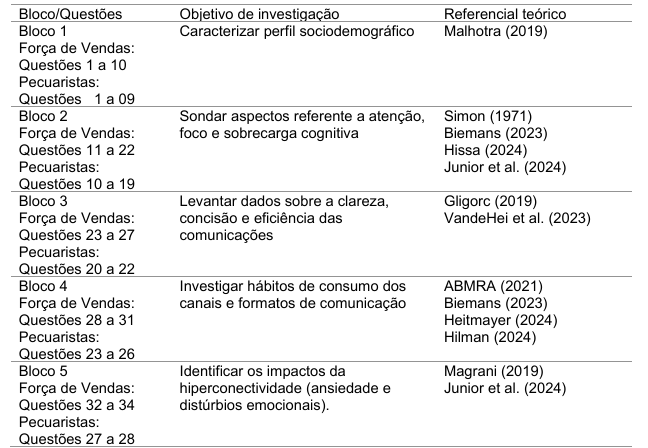
Source: Original research data
The questionnaire for the sales force was hosted on Google Forms and distributed via WhatsApp and email. For livestock farmers, the GetFeedback platform was used, with distribution via email mailing in SalesForce (CRM). The sampling was non-probabilistic intentional (judgmental), associated with convenience and self-selection, with defined selection criteria for sales force collaborators in the ruminant area and company client livestock farmers. The research objective was not the statistical generalization of results, but rather the perception of a specific group in the agribusiness sector. Before broad application, the questionnaire was validated with 4 volunteers (two from each sample profile) to assess comprehension, scope, and functionality, resulting in adjustments such as the possibility of multiple selections in one question and the simplification of statements in Block 4.
The ethical procedures followed the norms of resolution nº 510, of April 07, 2016, from the Ministry of Health (MS, 2016). Participants’ consent was obtained through the Free and Informed Consent Form [TCLE], which informed about the option to clarify doubts and/or withdraw from the research at any time. The research was exempted from registration and analysis by the Research Ethics Committee with human beings and by the National Commission for Ethics in Research [Conep], as it fit within research in the Human and Social Sciences area under items I (public opinion research with unidentified participants), II (research with aggregated databases, without individual identification), and VII (research that aims at the theoretical deepening of emergent situations in professional practice, provided that it does not reveal data that could identify the subject).
The data analysis employed descriptive statistics, including measures of central tendency and tabulation in Excel. For associations between categorical variables, Pearson’s Chi-Square test was used, and for comparing means on a Likert scale, the ANOVA and Student’s t-tests were used, with the support of the artificial intelligence tool Skywork. Comparative analyses and cross-tabulation of sociodemographic variables were performed based on the literature review (Malhotra, 2019).
3. Results and Discussion
The results and analyses of the collected data were organized into five thematic blocks, as outlined in the methodology.
Block 1 – Sociodemographic Data
The sociodemographic profile of livestock farmers revealed a male majority, with an age range distributed between 25 and 65 years or older, good representation between beef and dairy production, and good internet access. In the sales force, the profile was also predominantly male, with the age range concentrated between 25 and 44 years. More than half of these participants had been working for more than 10 years in animal health pharmaceutical companies, and 62.6% (n=62) held the position of livestock consultant. The mobile phone was the main device (65.7%, n=65) for accessing work communications.
Block 2 – Attention, focus and cognitive overload
To identify aspects of attention, focus, and cognitive overload, both groups were asked about the frequency of receipt and perceived relevance of communications. Cattle ranchers reported receiving a high volume of messages, considering most irrelevant, which led them to ignore 45% (n=62) of professional communications and 42% (n=58) of personal ones. In the sales force, professional frequency was higher, and 49% (n=49) of participants did not view irrelevant personal communications, while only 27% (n=27) ignored professional ones.
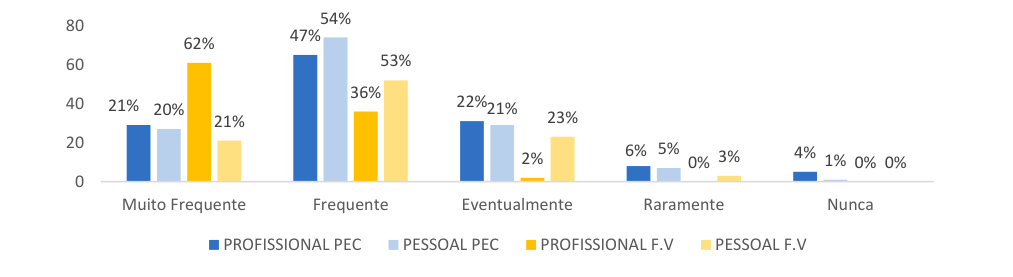
The analysis of the frequency of receiving communications in 24 hours (Figure 1) indicated that the sales force receives significantly more frequent professional notifications than livestock farmers (M Sales Force = 4.60 vs M Livestock Farmers = 3.76; t = -7.76; p < 0.0001), evidencing greater exposure to work. The professional routine and the main device (mobile phone and computer) influenced this frequency in the sales force. Regarding irrelevant communications (Figure 2), both audiences showed similar levels of exposure to content not relevant to the business (M Livestock Farmers = 3.51 vs. M Sales Force = 3.72), suggesting generalized infoxication. In the sales force, the exclusive use of mobile phones (M = 3.86; 70.8% high frequency) was associated with a higher frequency of irrelevant communications.
Figure 1. Frequency of communication reception in 24h
Source: Original research results
Figure 2. Frequency of receiving irrelevant communications
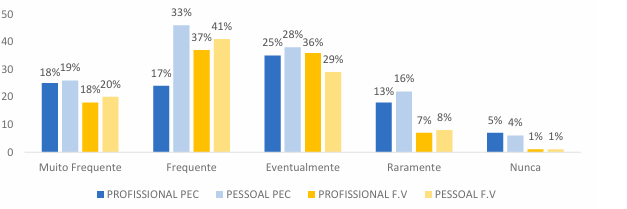
Source: Original research results | Note: “Cattle ranchers” [PEC]; “Sales Force“ [F.V]
The frequency with which information is ignored (Figure 3) revealed that ranchers tend to ignore business content more than the sales force (M Ranchers = 3.30 vs. M S.F= 2.80; t = 3.36; p = 0.0009), with 44.9% frequently ignoring professional communications, while 44.4% of the sales force rarely ignore them. This pattern points to a paradox: the sales force, although receiving more communications, ignores less, integrating digital consumption into work. Ranchers, with a lower volume, ignore more, adopting a more selective stance due to the high cognitive cost (Heitmayer, 2024). Ignoring communications is an adaptive strategy to information overload, which can lead to lurking behavior (passive consumption) and impact decision-making (Shahrzadi et al., 2024; Liu et al., 2024). Mobile phone use intensifies attention fragmentation and the discarding of content that requires greater cognitive effort.
Figure 3. Frequency with which information is ignored
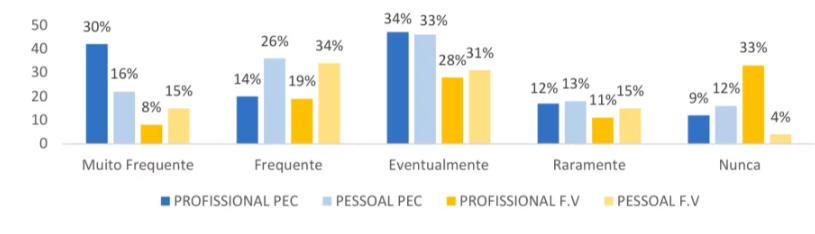
Source: Original research results | Note: “Cattle ranchers” [PEC]; “Sales Force“ [F.V]
Table 2, which summarizes the reasons for disinterest, showed that both groups reject long and tiring messages. The sales force demonstrated greater sensitivity to content irrelevance (72%; p = 0.0101) and message volume (61%; p = 0.0092). Cattle ranchers, in turn, showed less tolerance for lack of source credibility (65%) and commercial messages (67%), with significant variations by age group and connection quality. This pattern suggests that, for cattle ranchers, discarding is more linked to trust and format than to message volume. Message length was the main cause of disinterest for cattle ranchers, acting as a format barrier, according to VandeHei et al. (2023) and Gligorić et al. (2019) on the effectiveness of short messages. For the sales force, irrelevance was the central trigger, processing inadequate communications due to functional requirements, a pattern associated with technostress (Junior et al., 2024). This distinction reveals that the sales force prioritizes functional relevance, while cattle ranchers prioritize format, which explains the preference for WhatsApp for short and objective messages (ABMRA, 2021). Greater resistance to new formats was also observed in audiences over 65 years old, indicating a generational dimension in adaptation to digital channels (Hissa, 2024).
Table 2. Distribution of responses from Cattle Ranchers and Sales Force regarding reasons associated with loss of interest in received communications
| Statements (Reasons for Disinterest) | Cattle ranchers (%) | Sales Force (%) | Difference (p.p.) |
|---|---|---|---|
| Very long and tiring messages | 72% | 68% | +4 |
| The subject is not relevant to the business | 60% | 72% | -12* |
| The message is very commercial/promotional | 67% | 54% | +13* |
| Repetitive content (already received before) | 65% | 62% | +3 |
| Lack of credibility in the source | 65% | 54% | +11 |
| Too many elements (confusing communication) | 48% | 57% | -9 |
| I receive many messages (I can’t look) | 48% | 61% | -13* |
| The title does not arouse my interest | 54% | 55% | -1 |
| Inadequate format for my way of consuming | 49% | 46% | +3* |
Source: Original research results
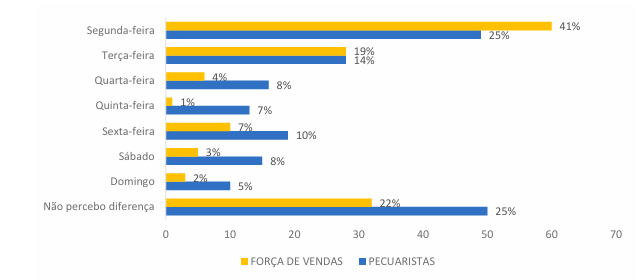
The analysis of the days of the week with the greatest potential for information absorption (Figure 4) revealed that 25% (n=50) of cattle ranchers and 22% (n=32) of the sales force perceive no significant difference, but Monday was the most indicated day. The sales force showed a significantly greater preference for Monday (60.6% vs. 35.5%; p = 0.0002) compared to cattle ranchers, who had a more balanced distribution, with a preference for Thursday (9.4% vs 1.0%; p = 0.0151). Among cattle ranchers, the preference for Friday was associated with the type of production (beef cattle: 20.3% vs. dairy cattle: 6.2%; p = 0.0327). In the sales force, the region influenced the preference for Monday (North: 88.9% vs. Northeast: 46.2%; p = 0.0362).
Figure 4. Days of the week with the highest absorption potential (ranchers and sales force)
Source: Original research results
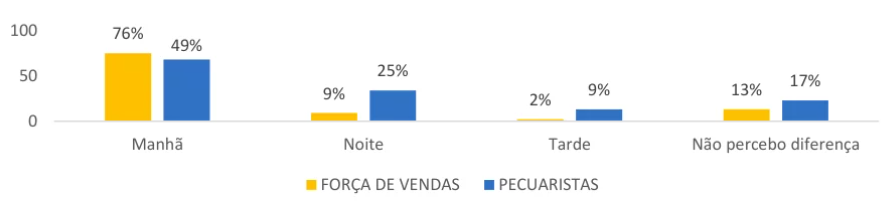
Regarding the time of day with the greatest ease of absorption (Figure 5), the morning was preferred by 49% (n=68) of livestock farmers and 76% (n=75) of the sales force. The sales force showed a significantly higher preference for the morning (75.8% vs. 49.3%; p = 0.0002), while livestock farmers showed a greater preference for the evening (24.6% vs. 9.1%). Within the sales force, job title influenced this preference (p = 0.0019), with livestock consultants preferring the morning (77.4%). This data indicates a misalignment between the time of sending and receptivity, with the sales force preferring the beginning of the week and the morning, aligned with structured routines and attention as a finite resource (Heitmayer, 2024). Livestock farmers, on the other hand, have a more balanced distribution and a preference for the evening, reflecting daytime operational routines and evening content consumption (ABMRA, 2021).
Figure 5. Time of day with greatest ease of information absorption (ranchers and sales force)
Source: Original research results
The use of mobile phones for content consumption proved to impair the memory of 52% (n=72) of cattle ranchers and 71% (n=70) of the sales force, an effect that Hissa (2024) attributes to content fragmentation and infinite scrolling.
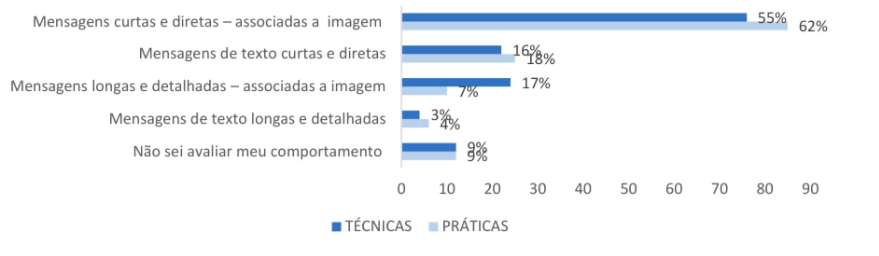
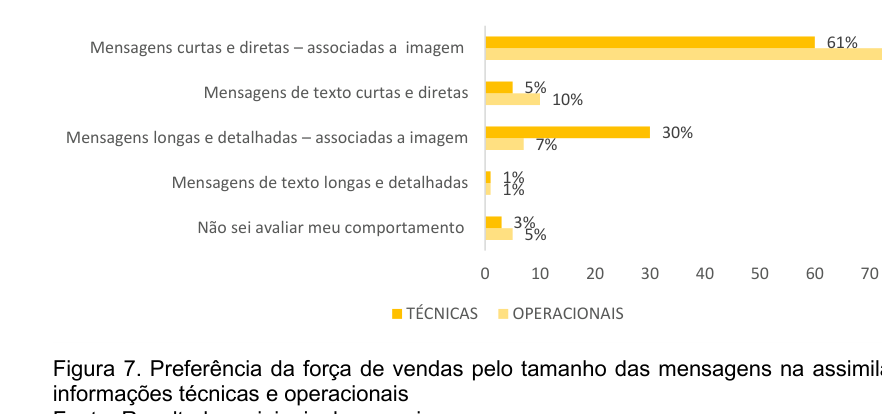
The ranchers’ preference for message size (Figure 6) and sales force (Figure 7) indicated that, regardless of content type (practical or technical), there is a clear preference for short, direct messages with visual elements. The sales force, especially field professionals (83.3%), demonstrated this preference more markedly, although there was greater tolerance for long messages for technical content (30.3%). This pattern is consistent with the idea that format acts as an initial filter (VandeHei et al., 2023) and that brief messages generate greater engagement (Gligorić et al., 2019). The reading dynamics on mobile phones fragment perception and memory (Hissa, 2024), making images essential for comprehension. The operational routine of the sales force, with high mobility, requires agile formats (Biemans, 2023), and the consumption of professional content during commutes is a consolidated practice (66%, n=66), especially among livestock consultants (69.4%).
Figure 6. Ranchers’ preference for message size in the assimilation of practical and technical information
Source: Original research results
Figure 7. Sales force preference for message size in the assimilation of technical and operational information
Source: Original research results
Block 3 – Clarity, conciseness, and efficiency of communication
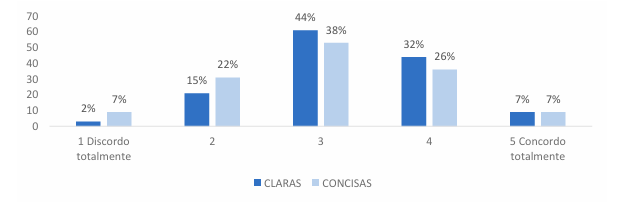
Cattle ranchers’ perception of clarity and conciseness in communications (Figure 8) indicated that messages are seen as clearer (M Clarity = 3.25) than concise (M Conciseness = 3.04; p = 0.0010). This suggests that, although they understand the content, cattle ranchers perceive a lack of objectivity, with 29% disagreeing with the conciseness. This mismatch, aligned with the attention economy (UNEM, 2023), reinforces the need for shorter and more direct communications for greater engagement (Gligorić et al., 2019; Colussi et al., 2024).
Figure 8. Perception of clarity and conciseness of communications received by livestock farmers.
Source: Original research results.
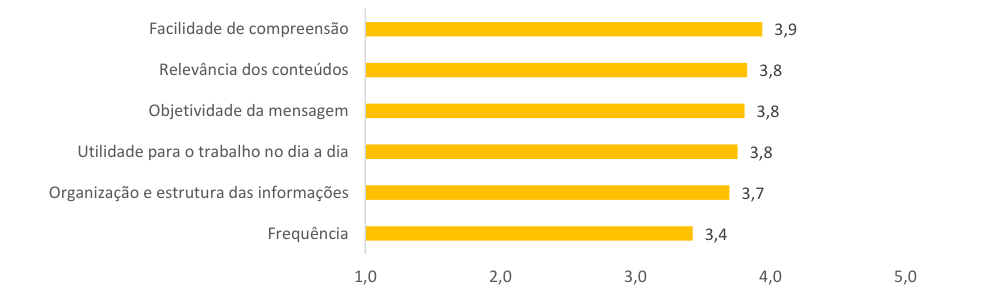
The evaluation of internal communications by the sales force (Figure 9) revealed that sending frequency was the worst-rated aspect. The perception of frequency was influenced by region (Center-West with better evaluation, M = 3.84 vs. Northeast, M = 2.92; p = 0.0357) and by functional position (livestock consultants with M = 3.60 vs. coordinators with M = 3.21; p = 0.0389). The organization and structure of information were better evaluated by professionals aged 25–34 years (M = 4.04; p = 0.0372) and in the Center-West region (M = 4.08 vs. Northeast, M = 3.31; p = 0.0478). These results suggest that the effectiveness of internal communication depends on the adjustment of frequency, structure, and adequacy to the audience’s profile, possibly indicating informational overload (UNEM, 2023) or lack of cadence (VandeHei et al., 2023).
Figure 9. Average of internal communications ratings of the ruminant business unit
Source: Original research results.
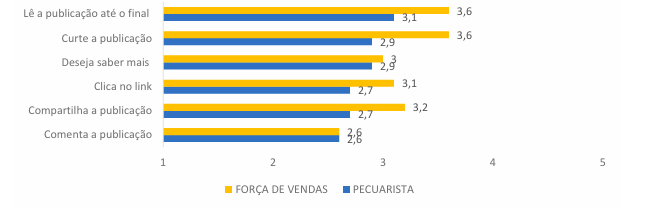
The frequency of interactions on social media (Figure 10) revealed that the sales force has significantly higher digital engagement than livestock farmers in interactions such as reading, liking, sharing, and clicking, with a greater difference in “liking the post” (p < 0.0001). Among livestock farmers, age group influenced engagement, with greater participation from older individuals (≥65 years for liking, p = 0.0473; 55–64 years for sharing, p = 0.0378). In the sales force, younger individuals (25–34 years) engaged more in liking (p = 0.0117) and sharing (p = 0.0080). Reading the full post was the most frequent interaction for both, while commenting was the least, a pattern associated with lurking as a coping mechanism for digital stress (Liu et al., 2024). The higher engagement of the sales force is explained by the integration of content into work functions (Biemans, 2023), while livestock farmers tend towards passive consumption (Heitmayer, 2024), with an inverted generational pattern where older livestock farmers engage more and younger ones adopt low interaction as a defense against information fatigue (UNEM, 2023; Liu et al., 2024).
Figure 10. Average frequency of social media interactions
Source: Original research results
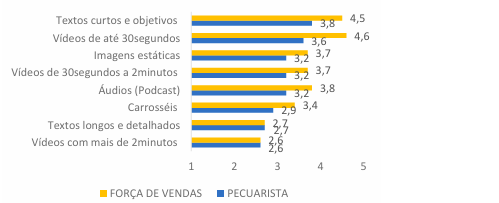
Figure 11, which assessed the efficiency of different content formats in attracting attention, showed that short and objective texts, videos up to 30 seconds, and static images were the most effective for both audiences. The sales force demonstrated greater receptivity to most digital formats (p ≤ 0.05), except for videos longer than two minutes and long texts. Dairy cattle ranchers showed greater affinity for the carousel format (M = 3.20 vs. M = 2.59 for beef) and videos between 30 seconds and 2 minutes (M = 3.36 vs. M = 3.03 for beef). Content efficiency is linked to cognitive and temporal economy, not just format (Hilman, 2024), with attention limitation being transversal to audiences (UNEM, 2023; Liu et al., 2024). The production routine influenced format preference, with dairy farming favoring sequential formats like carousels.
Figure 11. Average efficiency of different content formats for attracting attention (cattle ranchers and sales force)
Source: Original research results
Block 4 – Consumer habits of channels and communication formats
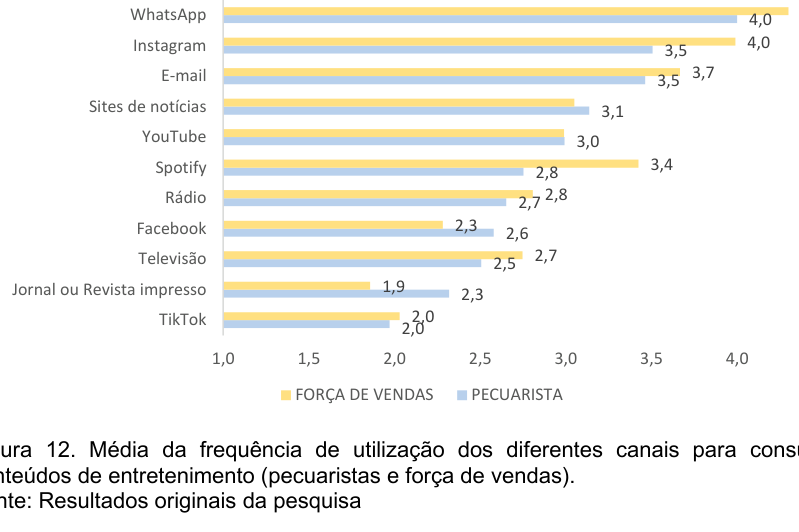
The analysis of channel usage frequency for entertainment consumption (Figure 12) revealed that WhatsApp is the most used channel by both groups. The sales force demonstrated greater digital engagement on WhatsApp (p = 0.0062), Instagram (p = 0.0026), and Spotify (p < 0.0001), indicating more diversified use of digital channels. Cattle ranchers prefer traditional media, such as printed newspapers (M = 2.32 vs. 1.86; p = 0.0020). Age range influenced TikTok usage among cattle ranchers (p = 0.0116), with higher usage between 25–34 years old. In the sales force, functional position influenced Instagram usage (p = 0.0249), and age range impacted Facebook usage (p = 0.0280), with higher usage between 55–64 years old.
Figure 12. Average frequency of use of different channels for consuming entertainment content (cattle ranchers and sales force).
Source: Original research results
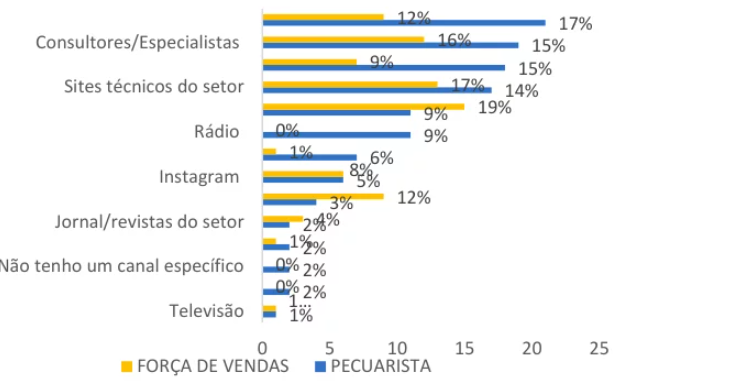
For technical information, 64% (n=89) of cattle ranchers and 73% (n=72) of the sales force use the same channel. Work routine influenced the preference for maintaining a single channel in the sales force (p = 0.0369). For those who use different channels (Figure 13), email and consultants/specialists were the most reliable sources for cattle ranchers, while the sales force preferred WhatsApp, technical websites, and consultants/specialists. The sales force showed greater confidence in WhatsApp (18.2% vs. 8.0% of cattle ranchers), while cattle ranchers trusted email (15.2% vs. 9.1%) and WhatsApp groups (13.0% vs. 7.1%) more. Production type influenced confidence in WhatsApp groups among cattle ranchers (beef cattle: 20.3% vs. dairy cattle: 4.7%; p = 0.0140). Age group also influenced confidence in YouTube (p = 0.0272), with a higher value among 55–64 year olds.
Figure 13. Most used channels for consuming business-related technical content
Source: Original research results
WhatsApp consolidates itself as a central channel (ABMRA, 2021), with its choice driven by established digital habits (Heitmayer, 2024) and individual routine (Biemans, 2023). The greater confidence of the sales force in direct WhatsApp contrasts with the preference of livestock farmers for email and WhatsApp groups, reflecting different credibility criteria. Asynchronous channels like email are valued for formality and traceability in important decisions (Biemans, 2023), while WhatsApp offers agility. The divergence between beef and dairy farmers in their confidence in WhatsApp groups reflects the influence of the production system, with beef farming using groups for collective intelligence (Kimotho, 2025) and dairy farming preferring email for formality. The preference of older producers for YouTube may be associated with the reproduction of the visual and explanatory dimension of in-person interaction with the field technician (Zhang et al., 2024).
Block 5 – Hyperconnectivity, anxiety, and social impacts
Regarding knowledge of the term hyperconnectivity, the sales force demonstrated greater familiarity (77.8%, n=77) compared to livestock farmers (62.8%, n=86). An unexpected generational pattern was observed, with greater knowledge among older age groups (45–64 years) in both groups, contrary to the expectation of greater familiarity among younger individuals for a concept disseminated from 2019 onwards (Magrani, 2019).
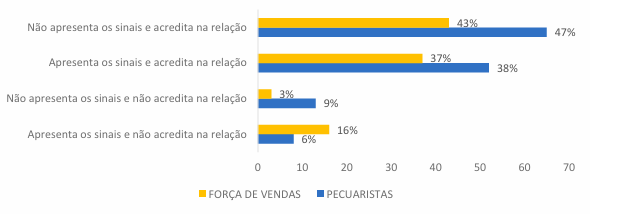
The perception regarding the presence of signs and correlation with hyperconnectivity (Figure 14) showed similar behavior between groups. Most participants associate the symptoms with excessive notifications and intense use of social media.
Figure 14. Perception of the presence of signs and correlation with hyperconnectivity
Source: Original research results
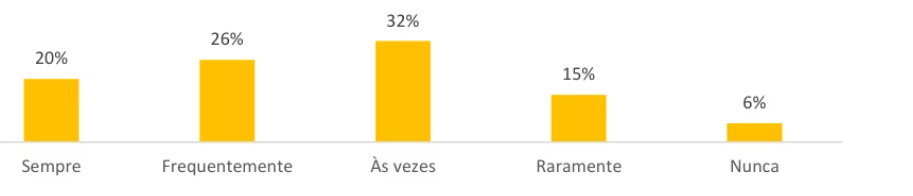
The frequency of stress or difficulty disconnecting caused by communications outside of business hours (Figure 15) was high in the sales force, with 46% (n=46) reporting the impact recurrently and 78.8% (n=78) presenting stress symptoms. The main device significantly influenced this outcome (x² = 8.67; p = 0.0340), with a higher prevalence among computer users (87.5%) and mobile phone users (84.6%), suggesting that the concentration of notifications intensifies stress. Age group also showed a marginal association, with higher prevalence among 45–54 years old (85.7%) and 35–44 years old (84.9%), and lower among 25–34 years old (64.3%), indicating greater adaptation among younger individuals. These findings corroborate the literature on the impact of hyperconnectivity on mental health, with intensive use of digital tools associated with increased anxiety and difficulty disconnecting (Junior et al., 2024). The concentration of notifications intensifies stress (Shimabukuro and Paletta, 2025), and digital vulnerability is more incident in middle-aged professionals (Yang et al., 2025). The association of symptoms with excessive notifications and social media use aligns with the concepts of informational normosis and FOMO, which contribute to cognitive overload (Wu et al., 2025; Shimabukuro and Paletta, 2025; Silva, 2019).
Figure 15. Frequency of stress or difficulty disconnecting caused by out-of-hours communications.
Source: Original research results
Synthesis of results
The research synthesized the main findings into thematic blocks. In Block 2, 45% of cattle ranchers ignore long professional or promotional communications, while 98% of the sales force, despite frequent receipt, rarely ignore them, indicating cognitive overload. The sales force prefers to consume information on Monday mornings, and cattle ranchers, more balanced, with a preference for evenings. In Block 3, 29% of cattle ranchers disagree with the objectivity of the communications. The frequency of sending was the main weakness for the sales force, with consultants evaluating it better than coordinators and regional differences. The digital engagement of the sales force is significantly higher than that of cattle ranchers, with higher engagement from older individuals among cattle ranchers. Both groups agree that videos longer than 2 minutes and long texts are the least effective formats. In Block 4, WhatsApp has consolidated itself as the main communication channel, with higher engagement from the sales force, which also uses Instagram and Spotify more. Cattle ranchers still use traditional media, and for technical content, they prefer email and WhatsApp groups (more so for beef cattle), with older cattle ranchers valuing YouTube. In Block 5, the term hyperconnectivity is better known by older individuals. A large part of the audiences associates the signals with excessive notifications, but the impacts are more expressive in the sales force, especially the difficulty of disconnecting from work after business hours.
The research reveals that the effectiveness of communication between cattle ranchers and the sales force depends on brevity and visual appeal, with WhatsApp consolidated as the main channel. While 45% of producers ignore long or promotional content, preferring technical and nighttime consumption, the sales force faces a warning of cognitive overload and greater attentional availability on Monday mornings. The findings indicate that communication effectiveness demands segmentation by profile and time, prioritization of objective messages, and digital well-being actions to mitigate the impacts of hyperconnectivity and promote sustainable engagement of both audiences.
4. Conclusion
The present research aimed to analyze the perception and consumption habits of different forms and channels of communication, as well as their effects on message attention and retention among animal health sector sales professionals and livestock farmers. It was found that WhatsApp has consolidated itself as the predominant channel for both audiences, who demonstrated a clear preference for short, direct, and visually supported communications, actively rejecting long texts or videos. An attentional paradox was observed, where the sales force, despite receiving a significantly higher volume of work messages, rarely ignored them, resulting in high levels of stress and difficulty disconnecting from work (78.8%). In contrast, livestock farmers protected their attention, frequently ignoring (45%) long or strictly commercial content. It was identified that livestock farmers perceive communications as clear, but lacking conciseness, while the frequency of sending was the main weakness pointed out by the sales force in internal communications. The findings indicate that communication effectiveness in agribusiness urgently requires format and frequency adjustments to the operational reality and cognitive receptivity windows of each audience.
The study contributes to science and academia by applying the concepts of attention economy and hyperconnectivity in a B2B context, offering an analysis model that integrates cognitive overload and communication behavior. For segment managers, the research provides immediate tactical guidelines to optimize communication, emphasizing the need to adapt the message, frequency, and timing of delivery, as well as providing empirical evidence for redesigning strategies based on operational routine and temporal receptivity. For society, the study highlights the impacts of hyperconnectivity on physical and mental health, reinforcing the need to promote digital well-being among rural producers and professionals. However, the research presents limitations due to its survey nature with intentional non-probabilistic sampling, which prevents statistical generalization of the results. Furthermore, the collection of self-reported data may introduce self-perception and self-selection biases. The absence of longitudinal data prevents the evaluation of behavioral patterns over time or seasonal variations. For future studies, it is suggested to conduct longitudinal research to analyze the evolution of tolerance to excessive communication and to expand this design to other agribusiness niches, combining quantitative data with qualitative interviews to deepen the psychological causes of informational stress in the field.
Bibliographic References
Associação Brasileira de Marketing Rural e Agronegócio [ABMRA]. 2021. 8° Pesquisa ABMRA Hábitos do Produtor Rural – Os Hábitos e Atividades do Produtor Rural Durante a COVID-19 (Coronavírus).
Biemans, W. 2023. The impact of digital tools on sales-marketing interactions and perceptions. Industrial Marketing Management 115: 395-407.
Billah, M.M.; Rahman, M.M.; Mahimairaja S.; Lal, A.; Naidu, R. 2024. Farmers’ exposure to communication media in receiving agriculture extension and rural advisory services for farm sustainability. The Journal of Sustainable Agriculture and Environment 3:1-12.
Gil, A.C. 2008. Métodos e técnicas de pesquisa social. 6ed. Atlas, São Paulo, SP, Brasil.
Gligorić, K.; Anderson, A.; West, R. 2019. Causal effects of brevity on style and success in social media. Proceedings of the ACM on Human-Computer Interaction 3(CSCW): 1-23.
Heitmayer, M. 2025. The Second Wave of Attention Economics. Attention as a Universal Symbolic Currency on Social Media and beyond. Interacting with Computers 36:18-29.
Hilman, E. 2024. This is your brain on social media: how social media use is changing our attention spans. Disponível em: . Acesso em: 14 dez. 2025.
Hissa, D.L.A. 2024. A leitura plataformizada na mídia digital: da sobrecarga informacional à perda do pensamento crítico. Revista da Abralin 23(2): 304-331.
Junior, C. E. S. C.; Oliveira, E. V. Q.; Souza, A. P. O.; Vargas, A. A. F.; Rocha, H. L. 2024. Hiperconectividade E Ansiedade: Os Impactos Da Era Digital Na Saúde Mental E Nas Relações Interpessoais. Revista Educação Contemporânea 1(2): 212-236.
Lakatos, E. M.; Marconi, M. A. 2003. Fundamentos de metodologia científica. 5ed. Atlas, São Paulo, SP, Brasil.
Liu, X.; Feng, R.; Chen, X.; Yuan, Y. 2024. “Left on read” examining social media users’ lurking behavior: an integration of anxiety and social media fatigue. Frontiers in Physchology 15.
Magrani, E. 2019. Entre dados e robôs: ética e privacidade na era da hiperconectividade. 2ed. Arquipélago Editorial, Porto Alegre, Rio Grande do Sul, Brasil.
Malhota, N. K. 2019. Pesquisa de Marketing. 7ed. Bookman. Porto Alegre, RS, Brasil.
MS, 2016 [Referência completa não encontrada no documento original]
Neves, M. F.; Marques, V. N.; Martinez, L. F.; Cambaúva, V. 2020. Os Desafios de Comunicação do Agronegócio: O Método “AgroPlanCom”. Revista Agronomia Brasileira v.4.
Shahrzadi, L.; Mansouri, A.; Alavi, M.; Shabani, A. 2024. Causes, consequences, and strategies to deal with information overload: A scoping review. International Journal of Information Management Data Insights 4.
Simon, H. A. 1971. Designing organizations for an information-rich world. p. 37–72. In: Greenberger, M. Computers, Communications, and the Public Interest. Johns Hopkins Press, Baltimore, MD, Estados Unidos.
United Nations Economist Network [UNEN]. 2023. New Economics for Sustainable Development Attention Economy. Disponível em: . Acesso em: 10. out. 2025.
VandeHei, J.; Allen, M.; Schwartz, R. 2023.Brevidade Inteligente.1ed. Sextante, Botafogo, RJ, Brasil.
Article originating from the Final Course Work of the Specialization in Marketing of the MBA USP/Esalq
To learn more about the course, click here and access the MBX Academy platform