
September 09, 2026
Internal Marketing and Organizational Culture: An Analysis from the Employees’ Perception
Caroline do Amaral Camargo; Vanessa Martins dos Santos
DOI: 10.22167/2675-6528-202602190
Article derived from a Final Course Work (TCC), with content based on the student’s original work and adapted to the editorial format of the Revista E&S with the support of the ResumeAI tool, an artificial intelligence solution developed by the Pecege Institute for textual synthesis and organization.
Abstract
In an organizational context that values human capital, internal communication and the strengthening of organizational culture have become strategic factors for companies’ performance. The study aimed to analyze professionals’ perception of the influence of internal marketing on the communication of organizational values, sense of belonging, and the strengthening of internal culture. The research adopted a quantitative and descriptive approach, with a ‘survey’ type design. Data were collected through an online questionnaire applied to 143 professionals with an employment relationship (CLT, PJ, or internship). The responses were measured by the Likert scale and descriptively analyzed. The results indicated that, although most participants knew the company’s values, there were gaps between organizational discourse and daily practices. Internal marketing actions were associated with an increase in employees’ sense of belonging, motivation, and engagement. It was observed that many professionals were unaware of the term “internal marketing”, but recognized its potential to strengthen organizational culture after the concept was presented. It was concluded that internal marketing can act as an important tool for cultural alignment and internal communication, provided that its actions are coherent, continuous, and aligned with the organization’s values.
Keywords: Internal communication; Organizational culture; Belonging; Employee appreciation.
1. Introduction
In recent decades, the organizational environment has undergone significant transformations, broadening the debate on culture, internal communication, and employee engagement as strategic factors for performance. In a context of generational changes and new work expectations, the appreciation of purpose, belonging, and professional well-being becomes relevant. Studies indicate that different generations present distinct perceptions and motivations, requiring strategies that strengthen the alignment between institutional values and the daily experience of employees (Marquez et al., 2022).
Professionals from different generations respond differently to organizational practices and motivational stimuli, influencing their perception of internal engagement and communication strategies (Mahmoud et al., 2020). In this scenario, practices aimed at the internal audience gain prominence as instruments to promote engagement, reinforce values, and build more integrated and participatory work environments.
In this context of growing appreciation for engagement and alignment between employees and organizations, the concept of endomarketing emerges. In Brazil, the term was introduced in the late 1980s by Saul Bekin, due to the need to dedicate the same strategic attention to the internal public as given to the external market. Inspired by the prefix ‘endo’, which means ‘inward’, endomarketing adapts the principles of traditional marketing to actions directed at employees, promoting alignment, engagement, and appreciation (Almeida and Avanzi, 2019).
Among the characteristics of internal marketing, Almeida and Avanzi (2019) highlight the construction of internal image, the introduction of new habits, and the integration of organizational culture. A company’s culture is built through collective learning, transmitted to new members as the group solves challenges (Schein, 2025). Effective solutions become consolidated as norms and values that guide individuals’ conduct and perception, becoming fundamental premises of the group’s culture.
Organizational culture directly influences how employees interpret the work environment, guide behaviors, and develop motivation and commitment. Environments with clearly communicated and experienced values favor the alignment between individual and institutional objectives, contributing to engagement and the consolidation of coherent practices. Internal marketing actions strengthen this cultural alignment, positively influencing motivation and performance (Martins and Macêdo, 2022; Silva and Santana, 2023).
For the dissemination of organizational culture, the strategic use of internal communication is fundamental, being the main means of transmitting messages. Tools such as internal publications, corporate newspapers, institutional magazines, bulletins, notice boards, murals, events, and digital media are commonly employed (Johann, 2004). Individual training and appreciation programs can be understood as acculturation processes, capable of guiding professional and interpersonal behaviors, attitudes, and relationships (Almeida and Avanzi, 2019).
Internal communication, according to França (2013), transmits relevant information about the company, keeping employees informed and valued. In this context, internal marketing emerges as a strategic approach that integrates internal communication and people management to strengthen relationships. By valuing the internal audience and reinforcing institutional values, internal marketing contributes to more participatory environments, where employees better understand the purpose and their role. Structured continuously and aligned with strategy, internal marketing favors the dissemination of corporate culture, expands belonging, and stimulates engagement (Lucena, 2023).
Despite the strategic importance of internal marketing, many organizations still show gaps between discourse and daily practices, and a portion of professionals are unaware of the term. This difference between strategic intention and employees’ practical experience justifies the need to deepen the understanding of internal marketing perception and its influence on the work environment. Given the strategic importance of valuing the internal audience and the influence that communication exerts in disseminating organizational culture, this study aims to understand how the interviewed audience perceives the influence of internal marketing on the communication of the company’s cultural values, on the sense of belonging, and on the consolidation of behaviors aligned with the culture.
2. Material and Methods
The research was characterized as a quantitative approach study, descriptive in nature, with a “survey” type design. The objective was to observe, record, and analyze phenomena without researcher interference, seeking to understand perceptions, opinions, and attitudes of social groups (Gil, 2008; Vergara, 2016).
The study was conducted in the contemporary organizational context, marked by the appreciation of agendas related to well-being, engagement, and cultural alignment in the workplace. In this scenario, internal communication and endomarketing practices have been adopted as strategic instruments for strengthening organizational culture and for bringing the company and employees closer together (Mahmoud et al., 2020).
The target audience was composed of professionals over 18 years of age, not belonging to vulnerable groups, working in companies from different segments, with an employment relationship (CLT, PJ, or internship), regardless of prior knowledge of internal marketing. This choice aimed to analyze the perception of employees before and after conceptual contact with the investigated construct.
The sample was non-probabilistic, by convenience, selected from the access and availability of response to the questionnaire (Gil, 2008). 171 responses were obtained, of which 143 were considered valid for analysis, with the remaining 28 being disregarded for not meeting the inclusion criteria, such as the absence of an employment relationship compatible with the research objectives.
Data collection was carried out using a structured questionnaire, developed based on the study’s theoretical framework. The instrument, composed of closed-ended questions, was organized into four main sections: participant profile; formation of organizational culture; strengthening and coherence of internal culture; and integration and knowledge about the concept of internal marketing. The structure of the instrument was organized to ensure alignment between the research objectives, the theoretical constructs analyzed, and the questions applied, as presented in Table 1.
Table 1 – Research instrument structure and analytical objectives
| Sections | Questions | Objective |
|---|---|---|
| Respondent profile | Issues related to the characterization of respondents (1 and 2) | Characterize the respondent according to their current professional situation and age group |
| Organizational culture | Issues related to the perception of coherence between discourse and organizational practice (8 and 9) | Analyze respondents’ perception of the communication of organizational values and their presence in internal practices (Almeida, 2019). |
| Coherence of internal culture | Issues related to the perception of internal culture coherence (8 and 9) | Assess respondents’ perception of the alignment between declared values and experienced realities in the workplace (Duarti, 2025). |
| Perception of endomarketing | Questions related to knowledge and perception about endomarketing (10 and 11) | Analyze the level of prior knowledge and respondents’ perception of the potential of internal marketing in strengthening organizational culture. (Johann, 2004). |
Source: Original research results
The complete questionnaire is presented in Appendix A of this work.
The data were collected online, through the Google Forms platform, in June 2025. The questionnaire was disseminated on the researcher’s professional and personal social networks (LinkedIn, WhatsApp, and Instagram). Contact with participants occurred indirectly, via electronic invitation with information about the research objectives, the voluntary nature of participation, and the guarantee of anonymity.
The responses were measured using a five-point Likert scale (Likert, 1932). No inferential statistical tests were applied. Data analysis was performed descriptively, calculating relative frequencies and identifying patterns and trends in employee perceptions. The results were presented through graphs and discussed in light of the adopted theoretical framework.
The research respected the ethical principles applicable to studies with human beings. The participation of the respondents was voluntary, after prior clarification about the objectives of the study and express agreement at the beginning of the questionnaire. The anonymity of the participants and the confidentiality of the collected information were assured, used exclusively for academic purposes.
3. Results and Discussion
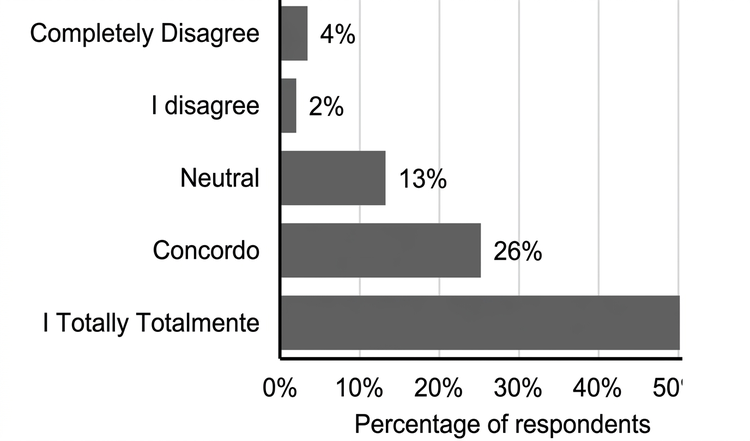
The analysis of the contemporary scenario, marked by the fluidity of social ties, reveals transformations in human relations, as pointed out by Bauman (2004). Organizations face the challenge of cultivating authentic bonds of belonging, recognizing collaborators as valuable individuals, and not just as disposable resources (Bock et al., 1999). Such actions are fundamental for building a solid organizational culture, capable of inspiring engagement, loyalty, and alignment with the company’s objectives. The research indicated that 81% of participants declared they knew the values of the company in which they work, suggesting an important level of formal dissemination of organizational values, as illustrated in Figure 1.
Figure 1. I know the values of the company where I work
Source: Original research results.
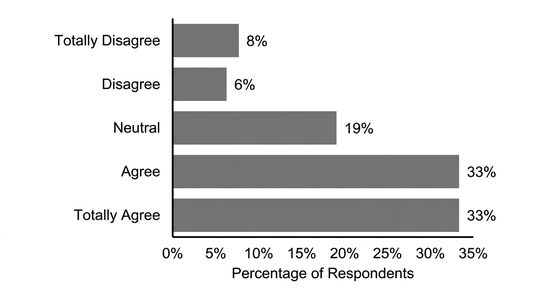
However, regarding actions aimed at employee well-being, appreciation, or motivation, 66% of participants reported that such actions are promoted by the company, while 19% were neutral and 14% disagreed with the statement, according to Figure 2. This divergence between knowledge of values and perception of actions may indicate a gap between organizational discourse and practice. Duarte and Coutinho (2025) highlight that the perception of the value and relevance of the employee’s contribution is directly linked to their commitment to organizational objectives, emphasizing the role of internal marketing (endomarketing) as a communicator of culture and an emotional engager.
Figure 2. The company where I work usually promotes actions aimed at the well-being, appreciation, or motivation of employees
Source: Original research results
When analyzing perception by age groups, it was observed that knowledge of organizational values is homogeneous among employees aged 18 to 44, with 94% agreement. However, in perceptions of practical actions for well-being, appreciation, and motivation, there was greater variation, with the 45 to 54 age group showing the lowest agreement rate. This result suggests that more experienced employees may be more critical or have different expectations regarding people management practices.
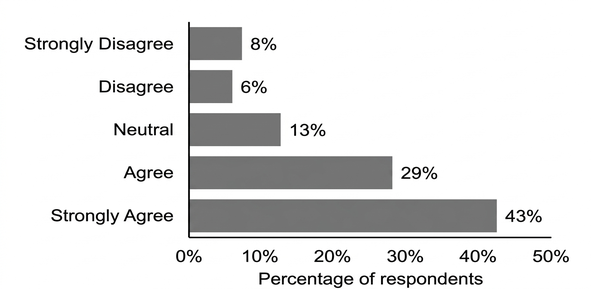
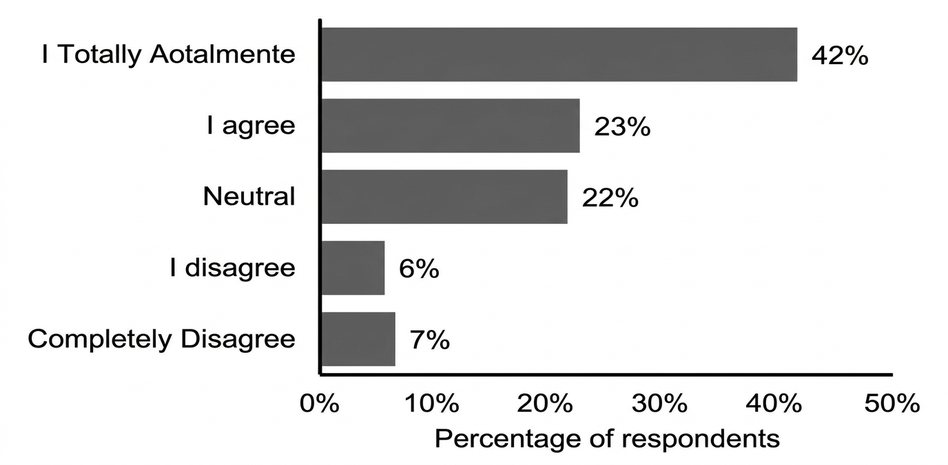
The coherence between values and internal actions was perceived by 72% of respondents, who feel that actions reinforce the company’s values, purpose, and “way of being”, according to Figure 3. Additionally, 65% feel that these actions tangibilize the organization’s culture in daily work, as shown in Figure 4. This finding, however, corroborates the hypothesis of a not fully satisfactory alignment between discourse and practice, indicating room for improvement in the communication and celebration of this relationship.
Figure 3. When these actions happen, I feel that they reinforce the company’s values, purpose, and “way of being”
Source: Original research results
Almeida and Avanzi (2019) emphasize that clear communication is not limited to the exposition of ideals, but must include the justifications for the goals and the consequences of achieving or not achieving them. Clarity and transparency are distinct; the former refers to the understanding of the message, while the latter reflects the commitment to share what actually happens in the company. The absence of transparency can generate insecurity and instability. An internal marketing action should, therefore, strengthen a clear and coherent culture, avoiding contrary effects. The generational analysis reinforced that the age group of 45 to 54 years concentrates the highest levels of disagreement regarding the coherence between values and actions and the tangibilization of culture in daily organizational life, suggesting a more critical perception of this group.
Figure 4. The company’s internal actions make organizational values and objectives more visible and present in daily life
Source: Original research results
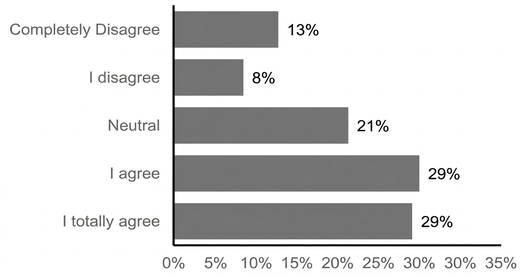
Endomarketing efforts to solidify culture can be compromised by contradictory actions and positions, generating disbelief in the communicated values (Johann, 2004). Figure 5 revealed that 42% of respondents would not describe the organizational culture as “strong and inspiring”. Schein (2025) addresses the “functional subcultures” that emerge in the absence of a strong and cohesive culture, creating communication barriers. The most negative perception regarding the strength and inspiration of organizational culture was concentrated among employees aged 45 to 54, while younger age groups showed higher levels of agreement.
Figure 5. I would describe the culture of the company I work for today as “strong and inspiring”
Source: Original research results
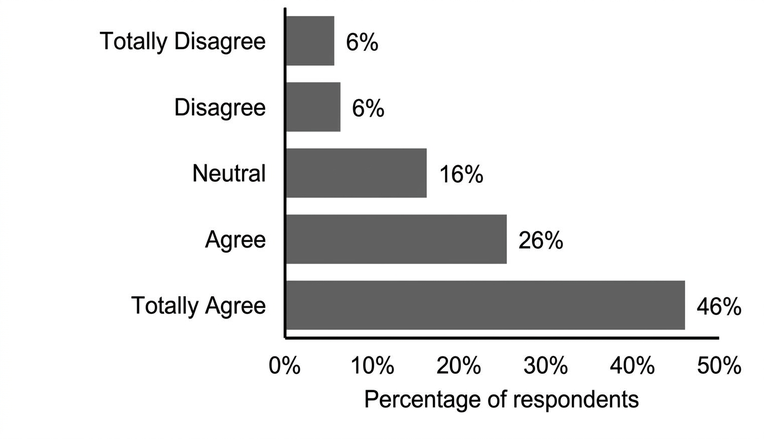
Regarding the perception of belonging, 72% of professionals reported feeling part of the organization when there are internal internal marketing actions, indicating a relationship between these initiatives and emotional connection with the company (Figure 6). Such actions, like feedback and quality campaigns, can positively impact the employee’s personal life (Duarti and Coutinho, 2025). About 28% do not feel included, raising questions about the effectiveness and personalization of strategies. Communication failures, which block the transparent sharing of information, may explain part of this finding (Schein, 2025).
Figure 6. When these actions happen, I feel like I belong in the company environment (as someone included, respected, and connected with the organization’s culture)
Source: Original research results
Generational analysis indicated that the perception of belonging is significantly lower among collaborators from generations X and “baby boomer”, especially in the 45 to 54 age group. In contrast, younger generations showed more favorable perceptions, reinforcing the need for internal marketing strategies that consider different expectations and professional trajectories (Bekin, 2004).
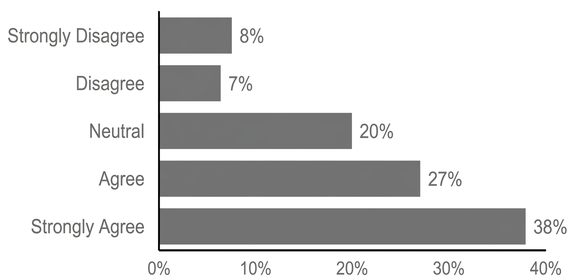
Regarding motivation and engagement, 65% of respondents stated that internal marketing initiatives make them feel more motivated and engaged, with only 15% disagreeing (Figure 7). Almeida and Avanzi (2019) emphasize that effective internal marketing campaigns must go beyond informational dissemination, acting as strategic communication mechanisms that clearly and permanently connect institutional goals, values, and practices. The effectiveness of these initiatives depends on clarity, transparency, and recognition, both institutional and interpersonal. Internal marketing thus articulates discourse and practice, contributing to engagement and the strengthening of organizational culture. The positive perception of the impact of internal marketing on motivation and engagement is predominant among employees up to 44 years old, while the 45 to 54 age group again showed higher levels of disagreement.
Figure 7. These internal initiatives (internal marketing) make me feel more motivated and engaged with my work
Source: Original research results
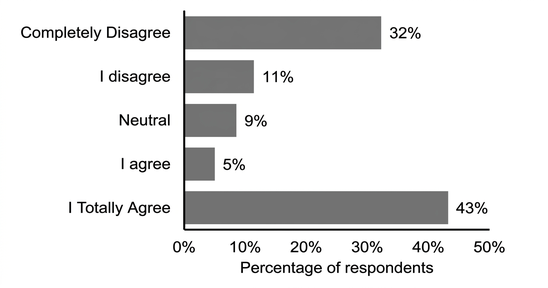
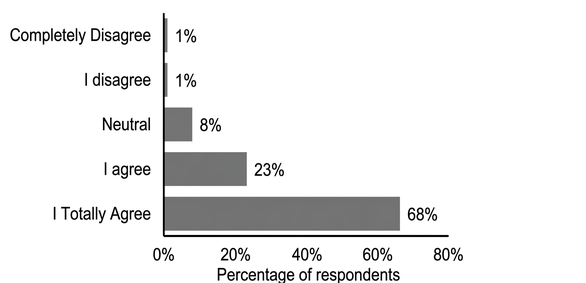
The research revealed that 48% of respondents knew the term “endomarketing” previously, while 52% were unaware of it. However, after the concept’s explanation, 91% believed that endomarketing can contribute to strengthening internal culture, indicating a favorable perception of its potential as an organizational tool (Figures 8 and 9). Bock et al. (2002) and França (2013) highlight the role of endomarketing in the emotional involvement of employees, creating a sense of belonging and strengthening organizational culture through a constant and transparent flow of information. Generational analysis indicated that the lack of knowledge of the term is transversal, and the more critical perception of the 45 to 54 age group is not related to the absence of conceptual knowledge, but to the practical experience of the actions. There is, however, a transversal recognition of the conceptual value of endomarketing across all age groups.
Figure 8. I already knew that this type of action is called internal marketing
Source: Original research results
Figure 9. After this contact with the concept, I believe that internal marketing actions can contribute to strengthening the company’s organizational culture
Source: Original research results
This data reinforces the central hypothesis that internal marketing has the potential to strengthen internal culture, despite gaps in communication and implementation of practices in many organizations. The results point to the need for better-planned strategies that consider the consistency of actions with organizational values and their capacity to generate genuine belonging. It is fundamental to work with culture disseminators to ensure a homogeneous and aligned positioning.
In summary, employee perception shows that, despite advances in internal communication and valuing the internal audience, there is still a lack of understanding of the term endomarketing and a gap between companies’ strategic intentions and employees’ practical experience. França (2013) argues that endomarketing is associated with structured internal communication, depending on the continuous and transparent circulation of information. Strengthening organizational culture through endomarketing depends on the coherence between declared values and promoted attitudes in the workplace.
Johann (2004) highlights that internal marketing must be linked to a larger integrated communication project, with objectives such as sharing the central ideology, attracting and retaining talent, fostering a high-performance culture, and positively positioning the institutional image. Table 2 summarizes the main findings of the research and presents corresponding strategic recommendations.
Table 2. Research findings and strategic recommendations
| Research finding | Recommendation |
|---|---|
| Conceptual unawareness of the term “endomarketing” (52% did not know it), despite later recognition of its value (91%) | Develop structured endomarketing actions with an educational and experiential character, prioritizing the explicit explanation of the reasons for internal actions, in order to transform existing practices into strategies consciously perceived as part of the organizational culture. |
| Perception of misalignment between declared organizational values and daily practices (28% do not perceive coherence) | Ensure that internal marketing actions are directly linked to observable behaviors and concrete organizational decisions, reducing the gap between institutional discourse and employees’ daily experience. |
| Internal communication perceived as punctual and insufficient to sustain the culture (only 65% perceive tangibilization of values in daily life) | Structure a continuous and integrated internal communication plan, guided by principles of clarity and transparency, focusing on the symbolic repetition of organizational values through internal actions, rituals, and narratives. |
| Low perception of culture as “strong and inspiring” (42% disagree with this statement) | Reinforce the role of internal marketing as an instrument for cultural strengthening, prioritizing consistent actions over time and avoiding isolated initiatives that may generate disbelief or weaken the legitimacy of the communicated culture. |
| Lower perception of belonging, motivation, and engagement among employees aged 45 to 54 years | Develop segmented internal marketing strategies, considering generational differences, professional expectations, and organizational trajectories, in order to enhance the symbolic and emotional inclusion of more experienced collaborators. |
| Low perceived involvement of leadership as disseminators of organizational culture | Empower leaders and managers as central agents of internal marketing, reinforcing their role in the daily experience of organizational values and in translating culture through practices of recognition, feedback, and behavioral coherence. |
| Gap between the strategic intention of organizations and the practical experience of employees | Implement continuous mechanisms for listening to and monitoring employee perception, using internal feedback as input for permanent adjustments to internal marketing and communication strategies. |
Source: Original research findings (2025)
The recommendations presented indicate that strengthening organizational culture through internal marketing depends more on the coherence, continuity, and clarity of existing practices than on the creation of new actions. The effectiveness of internal marketing is conditioned by the performance of leadership, the transparency of internal communication, and the adequacy of actions to different generational expectations, corroborating Johann (2004) and França (2013) on the integrating role of internal marketing. The recommendations are based on the perceptions identified in the sample and should be interpreted as indicative of trends, not as causal evidence.
The empirical findings of this study show that the main challenge for organizations lies not in the absence of internal initiatives, but in the lack of coherence, continuity, and strategic clarity of internal marketing actions. The practical effectiveness of internal marketing is directly conditioned by the performance of leadership, the transparency of internal communication, and the adequacy of actions to different generational expectations. This study, despite the limitations of a convenience sample (143 participants), which restricts the generalization of the results, contributes to the field of marketing and organizational management studies by highlighting the strategic role of internal marketing in strengthening internal culture. The research can serve as a basis for managers and leaders seeking to align internal practices with organizational values, reinforcing employee engagement and appreciation.
4. Conclusion
The study aimed to analyze professionals’ perception of the influence of internal marketing on the communication of organizational values, sense of belonging, and strengthening of internal culture. It was found that most participants knew the values of the company they worked for, but there were gaps between the organizational discourse and daily practices. It was observed that internal marketing actions were associated with an increase in employees’ sense of belonging, motivation, and engagement. Although many professionals were initially unaware of the term “internal marketing”, they recognized its potential to strengthen organizational culture after the concept was presented. Generational analysis revealed that more experienced employees, especially in the 45 to 54 age group, presented more critical perceptions of the practical effectiveness of the actions, although they recognized the conceptual value of internal marketing.
The main contribution of this study lies in highlighting the strategic role of internal marketing in strengthening internal culture, serving as a basis for managers and leaders seeking to align internal practices with organizational values, reinforcing employee engagement and appreciation. It was found that the central challenge is not the absence of initiatives, but the lack of coherence, continuity, and strategic clarity of actions, whose effectiveness is conditioned by the performance of leadership, the transparency of internal communication, and the adaptation to different generational expectations. However, the research has the limitation of having used a convenience sample of 143 participants, which restricts the generalization of the results. For future studies, it is suggested to conduct case studies in organizations of various sizes and segments, as well as to analyze the relationship between the maturity of people management and the effectiveness of internal marketing actions.
Bibliographic References
Almeida, E.M.S.; Avanzi, R. 2019. Marketing motivacional. 2 ed. Saraiva, Rio de Janeiro, RJ, Brasil. Disponível em: Acesso em: 01 jun. 2025.
Mahmoud, A. B.; Fuxman, L.; Mohr, I.; Reisel, W. D.; Grigoriou, N. 2020. We aren’t your reincarnation! Workplace motivation across X, Y and Z generations. International Journal of Manpower. Disponível em: . Acesso em: 07 mar. 2025.
Marquez, M. D. B.; Teba, E. M. S.; González, G. B.; Rydman, E. S.; Núñez, E. 2022. Generation Z within the workforce and in the workplace: A bibliometric analysis. Frontiers in Psychology 12:736820. Disponível em: . Acesso em: 07 mar. 2026.
Schein, E. H.; Schein, P. 2025. Cultura Organizacional e Liderança. 5. Atlas. Rio de Janeiro, RJ, Brasil. Disponível em: . Acesso em: 01 jun. 2025.
Article originating from the Final Course Work of the Specialization in Marketing of the MBA USP/Esalq
To learn more about the course, click here and access the MBX Academy platform