
September 09, 2026
Diplomatic Communication and Structured Roadmaps: Aligning Expectations with Bioentrepreneurs in Technological Innovation Projects
Eduardo Krebs Kleingesinds; Sidney Lincoln Vitorino
DOI: 10.22167/2675-6528-202602203
Article derived from a Course Conclusion Work (TCC), with content based on the student’s original work and adapted to the editorial format of the Revista E&S with the support of the ResumeAI tool, an artificial intelligence solution developed by the Pecege Institute for textual synthesis and organization.
Abstract
This study analyzed communication in project environments characterized by age, cultural, and professional diversity, multiple digital channels, and continuous interaction with entrepreneurial clients in the biotechnology field. The objective was to understand how information circulates among different actors, identify factors contributing to information loss and expectation misalignment, and discuss strategies to improve collaboration in contexts of high technical complexity. The research adopted a qualitative and exploratory approach, based on immersive observation of internal and external communication practices, and thematic analysis of the collected data. The results showed that the main communication problems stemmed from information fragmentation across channels, generational and cultural differences in message interpretation, the absence of a shared communication plan, and misalignment between client expectations and technical limitations. It was demonstrated that the use of process flows and structured roadmaps favored greater clarity and alignment, and diplomacy stood out as a central competence in communication management. A Communication Behavior Matrix was proposed, based on results orientation and diplomacy, identifying four communication profiles. It was concluded that effective communication in complex projects depends on the balance between focus on delivery and relational sensitivity, with structured and diplomatically conducted communication being a critical factor for project alignment and success.
Keywords: Communication in projects; Diplomacy; Cultural diversity; Stakeholder management; Roadmaps.
1. Introduction
For part of the 20th century, communication in organizations and projects was structured by a limited set of channels, such as face-to-face meetings, written memos, letters, and phone calls. Teams generally operated in the same physical space, with stable hierarchies and predominantly formal information flows, embedded in homogeneous organizational and cultural contexts. In this scenario, the communication system was comparatively simpler, with fewer breaking points and widely shared norms (PROJECT MANAGEMENT INSTITUTE, 2017; KERZNER, 2013). Project management literature emphasized formal reports, follow-up meetings, and documented approvals as primary communication mechanisms.
The digital transformation of work has significantly altered this landscape. Currently, email, instant messaging via apps, videoconferencing, and collaborative platforms compose an agile and fragmented communication ecosystem. Remote and hybrid work intensifies this dynamic, transferring previously informal interactions to digital tools, such as Microsoft Teams, Slack, and Zoom (CORTELLAZZO; BRUNI; ZAMPIERI, 2019).
From a project management perspective, this evolution has led to a significant increase in the volume and speed of communication exchanges. Information now circulates through multiple channels, often without clear consolidation of decisions, which favors ambiguities and divergent versions of what was agreed upon. Furthermore, communication has become more asynchronous and heavily text-based, reducing non-verbal cues and immediate clarification opportunities, thereby increasing the risk of noise, rework, and conflicts (KANABAR; WARBURTON, 2008; LEE-KELLEY; SANKEY, 2008).
Alongside technological advancement, project teams have become more diverse in terms of age, culture, and profession. Generational differences influence channel preferences, response expectations, and interpretations of what is understood as clear and professional communication. Similarly, cultural diversity affects interaction styles, context reading, and feedback forms, as well as the interpretation of silence, disagreement, and formality (BIZJAK; FAGANEL, 2021; HOFSTEDE; HOFSTEDE; MINKOV, 2010; HALL, 1976). This diversity, while it can enhance creativity, can also generate noise when there is no explicit alignment of expectations (OCHIENG; PRICE, 2010).
Communication challenges are even more evident at the interface between internal project teams and external clients, especially entrepreneurs and startups. These actors operate in contexts of high technical uncertainty, time constraints, and limited resources, in addition to frequently ambitious expectations. Even with the formal presentation of technical information, scope, and responsibilities, situations persist where clients claim not to have understood previously explained points (BLANK; DORF, 2012). Such episodes reveal that communication, in this context, should be understood as a process of interpretation, negotiation, and expectation management, and not just as information transmission. Part of the noise may stem from cognitive overload, client optimism, or strategic reinterpretations (BRETT, 2007; CARDON et al., 2009).
Although digital tools allow multidisciplinary and geographically dispersed teams to collaborate in real-time, share large volumes of data, and engage clients more closely, they also introduce communication overload, information fragmentation, and ambiguities regarding responsibility (GLOOR, 2006). It is not always clear where the official version of a decision is located or who had access to certain information. Thus, the central challenge of project management shifts from communicating more to communicating better, with structure, coherence, validation, and relational sensitivity.
Given this complex scenario, the present research is justified by the need to understand and improve communication in project environments characterized by cultural and generational diversity, multiple digital channels, and continuous interaction with entrepreneurial clients. The study’s objective was to analyze how internal and external communication occurs in these environments, seeking to understand how communication management can reduce information loss, misalignments, and conflicts.
2. Material and Methods
To meet the general objective proposed, the study was conducted based on specific objectives.
This research adopted a qualitative approach, of an exploratory and interpretive nature, based on the immersive observation of the daily life of projects in their real context of occurrence. This methodological strategy was chosen to understand communication in projects beyond its formal dimension, including tacit, relational, and behavioral aspects, which would hardly be captured by standardized instruments, such as structured questionnaires.
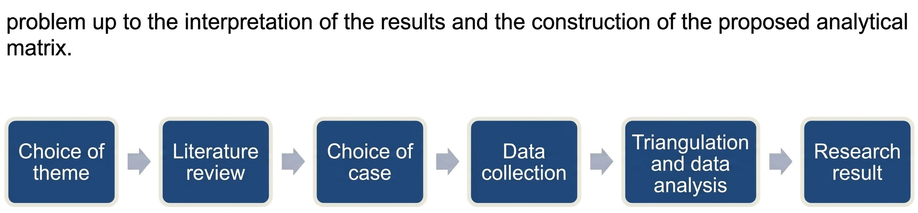
The methodological process adopted in this research is synthesized in Figure 1, which highlights the main stages that guided the development of the study, from the delimitation of the problem to the interpretation of the results and the construction of the proposed analytical matrix.
Figure 1. Research flow
Source: Original survey data
The study was developed in an organizational environment focused on supporting pilot-scale testing, demonstration, and process development projects, with frequent interaction between internal technical teams and external clients, especially entrepreneurs and “startups”. The context investigated is characterized by high technical complexity, operational uncertainty, stakeholder diversity, and the need for continuous coordination among multiple areas and interlocutors.
The research defined its focus on communication in project environments with cultural and generational diversity, multiple digital channels, and interaction with entrepreneurial clients, formulating the central question about how communication management can reduce information loss, misalignments, and conflicts. A literature review on project communication, cultural and generational diversity, digital communication, stakeholder management, diplomacy, and the use of roadmaps and process flows provided the theoretical basis.
Data collection occurred through participant observation and analysis of communication documents. The observation focused on two main axes: internal communication, among members of diverse teams in terms of age, nationality, and professional background; and external communication, between the project team and clients or stakeholders involved in the processes of testing, scope definition, monitoring, and decision-making.
Within the scope of internal communication, one-on-one meetings, in-person and virtual project meetings, informal interactions among team members, phone calls, and exchanges on instant messaging platforms were observed. Internal documents considered included emails, minutes, reports, and technical records related to project progress. For external communication, “kick-off” meetings, technical “workshops”, alignment and follow-up meetings, email exchanges with clients, proposals, contracts, minutes, executive summaries, and change requests were analyzed. The selection of these materials aimed to map how communication occurred, which channels were used, and how ambiguities affected project coordination.
The collected data were organized and analyzed through thematic analysis, as proposed by Braun and Clarke (2006). Observations and records were read exploratorily to identify recurrences, language patterns, breaking points, and episodes of communicational misalignment. Preliminary thematic categories were established and refined in light of the theoretical framework. From the interpretation of the observed patterns, a conceptual proposal was elaborated, synthesized in the Communicational Behavior Matrix. The analysis included the triangulation of different types of evidence (direct observation, verbal interactions, written records, and project documentation) and was guided by continuous dialogue between empirical observation and specialized literature in communication, project management, and intercultural management.
3. Results and Discussion
The analysis performed allowed the identification of consistent communication patterns that directly impact project coordination, team relationships, and alignment with external stakeholders. The results show that the main communication problems do not arise solely from a lack of information, but primarily from the way this information is distributed, interpreted, validated, and renegotiated throughout the project.
Information fragmentation across channels
The analyzed data demonstrate that information frequently fragments when transitioning between different communication channels. The same topic may initially be addressed in instant messaging, subsequently discussed via email, revisited in an online meeting, and finally, recorded partially or not at all in formal documentation. This process favors losses, simplifications, and reinterpretations, compromising the consistency of the circulating information. In diverse teams, this fragmentation becomes even more critical, as members do not use the same channels with the same frequency or priority, increasing the risk of contradictory actions, rework, and inconsistent communication with the client (KANABAR; WARBURTON, 2008).
Impact of generational and cultural differences on message interpretation
The analysis showed that generational and cultural differences significantly influence how communication is encoded and interpreted. Younger professionals tend to use short and informal messages, while more experienced professionals value structured records, explicit context, and formal confirmations. Furthermore, cultural differences affect communication style, especially regarding objectivity, the way of disagreeing, the use of nuances, and the interpretation of silence or omission. In several observed episodes, the problem was not located in the absence of content, but in the discrepancy between how the message was sent and how it was understood by the interlocutor, confirming that communication clarity is also a relational and contextual construction (Hall, 1976; Hofstede, Hofstede, and Minkov, 2010).
Misalignment with entrepreneurial clients
Another relevant result refers to the misalignment between the technical understanding of the internal team and the expectations of entrepreneurial clients. Even when limitations, responsibilities, and project constraints were explicitly presented, there was a recurrence of situations where clients later claimed not to have understood certain aspects already documented. These episodes indicate that communication with external stakeholders, especially in environments marked by uncertainty and pressure for results, should be understood not only as information transmission but as a continuous process of meaning negotiation and expectation management (BLANK; DORF, 2012; BRETT, 2007).
Absence of a shared communication plan
The results also show that the absence of an explicit communication plan contributes to amplifying noise and ambiguities. In many cases, it was not clearly defined which channels should be used for certain types of messages, where decisions should be recorded, or how scope changes should be formalized. This lack of a communication “playbook” leads to the prevalence of individual habits and subjective interpretations, compromising the predictability of the informational flow. In multicultural, multigenerational, and technically complex contexts, this lack of structure favors misalignments that could be avoided with simple, yet clear, communication agreements.
“Roadmaps” and process flows as alignment instruments
The analysis demonstrated that projects become more coordinable when communication is organized around process flows and visual roadmaps. Decomposing the project into recognizable stages, accompanied by decision points, defined responsibilities, and expected documented deliverables, contributes to creating a shared mental model between the team and the client. Internally, this structure reduces reactive communication and facilitates the escalation of doubts and decisions. Externally, it provides greater predictability to the client, contributing to reducing unrealistic expectations and promoting greater clarity regarding project progress, involved risks, and the responsibilities of each party.
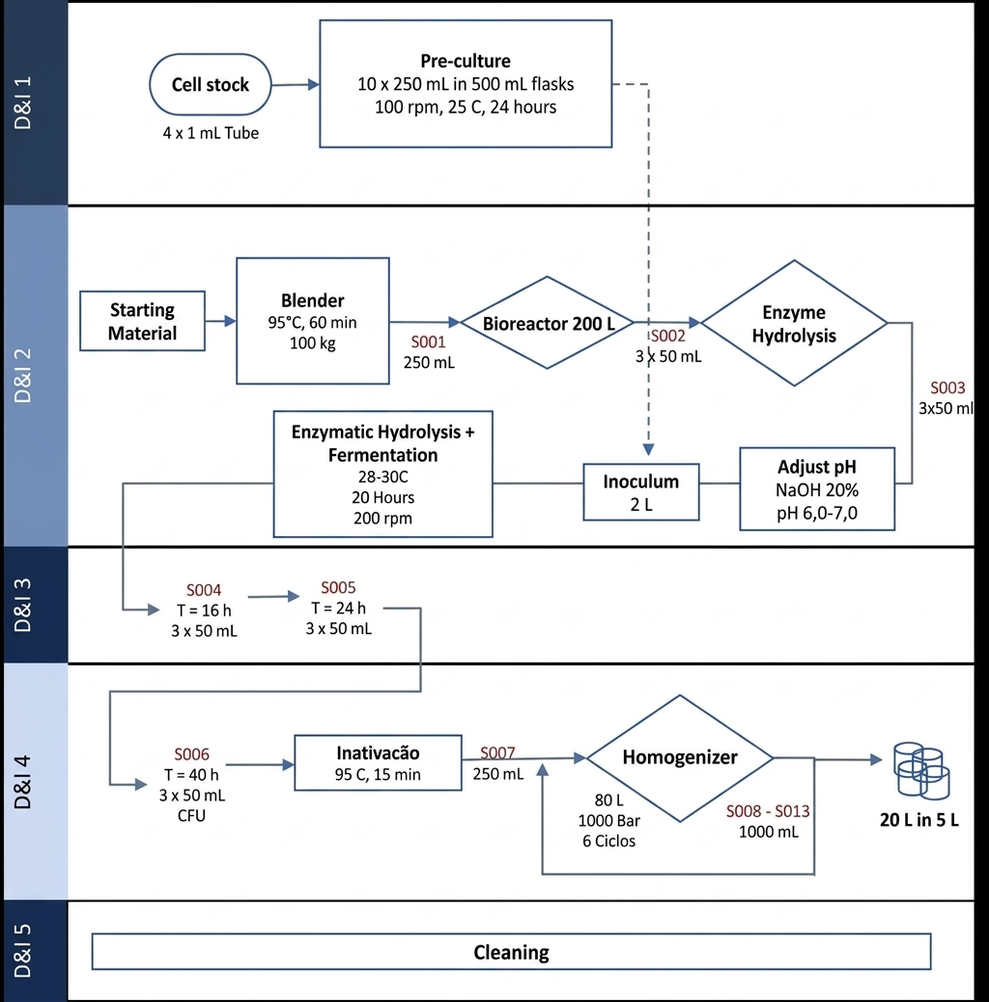
Figure 2 presents an example of a process flow used as an operational “roadmap” in pilot-scale technological innovation projects.
Figure 2. Example of an operational roadmap applied to a pilot-scale process
Source: adapted from internal operational document.
The use of visual representations such as the one presented in Figure 2 favors the construction of a shared understanding among the different actors involved in the project. By expliciting stages, dependencies, operational parameters, and control points, the roadmap reduces the need for implicit interpretations and facilitates alignment between technical language, operational planning, and client expectation. In this sense, structured flows function not only as operational instruments but also as communication, coordination, and expectation management devices in environments of high technical complexity.
Diplomacy as a core communication competence in projects
The results confirm that diplomacy constitutes a core competence for communication management in complex project environments. In contexts where internal diversity, pressure for results, technical limitations, and high client expectations coexist, clarity alone proved insufficient. The way of communicating proved to be as important as the content communicated. The most effective communication practice was that which was able to articulate objectivity with respect, firmness with active listening, and defense of boundaries with preservation of the relationship. Diplomacy proved especially relevant in situations of dispute, frustration of expectations, need for refusal, and scope renegotiation, contributing to reduce tensions and preserve collaboration.
Development of a Communication Behavior Matrix
In order to synthesize the observed communication patterns, a Communication Behavior Matrix was developed. This matrix is based on two dimensions that have proven relevant in project communication: results orientation and diplomacy. Results orientation refers to the degree to which an individual prioritizes action, efficiency, speed, execution, and achievement of project objectives. Diplomacy, on the other hand, refers to the ability to communicate respectfully, thoughtfully, and relationally intelligently, especially in situations of disagreement, uncertainty, criticism, or the need for delicate alignment.
The matrix was built inductively, based on the analysis of behaviors observed in meetings, email exchanges, chat platform interactions, and discussions with stakeholders. The results showed that the communicator’s behavioral style plays a determining role in how information is received, interpreted, and converted into action.
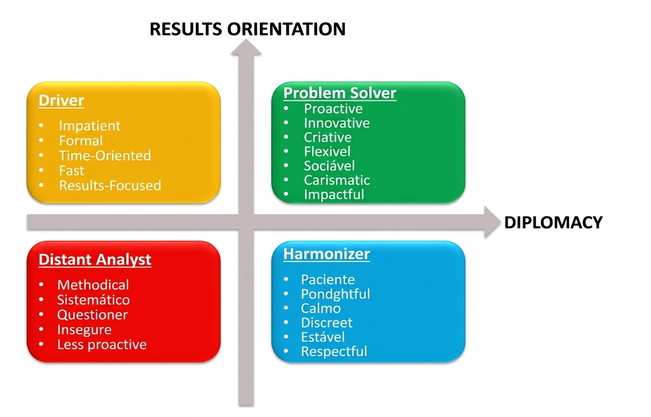
The resulting matrix identifies four communication profiles: The Driver, The Problem Solver, The Distant Analyst, and The Harmonizer, as presented in Figure 3.
Figure 3. Dimensions of Communication in Projects
Source: Original research results
The matrix categorizes communication behaviors into four profiles, according to the dimensions of results orientation and diplomacy. The model illustrates how different combinations between focus on delivery and interpersonal sensitivity influence team communication, stakeholder interaction, and project dynamics.
The Driver profile combines high results orientation and low diplomacy, characterized by urgency, formality, speed, and a strong focus on execution. Although advantageous in high-pressure contexts, it can be perceived as abrupt or unempathetic, generating resistance in multicultural or interdisciplinary environments.
The Collaborative Problem Solver combines high results-orientation and high diplomacy, representing a balanced and effective style. It brings together action, creativity, purpose, flexibility, and engagement capability, without compromising interpersonal respect and trust-building, being valuable for aligning execution and collaboration.
The Distant Analyst combines low results orientation and low diplomacy, with a methodical, cautious, and systematic posture. Their characteristics can contribute to risk identification and analytical depth, but the low results orientation and limited diplomacy may reduce their impact on the effective advancement of the project in dynamic situations.
The Harmonizer combines high diplomacy and low results orientation, being characterized by patience, calmness, stability, respect, and interpersonal sensitivity. It contributes to a stable communication environment and the preservation of relationships. However, the lesser emphasis on urgency and delivery may limit its effectiveness in contexts that demand quick decisions or execution follow-up.
The Communication Behavioral Matrix offers an analytical tool to understand why certain communication problems persist even when information seems clear and adequately documented, indicating that the difficulty lies in the misalignment between behavioral styles, expectations, and priorities. Furthermore, the matrix reinforces that effective communication in complex project environments requires both clarity and diplomacy. A results orientation is essential to ensure pace and delivery, but without diplomacy, it can compromise trust. Diplomacy is indispensable for preserving relationships, but without a focus on results, it can lead to slowness. The model suggests that the most desirable profile for complex, innovation-oriented project environments is the Problem Solver, as it combines execution capability with relational intelligence.
This study analyzed communication in project environments marked by cultural and generational diversity, multiple digital channels, and continuous interaction with entrepreneurial clients. The results showed that the main communication problems arise not only from a lack of information, but primarily from its fragmentation across channels, differences in interpretation between interlocutors, the absence of a shared communication plan, and misalignment of expectations with external stakeholders. The research demonstrated that, in contexts of high technical complexity, effective communication depends on greater structuring of communication flows, validation of understandings, and clarity in defining responsibilities. In this regard, the use of “roadmaps” and process flows proved relevant for fostering predictability, alignment, and coordination between the team and clients. Furthermore, diplomacy stood out as an essential competence for conducting sensitive interactions, managing tensions, and preserving collaboration without compromising the focus on results. The proposed Communication Behavior Matrix, based on the dimensions of results orientation and diplomacy, contributes to understanding different communication profiles in project contexts, indicating that communication, in complex innovation environments, constitutes a strategic competence for reducing noise, aligning expectations, and supporting project success.
4. Conclusion
This study analyzed communication in project environments characterized by age, cultural, and professional diversity, multiple digital channels, and continuous interaction with entrepreneurial clients, seeking to understand how communication management can reduce information loss, misalignment, and conflicts. It was found that the main communication challenges stemmed from the fragmentation of information across channels, generational and cultural differences in message interpretation, the absence of a shared communication plan, and misalignment between client expectations and project technical limitations. The use of structured process flows and roadmaps was observed to promote greater clarity, predictability, and alignment between the team and stakeholders. Additionally, diplomacy stood out as a central competence in communication management, especially in situations of tension and frustration, by articulating objectivity with respect and firmness with active listening. As a practical and conceptual contribution, a Communication Behavior Matrix was proposed, based on the dimensions of results orientation and diplomacy, which identifies four distinct communication profiles, with the Collaborative Problem Solver being the most effective for aligning execution and collaboration.
The Communication Behavioral Matrix offers an analytical tool to understand the persistence of communication problems, even with clear information, indicating that the difficulty lies in the misalignment of behavioral styles and priorities. It is concluded that effective communication in complex and innovation-oriented projects depends on the balance between focus on delivery and relational sensitivity, with structured and diplomatically conducted communication being a critical factor for project alignment and success. However, the study is qualitative and exploratory, based on immersive observation in a specific context, which limits the generalization of the findings. For future research, it is recommended to investigate the application of the proposed matrix in other sectors and organizational contexts, as well as to empirically evaluate the effects of structured communication practices on project performance.
Bibliographic References
BIZJAK, Igor; FAGANEL, Armand. Internal communication in global project teams. In: GAMS, Matjaž; FAGANEL, Armand; KOVAČIČ, Marjan (ed.). Challenges of working in virtual teams. Ljubljana: ToKnowPress, 2021.
BLANK, Steve; DORF, Bob. The startup owner’s manual: the step-by-step guide for building a great company. Pescadero: K&S Ranch, 2012.
BRAUN, Virginia; CLARKE, Victoria. Using thematic analysis in psychology. Qualitative Research in Psychology, v. 3, n. 2, p. 77-101, 2006.
BRETT, Jeanne M. Negotiating globally: how to negotiate deals, resolve disputes, and make decisions across cultural boundaries. 2. ed. San Francisco: Jossey-Bass, 2007.
CARDON, Melissa S. et al. The nature and experience of entrepreneurial passion. Academy of Management Review, v. 34, n. 3, p. 511-532, 2009.
CORTELLAZZO, Laura; BRUNI, Elisa; ZAMPIERI, Rita. The role of leadership in a digitalized world: a review. Frontiers in Psychology, v. 10, art. 1938, 2019.
GLOOR, Peter A. Swarm creativity: competitive advantage through collaborative innovation networks. New York: Oxford University Press, 2006.
HALL, Edward T. Beyond culture. New York: Anchor Books, 1976.
HOFSTEDE, Geert; HOFSTEDE, Gert Jan; MINKOV, Michael. Cultures and organizations: software of the mind. 3. ed. New York: McGraw-Hill, 2010.
KANABAR, Vijay; WARBURTON, Roger D. H. Understanding and overcoming communications complexity in projects. In: PMI GLOBAL CONGRESS, 2008. Proceedings […]. Newtown Square: Project Management Institute, 2008.
KERZNER, Harold. Project management: a systems approach to planning, scheduling, and controlling. 11. ed. Hoboken: Wiley, 2013.
LEE-KELLEY, Liz; SANKEY, Tim. Global virtual teams for value creation and project success: a case study. International Journal of Project Management, v. 26, n. 1, p. 51-62, 2008.
OCHIENG, Ezekiel G.; PRICE, Andrew D. F. Managing cross-cultural communication in multicultural construction project teams: the case of Kenya and UK. International Journal of Project Management, v. 28, n. 5, p. 449-460, 2010.
PROJECT MANAGEMENT INSTITUTE. A guide to the project management body of knowledge (PMBOK guide). 6th ed. Newtown Square: PMI, 2017.
Article originating from the Final Course Work of the Specialization in Project Management of the MBA USP/Esalq
To learn more about the course, click here and access the MBX Academy platform