
Blockchain
Compliance
Innovation
November 24, 2022
Blockchain and compliance as a tool in organizations: bibliometrics and quantitative analysis
DOI: 10.22167/2675-6528-20220034
E&S 2022,3: e20220034
Raphael Ewandyr Aguiar
Today, in modern society, globalization is seen as a natural and unique phenomenon, for allowing greater market openness and significantly expanding the potential supply of goods and services through logistics chains that transcend the geopolitical boundaries of countries[1].
Modern organizations are characterized as a system made up of interactive elements that receive inputs from the environment, transform them, and subsequently emit outputs to the external environment. In this sense, the interactive elements of the organization – people and departments – depend on each other and must work together. Previously, organizations were understood as closed environments, which were not influenced by the environment of which they were a part. It is important to emphasize, however, that flexible organizations tend to adapt more quickly to environmental changes, while rigid organizations, such as highly hierarchical ones (with a more conservative culture, for example), tend to be more resistant to changes or adapt to them more slowly[2].
Thus, companies began to carry out purchases, sales, and investments in different countries, generating the need for transactions between companies and international markets[1]. Concomitant with the market’s scope, the inevitability of building institutional security in commercial and productive relations arises, considering the ethical, moral, and legal aspects of economic agents[3].
With this, the compliance system assists companies in building this institutional security, in order to strengthen tangible and intangible aspects, so as to provide greater credibility with their clients, suppliers, and investors. This system is enforced through a set of disciplines, legal and regulatory norms, and established policies, as well as their guidelines, detecting any non-compliance in their activities. This pressures companies to think increasingly globally, designing their strategies with a focus on reducing costs and losses from errors arising from non-compliant processes[4].
In this context, blockchain emerges, a technology in which all computers connected to the system possess information about the activities registered within it in an encrypted manner, through a process called “ledger”, with the objective of guaranteeing the reliability of any and all types of transactions recorded by it[5].
Given the need for organizations to identify the main risks to which they are exposed, due to the complex business environment, the need for a broad and continuous assessment process[4] has become increasingly evident. This is because risk is a negative event in achieving an objective. Therefore, the violation of laws and regulatory procedures can generate several consequences, such as financial losses and damage to reputation, due to non-compliance with norms, codes of conduct, laws, and internal policies[6].
When it comes to risk management, blockchain strengthens its management because for a transaction to be considered valid and actually occur, it is necessary for 50% plus 1 (one) of the participants in the network to reach consensus. In this case, it becomes feasible for the majority, and not the entirety, to be responsible for validating a given transaction, in order to ensure that false transactions are not validated[7].
Generally, decentralized blockchains operate with the scope of managing the network and approving transactions, meaning that instead of the transaction being approved by a single individual, preserving the database, this validation is distributed among all people connected to the network. Thus, the acceptance or rejection of a transaction made on the blockchain occurs through the opinion of all people connected to it[7]. Given this, the blockchain enriches the unfolding of compliance transparency, as this transparency can be translated by the process of providing information that is relevant to stakeholders and not solely by the availability of what is mandatory by laws or regulations[4].
In this sense, aiming at the organization’s security, one of the blockchain’s functionalities is the creation of “smart contracts” (intelligent contracts), self-executing contracts that do not require intermediaries[8].
Smart contracts (Figure 1) are operated on a blockchain or distributed in a “ledger”, written in computer code. Furthermore, they are verified, executed, and enforced based on the terms written in their code, and can be partially or fully self-executing and self-enforcing. Therefore, unlike a traditional contract, which is written only in a legal language, the smart contract, as a self-executing computer protocol, is capable of obtaining information by processing it and taking the due actions foreseen according to the rules stipulated therein[7].
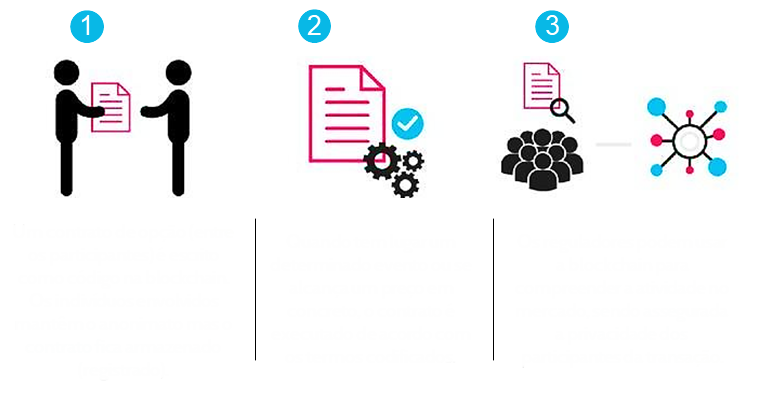
Figure 1. “Smart Contracts” Protocol
Source: Cardoso[8].
For the obtained information to be processed and for the due actions stipulated by the rules in the smart contract to be taken, the clauses need to be partially or completely self-executing, self-binding, or both. From the moment these conditions are met, the smart contract can proceed with the automatic completion of transactions. Unlike physical contracts, smart contracts offer greater security, considering that traditional contracts are made up of legal language, susceptible to multiple interpretations, whose validation is subject to a public judicial system that is often expensive, time-consuming, and inefficient. In contrast, smart contracts are written in an immutable programming language and are entirely digital, stating obligations and consequences in the same way as the traditional physical document, but with the possibility of having their code automatically executed[8].
The potential for applying blockchain in compliance is enormous, in addition to presenting numerous advantages specifically for compliance. Auditors, internal or external, would perform real-time process validation, drastically reducing the effort and time invested in obtaining information. Blockchain can also contribute to fraud prevention, as operations recorded on the blockchain do not allow tampering[9].
It is important to explain that there is still a lack of clarity in the regulation of blockchain technology. Due to its complexity, regulatory bodies have been finding it difficult to define a legal environment for the technology, making it difficult for authorities to obtain clear jurisdiction, as well as the legal obligations of the parties involved in the transaction[10].
Thus, as it is a recent topic, scientific knowledge can contribute to the understanding of blockchain’s application as a compliance tool. Therefore, in the present study, we sought to map articles on both blockchain and compliance, with the objective of analyzing whether the themes are among the “trending topics” in academia. A query was performed on the platform databases, Web of Science and Scopus, using some search expressions, with the keywords “blockchain” and “compliance”, for the indexes – article title – within a five-year interval (from 2017 to 2021). The interval was defined starting from 2017, given that the use of the aforementioned keywords did not result in any record of articles in these databases in previous years. The number of articles published per year, the total number of articles per database in each year of the analyzed period, the major area of study to which the articles refer, as well as the geographical origin of these articles were analyzed.
From the data collected, a structured spreadsheet with the following fields was elaborated: searched terms, publication year, country, knowledge area, and results. The analysis began with the distribution of articles found in the searched databases by year (Figure 2). Thus, it was observed that in 2017, three articles were published (3.33%), in 2018, eleven articles (12.22%), in 2019, twenty-nine articles (32.22%), in 2020, twenty-five articles (27.77%), and finally, in 2021, twenty-two articles (24.44%).
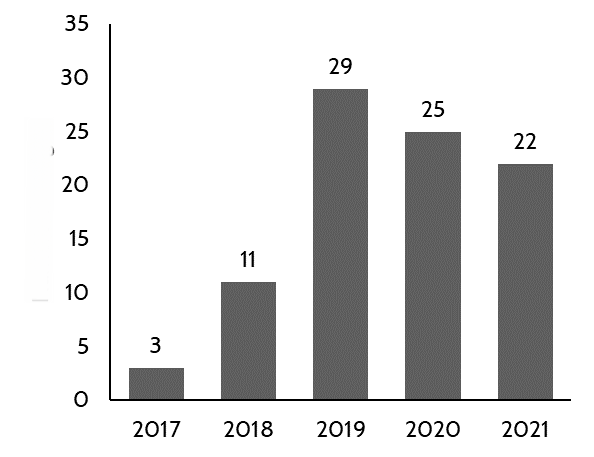
Figure 2. Number of articles published in the Scopus and Web of Science databases from 2017 to 2021
Source: Prepared by the author
In the year 2019, 29 articles were published, the largest number found in the analyzed corpus. Thus, after a decrease in previous years, it is possible to observe an increase in researchers’ interest in the topics of blockchain and compliance.
The largest volume of articles was found in the Scopus database. Below is a summary (Table 1) of the total articles found based on the filters mentioned in the previous paragraphs in each research database by year.
Table 1. Annual total of articles by database
| Database | 2017 | 2018 | 2019 | 2020 | 2021 | Sum |
| Web of Science | 1 | 3 | 10 | 7 | 6 | 27 |
| Scopus | 1 | 6 | 12 | 7 | 10 | 36 |
| Sum | 2 | 9 | 22 | 14 | 16 | 63 |
Source: Elaborated by the author
The percentages of the distribution of the analyzed articles by major area of knowledge are presented in Figure 3.
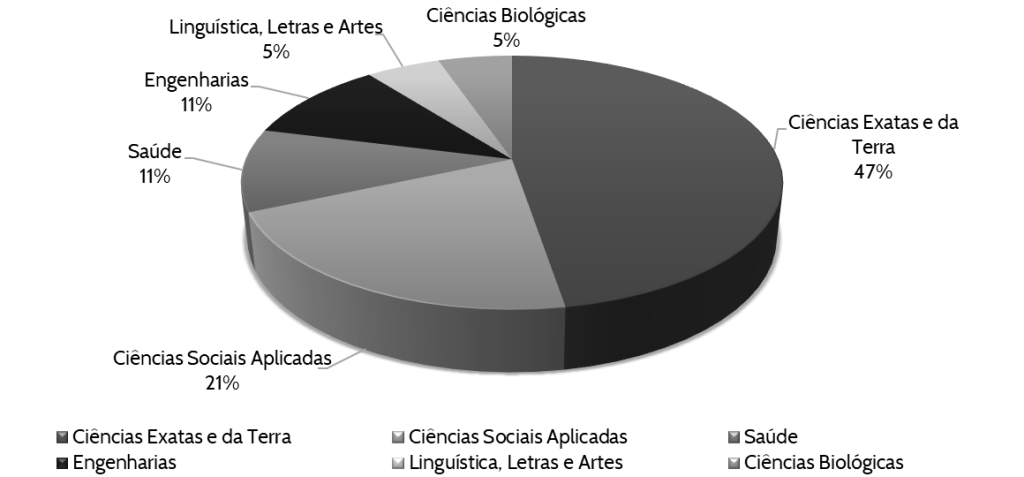
Figure 3. Distribution of the total articles surveyed in the Scopus and Web of Science databases by major areas
Source: Prepared by the author
Note: Distribution based on the CAPES knowledge/evaluation areas Table[11].
It is observed that 47% of the articles are from the exact sciences and earth sciences area, followed by 21% from the applied social sciences area, 11% from the health area and engineering area, and 5% from linguistics, literature and arts and biological sciences area. With the majority of these articles being from North America (Figure 4).
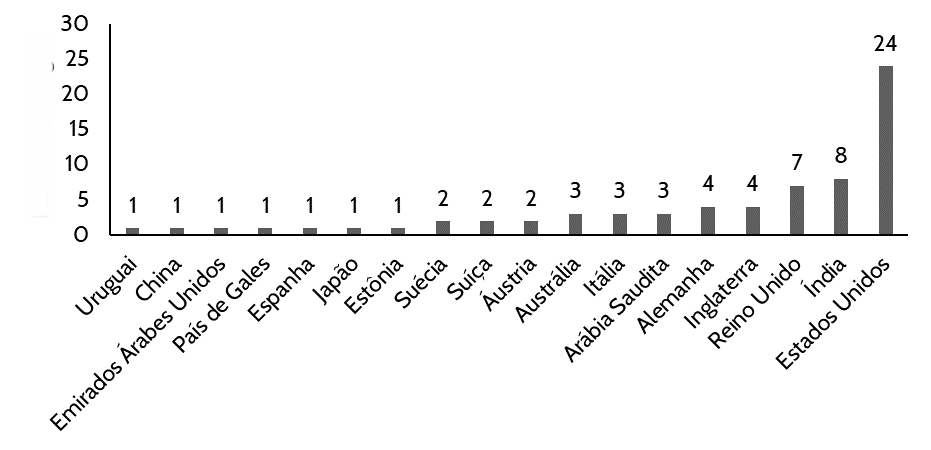
Figure 4. Geographic origin of the analyzed articles
Source: Prepared by the author
It was observed that the majority of articles belong to the United States region (24), followed by India (8), United Kingdom (7), England and Germany (4), Saudi Arabia, Italy and Australia (3), Austria, Switzerland and Sweden (2), Estonia, Japan, Spain, Wales, United Arab Emirates, China and Uruguay (1). It is worth noting that the number of articles per country is greater than the number of articles found, since one or more articles represent more than one country when analyzed in the searched databases.
The results indicate a low volume of studies on the topic around the world, with articles developed only from 2017 onwards.
However, it is possible to observe the strengthening of compliance, given the possibility of making it more efficient and effective through blockchain, since the technology works with a decentralized network model, unlike the client-server model. Furthermore, blockchain has its encrypted database and requires that any new information inserted into it be validated by the nodes – members of the network –, preventing the validation of false information. Thus, blockchain makes compliance more robust, generating more institutional security for organizations, making them more reliable, as the technology functions as a public ledger.
It is also noted that there are some obstacles in applying blockchain as a compliance tool, such as the issue of regulation itself, which does not clearly define the rules for the use of the technology.
Therefore, due to regulatory issues, lack of adequacy to existing regulations, and scientific studies on the subject, there are many difficulties in fully applying blockchain as a compliance tool. However, the value that blockchain can add to compliance is noticeable, promoting greater transparency of information and greater integrity to organizations, through public data records, disclosure of compliance programs, for example, which favors management by reducing most administrative procedures.
References
[1] Silva N.M. Geografia regional do mundo I. 2011. Editora EDUFRN, Natal, Rio Grande do Norte, Brasil.
[2] Barbosa R. Características básicas das organizações formais modernas: tipos de estrutura organizacional, natureza, finalidades e critérios de departamentalização. 2014. Disponível em: < https://pt.slideshare.net/deborasoaresteodoro/caractersticas-bsicas-das-organizaes-formais-modernas-apostila>.
[3] Théret B.; Braga J.C.S. Regulação econômica e globalização. 1998. Editora UNICAMP, Campinas, São Paulo, Brasil.
[4] Instituto Brasileiro De Governança Corporativa (IBGC). Código das melhores práticas de governança corporativa. 5ed. 2015.Editora IBGC, São Paulo, SP, Brasil.
[5] Wester L. Blockchain maximalist: the very structure of society is about to chance. 2018. Editora OnePeople.io, Ventura, California, Estados Unidos.
[6] Serpa A.C. Compliance descomplicado. Um guia simples e direto sobre programas de compliance. 1ed. 2016. Editora CreateSpace Independent Pub.
[7] Gates M. Blockchain: Ultimate guide to understanding “blockchain”, bitcoin, cryptocurrencies, smart contracts and the future of money. 2017. CreateSpace Independent Publishing Platform. Disponível em: <https://www.pdfdrive.com/blockchain-ultimate-guide-to-understanding-blockchain-bitcoin-cryptocurrencies-smart-contracts-and-the-future-of-money-d176310394.html>.
[8] Cardoso B. Contratos Inteligentes: descubra o que são e como funcionam. Advogado Bruno Cardoso; 2018. Disponível em: <https://brunocardosoadv.com/contratos-inteligentes/#t2>.
[9] Legal, Ethics & Compliance (LEC). Os efeitos da blockchain para o compliance no mercado financeiro. LEC; 2018. Disponível em: <http://www.lecnews.com.br/blog/os-efeitos-do-blockchain-para-o-compliance-no-mercado-financeiro/>.
[10] Lamounier L. Os 10 principais desafios para implementar “blockchain” nas empresas. 101 Blockchains; 2019. Disponível em: <https://101blockchains.com/pt/implementacao-da-blockchain-empresarial/#prettyPhoto>.
[11] Coordenação de Aperfeiçoamento de Pessoal de Nível Superior (CAPES). Tabela de áreas de conhecimento/avaliação. 2022. Disponível em: < https://www.gov.br/capes/pt-br/acesso-a-informacao/acoes-e-programas/avaliacao/instrumentos/documentos-de-apoio-1/tabela-de-areas-de-conhecimento-avaliacao>.
Como citar
Aguiar R.E. Blockchain e compliance como ferramenta nas organizações: bibliometria e análise quantitativa. Revista E&S. 2022; 3: e20220034.
Sobre o autor
Raphael Ewandyr Aguiar, Administrador e Especialista em Gestão de negócios, Juiz de Fora, Mg, Brasil.
Editorado por: Edson Pereira da Mota
Link para download: https://cms.revistaes.com.br/wp-content/uploads/2022/11/ES_34.pdf