
Innovation
Brazilian Market
Soils
Paints
May 21, 2024
Inks produced with soil in the Brazilian market
DOI: 10.22167/2675-6528-20230090
E&S 2024, 5: e20230090
Aline Martineli Batista; Bruna Arruda; Thairís Gomes dos Santos; Antonio Carlos de Azevedo; Alexandre Barreto de Almeida
Brazil is the fifth largest producer of paints in the world, this being an important sector for the country’s economy[1]. Among the main components of paints are pigments, which give them color; resin, which agglomerates the pigments; and solvents, which solubilize the resin and keep the pigments homogeneous[2].
Until the 1830s, paints were generally produced with natural pigments, derived from vegetable and/or mineral materials, and using natural solvents and resins as well, such as water, animal fats, egg yolks, oils, among others[3],[4]. With the industrialization of paint production, synthetic raw materials began to be used, prepared by chemical reactions[5], with volatile organic compounds that can cause damage to human health and, due to their toxic and corrosive properties, can also generate environmental damage[6],[7].
With this, efforts have been made in an attempt to resume the production processes of non-toxic paints that meet the specifications of the standards determined by the Brazilian Association of Technical Standards (ABNT) regarding product performance according to its purpose[2],[7]. Among non-toxic paints, geocoatings – paints made using soil as pigment – are being revived because they are considered sustainable, meeting the economic, social, and environmental tripod. Using soil as pigment, numerous natural materials can be used as solvent and resin for the production of ecological paints, covering various techniques and painting purposes. Geocoatings have low production costs[6], can be employed as a source of employment and income[7] , and aid in environmental awareness[8],[9].
In recent years, the use of geo-inks has been employed in painting residences and, more recently, in plastic arts and as a didactic material for environmental education[10],[11], showing the potential for this product’s insertion into the Brazilian market. However, it is necessary to evaluate the interest of potential consumers in using it, as it is still little known.
The hypothesis of this work was that Brazilian consumers were unaware of the potential of using geodyes, limiting their expansion in the market. The objectives were: (i) to evaluate the knowledge of potential paint consumers about the use of geodyes in Brazil; (ii) to verify the potential for geodyes to enter the Brazilian market; and (iii) to develop a Canvas business model for visualizing and planning strategies for a company, aiming at the commercialization of artisanal geodyes in Brazil.
The present investigation was carried out from a market study, at a national level (Brazil), through the application of an online questionnaire. The choice was made to apply an online questionnaire to reach a larger and more representative sample of Brazil, facilitating the participation of respondents from different states of the country. The questionnaire, developed using Google Forms, had 22 questions, 21 of which were multiple-choice and one open-ended (Table 1). The questionnaire was available from July 13, 2021, to August 26, 2021, for respondents from all over Brazil, with wide dissemination of the access link, and could only be answered once per person.
Table 1. Items evaluated in the online questionnaire
| Evaluated Item | Description | Question(s) |
| Respondent Profile | Gender, age, marital status, schooling, profession, monthly family income, current professional activity, state of residence, and use of paint/paints in their daily lives. | 1 to 7 and 13 |
| Respondents’ interest in geoinformation | Respondents’ prior knowledge of geojute and soil color diversity, and their opinion on the use of soil in geojute production. | 8 to 12 |
| Purchase intention | Purchase intention of geo-inks according to use, considering their utilization in masonry, artisanal, children’s, and other forms. | 14 to 17 |
| Form of purchase | Purchase points, purchase methods, and value that would best suit your interests. | 18 to 21 |
| Discursive question (optional) | Possibility for respondents to record their perceptions of the geotints. | 22 |
To quantify the interest in the idea of using soil to produce paints and the intention to buy them, affective tests were used to evaluate product acceptability or preference[12]. To understand the respondent’s opinion on the use of soil as a pigment to produce paints, a test with a five-point structured verbal hedonic scale was applied, namely: 5. I liked it very much; 4. I liked it; 3. Indifferent; 2. I did not like it; and 1. I did not like it at all. To define the purchase intention, a five-point attitude (or intention) scale test was applied: 5. I would certainly buy; 4. I would probably buy; 3. I am doubtful if I would buy; 2. I would probably not buy; and 1. I would certainly not buy.
Statistical analyses were performed using the R program. Data from questions with answers on hedonic scales with intensities ranging from 1 to 5 were evaluated by a mixed analysis of variance (ANOVA) model, considering participants as random variables and types of use as fixed variables. To evaluate the difference between means, in case of significant difference at the 5% level (α = 0.05), Tukey’s mean test was applied.
The relationship between purchase intention and the age group or income bracket of potential consumers was evaluated through Pearson correlation. For this, the average of each age and income bracket was considered. The relationship between gender or prior knowledge about geotints and purchase intention was performed through two-dimensional descriptive analysis, with frequency distribution.
The questionnaire responses from the discursive question were used in the work’s discussion. The information obtained from the questionnaire was used for the development of a Canvas business model[13],[14],[15], composed of nine blocks: value proposition; customer segments; distribution channels; customer relationships; revenue streams; key resources; key activities; key partnerships; and cost structure. This Canvas model consists of an effective and simple tool for visualizing and planning a company’s strategy.
This study included 144 respondents from 17 federative units of Brazil, with representatives from all Brazilian regions (North, Northeast, Center-West, Southeast, and South), with the North region presenting the lowest number of respondents and the majority of responses coming from the Southeast region, with emphasis on the states of São Paulo and Minas Gerais (Figure 1).
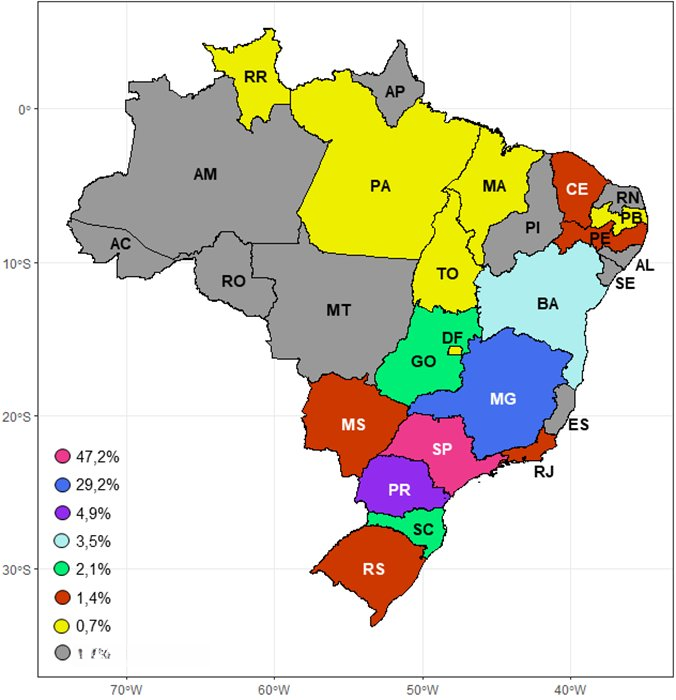
Source: Original research results.
Among the respondents, 83.3% did not work with painting, and among those who did work with painting, 68.2% developed works on canvas, paper, fabric, and masonry, with 22.7% working with more than one of these materials. Another 22.7% worked with paint manufacturing and painting on pieces of clay, wood, medium density fiberboard (MDF), ethylene-vinyl acetate (EVA) foam, and rope. Two people (9.1%) work with paints for teaching purposes; one of them is an art teacher, and the other uses natural paints for soil education activities.
The majority of respondents were female (68%), corroborating with some studies that suggest women tend to respond to online questionnaires more than men[16]. Regarding age, the majority of respondents were between 26 and 35 years old, for both female (50%) and male (52%) genders. The age of questionnaire respondents can vary depending on the research context and target population, however, online surveys tend to attract younger respondents[17],[18].
Information on marital status, schooling, profession, and monthly family income (Figure 2) showed that most respondents were single (58%); professionally worked as agricultural engineers (22%), professors (20%), and students (17%); had a high level of education (postgraduate, 48%); and received salaries between 1–5 minimum wages (58%). The complexity associated with obtaining respondents in online questionnaires is related to the representativeness of the sample to avoid fraud[19],[20]. However, it should be noted that 59% of respondents did not work in the professions described above (agricultural engineers, professors, and students); 52% did not have postgraduate degrees; and 42% received salaries in ranges other than 1–5 minimum wages (Figure 2).
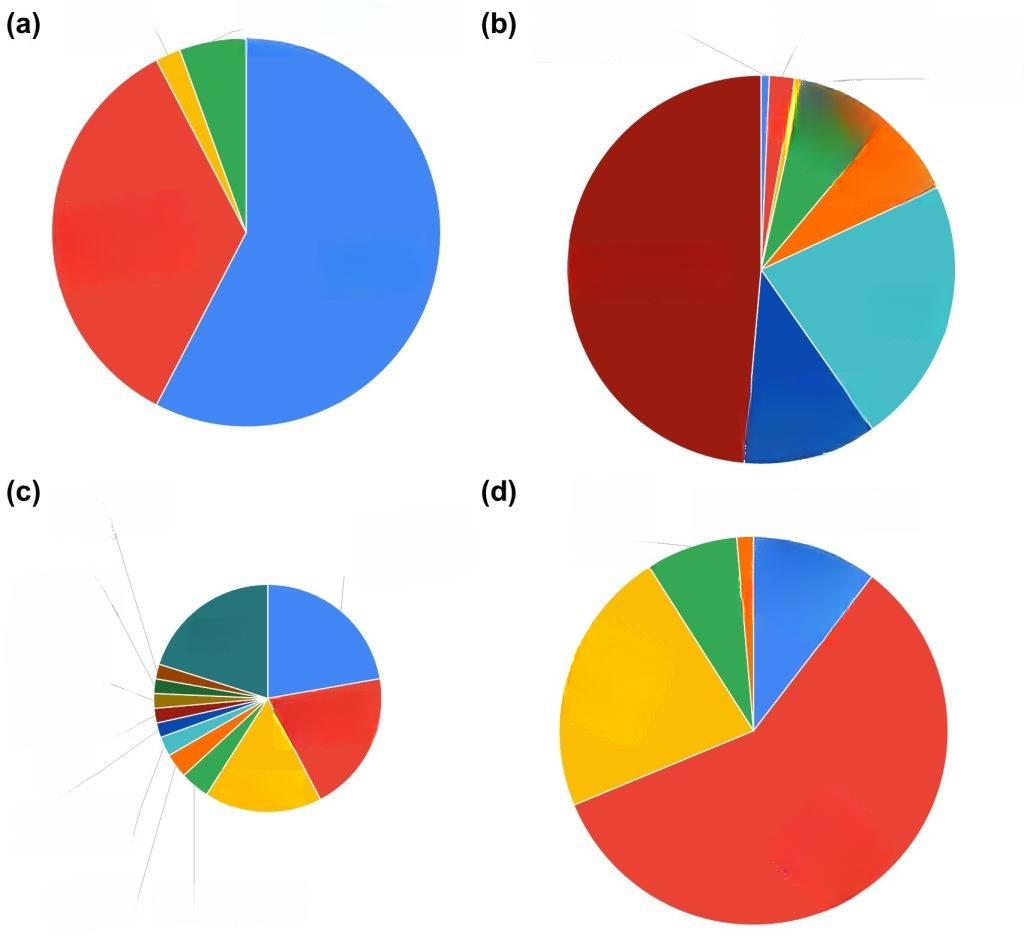
Source: Original survey results.
Among the 144 participants, 60.4% knew that soil could be used to produce paints. It should be noted that, among agronomists, students, and professors, 37.5%, 41.7%, and 24.1%, respectively, did not know that soil could be used to produce paints. Among the professionals listed as “others” (Figure 2c), 51.7% did not know this same information.
Although 60.4% of respondents were aware of the use of soil as a pigment for paint production, 75.7% had never used geotextiles, but all reported that they would like to have this experience. Of those who had already used the paint, only 2.1% would not like to use it again, as they would not give up the paints they used. The other participants (22.2%) had already used geotextiles and, on that occasion, liked the product. Of these, 2.1% had purchased the product from third parties, demonstrating that the geotextile market is already a reality, and 20.1% produced their own paints.
The fact that respondents show high interest in products with non-toxic and sustainable characteristics may be associated with green marketing and/or green consumption[21],[22]. Green marketing refers to a marketing strategy adopted by companies that emphasize their commitment to social and environmental sustainability, seeking to minimize the negative impact of commercial activities on the environment and meet consumer demands for environmentally friendly products. On the other hand, green consumption consists precisely of consumer demand for environmentally friendly products and services. Therefore, our results corroborate with other authors, demonstrating that consumers increasingly tend to choose sustainable products given the growing threats to the environment[23],[24].
Regarding the knowledge of soil colors: 50.7% believed that there were more than 20 colors; 18.1% believed there were 11 to 15 colors; 16.7% thought there were six to ten colors; 9% believed there were one to five soil colors; and 5.6% believed there were 16 to 20 soil colors. Among agronomists, students, professors, and others, 71.8%; 41.6%; 58.6%; and 51.7%, respectively, believed that there were more than 20 soil colors in nature. The different soil types worldwide exhibit great color diversity, represented in the Munsell Soil Color Chart by 170 colors, which vary according to the environment to which the soil is subjected[25]. Furthermore, different soil colors can be mixed during geotint preparation, obtaining intermediate colorations. The limitation in knowledge of the diversity of soil colors in nature is due to limited empirical knowledge, as cases of great variety of soil colors in the same location are rare, and variations in soil color with depth are not perceptible to the human eye. This result indicates that publicizing the existence of a wide variety of soil colors can be applied as a marketing strategy for geotints.
Regarding respondents’ interest in the idea of using geodyes, 71.5% assigned a score of “5. I liked it a lot”, and 24.3% of them gave a score of “4. I liked it”. Only 4.2% of participants assigned the score “3. Indifferent”. The average (n = 144), on a scale of 1 to 5, was 4.67 (± 0.05), indicating a high level of interest from respondents in the product. This is environmentally important because painting with geodyes can inspire aesthetic appreciation of the soil and even promote individual behavioral changes that support the pursuit of soil conservation[9].
Regarding purchase intention, 99.3% of respondents would be interested in buying geotextiles if they were for sale. Overall, average scores (n = 144) were obtained, ranging from 4.15 (± 0.06) to 4.67 (± 0.04), indicating a high purchase intention for all types of use, with geotextiles showing greater acceptability (p < 0.05) by consumers for artisanal and children’s use (Figure 3a). Painting on masonry received the lowest (p < 0.05) purchase intention (Figure 3a). However, the score “1. Certainly would not buy” was not assigned to any of the types of use.
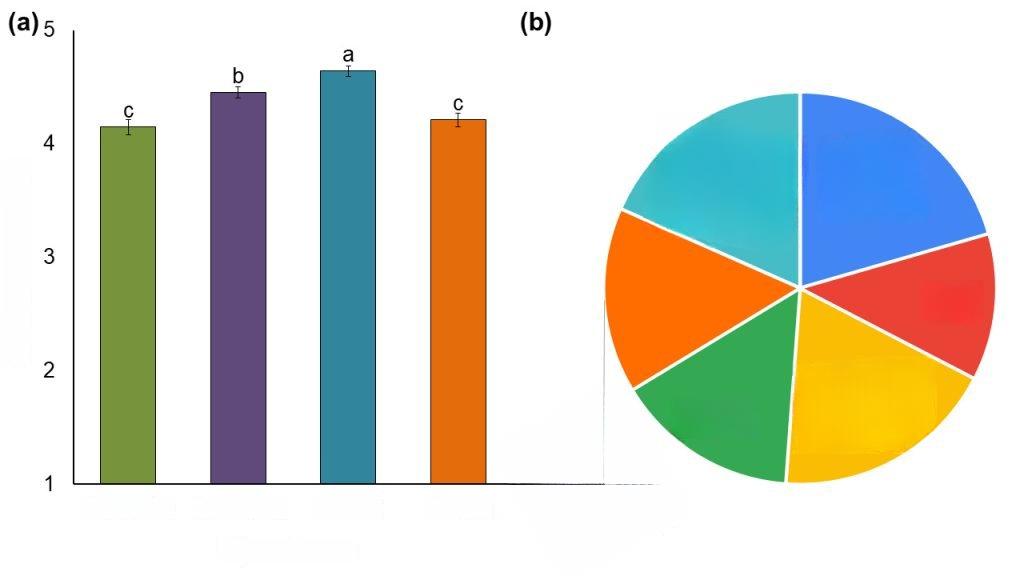
Source: Original survey results.
Note: In (a), letters differentiate usage types by Tukey’s test (α = 0.05).
Source: Original research results.
The salary range and age range of the respondents did not affect the purchase decision for the product, reflecting low correlation values between these variables (Table 2).
Table 2. Pearson correlation values between age group or salary range (average value of each range) and the ratings assigned to the purchase intention of geotextiles for masonry, artisanal, children’s and other uses on a hedonic scale of 1 to 5 (5. I would certainly buy; 4. I would probably buy; 3. I am unsure if I would buy; 2. I would probably not buy; and 1. I would certainly not buy) (n = 144)
| Categories | Masonry | Artisanal | Child | Others |
| Age range | 0.204 | 0.097 | 0.004 | 0.092 |
| Salary range | 0.018 | 0.002 | -0.017 | 0.044 |
For all types of use, a greater purchase intention for geoinck was observed among female respondents (Figure 4a). Purchase intention may vary by gender depending on the product being marketed, and marketing carried out by companies can influence the behavior of consumers of both genders in different ways[26]. Therefore, the marketing strategies for soil geoincks should aim to attract the interest of the male gender and secure that of the female gender. Hasan indicated that men value the utility of purchases[27]. To attract the interest of this gender in geoincks, marketing strategies should be used that demonstrate the diversity of product uses.
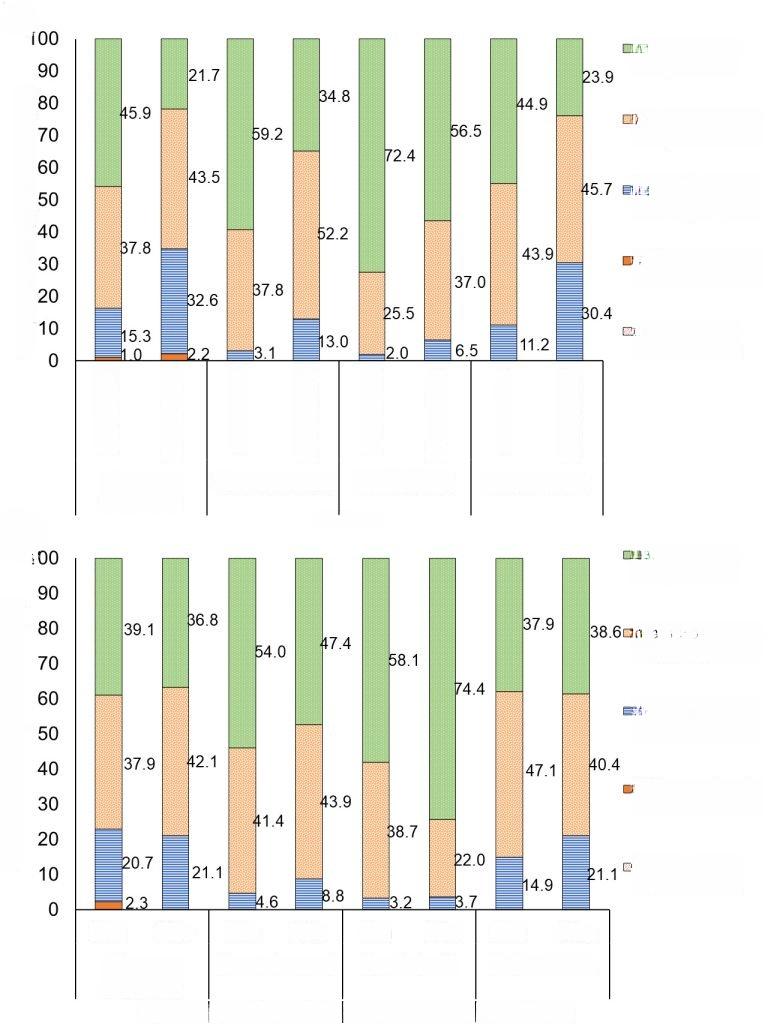
Source: Original survey results.
No difference was observed in purchase intention between people who knew about geotints and those who did not (Figure 4b). It was observed, however, that those who had this knowledge showed a greater tendency to certainly buy the paint for artisanal use and a lower tendency to acquire it for children’s use (Figure 4b). In general, people who are unaware of geotints initially associate them with works primarily done by children, as the product is non-toxic and children’s paints do not require high quality and performance from products. This group of people rarely associates geotints with high-quality paintings developed by professionals.
Regarding the ideal place to buy the product, participants interested in purchasing could choose more than one option. 556 responses were obtained, distributed across six options (Figure 3b). Construction material stores and art/craft product stores were elected as the best places for selling geotextiles (Figure 3b). Although the majority of respondents (20.5%) selected “construction material store” as an ideal place for selling geotextiles (Figure 3b), painting on masonry received the lowest (p < 0.05) purchase intention (Figure 3a). Considering what was observed in Figure 3, it is therefore believed that the ideal points of sale are art/craft product stores, stationery stores, and a specific website for product sales, thus working with direct sales (website) and indirect sales (resale by art/craft product stores and stationery stores) to individuals.
Of the 99.3% of respondents who would be interested in buying geotextiles, only 25.0% would be interested in choosing the soils used in the production of the paints; 28.5% would not be interested, and the majority (45.8%) chose that they “might” be interested, demonstrating uncertainty about the relevance of choosing soils to produce the paints to be purchased. Thus, the choice of soils for producing geotextiles was not a relevant factor for consumer interest and, therefore, should not be used as a marketing strategy. However, manufacturers should consider these characteristics to ensure product quality.
Of the 143 participants who responded about the ideal way to purchase the product, the majority (54.2%) would like to buy separate units; 18.3% would like kits with five to ten colors; 17.6% would like kits with two to four colors; and 9.9% wanted kits with more than ten colors. Therefore, selling separate units was elected as the ideal way to market the soil paints.
Regarding the product’s value, among the 144 participants, 56.9% would pay a similar price for geotint as for conventional inks found on the market; 38.2% would pay a higher price, as it is an artisanal product; 4.2% of respondents would pay only a lower price; and only 0.7% of them would not be willing to pay for the product. The respondents’ willingness to pay a similar or even higher price for the product than for conventional inks could be linked to the appreciation of the artisanal and sustainable characteristic of geotint. An analogy can be made to sustainable food products, as people are willing to pay a higher price for organic foods[28].
There was no relationship between the respondents’ salary range and the amount they were willing to pay for the product, with the majority of those who would pay a similar or higher amount than market paints earning one to five minimum wages. Six participants would be willing to pay less than conventional paints; of these, one has an income of less than one minimum wage and five others between one and five minimum wages. The only participant who would not pay for the product has an income of 11 to 20 minimum wages.
Regarding the cost of producing soil paints for use in masonry, this product can cost about ten times less than real estate paints sold on the market[6]. Based on the social character of the product[7] and the production cost[6], the value of geo-paints should not exceed the value of conventional paints currently available on the market.
Based on the results obtained, a Canvas business model (Figure 5) was developed. The Canvas business model suggested in this study took into account the questionnaire responses, environmental conservation, and the social importance of geoinck, focusing on income generation for various rural communities and raising awareness of the importance of soil conservation[6],[10],[11].

Source: Original research results.
A scenario of sales only in the state of São Paulo was considered, due to the higher number of respondents from this state (Figure 1). Regarding the purpose of use, only children’s and artisanal use were considered (Figure 3a), information that was reflected in the sales channels and customer segment. Regarding the cost structure, resources, and partnerships, the pretreatment process of soils used in the production of high-quality artisanal geotextiles was considered[2],[6],[7]. Regarding the use of soils as raw material, they must come from legalized deposits so as not to cause environmental damage (Figure 6). Although the production of geotextiles is an extractive activity of a non-renewable resource, it causes minimal damage when produced on a small scale, i.e., artisanally[6] (Figure 6). Furthermore, the production of geotextiles — which are non-toxic — reduces dependence on compounds harmful to human health and extremely polluting to the environment, currently used in commercial paints[6]. As for customer relationship, the organization of free geotextile production courses is proposed as a form of promotion (Figure 6), to avoid product elitism[7].
The results of this research allowed us to demonstrate that more than half of potential consumers of earth paints knew about the use of soil as a pigment for paint production (60.4%) and that, although most had never used the product (75.7%), all showed interest in the product. Thus, the high potential for earth paints to be inserted into the Brazilian market became evident. Based on the responses obtained, it was possible to develop a Canvas business model for visualizing and planning strategies for a company, aiming at the commercialization of artisanal earth paints in the State of São Paulo, where the largest percentage of respondents were concentrated, reflecting on the following marketing strategies: (i) divulgação da ampla diversidade de cores de solo; (ii) demonstração da ampla gama de utilidade das geotintas, principalmente para o público masculino; e (iii) divulgação dos usos de geotintas, principalmente aplicados às artes plásticas, visando apresentar o produto para além do uso infantil.
Future studies can focus on the development of processes for improving the quality of geoinks, consider the cost analysis of the product, and evaluate the environmental impact of this activity. The development and dissemination of geoinks as a commercial product should always promote fair trade and solidarity consumption.
References
[1] Associação Brasileira dos Fabricantes de Tintas (Abrafati). O setor de tintas no Brasil. 2023.Disponível em: https://abrafati.com.br/setor-de-tintas/dados-do-setor/. Acesso em: 25 mar. 2023.
[2] Cardoso F.P.; Alvarenga R.C.S.S.; Carvalho A.F.; Fontes M.P.F. Processos de produção e avaliação de requisitos de desempenho de tintas para a construção civil com pigmentos de solos. Revista Ambiente Construído. 2016; 16(4): 167-183. DOI: 10.1590/s1678-86212016000400112.
[3] Ward P. Earth pigments in North Devon: A guide for teachers and artists. In: Toland A. R.; Noller J.S.; Wessolek G. (Eds.). Field to palette: Dialogues on soil and art in the Anthropocene. Boca Raton: CRC Press Taylor & Francis Group. 2018; p. 149-160.
[4] Rapp G.R. Pigments and Colorants. In: Rapp, G.R. Archaeomineralogy. Heidelberg: Springer. 2009; p 201-221.
[5] Souaya E.R.; Selim S.A.; Tobia S.K. Thermal and spectroscopic investigations of some Egyptian clays. Thermochimica Acta. 1983; 65(2-3): 359-374. DOI: 10.1016/0040-6031(83)80035-5.
[6] Leite L.V.; Pacheco R.C.; Antunes W.L. Avaliação do processo de produção de tintas à base de argila. Revista de Engenharias da Faculdade Salesiana. 2016; (3): 2-9.
[7] Lopes M.M.S.; Sant’ana R.D.C.S.; Pedroti L.G.; Ribeiro J.C.L.; Carvalho, A.F.; Cardoso, F.P.; Mendes, B.C. Influence of the incorporation of granite waste on the hiding power and abrasion resistance of soil pigment-based paints. Construction and Building Materials. 2019; 205: 463-474. DOI: 10.1016/j.conbuildmat.2019.02.046.
[8] Feller C.; Landa E.R.; Toland A.; Wessolek G. Case studies of soil in art. Soil. 2015; 1(2): 543-559. DOI: 10.5194/soil-1-543-2015.
[9] Macewan R.J.; Macewan A.S.A.; Toland A.R. 2017. Engendering connectivity to soil through aesthetics. In: Field, D.J.; Morgan, C.L.S.; Mcbratney, A.B. (Eds.). Global Soil Security. Cham: Springer. 2017; p. 351-363. DOI: 10.1007/978-3-319-43394-3_31.
[10] Abrantes A.S.M.; Perusi M.C.; Zaher C.A.; Pereira, A.N.; Costa, R.C.; Costa F.A.; Bento A.C.; Santos W.S.; Moreno L.T.; Spinelli J.; Gomes Junior E.C. Educação ambiental inclusiva: a educação não formal em solos com grupos da terceira idade do município de Ourinhos – SP. Revista Homem, Espaço e Tempo. 2012; 6(2): 1-15. Disponível em: https://rhet.uvanet.br/index.php/rhet/article/view/120. Acesso em: 25 mar. 2023.
[11] Villani F.T.; Ribeiro G.A.A.; Ferreira D.C.O.; Costa M.M. Projeto tons da terra: ensinando ciências e química por meio da produção de tinta de terra amazônica. Experiências em Ensino de Ciências. 2017; 12(6): 252-260. Disponível em: https://fisica.ufmt.br/eenciojs/index.php/eenci/article/view/674. Acesso em: 25 mar. 2023.
[12] Lemes J.S.; Giuliani C.S.; Bezerra A.S. Testes Afetivos. In: Nora, F.M.D. (Org.). Análise sensorial clássica: fundamentos e métodos. Canoas: Mérida Publishers. 2021; p. 63-86. DOI: 10.4322/mp.978-65-994457-0-5.c3.
[13] Osterwalder A.; Pigneur Y. 2010. Business model generation: a handbook for visionaries, game changers, and challengers. Hoboken: John Wiley & Sons; 2010.
[14] Zott C.; Amit R.; Massa L. The business model: recent developments and future research. Journal of Management. 2011; 37(4): 1019-1042. DOI: 10.1177/0149206311406265.
[15] Carvalho L.; Galina S.; Sánchez‐Hernández M.I. An international perspective of the business incubators’ perception about business model canvas for startups. Thunderbird International Business Review. 2020; 62(5): 503-513. DOI: 10.1002/tie.22112.
[16] Dewaele, J.M. Online Questionnaires. In: Phakiti, A.; De Costa, P.; Plonsky, L.; Starfield, S. (Org.). The Palgrave handbook of applied linguistics research methodology. London: Palgrave Macmillan. 2018; p. 269-286. DOI: 10.1057/978-1-137-59900-1_13.
[17] Kongsved S.M.; Basnov M.; Holm-Christensen K.; Hjollund N.H. Response rate and completeness of questionnaires: A randomized study of internet versus paper-and-pencil versions. Journal of Medical Internet Research. 2007; 9(3): e25. DOI: 10.2196/jmir.9.3.e25.
[18] Couper M.P. Web surveys: a review of issues and approaches. Public Opinion Quarterly. 2000; 64(4): 464-494. DOI: 10.1086/318641.
[19] Couper M.P.; Traugott M.W.; Lamias M.J. Web survey design and administration. Public Opinion Quarterly. 2001; 65(2): 230-253. DOI: 10.1086/319201.
[20] Callegaro M.; Villar A.; Krosnick J.A.; Yeager D.S. A critical review of studies investigating the quality of data obtained with online panels based on probability and nonprobability samples. In: Callegaro M.; Baker R.; Bethlehem J.; Göritz A.S.; Krosnick J.A.; Lavrakas P.J. (Eds.). Online Panel Research: Data Quality Perspective. Chichester, West Sussex: John Wiley & Sons. 2014; p. 23-45. DOI: 10.1002/9781118763520.ch2.
[21] Webster Jr. F.E. Determining the characteristics of the socially conscious consumer. Journal of Consumer Research. 1975; 2(3): 188-196. DOI: 10.1086/208631.
[22] Ottman J.A., Stafford E.R., Hartman C.L. Avoiding green marketing myopia: ways to improve consumer appeal for environmentally preferable products. Environment: Science and Policy for Sustainable Development. 2006; 48(5): 22-36. DOI: 10.3200/ENVT.48.5.22-36.
[23] Zhang X.; Dong F. Why do consumers make green purchase decisions? Insights from a systematic review. International Journal of Environmental Research and Public Health. 2020; 17(18): 6607. DOI: 10.3390/ijerph17186607.
[24] Samarasinghe R. The influence of cultural values and environmental attitudes on green consumer behaviour. The Journal of Behavioral Science. 2012; 7(1): 83-98. DOI: 10.14456/ijbs.2012.6.
[25] Munsell A.H. Munsell Soil Color Charts. Baltimore: Macbeth Division of Kollmorgen Corporation; 1975.
[26] Chai C.; Wu X.; Shen D.; Li D.; Zhang K. Gender differences in the effect of communication on college students’ online decisions. Computers in Human Behavior. 2016; 65: 176-188. DOI: 10.1016/j.chb.2016.07.012.
[27] Hasan B. Exploring gender differences in online shopping attitude. Computers in Human Behavior. 2010; 26(4): 597-601. DOI: 10.1016/j.chb.2009.12.012.
[28] Li S.; Kallas Z. Meta-analysis of consumers’ willingness to pay for sustainable food products. Appetite. 2021; 163: 105239. DOI: 10.1016/j.appet.2021.105239.
Como citar
Batista A.M.; Arruda B.; Santos T.G. Azevedo A.C. Almeida A.B.. Tintas produzidas com solo no mercado brasileiro. Revista E&S. 2024; 5: e20230090.
Sobre os autores
Aline Martineli Batista , Pós-doutoranda – Universidade Nacional do Litoral – Faculdade de Ciências Agrárias – Kreder, 2805 – S3080 – Esperanza/Santa Fé, Argentina.
Bruna Arruda, Pós-doutoranda – Universidade Estadual Paulista – Faculdade de Ciências e Engenharia, Câmpus de Tupã – Rua Domingos da Costa Lopes, 780 – Jardim Itaipu – CEP: 17602-496 – Tupã/SP, Brasil.
Thairís Gomes dos Santos, Doctoral Candidate – College of Agriculture “Luiz de Queiroz”, University of São Paulo – Department of Soil Science – Avenida Pádua Dias, 11 – Agronomy – Postal Code: 13418-900 – Piracicaba/SP, Brazil.
Antonio Carlos de Azevedo, Professor – “Luiz de Queiroz” College of Agriculture, University of São Paulo – Department of Soil Science – Pádua Dias Avenue, 11 – Agronomy – Postal Code:13418-900 – Piracicaba/SP, Brazil.
Alexandre Barreto de Almeida, Innovation Project Manager – Harfsen Research – Rua Dona Eugênia, 1437 – São Judas – ZIP Code: 13416-401 – Piracicaba/SP, Brazil.