
Pecege wins dispute for the management of the Piracicaba Technology Park

Column

Innovation

October 15, 2025

Pecege wins dispute for the management of the Piracicaba Technology Park

Institute was enabled in the public selection process of the prefecture and intends to position the PTP as a national reference

Piracicaba is experiencing a new moment in its ecosystem of innovation. The Pecege Institute was ranked first in the public selection process carried out by the Piracicaba City Hall through the Municipal Secretariat of Economic Development, Industry and Commerce to choose the new managing entity of the Piracicaba Technology Park (PTP). The selection was conducted through Public Call Notice nº 01/2025, with rigorous technical criteria that evaluated proposals from different institutions.

With total transparency in all stages of the process, the city hall’s decision endorses the competence of an institution born in Piracicaba and recognized worldwide for its impact on education, research, technology, innovation, and development. 

With approximately 450,000 inhabitants, the city of Piracicaba is one of the most important development hubs in the interior of São Paulo. Historically recognized for its progressive profile, its industrial strength, and academic excellence, the city presents a strategic infrastructure that favors research, innovation, and entrepreneurship.

Piracicaba has consolidated and rapidly expanding industrial districts and hosts major multinational corporations, local productive arrangements recognized by the State of São Paulo, renowned higher education institutions, and centers and groups of excellence in research – many with international recognition.

The city is also the birthplace of AgTech Valley — the Piracicaba Valley, a globally recognized brand for its leadership in agribusiness innovation. The municipality is also advancing in strategic verticals such as bioeconomy, smart cities, information technology, metalworking, health, tourism, gastronomy, ESG, and energy transition.

Piracicaba possesses a regulatory environment for evolving innovation, with integrated governance among academia, government, the productive sector, and organized civil society. A complete system capable of promoting the effective and agile conversion of science into technology and innovation, offering entrepreneurs of all stages, corporations, and investors, excellent opportunities for acceleration and development of new businesses in the municipality.

The territory of the Piracicaba Technology Park, with approximately 2.5 million m², is an integral part of the Paulista System of Technology Parks. Its infrastructure houses the park’s public core, with 24 installed companies and the Piracicaba Hub, and institutions such as FUMEP, Fatec Piracicaba, IFSP, and Colégio CLQ, in addition to companies like Raízen and private innovation environments, such as Pecege itself, alongside Pulse Hub, Avance Hub, AgTech Innovation, Inova Park, and the EsalqTec Incubator, located at Fazenda Areão. More than physical space, the park is the backbone of a territorial development strategy based on innovation that should be intensified.

Management model

The park management model, proposed by the Piracicaba City Hall, is innovative and includes a more entrepreneurial governance, decentralized, with operational autonomy and network articulation, without dependence on public resources. Inspired by international models and best practices in ecosystem management, this arrangement fosters co-creation, the protagonism of local actors, and the engagement of companies, universities, startups, and social organizations.

The model ensures greater flexibility in decision-making, dynamism in program implementation, and reinforcement of open innovation and external investment. This change is fully in line with the interests and guidelines of the Municipal Council of Science, Technology, and Innovation (CMCTI), reflecting the priorities indicated in the Strategic Plan for S&T, carried out in 2024. 
Beyond the full compliance with all legal and documentary requirements, Pecege’s proposal leaves no doubt about its capacity to lead this new cycle of the Technology Park, standing out for its history of supporting innovation, ability to articulate partnerships and initiatives for forming innovative businesses, commitment to technological dissemination and internationalization, as well as direct investments in S&T&I and financial sustainability strategies.

In the area of technological diffusion and internationalization, Pecege conducts various actions structured in scientific communication, digital platforms, international networks, and open innovation, connecting the local ecosystem to global networks. In the field of training and business generation, Pecege develops initiatives focused on entrepreneurship, acceleration, capacitation, and mentoring, in addition to scholarship and technological education programs, promoting inclusion, qualification, and protagonism.

Your mobilization strength is impressive: between 2023 and 2025, it promoted 335 events, with a direct reach of over 330,000 people. A clear demonstration of its capillarity, relevance, and capacity for social engagement. Investments are significant and consistent, with over R$ 124.6 million invested in infrastructures supporting science, technology, and innovation. This financial and technical robustness supports the ambition of your work plan for the park.
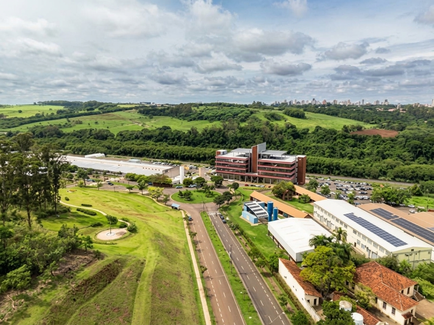
Pecege Building at PTP

Already headquartered in the heart of the park and acting in synergy with public authorities and civil society, Pecege is a catalyst for connections. It participates in the main S&T [Science & Technology] collegiate bodies of the city and integrates public policies with data and intelligence, continuously fostering a culture of impact-oriented innovation.

The headquarters of the Pecege Institute is one of the most relevant strategic assets supporting science, technology, and innovation in the Metropolitan Region of Piracicaba. Built with 100% own resources, the building was made possible on land granted by the Piracicaba City Hall, in the heart of the Piracicaba Technology Park, in accordance with the legal guidelines for promoting S&T&I in the municipality.

With over 12,000 m² of built area, the structure houses a vibrant ecosystem of innovation and learning. Its functional set includes an auditorium for 600 people, classrooms and corporate meeting rooms, high-tech audiovisual studios, a library with over 12,700 titles, collaborative spaces, a restaurant, and complete infrastructure with universal accessibility.

The building is not just an administrative and academic headquarters: it houses the Pecege Innovation Office Hub, with about 20 resident companies, and the Venture Builder WBGI, in addition to the operations of the integrated MBAs of USP (Esalq, Poli, FMVZ, and CIAAM), and Faculdade Pecege. Alongside this, it also houses Pecege Agro, Social, Consultancy and Projects and International, and its own research centers (CEAG, CLG, Ceinte, CPE, and Cedir).

Furthermore, it hosts high-impact events, such as the Master Business Experience (MBX), the AgTech Meeting (with PwC), and the National Science & Technology Week (with MCTI, CNPq, Unicamp, Fatec, and Esalq, among others). From 2023 to 2025, it promoted events with over 100 partner institutions. With a wide range of educational services and support for innovative companies, its community has a presence in 110 countries and over 60,000 members.

According to Daniel Sonoda, CEO of the institute, the management proposal for the Pecege Technology Park will be guided by goals, impact indicators, and continuous monitoring. “We intend to position PTP as a national reference in the management of innovation environments and in attracting sustainable investments,” he states. “Pecege has always been at the service of transformation. We want to activate a new phase in the Technology Park: more open, more connected, and more transformative. This means enhancing talents, integrating production chains, and positioning Piracicaba as a global hub for sustainable solutions and applied innovation,” he says.

By valuing Piracicaba’s vocations and activating the potential of different local productive chains based on science, technology, and innovation, the park should assume a new role as an agent of regional transformation. In a city with an entrepreneurial history and institutions of excellence like Piracicaba, the multisectoral effort to promote innovation can drive the creation of solutions in various strategic areas. 

The expectation is that this new phase of the Technology Park will expand the reach of innovation policies, attract qualified investments and favor the creation and installation of new businesses, in line with the major global challenges of sustainability and digital transformation, highlighted Pedro Chamochumbi, innovation manager, development agent, ESG and Smart Cities. 

Who wrote this column

Pedro Chamochumbi

É gestor de inovação, agente de desenvolvimento, ESG, cidades inteligentes e governo digital. É cofundador da AiX - Agência de Inovação, consultor associado ao Instituto Pecege, membro do Conselho Municipal de Ciência, Tecnologia e Inovação de Piracicaba, professor, palestrante e mentor de negócios inovadores.

You may also like

October 02, 2026

Determinants of supermarket location in São Paulo

A study investigated the determining factors for supermarket location in the state of São Paulo, with the objective of investigating the factors that explain the presence and expansion of these establishments, considering socioeconomic, demographic, and market dimensions. Data from the 2010 and 2022 Demographic Censuses of IBGE and information from the National Registry of Legal Entities of the Federal Revenue of Brazil were used to build a georeferenced database. A Random Forest classification model was applied, adjusted by grid search with cross-validation, prioritizing the recall-macro metric due to the imbalance of the dependent variable, which represented the presence or absence of supermarkets within a 50-meter buffer. The results indicated that supermarket location is strongly associated with demographic, income, and population characteristics in the surrounding area. The analysis of variable importance showed that sociodemographic factors, such as elderly literacy, household income, and the presence of other food establishments, exerted significant influence, especially in the immediate vicinity. The findings reinforced the hypothesis that the spatial distribution of supermarkets is not random, being conditioned by socioeconomic characteristics and the commercial structure of the territory, offering subsidies for business decisions and urban planning.

Keywords: Spatial Analysis; Machine learning; Expansion; Commercial location; Supermarkets.

Neuroscience And Learning In Education

October 02, 2026

Anti-Racist Education: Inclusive Educational Practices and Social Development

Antiracist education, understood as a structuring axis of inclusive education and social development, was investigated in the Brazilian context. The study aimed to identify and analyze, based on legal documents and teachers’ perceptions, educational practices capable of promoting antiracism in school and society, and how the implementation of Laws nº 10.639/03 and nº 11.645/08 contributed to social justice. A qualitative and documentary approach was adopted, with analysis of educational legislation, curricular guidelines, institutional reports, and academic literature. Complementarily, a semi-structured questionnaire was applied to 295 Basic Education teachers. The data were evaluated quantitatively and qualitatively, through thematic content analysis, and validated with bibliographic studies. The results revealed a paradox: despite a robust legal framework, the implementation of antiracist policies proved fragile and sporadic, with a lack of teacher training, adequate teaching materials, and monitoring. Significant educational inequalities between white and black students were found to persist, and most teachers acknowledged the occurrence of racism in schools, but without clear institutional protocols. Neuroscientific analysis showed that racism negatively impacts students’ cognitive and emotional development. It was concluded that antiracist education is central to quality education, requiring political commitment, public investment, and intersectoral articulation. The integration of Neuroscience in teacher training and the production of qualified materials are crucial to strengthen the school’s role in building a more just and inclusive society.

Keywords: Social Development; Antiracist Education; Social Justice; Law 10.639/03; Inclusive Educational Practices.

Neuroscience And Learning In Education

October 02, 2026

Paths of Inclusion: Perceptions of Parents and Teachers on the Schooling of Students with Dual Exceptionality in the Brazilian Context

Dual Exceptionality, characterized by the coexistence of High Abilities/Giftedness and neurodevelopmental disorders, represents a complex phenomenon that challenges traditional identification and schooling models. The study aimed to understand the perceptions of parents or guardians, teachers, and other education professionals regarding the schooling of students with Dual Exceptionality in the Brazilian context, investigating challenges, pedagogical strategies, and possibilities for inclusion based on equity. The research adopted a qualitative, exploratory, and descriptive approach, and collected data through an online, voluntary, and anonymous questionnaire answered by 25 participants. Discursive data were analyzed using thematic content analysis. The results indicated that knowledge about the topic is often built from personal and professional experiences, revealing gaps in systematic training. Difficulties were identified in identifying these students, in teacher training, and in implementing individualized educational plans, pedagogical flexibility, and curriculum enrichment. Socio-emotional repercussions, such as frustration and low self-esteem, were reported. However, some schools demonstrated inclusive practices based on equity, articulating specific needs and potentialities. Although the results do not allow for generalizations, they highlighted the need to strengthen professional training and the articulation between school, family, and specialized services. It was concluded that the inclusion of students with Dual Exceptionality requires practices that simultaneously recognize their difficulties and potentialities, ensuring equitable conditions for participation, learning, and development.

Keywords: Human development; Teacher training; School inclusion; Neurodivergence; Pedagogical practices.

October 02, 2026

Data Transformation into Strategy: Applied Research for Ecotourism Operation Optimization

The growing demand in ecotourism in Minas Gerais has driven the search for business intelligence to transform customer data into strategic information. The study aimed to structure a data science pipeline to collect, segment, and classify the customer base of an ecotourism operation, in order to optimize marketing actions and anticipate market movements. An exploratory, quali-quantitative research was conducted through a case study. 2,777 transactional records from an ecotourism company, referring to January 2024 to December 2025, were used. The methodological process involved automated data collection (Google Sheets API), processing and enrichment (ETL), validation, and creation of RFM (Recency, Frequency, and Monetary Value) attributes. Dimensionality reduction via PCA and K-Means clustering was applied, with the number of clusters defined by the Elbow method and Silhouette Score. The results were validated with DBSCAN and K-Medoids. The results revealed the identification of three behavioral customer segments: “Loyal”, “Low Value”, and “Potential”. The “Loyal” segment represented the highest accumulated economic value, while the “Potential” segment stood out for its high average ticket and potential for conversion into recurrence. The integration of data analysis techniques proved to be a robust and replicable method for generating intelligence in ecotourism. It was concluded that the structured data science pipeline enabled the behavioral segmentation of the customer base, the statistical validation of the groups, and the creation of a predictive system for new buyers, providing subsidies for data-driven strategic decisions and future analyses.

Keywords: Clustering; Business intelligence; Machine Learning; Customer segmentation; Decision making.

October 02, 2026

Classification of defaulting customers using supervised machine learning techniques

The risk of default in credit operations demanded analytical approaches to anticipate losses. This study comparatively evaluated the performance of supervised machine learning models in classifying defaulting customers in credit card operations. The public dataset “Default of Credit Card Clients” from the University of California Irvine was used, with 30,000 observations and class imbalance. The algorithms Logistic Regression, Random Forest, and Extreme Gradient Boosting were employed. The imbalance was addressed by assigning weights to the classes, and model optimization occurred with the RandomizedSearchCV method, prioritizing sensitivity. Cross-validation results indicated that the Extreme Gradient Boosting model showed a higher capacity for identifying the defaulting class and better discriminatory performance, followed by Random Forest and Logistic Regression, with a sensitivity of 0.8250 and an AUC-ROC of 0.7844 for XGBoost. Interpretability analysis, conducted by the Shapley Additive Explanations (SHAP) technique, highlighted the predominance of variables associated with payment behavior, especially the history of delays. It was concluded that tree-based models, particularly boosting techniques, proved to be more suitable for capturing complex patterns in the data, configuring themselves as consistent alternatives for credit risk management.

Keywords: Machine Learning; Credit Card; Classification; Extreme Gradient Boosting; Credit Risk.

October 02, 2026

Sentiment Analysis on Brazilian Banks on Twitter/X: Comparison between Traditional and Digital Institutions

A study analyzed public perception of Brazilian financial institutions on the Twitter/X platform, highlighting the importance of sentiment monitoring on social networks for understanding reputation and customer experience in the banking sector. The objective was to compare user perception of the image and reputation of traditional and digital banks, based on the sentiment patterns identified in the analyzed manifestations, seeking to identify structural differences between these groups. The methodology was based on the analysis of 1,096 tweets collected between November 2022 and June 2023. Two complementary sentiment analysis approaches were used, the sum and the average of labels, to capture the majority sentiment and nuances of perception. Additionally, the Market Profile Model, with indicators of emotional reputation, reputational risk, neutrality, and polarization, and the Banking Clustering Model, which allowed grouping institutions according to perception patterns, were developed. The results indicated a predominance of neutral and negative sentiments, a higher volume of interactions in digital banks, and structural differences in the emotional intensity of perceptions, with greater stability in digital banks and greater polarization in traditional ones. It was concluded that the combination of analytical and statistical techniques contributed to an in-depth understanding of institutional image in the digital environment, demonstrating the importance of data-driven reputation management strategies.

Keywords: Digital banks; Traditional banks; Data modeling; Opinion mining; Social Networks.

October 02, 2026

Optimization of annual budget planning through project management methodologies

The Annual Budget Planning (POA) is a crucial process for translating organizational strategy into operational and financial goals, but it frequently faces deadline pressures, interdepartmental dependencies, and the repetition of habitual expenses. The study aimed to analyze how the combined application of project management practices and Zero-Based Budgeting (OBZ) can optimize the POA. To this end, a case study was developed in the Brazilian operation of a publicly traded company in the beverage sector, using documentary research of its 2023 results report and an anonymous questionnaire applied to 47 respondents. Documentary analysis indicated growth in net revenue, expansion of gross profit and adjusted EBITDA, and contained advancement of selling, general, and administrative expenses, suggesting cost discipline and operational leverage. The complementary survey revealed a high perception of cascading effect on the schedule, strong support for defining cost package owners, and a preference for technical justification of expenses, in addition to demand for controlled flexibility after the baseline definition. It was concluded that structuring the POA as a project, associated with the rigor of OBZ, increased the process predictability, reinforced accountability for expenses, and broadened the coherence between budgetary execution and economic-financial performance.

Keywords: Cost Control; Operational Efficiency; Zero-Based Budgeting; PMBOK; Beverage Sector.