
Education
School Management
Innovation
March 10, 2023
New information and communication technologies in the continuing education of teachers
DOI: 10.22167/2675-6528-20230022
E&S 2023,4: e20230022
Matheus Luiz de Souza Céfalo; Flávia Pierrotti de Castro
The Coordinating Professor [PC], besides the administrative role, has responsibility in the continuing education of other professors, especially in collective pedagogical work activities. The pedagogical coordination function is essentially a continuing education work, an interpretation also identified in the Manager’s Notebooks, a document organized by [Seduc] in 2007, which advocates for the promotion of the improvement of teaching work as one of the pedagogical coordinator’s areas of practice[1].
The relationship between the pedagogical coordination function and the continuous training of the school’s teaching staff has already been the subject of other investigations prior to this work[2][3][4][5][6][7][8][9][10][11]. In general, these converge in identifying the PC’s responsibility regarding the continuous training of teachers, presenting challenges pertinent to this function.
Teacher education is not a new topic to be debated in academic research, as questions about how teachers are trained are recurrent in the History of Brazilian Education, particularly in the reflection of the relationship between this training and the quality of teaching[12]. In this aspect, the works of Junges et al.[13], Cerny et al.[14], Franco and Longarezi[15], and Alvarado-Prada et al.[16] present a fundamental theoretical framework for understanding the need for continuing teacher education within the school, including as a way to ensure compliance with Article 62-A of the Law of Directives and Bases of Education[17], which determines the guarantee of continuing education for Education professionals at the workplace, that is, in the school itself.
It should be noted Franco’s[18] interpretation regarding the importance of the pedagogical coordinator in the improvement of teachers starting their careers. The author considers the weaknesses present in the initial training of many of these teachers, which lead them not to sufficiently develop the skills necessary for future classroom performance and not to acquire knowledge pertinent to teaching practice.
Thus, it is observed that the discussion regarding the centrality of the PC in the continuing education of teachers is still relevant, but it lacks new investigations into the identification of possibilities for how to do it. According to resolution [Seduc] nº3 of Jan. 11, 2021[19], it is within the reach of the pedagogical coordinator to use technological resources in the school unit. It is worth considering the possibility of integrating discussions about New Information and Communication Technologies [NICTs] into the school environment, specifically in collective pedagogical work activities, with an emphasis on teacher training. Several authors[20][21][22][23] have highlighted the contributions of the use of NICTs in schools.
Given the above, the question is how the use of NTICs by the pedagogical coordinator can contribute to their role as a teacher trainer. To this end, it is hypothesized that the development of a free educational application can speed up access to resources, such as educational documents organized by the Ministry of Education and by [Seduc], texts on the area of Education, indication of videos and iconographic resources that, when mediated by the PC, become tools that enable the acquisition of teaching knowledge. It can be used as a digital tool by the pedagogical coordinator during continuous training in collective pedagogical work activities, especially with regard to beginner teachers who, due to often precarious initial training, lack the support of the coordinating teacher within the school.
Therefore, the objective of this work was to develop an educational application to be used by pedagogical coordinators working in the state of São Paulo, during continuing education moments, in order to concentrate theoretical references in the area of education, normative documents of public education in São Paulo, videos, images, among others, which can be used to facilitate the conduction of this training, especially in relation to beginner teachers.
This work was based on a qualitative methodology and was carried out in four stages, namely: 1) Collection of educational documentation, legislative texts and iconographic resources that will serve as the content of the application; 2) Creation of the application, through the digital platform Fábrica de Aplicativos [Fabapp][24]; 3) Presentation and detailing of the application’s functionalities and interface; 4) Discussion of the possibilities of using the application by pedagogical coordinators.
The educational documentation added to the application, pertinent to the first stage, concerns the National Common Curricular Base and the Paulista Curriculum, as teacher training is also given by the acquisition of knowledge from curricular programs, while these documents will be treated as social sources of knowledge acquisition, specifically, in relation to what is expected by the teaching work[25].
Furthermore, pedagogical support “websites”, videos, and academic texts were selected with the aim of systematizing, in one place, materials that can be used in continuing education moments, in order to facilitate the organization of the work of the Coordinating Professor. The articles added to the application are available on the “Scientific Electronic Library Online” [ScieElo] and on the “Google Scholar” search platform, while the selected books were available for free. Additionally, videos on various topics about Education are available on the “Youtube” platform.
During the second stage, the application was developed on the online platform Fábrica de Aplicativos [Fabapp]. The process of launching the application in the “Google” company store occurred through the following steps: a) creation of a “Google Play” developer account; b) configuration of the application on the “Firebase” platform; c) “Download” of the “apk” file and generation of the application’s Privacy Policy URL on the Fabapp platform; d) creation of the application version on “Google Play”; e) filling in the application details; f) launch on “Google Play”. The application (Figure 1) was named Formação Continuada [Formapp], with its first version published in the Google app store on July 15, 2021. It consisted of nine functionalities, namely: 1) Base Nacional Comum Curricular [BNCC]: containing the BNCC files in sections for Elementary and High School Education; 2) Currículo Paulista: directing users to the competencies and skills of the curricular components for Elementary and High School Education; 3) Library: concentrating two sections of theoretical reference, the first for indicating articles and the second for indicating books available on Google Books; 4) Novo Ensino Médio: presenting users with the legal texts governing the High School Reform, as well as videos with guidance on its implementation; 5) Legislation: providing, in full, the legal texts governing Education; 6) Video Library: gathering twenty videos about Education thinkers; 7) Sites: directing users to electronic addresses of support “sites” that present resources for continuing education; 8) Suggestions: providing a channel for users to submit notes, criticisms, and suggestions about the application’s functionality; 9) About the application: describing the justification for creation and objective of the application in question
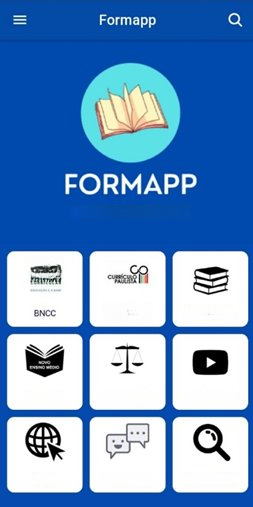
Figure 1. Formapp application home screen
Source: Prepared by the author.
It should be noted that the Formapp application does not aim to create educational content, but rather to be a network for sharing existing resources in an organized manner within the same digital environment. This facilitates the work of trainers who can access these resources through “hyperlink” technology, directing users to pages, platforms, and links.
The division of the application into sections was intended to facilitate the search for resources of interest by pedagogical coordinators, as well as to group content that deals with the same textual genres. The interfaces of each of the application’s sections described above can be seen in Figure 2.
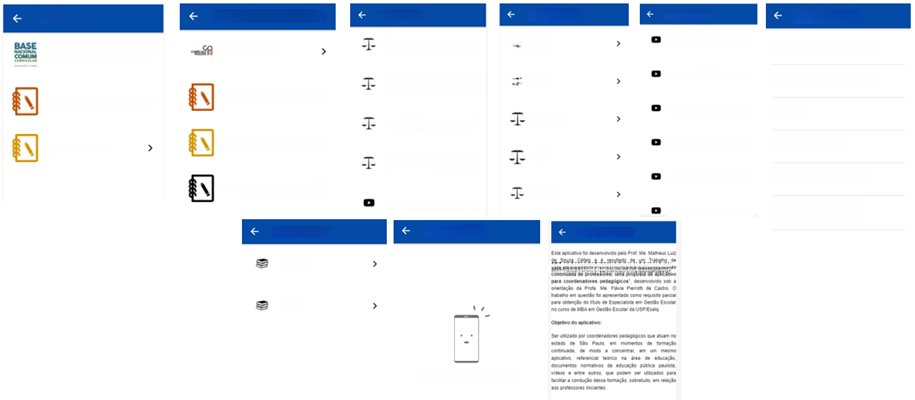
Figure 2. Mosaic with the nine sections of the Formapp application
Source: Elaborated by the author.
As can be observed (Figure 2), the decision was made to divide the curricular documents into segments between Elementary School and High School, with the intention of promoting a more precise and objective search for documents to be used in continuing education moments. Furthermore, the application includes a section dedicated to the New High School, which can assist the PC in conducting training on this topic.
Consequently, the division of the application into these specific functionalities corresponds to the free provision of pedagogical resources that, when mediated by the pedagogical coordinator, become sources of acquisition of teaching knowledge. Furthermore, it corroborates the relationship between the use of ICTs as tools for continuing education that, in the case of the application in question, promotes not only educators’ contact with digital tools, but also with a network for sharing knowledge, available through technology that makes access to educational information public. Therefore, it is also necessary to present possibilities for using this application.
The Formapp application essentially brings together three types of pedagogical resources, namely: a) textual resources; b) audiovisual resources; c) normative documents. Given this, the pedagogical coordination is presented with a variety of materials that can be used individually or in a mixed way, combining the resources used.
A proposal for using the application is given by sharing the texts available in the library, New HS, and Sites sections, to be used in moments of shared readings and/or individual reflections, whose themes deal with the challenges of the New High School, competencies and skills to be developed, active learning methodologies, inclusive education, among others.
In turn, the videos available on the app can be used as awareness-raising tools for teachers in training, as, based on the video content, the Coordinating Professor can promote debates and discussions among teachers about the applicability of these authors’ theories, as well as the identification of continuities and ruptures in the national, state, and municipal educational landscape.
Regarding the normative documents, that is, the archives of the BNCC and the Paulista Curriculum, as well as the laws and guidelines that guide Paulista education, it is worth considering that these are fundamental documents for teaching practice and, therefore, pedagogical coordinators can instruct ways to handle these documents, aiming at the acquisition of curricular knowledge[25].
Furthermore, the PC can instruct school teachers in the selection of competencies and skills to be developed in students in each of the curricular components, facilitating the completion of documents and assisting teachers in the construction of their lesson plans. The importance of this type of instruction for beginner teachers in the network must be considered, and for this, the application can be a tool capable of facilitating access to these resources [18].
Furthermore, after the shared reading of curricular documents, discussions can be raised, mediated by the PC, about the gaps between the prescribed curriculum and the actual teaching practice, as well as about the norms advocated in laws and guidelines and the reality experienced in the school’s daily life.
Finally, there is the possibility of integrating the resources available in the application into continuing education programs that can start with sharing a video available in the Videotheque section, followed by reading and discussing one of the texts available in the Library section, and ending with the analysis of competencies and skills, available in the curricular documents, which can be worked on with students to overcome the challenges identified in the video and/or text.
Therefore, there are several possibilities for the use of the application by pedagogical coordinators, all of which converge with the sharing of information and knowledge mediated by the figure of the pedagogical coordinator who, armed with this digital resource, can more easily exercise their role as a trainer. However, it is worth considering that, despite the Formapp application’s purpose being directed at the PC, its use is not restricted to this professional, but is accessible to all individuals who work at the school, with the Suggestions section open to receiving indications for improvements and enhancements from users.
To measure the app’s reach, it was promoted during September on the social network “Facebook” and in teacher groups on the “Whatsapp” app, with the aim of inviting pedagogical coordinators to install the app on their mobile devices. The number of “downloads” during September was 38 from September 1st to 30th, 2021. However, according to the statistics, a total of seven users uninstalled the app, while 31 users remained active, meaning they had the app installed during the considered period.
It should therefore be considered that the balance in the number of active users reflects that the Formapp application registered positive adherence from those who installed and became familiar with its functionalities, allowing it to be considered as one of the tools for approximating teachers and coordinators with ICTs, in addition to highlighting the possibility of monitoring the application’s use during continuing education in future academic research. Consequently, it is not the objective of this research to exhaust discussions about the use of ICTs in continuing education, which accentuates the possibility of new investigations regarding the use of these technologies in the academic training of educational managers, with a view to a qualitative analysis of how pedagogical coordinators are trained, in undergraduate Pedagogy courses and/or postgraduate School Management courses, in relation to the use of these tools, as well as the challenges and benefits of this training.
References
[1] Garrido E. Espaço de formação continuada para o professor-coordenador. In: Bruno E.B.G.; Almeida L.R.; Christov L.H.S. O coordenador pedagógico e a formação docente. 13ed. São Paulo (SP): Edições Loyola. 2015.
[2] Silva G.F.S.; Costa J.C.A.; Coutinho D.J.G. O papel do coordenador pedagógico como inductor da formação continuada. Brazilian Journal of Development. 2020; 6(10): 84087-84101.
[3] Souza M.J.A.; Bezerra M.A.D.; Tavares M.E.P.A.; Barbosa P.S.; Coutinho D.J.G. O coordenador pedagógico e a formação continuada. Revista Espacios. 2019; 40(12): 1-12.
[4] Araújo J.C.C. Coordenação pedagógica em instituições públicas de educação infantil de São Paulo: formação e profissão. [Tese de Doutorado] São Paulo (SP): Faculdade de Educação da Universidade de São Paulo; 2018.
[5] Aquino J.M.B.; Freire, M.L.E. O despertar do coordenador pedagógico para a formação continuada docente. Brazilian Journal of Development. 2018; 4(5): 2433-2446.
[6] Borba C.D.M.; Cardoso S.S. O coordenador pedagógico e a formação continuada docente no contexto de reestruturação curricular. Caderno Marista de Educação. 2018; 10(2): 107-124.
[7] Coité S.L.S.; Oliveira R.C.M.; Pimentel G.S.R. O coordenador pedagógico e a formação do professor: entrelaçando saberes em uma perspectiva humanizadora. In: Glap G.; Glap L. Políticas Públicas na Educação Brasileira: a formação inicial e continuada de docentes e gestores. Curitiba (PR): Atena Editora. 2017; p. 127-141.
[8] Barros S.; Eugenio B.G. O coordenador pedagógico na escola: formação, trabalho, dilemas. Educação, Gestão e Sociedade: revista da Faculdade Eça de Queirós. 2014; 4(16): 1-15.
[9] Franco M.J.N.; Gonçalves L.S.M. 2013. Coordenação pedagógica e formação de professores: caminhos de emancipação ou dependência profissional. Revista PUCSP Psicologia da Educação. 2013; (37): 63-71.
[10] Fernandes M.J.S. A função de coordenação pedagógica no estado de São Paulo: entre a articulação pedagógica e o controle do trabalho docente. [III Congresso Ibero Americano de Política e Administração da Educação] Zaragoza, Espanha; 2012.
[11] Domingues I. O coordenador pedagógico e o desafio da formação contínua do docente na escola [Tese de Doutorado]. São Paulo: Faculdade de Educação da Universidade de São Paulo; 2009.
[12] Placco V.M.N.S.; Silva S.H.S. A formação do professor: reflexões, desafios, perspectivas. In: Bruno E.B.G.; Almeida L.R.; Christov L.H.S. O coordenador pedagógico e a formação docente. 13ed. São Paulo (SP): Edições Loyola. 2015.
[13] Junges F.B.; Ketzer C.M.; Oliveira V.M.A. Formação continuada de professores: Saberes ressignificados e práticas docentes transformadas. Educação & Formação. 2018; 3(9): 88-101.
[14] Cerny R.Z.; Almeida J.N.; Ramos E. Formação continuada de professores para a cultura digital. Revista e-Curriculum. 2014; 12(2): 1331-1347.
[15] Franco P.L.J.; Longarezi A.M. Elementos constituintes e constituidores da formação continuada de professores: contribuições da teoria da atividade. Educação e Filosofia. 2011; 25(50): 557-582.
[16] Alvarado-Prada L.E.; Freitas T.C.; Freitas C.A. Formação continuada de professores: alguns conceitos, interesses, necessidades e propostas. Revista Diálogo Educacional. 2010; 10(30): 367-387.
[17] Brasil. Lei n. 9394, de 20 de dezembro de 1996. Estabelece as diretrizes e bases da educação nacional. Diário Oficial da República Federativa do Brasil. 1996. Disponível em: <http://www.planalto.gov.br/ccivil_03/leis/l9394.htm>.
[18] Franco F.C. O coordenador pedagógico e o professor iniciante. In: Bruno E.B.G.; Almeida L.R.; Christov L.H.S. O coordenador pedagógico e a formação docente. 13ed. São Paulo (SP): Edições Loyola. 2015.
[19] Secretaria de Estado da Educação do estado de São Paulo [Seduc]. Resolução Seduc -3, de 11 de janeiro de 2021. Dispõe sobre a função gratificada de Professor Coordenador e dá providências correlatas. 2021. Disponível em: <http://siau.edunet.sp.gov.br/ItemLise/arquivos/RESOLU%C3%87%C3%83O%20SEDUC%203.PDF?Time=24/04/2021%2016:08:07>.
[20] Batista C.G.; Andrade P.C.R. A inserção das Novas Tecnologias de Informação e Comunicação (NTICs) nos processos de ensino-aprendizagem. Revista Vozes dos Vales – UFVJM. 2020; 9(18): 1-16.
[21] Linhares J.; Duarte E.C.F. Práticas pedagógicas no uso das NTICs: possibilidades e convergências na educação escolar. Revista Ensino de Ciências e Humanidades – Cidadania, Diversidade e Bem-estar- RECH. 2019; 3(1): 58-80.
[22] Oliveira R.J. Da lousa ao pixel: o ensino com as Novas Tecnologias da Informação e Comunicação (NTICs) em escola municipal de Ribeirão Preto [Dissertação de Mestrado]. Ribeirão Preto (SP): Faculdade de Filosofia, Ciências e Letras de Ribeirão Preto da Universidade de São Paulo; 2017.
[23] Grotto E.M.B.; Salla, G. Gestão escolar e as NTICs: um olhar sobre a formação tecnológica do gestor. Revista travessias. 2007; 1(1): 1-16.
[24] Fabaap. Construa seu app sem programação. 2020. Disponível em: <https://fabricadeaplicativos.com.br/>. [25] Tardif M. Saberes docentes e formação profissional. 17ed. Petrópolis (RJ): Vozes. 2014.
Como citar
Céfalo M.L.S.; Castro F.P. Novas tecnologias de informação e comunicação na formação continuada de professores. Revista E&S. 2023; 4: e20230022
Sobre os autores
Matheus Luiz de Souza Céfalo, Mestre e Educação, Especialista em Gestão Escolar, Itupeva, SP, Brasil.
Flávia Pierrotti de Castro, Doutora em Ciências e Coordenadora de Gestão Pedagógica, Piracicaba, SP, Brasil.
Link para download: https://cms.revistaes.com.br/wp-content/uploads/2023/03/ES_23022.pdf