Innovation
Artificial Intelligence
Technology
June 17, 2024
The rise of chatbots: a parallel with human customer service
The question to be discussed should not be which is the best mode, but rather how it is possible to get the most out of both modalities
We live in the 21st century, an era in which we are increasingly bombarded with content, information, updates, and news. The new smartphone, the new clothing collection, the software update that transfers contacts from one mobile device to another just by pairing the two.
The dynamism and immediatism progressively start running in our veins. We cannot wait, there is no time to lose – if only there were. The hectic daily routine and all the technologies and technological tools that surround personal and professional routines cannot wait.
A payment problem in the online bank or with the travel app, at two-thirty in the morning on a Saturday, often cannot wait until eight o’clock or until the next business day. Suddenly, companies realized that, with the agile and dynamic technologies available, the need for equally agile and dynamic support arose, which led to the increased use of chatbots in interactions with brands.
Notably, these “conversational assistants” were not born with smartphones, but rather in the 1960s, with a computer program called ELIZA – a simple, yet disruptive chat model that simulated the dialogue of its user with a psychologist.
From ELIZA to modern chatbots
Since ELIZA, chatbots have had several leaps, however, the renaissance and massification of this technology came in the 2010s, driven by several advances in the field of artificial intelligence and neural language processing – allied to the unbridled intertwining of the internet and smartphones with daily human activities, including consumption, whether of goods, content, or even in the area of rapid communication.
It has become practically impossible not to encounter the famous chatbots when contacting banks, retail, health, mobility, education, and entertainment services, for example. They are already integrated into the daily life of the contemporary world, but in a much more intelligent and fluid way than in the past, assisting with demands that would be repetitive and too simple for a human agent and, increasingly, with more complex tasks as well.
This unprecedented advance in the adoption of chatbots by companies can be attributed to a series of marketing factors that make perfect sense in the current context. The first of these factors is practicality. We want quick, efficient, and assertive answers, and they offer all of this 24 hours a day, seven days a week, with no waiting lines and no forgotten responses.
Therefore, even with simpler chatbots, which only respond to superficial questions, the delivery of value to the company is very large; in addition to ensuring prompt service at any time, something that is of utmost importance in a heated market, it also guarantees more time and energy available for human attendants to resolve more complex issues for their clients. Linked to this is the reduction in costs for companies, a constant desire of organizations, as long as, logically, it does not affect the quality of the product, service, or experience.
Furthermore, not all companies have the necessary resources to maintain a large team of qualified attendants on standby, even if only during business hours. This is where chatbots emerge as a great alternative. Currently, there are options that fit all legal budgets, whether for a corporate giant or a small independent micro-entrepreneur at the beginning of their success journey.
Press 1 if you have ever been annoyed by a chatbot
However, as “not everything is rosy”, despite the undeniable usefulness and all the positive points of these customer service robots, they are not exempt from criticism. It is not uncommon for users to have had frustrating experiences with chatbots that were poorly programmed or unable to understand the requested demands.
The lack of understanding of human language, precisely because they are not human, can lead to responses that are inadequate to the context proposed by the user, imprecise or too vague, causing enormous customer dissatisfaction.
Furthermore, other factors that can lead to great disagreement from users are the excess of generic and repetitive responses. It can also happen that some chatbots are fed with pre-programmed responses that do not effectively address the demanded problems, which can trigger a second problem: a loop of identical responses in the conversation that do not help the client adequately.
In line with this, the last of the negative points of bot friends is the lack of empathy. As they are computer programs devoid of any emotion, in some cases the user may miss a more warm approach, finding the received responses too shallow or cold. In more complex cases, where the user needs emotional support, this gap can become even more evident and problematic.
Empathy
The other side of the coin for all these issues involving the use of chatbots is a return to origins, the adoption of a team of human customer service that will avoid the disturbances mentioned above.
Unlike chatbots, a very strong point of this type of service is the empathy inherent in human beings. Agents can put themselves in the customers’ shoes, understanding exactly what they want and, by reading the tone of the conversation, offering the comfort, welcome, and understanding necessary to resolve the frustration that is afflicting them.
Furthermore, the creativity of agents when faced with complex problems and unusual situations allows for innovative and more assertive solutions for clients, paving the way for personalized service based on critical analysis of the situation by the attendants.
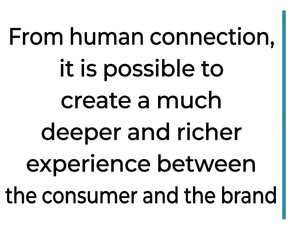
From human connection, it is possible to create a much deeper and richer experience between the consumer and the brand, strengthening this relationship and generating customer enchantment, something that is not easy to create and that is focused on practically all institutions that seek to grow in their segments. Hibou’s 2023 research on artificial intelligence reveals that the majority of individuals (65%) prefer to be served by humans, while another part (31%) does not mind talking to chatbots and only a small portion (4%) actually prefers this type of service.
We are not available at the moment
Despite all the benefits of human support, this modal is also not perfect. To begin with, it lacks scalability, as its support capacity is intrinsically linked to the number of available agents, which can generate long queues of waiting time during peak demand.
Furthermore, we are human and, as such, we make mistakes, especially in moments of high demand. Fatigue, inattention, and failures in communication can directly affect the quality of service, negatively impacting the user experience.
The fact that we are human is a gift that, especially for this type of service, ends up being counterproductive: we are unique, and the inconsistency of service from one agent to another can cause severe frustration to customers, leading to a lack of standardization in quality, in the conditions offered, and in the technical knowledge for resolving the problems faced.
This can be solved with a large investment in continuous training to keep all customer service employees updated on products, services, company policies, and the modus operandi to be followed. On the other hand, at this moment, the biggest obstacle for companies arises: the extremely high cost of maintaining a robust customer service department capable of meeting any level of demand with excellence.
This problem becomes more critical in specific niches of activity, such as technical support or customer service, where repetitive tasks are common. This includes dealing with recurring technical issues or registering and providing information for course enrollments. Such tasks can result in a significant drop in employee motivation. Furthermore, repetitive daily activities are costly, as they consume time and resources that could be spent on more complex, strategic, and beneficial activities for the institution and for the clients themselves.
And what was already expensive can become even more expensive, if the idea is to run this model 24 hours a day, seven days a week. The costs involved are unsustainable for most business models. What to do?
Neither too much to heaven, nor too much to the sea
The most effective alternative, which has been widely adopted in institutions, is to combine the use of chatbots with human support, joining the best of both worlds: the availability and low cost of bots and the analytical capacity and empathy of flesh-and-blood agents. This approach can be implemented in two ways:
- with chatbots only at times when attendants are not available (e.g., outside business hours); in this model, we already guarantee that the stakeholders will be served regardless of the time or day they contact us;
- with chatbots operating 24 hours a day; thus, the chats are responsible for making initial triages, which involve repetitive, routine, and extremely generic activities, in addition to answering less complex questions, freeing up the time and attention of human agents for issues that require greater care and analysis.
In summary, the question to be discussed should not be which is the best modality, but rather how it is possible to derive the greatest benefit from both modalities, in consonance and harmony, to improve the efficiency of institutions’ service processes, one of the current challenges, increasingly agile and dynamic.
This content was produced by:

Pedro Ribeiro Bagaiolo
He is an executive in the business area at Skylar. Bachelor of Science in Economics from USP/Esalq, postgraduate student in Sales Management from MBA USP/Esalq, with a focus on business intelligence, sales, and customer success.
Who wrote this column
Skylar