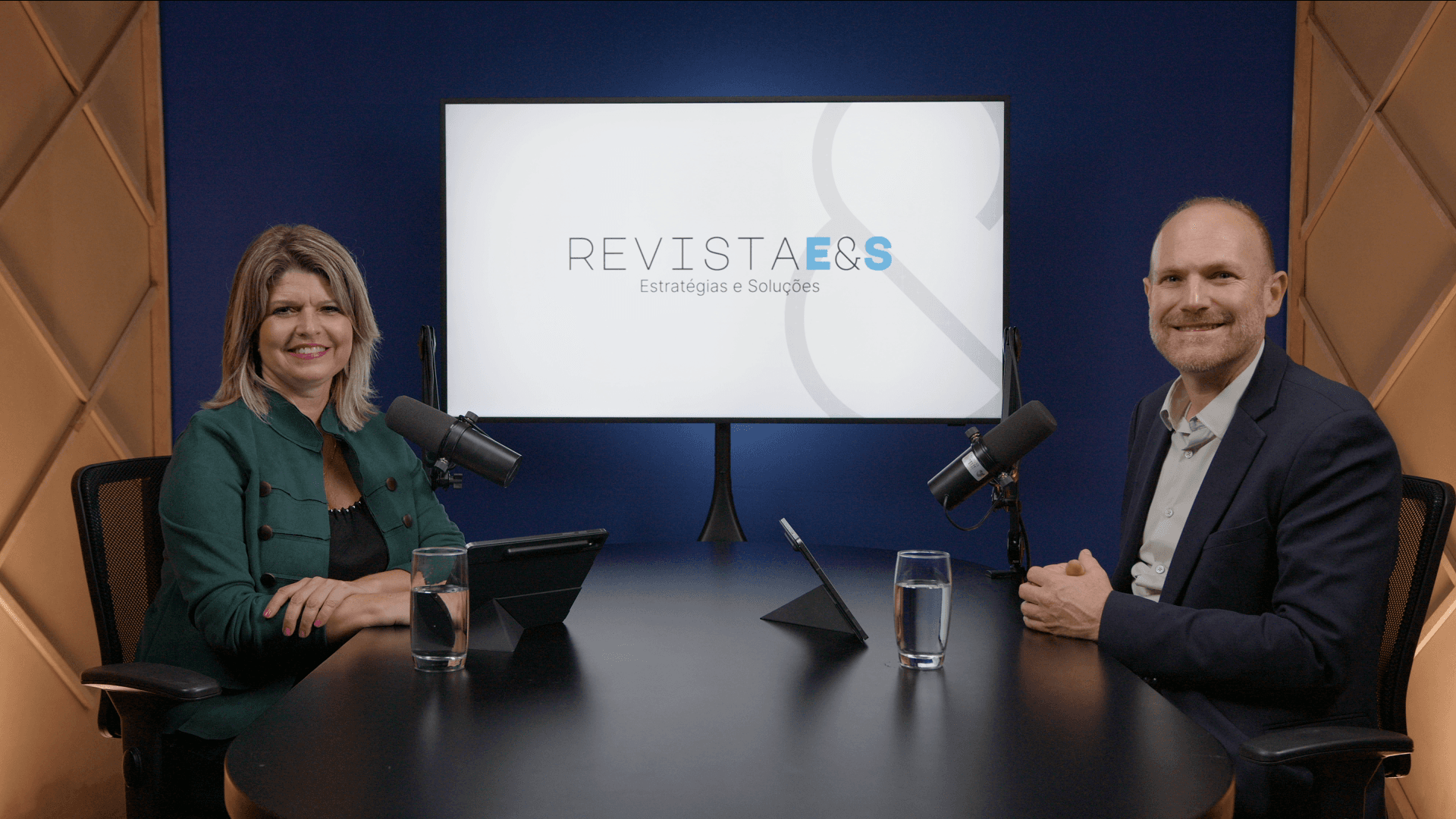
Videocast

The success of Sales Management in the business world.

Communication

Sales Management

Marketing

January 10, 2021

The success of Sales Management in the business world.

DOI: 10.22167/2675-6528-20210001
E&S 2021.2: e.20210001

by Soraia Fessel …………………………………………………………………………..

Understanding market behavior and having professionals with different profiles on your sales team can make the difference for your Sales Management to be more assertive when closing good deals. 

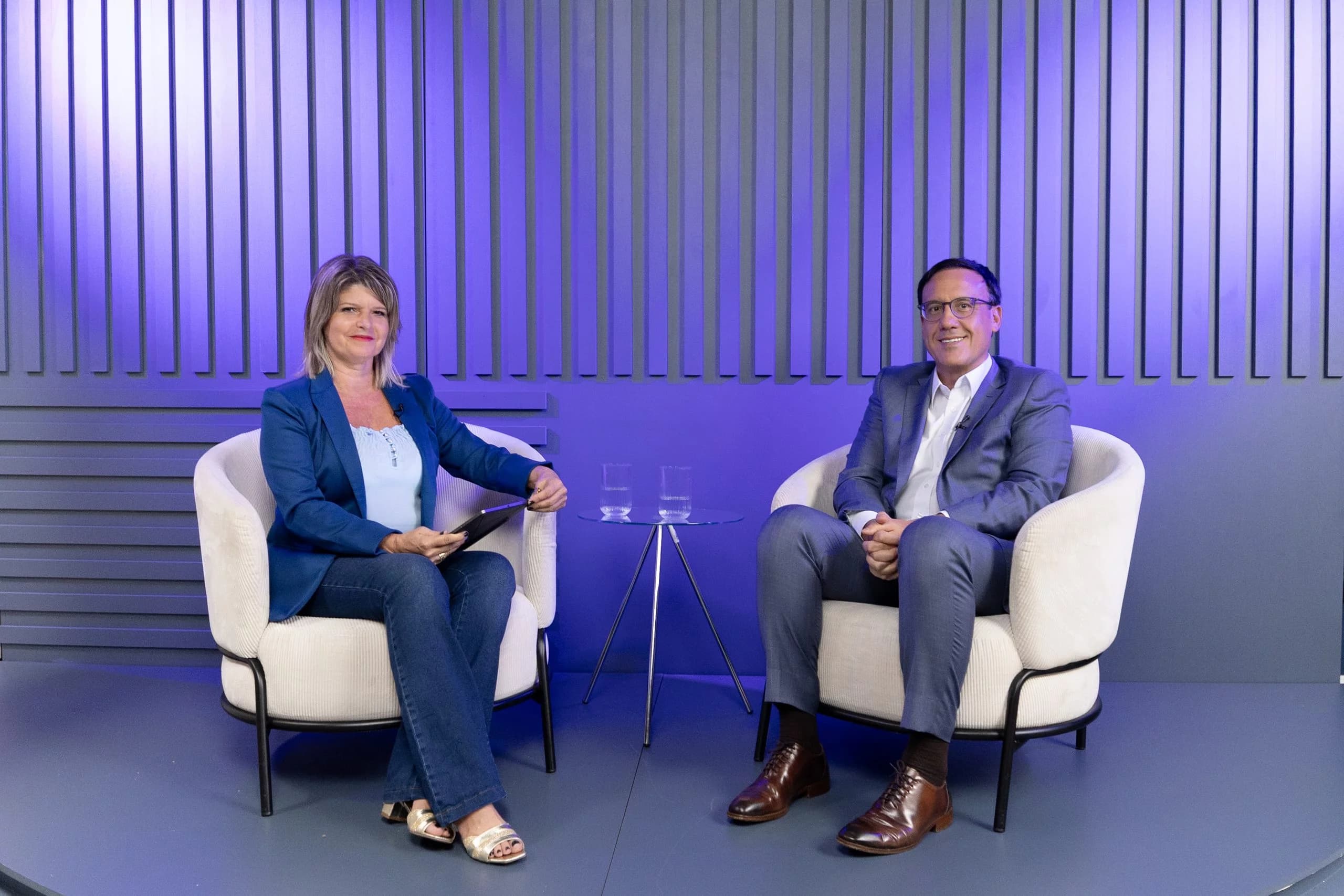
Is selling an art, or can we all develop our talents to be good salespeople? You must have asked yourself this question at some point in your life, especially if you are the professional responsible for Sales Management in a company. Well, this is one of the points addressed in the interview with Professor Doctor and Sales Consultant Francisco Alvarez, who gives us a broad view of the art of selling. For him, the old saying: “salespeople are born, not made,” is not quite right; because selling requires relevant personal characteristics, combined with the development of technical knowledge. This balance of strengths can make you a good salesperson.

Our interviewee warns that power has changed hands; today the buyer is surrounded by information and within an increasingly competitive market. Yes, it is the buyer who dictates the rules, and it is up to the seller to develop other factors to make their visit more attractive. 

Faced with this scenario, the Sales Manager needs to be attentive to a new negotiation model, where long-term relationships with the client are established, with more personalized service, but for this it is necessary to have different profiles in their sales team such as: Key Account, Farmer and Hunter. 

In this explanation I ask: And what about the use of new tools like social media marketing?

For Francisco, it is necessary to know how to dose the use of this communication, the tools are fantastic for individualizing service and analyzing the sales funnel, without losing the customer relationship.

Want to know more?

I invite you to participate in our conversation that will broaden your view of the market, with fundamental tips to improve your Sales Management in such challenging times.

About the Interviewee

Francisco Javier Sebastian Mendizabal Alvarez

Professor Doctor at the University of São Paulo (USP), Coordinator of the MBA Sales Management Course (USP/ESALQ), Coordinator of the Center for Studies and Research in Retail (USP/EACH) and Consultant specialized in sales.

Who published this videocast

Edson Mota
You may also like

November 17, 2026

Detection and Diagnosis of Diseases in Corn and Rice in Mozambique with Deep Learning

Mozambican agriculture depends on corn and rice, fundamental crops for food security, but their productivity is strongly affected by phytosanitary diseases, whose early and accurate identification remains a challenge in resource-limited contexts. The study aimed to develop and compare Deep Learning-based models for the automatic detection and diagnosis of diseases in corn and rice leaves in Mozambique. Three approaches were used: a classic Convolutional Neural Network (CNN) developed from scratch, and two transfer learning models, ResNet50 and MobileNetV2. The dataset consisted of images from public databases and collected in the field, which underwent cleaning, balancing, and artificial augmentation steps. The models were trained and evaluated with standard performance metrics, including accuracy, precision, recall, F1-score, Log Loss, and Cohen’s Kappa. The classic CNN presented the best overall performance, with 94% precision, recall, and F1-score, and 93% accuracy and Cohen’s Kappa. MobileNetV2 achieved 91% F1-score and 90% accuracy, standing out for its lower Log Loss (0.30) and training time (6h32min59s). ResNet50 reached 80% F1-score and 79% accuracy. It was concluded that Deep Learning techniques have high potential to support phytopathological diagnosis in real agricultural contexts, contributing to faster and more accurate decisions in the management of corn and rice diseases.

Keywords: Deep learning; Rice; Plant diseases; Corn; Computer vision.

November 17, 2026

Artificial intelligence in accounting operational routines and financial efficiency

The incorporation of Artificial Intelligence (AI) and automation tools has reconfigured the routines of Brazilian accounting offices, impacting productivity, error mitigation, and financial efficiency. These impacts were analyzed in a small accounting firm, specialized in serving service providers in the medical field in São Caetano do Sul, São Paulo. The research adopted a qualitative approach, with a single case study design and incorporated units of analysis. Data were collected through a structured questionnaire, applied via Google Forms between January and February 2026, to five professionals in the operational structure of the firm in a census survey. The treatment followed content analysis with a priori and emergent categories. All respondents declared the use of automated tools or tools with AI resources. The perception of reduced execution time, decreased operational errors, rework, and better use of the team’s time converged in 80% of affirmative responses and 20% partial responses. The most benefited activities were bank reconciliation, import of fiscal documents, and tax assessment, with visible gains on typing errors, duplicate entries, and incorrect classification. Human intervention remained indispensable in tax planning, scenario analysis, and verification of ancillary obligations. The overall evaluation of AI’s contribution was predominantly favorable, with moderation linked to the complexity of fiscal regulations.

Keywords: Content analysis; Process automation; Accounting 4.0; Small business; Digital transformation.

November 17, 2026

Factors influencing schedule management in sewage treatment plant “retrofit” projects

Projects involving “retrofit” in Sewage Treatment Plants (STP) are characterized by high complexity, operational restrictions, and multiple technical interfaces. The study analyzed the perception of the professionals involved regarding the management and adherence to deadlines in “retrofit” projects for sewage treatment plants, considering technical, operational, and organizational factors. The research was characterized as an applied study, with a quali-quantitative approach, designed as a field survey. Data analysis was performed using descriptive statistics and qualitative categorization, employing SWOT, risk matrix (Probability x Impact), and 5W2H action plan tools. The results indicated a high perception of clarity (77.8%) and realism of deadlines (100% agreement), evidencing consistent initial planning. However, 77.7% of respondents pointed out that rework and scope changes directly impacted deadline adherence. The integration between engineering, manufacturing, and Production Planning and Control (PPC) showed an intermediate evaluation (77.7% partial/total agreement), indicating fragility in interfunctional coordination. The risk matrix highlighted as critical: scope changes, operational limitations of the STP, and technical complexity, all with a high level. As a central improvement, the standardization of scope change control, analysis, and approval was proposed, aiming to reduce rework and increase schedule predictability.

Keywords: Performance; Integration; Planning; Rework; Risk.

November 17, 2026

B2C Acquisition in diagnostic medicine: strategic partnerships with specialized medical offices

The diagnostic medicine sector in Brazil operates with high dependence on health plan providers, which limits the financial autonomy of service providers. This study proposed and analyzed a direct patient acquisition model (B2C) for a highly complex diagnostic medicine institution, structured through partnerships with Oncology and Cardiology practices and operationalized by a personalized customer service called concierge. The investigation adopted a mixed-methods approach in three phases: a field survey with a structured questionnaire applied to 87 patients, mapping of the operational flow using “Service Blueprint”, and analysis of the conversion rate from 312 medical referrals registered in the pilot project. The results indicated that trust in medical referral achieved 92.0% agreement, establishing itself as the main factor for adherence. The convenience of performing the exam on the same day reached 78.2%, and the willingness to pay directly was 55.2%, with polarization associated with the predominance of health plan users. The “Service Blueprint” identified three critical points in the transitions between stages of the patient journey. The overall conversion rate was 51.0%, with superior performance in Oncology (58.2%) compared to Cardiology (45.0%), and the greatest loss was concentrated in the acceptance and scheduling stage (28.3%). It was concluded that the model demonstrated possible operational viability and indications of patient acceptance, conditioned by price transparency and a reduction in the interval between consultation and approach by the concierge.

Keywords: Direct payment; Patient journey; Supplementary health; Concierge service; Conversion rate.

November 17, 2026

The role of the school manager in promoting an inclusive culture: leadership and educational policies

The research analyzed the school manager’s performance in promoting an inclusive culture, considering the need to transform legal guidelines and pedagogical foundations into effective institutional practices. It was assumed that school inclusion requires planning, organization, and strategic leadership in the school’s daily operations. A qualitative approach of an applied nature was adopted, developed in three complementary stages: documentary analysis of Brazilian legislation on inclusive education, bibliographic review on school leadership and management, and data systematization using management tools such as SWOT analysis and the PDCA cycle. The results indicated that the school management’s performance directly influenced the consolidation of inclusive environments, especially in the organization of processes, continuous team training, and strengthening of a collaborative institutional culture respectful of diversity. Structural, pedagogical, and relational challenges that demanded planned interventions were also identified. Finally, a Practical Guide for School Managers was developed, with guidelines, protocols, and operational orientations for decision-making and the organization of inclusive processes. It was concluded that the construction of an inclusive culture depended on the management’s ability to articulate public policies, pedagogical practices, and institutional processes, consolidating inclusion as a permanent commitment in the school context.

Keywords: educational accessibility; educational equity; participatory management; strategic planning; institutional processes.

November 17, 2026

An AI artifact based on Design Thinking to support the elicitation of software requirements from user needs

The development of software oriented to user needs frequently faces challenges in requirements elicitation, stemming from ambiguities in natural language and communication failures. Given this, an intelligent artifact integrating Design Thinking and Artificial Intelligence was proposed and validated, focusing on the Empathy and Definition stages, to support the collection, interpretation, and structuring of user needs. The research, of an applied, qualitative, and exploratory nature, conducted a Proof of Concept in a controlled environment, employing hypothetical scenarios. The artifact operated through guided natural language interviews, organizing information into elements such as pain points, context, and impact, and generating traceable problem syntheses. The results indicated that the system organized unstructured reports, reduced ambiguities, and preserved the meaning of the original information in most cases. The ability to reorganize logically in complex scenarios was also observed, although with limitations in separating multiple problems and dependence on instructions. It was concluded that the artifact has potential as a support for requirements elicitation, improving the clarity and structuring of information, but requires supervision and contextual control.

Keywords: Design Thinking; Requirements Elicitation; Requirements Engineering; Artificial Intelligence; Natural Language Processing.

November 17, 2026

The Extinction of the Monophasic Tax System in the Pharmaceutical Industry in Light of the Tax Reform

The consumption Tax Reform, established by Constitutional Amendment No. 132/2023, introduced structural changes to the Brazilian tax system, with the replacement of the Social Integration Program (PIS) and the Social Security Financing Contribution (COFINS) by the Contribution on Goods and Services (CBS), in a dual Value Added Tax (VAT) model. The objective was to analyze the impacts of the extinction of the single-stage system on the pharmaceutical industry, in light of the new regulatory design and its economic and legal effects. A qualitative, exploratory research was conducted through a case study and documentary analysis of legislation and specialized doctrine. It was examined whether the end of the single-stage system would imply a relevant increase in the tax burden for the sector. The results indicated that, although the formal overcoming of the single-stage system has occurred, the material exemption of medicines has been preserved, mainly due to the application of reduced rates of 60% and, in certain cases, a zero rate of the Tax on Goods and Services (IBS) and CBS. The change in model may cause occasional variations in revenue collection, without characterizing a structural increase in the tax burden, tending towards neutrality over time. It was preliminarily concluded that the Tax Reform reorganized the taxation technique in the pharmaceutical industry, replacing a concentrated regime with more transparent exemption mechanisms. This approach proved compatible with the principles of neutrality, full non-cumulativeness, and fiscality, maintaining tax protection for essential medicines and aligning fiscal policy with the fundamental right to health.

Keywords: CBS; COFINS; IBS; Dual VAT; PIS.