Sciences
Education
Teaching
August 29, 2023
Assessment of the scientific literacy level of students in integrated technical education in MG
DOI: 10.22167/2675-6528-20230039
E&S 2023,4: e20230039
José Carlos Leandro de Sousa; Naissa Maria Silvestre Dias Hippler
Despite the great educational advances achieved since the Federal Constitution of 1988, with laws 9.394/1996[1] (Guidelines and Bases of Education) and 13.005/2014[2], which approved the current National Education Plan (PNE), the Brazilian educational system is falling short of the challenges posed by the digital society.
One of the mechanisms used to evaluate the quality of national student learning is the Basic Education Development Index (IDEB). Measured by the Anísio Teixeira National Institute for Educational Studies and Research (INEP), this index is based on the results of the Basic Education Assessment System (SAEB) and school approval rates. The IDEB results for 2019 indicated that the state network represented the largest part (97%) of enrollments in the public network, indicating that state and Federal District governments practically assume responsibility for high school education. The same data highlights that the 2019 result in Brazil (IDEB = 4.2) increased by 0.4 points compared to 2017 (IDEB = 3.8), falling below the target (5.0)[3].
These data are presented as one of the factors of concern regarding educational policies for high school, since the average of the countries in the Organisation for Economic Co-operation and Development (OECD) is 6.0 points[4].
Another factor that will hinder progress in the index are the effects arising from the Sars-CoV-2 pandemic, which had important repercussions on the poorest layers[5]. Despite the development of a vaccine in record time, the use of unproven scientific drugs and the spread of denialist ideas in the media led several people to misinformation[6].
Such behaviors suggest failures in the population’s scientific education process, which may be related to the inferior performance of Brazilian students in the 2006, 2009, 2012, 2015, and 2018 editions of the “Programme for International Student Assessment” (PISA) in the science domain, compared to the OECD average[7]. In science education, different terms have been used to guide the formation of active citizens in society (scientific literacy, scientific literacy, scientific enculturation)[8]. If science is the language constructed by humanity to understand nature, achieving scientifically literate status means being able to decode the natural world[9], as well as understanding the need to transform it, and for the better[10].
Given the above, this work aimed to evaluate the level of scientific literacy (SL) of graduating students from the Technical Course in Electrical Engineering (TCEE) and the Technical Course in Mechanics (TCM), both in the integrated modality, at the Federal Institute of Education, Science and Technology of Minas Gerais (IFMG). The campus is located in the city of Conselheiro Lafaiete, in the metropolitan macro-region of Belo Horizonte (MG), and serves approximately 400 students, enrolled in the integrated (morning and afternoon) and subsequent (night) modalities. The secondary objective of the study was to evaluate the use of the Basic Scientific Literacy Test (BSLT) as a tool to measure the quality of education offered to the sample population.
The participants in this case study are adult students and graduates of the 3rd year of the Technical Courses in Electrical and Mechanical Engineering (integrated modality) from the Federal Institute of Minas Gerais, Conselheiro Lafaiete campus. In order to comply with the Research Ethics Committee regulations, the questionnaire containing the Basic Scientific Literacy Test (TACB)[11] was structured on Google Forms platform and sent to the students via email registered on the platform that the campus uses for internal event registrations.
The respondents were informed about the anonymous nature of the study and their freedom of choice regarding participation. The profile of the respondents was defined based on the target audience used in the validation of the TACB[12], which is based on the following assumptions: i) nature of science (axis 1); ii) key scientific terms and concepts (axis 2); and iii) knowledge and understanding of the impacts of science and technology on society (axis 3)[13].
The test is composed of 110 closed-ended questions, with assertions that students can classify as “true”, “false”, or, alternatively, answer with “I don’t know the answer”, distributed across axis 1 (72 questions), axis 2 (22 questions), and axis 3 (16 questions). To be considered scientifically literate, the respondent must correctly answer a minimum of 45, 13, and 10 questions pertaining to axes 1, 2, and 3, respectively[14]. The data were processed and analyzed using Office 2019 applications. As it involves research with human beings, the project related to the research was submitted to the Research Ethics Committee/National Commission for Ethics in Research (CEP/CONEP), having been registered under the Certificate of Presentation for Ethical Appreciation (CAAE) 59283922.2.0000.9927, and approved by opinion number 5,645,826.
Despite the controversies arising from translation and linguistics, in this work the concepts of literacy and numeracy were used as synonyms, according to the assumptions of Pereira et al.[15]. Of the total of 40 (forty) graduating students from the 3rd grade of the Integrated Technical Courses invited to participate in this study, 23 (twenty-three) responded to the TACB, with 13 (thirteen) students from CTE and 10 (ten) from CTM.
Considering the overall result, 57% of the students reached the level of scientifically literate. This result indicates that the respondents achieved a satisfactory percentage of scientific literacy when compared with the performance of a private school in São Paulo (44.7%)[16] and with the public (29.3%) and private (69.1%) networks of Santa Catarina and Criciúma[17].
The best performance of the private network was also observed in PISA 2018[7], with an average score in the Science domain of 495 points, compared to 491 points for the federal network, 395 points for the state network, and 330 points for the municipal network. These results indicate that the Integrated Technical Courses of the federal network have achieved satisfactory performance in the natural sciences domain, being in line with the assumptions of the guiding directives developed in 2018 by the National Council of Institutions of the Federal Network of Professional, Scientific and Technological Education (CONIF) and approved by Resolution no. 24, of November 3, 2021[18]. Table 1 represents the participants’ performance as a function of Miller’s Axes[14].
Table 1. Percentage of correct answers by axis
| Axis 1 (Science Contents) | Axis 2 (Nature of Science) | Axis 3 (Impacts on Society) |
| 77% | 60% | 70% |
As presented in Table 1, axis 1 (Science Contents) achieved the highest percentage of correct answers, reinforcing the content-based nature that still persists in teaching, followed by axis 3 (Impacts of Science and Technology on Society) and axis 2 (Nature of Science). This behavior was also observed in the literature[16], reinforcing the need to implement educational actions aimed at axis 2.
Regarding axis 3 (Impacts of Science and Technology on Society), the result was satisfactory, but it allows us to infer that improvements are necessary. This result can be attributed to the presence of vocational training disciplines, focused on the world of work, which strengthens the dialogue with the technological sector.
Beyond the decoding of the natural world through scientific language, knowledge of the nature of science and socio-scientific aspects are dimensions of the AC[19] process. Such aspects are addressed in the TACB as a way to measure the level of science teaching and as an indicator of the need to update the curricula of educational networks, including the Federal Network of Professional, Scientific and Technological Education (RFEPCT).
A relevant factor that must be taken into consideration in the results of this study is the fact that the participants attended the 1st and 2nd years of the Technical Courses Integrated to High School in the remote modality, which compromised not only the socialization inherent to the school environment but also learning. This latter factor can be noted given the drop in performance of the current classes compared to those before the pandemic.
Before starting the TACB, respondents were asked to report their mother’s educational attainment, in order to investigate a possible relationship between this variable and the AC level. According to Figure 1, it can be observed that the average number of correct answers in the TACB tends to slightly increase when the mother’s educational attainment shifts from complete elementary school (1st grade) to complete high school (2nd grade), considering the standard deviation. Such behavior cannot be inferred when the educational attainment varies between the 2nd and 3rd grades (complete higher education), due to the range of the standard deviation of the latter measure.
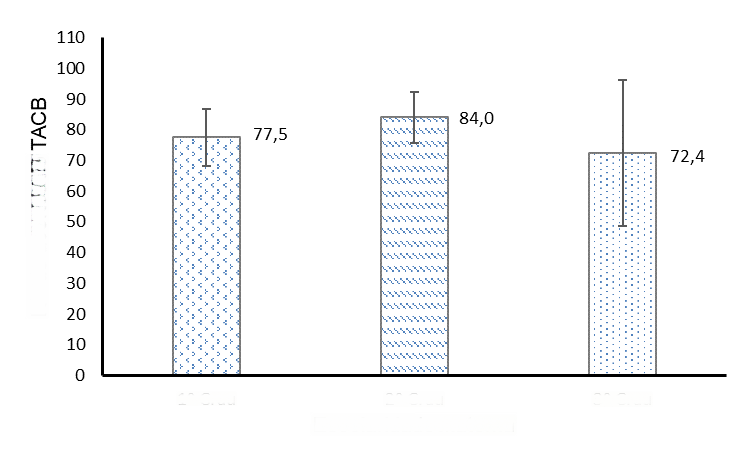
Figure 1. Number of correct answers in the TACB x maternal schooling
Source: Original research results
In order to evaluate the performance by area of training, the data were analyzed separately and indicated that 69% of CTE students and 40% of CTM students were considered scientifically literate. In order to better understand the performance of both classes, the results were described by axes (Figure 2).
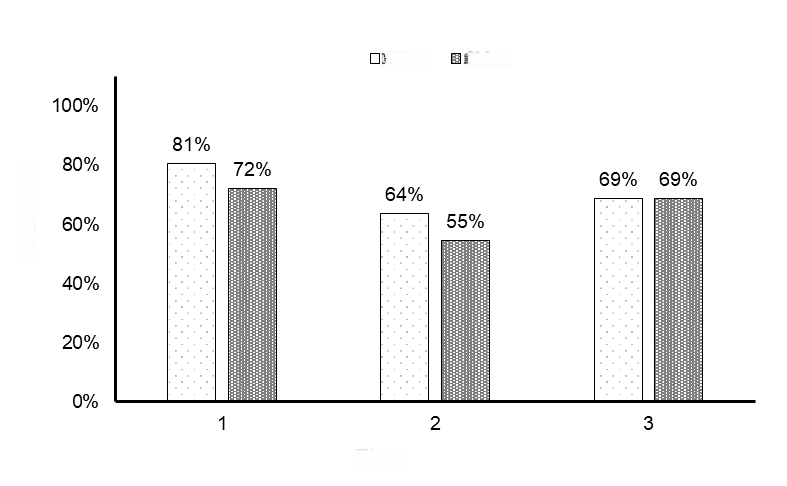
Figure 2. Performance of classes by axis
Source: Original research results
According to Figure 2, the performance of the electrical engineering class (3Elet) was 9% higher in axes 1 and 2. Regarding axis 3 (Impacts of Science and Technology on Society), the results were identical (69%). A possible explanation can be attributed to the similar focus of the professionalizing disciplines belonging to the technological axis (Control and Industrial Processes), in which both courses are included. As already mentioned, axis 2 indicated the highest lag index in the TACB, which reinforces the need to develop educational actions inherent to the nature of science.
Among the educational actions, some changes are suggested: expansion of the number of practical classes, greater emphasis on the methodological bases of science in different disciplines, offering of continuing education courses in scientific methodology, and more promotion of scientific initiation projects. The scientific methodology discipline prioritizes work as an educational principle and research as a pedagogical principle[20]. Encouraging the promotion of scientific initiation projects is important because, through them, the student learns to plan and execute research, as well as to argue, counter-argue, and substantiate with the authority of the argument. Thus, by doing science, they build citizenship that knows how to think[21].
Based on such information, the IFMG Conselheiro Lafaiete campus education managers will be invited to reflect on possible interventions in teaching methods. Among the factors that could promote the improvement of AC rates are the recent structuring of a space for practical science classes and the inauguration of two modern electrical and mechanical engineering teaching laboratories, which will leverage the quality of student training.
The results of this study indicated that more than half of the participating students could be considered scientifically literate. This panorama is satisfactory when compared to the still limited number of results from the national literature involving the TACB. However, it is worth noting that 43% of the respondents were considered scientifically illiterate, a high number that can be attributed to the difficulties and effects caused by the covid-19 pandemic.
The offering of the scientific methodology course, the focus of its fundamentals on practical activities in the common and professionalizing core areas, and the greater promotion of scientific initiation projects are educational actions proposed with the aim of raising the students’ AC level, which will be reflected in the formation of critical citizens active in society. The TACB is presented as another tool to be used in evaluating the quality of teaching in Integrated Technical High School Courses, as the test content dialogues with the purposes of the Federal Network of Professional, Scientific and Technological Education.
References
[1] Brasil. Lei 9.394, de 20 de dezembro de 1996. Estabelece as diretrizes e bases da educação nacional. Diário Oficial da República Federativa do Brasil. 1996 dez. 20. Disponível em: https://legis.senado.leg.br/norma/551270/publicacao/15716407.
[2] Brasil. Lei 13.005, de 25 de junho de 2014. Aprova o Plano Nacional de Educação – PNE e dá outras providências. Diário Oficial da República Federativa do Brasil. 2014 jun. 25. Disponível em: http://www.planalto.gov.br/ccivil_03/ato2011-2014/2014/lei/l13005.htm.
[3] Instituto Nacional de Estudos e Pesquisas Educacionais Anísio Teixeira (INEP). Resultados do Índice de Desenvolvimento da Educação Básica: 2019. Resumo Técnico. Brasília (DF): INEP; 2021. Disponível em: https://download.inep.gov.br/publicacoes/institucionais/estatisticas_e_indicadores/resultados_indice_desenvolvimento_educacao_basica_2019_resumo_tecnico.pdf.
[4] Rodrigues-Moura S.; Brito L.P. Eixos de convergência da alfabetização científica e técnica no ensino médio integrado. Linhas Críticas. 2019; 25: e21586. doi: 10.26512/lc.v25.2019.21586.
[5] Barbosa A.L.A.; Anjos A.B.L.; Azoni C.A.S. Impactos na aprendizagem de estudantes da educação básica durante o isolamento físico social pela pandemia do COVID-19. CoDAS. 2022; 34(4): e20200373. doi: 10.1590/2317-1782/20212020373.
[6] Caponi S. Covid-19 no Brasil: entre o negacionismo e a razão neoliberal. Estudos Avançados. 2020; 34(99): 209-223. doi: 10.1590/s0103-4014.2020.3499.013.
[7] Instituto Nacional de Estudos e Pesquisas Educacionais Anísio Teixeira (INEP). Relatório Brasil no PISA 2018. Brasília (DF): INEP; 2020.
[8] Sasseron L.H.; Carvalho A.M.P. Alfabetização científica: uma revisão bibliográfica. Investigações em Ensino de Ciências. 2011; 16(1): 59-77.
[9] Chassot A. Alfabetização científica: uma possibilidade para a inclusão social. Revista Brasileira de Educação. 2003; 22: 89-100. doi: 10.1590/S1413-24782003000100009.
[10] Chassot A. Alfabetização científica: questões e desafios para a educação. 8ed. Ijuí (RS): Unijuí; 2018.
[11] Vizzotto PA. Teste de Alfabetização Científica Básica – Questionário integral. 2020. Disponível em: https://www.researchgate.net/publication/341351238_Teste_de_Alfabetizacao_Cientifica_Basica-_Questionario_integral.
[12] Laugksch R.C.; Spargo P.E. Construction of a paper-and-pencil Test of Basic Scientific Literacy based on selected literacy goals recommended by the American Association for the Advancement of Science. Public Understanding of Science. 1996; 5(4): 331-359. doi: 10.1088/0963-6625/5/4/003.
[13] Miller J.D. Scientific Literacy: A Conceptual and Empirical Review. Daedalus. 1983; 112(2): 29-48.
[14] Vizzotto P.A.; Del Pino J.C. O uso do teste de alfabetização científica básica no Brasil: uma revisão da literatura. Revista Ensaio: Pesquisa em Educação em Ciências. 2020; 22: e15846. doi: 10.1590/1983-21172020210116.
[15] Pereira B.O.; Avelar B.Y.S.; Lemos R.A. Um olhar sobre a alfabetização científica. In: Valle M.G.; Soares K.J.C.B.; Sá-Silva J.R. A alfabetização científica na formação cidadã: perspectivas e desafios no ensino de ciências. Curitiba (PR): Appris. 2020; p. 17-28.
[16] Coppi M.A.; Sousa C.P. Estudo da alfabetização científica de alunos do ensino médio de um colégio de São Paulo. Revista Eletrônica Científica Ensino Interdisciplinar. 2019; 5(15): 537-544. doi: 10.21920/recei72019515537544.
[17] Nascimento-Schulze C.M. Um estudo sobre a alfabetização científica com jovens catarinenses. Revista Psicologia: Teoria e Prática. 2006; 8(1): 95-117.
[18] Instituto Federal de Educação, Ciência e Tecnologia de Minas Gerais (IFMG). Resolução n. 24, de 03 de novembro de 2021. Dispõe sobre a Aprovação da Adesão do IFMG às Diretrizes Indutoras do CONIF para a Educação Profissional integrada ao ensino médio, na íntegra. Belo Horizonte (BH); 2021. Disponível em: https://www.ifmg.edu.br/portal/ensino/Resoluo242021.pdf.
[19] Santos W.L.P. Educação científica na perspectiva de letramento como prática social: funções, princípios e desafios. Revista Brasileira de Educação. 2007; 12(36): 474-550.
[20] Guerra G.F. Metodologia científica no Ensino Médio Integrado: um estudo de caso no Instituto Federal Goiano – Campus Ceres [Dissertação de Mestrado Profissional]. Morrinhos (GO): Instituto Federal Goiano; 2019.
[21] Demo P. Educação Científica. Boletim Técnico do Senac. 2010; 36(1): 15-25.
Como citar
Sousa J.C.; Hippler N.M.S.D. Avaliação do nível de alfabetização científica de estudantes do ensino técnico integrado em MG. Revista E&S. 2023; 4: e20230039.
Sobre os autores
José Carlos Leandro de Sousa, Instituto Federal de Educação, Ciência e Tecnologia de Minas Gerais – Campus Conselheiro Lafaiete.
Naissa Maria Silvestre Dias Hippler, Escola Superior de Agricultura “Luiz de Queiroz” – Universidade de São Paulo – Departamento de Genética.
Link para download: https://cms.revistaes.com.br/wp-content/uploads/2023/08/ES_23039.pdf