
Communication
Strategies
Project Management
Forestry Projects
July 05, 2024
Strategic communication in a rural environment for forest project management
DOI: 10.22167/2675-6528-20240025
E&S 2024, 5: e202400025
Yanítssa Kapler de Paiva; Denise Alessandra Defina
Human communication is a process that involves the transmission and reception of ideas, impressions, and images of all kinds. It is linked to coexistence relationships and results from the availability of intelligible information, capable of making ideas, images, and experiences common and promoting mutual understanding and comprehension[1].
In project management, the communication process must be effective and follow a previously elaborated management plan, with a documented and reviewed methodological approach, considering different communication models, workplace trends, and process evolution. In a simplified way, the sender is responsible for ensuring that the information reaches team members and other stakeholders clearly, coherently, and completely. These, in turn, must ensure that the information was received in full and understood correctly[2].
Notably, communication dictates the building of relationships for successful project outcomes. However, this process requires the development of appropriate communication strategies, according to the needs of the project and of the stakeholders, parties that are also known as stakeholders. Strategic communication is, in turn, part of an effective management plan or strategy[3].
Considering that people from different cultures communicate using different languages, the challenges to ensure that the message’s meaning was understood are great. Thus, a strategic approach to communication is of fundamental importance for the success of a project[4].
In rural environments, communication failures are surely one of the main reasons for failure in the management of forestry projects. The inefficiency of this process can be due to several reasons, among which the main one is the cultural and routine practice of agricultural activities performed by the producer linked to resistance to change, a central issue of the bottleneck for communication between technical managers and farmers. From this perspective, and considering that the responsibility to be understood always lies with the sender, other reasons for the inefficiency of this communicative process may be the transmission of overly complex messages, inconsistency in messages, and lack of transparency and engagement[5].
Rural communication needs to be clear, motivating, and persuasive enough to induce changes in behavior, skills, and attitudes. At the same time, it is necessary for the communicative process to prepare the farmer to propose solutions appropriate to the specificities of their rural property, and, in this case, communication needs to be dialogical and collaborative[6],[7],[8],[9]. In this sense, the objective of this study was to propose a plan for strategic communication in a rural environment, considering the management of forestry projects on small agricultural properties, with a focus on reforestation of springs, rivers, and water recharge areas.
The work was conducted through a case study, a broad research method that guides answers to questions in social contexts (“how?”, “why?”). This is also considered an empirical investigation that comprises a comprehensive method, with data collection and analysis; but, fundamentally, traced in a rigorous methodological path, with a thorough literature review to support the propositions to the research questions[10].
The research development took place in one of the environmental consulting firms accredited to serve rural producers in reforestation projects in Espírito Santo. The projects were part of a state program to promote the restoration of the hydrological cycle, through the conservation and recovery of forest cover on rural properties. The counterpart was provided as a benefit to the rural producer through payment for environmental services (PES), either for the maintenance of native vegetation areas or for the acquisition of inputs necessary for planting new areas[11].
The process for joining the program occurred in stages previously defined in calls for proposals published once a year, when new project cycles began. Each call offered a number of vacancies per region, with updated modalities and values. The projects had a contractual duration of three or five years, depending on the modality, and were monitored once a year, always at the same time, for the release of the PSA installments. Payment was, therefore, conditioned on the fulfillment of activities, which should be carried out in the following proportions:
- year 1: 50% of the intervention area completed;
- year 2: 30% of the intervention area completed;
- year 3: 20% of the intervention area completed;
- year 4: maintenance of the intervention area;
- year 5: maintenance of the intervention area.
The present study covered the period between April and December 2019. However, projects that were already in the monitoring phase were fundamental for the elaboration of the research problem. The data were gathered from records in a specific virtual system for project registration, as well as spreadsheets and notes in physical and digital media made by previous company managers.
Initially, the main stakeholders of the projects managed by the target company of the research were identified, and their roles and expectations regarding the program were recognized. In an informal manner and without forming a questionnaire structure, this survey was conducted in a virtual group composed of managers from other consulting firms that also served projects linked to the state program to promote the restoration of the hydrological cycle on rural properties.
From then on, the study sought to understand the communication channels used by the company that was the target of this study, from the disclosure of the notices, through the planning, execution, and control of the projects, also addressing the main challenges of this process. The demands for the creation of a communication plan were ascertained, and the appropriate components and tools for its composition were defined. The methodological alignment used for the elaboration of this plan was adapted from Chaves et al.[12].
For the construction of the strategic process, in addition to the basic foundations of communication, four stages suggested by Walker[3] were considered, namely:
- identify the purposes of communication: the communicator must know their purposes and make them evident to the receiver;
- analyze the target audience: communication must be directed towards the interests, needs, and expectations of those who will receive the information;
- consider the context: the communicator must know the cultural and environmental issues in which their receiver is inserted;
- select the communication channels: adequate communication channels must be selected, considering previous diagnoses.
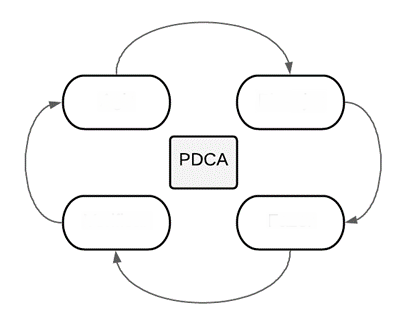
The formulation of strategies guides a path to be followed with a certain degree of flexibility, mainly due to the need for adaptation to changes. In this sense, an update of the strategic communication plan was suggested with the application of the cyclical concept of plan-do-check-act (PDCA), translated as plan-do-check-act. It is a model adapted and disseminated by Deming[13] that can be applied to the review of planning and, subsequently, to execution, monitoring, and adjustments.
Os principais stakeholders foram identificados ao se questionar quem eram os envolvidos nos projetos e quais os papéis que cada um deveria exercer. Essa pergunta foi discutida com gestores das outras empresas de consultoria ambiental que participavam do mesmo programa. Os stakeholders foram então classificados em dois grupos, internos e externos, de modo a compreender se o relacionamento que mantinham com a empresa-alvo desta pesquisa era direto ou indireto (Tabela 1).
Tabela 1. Relação dos principais stakeholders e seus papéis nos projetos de pagamento por serviços ambientais (PSA)
| Interested parties | Role played | |
| Internal | Government | Defines the invested values, covered regions, and vacancies offered by the program. |
| Investor | Operationalizes the financial part of the program and analyzes the progress of the projects. | |
| Management company | Performs the registration of rural producers, elaborates the technical project, and monitors the activities. | |
| Rural producers | They carry out the activities planned in the technical projects and promote the dissemination of the program. | |
| External | General community | It provides infrastructure for the program’s dissemination and benefits from the environmental services generated. |
| Input suppliers | They enable the implementation of activities through the sale of seedlings, fertilizers, herbicides, posts, etc. | |
| Competing companies | They can act in capturing clients from the same region. | |
The main stakeholders were recognized and their roles understood, and their expectations were identified. The government expected that the goals for reforested areas would be achieved, according to the scope provided for in the project. Investors’ expectations also followed this path, but, additionally, these stakeholders expected companies to deliver more and more projects and to be up-to-date with monitoring, as well as aligned with all the bureaucratic and procedural requirements of the program.
Companies, in turn, aimed to serve the largest number of producers satisfactorily, meaning that, in addition to having the objective of meeting the goals established by the program, they hoped that the environmental services generated could positively impact society. On the other hand, the expectations of rural producers were linked to the financial resources granted by the program. Almost unanimously, during visits and contract negotiations, it was observed that producers requested projects on their rural properties to receive PSA installments without worrying about the services provided.
Among the external stakeholders, the community expected companies to serve the region’s producers and maintain good relationships with them; input suppliers expected an increase in demand for their products due to the registered projects; and competing companies, in turn, were considered as such because they could operate in the same region and, therefore, expected to attract the largest number of producers to the program.
Given this scenario, it was possible to perceive that the projects were put into practice based on the relationships established between the company and the rural producers. The company, through a technical manager, should be aligned with the expectations of the government and its investor, while at the same time maintaining a clear and objective understanding with the rural producer about the importance of executing activities for delivering results. However, the producers’ expectations regarding the projects did not seem to be aligned with the roles they were supposed to perform.
In a brief survey of data from projects prior to 2019, four requests for contract termination were identified; of the 70 projects in the monitoring phase, only 49% were progressing satisfactorily, with activities carried out as planned for each year of intervention. The other 51%, corresponding to 36 projects, were delayed (Table 2).
Table 2. Number of projects per monitoring year
| Monitoring | Number of projects on time | Number of overdue projects |
| Year 1 | 10 | 13 |
| Year 2 | 11 | 10 |
| Year 3 | 11 | 12 |
| Year 4 | 2 | 1 |
| Year 5 | 0 | 0 |
| Totals | 34 | 36 |
Table 2 clearly shows the low level of engagement of rural producers regarding the contracted projects, which could directly affect the intended results. Furthermore, the non-execution of activities generated disruptions, such as contract terminations and returns of PSA installments with interest, in addition to rework for project alterations when the producer disagreed with what had been planned and a loss of credibility from the community in general about the program’s purpose.
From this point on, it was possible to perceive the need to manage the expectations of rural producers for new projects to be successful. In this sense, communication proved to be fundamental and a determining factor in the quality of relationships, as it permeated the entire structure of the projects, with resources for exchange and sharing capable of promoting mutual understanding. Conflicts would not cease to exist; however, they should be treated with maturity to strengthen and bring both sides closer[14]. From this perspective, several authors present communication as one of the factors that lead to project success[15],[16],[14],[17],[2].
Given that the project lifecycle duration varies from three to five years, the stakeholders’ expectations need to be managed throughout this period. Therefore, it is very important that communication channels with rural producers are used effectively. Furthermore, the frequency of communication needs to be adjusted according to the need, which can vary according to the project phase.
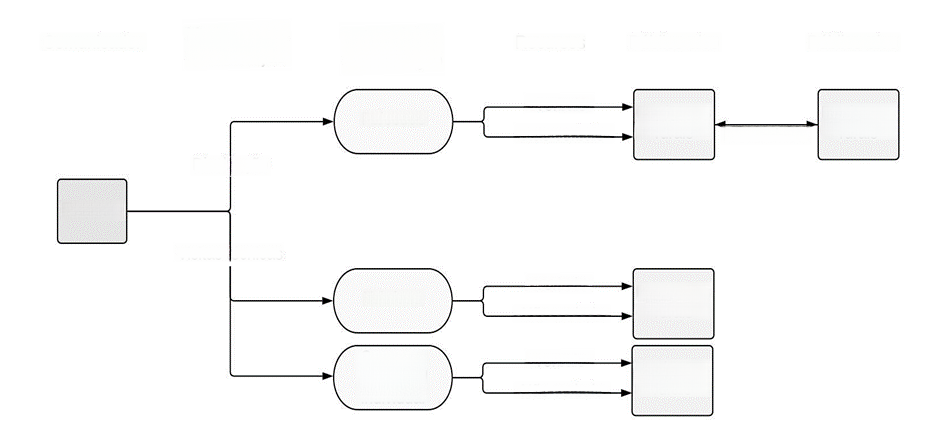
In this sense, the communication channels used with producers and the time and frequency of their use were investigated. The survey was conducted through previous data records and information exchanges with accredited companies for the program. It was found that the communication process essentially occurred in three moments: in the disclosure of the public notice, in the technical visit for project elaboration, and in the technical visit for project monitoring, with the latter being repeated once a year for the period stipulated in each producer’s contract (Figure 1).
Source: Original research results.
Initially, the communication aimed at publicizing the notice and registering interested parties. The company used this process whenever new vacancies arose. The notice was published in the Official Gazette and shared through the government’s and investor’s virtual communication channels. However, given the difficulty of rural producers accessing these channels, the company sought partnerships with the community in general, such as schools, associations, and regional leaders, to establish other means of dissemination.
In the moments following the communication between the company and the rural producer, the objectives focused on the project’s development and, subsequently, on monitoring the planned activities. In these cases, the communication channels and the resources used did not differ. Scheduling visits was done by phone, and the non-verbal resources considered were intonation of voice and the impressions the communicator could convey when speaking.
Lectures were held in cities covered by the program, and the mobilization of rural producers was carried out through partnerships. The manager used verbal and non-verbal resources; the verbal ones were oral and written language, and the non-verbal ones included the presentation’s images and the communicator’s body language, which, in turn, is considered by many scholars as one of the most important resources in the communicative process.
Mehrabian[18] demonstrated that, during this process, the receiver perceives only 7% of the message through verbal communication, and another 93% is perceived through non-verbal communication. In other words: voice intonation, gestures, facial expressions, and state of mind are fundamental to the success of communication.
In addition to the importance given to non-verbal communication, the manager also needs to focus on active listening, which consists of listening with empathy and without judgment. This practice is fundamental during technical visits, which are opportune moments to establish a trusting relationship with the producer, as they happen individually and in the specific context of each property. The manager needs to know the environment for project development and must consider all issues involving the interests, needs, and expectations of the rural producer.
Freire[19], in his study on rural communication, advocated for the construction of a transformative and participatory dialogue. According to him, for this to happen, an approximation of the rural producer’s reality would be necessary. Thus, when discussing water liabilities, for example, the value of water on the property should be contextualized — whether for production or consumption — and it should be questioned what can be done to preserve this resource.
Based on field reports and shared experiences from managers of other companies, it was possible to perceive that, in general, rural producers did not recognize the benefits generated by environmental services and did not understand the need for change in the models of use of available natural resources on their properties, such as water and soil. Furthermore, in most cases, they were unaware of the legal obligations for compensation of environmental liabilities, present in practically all rural properties submitted to the program.
Therefore, the need for a strategic change in the approach of rural producers, as well as the creation of a learning environment to guide managers’ decision-making, became evident. Deliberate strategies have a prescriptive approach, with intentions formalized in plans, while emergent strategies can arise without prior intention of agreement, with an unformalized pattern of actions[20]. Mintzberg[21] states that there are no purely deliberate or emergent strategies and that, in practice, one does not negate the other. The challenge lies in managing the balance between them, and it is in this process that learning occurs.
In general, the objective of the communication plan will always be to promote the integration of stakeholders. When reviewing the plan, it is important to keep updated the information about all parties involved in the projects, identifying whenever possible the roles played and the level of influence on the projects. Subsequently, the procedures will guide the dissemination of information in order to primarily serve those interested parties who maintain a direct relationship with the company.
Communication channels regarding the government and the investor will be maintained through virtual and formal means, which may include emails, websites, or the specific portal for project registration. Occasionally, virtual groups will be used for informal discussions with the investor, as has already been done at their initiative, to provide urgent information or clarify doubts.
Regarding producers, it is suggested that lectures be maintained to disseminate the program, but that a more educational approach be given in common language that can be understood by all. It is important to establish a more welcoming environment, making all interested parties feel like a fundamental part of the projects, as they indeed are. Furthermore, it is important that any doubts be clarified and that producer feedback be given during the meeting, directly to the communicator.
Documentary records are fundamental for monitoring the communication plan and must be made from the realization of the lectures, through data reports. During the visits, photographic records will also be of extreme relevance, mainly for monitoring the areas or for disseminating the producers’ work in future lectures.
The strategic communication plan was developed to serve as basic support for the management and engagement process of stakeholders, in order to meet the different needs and objectives of the project at the end of each cycle.
It has been suggested that communication be directed towards disseminating knowledge and dialogue, with the aim of discovering common interests and establishing good relationships among the stakeholders in the project. It is suggested that this communication plan be constantly updated, as a form of continuous process improvement through a circuit of four actions, represented below (Figure 2).
Source: Adapted from Deming[13].
In the planning phase, the objectives and goals of the plan should be established or reviewed, and for this, questions can be asked about the current problems, why they need to be solved, and how to do it. Doing is putting into practice, executing the plan. In the verification phase, the effectiveness of the communication plan is evaluated through feedback from stakeholders, which consists of receiving a positive or negative evaluation from the stakeholders about the implemented strategies. Finally, acting requires commitment to corrective actions in a new cycle and standardization of best practices.
This method is important to demonstrate that planning is not a stagnant or absolute phase, meaning it should not happen only once. Therefore, during the project, it is necessary to maintain continuous control of the quality and effectiveness of the adopted strategies and seek improvements for the communicative process.
Technical managers will need to adapt the transmission of information to the audience, with clearer, more attractive, dynamic, and respectful intonation, posture, and language. It is important to practice active listening and convey the results obtained in each delivery to ensure that rural producers are engaged and aligned with project demands. However, communication must be constantly renewed, and planning should not be considered absolute. The strategic communication plan can be used by managers to guide communicative processes in future PSA projects.
References
[1] Penteado J.R. A técnica da comunicação humana. 14ed. São Paulo: Cengage Learning; 2012.
[2] Project Management Institute (PMI). Guia PMBOK. 6ed. Newtown Square: PMI; 2017.
[3] Walker R. Gerenciamento estratégico de comunicação para líderes. 3ed. São Paulo: Cengage Learning; 2016.
[4] Bubshait A.A.; Siddiqui M.K.; Al-buali A.M.A. Role of communication and coordination in project success: case study. Journal of Performance of Constructed Facilities. 2015; 29(4): 1-7. DOI: 10.1061/(ASCE)CF.1943-5509.0000610.
[5] Freire P. Pedagogia do oprimido. Rio de Janeiro: Paz e Terra; 1970.
[6] Lisita V. Didática e formação de professores: um estudo sobre as possibilidades da reflexão crítica. Tese de Doutorado. São Paulo: Universidade de São Paulo; 2002.
[7] Rodrigues C.M. Conceito de seletividade de políticas públicas e sua aplicação no contexto da política de extensão rural no Brasil. Cadernos de Ciência & Tecnologia. 1997; 14: 113-154.
[8] Olinger G.O. Ascensão e decadência da extensão rural no Brasil. Florianópolis: Epagri; 1996.
[9] Bordenave J.E.D. O que é comunicação rural? 3ed. São Paulo: Brasiliense; 1983.
[10] Yin R.K. Estudo de caso: planejamento e métodos. Porto Alegre: Bookman, 2015.
[11] Governo do Espírito Santo. Programa Reflorestar. Disponível em: <https://www.es.gov.br/programa-reflorestar>. Acesso em: 24 maio 2024.
[12] Chaves L. et al. Gerenciamento da comunicação em projetos. 2ed. Rio de Janeiro: Editora FGV; 2010.
[13] Deming W.E. Out of the crisis. Cambridge: Massachusetts Institute of Technology; 1986.
[14] Cohen H. Você pode negociar qualquer coisa. 2ed. Rio de Janeiro: Record; 1994.
[15] Aldabó R. Gerenciamento de projetos: procedimento básico e etapas essenciais. 2ed. São Paulo: Artliber; 2001.
[16] Braga M. O papel da comunicação na gestão de projetos: um estudo de caso. Dissertação de Mestrado. Salvador: Universidade de Salvador; 2005.
[17] Maximiano A.C.A. Administração de projetos: como transformar ideias em resultados. 4ed. São Paulo: Atlas; 2010.
[18] Mehrabian A. Nonverbal communication. New York: Routledge; 2007.
[19] Freire P. Extensão ou comunicação? 16ed. Rio de Janeiro: Paz e Terra; 2013.
[20] Mariotto F. Mobilizando estratégias emergentes. Revista de Administração de Empresas. 2003; 43(2): 78-93. DOI: 10.1590/S0034-75902003000200006.
[21] Mintzberg H. 1987. Crafting strategy. Harvard Business Review. Disponível em: <https://hbr.org/1987/07/crafting-strategy#comment-section>. Acesso em: 22 mar. 2024.
Como citar
Paiva Y.K.; Defina D.A.; Magnani V.M. Comunicação estratégica em ambiente rural para a gestão de projetos florestais. Revista E&S. 2024; 5: e20240025.
Sobre os autores
Yanítssa Kapler de Paiva, Especialista em Gestão de Projetos – Praça Padre Geraldo,146 – CEP: 36974-000 – Durandé, Minas Gerais, Brasil.
Denise Alessandra Defina, Professora Universitária – Universidade de Ribeirão Preto – Avenida Costabile Romano – CEP: 14.096-900 – Ribeirão Preto, São Paulo, Brasil.