
Consumer Behavior
Digital
Strategy
Marketing
April 26, 2024
CRM Actions and consumer perception regarding the receipt of emails sent by companies
DOI: 10.22167/2675-6528-20230046
E&S 2024, 5: e20230046
Bethania Fernandes da Fonseca; Rafael Herman Mauro
There is no doubt that digital innovations exert significant forces on consumer behavior, and the impact of this change will continue to spread as more and more individuals around the world connect[1]. In this scenario, the need for companies to adapt quickly to this context of transformations caused by technological development is unquestionable[2]. Thus, it can be considered that studies of the possibilities of the digital universe are indispensable for directing all those who work with marketing in the prediction and diffusion of new technologies[3].
Considering the influence of the internet on individual behavior, as individuals increasingly communicate in the digital environment and have a growing interest in staying connected and well-informed, companies have identified an opportunity to relate to their customers. Thus, the online connection occurs through digital marketing strategies, which should be centered on meeting consumer needs, thus establishing a bond /relationship[4].
In this context, an opportunity can be observed for the implementation of Customer Relationship Management (CRM) strategies, referred to in Portuguese as customer relationship management[5]. This tool is used to bring consumers closer through communication and present solutions. It should be considered that CRM strategies act as a listening algorithm to monitor and select conversations, making it possible to interact and achieve a positive outcome[3].
Studies from the 2010s[6] already considered that the rapid growth of media and social networks was pressuring companies to increase activities in their traditional CRM systems. This is because they already identified that these environments could be a great approach for companies to improve their communication with customers, applying customer relationship strategies to mobile devices. Social networks, as well as email, have also become part of people’s daily lives.
Social networks, as well as email, have also become part of people’s daily lives, in which individuals present in the online environment have their behavior shaped by factors motivated by technological advances, increased internet accessibility, and the purchase of smartphones and computers[7]. Considering this scenario of easy accessibility, it can be observed that there have been changes in how people behave, conduct their relationships, and think, causing companies to adapt their email marketing actions to these strongly connected consumers[8].
In this scenario, CRM seeks to suggest relevant messages to individuals, with the intention of improving customer acquisition, retention, and loyalty[9]. Similarly, preserving existing customers and acquiring new ones, through marketing, sales, and management activities, are the main objectives of CRM implementation. The combination of information obtained through different communication channels is paramount. Among the tools that allow obtaining this information, we can consider[10]:
- Sites: environment needs to be attractive and present ease of access and use;
- SMS: efficient messaging feature and, unlike email, does not require receipt acceptance;
- Social networks: due to their interactive communication nature, they bring to the company an expressive volume of sharing of information and knowledge about consumers;
- E-mail marketing: it is necessary to establish objectives for the action and request contact authorization. It is also important to organize the database, so that the message is coherent and correctly formatted for the recipient.
In this study, the e-mail marketing tool was adopted as the research object, considering that CRM is a means of customer loyalty, being a differential for a company’s advancement[10]. For the project development, a bibliographic research was carried out by consulting books and scientific articles, and then a descriptive exploratory research of a quantitative nature, which used a questionnaire with 21 questions as a data collection instrument. The questions sought to investigate the respondents’ perception regarding the receipt of emails sent by companies.
The questionnaire application occurred online. A link was sent via messages to WhatsApp groups and privately on the Instagram social network, characterizing a convenience sample (non-probabilistic). The survey was available (accepting responses) from 09/15 to 09/20/2022 and, as a result, obtained a total of 109 responses.
In order to improve customer relationship, CRM is performed using software. Once information about consumers is obtained, it can be ordered to organize strategies with the purpose of stimulating customer loyalty[11]. CRM actions focus on monitoring customers through the communication channels that companies have with the intention of maintaining interactivity[12]. The e-mail marketing strategy uses e-mail as a communication channel. The tool must be customized according to the characteristics of the target audience. These actions can be used to improve and transform the relationship between brands and consumers.
Email marketing is still considered a strategy with great potential. According to the results of a study conducted in 2021 by Hubspot (an American company that develops software for marketing actions)[13], approximately 77% of companies perceived an increase in their customers’ engagement level during the pandemic. The following presents the results of the research conducted within the scope of the present study, which sought to investigate consumer perceptions regarding the receipt of emails from marketing campaigns by companies. Table 1 indicates the sample profile:
Table 1. Sample profile.
| Gender | Age | Region | |||
| Female | 70% | 18 to 25 years | 11% | Southeast | 84% |
| 26 to 35 years | 35% | South | 8% | ||
| 36 to 45 years | 33% | ||||
| Male | 30% | 46 to 55 years | 11% | Other regions | 8% |
The online shopping habits of the respondents were investigated. Among the 109 participants, only one declared that they had never purchased online. In this case, their participation was terminated. In the following question, it was asked if it was common to receive emails with advertisements for products, services, discounts, and promotions from stores where the respondent had previously shopped. Three respondents stated that they did not. This was also a selective question, where a positive response was necessary for the continuation of the survey. After applying these eliminatory questions, four participants had their contribution terminated, and the survey proceeded with 105 participants, as shown in Table 2 below:
Table 2. Online shopping behavior
| Online shopping habit: | 99,1% | Ranking of the products you buy most frequently: |
| 1st) Fashion and accessories | ||
| 2º) Perfumery and Cosmetics | ||
| 3rd) Food and beverages | ||
| Usually receives email from brands that have already purchased: | 97,2% | 4th) Books |
| 5º) Decoration products | ||
| 6º) Household appliances |
It can be observed that, among the participants, 97% usually receive emails from brands. The most visited segments during online shopping were fashion and accessories, perfumery and cosmetics, food and beverages, and books. Following up on the questionnaire, those who stated they receive emails from stores with advertisements for products and services were asked about their perception of these actions. In this question, some sentences were inserted in which the participant should answer how much each of them represented them, according to Table 3 below:
Table 3. Consumer actions after receiving e-mail from companies
| How much does each sentence represent? | Response (%) | ||
| NEVER | ALWAYS | SOMETIMES | |
| When I receive an email from the store, I usually open it to read the message | 27 | 7 | 66 |
| I notice that the content of the emails I receive is relevant to me | 22 | 13 | 65 |
| The emails I receive are personalized, as they present products that are within my routine | 26 | 15 | 59 |
It can be observed that only 7% of respondents stated they frequently open emails and did not always identify the content as relevant (only 13% indicated this always happens). Only 15% of consumers stated that the content always matches their habits. The majority of responses (an average of 60%) indicated that these situations only sometimes occur, and a significant portion of the sample (an average of 25%) indicated that they never open emails, that the content is not relevant, and that they never receive personalized content. In this context, it can be considered that it is necessary to go beyond the simple in the relationship between clients and companies and dedicate oneself to personalized services, considering the individuality of each one[14]. CRM must start from the understanding that retaining an individual who is already part of your base can be cheaper than acquiring new clients.
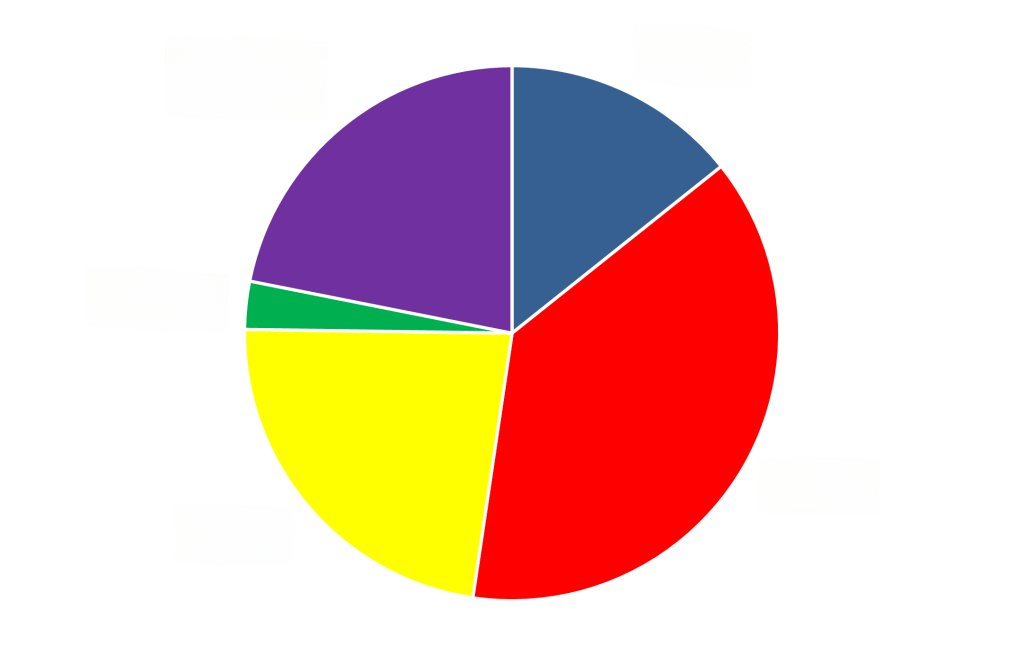
Regarding the frequency that consumers consider ideal for receiving emails from stores with messages about launches, discounts, and promotions, it can be observed in Figure 1, below, that only 14% of respondents consider weekly an adequate frequency, 60% indicate every 15 days and up to once a month as ideal, and a representative portion of the sample (approximately 22%) prefer not to receive emails.
Source: Prepared by the author.
Another question posed to the respondents was regarding the most important characteristics for the decision to open or not an email received from a marketing action carried out by a brand, as indicated in Table 4 below:
Table 4. Most important characteristics for the decision to open an e-mail
| Importance of items for deciding whether or not to open an email? | Response (%) | ||
| OF NO IMPORTANCE | IMPORTANT | VERY IMPORTANT | |
| Know the store that sent | 9 | 41 | 50 |
| Clear and objective title | 8 | 41 | 51 |
| To have authorized the sending | 9,5 | 22 | 68,5 |
| My interest in the type of product/service | 4 | 44 | 52 |
| Email title that refers to special offers and discounts | 10 | 47 | 43 |
It can be observed that issues such as 1) knowing the store that sent the email; 2) objective subject line; 3) having authorized the sending of messages; 4) customer interest in the type of product advertised; and 5) offer of discounts and special conditions are perceived as important or very important by the research participants.
This field of marketing has evolved significantly towards improving companies’ relationships with their customers so that, in this way, it is possible to establish a lasting relationship, this being a differential in the competitive environment[15]. For this, however, it is important that customers recognize that a certain company better meets their expectations than another, and this will bring more confidence and security to the customer[16]. As a result, satisfied consumers repeat their purchases and publicize their experiences to other individuals[17].
The research also investigated whether it was common to receive emails without authorization, or even receive from brands that never purchased. The results indicated that 90% of respondents usually receive emails under these conditions. Considering this scenario, the following question explored how this situation is viewed by consumers, according to Table 5 below:
Table 5. Receipt without authorization or from stores that never bought
| As each sentence represents the respondents’ actions | Never | Always | Sometimes |
| Receiving emails from brands I’ve never purchased from bothers me | 5% | 76% | 19% |
| When I receive emails from brands I haven’t bought from, I delete them without reading | 6% | 61% | 33% |
| Even when I receive emails from brands I haven’t purchased from, I usually read them to check the message content | 52% | 7% | 41% |
| I request the cancellation of sending emails from brands that I have never purchased from | 14% | 39% | 47% |
| Receiving emails without authorization gives me an unpleasant perception of the store | 9% | 60% | 31% |
E-mail marketing actions are carried out through a private channel between the company and the consumer; this communication is almost always unilateral (from the company to the consumer) [8] This research stage sought to discover the consumer’s perception when they receive an email without having given authorization, and even from a store they have never bought from. The results indicate that 76% are always bothered by this type of action, and that 61% delete the messages without reading them.
Only 7% state that they always open emails solely for review, and 52% state that they never open emails, not even to check the message content. Following this context, regarding the investigation into receiving unauthorized emails, as shown in Figure 06, the results indicate that only 14% stated they requested the cancellation of emails and that this action (receiving emails without authorization) always creates an unpleasant brand perception for 60% of respondents.
These results indicate that actions like this can compromise consumer perception of the brand, and once again reinforce the need to maintain customer satisfaction. The research results corroborate previous studies [8] that consider that some E-mail Marketing actions end up being part of content that is frequently added to the pile of information people receive daily, and for this reason are ignored or blocked and can also disfavor the customer’s sentiment towards the company. This situation can compromise the consumer’s relationship with the brand, as satisfaction determines a feeling of pleasure or dissatisfaction that results from the comparison of the outcome to the expectations created by the customer [18].
The questionnaire also addressed what type of content would make the consumer open an email from a store they have never purchased from. In this question, a space was left for respondents to freely write their answers, the recurring answers were:
- Promotions / Discount for new clients / Special conditions
- Direct approach on products previously researched
- Prior knowledge about the brand
- Objective email title
The research result indicates that consumers increasingly seek personalized, customized messages with real perceived advantages such as discounts and conditions for new customers, as this issue addressed the perception of receiving emails without authorization or from stores they have never purchased from. In this sense, it is important to reinforce the consumer-focused orientation that points to CRM as a way to select and manage customer relationships, seeking constant improvement focused on future results, but this demands that the company culture be customer-oriented for the marketing resources employed to be successful [19].
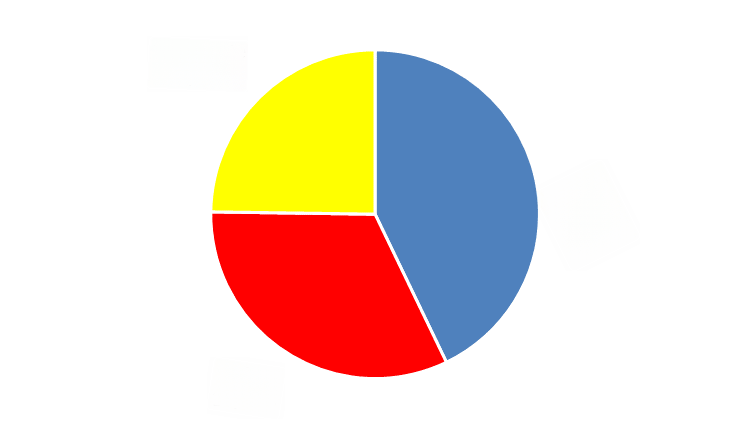
Continuing with the research, it was investigated whether consumers liked receiving emails about products, discounts, and promotions. As shown in Figure 2 below, it can be observed that approximately 33% do not like it, and the rest like it or are indifferent, with the majority of respondents (42.9%) liking to receive emails under these conditions.
Source: Prepared by the author.
For the participants who stated that they do not like receiving emails (32.4%), the reason was investigated, and in this question, a space was left for spontaneous arguments, and the recurring answers were:
- Excess emails, leaving the inbox congested
- Preference for searching when interested in a specific product
- Fear of online scams
One response that drew more attention was from the respondent who stated that the quantity of emails they receive discourages them and that they have even deleted 60 emails at once without reading any because they were from products that did not interest them or from brands they did not know. Their preference is to follow brands on social media, and emails are deleted without being read.
The issue of excessive emails was one of the most recurrent answers, and it corroborates with Netto (2022), who considers that organizations have been modernizing their communication methods with consumers and using available technologies over time. As a result of the increased use of emails, there has been a massification of Email Marketing actions. Because of this, consumers suffer from an exaggerated flow of information, which constantly grows and updates. Furthermore, regarding the result of this question, which investigated whether consumers like to receive emails from brands, it can be observed that women have a greater preference, and men are slightly more indifferent, as shown in Table 7 below:
Table 06. Difference between genders regarding preference for receiving emails or not
| Gender | Yes | No | Indifferent |
| Female | 45% | 32% | 23% |
| Male | 39% | 32% | 29% |
Finally, the research sought to discover, according to consumer perception, what are the advantages they perceive in registering their email for future messages, and what type of content they like to receive from stores (by email). For these questions, the participant could write spontaneously; the recurring answers can be observed in Table 1 below:
Table 1. Perceived advantage in registering e-mail and preferred content.
| Advantage of registering the e-mail with the stores | Email type preference |
| – Receive information about specific products tailored to my lifestyle; – Be reminded of previously researched products; – Receive personalized coupons, e.g., for birthdays; – Expect first-hand discounts; – Exclusive discounts for purchasing in the online store. | – Exclusive discounts for each client; – Ads with offers for previously searched products; – Free shipping ads; – News / new product launches. |
It is observed that e-mail marketing actions are common in companies from various segments, for reasons already presented, and this study proposed to investigate consumer perception regarding the receipt of e-mail marketing messages. At the end of the research, it can be highlighted that only a minority of respondents (33%) do not like receiving emails from brands, and for those who do like these actions, the preference is for content with discounts / promotions / special conditions.
It is noted that overall, for the research participants, there is not yet a perception of sending exclusive / customized messages that represent their needs, perhaps this is due to a flaw in the message segmentation strategy. This scenario seems to suggest that many companies send emails to their entire base of registered customers without filtering them correctly, which according to respondents ends up generating dissatisfaction with the volume of unsolicited messages received. In this context, it can be considered that within CRM actions, the proposal is to offer communication to engage and attract consumers by offering solutions that cause a positive impact [3]. Thus, the result of this research indicates that there is an opportunity for improvement in email marketing actions.
The research results indicate that consumers who participated in this survey do not identify that the emails received reflect their real needs, causing many emails to be deleted and the high volume of emails can harm the brand’s image to the consumer. Among the perceived advantages of registering the email for future message reception, there is an expectation of receiving information about specific products with lifestyle, reminders of previously researched items, receiving personalized coupons, first-hand discounts, or discounts for online purchases. As a limitation of the study, it should be considered that the results reflect the perceptions of a sample of individuals who may not represent the entire population universe; future studies are indicated for continuous contribution on the topic, and as a suggestion, it could be addressed which CRM actions tool is most appreciated by consumers.
References
[1] Solomon M.R. O Comportamento do consumidor: comprando, possuindo e sendo. 11ed. Porto Alegre: Bookman; 2016. 608 p.
[2] Mattar F. N. Administração de Varejo. 1ed. Rio de Janeiro: Elsevier; 2011. 602 p.
[3] Kotler P.; Kartajaya H.; Setiawan I. tradução de Ivo Korytowski. Marketing 4.0: Do tradicional ao digital. 1ed. Rio de Janeiro: Sextante; 2017. 208 p.
[4] Torres C. A Bíblia do Marketing Digital. 2ed. São Paulo: Novatec; 2018. 350 p.
[5] Castro D.J.O. A importância do CRM – Customer Relationship Management – dentro do universo empresarial para o desenvolvimento de estratégias de marketing de relacionamento por parte das empresas. Revista Pensar Gestão e Administração. 2015; 3(2): 1-22. DOI: https://doi.org/10.14295/idonline.v14i50.2381.
[6] Assaad W.; Gómez J. M. Rede Social em Marketing (Social Media Marketing) Oportunidades e Riscos. Revista Internacional de Gestão de Tecnologias de Informação e Comunicação do Setor Público (IJMPICT). 2011; 2(1): 13-22. Disponível em SSRN: https://ssrn.com/abstract=3471150.
[7] Frankenthal R. Entenda o comportamento do consumidor nas redes sociais. Mindminers Blog. 2018. Disponível em: https://mindminers.com/blog/comportamento-do-consumidor-redes-sociais/.
[8] Netto L.F. Preferência de Acesso a Conteúdo: E-mail Marketing ou Redes Sociais. Trabalho de Conclusão de Curso. Rio de Janeiro: Pontifícia Universidade Católica do Rio de Janeiro; 2022. 57 p. Disponível em: https://www.maxwell.vrac.puc-rio.br/60478/60478.PDF.
[9] Swift R.S. Accelerating customer relationships: Using CRM and relationship technologies. 1ed. Hoboken: Prentice Hall; 2001. 512 p.
[10] Fonseca D.H.S. Ferramentas de Comunicação Relacional e o CRM na Promoção da Satisfação e Fidelização de Clientes Concessionário Automóvel Finiclasse, S.A. Dissertação de Mestrado. Corvilha: Universidade Beira Interior Portugal; 2020. 106 p. Disponível em: https://ubibliorum.ubi.pt/bitstream/10400.6/10609/1/7679_16256.pdf
[11] Martins A.R.; Macêdo M. E. Cruz. O CRM como Estratégia no Marketing de Relacionamento. Revista Multidisciplinar de Psicologia. 2020; 14(50): 26-42. DOI: https://doi.org/10.14295/idonline.v14i50.2381.
[12] Baracho D.C. Customer Relationship Management (CRM): Gestão de relacionamento com o cliente. 2011. Monografia. Belo Horizonte: Escola de Engenharia, Universidade Federal de Minas Gerais; 2011. 47 p. Disponível em: https://repositorio.ufmg.br/bitstream/1843/BUBD-AQ3J6F/1/daniel_c_baracho_monografia.pdf
[13] Hubspot. Not Another State of Marketing Report. 2021. In: Hubspot. Disponível em: https://www.hubspot.com/hubfs/State-of-Marketing.pdf.
[14] Nascimento B.G.M.F.; Saito E.S.; Alves, L.A.S. O CRM contribuindo na gestão do relacionamento com o cliente: um estudo de caso nas lojas Tanger Ltda. 2016. Trabalho de Conclusão de Curso Lins: Centro Universitário Católico Salesiano Auxilium. 73 p.
[15] Viola J.C.A, Engel E. J. Estratégias de marketing de relacionamento em salões de beleza em Criciúma. In: Congresso Sul Catarinense de Administração e comércio exterior. Anais do Congresso Sul Catarinense de Administração e Comércio Exterior. Criciúma: UNESC, 2018. p. 1-13.
[16] Ferrão F. CRM – Marketing e Tecnologia. Lisboa, Portugal: Escolar Editora; 2003.168p.
[17] Kotler P.; Armstrong G. Princípios de Marketing. 7ed. Rio de Janeiro: LTC – Livros Técnicos e Científicos Editora S.A; 1998. 800 p.
[18] Kotler P. Administração de marketing: a edição do novo milênio. Tradução Bazán Tecnologia e Linguística. 10ed. São Paulo: Prentice Hall; 2000. 754 p.
[19] Greensberg P. CRM (Customer Relationship Management) – Na Velocidade da Luz: Conquista e lealdade de clientes em tempo real na Internet. Rio de Janeiro: Campus. 2001. 409 p.
Como citar
Fonseca B.F.; Mauro R.H. Ações de CRM e a percepção dos consumidores em relação ao recebimento de e-mails enviados por empresas. Revista E&S. 2024; 5: e20230046.
Sobre os autores
Bethania Fernandes da Fonseca , Rua Arlindo Béttio, 1000 – Vila Guaraciaba – CEP 03828-000 – São Paulo/SP, Brasil.
Rafael Herman Mauro, Serviço Brasileiro de Apoio as Micros Empresas São Paulo (SEBRAE) – Rua Vigário J.J. Rodrigues, 786 – Centro – CEP 13201-001 – Jundiaí/SP, Brasil.
Download link: PDF