
Marketing
April 28, 2026
Think global, act local
Territorial innovation and positioning strategies in the interior of São Paulo
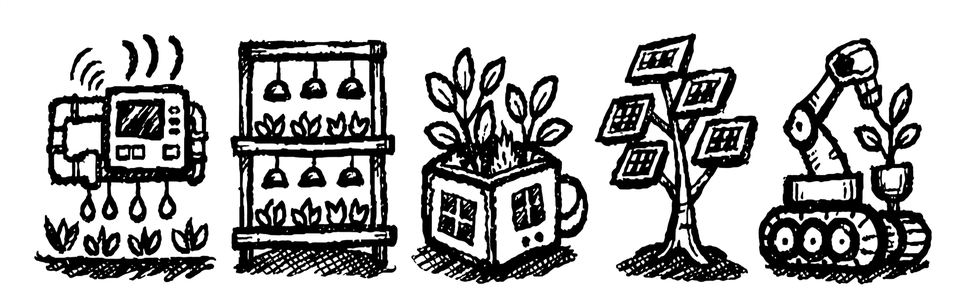
For decades, the narrative of innovation in Brazil was dominated by the major capitals, which represented the most common imaginaries when the subject was technology, startups, and the knowledge economy. In recent years, however, a city in the interior of São Paulo has begun to appear with increasing frequency in reports, events, and debates about innovation: Piracicaba.
The reason is simple — and strategic: the city has been consolidating a technology ecosystem focused on agribusiness that has come to be known as “redneck Silicon Valley”. The expression may seem like just a nice metaphor, but it translates a real movement of economic and symbolic transformation of the territory.
The so-called AgTech Valley (technology ecosystem for agribusiness) brings together universities, research centers, multinationals, and startups that develop solutions for the agricultural sector. The city hosts hubs (innovation centers), acceleration programs, and initiatives connecting companies and technology, forming a collaborative environment that drives new businesses.
The phenomenon is measurable. Surveys from Radar AgTech Brasil 2020/2021 cited by UOL indicate that the country has more than 1,500 startups focused on agribusiness, with about 60 concentrated in Piracicaba. This number reveals a high level of specialization for an inland municipality, which positions the city as one of the main agro innovation hubs in the country.
Piracicaba’s transformation did not happen by chance. It results from a phenomenon that researchers call an innovation ecosystem — an environment in which different economic and institutional actors interact to generate knowledge, technology, and new businesses, a concept widely discussed in the literature on innovation and regional development.
In the Piracicaba case, this system brings together universities, companies, innovation hubs, research centers, and public policies aimed at technological development. The city has consolidated a structured innovation environment, with the presence of multinationals, startups, and educational institutions working in an integrated manner, which reinforces its positioning as a strategic hub for technological agribusiness in the country, as indicated by recent reports on the development of the so-called “caipira Silicon Valley”.
One of the main articulation points of this ecosystem is the Piracicaba Technology Park, created with the mission of bringing together companies, startups, and researchers around technological solutions for agribusiness. The park functions as a strategic innovation infrastructure, housing incubators, laboratories, and business hubs that connect startups to large companies and investors, in addition to promoting acceleration and technology transfer programs.
This type of structure is central to contemporary theories of regional innovation. Sociologist Henry Etzkowitz, for example, proposed the Triple Helix model (interaction between university, government, and industry), according to which innovation arises from the interaction between three main actors: university, government, and industry. When these three spheres work in an integrated manner, they create more favorable conditions for technological and economic development.
Economist Ronald Boschma, a reference in regional innovation studies, argues that territorial proximity and collaboration networks favor the circulation of knowledge and the emergence of new ventures.
This logic also dialogues with the contemporary scenario of marketing. A report by GoAd Media, published in 2025, on trends for 2026, points out that brands and organizations increasingly operate in integrated systems, in which technology, culture, experience, and data need to be connected to generate consistent value.
In other words: innovation rarely happens in isolation. It emerges from networks. And, in this sense, Piracicaba has managed to transform its historical vocation in agribusiness into a contemporary platform for technological innovation.
Another frequently invisible element in the formation of innovative ecosystems is the role of professional communities. If hubs and universities provide infrastructure and knowledge, it is the communities that create circulation of ideas, connections, and opportunities.
Events, meetups and professional gatherings function as spaces for informal exchange, where projects begin to be born. It is in these environments that partnerships, startups and initiatives that later gain scale emerge.
Communities like DevPira also fulfill this role. Focused on connecting developers, designers, and technology professionals in the region, the initiative strengthens the local ecosystem through knowledge exchange, meetings, and its annual festival, which brings together the tech community of Piracicaba for discussions on innovation, career, and development.
In the interior of São Paulo, this movement already has some initiatives happening, such as the World Creativity Day, a global collaborative festival focused on the creative economy. Held this year between April 19th and 23rd, in Piracicaba, the event has placed the city on an international innovation agenda, connecting local actors to global networks of creativity, entrepreneurship, and development.
Independent and niche events are also gaining prominence. Conferences such as CDX (Caipira Design Experience), focused on discussions about digital experience, product, and community building, have been expanding the local innovation agenda; its next edition is scheduled for May 30, 2026, also in Piracicaba. These initiatives show how the articulation between creators, technology professionals, and entrepreneurs has been building an active layer of exchange and collaboration in the territory. It is not just about agenda, but about the continuous formation of a network.
This phenomenon directly dialogues with the concept of social capital, widely discussed by Robert Putnam, by demonstrating that relationships of trust, reciprocity, and collaboration within a community generate concrete competitive advantages for territories. This dynamic also approaches the discussions on brand communities, which show how value can be collectively built by the participants themselves, as proposed by Muñiz and O’Guinn when analyzing how consumers form social networks structured around brands.
Marketing
From a marketing perspective, the learning is straightforward: ecosystems are not sustained solely by infrastructure, but by relational density and the circulation of narratives. And these narratives are not built by campaigns — they are built by people, encounters, and shared stories.
In a scenario where communities begin to play a central role in value creation — as indicated by contemporary trends associated with the creator economy (creator economy) and the concept of community-led growth — territories that manage to consistently activate their local networks not only expand their innovation capacity but also their symbolic relevance.
In this context, community-led growth refers to strategies in which the growth of brands, products, or ecosystems is driven by the community itself, through engagement, co-creation, and circulation of value among its members, reducing the centrality of institutional actions and amplifying the protagonism of participants — a logic that directly dialogues with the dynamics observed in brand communities.
There is an entire area of study dedicated to understanding how cities build reputation and identity on the global stage. This field is known as place branding (territorial branding).
Researchers like Simon Anholt, Gregory Ashworth, Mihalis Kavaratzis, and Sebastian Zenker argue that territories, just like companies, need to develop communication and positioning strategies to differentiate themselves in an increasingly competitive world. The logic is simple: cities also compete for attention. They compete for: investments, companies, talent, tourists, and international events.
In this sense, territorial narratives become strategic tools. The expression “caipira Silicon Valley” functions exactly in this way. It creates a symbolic bridge between two apparently distinct universes: Silicon Valley, a global reference for technological innovation, and the interior of São Paulo, historically associated with agribusiness.
The result is a powerful narrative: it communicates innovation while preserving identity. For marketing professionals, this construction offers valuable learning: positioning is not just about what you do, but about the story you tell.
Think globally, act like a country bumpkin
The expression “think global, act local” has become a mantra in discussions about innovation and development. In the interior of São Paulo, however, this idea has been reinterpreted in a formulation that draws attention: think global, act caipira.
The term does not appear in isolation. It already appears in institutional and academic debates on territorial development, such as at the event “Think Global, Act Caipira,” promoted by the University Global Coalition, and in initiatives by the SDG Hub, which discuss the role of local identities in building global solutions.
In this context, the expression ceases to be merely a linguistic adaptation and begins to synthesize a strategic principle: the capacity of territories to insert themselves into global innovation networks without breaking with their cultural, productive, and social bases.
This is one of the main challenges for contemporary medium-sized cities. Participating in global flows of knowledge and technology requires connectivity and international ambition. However, competitive differentiation is increasingly born from the ability to mobilize local specificities — be they economic, cultural, or institutional.
This balance is increasingly relevant. In the current scenario, innovation does not only happen in laboratories or startups. It depends on the construction of environments that favor experimentation, collaboration, and knowledge circulation, elements deeply rooted in the territory.
International entities such as the United Nations reinforce this perspective by including innovation, infrastructure, and technological development among their priorities — such as Sustainable Development Goal 9 (SDG 9) of the UN’s 2030 Agenda. In other words: innovation is not just an economic agenda. It is also a strategy for territorial development. And, in this scenario, “countryside action” does not represent a limitation, it represents positioning.
What marketing professionals can learn
For those who work with marketing, branding, or product strategy, observing what happens in ecosystems like Piracicaba’s can offer valuable learning experiences.
First, because it shows that positioning is not exclusive to brands. Territories also need to build identity, reputation, and strategic narrative. Second, because it reinforces a central principle of contemporary marketing: differentiation is born from the combination of context, culture, and strategy.
Finally, it is worth remembering something we often forget in the corporate universe: innovation does not only happen in large centers. Sometimes, it starts in places that were not yet on the radar. And when this happens, the challenge is no longer just technological, it also becomes narrative.
Ultimately, innovative territories are not just those that create new technologies — but those that manage to tell a good story about the future they are building.
| To access the references of this text click here |
Who wrote this column
Natasha Barreto de Oliveira