Digital
Innovation
Technology
August 26, 2024
Why investing in mobile solutions is essential for companies?
Whether to sell products, offer services, build customer loyalty, or optimize internal processes, apps have become essential items
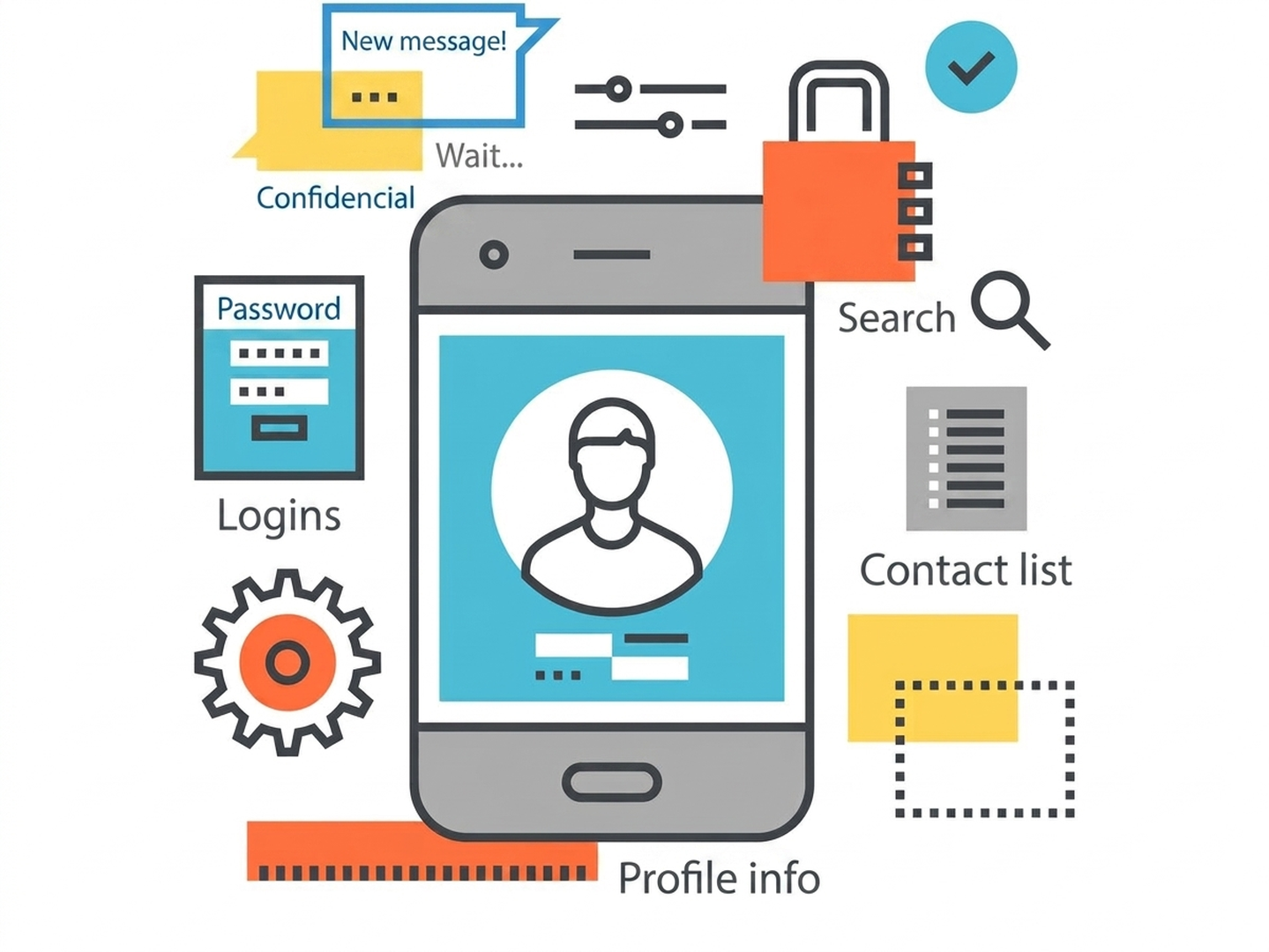
In a world where smartphones have become extensions of our hands, mobile development gains even more importance for companies that wish to remain relevant and competitive. Regardless of size or segment, all companies can benefit from the process of creating mobile device systems. Whether to sell products, offer services, build customer loyalty, or optimize internal processes, apps, as they are known, have become essential tools for success.
Nubank can be considered a good example of a business that succeeded thanks to smartphones. One of the largest banks in Latin America, the institution has over 80 million customers without ever needing to open a single physical branch with in-person service. It is unlikely the bank would have come this far without prior investment in mobile development.
According to the Brazilian Federation of Banks (Febraban), seven out of ten banking transactions are made through mobile phones. In 2023 alone, 130.7 billion operations made via smartphones were registered in the country.
Developers
In addition to real-time subtitling products, Skylar also creates mobile solutions, such as Legenda.ai, an automatic subtitling application for short videos. The development process for this type of software is surrounded by challenges, which must be taken into consideration before starting a project. Estimating the development time is one of the most important, because, depending on the size of the product, the required deadline can last months or even years.
The complexity increases when the solution is developed specifically for mobile phones, because the developer must take into account the processing power of mobile phones, the screen sizes and the policies for publishing applications in the stores (from Google and Apple), which analyze whether the applications meet the required requirements and standards.
Often stores reject the application for not complying with some rule, and a correction is suggested. Unfortunately, this communication is not very clear, and the development team needs to figure out the reason for rejection based on subjective feedback from the Play Store (Google) and App Store (Apple). It is difficult to count exactly how many applications are published per day, but estimates are in the thousands; perhaps for this reason, the feedback is not always clear.
The construction of an application requires a lot of planning and involves professionals from different fields and with various skills, such as, for example, the UX (User Experience designer) and the UI (User Interface designer), two complementary and essential areas for the success of a mobile application. They must work together to ensure that the application is not only functional, but also intuitive and enjoyable to use. Click here to learn more about the work of a UX/UI designer in Bruno Henrique Martimiano’s column.
The product owner (PO) is a fundamental figure in product development, including mobile applications. He is responsible for representing the interests of users and the business throughout the entire development process, defining the features of the applications and prioritizing the development team’s tasks. The developer or software engineer transforms the vision of the product owner and the UX designer UX/UI into a functional product, writing the code that brings the application to life.
Besides screen size, computational resources and internet connection also need to be taken into consideration by developers when creating an application. No matter how powerful a phone may be, it will never have the same performance as a computer. In the realm of computer systems, size matters, so the more space there is to accommodate a device’s physical components, the faster it can be.
In the case of mobile phones this is not possible, therefore, it is important to try to predict as much as possible the possible adverse conditions that can interfere with the functionality of the applications, from the device’s processing capacity to the quality of the internet connection, in order to allow the experience to be positive for the majority of users.
Development
Applications are developed through lines of code, using the IDE (Integrate Development Environment), integrated development environment in Portuguese – an application creation software that provides several common development tools in a single graphical interface.
One of the most used tools for developing mobile applications is React Native, a framework created by Meta that allows developers to build the application using JavaScript, which is among the most popular and accessible programming languages that exist, due to its simpler syntax.
Furthermore, React Native is versatile, providing great time savings, as the tool enables development for iOS and Android with just a single codebase, overcoming the fact that both systems use their own programming languages. Without React Native, it would be necessary to literally write double the code to develop an application that would work perfectly on both operating systems, managed by different companies.
On the other side of the board are the specializations, as is the case with a programming language called Kotlin, used to develop native applications for Android. The language gained momentum in 2017, when Google announced it would provide support for Android. From then on, Kotlin gained credibility among developers and began to be considered safe for the creation of native Android system projects.
Apple uses the Swift language for development on iOS. This language was created by the company itself with the purpose of meeting internal demands. This makes Swift one of the most used languages in the creation of applications for Apple.
Choosing the best encoding language for the application to be created is one of the most important factors before starting development. Unfortunately, there is no silver bullet in the programming world, which means that one language is not necessarily better than another. What exists are different needs and languages that are more suitable for each type of scenario.
When the developer chooses to use React Native, the entire team needs to know that it is not as performant as the native languages of the respective operating systems. Depending on the application’s needs, the framework may not meet specific requirements.
Open source
Behind these languages exist large groups, of companies or communities, that provide support so that they are updated permanently. But why does Google fund the development of open source tools? Google generates substantial revenue from advertising and therefore needs more websites and applications to be created. To achieve this, it is essential to provide the necessary tools for the development of these products.
To maintain Android, for example, providing methods that assist in the creation of applications for this Operating System becomes a strategic measure. This is why the company develops emulators, tools widely used by developers. Consequently, everyone who develops for Android already expects that, each year, the Android and iOS ecosystem will be improved compared to the previous year, and vice versa. Click here to read more about open source, in Renato de Lacerda’s column.
Another issue is the management of app stores. When launching an application on the App Store or Play Store, it is possible to choose to include ads or pay a lifetime subscription. However, depending on the business model, there may also be a charge of a percentage of the revenues generated. In this way, the maintaining company makes a profit by providing the necessary tools for the development of products that run on its operating system.
The challenges can be great and often unpredictable, but it is still very worthwhile to invest in this market, which is in constant growth and lacks qualified professionals, in an era when mobility is no longer an option. According to data from Agência Senado, it is estimated that Brazil trains 53,000 professionals per year, while the average annual demand is 159,000. It is crucial for any company, public or private, to be aligned with this new reality.
This content was produced by:

João Paulo Silva Costa
Front-end/mobile developer at Skylar. He holds a degree in systems analysis and development and works with software development.
Who wrote this column
Skylar