Where is the clarity?

Column

Education

Writing

Spelling

Post

March 19, 2024

Where is the clarity?

Spelling is by no means the most important item in a text

It may sound strange, but writing is a technology – and one of the oldest! Its function is to facilitate the exchange of information. It works through codes, which must be manipulated with a lot of practice, and its power to transmit ideas or concepts is unsurpassed. Like any technology, however, when misused, writing can cause damage; in this case, misunderstandings. In the realm of science the damage can be even greater.

No scientific discovery is considered complete if it is not described and published. Therefore, writing is part of the researcher’s daily life. But the lack of clarity in an article can lead to discredit for the scientist and jeopardize the basic functions of their work: improving some process, transmitting scientific knowledge, generating development for society.

What is, then, the secret to writing clearly? A beginner author, when searching the internet for this answer, will certainly find an infinity of specific tips: “por que or porque?”; “entrega a domicílio or entrega em domicílio?”, most of them delving into grammatical rules.

However, the idea that knowing how to write according to grammatical norms is the factor that most contributes to the clarity of a text is not a unanimous one. “Spelling is by no means the most important item in a text,” usually says the Portuguese teacher and grammarian Pasquale Cipro Neto. The writer Luís Fernando Veríssimo, author of “Comédias da Vida Privada” (1994), went further in the chronicle “O Gigolô das palavras” and ironized: “Grammar is the skeleton of language. It only predominates in dead languages, and there it is of restricted interest to necrologists and Latin teachers…”.

Respecting grammatical rules may not be a sine qua non(something like “indispensable”, in Latin), but it is a good start, at least “to avoid the most glaring embarrassments”, as Veríssimo wrote. However, the fluency and clarity of the text are intimately linked to another factor in particular: cohesion. Without it, the content runs the risk of losing the reader’s interest.

According to linguist Irandé Antunes, the most important thing at the beginning of text development is to understand how to organize it and make it cohesive. To aid in organization, she suggests separating topics between “what is nuclear and what is peripheral”; for cohesion, she recommends the use of linguistic elements to “stitch” the ideas, the so-called connectors. These are prepositions, conjunctions, and adverbs that help the reader follow the author’s chain of concepts. In her book “Lutar com as palavras: coesão e coerência” (Fighting with Words: Cohesion and Coherence), the author lists other relevant points for organizing text ideas:

  • defend a point of view;
  • guide an argumentation;
  • make a reservation;
  • present a justification;
  • give an explanation;
  • issue an opinion;
  • sell an idea.

All of this is intended to benefit the most important variable in the process of good writing: the reader. A convoluted text, full of information and references, but whose message is not clear to the reader, is a bad text and doomed to disinterest or oblivion. Thus, the author’s first concern, even before touching the keyboard or picking up the pen, should be to answer the following questions:

  • for whom am I writing?
  • what is the intention of the text?

Many of the linguistic decisions the author will make from then on should be based on these two answers.

Also on the list of priorities is the construction of the central idea around which the paragraphs will be woven. In her work, Irandé Antunes classifies the act of writing as “a thematically oriented activity,” which has a destination towards which sentences, paragraphs, or chapters are moving. And losing it can also result in damage to the relationship with the reader.

Scientific writing

Not even deeply understanding the subject guarantees a well-written text. “One cannot continue with the simplistic, perhaps naive, thinking that a master’s or doctoral student, after completing a certain number of courses, participating in some conferences, observing or conducting experiments, is ready to write a dissertation or thesis and even submit an article for publication,” states Professor Pedro Reiz in the book “Manual de Técnicas de Redação Científica”. In the work, the author lists the main deficiencies found in scientific texts. Some of them have been reproduced below, and they serve as warnings about what to avoid when writing articles.
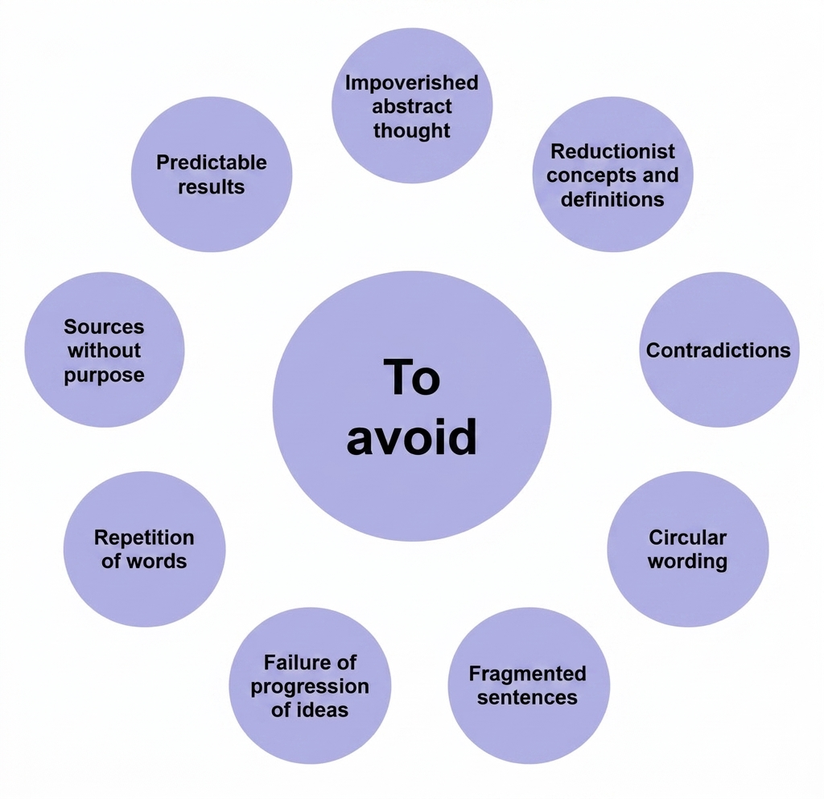
Adapted from “Manual of Scientific Writing Techniques”

According to Valtencir Zucolotto, president of the management committee of the Scientific Writing Portal of USP São Carlos (SP), one of the problems in scientific production in Brazil is that researchers are unaware of what type of information should be included in each section of a scientific article. The USP/São Carlos portal has various support materials in the area, including short courses, writing tools, and lectures to help researchers.

The English writer George Orwell – another word specialist – offered some advice to those interested in writing, regardless of the language and genre chosen. The tips from the author of “1984” and “Animal Farm” were transformed into the opening of the style guide of the prestigious magazine The Economist. There are six “rules”, originally published in an article in Horizon magazine, in 1946. Three of them fit here, as they can help with the fluency of any type of text: “Never use a metaphor, simile or cliché that you are used to seeing written”; “never use a long word if a shorter one will do the same job”; “if it is possible to cut a word, cut it.”

Suggestions are valuable in the sense of encouraging simple, light, and unpretentious writing, which, in turn, facilitates reading. Excess words (those that, if removed, do not change the meaning of the sentence) make the text complex and can lead the reader to lose the thread.

At Editora Pecege, the main work of the editors involves precisely the adaptation of the texts of the articles submitted for publication in the journals Estratégias e Soluções (E&S) and Quaestum, so that they meet the standard of the journals’ scope and comply with the standard of the language. Above all, both journals value clarity, and their editorial policy recommends that manuscripts be written in an interesting and legible way for various types of readers, market professionals, academics, or students.

Myths

Giving up some preconceived ideas or myths can also help the author who aims to write a clear text. One of these myths is the belief that people who write well do so on the first try, without reformulations or revisions. This is a misconception. A well-written text is usually the result of good revision. Another legend often invoked by those who tend to procrastinate in writing is the “lack of inspiration”. But only practice can make this “inspiration” emerge. The secret is to read a lot and write a lot, without worrying about style; the time to worry about it is during revision. “It is the interaction with reading and writing that leads us to memorize and automate the spelling of complicated words such as those ending in “são”, “ssão”, or “ção” (“ascensão”, “transmissão”, and “contenção”, for example)”, teaches Professor Pasquale.

In summary, reading assiduously, having knowledge about the topic, putting oneself in the reader’s place (with empathy, imagining, for example, that they may not be familiar with the subject), revising what has been written, and cutting everything possible are good writing habits and have the potential to bring clarity to any text, increasing the chances of the reader reaching the end of the text.

To access the references of this text click here

This content was produced by:

Renata de Gáspari Valdejão Almeida

LinkedIn

Assistant editor of the Strategies and Solutions (E&S) Magazine, from Pecege Publishing House. She is a journalist, screenwriter, and researcher. She worked for 16 years at Folha de S.Paulo, as a writer and reporter, and collaborated with several national circulation magazines, such as Época Negócios, Pais & Filhos Magazine, and Superinteressante. She worked in the communication area of the USP School of Medicine and was the Audiovisual Coordinator of UNA-SUS/UFMA, in Maranhão.

Who wrote this column

Editora Pecege

Produz materiais nas áreas de agronegócios, educação, gestão e tecnologia, prestando serviços de padronização, revisão, elaboração de ficha catalográfica e produção gráfica. Gerencia a publicação das revistas Quaestum (científica) e Estratégias e Soluções – E&S – (técnico-científica) e publica livros em diversas áreas.

You may also like

Executive Mba In Leadership And Management

November 23, 2026

Improvements in the efficiency of a secondary biological sludge drying plant

The management of industrial solid waste, especially secondary biological sludge, represented an operational and strategic challenge for a company in the pulp and paper sector. A secondary biological sludge drying plant, installed to meet environmental requirements and reduce costs, operated with low efficiency and high unavailability. The objective of this study was to evaluate and propose a set of actions to increase the operational availability of the plant, ensure the integral processing of the generated sludge, and reduce treatment and transportation costs, in addition to mitigating environmental risks. To this end, an analysis of the root causes of low efficiency was carried out, using tools such as the cause-and-effect diagram (Ishikawa) and the “5 whys” analysis, and hypotheses were tested to identify the most impactful factors. Three main root causes were identified: addition of low-load effluent to the process, absence of a dedicated maintenance team, and lower consistency of dewatered sludge. The proposed countermeasures, which included stopping the addition of effluent, hiring a maintenance team, and testing polymers, had a monthly implementation cost of R$ 35,000.00. An annual reduction in operating expenses of up to R$ 1,800,000.00 and maintenance costs of R$ 600,000.00 was estimated, in addition to a 25% reduction in operational unavailability. It was concluded that the proposed measures are viable, quick to implement, and capable of ensuring the integral processing of secondary biological sludge, strengthening the company’s ESG strategy and ensuring environmental compliance.

Keywords: Operational costs; Operational efficiency; ESG; Biological sludge; Sludge drying.

Data Science And Analytics For Operations

November 19, 2026

Polyp-YOLO: an efficient, low-latency detector for polyps in colonoscopies

The early detection of colorectal polyps is crucial for the prevention of colorectal cancer, and real-time computer-aided detection (CADe) systems have shown gains in endoscopic practice. The objective was to develop and validate a lightweight colorectal polyp detector, based on the YOLO architecture, capable of operating on restricted hardware with high precision and low latency. The methodology used public datasets of endoscopic images, partitioning the Kvasir-SEG dataset for training and internal validation, and CVC-ClinicDB and ETIS-Larib Polyp DB for cross-dataset evaluation. Lightweight variants of the YOLOv8, YOLO11, and YOLO26 families with 640×640 pixel input were evaluated. A grid search tested 70 combinations of optimizers and activation functions, and identified AdaBelief and LeakyReLU as the configuration with the best generalization. The optimization pipeline applied unstructured pruning, knowledge distillation, and fine-tuning. The optimized YOLO11n-seg model outperformed the higher-capacity architecture (YOLO26m-seg) in mAP50 and showed similar performance in F1-Score, operating with approximately seven times fewer parameters. It achieved an mAP50 of 0.7929 and an F1-Score of 0.7514 on the ETIS-Larib dataset, and fast inference was demonstrated in different formats, with real-time latencies. The explainability of predictions was validated by Grad-CAM activation maps. The proposed solution demonstrated itself to be a promising experimental tool for diagnostic support, with technical feasibility for integration into environments with reduced computational power, although it requires future clinical validation.

Keywords: Computer-aided detection; Edge computing; Hyperparameter optimization; Endoscopic image segmentation; Medical computer vision.

Data Science And Analytics For Operations

November 19, 2026

Multi-touch Attribution in E-commerce: A Comparison between Markov Chains and Last-Click

The research investigated Multi-touch Attribution (MTA) Models in e-commerce, seeking to overcome the limitations of the Last-Click model, widely used in the market. The objective was to compare the performance of first-order Markov Chains with Last-Click and Position-Based approaches, identifying the value of assistance channels frequently ignored. To this end, Markov Chain algorithms were applied to a large volume of purchase journey data from the Google Merchandise Store, extracted via BigQuery. The study probabilistically mapped the purchase journey and calculated the Removal Effect to quantify channel relevance. The results demonstrated that data-driven models identified the strategic role of discovery (awareness) and assistance channels, which Last-Click neglected in 65% of complex journeys. Simulated financial analysis indicated an approximate 28% hidden efficiency in Cost Per Acquisition (CPA) for Paid Search, compared to the Last-Click model. It was concluded that Markov Chains allowed for a more accurate mapping of purchase journeys, validating the technical feasibility of the modeling and providing evidence for more efficient budget allocation in digital media, mitigating the risk of early divestment in crucial channels.

Keywords: Assistance channels; Data science; E-commerce; Digital marketing; Media optimization.

Project Management

November 19, 2026

Integrated Software for Operational Communication and Control: Practical Evidence in a Medium-Sized Company

The study analyzed the impacts of the lack of integration between commercial and operational modules of an integrated management software (ERP/CRM) in a medium-sized company in the mechanical engineering sector. The main objective was to evaluate practical evidence of communication and operational control optimization, identify bottlenecks, and formulate improvement proposals. A qualitative-quantitative approach was adopted through a single case study with documentary research, based on the extraction and filtering of historical task records from the Bitrix24 software and statistical correlation analysis between workload and allocated team. Based on the diagnosis, an action plan structured in the 5W2H tool was developed. The results revealed that 54.4% of the registered tasks consisted of duplicate, test, or practically useless records, generated by manual insertion during the scope transition between commercial CRM and engineering. It was also demonstrated that the increase in the commercial team linearly accompanied the growth of inefficient tasks, polluting the database and masking the organization’s real productive capacity. It was concluded that the automation of workflows and native integration between modules are essential to mitigate operational and financial risks, providing replicable guidelines for data governance in small and medium-sized enterprises.

Keywords: System Customization; Enterprise Resource Planning (ERP); Task Management; Management Software.

Project Management

November 19, 2026

Supervised learning in voltammetric quantification with electrochemical sensors

The application of supervised learning in the voltammetric quantification of paraquat in artificial urine was evaluated. The study aimed to quantitatively assess the predictive performance of supervised learning models compared to a univariate “baseline”, preserving independence between devices in the training and testing sets. The research was conducted as an applied case study, processing data from four physical devices, each evaluated under a blank condition and six paraquat concentration levels, totaling 28 square wave voltammetry (SWV) curves. A computational “pipeline” integrated automated file reading, organization of curves into current-potential matrices, generation of potential maps, and device-specific blank correction. Five approaches were considered: conventional univariate calibration, predictive univariate “baseline”, partial least squares (PLS) regression, support vector regression (SVR), and random forest (RF). Predictive evaluation was performed using device-grouped cross-validation. PLS showed the best predictive performance for curves from a device not used in training, with an R² of 0.7981. RF exhibited intermediate performance, while SVR and the predictive univariate “baseline” showed inferior and similar performance between themselves. It was concluded that a compact multivariate representation of the voltammetric profile was more favorable for inter-device prediction than increasing model flexibility under the studied conditions. Grouped validation preserved independence, but the limited number of devices restricts the generalization of results.

Keywords: Supervised learning; Paraquat; PLS; Electrochemical sensors; Square wave voltammetry.

Project Management

November 19, 2026

Improvement of Inventory Management via Lean Six Sigma: Study in the Paper Industry

Organizations seek methodologies to reduce waste, increase efficiency, and become more competitive, promoting sustainable improvements in their processes. In this context, the study aimed to apply the Lean Six Sigma methodology, through the DMAIC cycle, to improve inventory management in a company in the paper industry manufacturing pneumatic hoses, aiming to increase the accuracy between physical and systemic inventories and improve the visual management of parts storage. The research was developed from the collection and analysis of data extracted from the company’s ERP system. Tools such as SIPOC, Ishikawa Diagram, and 5 Whys were used to define and identify the root cause of the problem. As improvement proposals, a Digital Kanban system and an adaptation of the Two-Bin system, called the Three-Bin System, were implemented, in addition to the development of standardized operating procedures and the establishment of control mechanisms. The results demonstrated a significant improvement in inventory accuracy, raising the lowest identified index from 28% to 80%, and detected discrepancies between systemic and physical records equivalent to R$ 134,335.53. It was concluded that the application of Lean Six Sigma, combined with Project Management, represented an effective approach for conducting operational improvement projects, contributed to increased reliability of inventory information, to the improvement of material control processes, and to the strengthening of the organization’s operational management.

Keywords: Inventory accuracy; DMAIC; Visual management.

Data Science And Analytics For Operations

November 19, 2026

Predictive Analysis Methodology for Performance Optimization in E-commerce: Correlation between Public Data and Paid Media

A predictive analysis methodology was developed for e-commerce, integrating transactional data and public search trends. The objective was to develop and validate a predictive model, based on machine learning algorithms, capable of correlating organic search trends with sales performance and paid media costs in the Beauty and Health category of Brazilian e-commerce. The Brazilian E-Commerce Public Dataset by Olist and data from Google Trends were used, processed in Python with the Random Forest Regressor algorithm. A moderate inverse correlation (r = -0.43) with a seven-day lag was identified between organic search volume and purchase. Initial models, based solely on behavioral variables, presented insufficient metrics (R² = -0.47; MAE of R$ 2,120.54). The incorporation of microeconomic (average ticket and shipping) and macroeconomic (exchange rate and Ibovespa index) variables raised the R² of the final model to 0.29, with an MAE of R$ 1,489.63, representing a 24.7% reduction in error compared to the baseline. Temporal cross-validation showed that, in periods of mature operation (2018), the model achieved an R² of 0.42. It was concluded that isolated search volume explains the moment of consumer interest, but not the financial magnitude of sales, making the fusion with transactional and economic data mandatory for predictive viability.

Keywords: Beauty and Health; Consumer Behavior; Google Trends; Machine Learning; Time Series.