Journal selection, writing, and submission: the journey of scientific publication

Column

Publishing

Writing

Publication

September 20, 2024

Journal selection, writing, and submission: the journey of scientific publication

Mapping research area publications is essential to select the right journal and avoid pitfalls

“When it comes to academic writing, it’s like Freud’s analysis of sex: ‘Everyone does it, but no one talks about it.’” The phrase is by the author of the book “Writing Your Journal Article in Twelve Weeks: A Guide to Academic Publishing Success,” Wendy Belcher. For her, the taboo surrounding the topic ends up making writing, which should be something natural, a dysfunctional activity.

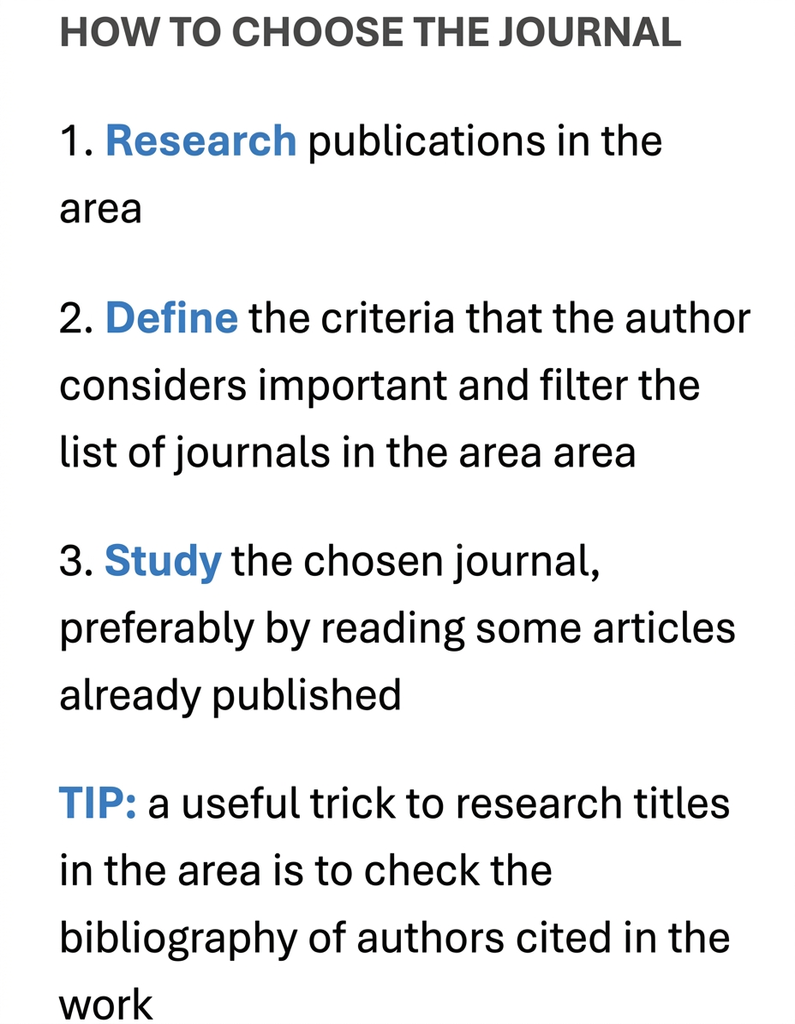
In her book, Belcher, who is a professor of African literature at Princeton University (USA), highlights two steps as the most important for those who wish to see a study published: to conduct a thorough review of the material that is already drafted (the project) and to select the journal for publication – planning the review according to the chosen outlet.

The professor warns, however, that this selection must be preceded by a thorough analysis of the existing journals in the area, to identify what best fits the theme of the research that is intended to be published. The penalty for the wrong choice is the rejection of the article, a more than fair reason for this stage to appear right at the beginning of the process.

According to the professor, one of the main reasons why a paper is rejected is not being in compliance with the standards of the publication to which it was submitted. Therefore, once the journal is chosen, it is essential to study it to understand what the required parameters for publication are. All of this helps to guide the review of the work and to adjust its writing and formatting as an article, in addition to identifying and avoiding so-called predatory (fraudulent) titles – read more about this subject below.

Start of the journey

In the book, Belcher details the steps needed to go through all stages of this process. According to her, the ideal is to submit the work to a journal that has a peer review system, whose works are published by an academic publisher (university or commercial) and which counts on authors considered specialists in their areas. The articles must cite their sources and detail the methodology used, so that other researchers can replicate or verify the works.

Analyzing the journal’s body and editorial board, as well as its indexing databases, can give the researcher an even broader view of the type of article they should write. Furthermore, an editorial board composed of specialists can add credibility and weight to the publication.  
Source: Wendy Laura Belcher

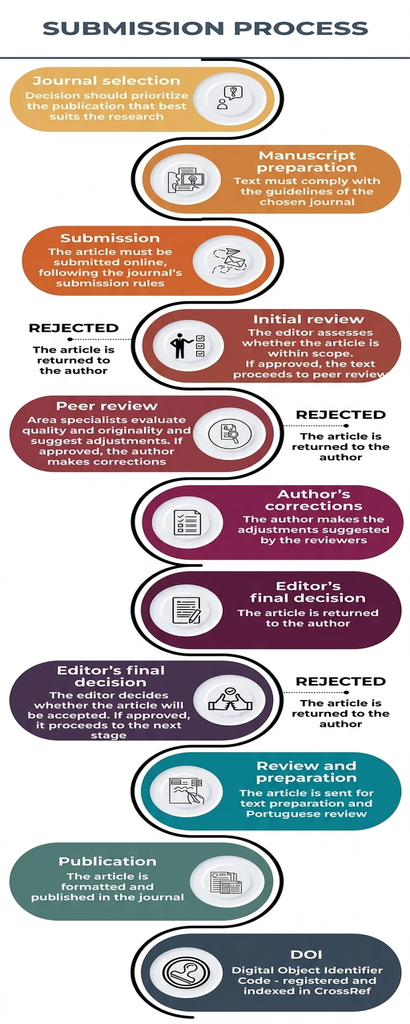
Following Belcher’s steps, the next is the preparation of the text. There are various types of articles within the categories “primary publications” (derived from original research results) and “secondary publications” (those that discuss other works), with different styles and structures – which can also vary according to the parameters of the journal to which the article will be submitted for evaluation. The text must be a concise report of the author’s research.

Article ready, time to submit. Each journal has its own submission system, just follow the instructions of the one chosen. The article must be sent along with the documentation required by the journal, according to its guidelines.

Publication process

Initially, the text and documentation will be analyzed by the editor, to verify if the material meets the scope of the journal. If the article is rejected at this stage, it is the end of the process. If it is accepted, it is forwarded for peer review, in which specialists in the research area evaluate the quality, relevance, and originality of the article.

In this stage, the article can also be rejected and returned to the author. If approved, most of the time, it returns to the author for adjustments, which can be of “major” or “minor” complexity. In the first case, it means that the reviewer asked for major structural changes in the text and it will be necessary to put a little more effort into rewriting some parts. Minor adjustments generally concern standards, spelling or clarification of small doubts.
Source: Pecege Publishing House

After the author makes the necessary adjustments, the editor decides if the article is ready for publication and, if so, it is formatted, laid out, submitted for a final read by the author and, finally, published. The flow of this process can take from six months to a year, although there are journals that exceed this time.

Predatory journals

Unlike the process described above, predatory journals are known for promising agility in the review process and high acceptance rates. The proliferation of these journals has become a growing challenge in the academic world. These publications jeopardize the integrity of scientific research and the reputation of researchers seeking to publish their work.

The Ibict (Brazilian Institute of Science and Technology Information), linked to the Ministry of Science, Technology and Innovation (MCTI), launched a form to gather information about journals with indications of predatory practices in the country. The objective is to map these periodicals based on the experiences and perspectives of researchers.

The preliminary results, presented at the ABEC Meeting 2023, indicated about 5,338 complaints, with the identification of 478 journals engaging in predatory practices worldwide (Andrade et al., 2023).

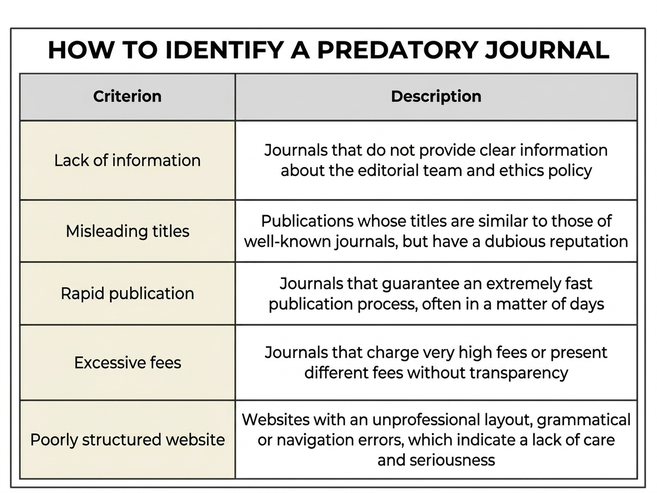
The first step to avoid the pitfalls of predatory journals is to understand how to identify them. Unlike legitimate publications, predatory journals often lack a proper editorial process. They may publish virtually any article upon payment of a fee, without quality peer review.

According to Campos and Maricato (2024), these journals have characteristics similar to traditional ones, which attracts researchers. They facilitate the editorial process, making article publication fast, and charge high fees for the service. They present broad thematic coverage, send recurring invitations capturing authors, and their operating and management systems appear to have no flaws. These journals also present metrics of false and imaginary rankings.

An organization formed by volunteer researchers has launched a website called “Predatory Journals”, whose mission is to expose and help researchers identify predatory journals and share their negative experiences with these publications. To access the website, click here.

In 2020, American researcher Matan Shelomi starred in a curious case to expose this problem. He submitted a fictitious article, full of names and references to the Japanese animated series Pokémon, to a publication of doubtful reputation. The topic was how the consumption of Zubat (one of the fictional creatures from the animation) would have been responsible for the outbreak of Covid-19 in a city that only exists in the imagination of Pokémon fans. The fact gained notoriety when detailed in a text written by him and published by The Scientist website.

The article cited other figures from the world of fiction, such as Gregory House, a famous character from the series “House” (2004-2012), as well as characters from the Harry Potter saga. All these mentions were used as if they were true accounts for the study’s events. The villain duo from Pokémon itself, Jesse and James, were presented in the references as “theoretical basis” for the study.

Jesse J James J (2020) Prepare for trouble: Coronavirus outbreak reaches North America. Rocket Science Monthly 21(2): 45–47

According to the article, SpongeBob also had publications, along with his friends Patrick and Sandy, which were used to “substantiate” the work.

Squarepants, S Star P, Cheeks S (2014) Treatment of Karenovirus infection with processed food. Bikini Bottom Journal of Morbidity and Mortality 32: 2–50.

The journal accepted the paper four days after its receipt, upon payment of a fee in the amount of US$ 1,179.00. Despite the jokes, this experiment shed light on the lack of criteria in this type of publication.

Impact Metrics

The growing concern with these misleading practices has led the scientific community to be more cautious. As warned by Jornal da USP, the “scientific scam” of predatory journals not only compromises the credibility of published research but can also manipulate impact metrics, deceiving those seeking reliable information. This often happens when researchers, pressured by the need for publication for career progression and visibility, fall into the trap of journals that promise quick publication, which can compromise their reputation in the academic community, as discussed by researcher Ernesto Spinak (2021). The table below presents some considerations to take into account before submitting an article.
Source: Elaborated by the authors from Spinav (2021) and Almeida (2023)

Awareness of the dangers of predatory journals is a vital step in protecting the integrity of science and ensuring that published research contributes meaningfully to the advancement of knowledge. As USP researchers Hoch and Mench (2024) highlight, the collective effort to educate the scientific community about responsible publishing practices can help to “nip the problem in the bud,” fostering a culture of ethical and quality research. Science must be treated with seriousness, so that characters like Pokémon, SpongeBob SquarePants, and Harry Potter remain solely in the realm of entertainment and moments of relaxation on TV and video games.

To access the references of this text click here

Who wrote this column

Editora Pecege

Produz materiais nas áreas de agronegócios, educação, gestão e tecnologia, prestando serviços de padronização, revisão, elaboração de ficha catalográfica e produção gráfica. Gerencia a publicação das revistas Quaestum (científica) e Estratégias e Soluções – E&S – (técnico-científica) e publica livros em diversas áreas.

You may also like

October 27, 2026

Effectiveness of the Brazilian Central Bank’s monetary policy and its possible social costs (1999-2024)

The conduct of monetary policy in Brazil, particularly under the inflation targeting regime, has been widely debated due to its possible impacts on inflation and economic activity. The study aimed to evaluate the effectiveness of Brazilian monetary policy, guided by the Selic rate, in controlling inflation, and to investigate its possible social costs during the period from 1999 to 2024. For this purpose, quarterly data on Gross Domestic Product (GDP), Broad Consumer Price Index (IPCA), Selic rate, and exchange rate, extracted from the Central Bank of Brazil, were used. The methodology employed a Vector Error Correction Model (VECM), preceded by stationarity and cointegration tests, and complemented by Impulse Response Function and Variance Decomposition analyses. The results indicated that inflation showed a strong inertial component, being predominantly explained by its own dynamics, while shocks in interest rates and exchange rates demonstrated a statistically limited impact on the IPCA. Additionally, it was found that GDP did not respond significantly to variations in the Selic rate, suggesting low sensitivity of economic activity to monetary policy during the analyzed period. In summary, it was concluded that monetary policy demonstrated limited effectiveness in controlling inflation, without, however, generating direct and significant social costs on Gross Domestic Product, which acts as the main driver of job creation.

Keywords: Cointegration; Econometrics; Inflationary inertia; Inflation targets; Gross Domestic Product.

October 27, 2026

Financial efficiency and risk mitigation in legal departments

The research investigated how governance mechanisms and internal controls, applied to “Legal Operations” practices, can strengthen the financial management and budgetary predictability of a legal department in a multinational company. The study aimed to diagnose critical points of the legal budget cycle, from forecasting to payment, and identify process improvements, indicators, and responsibilities between the legal and financial departments. To this end, an applied qualitative research was conducted, configured as a case study. Data collection included interviews with professionals from the legal and financial areas, documentary analysis of cost spreadsheets (2022-2024) and compliance policies, as well as mapping of the legal expenses flow. The results revealed fragilities in interdepartmental coordination, notably in the definition of cost centers and the use of budgetary control instruments. Gaps were observed in process monitoring and in the integration of information from external firms, as well as opportunities for routine automation and improvement of management indicators. Budgetary predictability was found to be impacted by exogenous factors, such as the dynamics of the Judiciary, and endogenous factors, such as the quality of information and the governance of the budget cycle. It was concluded that budgetary predictability depends on the maturity of governance applied to processes, data, and operational routines. A governance and control model for the legal budget was proposed, focusing on process standardization, strengthening monitoring, and improving decision-making, including process mapping, risk and control matrix, and performance indicators.

Keywords: Automation; Internal controls; Corporate governance; Legal Operations; Budgetary predictability.

October 27, 2026

Comparison of prepayment risk models in fixed-rate credit portfolios

The risk of early settlement in pre-fixed credit portfolios constituted a relevant challenge for Asset and Liability Management (ALM) in financial institutions, as it generated cash flow asymmetries and inefficiencies in hedging strategies. The work aimed to comparatively evaluate the predictive performance of traditional econometric and statistical models versus machine learning algorithms in estimating the Monthly Mortality Rate (SMM). To this end, a real database of credit operations originated between 2016 and 2025 was used, totaling approximately 500 million observations. Models such as Historical CPR, Beta Regression, Quantile Regression, Logistic Regression, Cox Proportional Hazards, and LightGBM were evaluated, with performance measured by Mean Absolute Error (MAE) and validated through temporal cross-validation with an expanded window. The results demonstrated the superiority of non-linear approaches, with the LightGBM model showing the best performance in the test period (Jan/2024 to Jul/2025), reducing MAE by 34.21% compared to the historical benchmark. Additionally, interpretability techniques based on SHAP values and survival analysis were employed to identify the contract rate spread, market rate, and bond age as the main economic determinants of prepayment. The application of the proposed model improved the accuracy of cash flow estimates and provided favorable evidence for refining the calculation of effective duration and the sizing of the institutional liquidity buffer, suggesting that more flexible models can optimize ALM management.

Keywords: Machine learning; ALM Management; Hedge; Financial modeling; Interest rate risk.

October 27, 2026

Imperative vs. reactive architecture: impact on debugging and error correction in iOS mobile development

The development of iOS mobile applications can be conducted under imperative and reactive architectures, directly impacting debugging and maintenance practices. The objective was to establish the impact of architectural choice on debugging and error correction in iOS applications, evaluating the automatic detectability of failures, the traceability of reports, and the utility of logs. An experimental study was conducted, in which two functionally equivalent native applications were developed with UIKit (imperative) and SwiftUI/Combine (reactive). Four controlled error scenarios were inserted, classified as explicit crashes and silent errors. Data were collected with Firebase Crashlytics and Xcode Debugger in forty sessions, and these were analyzed by descriptive statistics and content analysis. The results revealed that, for state inconsistencies, the UIKit architecture generated immediate crashes and automatic reports, while SwiftUI suppressed the crash and produced a silent warning invisible to automatic tools. For forced unwrapping, the architecture proved irrelevant. In silent scenarios, neither architecture offered automatic observability, which highlighted the limitations of the tools. It was concluded that the reactive architecture, by abstracting state control mechanisms, reduced explicit errors but introduced silent failures with lower traceability. The architectural decision must consider the implications for production monitoring, requiring manual log instrumentation in SwiftUI/Combine projects for errors that would be automatically captured in UIKit.

Keywords: Combine; Maintainability; Observability; SwiftUI; UIKit.

October 27, 2026

CRM IN DATA RETENTION FOR CUSTOMER POTENTIAL ANALYSIS IN THE B2B HEALTH SECTOR

Commercial management in the B2B healthcare sector faced constant challenges, requiring strategic vision and sharp attention to delivering results. The study investigated how the implementation of a CRM (Customer Relationship Management) system contributed to mitigating the loss of historical information and enhancing customer retention in the face of selling costs. A qualitative-quantitative approach of an exploratory-descriptive nature was adopted, and data were collected through a questionnaire answered by 42 professionals in the commercial area, working in the industry or in healthcare segment companies. The results revealed that, although 71.4% of respondents used computerized CRM, organizational culture imposed strong resistance, confirmed by 57.1% of professionals who relied on manual methods, such as diaries and isolated spreadsheets, for data recording and retention. A gap in training was also evident, as 24.4% of respondents rarely or never received specific training. The research inferred that the underreporting of data was not solely due to a lack of technology or technological failure, but to a deficiency in the strategic management of people and processes. The vision of the need for integrated management to generate competitive intelligence and sales predictability was reinforced, and attention was drawn to the need for more frequent training and development. Mitigating the cost of selling and enhancing customer retention depend on consistent integration between human capital and technology, generating managerial assets to increase commercial production and strategic data retention.

Keywords: Training; Sales strategy; Customer management; Strategic management; Commercial intelligence.

October 27, 2026

Evaluation of the application of Scrum in improving efficiency and adaptability in technology projects

The growing complexity of technology projects demanded approaches capable of balancing control, efficiency, and adaptability to constant changes, as traditional management models showed limitations in dynamic environments. Technology project management was evaluated before the implementation of an agile method, improvements based on iterative practices were proposed, and post-implementation performance was reassessed, seeking to identify gains in operational efficiency and adaptability throughout the project lifecycle. The research employed a descriptive case study, with a qualitative approach, in two technology sector companies. Data were collected through structured questionnaires applied before and after the intervention, complemented by documentary analysis and systematic observation over ninety days of solution application. The results showed consistent improvement in planning flexibility, greater alignment with client needs, increased delivery predictability, and enhanced team productivity. A productivity gain was the most expressive indicator, with 85.7% total agreement on the improvement of team performance after adopting the *framework*. It was concluded that the structured implementation of the method improved the management of the analyzed projects, reinforcing the capacity to respond to changes and promoting greater business value generation.

Keywords: Organizational adaptation; Incremental delivery; Agile management; Iterative planning; Team productivity.

October 27, 2026

Challenges in the operationalization of rural credit: perception of employees of a financial institution in the Southeast of Brazil

Rural credit is a crucial instrument of Brazilian agricultural policy, essential for the viability of agricultural production cycles and the development of the sector. Despite its relevance, the operationalization of rural credit has faced significant challenges in financial institutions, stemming from regulatory complexity, documentary bureaucracy, and risks inherent to agricultural activity. In this context, the study aimed to analyze the perception of financial institution employees regarding the rural credit release process, identifying difficulties, operational challenges, and opportunities for improvement. A descriptive quantitative approach was adopted, with the application of a structured questionnaire to 37 employees who work directly or indirectly in the granting of rural credit. The sample was intentional, and the data were analyzed descriptively, with the support of tabulation and graphical representation. The results indicated that the main challenges faced by financial institutions were related to excessive bureaucracy, collateral requirements, risk analysis, limitation of agent autonomy, and the need for greater technical training. External factors, such as producer indebtedness, adverse climate events, and high production costs, also negatively impacted access to credit. It was concluded that the improvement of internal processes, combined with continuous training of professionals and coordination between regulatory agents and financial institutions, can contribute to making rural credit more efficient and accessible.

Keywords: Agribusiness; Bureaucracy; Agricultural policy.

October 27, 2026

Institutional Dissonance and Privacy Barriers in the Adoption of DREX in Brazil

The perception of different stakeholders on the implementation of DREX (Real Digital) in the Brazilian financial system was analyzed, focusing on the expected impacts on security, privacy, and adoption. The study aimed to investigate the perceptions of distinct groups regarding the risks and opportunities of DREX, offering subsidies for decision-making by financial institutions and regulators. To this end, three questionnaires were applied to 415 participants, divided among professionals in finance and technology (81), cryptoasset investors (149), and the general public (185). The collected data were tabulated and subjected to quantitative descriptive analysis, complemented by a comparative analysis between groups. A consistent institutional dissonance was identified, where technical trust in the Central Bank surpassed political trust in the Federal Government. Among cryptoasset investors, an ideological rejection of DREX was observed, driven by concerns about traceability and governmental control, with an inverse relationship between technical knowledge and adoption intention. The general public demonstrated pragmatic willingness, conditioned on the absence of explicit perception of financial surveillance, a pattern termed “Pix-Privacy Gap”. Financial privacy emerged as the main transversal obstacle to adoption across all groups, and a 1% cashback incentive proved insufficient to overcome this resistance. It was concluded that voluntary adoption of DREX tends to be fragmented and conditional, depending on structured communication initiatives, digital financial education, and auditable privacy architectures that reinforce the credibility and independence of the Central Bank before society.

Keywords: CBDC; Institutional trust; Risk perception; Traceability; Financial system.

October 27, 2026

Application of Six Sigma DMAIC and Gemba Walk for the analysis of mechanical availability of mobile equipment

The inefficient management of mobile equipment maintenance routines in infrastructure works had directly evidenced impacts on mechanical availability indicators and productive performance. The study aimed to analyze the mechanical availability of equipment in a highway superstructure work, employing the Six Sigma DMAIC cycle and the Gemba Walk practice. The adopted methodology was characterized as an applied case study, of a mixed nature. Data from operational reports were collected and processed, mechanical availability indicators were calculated, and qualitative analyses were conducted through the Ishikawa Diagram. In the Define phase, routines were mapped and historical data were collected. In Measure, mechanical loss records were standardized and mechanical availability was calculated, identifying critical equipment with performance below 85%. The Analyze stage used the Ishikawa Diagram to identify root causes, and in the Improve phase, improvement actions and an implementation schedule were structured. The results revealed that certain equipment families presented performance below the acceptable threshold, with the asphalt plant standing out for its unavailability of 79%, directly impacting production. The main identified causes included the absence of preventive planning, failures in maintenance management, and the unavailability of critical inputs. It was concluded that the integrated application of the methodologies allowed not only to identify the causes of low availability but also to structure a management model focused on operational reliability and continuous improvement, proposing the transition from a reactive model to proactive, field-based maintenance.

Keywords: Operational reliability; Asset management; Performance indicators; Maintenance; Continuous improvement.