Strategy
User Experience (Ux)
March 06, 2024
Is a beautiful interface, by itself, capable of attracting and retaining users?
The field of User Experience Design (UX Design) is constantly changing, driven by increasingly sophisticated research methodologies that aim to understand the complex interactions between users and the numerous digital systems.
In a dynamic technological environment, where the user has high expectations related to digital products and services, research plays an important role in defining the path to success in UX Design. Effective research methodologies are the foundations of a user-centered design strategy, providing valuable perceptions and insights that aid decision-making throughout the project lifecycle. The design process employs a wide variety of research approaches to investigate the needs, behaviors, and motivations that drive users.
Among the most popular methodologies, interviews with users, usability tests and heuristic analysis – interface review based on Nielsen’s heuristics, which have been the fundamental UX guidelines since 1990 and aim to help create simple and intuitive digital solutions, facilitating their use. In addition to those mentioned above, another important tool is card sorting, which helps build the information architecture and involves user participation to understand how to create categories and organize them, facilitating the process of finding a specific product on a website, for example. Each of these approaches has distinct characteristics, and to choose which one to apply, it is necessary to have clear specific project objectives.
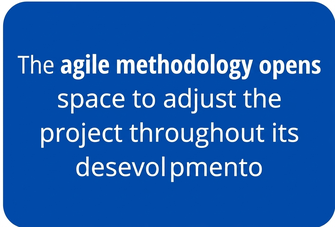
Agile methodologies have transformed the way development teams create and deliver products, as they promote flexibility, allowing room to adjust the project throughout its development, unlike traditional methods, which only observed necessary changes after the project’s completion. However, integrating user-centered design practices in this context can be challenging, since, although the incremental nature of agile development provides flexibility and speed, it may often seem to conflict with UX Design research process approaches. The lack of time dedicated to in-depth research and prototyping can compromise the understanding of user needs, resulting in low-relevance solutions.
Understanding the relationship between design processes and agile methods, continuous collaboration between designers and developers becomes the main link for successful integration. Skylar promotes daily alignment meetings between design and the development team. All design ideas are shared to foster discussion about feasibility and the necessary execution time. This is paramount to avoid losing our most expensive asset, time; furthermore, these conversations are moments for idea generation and review of what is being produced, enabling route updates at each stage of the process. The formation of multidisciplinary teams, where designers are involved from the initial phases of agile planning, is fundamental, as UX activities need to happen before, during, and after the programming stages. This cycle constantly renews itself so that the product is always aligned with the user’s needs.
In agile environments, rapid prototyping becomes a valuable tool for validating design ideas in a practical and economical way. The creation of prototypes allows for continuous adjustments based on user feedback, maintaining flexibility for agile development. Continuous testing, even in the early stages, ensures that design decisions are informed by user data.

The common practice of using user stories in agile development can be enhanced by incorporating user-centered design elements. User stories not only describe the desired functionality but also include specific UX considerations such as personas, user journeys, and user experience-based acceptance criteria.
Instead of considering user experience as an isolated phase at the beginning of the project, the effective integration of user-centered design in agile environments demands a continuous approach. Constant feedback collection, analysis of usage metrics, and regular iterations ensure that user experience is refined throughout the product lifecycle.
Emerging trends
The technological landscape is constantly evolving, driving the need for continuous innovation in user interfaces (UI). For this reason, the UX design professional needs to be aware of trends, adapting to create intuitive and engaging interfaces.
Among the emerging technologies are augmented reality (AR) and virtual reality (VR) in user interfaces. The ability to overlay digital information onto the physical environment and create immersive experiences redefines user interaction. From shopping applications to virtual training, AR and VR offer new forms of engagement and highly personalized experiences.
The rise of conversational interfaces, driven by virtual assistants like Siri, Alexa, and Google Assistant, highlights the importance of natural interaction. Designers now need to consider not only the visual appearance of the interface but also fluid and contextual conversation. Understanding natural language and the ability to adapt to user intentions are crucial elements in this scenario.
Details such as microinteractions, which are small design elements that provide feedback to the user, like subtle animations, notifications, and smooth transitions, gain notoriety in this context. These details contribute to a more polished and enjoyable experience. Attention to microinteractions not only enhances aesthetics but also improves usability, conveying information clearly and effectively.
With the increasing availability of different digital devices and screen sizes, responsive design has become imperative. The fluid adaptation of interfaces to various sizes ensures a consistent experience. Furthermore, the consideration of continuity across devices, known as cross-platform design, allows users to transition effortlessly between desktops, tablets, and smartphones. The effort in this regard is significant, and the correct use of interface building tools like Figma is essential, both for small projects – such as building landing pages – and for more complex projects – service delivery systems, for example.
The personalization of the user experience, driven by machine learning algorithms, is a trend that continues to gain prominence. Interfaces that learn from user behavior anticipate needs and offer personalized recommendations, increasing relevance and perceived value and making them want to continue using the product. The ability to invest in personalization without compromising privacy becomes a critical consideration.
Accessibility and inclusion
The pursuit of accessibility and inclusion has become an ethical and practical subject in the field of UX Design. Therefore, exploring the importance of creating experiences that cater to diverse users, including those with different abilities and needs, is essential to reach distinct groups of people.

Accessibility in UX Design refers to the practice of ensuring that digital products can be perceived, operated, and understood by users with a variety of abilities and needs. This approach goes beyond meeting regulatory standards, seeking to provide everyone with a meaningful and inclusive experience. One of the Universal Design best practices in UX is Universal Design, which advocates for the practice of creating interfaces that benefit the largest possible number of users from the outset, without the need for later adaptations.
User testing, involving people with different usability skills, is essential. This not only identifies obstacles but also validates the effectiveness of implemented accessibility solutions, as only these people can attest whether the ideas generated by product teams are truly adequate for their needs.
Another important point is to ensure compatibility with assistive technologies, building solutions that are compatible with screen readers, special keyboards, and alternative input devices. This is fundamental to meet the needs of users with visual, auditory, motor, or cognitive disabilities. This reality is not always present in product teams, as companies end up having little time or resources to invest in this topic, leaving the practice of these technologies in the background.
Inclusion goes beyond technical accessibility, encompassing the representation and consideration of different user groups. This includes people from diverse ethnic, cultural, and social backgrounds. Plurality in the design team plays a vital role in creating interfaces that consider a wide range of perspectives and experiences.
Despite all this effort in building technologies and solutions that help in the inclusion process of different groups, universal access to technology is not a reality, and digital inclusion requires continuous efforts to overcome economic, educational, and geographical barriers. An example of this scenario is the Figma tool, which was cited above as a resource for building digital interfaces. This platform was not designed for visually impaired people, making its use impossible for those with this condition.
The pursuit of accessibility and inclusion does not only benefit users with specific needs, as an environment designed for people with disabilities will also provide clearer language communication and encourage the construction of an interface that is easier for all people to understand and use, resulting in more efficient designs. Furthermore, catering to a variety of perspectives can lead to innovations that benefit the construction of more comprehensive and inclusive solutions. By analyzing Google’s strategy, one can notice sober communication, neutral colors, minimalist interfaces, and simple language, patterns that can be used by the largest number of people.
Beyond the aesthetics
In a digital world where the amount of content grows exponentially every day and users seek practical solutions, the aesthetics of an interface is undoubtedly a decisive factor in attracting users and, consequently, for the success of any business. But the effort to retain the user goes beyond the visual surface.
When considering only aesthetics, the risk of neglecting relevant elements is high, such as adaptation to different needs, user understanding, responsiveness for various devices, and constant optimization based on concrete data. Beautiful interfaces are important, but they are not always founded on functionality, usability, and the ability to provide effective solutions to users.
Therefore, after analyzing all the discussed themes, it is possible to answer the question “Is a beautiful interface, by itself, capable of attracting and retaining users?” with a definitive no, since all the tools cited in the user experience design process need to come before, during, and after the construction of an interface. This cycle never stops, always restarting research and studies with users. It is possible to observe this process in major market players, such as banks, which always launch updates in their applications, with changes in their interfaces.
Effective attraction and retention require a commitment to research, innovation, accessibility, and continuous evaluation of the user experience. By integrating these elements, designers have the ability not only to attract but also to keep users engaged, building lasting relationships and contributing to the sustainable success of a digital interface.
This content was produced by:

Bruno Henrique Martimiano
UX designer at Skylar, works in all stages of the brand’s product development process. Previously worked in sales at companies in the financial sector, but switched careers to the digital product niche. Is passionate about cultural diversity, human relations, and the business world, and is always attentive to technological innovations.
Who wrote this column
Skylar