Audiovisual
Education
Technology
October 18, 2024
The role of subtitles in audiovisual
Besides being crucial for social inclusion, subtitling has evolved to meet an increasingly demanding and diverse audience
To watch any type of audiovisual material produced in a language different from the viewer’s native one, the use of some resource for translation is indispensable – unless there is fluency in the source language. Unfortunately, this is not yet the reality for most Brazilians. According to the British Council, 5% of Brazil’s population can communicate in English, and only 1% is fluent.
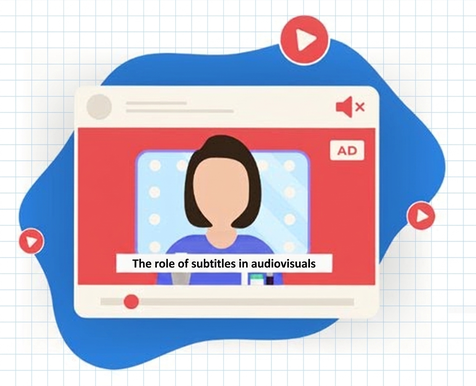
In order to meet this need, the film industry has long incorporated various resources to make audiovisual materials accessible in various languages. The main ones are dubbing and subtitling. Okay, nothing new here.
Until a few years ago, the most common and widespread resource was dubbing, due to the wide accessibility of open TV channels to the general population. It was only possible to watch a movie with subtitles in cinemas (by buying a ticket for the subtitled session) or by having a cable TV subscription. At the time, there was even a rivalry between those who preferred to watch dubbed movies and those who liked subtitled ones more. It probably still exists.
This story changed when streaming platforms began to spread, personalizing the user experience. From then on, it became possible to watch what, where, and when a person wants, with the option of “how” too: dubbed or subtitled? I respect dubbing advocates; indeed, it is a resource that facilitates understanding and helps the viewer pay more attention to the details of the scene. But my favorite will always be subtitles, and here is the explanation: by choosing to watch with subtitles, the user has a 100% original audio – and even clean in a way –, which provides an authentic immersion into the culture of the produced content. It is possible, for example, to identify accents, dialects, and regional variations of the same language.
The viewer can also improve their listening skill in another language and has at their disposal a translation that is much more faithful to the original, since, in dubbing, the translation needs to prioritize lip-sync, which reduces fidelity to the original content.
Closed captioning
Besides the subtitles available in languages other than the one in the original version, there is another option called closed caption, represented in streamings by the letters “CC”. The English terms literally mean “closed caption”. In summary, it is a descriptive transcription of everything that is audible in the audiovisual content (dialogues, music, sounds, noises). Furthermore, what also characterizes the caption as CC is the inclusion of the characters’ names or designations in their dialogues.
It may seem simple, but adding all these closed caption details to each subtitle segment, to every line, sound, and music that plays in a one-and-a-half-hour film requires the professional to have a very detailed sense, without which they would definitely not be suited for the business.
The closed caption is a subtitle in the same language as the video, that is, a descriptive transcription in the original language of the audiovisual content. So, if a movie is Brazilian (and, consequently, in Portuguese), the closed caption will be a transcription in Portuguese of everything that is audible. If the movie is American, the CC will be in English, and so on.
It is for this reason that, most of the time, there is only one CC option available in each audiovisual content, even if there are scenes and characters with dialogues in other languages. It can also happen that there is more than one closed caption option for different variations of a language, such as, for example, Brazilian Portuguese and Portuguese from Portugal, American English and British English, among others. It is not very common, but still, the language is the same.
The main objective of closed caption is to provide accessibility and audiovisual inclusion for people with hearing impairments or difficulties. The feature can also be used to assist the elderly and people in the process of literacy, in addition to viewers with general language difficulties, such as, for example, in the case of a user who is accustomed to a dialect different from that used by the film’s actors. Furthermore, just like common subtitles, CC helps the viewer to improve listening and reading fluency in another language, serving as a complement to aid in learning a new language.
Despite the similarity, subtitles and CC do not “compete” with each other for the viewer’s choice. On the contrary, closed caption is a branch of subtitling, or a “more elaborate” subtitle, so to speak. Basically, both tools have the same purpose, but they are resources used by different target audiences. Broadly speaking, the viewer who needs translation will choose between dubbing and subtitling. The viewer who needs auditory accessibility will opt for CC.
The customer
Despite all the benefits for the viewer, who is the final consumer of audiovisual content, they are not the main client in this field. The contractor of subtitling and dubbing services is the true target audience of the sector; they are the ones who make these resources available to viewers. And where does the client fit into this story?
Practical example: every time an American series is about to be released in Brazil, the streaming platform is responsible for making the dubbing and subtitling available to the subscriber (the viewer), as well as closed caption for Brazilian productions. It is at this moment that these services are contracted. For the client, i.e., the streaming platform, the most advantageous are subtitles and CC, as they are cheaper and involve fewer steps to produce. This is because, unlike dubbing, which most of the time requires a translator, actors, and a recording studio, subtitling can be produced entirely by the translator or CC professional, who usually does both.
According to Business Research Insights, the COVID-19 pandemic had a significant impact on the market for subtitling, considerably increasing the option for the inclusion of subtitles in various areas beyond the film industry, as is the case in the educational field. Several institutions have been offering courses entirely online (EaD), in recorded and subtitled classes, often in more than one language. This allows foreigners or non-native speakers of the local language to access and participate in courses without the language hindering learning. This environment fostered the emergence of companies like Skylar, a startup that focuses entirely on subtitling. Founded in 2015, the company is responsible for subtitling the classes of the international MBAs USP/Esalq courses in Portuguese, English, and Spanish, making them inclusive and accessible, especially for foreign students.
The practitioner
The subtitling professional needs to have a detailed sense, in addition to mastery of English, which is the most used language worldwide in this market. Proficiency in other languages is certainly a highly valued differential in the field. However, mastery of the foreign language is not enough. It is of utmost importance that the professional has vast knowledge of the rules and aspects involved in subtitling.
In Brazil, the training of this professional can be achieved through various paths. There are undergraduate courses in letters with qualification in translation and the possibility of acquiring specialist training in translation audiovisual, in courses that have subjects focused on subtitling practice. It is also possible to become a subtitling professional by taking courses free aimed at the area.
None of the mentioned courses, however, are mandatory to practice the profession. This is because it is possible to gain experience by studying the subject on your own and, eventually, seeking the opportunity to enter the job market as a freelancer at first. Regardless of the path the professional chooses, what matters is dedication. The experience acquired in each job is what will make them an excellent subtitling professional.
The future of the caption
In addition to having a team responsible for subtitling and closed caption projects with human review, Skylar developed a technology for real time translation and subtitling , generated instantly by artificial intelligence (AI). The AI captures everything that is said and instantly reproduces it as a caption on a screen. In addition to transforming a face-to-face event, a live or a video call into inclusive experiences, eliminating the linguistic barrier, the use of this technology replaces the need for a booth and simultaneous or consecutive interpretation service. Skylar also developed a solution for recorded videos, the Legenda.ai app, a feature for subtitling reels, TikTok videos, or any other mobile audiovisual content.
In summary, what was once a rare resource has advanced so much that it has already surpassed the limits of streaming. According to data from Business Research Insights, currently multilingual accessibility is essential for various audiences, due to the global reach of digital content. Therefore, subtitles can already be found in practically every type of audiovisual content everywhere: streaming, online courses, live events, social media, television, games, recorded videos, institutional videos, and many others. In addition to playing a crucial role in social inclusion, subtitling is constantly evolving to meet the needs of an increasingly demanding and diverse audience. Consequently, subtitles have definitely expanded in recent years and are gaining even more strength with the technologies and resources applied to them. We already have access to and are experiencing all the existing solutions in the segment. And yet, in a short time, we can expect even more modern and sophisticated solutions with the proportions that technology is taking. The future of subtitles is now.
This content was produced by:
Leticia Contini
Skylar’s project manager and translator, she has been working in the subtitling industry since 2020. Postgraduate in translation. She is an enthusiast of accessible audiovisual translation and currently works in Spanish, English, and Portuguese.
Who wrote this column
Skylar