
Futures
Innovation
Technology
May 26, 2025
Foresight: strategies from multiple futures
Anticipating scenarios can guide more conscious action plans and become a competitive advantage
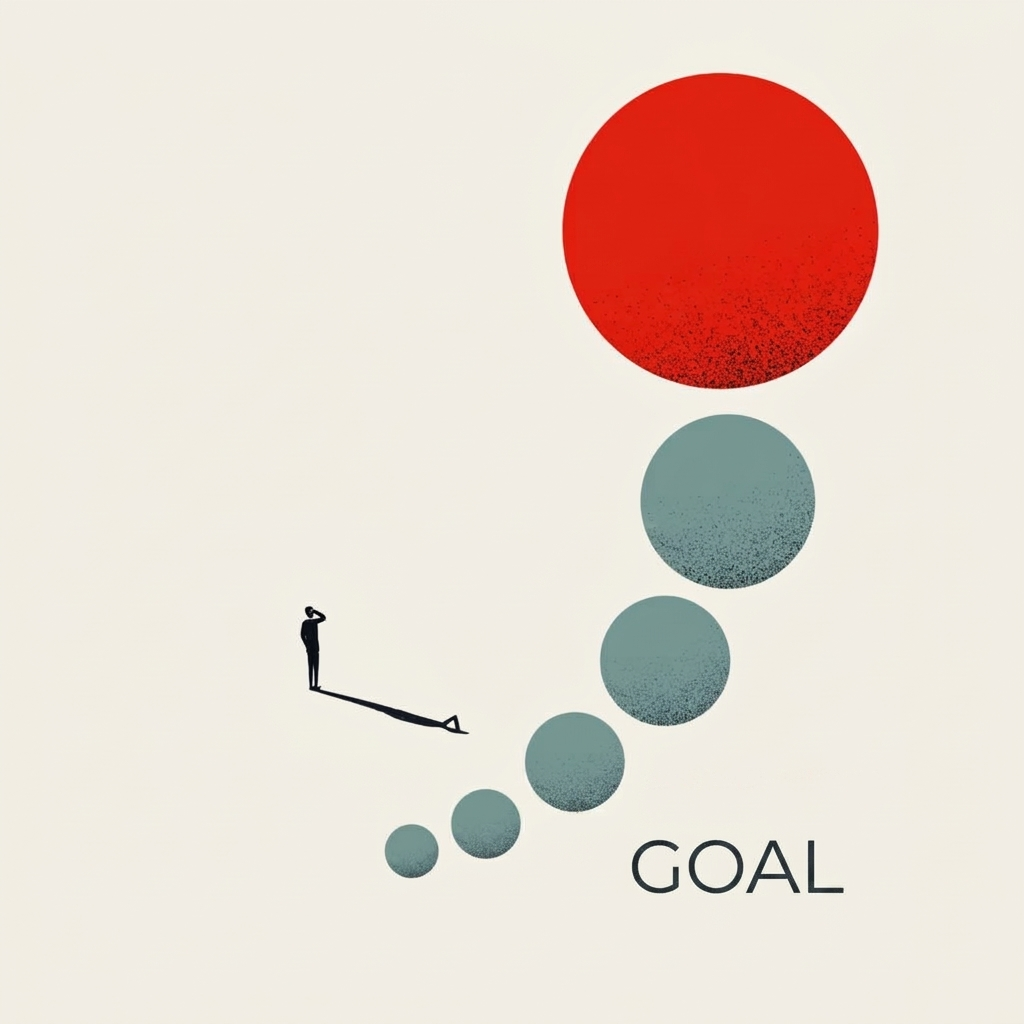
Since the dawn of civilization, human beings have sought ways to predict the future. Anticipating events, transformations, and uncertainties has always been a fundamental need in the face of the unknown. This restlessness reflects a common yearning across different cultures: to understand what is to come in order to prepare better.
More than a desire, this necessity has been decisive for the success of individuals, organizations, and entire civilizations. Understanding the future can represent both a competitive advantage and a matter of survival. Although predicting the future with accuracy is impossible, developing strategies to anticipate scenarios and their possible consequences has become essential. In this article, I explore this human need for anticipation and how foresight — an approach focused on the study of futures — can guide more conscious strategies based on the consideration of multiple possible scenarios.
Predicting linear and closed systems, where causes and consequences are easier to identify, is relatively simple. However, the main obstacle to assertive predictions today is the growing complexity of the systems we are immersed in. In a world marked by interdependence, constant flows of information, and accelerated changes, the relationship between cause and effect becomes opaque, and the future, more difficult to anticipate.
In 1984, the German sociologist Niklas Luhmann published the first part of his main work, “Soziale Systeme”, a fundamental work for the theory of social systems. Over the years, he developed an approach to understanding society as a system, structured from the distinction between system and environment. Inspired by studies from exact and biological sciences, Luhmann argued that various domains of modern society — such as economy, logistics, and industry — operate as systems interdependent. His theory holds a prominent place in contemporary sociological studies.
Before Luhmann, General Systems Theory had already been introduced by Ludwig von Bertalanffy in the 1940s. He proposed a fundamental distinction between closed systems, which do not exchange energy or information with the external environment and are therefore more predictable, and open systems, which interact with their surroundings and undergo continuous processes of adaptation, becoming more complex. Over time, this theory was expanded to include concepts such as entropy, interactions, and autopoiesis — borrowed from the biological sciences, the latter term describes the ability of systems to self-produce and maintain their organization through internal processes, even in constant interaction and exchange with other systems.
Luhmann defined complexity as the set of all possible states and events within a system. Society, in this sense, is an extremely complex system, with multiple influences and interactions. This reinforces the fact that predicting the future with accuracy is unfeasible. Nevertheless, the desire for anticipation remains an essential human characteristic. Understanding the systemic view of society and accepting that our anticipation efforts do not provide absolute certainties, but can generate valuable insights and guide better decisions, is fundamental to exploring visions of the future.
Although talking about forecasts and the study of the future may still be underestimated, the concept has been treated seriously by science for decades. Several global organizations are dedicated to developing methodologies and training professionals to explore scenarios. Among them, the following stand out:
- Institute for the Future (IFTF) – Founded in 1968, in California (USA), it is one of the main research centers on futures, assisting organizations to anticipate changes and prepare for emerging challenges;
- University of Houston – Since 1974, it has offered a Master of Science degree in Foresight, being a pioneer in academic training in this area;
- World Futures Studies Federation (WFSF) – Founded in 1973, based in Paris, it is an advisory partner of the UN and Unesco, bringing together researchers from over 60 countries to promote future studies.
The relevance of this field is such that, according to the World Economic Forum, skills such as systems thinking and scenario anticipation are essential for dealing with the complexity of the world — especially in the post-COVID-19 pandemic context.
Among the most used methods for anticipation are predictive models based on data. These approaches start from the analysis of historical information to identify patterns and estimate the probability of certain events. They are widely applied in sectors such as logistics, marketing, politics, weather and finance. It is, possibly, the most popularized approach currently in the organizational environment. Many companies declare themselves data driven (data-oriented), basing a large part of their decisions on statistical analyses and quantitative projections.
With the appreciation of these projections, the production and dissemination of trend reports became common. Major consultancies, research institutions, universities, and international organizations, such as the World Economic Forum, are some of the recurring sources of this type of material. By synthesizing behavioral patterns and market projections, these reports exert a strong influence on decision-makers. When they gain great visibility, they can generate what we call self-fulfilling prophecies — that is, scenarios that, by being widely disseminated as probable, shape strategies, investments, and behaviors, causing them to materialize due to the very adherence they generated.
This validation cycle can reinforce trends without necessarily questioning their assumptions. Therefore, regardless of the approach used, it is essential to remember that no scenario is deterministic. In complex systems, such as those that make up contemporary society, the future does not follow a single, predictable trajectory. Recognizing this multiplicity is what allows us to expand our capacity for action and adaptation.
One of the best-known visual representations of this logic is the cone of futures, developed in 2000 by Joseph Voros, then professor at the Royal Melbourne Institute of Technology (Swinburne University). The model proposes a progressive opening from the present, mapping possible, probable and preferable futures. This perspective broadens the strategic outlook and reinforces the understanding that we live in an interconnected, uncertain, and constantly transforming world—where multiple scenarios are possible.
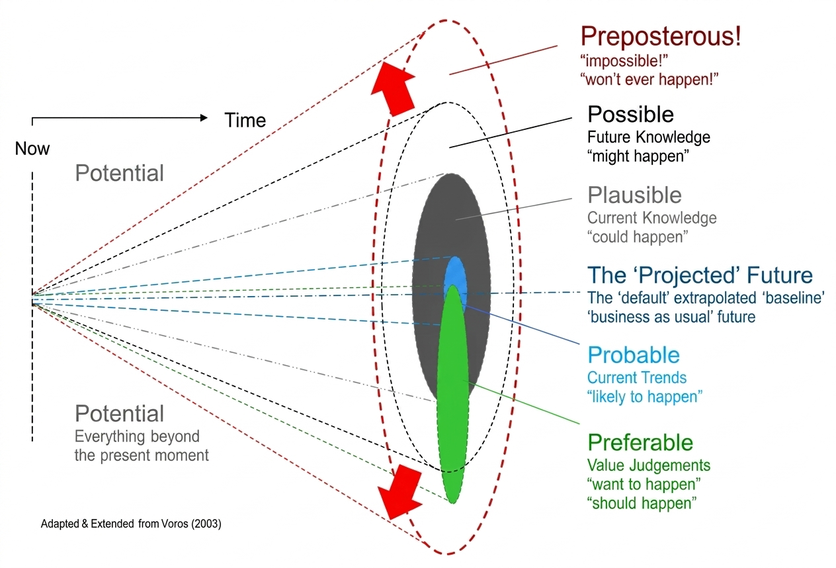
Voros’s proposal, by representing the future as a cone, despite being visually simple, carries a deep and plural understanding of scenario construction. Speaking of futures, in the plural, is not just a semantic choice—it is a paradigm shift. This plural broadens our perception, influences how we think, and, above all, how we act. Representing and discussing futures means acknowledging that the present unfolds in multiple possible directions, with different consequences, impacts, and protagonists. It means abandoning the idea of a single finish line and accepting the coexistence of diverse paths.
In Brazil, one of the main names promoting this vision is futurist Tiago Mattos, who often says: “Choosing a single future and ignoring the others — and all the other shades of gray — is myopia.” His approach dialogues with the studies of cognitive scientist Lera Boroditsky, who investigates how language shapes our thinking. According to her, the way we speak directly influences our perception of the world. The choice of words — even unconscious — acts as a mental director , limiting or expanding our capacity to imagine alternatives.
When we speak only of “the future”, in the singular, we are often, without realizing it, reinforcing a deterministic logic: as if there were only one possible path, a single and inevitable narrative. This way of thinking tends to simplify discussions and can lead us into traps such as binary thinking, polarization, and the illusion of control over a unique, linear, and idealized scenario — often detached from the real complexity of the world.
By adopting the notion of futures, we open space for more diverse, ethical, and conscious visions. We begin to recognize that each projected path carries important questions: Who defined this future? From what perspective? Which voices were included — and which were silenced? The more futures we can imagine and embrace, the richer the conversation becomes — and the better prepared our decisions will be to deal with uncertainty.
The construction of future scenarios demands breadth of thought — and, above all, the courage to imagine what has not yet been imagined, detaching from scenarios that simply please us. In this process, imagination becomes an indispensable ally. Speculative exercises are fundamental for exploring possibilities not yet formulated, and science fiction has been one of the most fertile grounds for this type of experimentation. By creating alternative worlds, it functions as a true creative laboratory, in which ideas, values, and technologies are symbolically tested — often anticipating themes that, years later, become central to society.
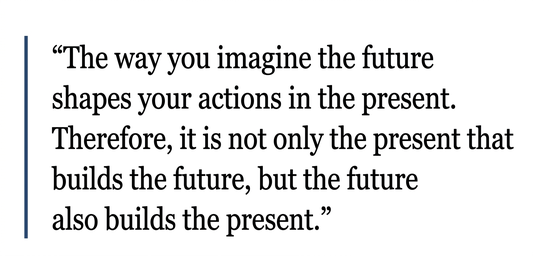
Technologies such as videoconferencing, artificial intelligence, and electric vehicles, for example, were imagined in works of fiction long before they became a reality. Although these representations are not scientific in nature, they are full of elements that attempt to give shape to what does not yet exist — and, in doing so, they also end up influencing the present. Thomas Frey, an American futurist, summarizes this logic well by stating: “The way you imagine the future shapes your actions in the present. Therefore, it is not only the present that builds the future, but the future also builds the present.”
Some of these visions have inhabited the collective imagination for many decades. One of the most emblematic examples is perhaps the flying car. In 1882, the French painter and futurist Albert Robida presented his work “Le Sortie de l’Opéra en l’an 2000” (Leaving the Opera in the Year 2000), in which he depicts people leaving a concert in aerial vehicles, flying over a still recognizable Paris.
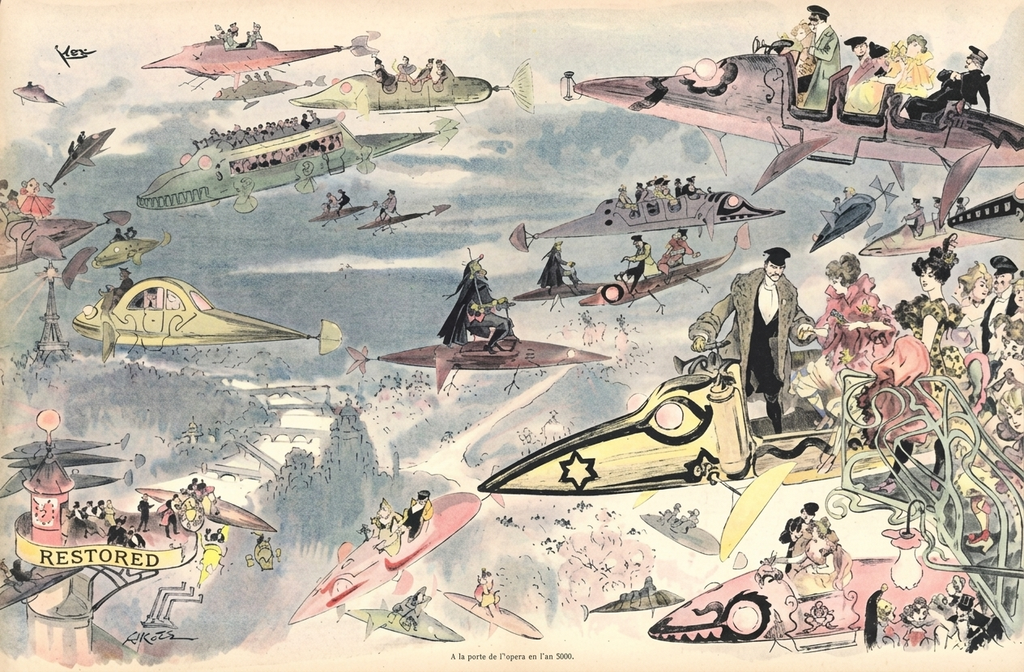
The painting merges technological advances imagined with elements of 19th-century bourgeois daily life, such as formal attire, architectural style, and codes of etiquette. While projecting a technological leap, it preserves the social and aesthetic imagination of its time. A contrast that invites us to reflect: when imagining the future, what can we actually change — and what do we keep, even if unconsciously?
When imagining the future, we inevitably project much of the present onto it. Robida’s work is a clear example of how imagination shapes our perceptions of what is to come — and also reveals our limits, biases and what we fail to consider.
The complexity of contemporary society involves multiple influences that shape our worldview — consumption, science, technology, culture, economy, and market. In light of this, professionals dedicated to studying the possible directions the future may take emerge, using data, observations, and, yes, imagination. This practice has been synthesized in terms such as foresight and future studies. In Brazil, expressions such as estudos do futuro, prospecção and prospectiva are also used — it is important to remember that the term “futurism” here does not refer to the artistic movement of the early 20th century, but to the discipline focused on the analysis of future scenarios.
Foresight actions seek to map a diversity of scenarios, generally classified as possible, plausible, probable, and preferable. The objective is to structure action plans that allow organizations, governments, and individuals to prepare for—or influence—the futures in which they wish to operate. It is an exercise that integrates data analysis, market research, trend observation, and strategic use of imagination.
To strengthen the practice and formally recognize professionals in the field, the Global Foresight Advisory Council was created, an international initiative that certifies specialists in foresight based on criteria such as study hours, applied work, continuing education, and specific evaluations.
Beyond the corporate environment, this approach has been incorporated in a structured way by governments, such as those of Finland and Singapore, which have adopted practices focused on formulating public policies based on long-term planning. A notable example is the Finnish case: since 2015, the government periodically publishes the Report on the Future, prepared by the Parliamentary Committee for the Future, with the aim of mapping strategic themes that will require medium and long-term attention. This report guides both policy formulation and social debate, offering data, analyses, and recommendations. Among the programs derived from this vision is Finland for Future Generations, which projects scenarios and formulates proposals to ensure sustainability and well-being for the country’s future generations.
Although the report was formalized in 2015, foresight practices have been conducted systematically in Finland since 2004. The country is recognized for developing one of the most advanced anticipation systems in the world, characterized by permanent articulation between public bodies, academia, the private sector, and civil society in the collaborative construction of desirable futures.
The results of this investment in futures thinking are reflected in several international indicators. Finland currently ranks first in the Sustainable Development Report 2024 (SDG Index), with a score of 86.3, leading the sustainability ranking among 193 countries. Furthermore, it consistently maintains top positions in major global innovation, infrastructure, and governance indices, such as the Global Innovation Index, published by the World Economic Forum. Although these results are the product of multiple factors, it can be stated that the systematic adoption of foresight practices — especially the integration between the public, private, and academic sectors — has been a relevant vector for driving both innovation and the country’s resilience in the face of uncertainties.
These are initiatives that recognize the importance of thinking beyond the present — and of preparing the present based on multiple future possibilities. Even without guarantees of absolute accuracy, exploring future scenarios is a powerful tool for increasing awareness of the present. Unlike a deterministic forecast, the exercise of anticipating futures allows us to recognize possibilities, assess risks, and project paths with greater intentionality. The more we can understand the variables that shape the world, the better prepared we will be to deal with uncertainty — and the less we will be held hostage by reactive or poorly guided decisions.
Even without resorting to formal methodologies, futures thinking (futures thinking) is an accessible and democratic practice — a socioemotional skill that needs to be cultivated by more people. In a world crossed by environmental, social, and political urgencies, developing this capacity helps us face challenges systemically, reduce biases, and plan more responsibly. Making conscious decisions requires looking beyond the immediate — and considering, with courage and curiosity, the possible, probable, preferable… and even undesirable futures. Among the initiatives seeking to democratize this repertoire in Brazil, the Glossary of Futures stands out, available at: futurosplurais.com.br/glossario-de-futuros.
Ultimately, anticipating the future is also an act of care. Not just for the competitive advantages it can offer, nor as an attempt to control what is to come, but as an exercise in lucidity and responsibility in the present. By developing this awareness, we broaden our capacity to create strategies and solutions more connected to the complexity of the world. May this practice gain space in our decision-making environments, transforming uncertainty into creative potential. After all, imagining more diverse, desirable, and just futures is also a long-term strategy. And, for those who lead people, ideas, or businesses, this may be one of the boldest – and most necessary – choices of our time.
| To access the references of this text click here. |
Who wrote this column
Lucas Tangi