
Business
June 11, 2025
Digital marketing and search engine optimization in companies: strategies and challenges
DOI: 10.22167/2675-6528-2025007
E&S 2025, 6: e2025007
Tayná Veiga Barroso e Bethania Fernandes da Fonseca
According to Richers[1], in Brazil, the word “marketing” began to be used with the same frequency and emphasis as terms like “democracy” and “guaraná”. However, this was not always the case — about fifty years ago, the term was practically unknown. From the following decades onwards, with its gradual popularization, marketing surpassed the limits of commercial practices in companies and also began to play a social and cultural role[1]. It is an area that sustains human actions aimed at strengthening and expanding their structures in the environment in which they are inserted, and can be applied in the promotion of products, brands, and organizations.
Faustino[2] defined digital marketing as the application of communication and marketing strategies to promote products and services through digital channels, such as websites, blogs, social networks, and mobile applications. This practice involves the use of electronic devices as a means to reach the target audience and promote the brand. Richers[1], when analyzing the perception of marketing in Brazil, observed that a large part of the population did not see it as an effective instrument for enhancing business results.
According to Setiawan[3], as customers seek closer interactions with organizations, digital marketing becomes increasingly important for small businesses, and its main objective is to promote brand action and advocacy, and as it is more controllable than traditional marketing, its focus is on results.
Simple activities, such as searching for restaurants on Google or comparing product prices online, are common for most internet users[2]. Although Google’s algorithm now seeks authenticity on the pages of websites, blogs, and e-commerce, its main function is to evaluate the relevance of the content to the user’s search. Therefore, understanding search engine optimization, Search Engine Optimization (SEO) — a set of strategies aimed at improving the positioning of pages on the internet, such as websites, blogs, and e-commerces, in the organic results of search engines.
According to Baye et al.[4], search engines are widely used by most people as a starting point for navigating the web, and they are crucial in connecting users and content creators. Lemos & Joshi[5] highlighted that, through SEO techniques, websites compete for positions in search results, aiming to achieve better rankings than their competitors. Paiva[6] identified that, although SEO strategies require time for their results to be noticeable, they are an effective alternative for companies that do not wish to invest heavily in paid traffic. Furthermore, SEO strategies can generate short-term results, and the use of these techniques also contributes to increasing the site’s credibility with consumers and facilitating navigation on its pages. The early adoption of SEO techniques and presence in the top Google search results are fundamental for brands to generate traffic, increase the number of visits, and consequently, increase business volume Paiva[6].
To achieve this objective, the study used two complementary approaches. Firstly, the reports “Digital Maturity in B2B Companies”, by Opinion Box and Ploomes from 2022[7], and “Maturity of Digital Marketing and Sales in Brazil”, by Resultados Digitais[8], were analyzed, providing an updated overview of the adoption of digital strategies in the Brazilian business environment. Secondly, a quantitative survey was conducted with 50 respondents, between February and March 2023, with the aim of investigating how small and medium-sized enterprises apply SEO techniques and what challenges they face in this process. This combination of secondary and primary data allowed for a more comprehensive analysis of the effectiveness and maturity of SEO application in the Brazilian business context.
Opinion Box and Ploomes conducted a survey published in September 2022, titled “Digital Maturity in B2B Companies”, with 603 professionals from various regions of Brazil[7]. The objective was to investigate the adoption of digital tools, methodologies, and solutions in the marketing and sales areas. The survey, conducted between July and August 2022, indicated a significant evolution in this aspect in recent years. Nevertheless, the data suggest that there are important challenges for this digital maturity to translate into strategic and consolidated actions.
One of the main results observed was that 68% of B2B companies reported becoming more digital since the beginning of the pandemic, demonstrating a movement of acceleration forced by circumstances. Nevertheless, only 61% classified their digital maturity as high (32%) or very high (29%), which indicates a positive perception, but which may not reflect the depth of digital transformation in practice (Figure 1).

Source: Extracted from the survey “Digital maturity in B2B companies”[7].
Note. Data corresponding to the period between July and August 2022.
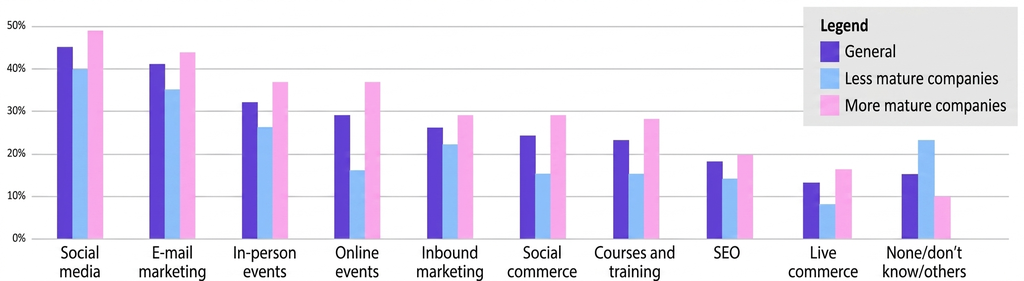
This study also observed the main marketing strategies adopted by B2B companies and the most used tools. Among the tactics with the highest adherence are social media, followed by email marketing, in-person events, and online events. These data reflect a preference for actions with a more tangible return and direct interaction with the public, which reinforces the pursuit of real-time engagement and rapid measurement of results.
However, the positioning of search engine optimization stands out, occupying only the eighth position, used by only 20% of companies considered more digitally mature (Figure 2).
Source: Extracted from the research “Digital maturity in B2B companies”[7].
Note. Data corresponding to the period between July and August 2022.
The research conducted by Resultados Digitais, in partnership with Mundo do Marketing, Rock Content, and Venda B2B, analyzed companies’ interaction with digital marketing and revealed that 94% of the interviewed organizations adopted digital marketing as their main growth strategy[8]. This data represents a significant shift compared to Richers’ perspective[1], demonstrating the consolidation of digital marketing as a dominant practice in the Brazilian market. The survey was conducted in May 2022, with the participation of 1,386 respondents, through the partners’ networks.
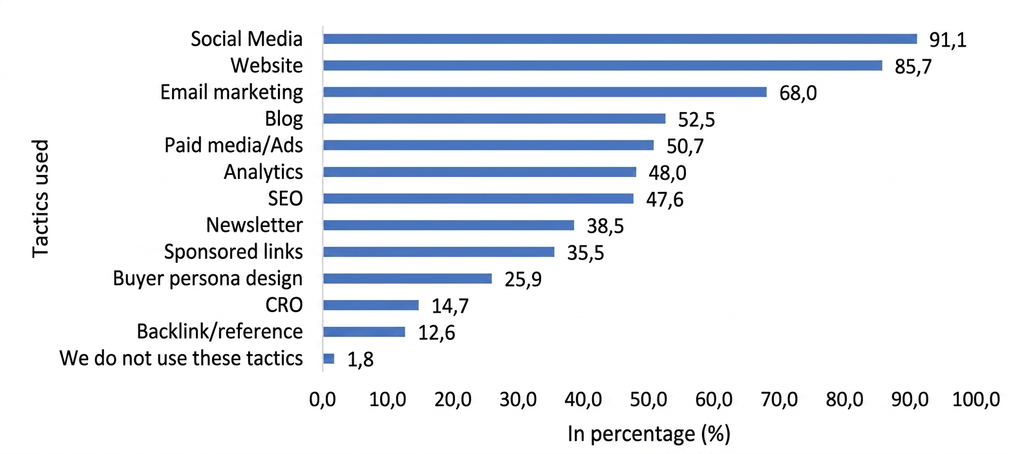
According to the study “Digital Marketing and Sales Maturity in Brazil” from 2022[7], only 5.5% of companies stated that they exclusively use traditional strategies, such as conventional advertising and events, to promote their brands. The data also reveal a strong digital presence through social media, with 91.1% of companies maintaining active profiles on these platforms — a number higher than those with their own website (85.7%).
Despite this significant digital presence, only about half of the companies stated they use SEO strategies or analytical tools like Google Analytics — even though it is a free tool (Figure 3). This data suggests a gap between digital presence and the strategic use of optimization and results measurement mechanisms, highlighting the need for greater maturity in the use of these tools in the B2B environment.
Source: Extracted from “Digital maturity in B2B companies”[7] and Resultados Digitais[8].
Note. Data corresponding to May 2022; SEO: search engine optimization; CRO: conversion rate optimization.
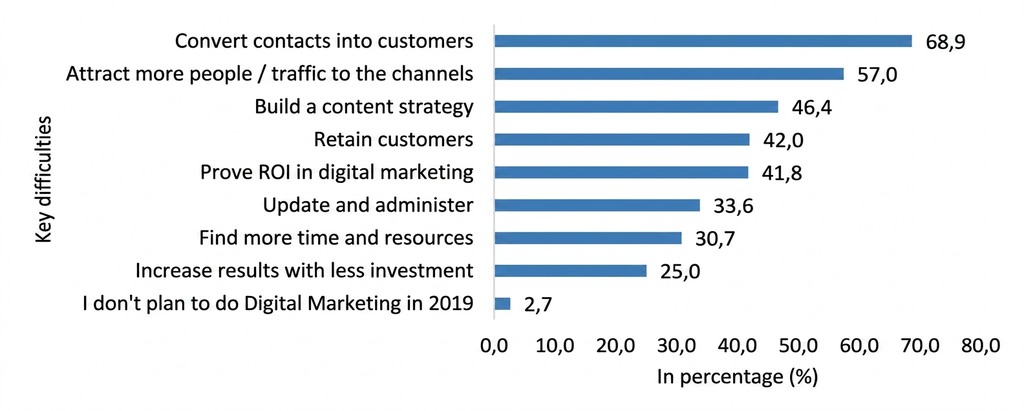
Among the main challenges faced by companies participating in Ploomes’ research[7] are the increase in traffic on digital channels (57.0%) and the difficulty in proving the return on investment made in campaigns (41.8%) (Figure 4).
Source: Extracted from “Digital maturity in B2B companies”[7] and Resultados Digitais[8].
Note. Data corresponding to May 2022; ROI: return on investment.
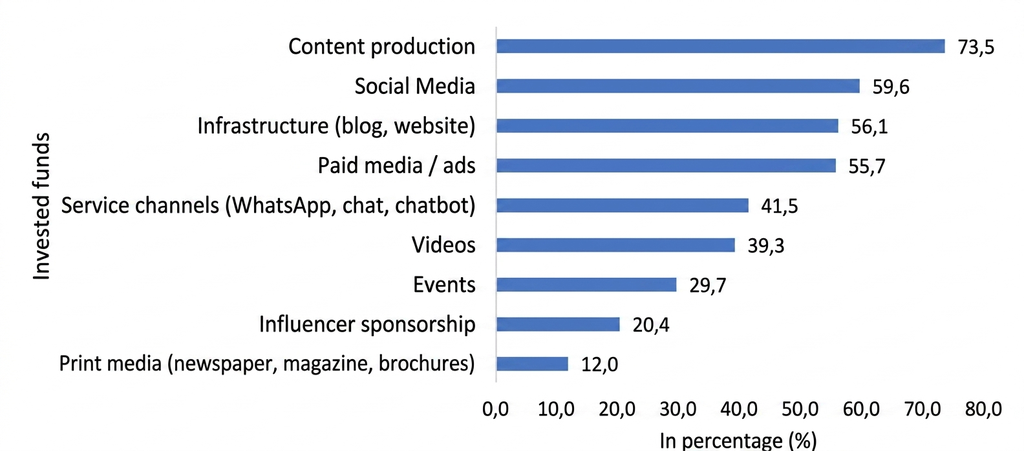
To face these challenges, the research also identified that 73.5% of companies intend to invest in content production for digital marketing, while 56.1% plan to improve the infrastructure of their blogs and websites[7], as illustrated in Figure 5.
Source: Extracted from “Digital maturity in B2B companies”[7] and Resultados Digitais[8].
Note. Data corresponding to May 2022.
Investments in tools to support digital marketing strategy, such as the creation of pop-ups and landing pages (38.5%) and analytics and big data (38.3%), do not yet present a favorable position for the maintenance and improvement of these strategies (Figure 6).
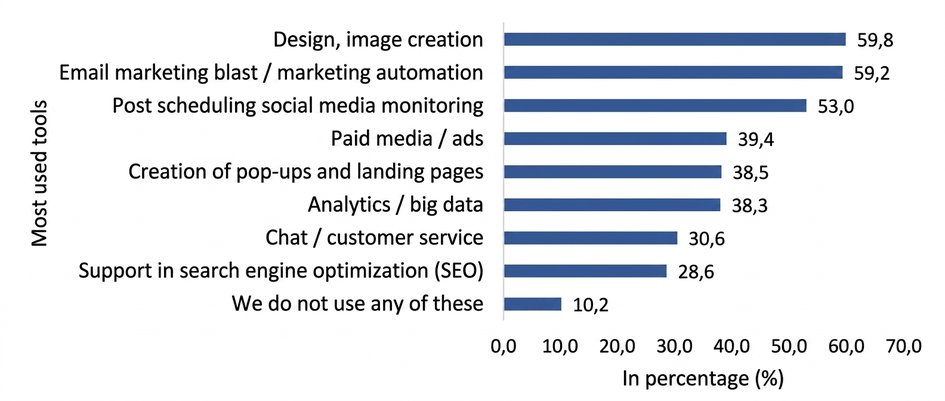
Source: Extracted from “Digital maturity in B2B companies”[7] and Resultados Digitais[8].
Note. Data corresponding to May 2022.
However, there is a shortage of professionals specialized in SEO and website optimization in B2B companies’ teams. Only 18.0% of companies had an SEO specialist on their team. On the other hand, 40.0% of companies had a content specialist and 30.0% had a professional dedicated to web design (Figure 7).
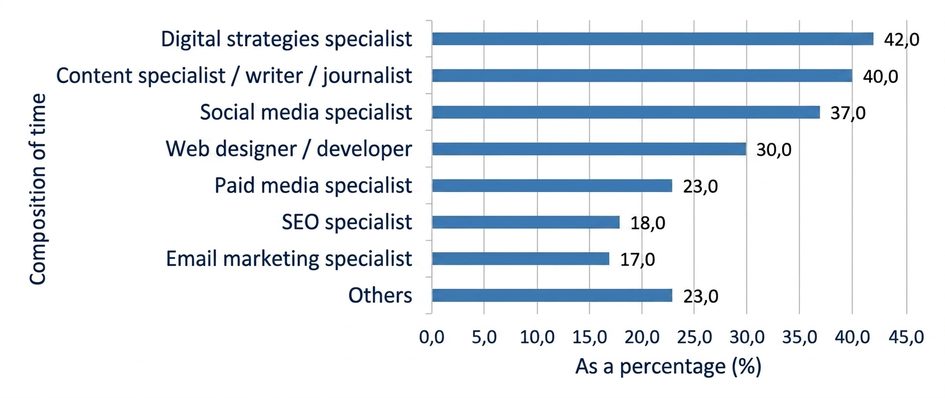
Source: Extracted from “Digital maturity in B2B companies”[7] and Resultados Digitais[8].
Note. Data corresponding to May 2022.
The data obtained from the previously presented surveys show significant advances in the digital maturity of B2B companies, especially in the post-pandemic context. However, despite the progress, important challenges still persist for the consolidation of the use of digital solutions in marketing and sales strategies. This scenario reinforces the relevance of strategies that expand companies’ digital presence and performance, such as search engine optimization. Therefore, the discussion was deepened based on the research developed in this study, by examining how small and medium-sized enterprises have adopted SEO as a central tool to strengthen their presence in the digital environment.
The initial analysis of the collected responses revealed that more than half of the interviewed participants, i.e., 54.0%, were between 25 and 34 years old, while 32.0% were in the 35 to 45 age group. Only 6.0% of the respondents were between 18 and 24 years old and 8.0% were over 45 years old (Table 1).
Table 1. Age distribution of research participants
| Age range | Quantity | In percentage (%) |
| 18 to 24 years | 3 | 6,0 |
| 25 to 34 years | 27 | 54,0 |
| 35 to 45 years | 16 | 32,0 |
| 45 years or older | 4 | 8,0 |
| Total sales (vendas)/ Invoicing (emissão de doc) | 50 | 100,0 |
It was found that most respondents (16.0%) work in the information technology sector, while only 8.0% work in companies whose main activity is digital marketing (Figure 8). However, regardless of the sector in which they operate, 38% of respondents stated that they perform functions related to digital marketing in their professional activities.
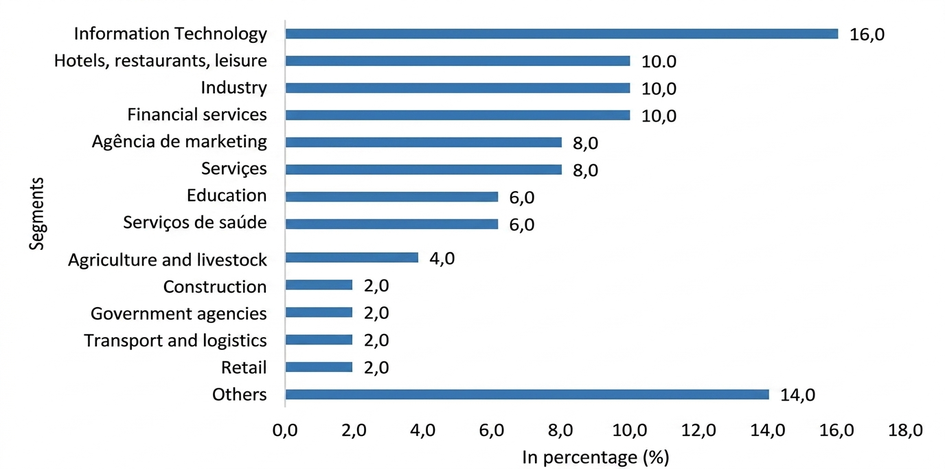
Source: Original research results.
It was found that 20.0% of companies have between 51 and 250 employees, while companies with up to 5 employees represent 18.0% of the total (Figure 9).
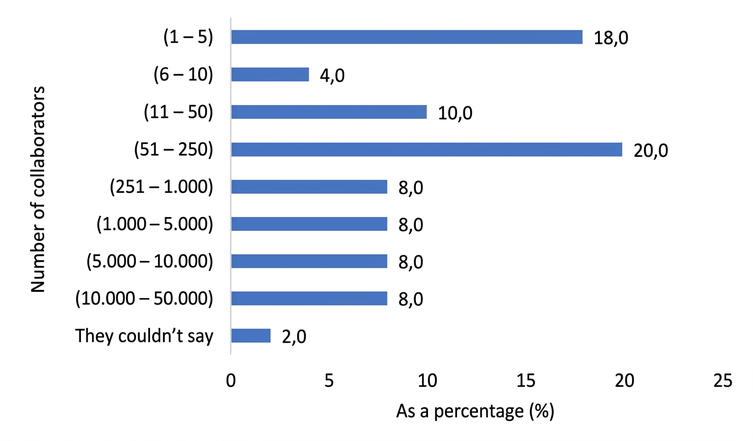
Source: Original research results.
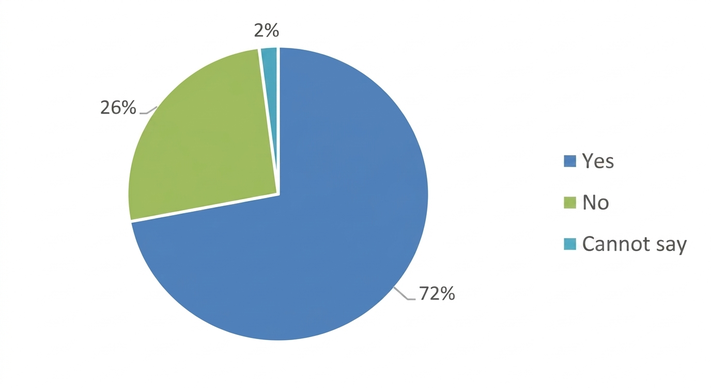
It was identified that 72.0% of companies have a team or person dedicated to digital marketing activities; 26.0% of this number do not have a team or squad and 2.0% of respondents did not know how to inform (Figure 10).
Source: Original research results.
Furthermore, the study showed that a significant portion of 16.0% of these companies has a single individual responsible for digital marketing work, while another 20.0% have a team of 2 to 5 collaborators. A significant 26.0% already have more than five professionals in
their marketing teams. It is worth noting that about 22.0% of respondents could not
say (Table 2).
Table 2. Number of collaborators in the marketing team
| Number of people on the team | Percentage distribution (%) |
| 1 | 16,0 |
| 2 | 12,0 |
| 3 | 2,0 |
| 4 | 6,0 |
| 5 | 0,0 |
| More than 5 people | 26,0 |
| None | 16,0 |
| I don’t know | 22,0 |
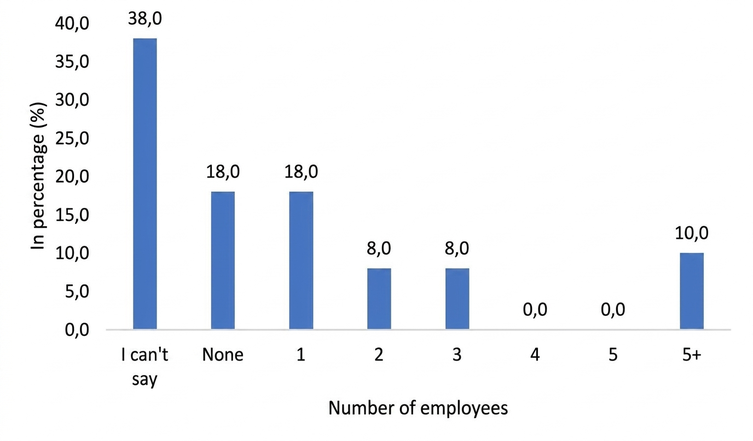
The graph shows that 38.0% of respondents did not know how many professionals have SEO knowledge, while 18.0% stated that none possess it. Another 18.0% indicated that only one person has this knowledge, and 10.0% reported more than five. The remaining percentages were divided between two (8.0%) and three professionals (8.0%), evidencing a still limited presence of SEO expertise in the analyzed teams. (Figure 11).
Source: Original survey results.
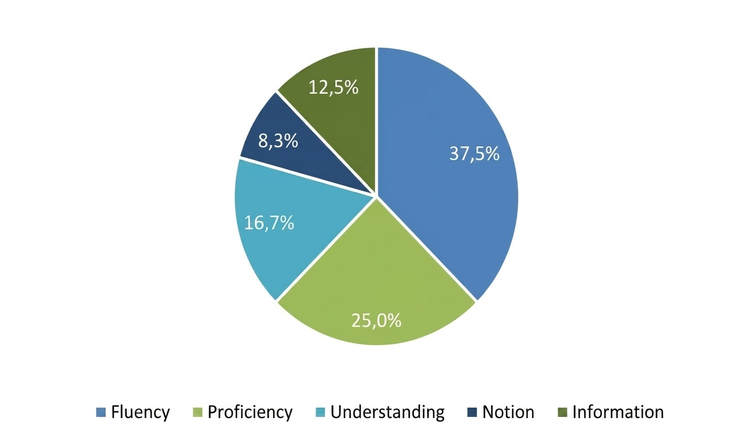
According to the respondents’ answers, only 18.0% of those interviewed stated that the company they work for has at least one employee exclusively dedicated to SEO activities. However, of these, only 37.5% are considered experts on the subject. The data also revealed that a small portion of respondents have some knowledge about SEO: 12.5% stated they have an idea about the topic, 8.3% said they have some information, and 16.7% stated they have some understanding. On the other hand, 25% of respondents are proficient in the subject (Figure 12).
Source: Original survey results.
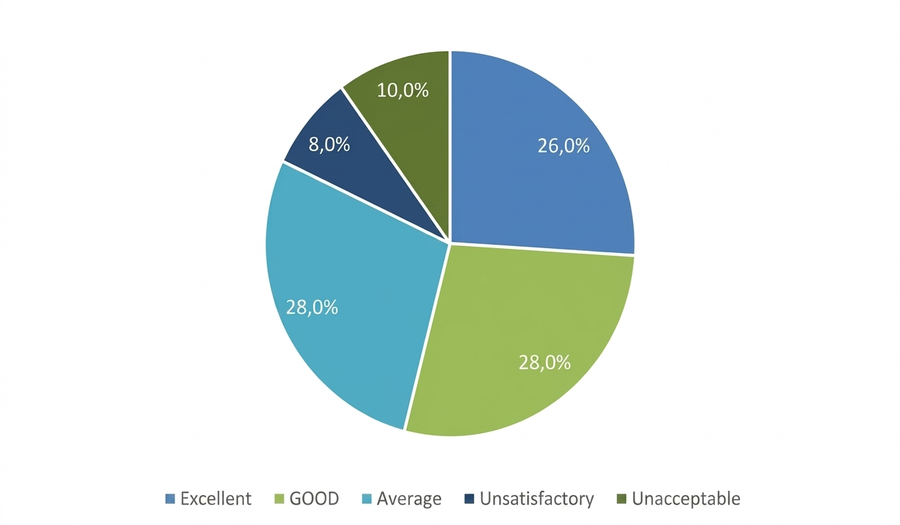
After understanding how companies organize their marketing teams, the importance attributed to content production and SEO strategies in these organizations was analyzed. The research results showed that 94.0% of companies have a website, but only 26% of respondents rated the company’s website as excellent. While 28% considered the website good, and the same percentage rated it as average. On the other hand, 8.0% of respondents considered the website unsatisfactory, while 10.0% rated it as unacceptable (Figure 13).
Source: Original survey results.
Based on the results, the perceived degree of importance regarding strategies aimed at the website was also evaluated. Only 34.7% of respondents stated that companies attribute high importance to the website, indicating that many organizations may not give due attention to this crucial aspect. On the other hand, 22.4% of respondents perceive that the company attributes medium importance to the website, a proportion similar to those who consider this importance as relevant. Meanwhile, 12.2% responded that companies give little relevance to the website, which is a cause for concern, as this could compromise the organization’s online presence and affect the acquisition of new customers. Of the respondents, 8.2% stated that the company attributes no importance to the website (Figure 14).
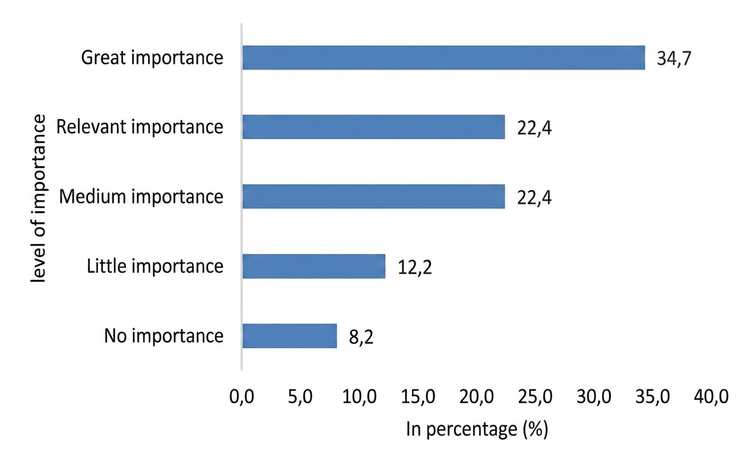
Source: Original research results.
After collecting the 50 responses, aspects related to digital marketing were analyzed, as well as the structure of marketing teams, the importance of content production and SEO strategies. From these analyses, it was possible to identify the main challenges and opportunities faced by companies in this area.
According to the results, although 72.0% of companies have specialized marketing teams, 20.0% have only one professional dedicated to the area. Furthermore, only 30.0% of marketing teams have at least one employee exclusively dedicated to SEO. This reality may be partially associated with what was mentioned by Richers[1], who pointed out the lack of recognition of marketing as a tool capable of enhancing business effectiveness in an integral way by the majority of Brazilians.
It was found that 18.0% of marketing professionals in teams lack SEO knowledge. Only 37.5% of respondents who are part of marketing teams have SEO expertise. Therefore, it is crucial for companies to understand the importance of search engine optimization. The lack of SEO knowledge can significantly affect a company’s performance, as search engine optimization is a fundamental strategy for the success of an online presence.
Regarding the company’s website, only 26.0% of respondents rated the site as excellent, while 8.0% rated it as terrible. Only 34.7% of companies attribute high importance to strategies focused on the website or SEO.
The study offered relevant data on companies and marketing teams that implement SEO strategies. The sample analysis highlighted that the majority of respondents work in information technology companies, with 20.0% in medium-sized companies and 18.0% in small-sized companies. This variation in size is crucial, as different companies face distinct challenges and opportunities. Smaller companies may be more agile but may have financial limitations, while larger companies have more resources but may face difficulties in adapting quickly.
The research revealed that 72.0% of companies have a dedicated marketing team, but 16.0% have only one person in this role. The presence of a marketing team is vital for company success, as it encompasses activities such as advertising campaigns, social media management, and market analysis. However, having only one person in this role limits capabilities, given the complexity and diversity of marketing demands. Therefore, it is crucial for companies to assess their internal situation and competencies to fully leverage opportunities and face challenges. This may involve hiring SEO specialists or investing in internal training.
The research highlighted that many companies still do not recognize the importance of SEO and content production to improve their digital presence and stand out in the market. The lack of investment in these areas can result in unsatisfactory performance in terms of visibility and positioning in search engines. On the other hand, having a specialized SEO team can offer several benefits, such as improved content quality, increased organic traffic, and effective conversion of leads into customers.
It is important for companies to understand the relevance of SEO and content production to achieve online success and improve brand visibility on the internet. Investing in digital marketing strategies, producing relevant content, and optimizing websites for a superior user experience can be crucial for generating more business opportunities. Furthermore, it is important to remain attentive to technological evolutions, evaluate their impact on digital marketing strategies, and adapt as necessary to remain competitive. A limitation of this research is the relatively small data sample, due to time constraints and the collection method. Therefore, the previously mentioned data cannot be extrapolated to represent the entire population universe. For a more comprehensive analysis at the national or global level, future research should be considered. This research also has limitations related to its scope and reach, which should be considered when interpreting the results.text
References
[1] Richers R. 2000. Marketing: uma visão brasileira. Elsevier: Rio de Janeiro, RJ, Brasil. 412 p.
[2] Faustino P. 2019. Marketing digital, na prática. DVS Editora: São Paulo, SP, Brasil. 352 p.
[3] Setiawan PK. 2017. Marketing 4.0: do tradicional ao digital. Sextante: São Paulo, SP, Brasil. 256 p.
[4] Baye, M.R.; Santos B.; Wildenbeest, M.R. 2016. Search engine optimization: what drives organic traffic to retail sites. Journal of Economics & Management Strategy. 25(1): 6-31. https://doi.org/10.1111/jems.12141
[5] Lemos, J.Y.; Joshi, A.R. 2017. Search engine optimization to enhance user interaction. In: International Conference on I-SMAC (IoT in Social, Mobile, Analytics and Cloud). Tamil Nadu.1-5.
[6] Paiva, C.S.A.C. 2018. A importância do search engine optimization para uma melhor experiência do consumidor: caso de estudo Impacting Digital. Dissertação de mestrado. Porto: Faculdade de Economia, Universidade do Porto. Disponível em: https://repositorio-aberto.up.pt/bitstream/10216/113174/2/274363.pdf. Acesso em: 25 mar. 2023.
[7] Ploomes. A maturidade digital nas empresas B2B. Disponível em: https://materiais.ploomes.com/pesquisa-maturidade-digital. Acesso em: 4 mar. 2023.
[8] Maturidade do marketing digital e vendas no Brasil. 2022. Resultados Digitais, Mundo do Marketing, Rock Content, Vendas B2B. Disponível em: https://materiais.resultadosdigitais.com.br/pesquisa-maturidade-marketing-digital-e-vendas-ext-mdm-cm. Acesso em: 4 mar. 2023.
Como citar
Barroso, T.V.; Fonseca, B.F. Marketing digital e otimização para sistemas de buscas em empresas: estratégias e desafios. Revista E&S. 2025; 6: e2025007
About the authors
Tayná Veiga Barroso – Technologist in Mechatronics from the Federal Institute of Education, Science and Technology of São Paulo. Rua Doutor Aldo Benedito Pierri, 250 – Jardim Paulo Freire, Araraquara, 14804-296, SP, Brazil
Bethania Fernandes da Fonseca – Advisor Professor. Rua Cezira Giovanoni Moretti, 580, Santa Rosa, 13414-157, Piracicaba, São Paulo, Brazil