
Business
September 03, 2025
Engagement in the use of information technology tools for process automation
Authors: Daniel Cardoso and Heloisa Helena Dias Proença
DOI: 10.22167/2675-6528-2025011
E&S 2025, 6: e2025011
Investment in information technology (IT) must be accompanied by the adaptation of internal processes and structures to ensure positive results in organizations[1]. For the full functioning of automation, it is necessary for users to utilize all the functionalities of the tool and complete all stages of the process[2]. This ensures data registration and enables the automatic sending of details of installed stores through the issued invoices (statements).
Without these changes, the adoption of new technologies tends to be ineffective[3]. In recent decades, Brazilian and international companies have increased the use of IT as a competitive tool[4,5]. However, many acquisitions occur due to fads, without evaluating the real needs of employees. This results in limited use or rejection of the tools, with only 25% of the available functionalities being utilized[3].
This study was conducted in a large company in São Paulo that faces difficulties in automating internal processes due to low employee adherence to IT tools. The organization also faces recurring complaints about delays in sending invoice statements, which impacts approximately 100 clients. The problem compromises contracts, such as the Service Level Agreement (SLA), causes non-payment, and affects sectors like collection.
A critical factor identified was the incomplete database of active customer stores, automatically generated with accumulated errors over the years. To solve this problem, the company developed an IT tool (extracts), which allows for the manual insertion of missing stores based on the analysis of signed contracts. To maximize the IT benefits related to manual insertion, the engagement of internal teams is essential. This is a positive state of mind, in which the employee invests energy and effort in activities that provide professional fulfillment[6].
The study’s objective was to identify the factors that promote employee engagement in the full use of the IT tool, in line with the researcher’s motivation to explore the human dimension of technology. Thus, the company must analyze the level of employee engagement and implement actions to improve it, which guarantees greater efficiency and automation of internal processes.
In the first phase of the research, a systematic mapping was carried out to deepen the field of study, a methodology capable of providing diverse knowledge and a starting point for the researcher, which prevents them from starting their investigation without a prior basis[7]. The aim was to review existing primary studies on a specific topic and identify the available evidence on this theme[8].
The data collection instrument consisted of searching for scientific papers using the keywords: engagement, automation, internal processes, stakeholders, and information technology tools, in the Google Scholar and Pecege Library databases, with publications between 2000 and 2023, related to employee engagement and the influence of process automation in the corporate environment.
Materials presenting the following aspects were excluded: 1) related to the educational environment; 2) literature reviews; 3) outside the scope of the investigation, i.e., that did not address the engagement of collaborators in the change process resulting from the automation of internal processes. Eight cases that met the cited inclusion criteria were selected. Subsequently, data extraction and organization were performed, followed by qualitative analysis as a data treatment methodology.
In the second phase, the methodology adopted the case study format, a useful approach in the management area to analyze the functioning of a company and guide necessary change actions[9]. Another important point is to observe exploratory issues, which involve specific relationships of the context under study and cannot be solved through quantitative data[10].
A case study was conducted in an area with 16 collaborators (small sample) in a company, considered the only unit of analysis[11]. The purpose was to establish close collaboration with the institution to identify a problem situation related to decision-making, due to the need for exclusive data collection from this organization[12].
The study took place during the implementation of the IT tool (statements), through the development of a project for the automation of invoice statements, with the researcher’s participation in both planning and execution. The target audience of the study was a small group of workers, composed of analysts of various levels (junior, mid-level, senior, and specialist) from an administrative area of a technology company in greater São Paulo. The data were obtained as indicated below (Table 1).
Table 1. Data acquisition for the case study
| Type | Phase A | Phase B |
| Closed questionnaire | Company database | |
| Objective | In the first block, the sociodemographic profile of the target audience was analyzed through four multiple-choice questions. In the second block, perceptions about the corporate environment, related to the use of the IT tool, were examined, focusing on various aspects linked to engagement. | Obtain information about the use, total or partial, of the extracts tool, based on the issued invoices |
| Methodology | The first nine questions in this block were standardized by a Likert scale, which is a survey tool used to measure attitudes and opinions, and the remaining three questions were multiple-choice, with the possibility of selecting up to three answers, totaling 12 questions. The researcher approached the collaborators individually through the instant messaging application (WhatsApp). | Invoices issued in the second half of 2022, referring to approximately 100 clients who received the account statements monthly, were considered. |
The questionnaire was applied virtually to a convenience sample of 16 individuals, using Google Forms as the data collection instrument. Participants of both sexes, over 18 years of age, and with an employment contract under the Consolidation of Labor Laws (CLT) were recruited, which is the set of rules that regulates labor relations in Brazil, defining rights and duties for both employees and employers. More than one research source will reflect an increase in the reliability and validity of the study’s conclusions, which contributes to the triangulation of various sources of information[13]. The analysis of the data obtained from the questionnaire, using Microsoft Excel, allowed for the calculation of frequency, which indicates the number of times a particular answer was given, enabling a conclusion to be drawn about the data[14]. The data analysis, in general, was based on Yin[15]:
a) theoretical propositions, resulting from systematic mapping, which reflected the revisions made in the literature on the subject in question and established a relationship between these evidences and the current scenario;
b) comparison between empirical-based standards and the predicted standards;
c) elaboration of explanations to analyze the data and build explanations about the phenomenon studied.
The information and data collected were filtered and organized to facilitate analyses and allow confirmation of any existing correlations, which ensures the protection of the confidentiality of the professionals involved through data anonymization. To this end, some information was inserted into tables, according to the case study proposals, to facilitate data interpretation.
Systematic mapping: phase 1 of the study
In order to obtain an overview of the elements for engagement in the use of IT tools, a systematic mapping was carried out based on the reading and critical analysis of 23 scientific works that address issues related to employee engagement and the influence of process automation in the corporate environment.
The analysis aimed to extract information contained, mainly, in the summary, material and method, and results and discussion sections, focusing on the concepts shared by the authors. Of these 23 studies, 15 were excluded for not meeting the criteria of being scientific articles of a technical nature, for being related to the educational environment, or for not covering the scope of the investigation, that is, not citing elements related to the engagement of collaborators in the process of change resulting from the automation of internal processes with the use of IT tools. Thus, eight scientific works, shown below (Table 2), were included in the systematic mapping.
Table 2. Scientific works included in the systematic mapping
| Year | Authors | Title | Main objective | Employee Engagement Elements |
| 2016 | Manzueto, M.S[16] | Process automation: the influence of process automation software on organizational routines | The work sought, with a qualitative methodology, to understand the application of automation software in the corporate environment. | Participation in decision-making (belonging), communication, lack of employee trust in using other systems, technology change without process redesign, software interface, agility in business processes |
| 2019 | Guimarães, L.R.[17] | Engagement: a historical analysis of the literature | The objective of this study was to verify engagement based on the literature, identifying the relationship with the workers. | Recognition/incentives (appreciation), autonomy, training/development, sense of challenge, variety among diverse activities, self-actualization / self-development, participation in |
| 2019 | Andrade, D.C.T.[18] | Work engagement in public service: a multicultural model | The objective of this study was to propose a model to measure engagement in work related to the Brazilian public service. | Job satisfaction |
| 2020 | Rossato, D.M.[19] | Worker engagement in the implementation of chatbot for user support at a university | This study aimed to verify the presentation of worker engagement in a project focused on the implementation of a chatbot. | Communication, process automation/new technologies (innovation), involved and engaged managers, organizational environment, constructive feedback, self-realization / self-development, autonomy, participation in decision-making (belonging), training/capacity building |
| 2022 | Silva Júnior, J.B.; Silva, M.C.M.; Branco, N.[20] | Management, gamification, and technology: a study from the perspective of engagement | The objective of this work was to verify the perception of servers regarding engagement, identifying the conditions for the adoption of gamified project management. | Communication, recognition/incentives (appreciation), clear goals and objectives, training/capacity building, constructive feedback |
| 2022 | Wyse, M.; Nascimento, G.C.; Blanco, F.; Borges, F.V.; Sartorato, F.[21] | Analysis of projects and stakeholder engagement in sanitation works: case study | Sought to evaluate the sufficiency of information in projects regarding stakeholder engagement | Participation in decision-making (belonging), communication, constructive feedback |
| 2022 | Colombo, V.L.B.[22] | Background of accounting-managerial process automation | This research examined the effects of work engagement, in the context of accounting-management process automation | Automation of processes/new technologies (innovation), reskilling and upskilling, personal and professional balance |
The extraction, organization, and critical analysis of the data enabled the identification of
22 elements of employee engagement in these studies. The recurrence of these
elements in the analyzed works was organized and presented in the table below (Table 1).
Table 1. Recurrence of citation of employee engagement elements
| Elements of employee engagement | Number of citations in the sample | Organizational importance |
| Participation in decision-making (belonging) | 5 | Important from the implementation of automation to improvements, as this aligns delivery with user expectations and strengthens their sense of contribution |
| Communication | 5 | This action adds knowledge of relevant information to collaborators in these improvement/automation processes |
| Training/capacity building | 4 | This enables collaborators to use the new IT tool or software correctly and in its entirety |
| Constructive feedbacks | 3 | Both in receiving, which improves employee performance, and in opening up for them to be heard, which helps identify necessary improvements |
| Personal and professional balance | 3 | The collaborator receives emotional support to facilitate the acceptance of the new tool/software in the corporate environment |
| Automation of processes/new technologies (innovation) | 3 | The acceptance of collaborators regarding the importance of process automation in the work environment occurs as long as it facilitates their activities |
| Recognition/incentives (appreciation) | 2 | Application of awards/bonuses related to employee adherence and the performance of the new process for using the tool |
| Autonomy | 2 | Grant collaborators the freedom to develop autonomously in the knowledge and use of the new tool |
| Self-actualization / self-development | 2 | By performing tasks that employees identify with, the opportunity to learn more challenging and value-adding tasks increases |
| Job satisfaction | 2 | Indispensable for employee engagement, especially regarding the implementation of new work tools |
| Reskilling and upskilling | 2 | This approach enables collaborators to evolve in their activities, perform them more analytically, and learn new activities |
Original research results.
It is interesting to note that the engagement elements identified by the systematic mapping presented, both the most and least recurrent, are linked to the collaborators’ experience, which should be valued, in the first place, by the technology company, to establish a sustainable strategy for valuing the consumer experience[23].
Case study: phase 2 of the study
In this stage, the elements that impact employee engagement were validated to practically analyze the perception of IT tool usability, from the human dimension perspective, in various aspects. Finally, the information gathered in Phase 1 of the study (systematic mapping) was compared with that obtained in this part, in order to provide an overview of how engagement in the use of the IT tool is perceived and effectively occurs.
The questionnaire was divided into two blocks. The first referred to the assessment of the individuals’ sociodemographic profile. 16 people participated, identified according to the table below (Table 2).
Table 2. Classification of participants by age group, gender, and race/color
| Age range (years) | Woman | Man | White | Brown | Black | Yellow |
| ——————————————————– In percentage (%) | ||||||
| 18 to 23 | 100,0 | 0,0 | 100,0 | 0,0 | 0,0 | 0,0 |
| 24 to 29 | 62,5 | 37,5 | 50,0 | 12,5 | 25,0 | 12,5 |
| 30 to 35 | 66,7 | 66,6 | 83,3 | 16,7 | 0,0 | 0,0 |
| 36 to 41 | 100,0 | 0,0 | 0,0 | 100 | 0,0 | 0,0 |
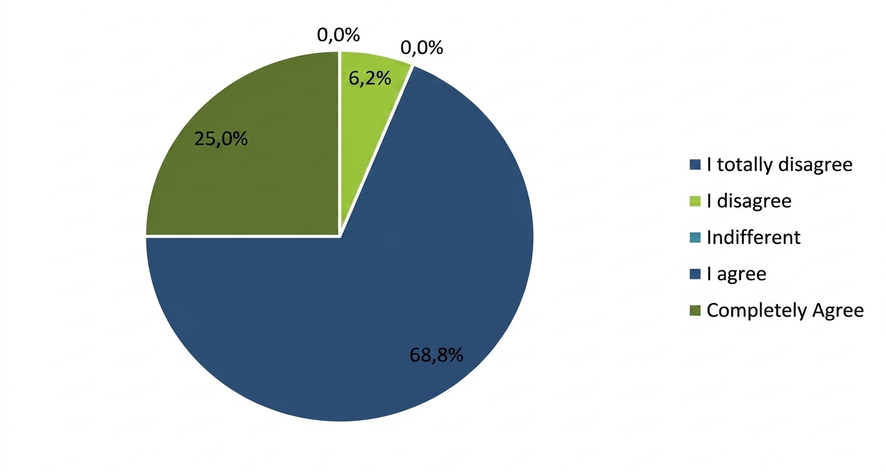
The second block aimed to identify the elements related to the engagement of the interviewed collaborators and relate them to the elements cited in the systematic mapping sample. The first question sought to understand if the participants identify with the process of sending extracts through the IT tool. The majority of respondents answered “agree” (68.8%) or “strongly agree” (25%). However, 6.2% expressed disagreement, as evidenced in Figure 1.
Source: Original research results.
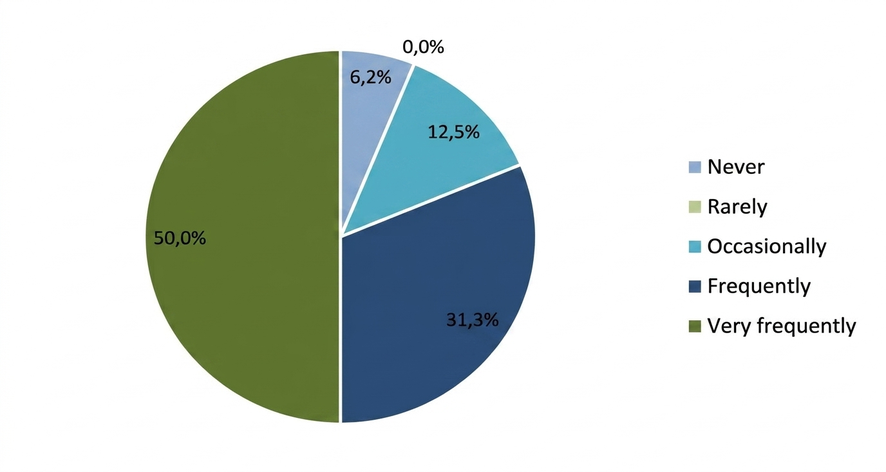
The second question aimed to understand how participants evaluate their participation in the use of the IT tool in the second semester of 2022. The majority (81.3%) responded having used it “very frequently” (50%) or “frequently” (31.3%). In turn, respondents who indicated the options “occasionally” (12.5%) and “never” (6.2%), as illustrated in Figure 2:
Source: Original research results.
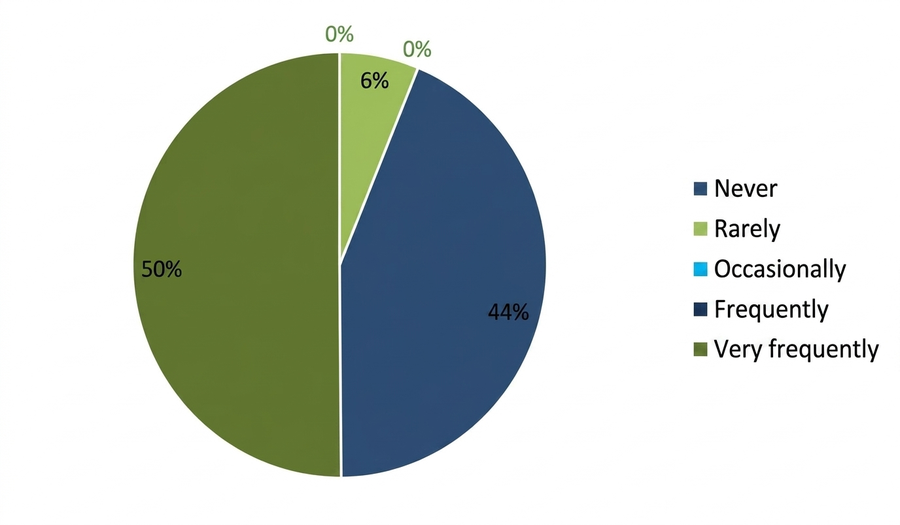
The third question focused on evaluating the use of the IT tool in its entirety, based on the participants’ point of view. A large part (93.8%) responded “very often” (50%) or “often” (43.8%), as evidenced by Figure 3:
Source: Original research results.
This question allowed us to relate the sociodemographic data (such as age group, analyst position held, and gender), presented in the first section of the questionnaire, with the respondents’ perception of the use of the IT tool (extracts) in its entirety. This relationship is shown in Table 3.
Table 3. Classification of participants by gender, age group, use of the IT tool (extracts) in its entirety and gender

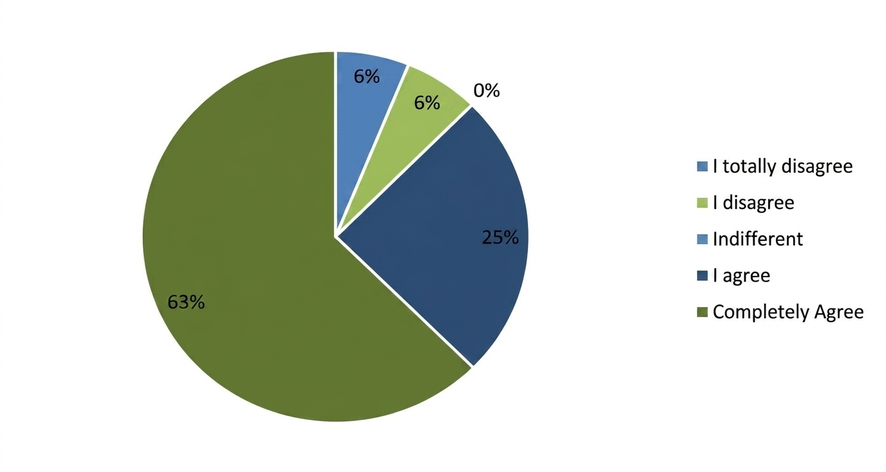
The fourth question sought to understand if the use of the IT tool is indispensable in the process of automating the sending of statements. The majority (87.5%) stated they fully agree (62.5%) or agree (25%), as observed in Figure 4:
Source: Original research results.
Together, questions one to four suggested that a large portion of the respondents (87.5%) consider the process of sending statements to clients through the IT tool indispensable, according to the process automation/new technologies (innovation) element, as evidenced in the systematic literature mapping. It was also noted that the majority (81.3%) identify with this process. These positions were highlighted by the responses very frequently or frequently, both generally (81.3%) and in totality (93.8%), related to the use of the IT tool. Thus, it was possible to associate these results with the job satisfaction element, according to phase 1 of the study.
Question five aimed to verify if participants feel professionally fulfilled when preparing statements through the IT tool. The majority (62.4) answered “agree” (43.6%) or “strongly agree”, while the minority (37.6%) indicated “neutral” (18.8%) or “disagree” (18.8%). Question six aimed to understand the participants’ contribution to the automation of the statement submission process through the IT tool in its entirety. The majority (93.8%) answered “strongly agree” (56.3%) or “agree” (37.5%), while only 6.2% answered “disagree”.
The seventh question aimed to verify if the continuous improvement actions of the tool and the update of active stores facilitate the preparation of extracts. All participants (100%) responded that they “totally agree” (43.8%) or “agree” (56.2%). The eighth question sought to understand if the participants consider that the actions taken to modify or improve internal processes facilitate the use of the IT tool. The vast majority (93.8%) responded “agree” (31.3%) or “totally agree” (62.5%) and only 6.2% responded “indifferent”.
Question nine aimed to understand if the area’s expectations were or are considered in the development and improvements made to the IT tool. The majority (93.8%) answered “agree” (50%) or “strongly agree” (43.8%) and only 6.2% answered “indifferent”. Questions five to nine, taken together, allowed us to establish the relationships between the elements identified in the survey and those previously found in the systematic mapping, as shown in Table 4.
Table 4. Relationships of the elements identified in the research with the systematic mapping
| Question | Research | Systematic mapping | Number of citations |
| 9 | Consideration of area expectations | Participation in decision-making (belonging) | 5 |
| 6 | Contribution to process automation | Automation of processes/new technologies (innovation) | 3 |
| 5 | Sense of accomplishment | Self-actualization/self-development and job satisfaction | 2 |
| 9 | Consideration of area expectations | Protagonism of business areas | 1 |
With these relationships established, it was identified that considering the expectations of the studied area is the most important factor for collaborators, both in participating in decision-making and in assuming protagonism. Both represent a little over 50% of the number of related citations. The contribution to process automation and the feeling of accomplishment appear next, with the former related to the automation of processes/new technologies (innovation), cited three times; and the latter related to self-realization/self-development and job satisfaction, cited twice, out of a total of 11 related citations.
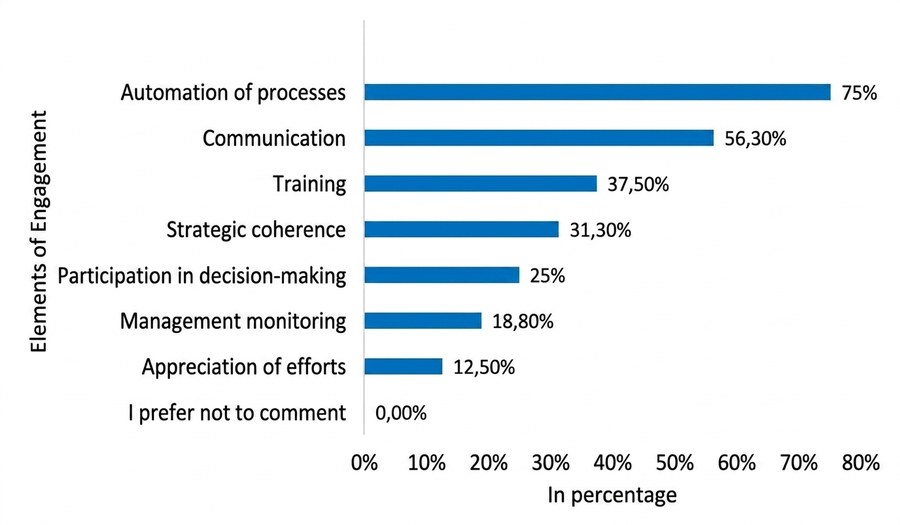
The tenth question sought to understand which elements are important for engagement in the use of the IT tool. Notably, out of 16 participants, 75% responded “automation of manual processes”; 56.3% mentioned “communication about improvements/changes”; 37.5% cited “training”. These responses indicated that the most important element for the interviewees was “automation of processes/new technologies (innovation)”, present in three of the eight articles (37.5%) from the systematic mapping performed.
With this, a relationship was identified with the behavior previously observed in question six. The second most relevant element for the participants was “communication regarding improvements”, which also appeared in the systematic mapping, cited in three of the eight articles (37.5%). “Training/capacity building” also stands out as another important element for the interviewees, mentioned in four of the eight analyzed works, as can be seen in Figure 5.
Source: Original research results.
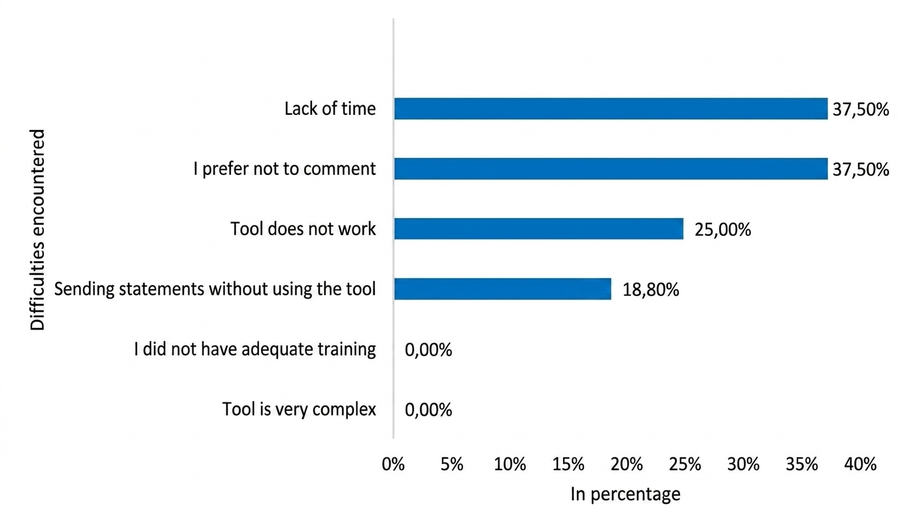
Question 11 sought to evaluate the main difficulties encountered in using all the resources of the IT tool. It is noteworthy that 37.5% of the participants pointed to a lack of time due to other priority demands or preferred not to comment, according to Figure 6.
Source: Original research results.
It was verified that the main difficulty pointed out by the participants was the “lack of time due to other priority demands”, which suggests a threat to the full use of the tool, besides indicating that its use is not considered a priority by the area. This element was identified in the systematic mapping, cited in one of the eight works analyzed (12.5%). It is also worth mentioning the option “I prefer not to answer”, which obtained a significant percentage of responses (37.5%), which may indicate discomfort of the participants in answering sensitive questions through online questionnaires[24].
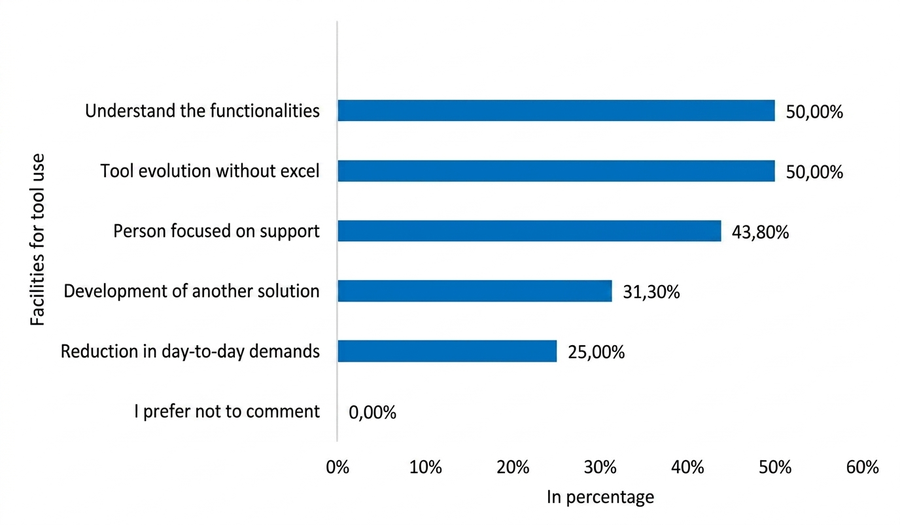
Finally, the last question aimed to understand what can facilitate the continuous use of the IT tool. Of the 16 participants, 50% highlighted the need to “better know the functionalities through practical training or by the evolution of the tool”, so that it is not necessary to use Excel as an interface; and 43.8% indicated the “importance of having a person focused on providing support in case of doubts”, as represented in Figure 7:
Source: Original research results.
This question suggested that a large part (93.8%) of the respondents chose alternatives related to the training/capacity building element, identified in the systematic mapping and mentioned in the previous question, through the answers to better know the functionalities through practical training or to have a dedicated person who offers support in case of doubts. Thus, there is a need for practical, individually applied training for better use of the IT tool (extracts)[25].
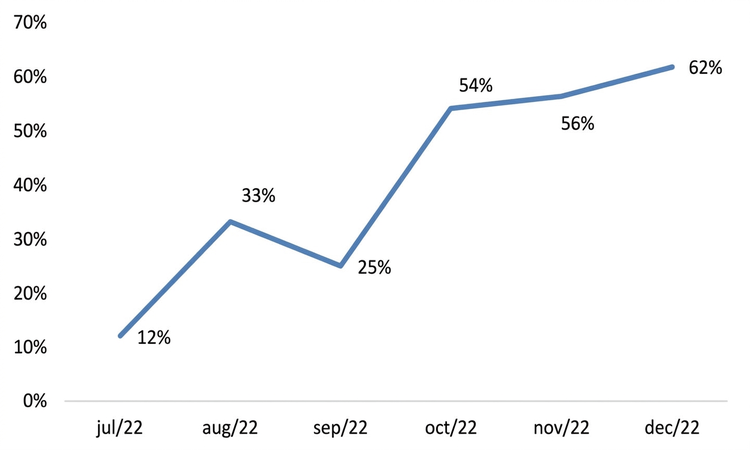
To endorse the analyses, a database authorized by the researched company was used, with the aim of analyzing the use of the IT tool (extracts) in its entirety, during the second half of 2022, by the target audience. It was observed that, from July to September 2022, the percentage of utilization was below 50%, with 12% in July, 33% in August, and 25% in September. In the following three months, utilization exceeded 50%, with 54% in October, 56% in November, and 62% in December, as visually evidenced in Figure 8:
Source: Original research results.
It was observed that the use of the IT tool in its entirety grew over the months of the second half of 2022, with the exception of September, when it presented a lower index than August. Usage began at 12% in July and reached 62% in December of the same year. A progressive growth in employee engagement was evident. Despite this evolution, and based on the fact that innovation does not reach its entirety in a population[26], the last percentage is still insufficient for the complete automation of the process of sending statements to clients, as it is lower than the 93.8% usage indicated in question three of the survey, according to the responses very often or often provided by the participants. In order to contribute to the analysis, Table 7 presents the percentage of IT tool usage by each employee over the months of the second half of 2022, as well as the average usage.
Table 7. Use of IT tool by employee – second half of 2022
| Contributors | Jul/22 | Aug/22 | Sep/22 | Oct/22 | Nov. 22 | Dec/22 | Average |
| In percentage (%) | |||||||
| Collaborator A | 5,0 | 0,0 | 0,0 | 44,0 | 43,0 | 78,0 | 28,0 |
| Collaborator B | 0,0 | 2,0 | 0,0 | 4,0 | 14,0 | 15,0 | 6,0 |
| Collaborator C | 38,0 | 84,0 | 50,0 | 52,0 | 59,0 | 23,0 | 51,0 |
| Contributor D | 100,0 | 100,0 | 100,0 | 100,0 | 100,0 | 100,0 | 100,0 |
| Collaborator E | 5,0 | 11,0 | 3,0 | 48,0 | 44,0 | 51,0 | 27,0 |
| Collaborator F | 0,0 | 100,0 | 0,0 | 0,0 | 25,0 | 25,0 | 25,0 |
| Collaborator G | 0,0 | 0,0 | 0,0 | 0,0 | 0,0 | 100,0 | 17,0 |
| Collaborator H | 47,0 | 33,0 | 44,0 | 81,0 | 64,0 | 84,0 | 59,0 |
| Contributor I | 0,0 | 71,0 | 0,0 | 0,0 | 0,0 | 0,0 | 12,0 |
| Contributor J | 2,0 | 21,0 | 0,0 | 27,0 | 24,0 | 37,0 | 19,0 |
| Collaborator K | 11,0 | 21,0 | 18,0 | 91,0 | 88,0 | 75,0 | 51,0 |
| Collaborator L | 11,0 | 58,0 | 32,0 | 73,0 | 77,0 | 80,0 | 55,0 |
| Collaborator M | 14,0 | 0,0 | 11,0 | 38,0 | 73,0 | 100,0 | 39,0 |
| Contributor N | 25,0 | 8,0 | 26,0 | 93,0 | 91,0 | 98,0 | 57,0 |
| Collaborator O | 5,0 | 20,0 | 33,0 | 13,0 | 22,0 | 50,0 | 24,0 |
| Contributor P | 0,0 | 74,0 | 62,0 | 59,0 | 70,0 | 65,0 | 55,0 |
Through the average, it was verified that, of the 16 collaborators, only one (collaborator D) used the IT tool (extracts) in its entirety, in 100% of the cases. Six collaborators used the tool fully in between 50% and 60% of the cases, while the vast majority (nine collaborators) used it fully in less than 40% of the cases.
Therefore, a lower practical utilization percentage of the IT tool was found compared to that indicated in the respondents’ answers, as evidenced by both Figure 13 and Table 4. This suggests a fear on the part of the majority in declaring that they use the tool occasionally or rarely, probably due to exposure-related issues[27].
In conclusion, the study explored the human dimension of technology and identified several factors that influence employee engagement. Among these, training/capacity building stood out as the most relevant — cited in half of the analyzed studies, evident in two of the applied questions, and recognized by the majority of respondents as a determining factor for the better utilization of the IT tool (extracts).
In this context, it was found that practical and individualized training are more effective and should be considered a priority in the actions of the company in question. It was also observed that the practical application of the tool was significantly lower than what was pointed out by the participants, which reinforces the need for the company to adopt the analysis of the database as a metric of real use to monitor future evolutions.
The main limitation of this research was the small sample size, restricted to a single area of the company, which prevents the generalization of the results. It is recommended that other companies implement practical and individualized training, provided that it is directed at areas with a profile similar to the one analyzed (administrative). As a suggestion for future research, it is proposed to investigate whether engagement with IT tools in more technical areas—such as the information technology area—also falls short of the organization’s expectations.
REFERENCES
[1] Venkatraman, N. 1994. IT-Enabled Business Transformation: from Automation to Business Scope Redefinition. Sloan Management Review 35: 73-87.
[2] Karmker Santu, S. K.; Hassan, M. M.; Smith, M. J.; Xu, l.; zhai, C.; Veeramachaneni, K. 2020. AutoML to date and beyond: challenges and opportunities. arXiv. (1): 1-35. https://doi.org/10.48550/arXiv.2010.10777.
[3] Orlikowski, W. J. 2000. Using technology and constituting structures. Organization science. 11(4): 404-428. http://www.jstor.org/stable/2640412.
[4] Albertin, A. 1998. Comércio eletrônico: Benefícios e aspectos de sua aplicação. Revista de administração de empresas. 38(1): 52-63.
[5] Meirelles, F. 1999. Estudo dos gastos e investimentos em informática: avaliação, evolução e tendências nas médias e grandes empresas. Fundação Getúlio Vargas. Disponível em: https://pesquisa-eaesp.fgv.br/publicacoes/gvp/estudo-dos-gastos-e-investimentos-em-informatica-avaliacao-evolucao-e-tendencias-nas.
[6] Schaufeli, W. B.; Salanova, M.; González-Romá, V.; & Bakker, A.B. 2002. The measurement of engagement and burnout: a two simple confirmatory fator analytic approach. Journal of Happiness Studies. 3: 71-92. https://link.springer.com/article/10.1023/A:1015630930326.
[7] Budgen, D.; Turner, M.; Brereton, P.; Kitchenham, B. 2008. Using mapping studies in software engineering. School of computing & maths. 1: 1-9.
[8] Kitchenham, B.A.; Charters, S. 2007. Guidelines for performing systematic literature reviews in software engineering 2:1-67.
[9] Gomes, J. S. 2006. Método de estudo de caso aplicado à gestão de negócios. 1ed. São Paulo, SP: Atlas.
[10] Eisenhardt, K.M. 1989. Building theories from case study research. Academy of management review 14: 532-550. https://doi.org/10.2307/258557.
[11] Collis, J.; Hussey, R. 2005. Pesquisa em Administração: um guia prático para alunos de graduação e pós-graduação. 2ed. Porto Alegre, RS: Bookman.
[12] Farina, S; Becker, F. S. U. 1996. Apresentação de trabalhos escolares. 16ed. Porto Alegre, RS: Multilivro.
[13] Patton, E.; Appelbaum, S. H. 2003. The case for case studies in management research. Management Research News. 26(5): 60-71. https://doi.org/10.1108/01409170310783484.
[14] Morais, D. 2005. Escalas de medida, estatística Descritiva e inferência estatística. Instituto Politécnico de Bragança. Bragança, SP. Disponível em: https://bibliotecadigital.ipb.pt/entities/publication/d55352f2-25a2-4ac4-8ed0-da2cd991f575. Acesso em: 23 mai. 2023.
[15] Yin, R. K. 2005. Estudo de caso: planejamento e métodos. 3.ed. Porto Alegre, RS, Bookman.
[16] Manzueto, M.S. 2016. Automação de Processos: a influência dos softwares de automação de processos nas rotinas organizacionais. Dissertação de. Pontifícia Universidade Católica do Rio de Janeiro, Rio de Janeiro, RJ, Brasil.
[17] Guimarães, L.R. 2019. Engajamento: Uma análise histórica da literatura. Trabalho de Conclusão de Curso em Administração. Faculdade de Administração e Ciências Contábeis, Universidade Federal Fluminense, Niterói, RJ, Brasil.
[18] Andrade, D.C.T. 2020. Engajamento no trabalho no serviço público: um modelo multicultural. Revista de Administração Contemporânea. 24(1): 49-76. http://doi.org/10.1590/1982-7849rac2020190148.
[19] Rossato, D.M. 2020. Engajamento de trabalhadores na implementação de chatbot para atendimento aos usuários de uma universidade. Dissertação de mestrado. Faculdade de Ciências Econômicas, Administrativas e Contábeis da Universidade de Passo Fundo, Passo Fundo, RS, Brasil.
[20] Silva Júnior, J.B.; Silva, M.C.M.; Branco, N. 2022. Gestão, gamificação e tecnologia: estudo sob a perspetiva do engajamento no Instituto Federal de Brasília. Dissertação de mestrado. Instituto Politécnico de Santarém. Santarém, PA.
[21] Wyse, M.; Nascimento, G.C.; Blanco, F; Borges, F.V.; Sartorato, F. 2022. Análise de projetos e engajamento de partes interessadas em obras de saneamento: estudo de caso. Gestão & Tecnologia de Projetos. 17(4): 1-24. https://doi.org/10.11606/gtp.v17i4.196134.
[22] Colombo, V.B. 2022. Antecedentes da automação de processos contábeis-gerenciais e reflexos no trabalho dos profissionais atuantes em um centro de serviços compartilhados no setor elétrico. Dissertação de mestrado. Universidade Federal de Santa Catarina, Florianópolis, SC, Brasil.
[23] Maylett, Tracy; Wride, Matthew. 2017. The Employee Experience: How To attract talent, retain top performers and drive results. Hoboken, New Jersey, USA: John Wiley & Sons.
[24] Hudon, C; Gaudreau, P.; Ramsay, M.; Chouinard, M.; Leduc, y.; Poitras, M. 2022. Reconciling validity and challenges of patient comfort and understanding: Guidelines to patient‐oriented questionnaires. Health Expectations, [S. l.] 1: 287–294. Wiley Online Library. DOI: https://doi.org/10.1111/hex.13370[LG3] .
[25] Marijani, R.; katomero, J.; Hayashi, A.; Kajerero, J. 2023. The Impact of Field-Based Practical Training on Job Performance in Tanzania: Perspectives From Students and Work Supervisors. SAGE Open. 13(4). https://doi.org/10.1177/21582440231218809.
[26] Rogers, Everett M. 2003. Diffusion of innovations. 5 ed. New York, USA, Free Press.
[27] Dias, A.C.G; Teixeira, M.A.P. 2008. Auto-revelação na Internet: um estudo com estudantes universitários. Aletheia, (versão impressa ISSN 1413-0394). Disponível em: https://pepsic.bvsalud.org/scielo.php?script=sci_arttext&pid=S1413-03942008000100003. Acesso em: 23 mai. 2023.
COMO CITAR
Cardoso, D.; Proença, H.H.D.M. 2025. Engajamento no uso de ferramentas de tecnologia da informação voltadas a automação de processos. Revista E&S. 6: e2025011.
ABOUT THE AUTHORS
 Daniel Cardoso – Project Management Specialist. Senior Analyst of Project Contracts. Rua Avaré, 361, Baeta Neves, 09751-060, São Bernardo do Campo, São Paulo, Brazil.
Heloisa Helena Dias Proença – Pedagogue and Master in Education. Rua Luiz Oliveira, 327, apt 32, Parque das Flores, 13087-610, Campinas, São Paulo, Brazil.