
Business
September 22, 2025
Production efficiency: process management in a cement industry company in São Paulo
Authors: Heloisa dos Santos Capoeira and Danilo Dupas Ribeiro
DOI: 10.22167/2675-6528-2024064
E&S 2025, 6: e2024064
Process management focuses on improving organizational procedures through a set of practices that involve identifying improvement opportunities, reducing waste, and increasing the efficiency of activities at each stage. A company that sees value in process development can analyze employee performance in production activities and performance indicators in more detail, obtaining better results[1].
Process mapping is not just applicable to industries and offices; it should be used in various areas. Identifying and organizing processes generates detailed analyses that support decision-making regarding structural changes, establishing rules and guidelines to be followed[2]. According to Amaran et al.[3], the process simulation phase demonstrates the possibility of reducing errors, time, and resources, providing a more assertive modeling. Zhang et al.[4] state that one of the main benefits of process management is the usability of performance indicators for each activity, which allows for the evaluation and continuous improvement of established goals.
By using process mapping, the manager can plan demands, define responsibilities, and use resources according to technical and safety standards. Furthermore, it standardizes processes, improves product quality, and reduces errors due to lack of information. A case study by Maiczuk and Júnior[5] showed that the use of quality tools and Statistical Process Control (SPC) indicated changes in employee behavior, who began to perceive the importance of product quality and the production system.
This research work focused on a large company in the cement production sector, where efficient process management was crucial due to the competitive and dynamic nature of the market. Several methodologies and approaches were explored to optimize the analysis and applicability of improvements in operational processes.
The cement market, with high production volumes and significant environmental impact, demands management practices that improve efficiency, quality, and sustainability. In 2023, cement production in Brazil reached 62 million tons, an increase of 2.3% compared to the previous year, with an annual average of 60 million tons over the last decade[6]. Cement demand is linked to the civil construction sector, which experiences economic fluctuations. During the 2014-2016 recession, production fell but gradually increased from 2017 onwards[7]. In 2022, the sector represented 0.4% of Brazil’s GDP[7]. This case study identified bottlenecks and inefficiencies in the company’s operational processes, proposing improvements to increase efficiency, reduce costs, enhance quality, and promote sustainability by analyzing the supply chain, production, logistics, and waste management.
The company under study is a multinational in the cement production segment, manufactured for use in civil construction works, infrastructure, and industrial applications. With an estimated market share between 12% and 15% in Brazil and between 10% and 20% in Latin America, the company stands out as one of the leaders in the sector. In the last three years, the company had an annual revenue of approximately R$ 10.6 billion in 2023, R$ 10.4 billion in 2022, and R$ 9.5 billion in 2021.
Due to the basic and undifferentiated nature of these products, the company needs a solid and efficient operational structure to handle large-scale production and market fluctuations. The main objective of this study is to analyze the efficiency of process management in operational flows through a detailed analysis of existing processes, seeking to identify improvement opportunities that can result in a significant increase in operational efficiency.
The company was chosen for the study due to the strategic relevance of efficient process management in a highly competitive and dynamic market. The case study methodology was used to identify and analyze bottlenecks in the production chain, from the extraction of raw materials to the delivery of the final product. A case study, according to Yin[8], is an empirical inquiry that investigates a contemporary phenomenon in its real-world context, especially when the boundaries between phenomenon and context are not clearly evident, ideal for in-depth examination of “how” and “why” questions[8]. The research employed an integrated approach, combining bibliographic research to understand the theoretical context and best practices, as demonstrated in Table 1.
Table 1. Research methodological path
| Approach | Method/Reference | Specific objective | Contribution to the company’s context |
| Bibliographic research | Literature review in scientific databases on process management and continuous improvement[9,10] | Identification of bottlenecks: detect critical points that affected operational efficiency and quality | Provided theoretical grounding and best practices to support the critical analysis of the company’s processes |
| Document analysis | Examination of internal reports, flowcharts, and operational records of the organization[11,12] | Understand the company’s history and map performance indicators | They allowed visualizing the evolution of processes and identifying inconsistencies or recurring patterns |
| Semi-structured interviews | Conducted with managers and operators, following qualitative interview protocols[13,14] | Obtain practical insights into everyday challenges and identify perceptions of failures and opportunities | They brought rich and contextual information that was not documented, revealing hidden problems in the workflows |
| Direct observation | Non-participant observation in strategic sectors of the production chain[15,16] | Identify inefficiencies and waste in production processes. | Provided empirical evidence on the actual behavior of operations, validating or questioning the documentary data |
| Secondary data analysis | Evaluation of historical production records, financial indicators, and previous reports[17,18] | Evaluate historical information to identify critical trends and patterns | It supported the longitudinal analysis, allowing the comparison of current performance with previous periods and supporting strategic decisions |
For this study, processes in the commercial area were mapped that are directly linked to the product distribution channel, that is, to the company’s operational flows. The methodology adopted for process mapping integrated the analysis of internal company documents and the practical experience of an experienced professional. Standard operating procedures, performance reports, and historical records were analyzed, which made it possible to identify critical areas and points for improvement.
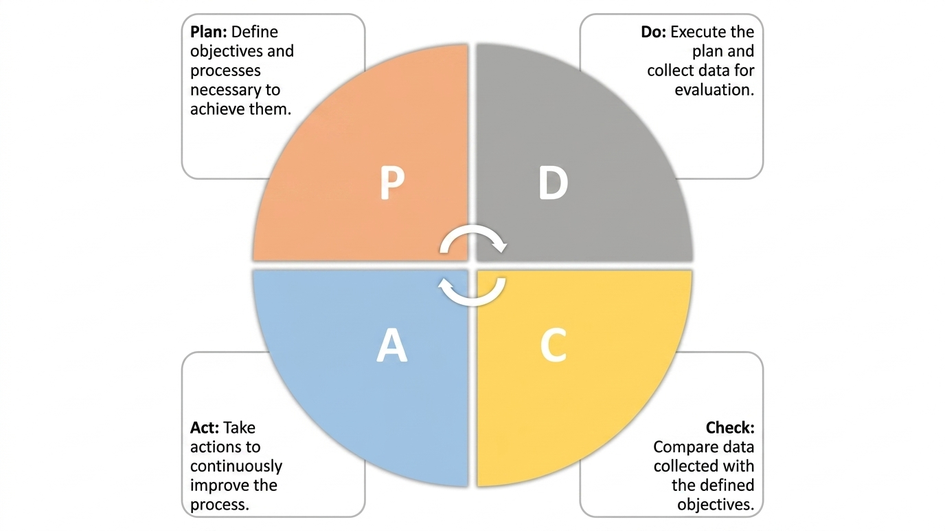
The work emphasized the implementation of advanced industrial automation technologies, the restructuring of logistics processes, and the adoption of sustainable practices in waste management and energy consumption. The intention was not only to increase efficiency and productivity but also to position the company as a model of operational excellence and sustainability, strengthening its competitiveness. In this case study, the “Plan-Do-Check-Act” (PDCA) method was applied to structure and manage improvements in the company’s operational processes (Figure 1). This method is widely recognized in quality management literature, being highlighted by authors such as Deming[19] and Juran[20].
Source: Original research data.
The company used the PDCA method in a structured way to perform the identification, analysis, and control of the quality process.
- Plan (Planejar): the company initiated the process by defining clear and specific objectives for the improvement of operational processes. This included identifying bottlenecks and inefficiencies in the production chain at all stages. Planning also involved defining goals for cost reduction, resource optimization, and quality improvement;
- Do (Execute): based on the plan, the company executed the necessary actions to implement the identified improvements. This included the implementation of advanced industrial automation technologies, the restructuring of logistics processes, and the adoption of sustainable practices in waste management and energy consumption;
- Check (Verify): the company conducted regular checks to assess the effectiveness of actions. This involved analyzing performance indicators, such as efficiency, productivity, costs, and final product quality;
- Act: based on the verification results, the company took corrective and preventive measures to ensure the continuity of improvements, such as process adjustments, procedure reviews, or investment in new technologies.
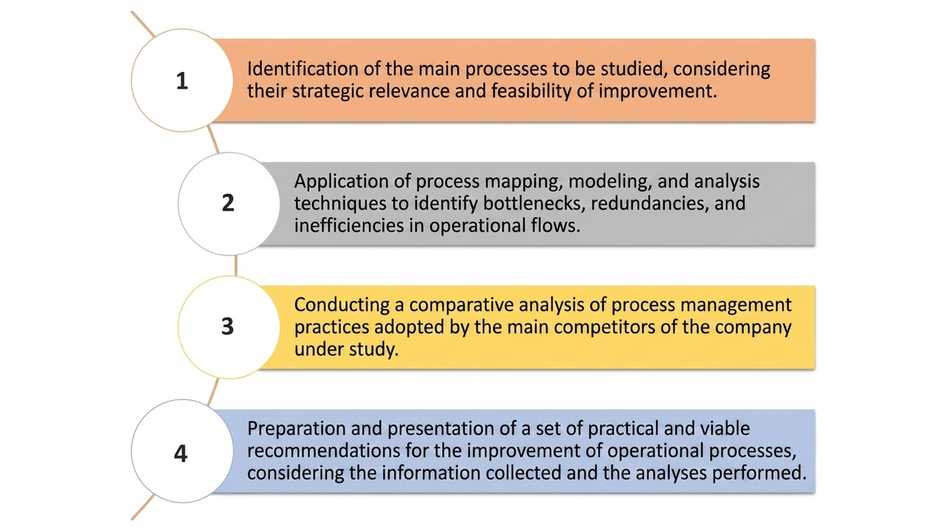
Davenport[21] highlights that the use of these techniques not only identifies problems in processes but also highlights opportunities for improvement that can have a significant positive impact on organizational performance. By better understanding workflows and interactions between different stages, organizations can optimize their processes for more effective results. For the data treatment methodology, qualitative analysis techniques were used to identify patterns, trends, and relevant insights for process improvement. The method was divided into stages (Figure 2).
Source: Original research data.
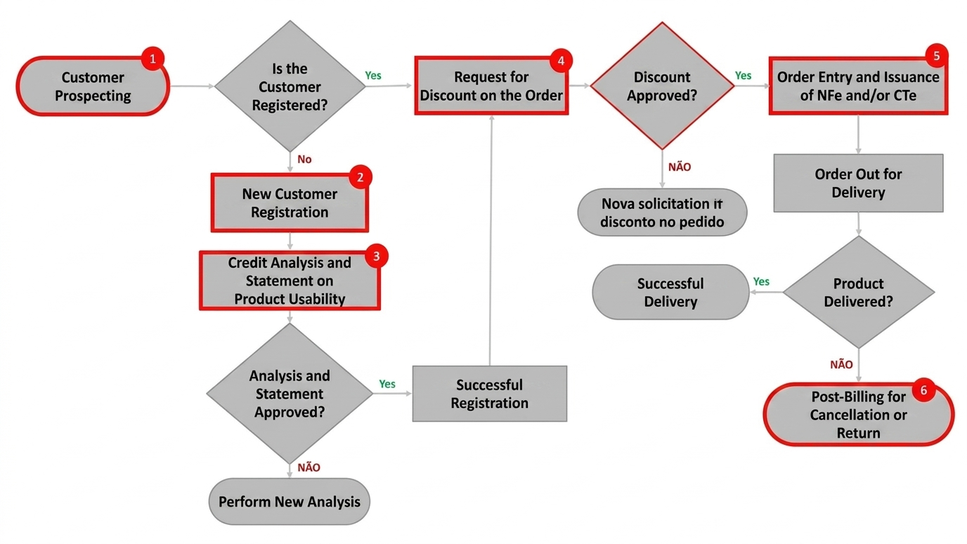
The results obtained from the detailed analysis of the processes and the practical experience of the professional involved were crucial for identifying inefficiencies and opportunities for improvement in the company’s operation. Through this contact, it was possible to carry out the complete mapping of the operational processes of the distribution network (Figure 3).
Source: Original research results.
The flowchart provides a comprehensive overview of the company’s organizational structure and illustrates the functioning of each step involved in the process of distributing cement to the client network. During the analysis of the complete cement buying and selling flow, gaps (GAPs) were identified that impacted the company’s efficiency and profitability. The process mapping, from customer prospecting to the issuance of the Invoice and Transport Document (NF/CTe), revealed a complex system with several branches and bureaucracies.
These gaps highlighted several bottlenecks throughout the process, presenting opportunities for improvement that could optimize lead time and increase overall efficiency. As illustrated in Figure 3, bottlenecks were identified at various distinct stages of the distribution process, revealing critical points where operational efficiency was compromised. The presence of these critical points suggests that workload and resources were not being optimally distributed, leading to delays and reduced overall process efficiency.
The presence of bottlenecks in multiple stages accentuated the need for a comprehensive and strategic approach to process optimization, including the review of operations in each affected phase, the application of specific corrective measures, and the continuous review of the workflow[22]. To mitigate fragilities, it was fundamental to seek ways to optimize the process, such as automating repetitive tasks, integrating systems between the involved areas, simplifying procedures, and training teams to efficiently handle process demands. Furthermore, it was important to analyze each stage of the process individually to identify the lead time, those involved, and efficiency.
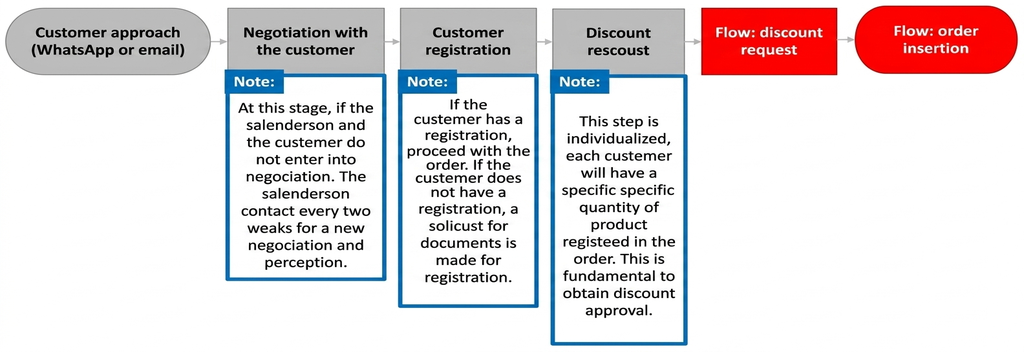
The customer prospecting stage (Figure 4) took three to five days to complete, because the salesperson depended on the information provided by the customer to continue with the order. If the customer was not registered, the lead time increased.
Source: Original research results.
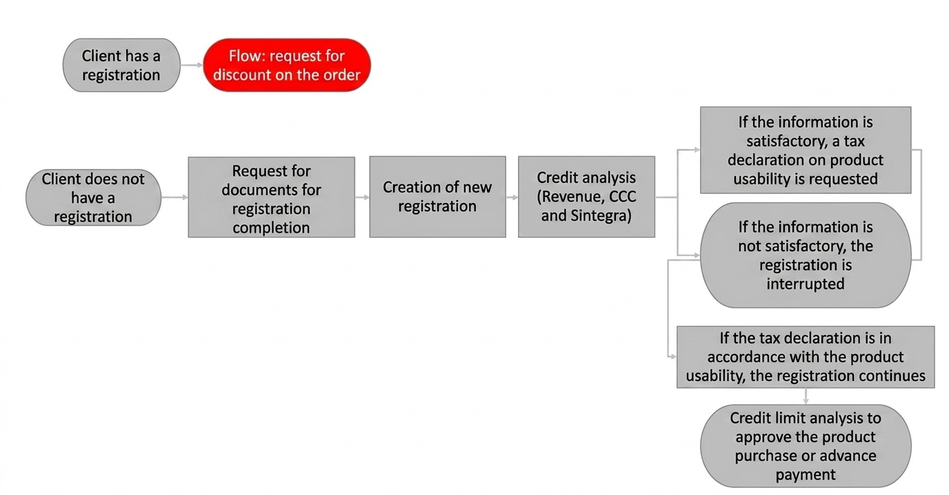
In the customer registration step (Figure 5), if the registration already existed, the process flowed more smoothly; otherwise, a new registration was initiated, which involved requesting documentation. Subsequently, a check of the customer’s tax status was performed: if it was regularized, the registration was completed; if not, it was interrupted.
Source: Original research results.
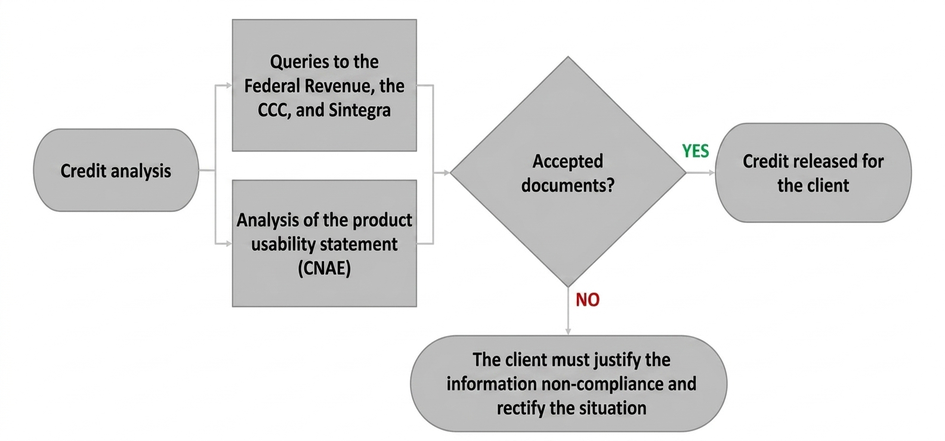
The stage on credit analysis (Figure 6) included the verification of data available from the Federal Revenue Service, the Centralized Taxpayer Registry (CCC), and the Integrated System for Information on Interstate Operations with Goods and Services (Sintegra), which provide information on the client’s tax and registration status.
Simultaneously, information from the product usability statement was analyzed, which specifies the purpose and final use of the product according to the customer’s National Classification of Economic Activities (CNAE). This step contributes to ensuring that the product’s use is aligned with the declared economic activity context, favoring regulatory and operational compliance (ISO/IEC 9126; ISO 9241-11). If any of the documents presented irregularities or if there were discrepancies in the information provided, the credit granting process was interrupted.
Source: Original research results.
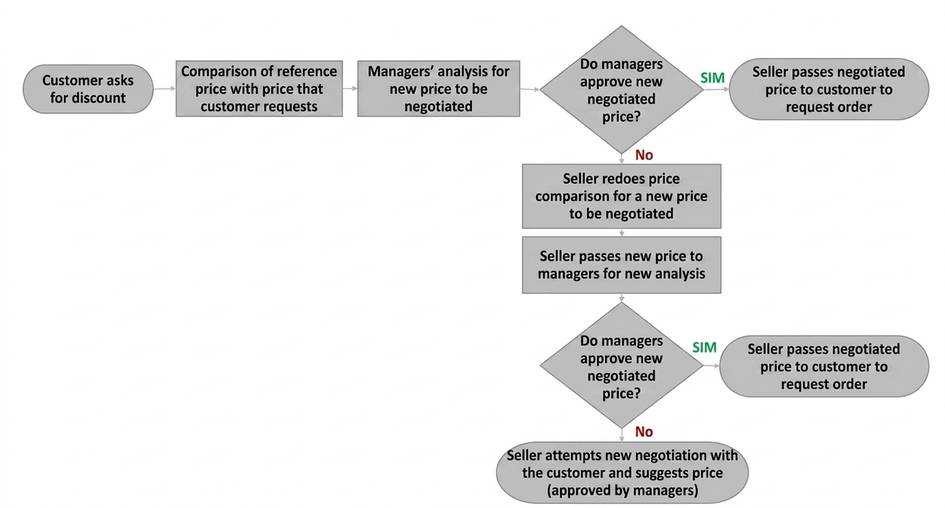
The negotiation phase (Figure 7) allows the customer to suggest a price, and the seller must also bargain. When the customer requested a discount, the seller needed to compare the reference price with the discounted price requested by the customer. The reference price is an average value used as a basis for evaluating the feasibility of requested discounts, calculated based on costs, profit margins, and market prices.
Source: Original research results.
The next step is the formalization of the request. Before formalizing and processing the request, the seller must perform a verification. If the customer’s registration is not updated, the seller must request the missing information. Furthermore, it is essential to check if the customer has a registered route in the system. If not, this registration must be done. After these verifications, the seller must request detailed information about the products and quantities to be delivered.
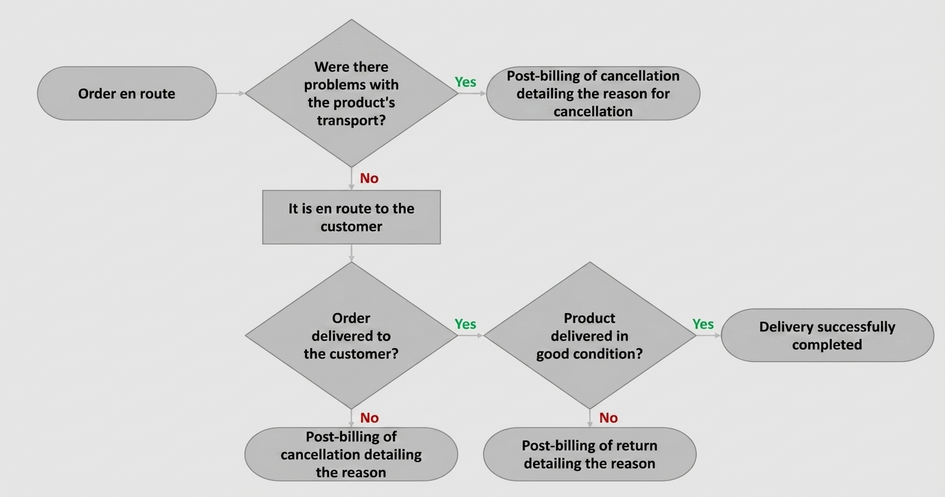
In the delivery logistics stage, the order has already been placed, and the delivery scheduled. If the customer received the product correctly and without any damage, the delivery logistics flow was successfully concluded. Otherwise, it would be necessary to open a post-billing process for cancellation or return of the order and proceed to the return or cancellation management stage (Figure 8). This process not only ensures the integrity of the delivery but also demonstrates a commitment to quality and agile resolution of any problems that may arise.
In the final stage, described as “finalization”, after the product delivery, a copy of the Electronic Invoice (NFe) or the Electronic Transport Document (CTe) is issued. The person responsible for receiving is asked to sign the stub and return it for the company’s internal control. This procedure is essential to ensure adequate documentation and accurate recording of the delivery made.
Source: Original research results.
After detailed identification of the steps and their components to understand the root cause of the bottlenecks, the data were analyzed to identify improvements. Specific improvements were recommended for each step, as shown in Table 2.
Table 2. Process weaknesses and suggestions for improvement
| N#¹ | bottleneck | Step | Involved area | Bottleneck identification | Improvement Recommendation |
| 1 | Client prospecting | Identification and approach of clients | Sales | Difficulty in identifying and approaching new clients efficiently, resulting in delays in expanding the client base | Invest in marketing automation and CRM² tools to streamline lead identification and improve interest tracking |
| 2 | New customer registration | Customer registration | Sales; administration | The registration process is time-consuming and prone to errors, negatively impacting the efficiency of the sales flow | Simplify and standardize the customer registration process to ensure it is carried out more quickly and accurately |
| 3 | Credit analysis and product usability statement | Credit analysis and usability | Credit analysis; sales | Credit analysis and product usability declaration frequently cause delays | Integrate management systems to automate part of these analyses and reduce the time needed for approvals |
| 4 | Discount request on order | Order processing | Sales; pricing | The discount request process is complex and can lead to approval delays | Implement a more efficient system for requesting and approving discounts, possibly using an integrated digital platform |
| 5 | Order entry and issuance of NF/CTe³ | Order insertion and documentation | Systems; sales; logistics | The manual insertion of orders and the issuance of invoices and transport documents are very time-consuming | Integrate sales, inventory, and financial management systems to reduce the time required for order creation |
| 6 | Post-billing of cancellation or return | Cancellation and Returns Management | Customer service; logistics | The management of cancellations and returns is inefficient, causing delays and customer dissatisfaction | Establish clear and automated processes for the management of cancellations and returns |
Note. ¹No#: number; ²CRM: Customer Relationship Management; ³NF/CTe: Invoice and Transport Document.
Each bottleneck was analyzed based on its impact on the overall flow of operations and process efficiency. By investing in automation tools, integrating systems, simplifying processes, and optimizing order management, the company can reduce the lead time and increase operational efficiency. These changes aim not only to streamline process steps but also to minimize errors and delays, contributing to greater customer satisfaction and enhanced competitiveness in the industrial commodities market.
The complexity of the cement distribution system, however, implies an interdependence between various sectors to ensure that the process flow is completed effectively and that the customer receives their product as expected. The identified bottlenecks demonstrated that, due to the multiple branches and the lack of integration between the areas involved, the process fluidity was compromised. This resulted in potential delays and product delivery failures, highlighting the urgent need for improvements to ensure a more cohesive and efficient operation.
To obtain efficiency in process management, taking into consideration Quality Management, the improvement of flowcharts and practices observed in competitors, as detailed in Table 3.
Table 3. Improvement proposals in processes
| Process | Improvement proposal | Performance indicators |
| Client prospecting | Improve CRM¹, integrating with marketing automation tools; improve segmentation and personalization of approaches | Lead conversion rate; cost per lead; campaign engagement; average conversion time |
| New customer registration | Simplify and standardize registrations with digital forms and automatic validations; integrate systems and train the team | Average registration time; error rate; compliance with procedures; number of reworkings |
| Credit analysis and usability | Integrate management systems; automate real-time checks; centralize data for faster and more accurate decisions | Average approval time; error rate in analyses; customer satisfaction regarding response time |
| Discount request | Improve digital system with automatic workflows and predefined rules; establish clear value authority policies aligned with company goals | Average approval time; approval versus rejection rate; discount percentage within limits; impact on profit margins |
| Order entry and Invoice/CTe issuance² | Integrate sales, inventory, and financial systems; automate orders and issuance of fiscal documents with automatic checks | Average processing time; error rate in tax documents; inventory accuracy |
| Post-invoicing (cancellation/ return) | Establish clear and automated procedures; integrate CRM¹; train team in best practices | Average processing time; customer satisfaction rate; error rate in cancellation and return events |
Note. ¹CRM: Customer Relationship Management; 2NF/CTe: Nota Fiscal e Conhecimento de Transporte.
To achieve efficiency in process management, it is essential to adopt an integrated approach that considers all stages and areas involved. Improving existing systems used by the company, such as Enterprise Resource Planning (ERP) and Customer Relationship Management (CRM), is a key strategy to optimize data integration and synchronization. The integration of these systems allows for process automation, reducing the time and effort required to complete each stage. Furthermore, data analysis tools, such as Business Intelligence (BI) software, can provide insights into processes and identify areas for continuous improvement. Recent studies highlight that the integration between ERP, CRM, and BI drives data-driven decision-making and enhances operational efficiency through real-time reporting, centralized visibility, and more accurate forecasts[23,24].
Team empowerment is another essential aspect, ensuring that all members are aligned with best practices and operational procedures[25,26,27]. Investing in regular training and the development of specific skills can reduce the incidence of errors, as well as strengthen the teams’ adaptation to new organizational demands[25]. Adopting a culture of continuous improvement, with the Kaizen methodology, where performance analysis and the pursuit of innovation are constant, contributes to maintaining efficiency and adapting to market changes[28]. Kaizen focuses on small incremental improvements and the participation of all employees to identify and implement process improvements[29].
Finally, the implementation of performance indicators (KPIs) and the periodic review of processes are recommended practices to monitor the effectiveness of improvements and identify new optimization opportunities[30]. These adjustments provide gains such as reducing the time needed to complete each stage, improving operational efficiency. Furthermore, the automation and integration of systems result in operational cost savings and better resource allocation, increasing profit margins[31]. The expected competitive advantage includes an enhanced ability to react quickly to market changes and trends, adjusting strategies to offer services and products with greater efficiency and quality[32].
The specific objectives of this study were achieved, namely: (1) the identification of bottlenecks and inefficiencies in the production chain, carried out through detailed mapping using process flowcharts and the application of the PDCA methodology; (2) the evaluation of resource utilization in all stages of the production process, through the review of documentation, processes, and interactions, providing a comprehensive view of resource allocation and highlighting opportunities for optimization and waste reduction; (3) the proposal of solutions for operational cost reduction, through process mapping with flowcharts, which helped identify areas with higher costs; and (4) the improvement of final product quality, achieved through the implementation of continuous improvements and process Quality Management.
The integrated approach used combined bibliographic research to understand the theoretical context and best practices, documentary analysis of internal and historical company procedures, interviews with managers and operators for practical insights, direct observation of processes, and secondary data analysis.
The main findings include the identification of critical points that affected operational efficiency and product quality. To optimize resource utilization and reduce operational costs without compromising quality, the solutions proposed during the research were implemented. Among the improvements applied, the significant reduction in the lead time of the process stands out, which showed a drop of up to 40%. The recommended practices and processes, already incorporated into the organizational routine, have effectively contributed to the continuous improvement of the quality of the cement produced, ensuring that the product meets the required standards and stands out in the market.
The study achieved the objective of improving process management in the company. The proposed recommendations were effectively implemented and not only solved previous deficiencies but also generated tangible positive results, including the reduction of lead time and the overall optimization of operational processes. The practical implications of these results prove the relevance of efficient process management, demonstrating that the application of improvements directly contributed to maintaining competitiveness in the sector and to enhancing operational performance.
The analyzed company demonstrated positive influences on its productivity and efficiency, resulting in tangible benefits such as the reduction of operational costs, the increase in the efficiency of production processes, the improvement of product quality, and the minimization of environmental impact. The key performance indicators (KPIs) used to evaluate the success of these initiatives included the reduction of average production time, the decrease in transportation and storage costs, the increase in equipment utilization rate, and the increase in customer satisfaction. These strategies contributed significantly to the company’s competitiveness and sustainability in the market.
To expand and deepen knowledge on process management in cement manufacturing companies, future studies could explore the implementation of emerging technologies, such as automation and artificial intelligence, to further optimize production processes and reduce inefficiencies. The analysis of the integration of advanced real-time monitoring and control systems can reveal new opportunities for continuous improvement and operational efficiency. Another recommended research area is the evaluation of process management strategies in different segments of the production chain, beyond the commercial area, to identify effective practices and specific challenges at each stage.
REFERENCES
[1] Silva, A.C.C.; Gomes, B.R.A.; Costa, D.O.; Ribeiro, J.L.S.; Jorge, L.H.R.S.; Corrêa, T.S.; Duarte, T.R.G. 2024. A importância da gestão da qualidade na otimização dos processos de manufatura: estratégias para melhoria contínua e competitividade empresarial. Revista Contemporânea. 4(12): e6948. https://doi.org/10.56083/RCV4N12-137
[2] Bresciani, S.; Huarng, K.-H.; Malhotra, A.; Ferraris, A. 2021. Digital transformation as a springboard for product, process and business model innovation. Journal of Business Research. 128: 204–210. https://doi.org/10.1016/j.jbusres.2021.02.003.
[3] Amaran, S.; Sahinidis, N.V.; Sharda, B.; Bury, S.J. 2016. Simulation optimization: a review of algorithms and applications. Annals of Operations Research. 240(1): 351-380. https://doi.org/10.1007/s10479-015-2019-x.
[4] Zhang, L.; Kim, D.; Ding, S. 2023. Cultivating organizational performance through performance measurement systems: Role of psychological empowerment and creativity. Frontiers in Psychology. 14, 1116617. https://doi.org/10.3389/fpsyg.2023.1116617.
[5] Maiczuk, J.; Júnior, A. C. 2013. Aplicação de ferramentas de melhoria de qualidade e produtividade nos processos produtivos: um estudo de caso. Qualit@ s Revista Eletrônica, 14(1). https://www.researchgate.net/publication/277021522_Aplicacao_de_ferramentas_de_melhoria_de_qualidade_e_produtividade_nos_processos_produtivos_um_estudo_de_caso
[6] Sindicato Nacional da Indústria do Cimento (SNIC). 2023. Relatório anual da indústria cimenteira. São Paulo, SP. Disponível em: https://snic.org.br/assets/pdf/relatorio_anual/1732731328.pdf.
[7] Instituto Brasileiro de Geografia e Estatística (IBGE). 2023. Sistema de Contas Nacionais – SCN: Produto Interno Bruto – Série Contas Nacionais 2022. Rio de Janeiro: IBGE. Disponível em: https://www.ibge.gov.br/estatisticas/economicas/servicos/9052-sistema-de-contas-nacionais-brasil.html.
[8] Yin, R.K. 2018. Case study research and applications: Design and methods. 6ed. Thousand Oaks, USA: Sage.
[9] Snyder, H. 2019. Literature review as a research methodology: An overview and guidelines. Journal of Business Research. 104: 333–339.
[10] Xiao, Y.; Watson, M. 2019. Guidance on conducting a systematic literature review. Journal of Planning Education and Research. 39(1): 93–112. https://doi.org/10.1177/0739456X17723971.
[11] Bowen, G.A. 2009. Document analysis as a qualitative research method. Qualitative Research Journal. 9(2): 27–40. https://doi.org/10.3316/QRJ0902027.
[12] Johnston, M. P. 2021. Document analysis in educational research. International Journal of Qualitative Studies in Education. 34(2): 146–162.
[13] Kallio, H.; Pietilä, A.M.; Johnson, M.; Kangasniemi, M. 2016. Systematic methodological review: Developing a framework for a qualitative semi-structured interview guide. Journal of Advanced Nursing. 72(12): 2954–2965. https://doi.org/10.1111/jan.13031.
[14] Adams, W.C. 2019. Conducting semi-structured interviews. In Handbook of Practical Program Evaluation, 4ed., pp. 492-505. Jossey-Bass. http://dx.doi.org/10.1002/9781119171386.ch19.
[15] Creswell, J.W.; Poth, C.N. 2018. Qualitative inquiry and research design: Choosing among five approaches. 4ed. Thousand Oaks, USA: Sage.
[16] Flick, U. 2018. An introduction to qualitative research. 6ed. Thousand Oaks, USA: Sage.
[17] Johnston, M.P. 2017. Secondary data analysis: A method of which the time has come. Qualitative and Quantitative Methods in Libraries. 3(3): 619–626. https://www.researchgate.net/publication/294718657_Secondary_Data_Analysis_A_Method_of_Which_the_Time_has_Come.
[18] Tripathy, J.P. 2020. Secondary data analysis: Ethical issues and challenges. Iranian Journal of Public Health. 49(12): 2519–2523. https://www.researchgate.net/publication/278044529_Secondary_Data_Analysis_Ethical_Issues_and_Challenges.
[19] Deming, W.E. 1986. Out of the crisis. Cambridge, USA: MIT Press.
[20] Juran, J.M. 1992. Juran on quality by design: The new steps for planning quality into goods and services. New York, USA: Free Press.
[21] Davenport, T.H. 2013. Process innovation: Reengineering work through information technology. Harvard Business Press. Disponível em: https://www.scirp.org/reference/referencespapers?referenceid=1970491.
[22] Reijers, H.A. 2021. Business Process Management: The evolution of a discipline. Computers in Industry. 126: 103404. https://doi.org/10.1016/j.compind.2021.103404
[23] Chatterjee, S., Rana, N. P., Khorana, S., Mikalef, P., & Sharma, A. (2023). Assessing organizational users’ intentions and behavior to AI integrated CRM systems: A Meta-UTAUT approach. Information Systems Frontiers, 25(4), 1299–1313. https://doi.org/10.1007/s10796-021-10181-1.
[24] Hossain, M. Z., Sultana, S., Nahiduzzaman, A. K. M., & Jalil, M. A. (2025). Evaluating the Effectiveness of ERP and CRM Integration on Enhancing Customer Experience in the Digital Business Ecosystem. Pacific Journal of Business Innovation and Strategy, 2(2), 11–21.
http://dx.doi.org/10.70818/pjbis.2025.v02i02.040
[25] Rakhmasari, A.A.; Dharmayanti, I.; Abdusyakur, M.Z. 2025. Impact of Automation, Workforce Training, and Lean Manufacturing on Production Efficiency in the Indonesian Automotive Industry. West Science Interdisciplinary Studies, 3(1), 99–108. http://dx.doi.org/10.58812/wsis.v3i01.1595.
[26] Institute for Corporate Productivity (i4cp). 2025. The future of workforce learning and development. Seattle, USA: i4cp Research.
[27] Chatterjee, S.; Rana, N.P.; Khorana, S.; Mikalef, P.; Sharma, A. 2023. Assessing Organizational Users’ Intentions and Behavior to AI Integrated CRM Systems: A Meta-UTAUT Approach. Information Systems Frontiers. 25(4): 1299–1313. https://link.springer.com/article/10.1007%2Fs10796-021-10181-1.
[28] Godoy, R.F.; Munhoz, I.P.; Oliveira, G.G.; Rosa, M.T.M.G.; Gouvêa, M.T.; Akkari, A.C.S. 2023. Operacionalização da metodologia Kaizen a fim de otimizar o desempenho organizacional: um enfoque na gestão de processos em uma indústria eletrônica. Revista Gestão e Secretariado (GeSec). 14(2): 1832–1854. https://doi.org/10.7769/gesec.v14i2.1665.
[29] Sichinsambwe, C. 2023. Kaizen practices and performance improvement in Zambian manufacturing companies. Total Quality Management & Business Excellence, 34(1–2), 1–18. http://dx.doi.org/10.1080/23311916.2023.2183590.
[30] Van Looy, A. 2021. Does IT Matter for Business Process Maturity? A Comparative Study on Business Process Maturity Models. Springer.https://doi.org/10.1007/978-3-642-16961-8_95.
[31] Ahmad, S.; Riaz, Z.; Saeed, A.; Arshad, M. 2020. ERP implementation, resistance, and performance: a systematic literature review. Journal of Enterprise Information Management. 33(5): 1195–1223.
[32] Ghobakhloo, M. 2020. Industry 4.0, digitization, and opportunities for sustainability. Journal of Cleaner Production. 252: 119869.https://doi.org/10.1016/j.jclepro.2019.119869.
COMO CITAR
Capoeira, H.S.; Ribeiro, D.D. 2025. Eficiência na produção: gestão por processos em uma empresa da indústria cimenteira em São Paulo. Revista E&S. 6: e2024064.
ABOUT THE AUTHORS
Heloisa dos Santos Capoeira – Quality and Productivity Specialist. Production Engineer. Rua Júlio de Castilho, 248 – Belenzinho; 03059-001. São Paulo, SP, Brazil.
Danilo Dupas Ribeiro – Master in Administration. Tucuna Street, 632 – Perdizes; 05021-010. São Paulo, SP, Brazil.