
Strategy
Innovation
Marketing
December 04, 2024
Retail media emerges as a revenue source for retail
Marketing modality allows the retailer to promote industry products on their own media platforms and track results in actual sales
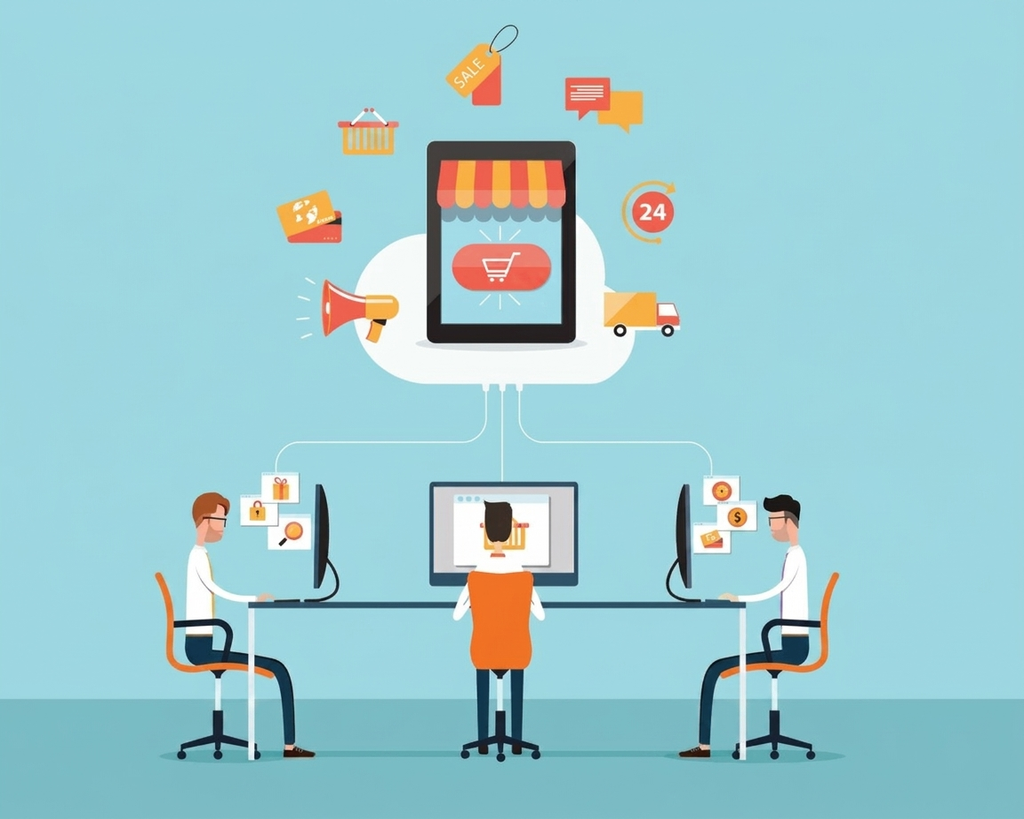
The year 2024 was marked by a trend that has been on retailers’ lips: retail media. Since the beginning of the year, at the NRF Retail Big Show, the major global retail fair that takes place in New York, and throughout the year, in multiple articles published in the mainstream media, it seems that nothing else matters in the context of retail marketing, especially in the CPG (Consumer Packaged Goods) sector.
What is most important about this trend is its high dependence on data — but that’s just the beginning. It also depends on the integration of primary data, a macro-trend that will revolutionize retail marketing and put companies that know how to leverage it in a position of advantage.
To understand the depth of the concept of retail media, it is essential to look beyond its traditional definition. The tool is not limited to the placement of advertisements on a retailer’s online platforms. In fact, it is a complete media ecosystem that includes both online (e-commerce) and offline (physical stores) environments, as well as the use of channels external to the retailer to attract traffic to their stores.
The great differentiator of retail media compared to other types of advertising is that it allows the retailer to capture revenue from media directly from industries. With this, the retailer can promote industry products on its own media platforms, on-site, off-site, or in-store. And the added value of this promotion is immense, as the retailer, unlike other media operators, can track whether that advertising resulted in actual sales.
He has direct access to sales data and can share these results with the advertiser. This is the “Holy Grail” of media: the ability to accurately measure the impact of an advertisement on sales, something other media platforms still struggle to achieve.
Primary data
The constant uncertainty about the future of third-party cookies has significantly increased the relevance of data from first-party sources, something retailers have in large volumes. By relying less on third-party data, retailers who know how to use their own data well will gain even more segmentation power and precision in their campaigns. This shift places even medium-sized retailers in a position where they can offer interesting differentiators to the industry against giants like Amazon and Walmart.
Brands can access valuable niches from their own strengths, such as the ability to capture traffic at critical moments of purchase intent. The success of retail media depends on integration and the creation of broad networks, both for content distributors and advertisers.
As we have heard a lot, “data is the new oil”, but this famous phrase has a hidden double meaning. If on the one hand it is used to express the high value that this data has, resembling a commodity, like fuel, on the other hand, just like “black gold”, data only has real value when it is extracted and refined.
The industry
In Brazil, the industry has frequently stood out for knowing how to use data strategically in its operations. Heineken and Seara are examples of how data intelligence can transform the relationship with the consumer and the efficiency of campaigns. These companies have deeply explored consumer behavior to adjust their marketing strategies, improving both communication and precision in audience segmentation.
Nowadays there are several approaches to better understand retail consumer behavior. One of the best-known companies in this market is Nielsen, which conducts door-to-door surveys to collect information directly from street stores and shopping malls and supports the industry with consulting to better understand purchasing behaviors.
More recently, a new category of solutions has emerged, based on artificial intelligence (AI). Leveraging massive data aggregation, anonymized to comply with LGPD and analyzed through machine learning, these are cloud-based SaaS platforms that offer a self service data intelligence environment, where the brand or even the retailer itself can analyze its consumer’s behavior from various predefined angles and build its own analysis segments.
Increasingly, AI itself suggests analyses and points out possibilities that may be interesting to verify, transforming itself into a true insight generating machine, seeing patterns amidst the cacophony of data that would hardly be observed by the human eye.
An example in this category is TOTVS Index – Tail., which is capable of processing, analyzing, and combining various data sources on a large scale. The tool performs a complete radiography of consumer behavior, based on real purchase data collected across the country, as well as sociodemographic and web navigation information, enabling access to information from over 2.6 billion purchases in more than 3,000 supermarkets, made by 26 million shoppers from all over Brazil.
Regardless of the methodology used – manual or automated –, these analyses aim to generate insights about the brands’ customers, competitors, consumers, and customers who stopped buying, in addition to also providing information such as average ticket, average number of items in the shopping cart, prices, etc., providing relevant data not only for sales strategy, but also for communication, marketing, pricing, distribution, and even product development. By focusing on consumer behavior, these companies can not only increase sales but also create a more relevant and personalized experience for customers.
The future
Retail media is more than just a trend; it is a profound transformation in how retail can generate revenue and connect with consumers using their data. The ability to leverage their own properties, combined with their knowledge of what was actually sold, to drive marketing campaigns that deliver real results, places retailers in a unique position, allowing them to offer a media product that has no competition. On the other hand, industries that know how to leverage this opportunity will be ahead in the market, taking advantage of the power of these new media platforms to maximize their campaign results.