
Strategy
People Management
Innovation
July 22, 2025
Organizational resilience: from crisis to opportunity
To develop this skill, companies must invest in consistent strategic planning and human development practices
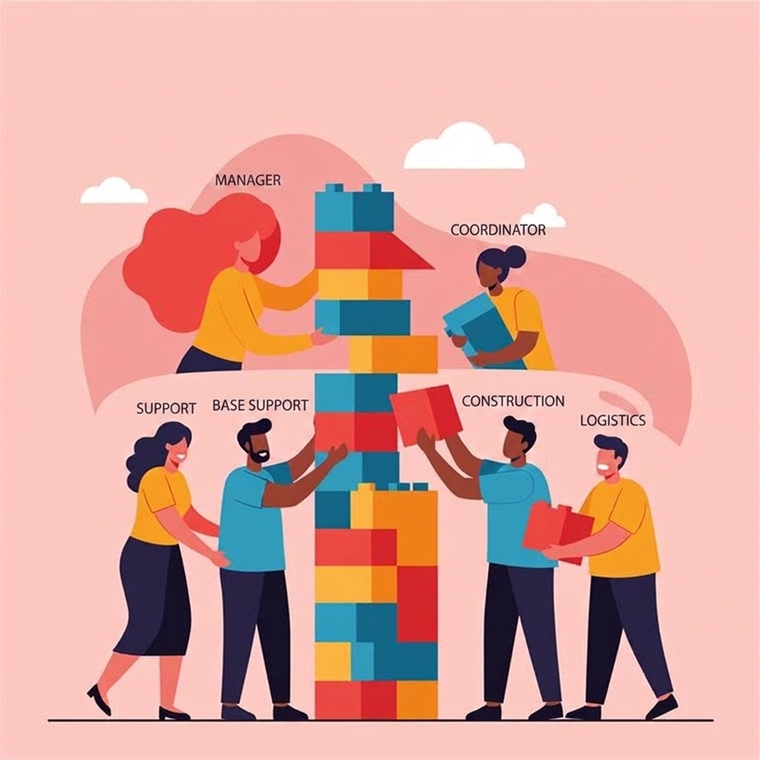
A company’s ability to face, adapt to, and grow in the face of challenges, unexpected changes, and critical events organizational resilience is defined as. It is a dynamic process that allows the organization to transform adverse situations into opportunities for improvement and reinvention. It involves a combination of cognitive, behavioral, and contextual competencies that, together, sustain the ability to act robustly in uncertain environments.
Organizational resilience relies on four core capabilities, which form the basis for its operating mechanism. The first of these is the capacity for anticipation, which concerns the organization’s ability to identify warning signs and vulnerabilities before they turn into crises. This capacity is developed through careful attention to the external environment, active listening to stakeholders, and continuous analysis of risks. The second is the capacity for response, which is reflected in the agile and effective way the organization reacts to adverse situations.
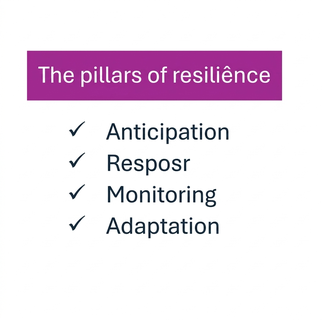
Resilient organizations can make quick decisions, allocate resources with agility, and maintain internal cohesion even under pressure. The third pillar is the capacity for monitoring, which involves the systematic tracking of internal and external processes, contexts, and indicators. This continuous vigilance allows the organization to perceive deviations, adjust course and correct vulnerabilities in a timely manner with predictive actions.
Finally, another important characteristic is the capacity for learning and adaptation, which refers to the organization’s ability to extract lessons from lived events, whether positive or negative, and incorporate these learnings into its systems and routines. It is a necessary competence for strengthening a culture of innovation and continuous improvement (Moura; Tomei, 2021).
Organizational culture
These four capabilities do not operate in isolation. They articulate within a system that relies heavily on two elements: the organizational structure and the prevailing culture . Flexible structures, with clear processes, well-defined roles, and good governance create support for agile responses.
At the same time, an organizational culture that values cooperation, transparent communication, mutual trust, and experimentation strengthens interpersonal connections and the company’s internal cohesion, making it more resistant to external and internal pressures.
To develop and enhance organizational resilience, companies must invest in consistent practices that combine strategic planning and human development. The first step is to conduct diagnostics that identify operational, technological, financial, and reputational vulnerabilities. From there, it is possible to develop contingency plans and conduct simulations that train teams to act in different critical scenarios. Such measures not only prepare the organization for the unexpected but also reveal blind spots and promote internal alignment.
Leadership
Another crucial point is the strengthening of leadership. Resilient leaders are capable of dealing with ambiguity, communicating with clarity, maintaining team engagement, and making difficult decisions with responsibility and empathy. Therefore, training programs focused on adaptive leadership, emotional intelligence, and crisis management should be part of the organizational strategy. Likewise, it is essential to establish listening channels and foster a culture that sees mistakes as opportunities for growth, rather than as reasons for punishment.
Furthermore, resilient companies continuously monitor their internal and external environments, using useful indicators and metrics to support real-time decisions. This allows for agile strategic and operational adjustments, favoring a proactive response to market changes, regulations, or consumer behavior. In parallel, organizational learning mechanisms, such as documenting lessons learned, post-crisis audits, study groups, and sharing best practices, help transform experience into organizational knowledge.
In summary, organizational resilience is much more than a technical response to risks: it is a strategic competence that integrates people, processes, and culture in a continuous cycle of observation, action, and renewal. Companies that develop this competence are better prepared to face turbulences, maintain their reputation and, above all, transform adversities into paths of sustainable growth.
In increasingly volatile and unpredictable political, economic, and social scenario environments, both nationally and globally, organizational resilience ceases to be a competitive advantage and becomes an essential condition for the survival and flourishing of organizations. The next article will present the GERO – Strategic Management and Organizational Resilience framework, aiming to support companies in understanding and developing strategies to become more resilient.
Who wrote this column
Denise de Moura