
Why include reading in your annual goals?

Column

Education

Writing

Research

February 28, 2025

Why include reading in your annual goals?

In addition to favoring neurological and psychological aspects, reading also strengthens critical thinking and broadens people’s worldview


Released in September 2024, the 6th edition of the survey “Portraits of Reading in Brazil”, conducted by the Pró Livro Institute (IPL) and the Ministry of Culture (MinC), indicated that, for the first time since the survey began to be conducted, people who do not read books are the majority in the country. According to the data, 53% of Brazilians had not read even part of a work in the months prior to the survey.

Considering only completed books, the percentage drops to just 27%. Furthermore, the percentage of non-readers is the highest ever recorded in the survey, which began in 2007, and represents a 5% increase compared to the previous edition, conducted in 2019 (figure 1).
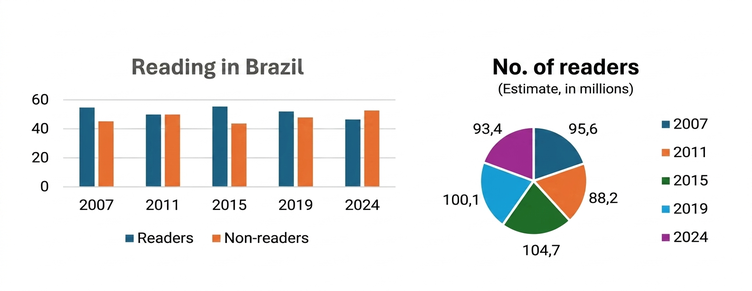
Figure 1. Percentage graph and population estimate
Source: Pró Livro Institute (2024)

The main factors pointed out by non-readers as reasons for not having read were lack of time, not liking to read, and not having the patience to read (figure 2).
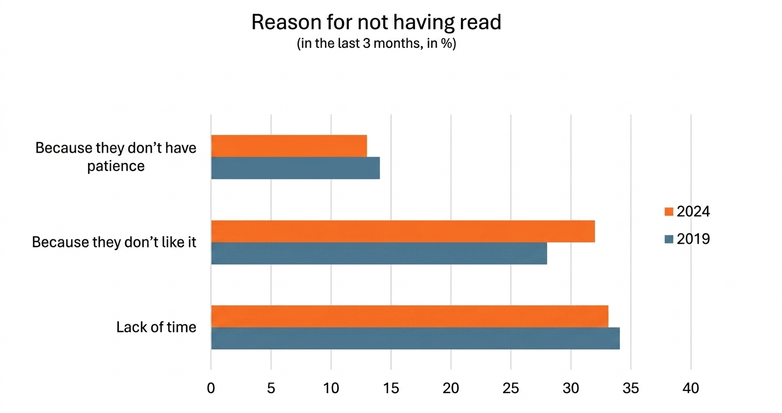
Figure 2. Reason for not reading in the last three months
Source: Pró Livro Institute (2024)

Although lack of time was the main reason cited, survey data showed that internet use and social media during leisure time increased significantly. In 2015, 43% of respondents stated they enjoyed using social media in their free time, a number that rose to 62% in 2019 and 71% in 2024. According to the report “Digital 2024: 5 billion social media users” by We Are Social, Brazil is the third country where users spend the most time using social media, with an average of 3h37 daily.

Designed to be quick and easy to digest, the content produced for social media has come to dominate a large part of people’s choices and activities — determining everything from clothing style and consumption decisions to the so-called lifestyle. The consumption of this quick content greatly impacts people’s concentration ability and makes more complex activities highly challenging.

The expression brain rot(literally translated as “cerebral atrophy”) was coined by cyberculture to define both this type of content and the negative effects it supposedly generates for cognition. So popular was the term that it was elected by Oxford University as the “word” of the year for 2024 and began to appear in the Oxford Dictionary under the definition “the apparent deterioration of a person’s mental or intellectual state, especially seen as resulting from the excessive consumption of material (now particularly online material) considered trivial or not challenging.” The first record of the term, according to Oxford University, was made by Henry David Thoreau in his work “Walden,” in which the author criticizes society’s tendency to devalue complex ideas in favor of simple ones, which would indicate a decline in mental and intellectual effort by individuals (Oxford University Press, 2024).

The brain and synapses

The human brain is formed by a set of neurons that communicate with each other through synapses. Brain development is a process that does not cease, as the brain adapts and reconfigures itself as a new skill or information is learned. This process of adaptation of the brain’s architecture is due to neuroplasticity, which is the brain’s ability to adapt from internal and external stimuli, with neurons forming connections that did not exist before (Jornal da USP, 2023a).

According to Raphael Spera, a doctor at the Hospital das Clínicas of the University of São Paulo’s Medical School, learning is like physical activity for the brain, as it stimulates the organ’s plasticity. As the activity is performed, a large brain area is stimulated to find the most efficient way to carry out such a task, leading to an increase in gray matter volume in the areas stimulated by this activity (Jornal da USP, 2023a).

Regarding reading, the main activated areas are those responsible for processing visual stimuli, symbol recognition, and language processing, meaning it is an activity that stimulates the neuroplasticity of areas responsible for memory, interpretation, vision and concentration (CMSi, 2021). According to Eliane Comoli, a professor at the Ribeirão Preto School of Medicine at USP, the act of paying attention requires cognitive effort (Jornal da USP, 2023b), therefore, for an individual to have greater focus and concentration capacity, it is necessary for them to exercise this competence with activities that stimulate it — such as, for example, reading (Jornal da USP, 2020).

Relationship between reading and writing

Reading plays a significant role in the development of writing. Research reveals that when writing and reading are taught together, both skills are better developed by students. Reading can also function as a tool for improving writing skills because, when reading, the individual comes into contact with a diversity of textual genres, grammatical structures, and a plurality of vocabulary (Ahmed et al., 2023). But, despite these factors being known, it is not yet possible to establish the nature of the correlation between writing and reading skills.

Although many may think otherwise, written production is part of the daily lives of the vast majority of people — including in the context of social networks and everyday communication, with the exchange of messages that occurs in both personal and professional spheres. Writing is the process of transforming ideas into texts and involves interpretation, ordering and connection of words based on the linguistic and grammatical criteria of a language. A text that lacks clarity can generate confusion and the spread of incorrect information. In scientific and business contexts, the damage caused by confusions of this nature can generate significant impacts.

Every scientific discovery needs to be published in journals to be validated and disseminated. This makes writing part of researchers’ daily routine, regardless of the area they work in. Building a cohesive, organized, and objective text is essential to ensure clarity in transmitting the information contained therein, as well as to facilitate understanding for both other researchers and people seeking knowledge on the subject (read more about the topic by clicking on the column “Where is the clarity?”, of the E&S Magazine.

A survey conducted in 2019 by the National Association of Colleges and Employers, in the United States, indicated that 82% of the interviewed employers considered that written communication was the most valued skill, ahead of problem-solving skills or teamwork ability (Research Rockstar, 2020).

According to Jeff Bradford, former member of the Forbes Agency Board and president of Dalton Agency’s Nashville office, companies’ concern with the quality of employees’ writing is linked to the fact that they consider communication a key factor for success in any business, since persuasion is a fundamental part of negotiations (Forbes, 2019). And, although communication can occur in various ways — videos, conversations, calls, illustrations, advertisements, etc. —, all of them depend on writing skills, as, being a cognitively complex activity, it requires the coordination of a series of higher-order thoughts for it to be well executed.

It is important to remember that reading is a habit that, like others, can be acquired even by those who are not familiar with the activity. An essential tip for including reading in your routine is to set aside a daily time for it, which can start with 10 minutes and gradually increase. At this moment, it is important that distractions such as cell phones, computers, and televisions are eliminated, which increases concentration capacity. The habit of reading can also be an important ally in reducing the use of social media, the excess of which can cause problems such as anxiety, depression, poor sleep quality, low self-esteem, and even lead to a fictional elaboration of reality (Jornal da USP, 2021). Read more about social media and self-esteem by clicking on the column “Sem filtro: reflexões sobre autenticidade, autoestima e o impacto das redes sociais”, from Revista E&S.

Reading, whether it is a complex work or done as a hobby, is an activity that presents numerous benefits for human beings. In addition to neurological, psychological, and professional aspects, reading also allows for the strengthening of critical thinking and the broadening of people’s worldview. In a context like the current one, with the spread of fake news and social media algorithms that surround people with topics of interest to ensure they do not abandon the activity, broadening critical thinking takes people out of their comfort zone and gives them the necessary tools to discern between what is true and what is not.

To access the references of this text click here.

This content was produced by:

Jéssica Zambello

LinkedIn

She holds a degree in Portuguese Language and Literatures of the Portuguese Language from the Federal University of Rio de Janeiro (UFRJ) and a master’s degree in Portuguese and African Literatures of the Portuguese Language from the same institution. Since 2024, she has worked as a proofreader and text preparer at Editora Pecege.

Who wrote this column

Editora Pecege

Produz materiais nas áreas de agronegócios, educação, gestão e tecnologia, prestando serviços de padronização, revisão, elaboração de ficha catalográfica e produção gráfica. Gerencia a publicação das revistas Quaestum (científica) e Estratégias e Soluções – E&S – (técnico-científica) e publica livros em diversas áreas.

You may also like

October 02, 2026

Determinants of supermarket location in São Paulo

A study investigated the determining factors for supermarket location in the state of São Paulo, with the objective of investigating the factors that explain the presence and expansion of these establishments, considering socioeconomic, demographic, and market dimensions. Data from the 2010 and 2022 Demographic Censuses of IBGE and information from the National Registry of Legal Entities of the Federal Revenue of Brazil were used to build a georeferenced database. A Random Forest classification model was applied, adjusted by grid search with cross-validation, prioritizing the recall-macro metric due to the imbalance of the dependent variable, which represented the presence or absence of supermarkets within a 50-meter buffer. The results indicated that supermarket location is strongly associated with demographic, income, and population characteristics in the surrounding area. The analysis of variable importance showed that sociodemographic factors, such as elderly literacy, household income, and the presence of other food establishments, exerted significant influence, especially in the immediate vicinity. The findings reinforced the hypothesis that the spatial distribution of supermarkets is not random, being conditioned by socioeconomic characteristics and the commercial structure of the territory, offering subsidies for business decisions and urban planning.

Keywords: Spatial Analysis; Machine learning; Expansion; Commercial location; Supermarkets.

Neuroscience And Learning In Education

October 02, 2026

Anti-Racist Education: Inclusive Educational Practices and Social Development

Antiracist education, understood as a structuring axis of inclusive education and social development, was investigated in the Brazilian context. The study aimed to identify and analyze, based on legal documents and teachers’ perceptions, educational practices capable of promoting antiracism in school and society, and how the implementation of Laws nº 10.639/03 and nº 11.645/08 contributed to social justice. A qualitative and documentary approach was adopted, with analysis of educational legislation, curricular guidelines, institutional reports, and academic literature. Complementarily, a semi-structured questionnaire was applied to 295 Basic Education teachers. The data were evaluated quantitatively and qualitatively, through thematic content analysis, and validated with bibliographic studies. The results revealed a paradox: despite a robust legal framework, the implementation of antiracist policies proved fragile and sporadic, with a lack of teacher training, adequate teaching materials, and monitoring. Significant educational inequalities between white and black students were found to persist, and most teachers acknowledged the occurrence of racism in schools, but without clear institutional protocols. Neuroscientific analysis showed that racism negatively impacts students’ cognitive and emotional development. It was concluded that antiracist education is central to quality education, requiring political commitment, public investment, and intersectoral articulation. The integration of Neuroscience in teacher training and the production of qualified materials are crucial to strengthen the school’s role in building a more just and inclusive society.

Keywords: Social Development; Antiracist Education; Social Justice; Law 10.639/03; Inclusive Educational Practices.

Neuroscience And Learning In Education

October 02, 2026

Paths of Inclusion: Perceptions of Parents and Teachers on the Schooling of Students with Dual Exceptionality in the Brazilian Context

Dual Exceptionality, characterized by the coexistence of High Abilities/Giftedness and neurodevelopmental disorders, represents a complex phenomenon that challenges traditional identification and schooling models. The study aimed to understand the perceptions of parents or guardians, teachers, and other education professionals regarding the schooling of students with Dual Exceptionality in the Brazilian context, investigating challenges, pedagogical strategies, and possibilities for inclusion based on equity. The research adopted a qualitative, exploratory, and descriptive approach, and collected data through an online, voluntary, and anonymous questionnaire answered by 25 participants. Discursive data were analyzed using thematic content analysis. The results indicated that knowledge about the topic is often built from personal and professional experiences, revealing gaps in systematic training. Difficulties were identified in identifying these students, in teacher training, and in implementing individualized educational plans, pedagogical flexibility, and curriculum enrichment. Socio-emotional repercussions, such as frustration and low self-esteem, were reported. However, some schools demonstrated inclusive practices based on equity, articulating specific needs and potentialities. Although the results do not allow for generalizations, they highlighted the need to strengthen professional training and the articulation between school, family, and specialized services. It was concluded that the inclusion of students with Dual Exceptionality requires practices that simultaneously recognize their difficulties and potentialities, ensuring equitable conditions for participation, learning, and development.

Keywords: Human development; Teacher training; School inclusion; Neurodivergence; Pedagogical practices.

October 02, 2026

Data Transformation into Strategy: Applied Research for Ecotourism Operation Optimization

The growing demand in ecotourism in Minas Gerais has driven the search for business intelligence to transform customer data into strategic information. The study aimed to structure a data science pipeline to collect, segment, and classify the customer base of an ecotourism operation, in order to optimize marketing actions and anticipate market movements. An exploratory, quali-quantitative research was conducted through a case study. 2,777 transactional records from an ecotourism company, referring to January 2024 to December 2025, were used. The methodological process involved automated data collection (Google Sheets API), processing and enrichment (ETL), validation, and creation of RFM (Recency, Frequency, and Monetary Value) attributes. Dimensionality reduction via PCA and K-Means clustering was applied, with the number of clusters defined by the Elbow method and Silhouette Score. The results were validated with DBSCAN and K-Medoids. The results revealed the identification of three behavioral customer segments: “Loyal”, “Low Value”, and “Potential”. The “Loyal” segment represented the highest accumulated economic value, while the “Potential” segment stood out for its high average ticket and potential for conversion into recurrence. The integration of data analysis techniques proved to be a robust and replicable method for generating intelligence in ecotourism. It was concluded that the structured data science pipeline enabled the behavioral segmentation of the customer base, the statistical validation of the groups, and the creation of a predictive system for new buyers, providing subsidies for data-driven strategic decisions and future analyses.

Keywords: Clustering; Business intelligence; Machine Learning; Customer segmentation; Decision making.

October 02, 2026

Classification of defaulting customers using supervised machine learning techniques

The risk of default in credit operations demanded analytical approaches to anticipate losses. This study comparatively evaluated the performance of supervised machine learning models in classifying defaulting customers in credit card operations. The public dataset “Default of Credit Card Clients” from the University of California Irvine was used, with 30,000 observations and class imbalance. The algorithms Logistic Regression, Random Forest, and Extreme Gradient Boosting were employed. The imbalance was addressed by assigning weights to the classes, and model optimization occurred with the RandomizedSearchCV method, prioritizing sensitivity. Cross-validation results indicated that the Extreme Gradient Boosting model showed a higher capacity for identifying the defaulting class and better discriminatory performance, followed by Random Forest and Logistic Regression, with a sensitivity of 0.8250 and an AUC-ROC of 0.7844 for XGBoost. Interpretability analysis, conducted by the Shapley Additive Explanations (SHAP) technique, highlighted the predominance of variables associated with payment behavior, especially the history of delays. It was concluded that tree-based models, particularly boosting techniques, proved to be more suitable for capturing complex patterns in the data, configuring themselves as consistent alternatives for credit risk management.

Keywords: Machine Learning; Credit Card; Classification; Extreme Gradient Boosting; Credit Risk.

October 02, 2026

Sentiment Analysis on Brazilian Banks on Twitter/X: Comparison between Traditional and Digital Institutions

A study analyzed public perception of Brazilian financial institutions on the Twitter/X platform, highlighting the importance of sentiment monitoring on social networks for understanding reputation and customer experience in the banking sector. The objective was to compare user perception of the image and reputation of traditional and digital banks, based on the sentiment patterns identified in the analyzed manifestations, seeking to identify structural differences between these groups. The methodology was based on the analysis of 1,096 tweets collected between November 2022 and June 2023. Two complementary sentiment analysis approaches were used, the sum and the average of labels, to capture the majority sentiment and nuances of perception. Additionally, the Market Profile Model, with indicators of emotional reputation, reputational risk, neutrality, and polarization, and the Banking Clustering Model, which allowed grouping institutions according to perception patterns, were developed. The results indicated a predominance of neutral and negative sentiments, a higher volume of interactions in digital banks, and structural differences in the emotional intensity of perceptions, with greater stability in digital banks and greater polarization in traditional ones. It was concluded that the combination of analytical and statistical techniques contributed to an in-depth understanding of institutional image in the digital environment, demonstrating the importance of data-driven reputation management strategies.

Keywords: Digital banks; Traditional banks; Data modeling; Opinion mining; Social Networks.

October 02, 2026

Optimization of annual budget planning through project management methodologies

The Annual Budget Planning (POA) is a crucial process for translating organizational strategy into operational and financial goals, but it frequently faces deadline pressures, interdepartmental dependencies, and the repetition of habitual expenses. The study aimed to analyze how the combined application of project management practices and Zero-Based Budgeting (OBZ) can optimize the POA. To this end, a case study was developed in the Brazilian operation of a publicly traded company in the beverage sector, using documentary research of its 2023 results report and an anonymous questionnaire applied to 47 respondents. Documentary analysis indicated growth in net revenue, expansion of gross profit and adjusted EBITDA, and contained advancement of selling, general, and administrative expenses, suggesting cost discipline and operational leverage. The complementary survey revealed a high perception of cascading effect on the schedule, strong support for defining cost package owners, and a preference for technical justification of expenses, in addition to demand for controlled flexibility after the baseline definition. It was concluded that structuring the POA as a project, associated with the rigor of OBZ, increased the process predictability, reinforced accountability for expenses, and broadened the coherence between budgetary execution and economic-financial performance.

Keywords: Cost Control; Operational Efficiency; Zero-Based Budgeting; PMBOK; Beverage Sector.