Innovation
Technology
Agricultural Technology
March 27, 2024
The succession of Tupã is underway
Cray XT-6, the National Institute for Space Research’s supercomputer, will be replaced by 2026
Were it not for the protagonist’s name, the sentence could perfectly be on the headline of a business page. However, instead of the Tupi-Guarani mythological entity, we are talking about the Cray XT-6, the supercomputer of the Center for Weather Forecasting and Climate Studies (CPTEC), an organ of the National Institute for Space Research (INPE). Since 2010, it has been responsible for weather forecasting in our country.
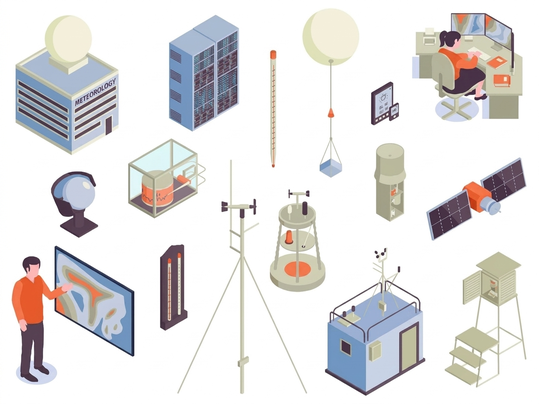
In the beginning of its operations, Tupã (as it was named) was one of the most powerful supercomputers in the world. According to the Top500.org website, the equipment ranked 29th on the list and was the third most powerful in the world dedicated to weather forecasting. Its capacity was so great – 205 TFlops – that, according to an estimate by professor Plinio Thomaz Aquino Junior, coordinator of the Computer Science course at Centro Universitário FEI, one minute of its processing would be equivalent to a week on a good current laptop (equipped with an i7 processor, 8 GB of memory, and SSD storage).
Installed in Cachoeira Paulista, in the interior of São Paulo, almost next to Rodovia Presidente Dutra, Tupã spreads over an area of 100 m2 and, when it was in full operation, consumed about R$ 5 million annually in electricity between processing and cooling.
The importance of its data processing is shown by the list of entities that receive information generated by it: Ministry of Mines and Energy, Ministry of Agriculture, National Electric System Operator (ONS), National Water Agency (ANA), National Center for Natural Disasters (CENAD), National Center for Monitoring and Alerts of Natural Disasters (CEMADEN), Directorate of Hydrography and Navigation of the Navy (DHN), and Department of Airspace Control of the Air Force (DECEA), in addition to several state meteorology centers.
The Brazilian way
One of the most striking characteristics of this type of machine is its quite short lifespan, estimated between 4 and 6 years, even more considering its cost, around R$ 50 million at the time (equivalent to R$ 110 million today). In other words, it was common knowledge that it would need to be replaced in the mid-2010s. The original maintenance contract with the manufacturer was for five years, but it was possible to negotiate an extension for another two years. At the end of this period, in 2017, INPE proposed the purchase of a new machine with a processing capacity 30 times greater than Tupã’s, for US$ 150 million. The proposal was not approved.
Without a budget to buy a new supercomputer (remembering that its replacement was not an unexpected fact), the famous Brazilian “jeitinho” came into play. In 2018, for US$9.6 million (a little over US$12 million updated, about 10% of the updated cost of the supercomputer), an auxiliary computer was purchased, a Cray CX-50, with processing capacity slightly superior to Tupã’s: 303 TFlops. It was coupled to the original machine, allowing work to be divided between the two pieces of equipment.
At that time, the decision to deactivate six of Tupã’s 14 cabinets drew attention. In addition to seeking a reduction in electricity consumption, this measure aimed to preserve components so that they could be used as spare parts for eventual maintenance needs, since Cray stopped supplying them at the end of the maintenance contract extension. This reduced the machine’s processing capacity by almost 30%.
In an attempt to extend Tupã’s lifespan by two more years, until 2020, two other Cray CX-50 machines were acquired, one in 2019 and the other the following year. In parallel, in an attempt to minimize the impacts of Tupã’s end-of-life, a technical cooperation agreement was signed with the United Nations Development Programme (UNDP).
For US$ 729,000 (less than 10% of the cost of the Crays!), it provided for the supply of complementary equipment that could perform some of the tasks that were still done by the original supercomputer. Its cost shows that it was a palliative solution. This equipment arrived in mid-2021 and helped to slightly reduce the workload of the overloaded Tupã.
The solution – hardware and software
In September 2023, the release of US$ 200 million was announced for the purchase of a new supercomputer that will definitively replace Tupã and its aggregates. Its complete implementation will happen in four phases: the first was planned for 2023, and the last, for 2026.
There is almost no information in the press about this new machine, which leads us to suppose that the bidding process is not yet finalized. In any case, INPE has already announced that artificial intelligence and machine learning are part of the solution, as well as a solar-powered energy supply system – the first in the world, according to Gilvan Sampaio, INPE’s general coordinator for Earth Sciences. Furthermore, according to Sampaio, its implementation is planned to be modular, with new modules featuring increasingly advanced technology being incorporated over ten years, which will extend its useful life and allow for the incorporation of new technologies still under development.
The stated intention is that this new machine will be capable of making increasingly accurate weather forecasts, even indicating the start and end of rain within minutes.
For all this to happen, a new model for numerical climate prediction has been developed by Brazilian scientists since 2021. This model was named MONAN (model for ocean-land-atmosphere prediction or model for ocean, land surface, and atmosphere prediction). It has been developed by a committee composed of representatives from various entities, including laboratories, universities, Armed Forces, and ministries: National Institute for Space Research (INPE), National Institute of Meteorology (INMET), National Institute of Amazonian Research (INPA), National Laboratory of Scientific Computing (LNCC), Ceará Foundation for Meteorology and Water Resources (FUNCEME), Federal University of Campina Grande (UFCG), Federal University of Mato Grosso do Sul (UFMS), Federal University of Pará (UFPA), Federal University of Rio de Janeiro (UFRJ), Federal University of Rio Grande (FURG), University of São Paulo (USP), Management and Operational Center of the Amazon Protection System (CENSIPAM), Brazilian Army (EB), Brazilian Air Force (FAB), Brazilian Navy (MB), and Ministry of Science, Technology, and Innovations (MCTI).
Also participating are the international entities National Meteorological Service (SMN), from Argentina, and World Meteorological Organization (WMO). This group of specialists is divided into specialized subcommittees. Each subcommittee develops a specific mathematical model, which will be incorporated into the new system. The development plan for these models covers a period of five years, extendable for another five years, with the following themes:
- atmosphere;
- ocean and continental and maritime ice;
- continental surfaces and soils;
- space weather;
- surface and subsurface hydrology.
The Integrated Modeling System subcommittee was tasked with considering the system as a whole and envisioning how its different parts will integrate. In turn, attentive to data acquisition, system operation, and overall performance, there are subcommittees for High-Performance Processing and Code Quality, Earth System Data Assimilation, Advanced Data Assimilation Methods and Artificial Intelligence Applications, and Weather and Climate Forecast Pre- and Post-processing Methods.
Similarly to the hardware, the various modules of the new model are being developed and becoming functional over time. The first to be deployed is the atmosphere module, which will be followed by the ocean and continental and maritime ice modules. The atmosphere module will allow for short-term forecasts, of a few days. With the second module, which is expected to become operational within four years, it will be possible to anticipate climate events months in advance.
A national model
The importance of developing a national mathematical model becomes evident when considering a few critical factors: the size of Brazil, with its continental dimensions, and the variety and specificity of its geography and biomes.
For example, the Cerrado and the Pantanal are typically Brazilian biomes. The former presents a great variability of vegetation cover, ranging from pastures to something very similar to a tropical forest. In models developed by other countries, it is uniformly represented as an African savanna. As for the Pantanal, there is nothing similar in the world and, consequently, in any climate model developed in other countries.
Another typically Brazilian factor that unfavorably influences the climate is deforestation. It significantly alters the geomorphic characteristics of areas that originally had vegetation cover. As Professor Paulo Artaxo, from the Physics Institute of USP, explains, one of the main consequences is the reduction of the natural cooling effect provided by forests through biogenic volatile organic compounds, which are naturally emitted by plants during their metabolism.
One of the most common ways to deforest in Brazil is through burning. In addition to heat, they generate a large amount of particulate matter (black carbon) that hinders the vertical movements of air masses (convection), as described by Professor Alexandre Correia, also from the Institute of Physics at USP. This phenomenon harms the freezing of water in clouds and unfavorably affects the formation of rain. Large quantities of CO2 and methane are also generated, in addition to changes in surface albedo (part of the radiation reflected back into space).
The need for a supercomputer
Beyond the criticality of the forecasts themselves, a supercomputer accelerates the development of the weather forecasting mathematical model itself. This is because simulations can be performed more quickly, enabling a more effective comparison with real phenomena and allowing for faster adjustments and new tests.
After being developed and adjusted, a weather forecasting model as complex as the one being developed will bring many positive impacts. The speed and accuracy of long-term and short-term forecasts are fundamental for agriculture, for the generation of electric power, for the water resource management, for the environment itself, and for the protection of the population against extreme events, for example.
In agriculture, good weather forecasting is essential for everything from planting to harvesting, including soil preparation and the application of agricultural pesticides that protect crops against pests. The importance of agribusiness in the Brazilian economy highlights the criticality of accurate weather forecasts: according to IBGE, the sector represented more than 27% of the GDP nationally in 2023, which, in absolute terms, was equivalent to Argentina’s GDP.
Regarding the generation of electric power, data from 2023 released by the Electric Energy Commercialization Chamber (CCEE) indicate that more than 71% of the 70.2 thousand average megawatts (MWm) generated during that year came from hydroelectric plants. Furthermore, it is worth highlighting Brazil’s pioneering role in the use of renewable energy sources: more than 93% of all electric power generated in the country in that same year came from renewable sources.
Regarding what directly affects the population, it is not necessary to go far back in time to recall the water crisis experienced in the Southeast of the country between 2013 and 2014. The reservoirs that supply water to the city of São Paulo and the interior of the state reached critical levels, leading to the implementation of rationing in the capital and dozens of other cities. In 2023, the National Center for Monitoring and Alert of Natural Disasters (CEMADEN) documented 1,161 natural disasters, most of them related to river overflows and landslides. This represents an average of more than three events per day. It was the largest annual quantity recorded since the beginning of records in 2011, and the toll was 132 deaths, 9,000 injured, and more than 74,000 homeless people.
A happy ending?
This is what we all expect: that this hardware-software set will re-empower Brazil in terms of climate predictions and climate studies, maintaining the prominence the country has achieved through the joint efforts of many researchers and scientists. One of its highlights occurred in 2014, when the Brazilian Earth System Model (BESM), also developed by INPE, was included in the 5th Assessment Report of the Intergovernmental Panel on Climate Change (IPCC).
Who wrote this column
Ciro Barbieri da Cunha