
The extinction of creativity

Column

Education

Innovation

Artificial Intelligence

July 29, 2024

The extinction of creativity

Generative artificial intelligence can be an ally of good ideas, if used with common sense
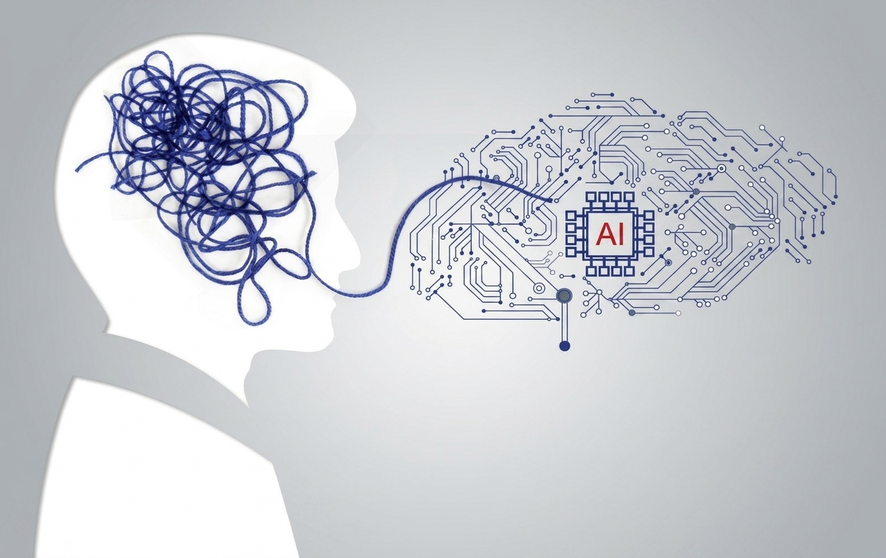
In June 2024, the premiere of the film “The Last Screenwriter” (O Último Roteirista, in free translation) was canceled at a cinema in London, England. The reason was the public reaction to the fact that the script for the feature had been created by an artificial intelligence (AI): ChatGPT.

Open AI’s chatbot has been dividing opinions since its inception. Launched in November 2022, it had reached the mark of 100 million users in two months, which at the time was considered a historic record. In the wake of ChatGPT, several other generative artificial intelligence models were born, with which it became possible to create texts and images with just a command, without creative effort.

The result was the emergence of an avalanche of content conceived by digital “minds” in all sorts of scenarios, including the scientific one. In 2023, according to a report published in the English newspaper The Guardian, more than 10,000 articles had to be retracted in various scientific journals worldwide due to the improper or inadequate use of AI at some point during the preparation of the manuscripts, a fact disclosed in the column AI in scientific writing: advances and ethical implications, published by Revista Estratégias e Soluções (E&S), from Editora Pecege.

This environment stimulated Turnitin, creator of a detection tool for similarity (plagiarism), to recently launch a product to recognize texts written by artificial intelligence. Currently in the refinement phase, the solution is not yet available in Brazil.

Concern spread across various sectors, especially in the area of education. Fears involving ethics, dependency and even damage to creativity were expressed everywhere.

Is the era of creativity extinction arriving? The grammarian and Portuguese professor Pasquale Cipro Neto does not believe in this possibility. “I don’t say it’s impossible, because, at this stage of life and of all the shameful things that happen on the planet, everything is possible (‘Everything is possible, only I am impossible,’ says Drummond in ‘Secret’). But it seems unfeasible to me that a machine feels what a person feels, that translates feelings, reactions, facts as a person does. I can’t imagine a machine writing something like ‘Tecendo a Manhã’ (by João Cabral de Melo Neto), for example. Deep down, deep down, my desire is to tell stupidity, I mean, artificial ‘intelligence’ to lick soap (it’s not exactly what I’d like to say, but there are children in the room),” Pasquale stated, humorously, to Revista E&S.

A study on this matter, published in July 2024 in the journal Science Advances, concluded that AI tools favor creativity individual of the author, but, as a side effect, produce a kind of leveling collective.

“We found that access to generative AI ideas causes stories to be rated as more creative, better written, and more enjoyable, especially among less creative writers. However, stories produced with the help of AI are more similar to each other than those written only by humans,” says the abstract of the work.

The Pecege Institute Pecege recently held the “Artificial Intelligence Training: Prompt Engineering” course, taught by Alura, to update staff on technological innovations. The course instructor, Alexandre Aquiles, highlighted that generative AIs are “excellent for text refinement tasks”.

According to him, activities such as correcting spelling, adapting grammar and syntax, adjusting the “tone of voice” for specific target audiences and channels (blogs, social media, books), looking for synonyms, translating or structuring the text into sections can gain more agility with these tools.

“Generative AIs also help to generate illustrations and transcribe audio to text very efficiently,” highlighted Aquiles, while also pondering the importance of using them only as aids, a condition under which they have the potential to amplify creative capacity. “Used in generating ideas and seeking new perspectives, AIs are a stimulus to creativity, causing people to focus on broader aspects of the text and even overcome creative blocks,” he suggests.

“It is important to emphasize that [using the tool this way] works best for people with more experience in text creation. Less mature individuals may have their creative potential development hindered,” he said. The table below shows some tools that Aquiles recommends to help with specific activities.
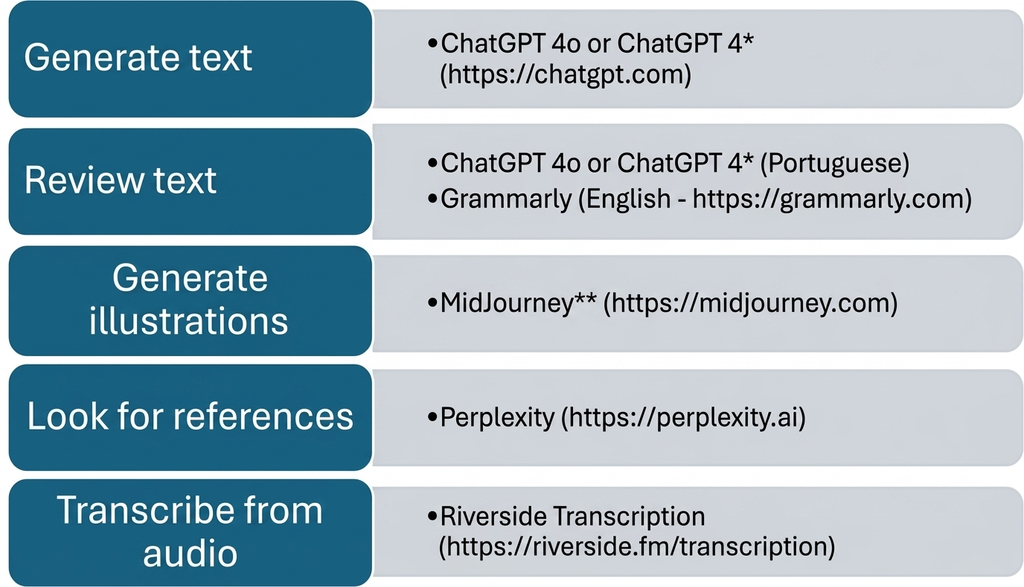
*Paid version **Paid tool 

However, it is essential to pay attention to the output generated by the models, because generative AI tools for text, known as LLMs (Large Language Models), do not verify if the content produced is factually correct. “This can generate ‘hallucinations’, the technical term for text that contains incorrect data, but is correct in its structure,” explains Aquiles.

According to him, a large part of conversational interfaces, such as ChatGPT and Google Gemini, contain an integration layer with tools for search like Bing and Google, which show the origin of the information, reducing the occurrence of hallucinations. “Gemini currently has a check answer button, which shows the sources for each piece of generated text.”
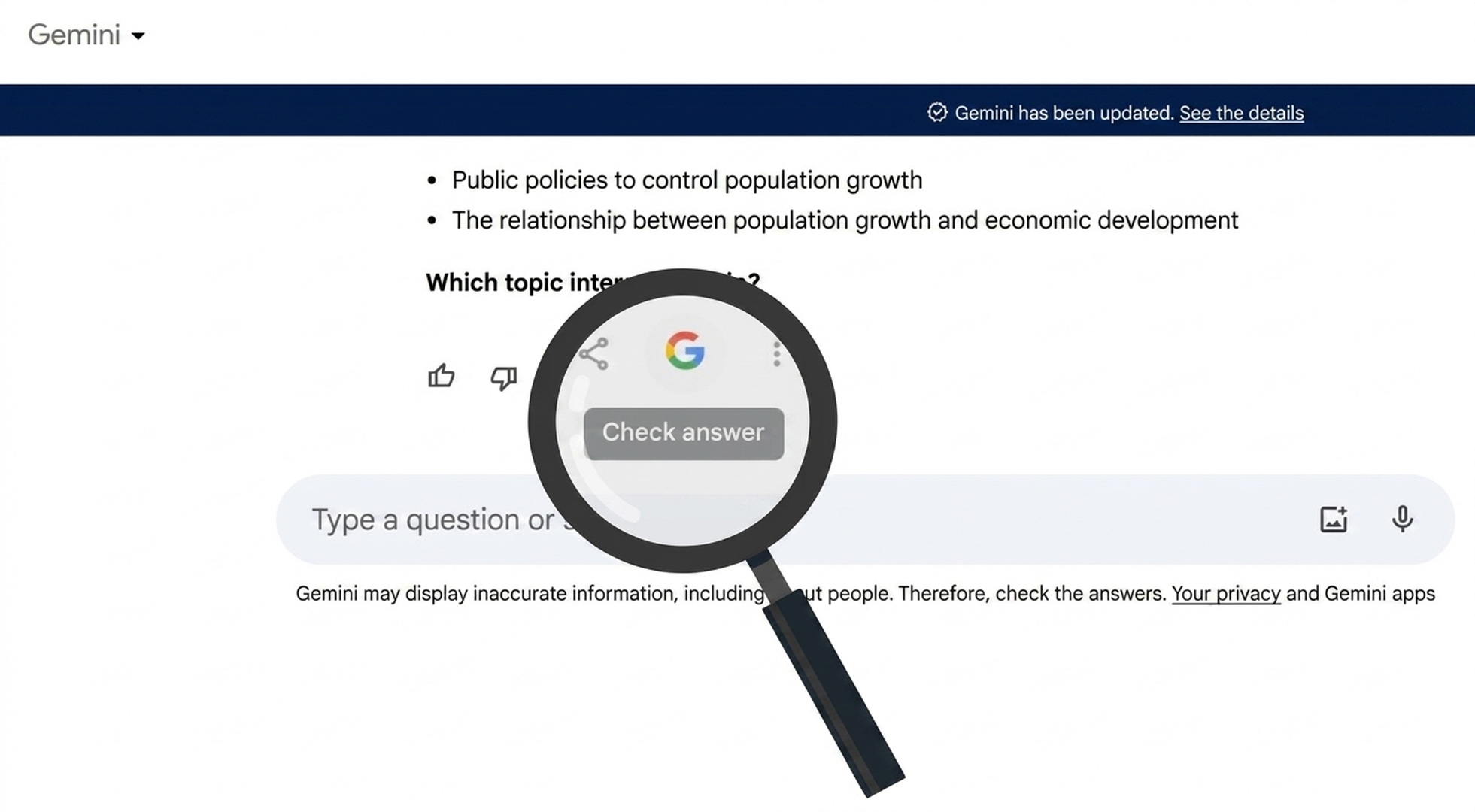
Gemini button to check answers

The Pecege design ops manager, Lucas Tangi, one of the training participants, considers artificial intelligence an ally in idea generation. “I see AI as a tool that enhances creativity.” According to him, the accessibility of generative AIs, mainly through prompts(command phrases that initiate the “conversation” with the model), democratizes the use of artificial intelligence, “benefiting users with less technical knowledge and, at the same time, boosting those who master programming.”

For Tangi, the advancement of generative AIs and new technologies makes creativity an even more important skill for programmers, who will need to be increasingly creative to request, review, and seek solutions in conjunction with digital tools.

Neuroscience

It is still too early to measure the results of all this movement, but one thing is certain, at least in the eyes of neuroscience: creativity can be exercised. Therefore, it is permissible to conclude that the effects of using AI as an assistant in text production will depend on how the tools are used, as Aquiles said.

If they are indeed treated only as auxiliaries, they can function as catalysts and enhancers of ideas. To this end, the recommendation is to avoid excesses. Brazilian neurologist Miguel Nicolelis makes a warning in the book “O verdadeiro criador de tudo: como o cérebro humano esculpiu o universo como nós o conhecemos” (Ed. Planeta): “Continuous coexistence with technology and computers can affect the functioning of the human brain. This scenario will manifest itself all the more quickly as our brain is deceived, convincing itself that greater rewards would be obtained if it ceased to express the most celebrated attributes of the human condition.”

For Nicolelis, who teaches and leads studies at Duke University in the United States, the human brain is capable of “an almost unlimited expression of creativity, intelligence, intuition, discernment, and wisdom that exceed, by many orders of magnitude, the performance of any computer”. Therefore, in another passage of the book, he attributes to the organ “a unique position as a computational system… By definition, in contrast to digital computers, neither the operation nor the products of this ‘organic computer’ can be simulated or reproduced by a digital algorithm”.

SUGGESTED READING
1 – “ChatGPT for Everyday Use” (Bruna Escudelario – Casa do Código).
It offers a perspective on how to use it daily, from summaries to creative writing.

2 – “Artificial Intelligence and ChatGPT” (Fabrício Carraro – Casa do Código).
It provides a broader view of Generative AI; delves into the functioning of the
tools and teaches how to create quality prompts using the technique
of Prompt Engineering.
Source: Alexandre Aquiles

To access the references of this text click here

This content was produced by:

Renata de Gáspari Valdejão Almeida

LinkedIn

Assistant editor of the Strategies and Solutions (E&S) Magazine, from Pecege Publishing House. She is a journalist, screenwriter, and researcher. She worked for 16 years at Folha de S.Paulo, as a writer and reporter, and collaborated with several national circulation magazines, such as Época Negócios, Pais & Filhos Magazine, and Superinteressante. She worked in the communication area of the USP School of Medicine and was the Audiovisual Coordinator of UNA-SUS/UFMA, in Maranhão.

Who wrote this column

Editora Pecege

Produz materiais nas áreas de agronegócios, educação, gestão e tecnologia, prestando serviços de padronização, revisão, elaboração de ficha catalográfica e produção gráfica. Gerencia a publicação das revistas Quaestum (científica) e Estratégias e Soluções – E&S – (técnico-científica) e publica livros em diversas áreas.

You may also like

October 05, 2026

Prediction of default on tax debt installments

The installment payment of tax debts constitutes a relevant fiscal recovery instrument, allowing taxpayers to regularize their obligations in installments, while exposing the tax administration to the risk of cancellation due to non-compliance. The objective was to develop and evaluate machine learning models for predicting the cancellation of ICMS installments, aiming to support proactive collection strategies. A database of historical installment plans from the Secretariat of Economy of the State of Goiás was used. Decision Tree, Random Forest, and XGBoost algorithms were trained and compared, with hyperparameter optimization via GridSearchCV and evaluation by confusion matrices and ROC curves. XGBoost showed superior performance, with an AUC of 0.869 for the model that included the variable Number of Installments and 0.778 without it, highlighting the centrality of this feature. Applied to the active portfolio of R$ 2.752 billion, the model identified that 92.9% of the total value presented a risk of cancellation equal to or greater than 50%, with R$ 1.488 billion concentrated in extreme risk installments, a result consistent with the historical behavior of cancellations in the initial phases of agreements. The results demonstrated that the adoption of predictive models in the management of tax installments enables the transition from a reactive stance to a preventive approach, with the potential to substantially increase fiscal recovery.

Keywords: Tax administration; Machine learning; Binary classification; Fiscal recovery; XGBoost.

October 05, 2026

Interactive system for generation and comparison of predictive models of monthly rural credit concessions

The ability to predict the future volume of rural credit concessions is essential for efficient resource allocation and setting disbursement targets. The work aimed to develop an interactive web platform to generate, analyze, and compare predictive models of time series of rural credit concessions, covering the period from March 2011 to January 2026. Econometric techniques (ARIMA, SARIMA, SARIMAX) and linear regression were confronted with machine learning methods (Random Forest, XGBoost). The methodology included collecting monthly data on rural credit concessions, macroeconomic variables, and agricultural commodity indicators, followed by exploratory analysis and platform development in a client-server architecture with Python and web technologies. The platform’s application to rural credit forecasting in three scenarios (total, individual, and corporate) evaluated by temporal cross-validation revealed that no technique proved universally superior. Linear regression models with seasonal lags showed the most consistent results across all folds, maintaining stable performance even in periods of level shift, where decision tree algorithms registered significant degradation. The corporate scenario showed low predictability in all models. The results demonstrated that the platform fulfilled its objective, revealing that algorithmic complexity does not guarantee predictive superiority and that the choice of model should be guided by the series’ characteristics and the application context.

Keywords: Agribusiness; Forecasting; Machine learning; Predictive modeling; Time series.

October 05, 2026

Music festivals as a platform for brand engagement with Gen Z consumers

Music festivals have consolidated themselves as complex experience ecosystems, where the convergence between physical entertainment and digital narratives redefines brand positioning strategies. In the post-pandemic scenario, the events sector showed a significant recovery, establishing itself as a strategic platform for engaging with Generation Z, an audience that prioritizes authenticity and shared experiences over traditional advertising formats. The study aimed to analyze how brand activations in these environments impacted the engagement of consumers born between 1995 and 2010. The methodology was characterized by a quantitative and descriptive research, conducted through the application of a structured questionnaire that obtained the participation of 163 respondents. The results showed that experience marketing strategies, especially those that integrated aesthetic attributes and digital sharing potential, presented the highest averages of positive perception. It was found that brand trust was strengthened after successful physical interactions, revealing a symbiosis between the emotional environment of the event and the young person’s digital journey. In contrast, the perception of authenticity mediated by digital influencers obtained the lowest agreement index. It was concluded that Generation Z’s engagement was enhanced by hybrid strategies that allowed consumers to take on the role of protagonist in building the brand narrative, prioritizing the authenticity of direct experience.

Keywords: Consumer behavior; Cultural consumption; Transmedia strategies; Digital influencers; Experience marketing.

Compliance And Esg

October 05, 2026

Compliance to mitigate and prevent theft in construction sites: Integrity program applied to civil construction

Thefts at construction sites represent a significant challenge for the civil construction industry, generating financial, operational, and reputational impacts. In this context, integrity and compliance programs have emerged as management tools to strengthen governance and mitigate risks. The study aimed to propose a compliance program applied to civil construction, focused on preventing and mitigating thefts at construction sites. A qualitative approach, with quantitative support, was adopted, developed in two stages. Firstly, a field survey was conducted between February and March 2026, applying an electronic questionnaire to industry professionals. Subsequently, a fictitious case study was developed, based on the author’s professional experiences, integrating the research results with risk management and governance practices. The results highlighted the importance of implementing compliance programs in the sector and indicated that the combination of control mechanisms, structured processes, team training, reporting channels, continuous monitoring, and strengthening of an ethical culture can reduce vulnerabilities. It was concluded that the adoption of integrity practices enhances organizations’ preventive capacity and improves governance and risk management in the sector.

Keywords: Compliance; Civil construction; Theft; Risk management; Corporate governance.

October 05, 2026

Multi-signal panel for optimizing vulnerability prioritization in cybersecurity

The growing proliferation of cyber vulnerabilities has rendered prioritization based solely on static severity metrics inadequate. A multi-signal analytical panel was developed and evaluated to optimize cyber vulnerability prioritization, integrating Common Vulnerability Scoring System (CVSS), Exploit Prediction Scoring System (EPSS), criteria derived from Stakeholder-Specific Vulnerability Categorization (SSVC), and the Known Exploited Vulnerabilities (KEV) catalog as the supervised target variable. 137,854 vulnerability records from NVD (2022–2025) were consolidated, with 607 confirmed KEVs (0.44%), characterizing a classification problem with a highly imbalanced class. A supervised Random Forest model was trained with ten non-circular variables and evaluated using metrics suitable for imbalance. The model achieved an AUC-ROC of 0.9869 and AUC-PR of 0.4959, outperforming isolated EPSS on both metrics (AUC-ROC=0.9383 and AUC-PR=0.3231). Discrepancy analysis with the deterministic SSVC approach revealed that 83.4% of vulnerabilities were over-prioritized. Of the 4,584 CVEs classified as P0, 4,029 represented high-imminent-risk vulnerabilities not confirmed as exploited, flagged by the model. It was concluded that the multi-signal approach goes beyond querying the KEV catalog, identifying vulnerabilities with high future exploitation potential and guiding proactive remediation prioritization.

Keywords: Exploit prediction; Risk management; Vulnerability management; Known Exploited Vulnerabilities (KEV); Random Forest.

Neuroscience And Learning In Education

October 05, 2026

Meditation: a tool that collaborates with the teacher in the classroom

The study aimed to identify meditative practices, their benefits, limitations, and application possibilities in the school context, with a scientific focus and based on existing publications, seeking to expand strategies for promoting mental health and well-being of students and teachers. An exploratory and descriptive research was conducted, with a qualitative approach, based on a literature review of scientific articles, books, and documents published in the last ten years, and on the researcher’s experience reports. The methodology included the scientific definition of meditation and the analysis of studies on meditation and mindfulness in school settings, incorporating contributions from neuroscience, but avoiding biological reductionism of learning. As a main result, a Booklet of Meditative Practices for Teachers was developed, conceived as a complementary pedagogical support material. The findings indicated that meditation can contribute to the reduction of symptoms of stress, anxiety, and depression, in addition to fostering attention, self-reflection, empathy, and coexistence. It was concluded that the booklet offers simple and adaptable guidelines for the classroom, serving as a complementary tool that does not replace pedagogical interventions or public policies. The sustainability of these practices requires articulation with the pedagogical project, institutional support, and teacher training, integrating neuroscience, pedagogy, and practical experience for an education more attentive to the cognitive, emotional, social, and existential dimensions of students.

Keywords: School environment; Mindfulness; Meditation; Neuroscience; Mental health.