
Business
March 19, 2025
Social network interaction as a signal of value deficit in a nutritional supplement company
DOI: 10.22167/2675-6528-20240048
E&S 2025, 6: e202400048
Marco Aurélio da Silva Ribeiro-Sousah e Bethania Fernandes da Fonseca
The emergence of Covid-19 and its global impacts on health services, the high death rates, with about 705,962 deaths in Brazil by May 2023[1,2], altered consumer behavior, forcing companies to re-evaluate their marketing strategies[3,4]. Many redirected investments to digital marketing and e-commerce[5], and social networks, such as Instagram and Facebook, became essential for disseminating information and strengthening relationships with consumers[6,7,8,9,10].
The lack of pharmacological treatments for Covid-19 boosted the global consumption of dietary supplements, especially for strengthening immunity[11]. These supplements, which complement the diet with nutrients, bioactive substances, or probiotics, gained prominence in the market[12,13]. The sector transformed rapidly, creating opportunities for companies to differentiate themselves. A 2020 study by Abiad indicated that the supplement market in Brazil grew by 10% since 2015, with an increase of 48% during the pandemic, reflecting the change in consumer behavior[14].
This growth leveraged companies like “Company A”, a Brazilian company in the foodtech sector, identified here by pseudonym, a Brazilian foodtech that, in 2021, reached R$ 295 million in revenue and was acquired by a Swiss multinational in 2022[15]. In a competitive market, value delivery is essential, involving the ability to meet consumer expectations[16,17]. Digital platforms, such as Instagram, have become strategic tools for assessing customer perception and identifying operational bottlenecks. Kemp data[18] reveals that Brazil ranks sixth in social media usage, with 140 million users, who dedicate an average of 3h31min per day to these platforms. Globally, there are 3.5 billion users. These platforms have become crucial in building relationships between companies and consumers[19] as they increase visibility and sales through visual interactions[20].
In e-commerce, the internet is essential for the consumer, allowing comparisons and evaluations[21]. According to Mises[22] , competitiveness and profitability are impacted by human-computer interaction and user experience, key factors for the acceptance of products and services. Regarding the online sale of dietary supplements, delivery problems are recurring sources of dissatisfaction, affecting value delivery, which involves not only the products but the entire customer experience[16,23].
This study used the case study methodology to analyze Instagram interactions between “Company A” and its consumers — a method chosen for its effectiveness in investigating contemporary social dynamics[24]. The research combined a literature review with participant observation, which allows immersion in everyday situations[25]. The research focused on interactions between May and November 2023, excluding influencers and advertising posts, totaling 158 posts and 3,000 comments evaluated. The posts addressed health and well-being topics, such as sleep, immunity, and sports performance, reflecting the consumers’ lifestyle.
“Company A”’s strategy included open-ended questions to promote interactions, such as “Did you know that our product can contribute to your athletic performance? Did you like it? Share it with your training colleagues?”. Many comments expressed dissatisfaction, especially regarding product availability and delivery delays. After excluding irrelevant interactions, 2,235 genuine comments were analyzed. Complementary data were collected from the Reclame Aqui platform, allowing the identification of satisfaction and dissatisfaction patterns. With this, the comments were organized into four categories: a) interaction, b) questions, c) complaints, and d) praise (Table 1). This enabled a detailed analysis of interactions on Instagram, providing insights into the relationship between customers and the company and areas for improvement.
Tabela 1. Dados descritivos em relação à categorização dos comentários
| Variable | Percentage and absolute number | Average | Standard deviation | Median | Value of p |
| Interaction | 67,2% (1502) | 214,5 | 101,3 | 239 | 0,33 |
| Doubt | 15,5% (346) | 49,5 | 37,6 | 35 | 0,02 |
| Complaint | 9,1% (206) | 29,1 | 25,5 | 16 | 0,04 |
| Praise | 8,1% (181) | 26 | 14,7 | 24 | 0,73 |
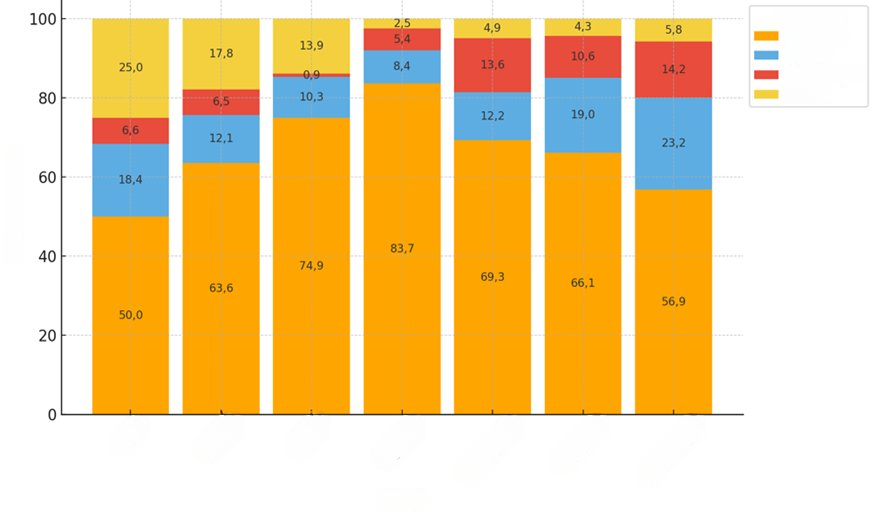
The “Interaction” category included comments without a specific purpose, such as informal questions or direct compliments, being characterized by spontaneous and informal interactions. This type of interaction was the most prevalent, representing 67.2% (1,502) of the total comments analyzed, which reflects a high level of audience engagement. The predominance of spontaneous interactions demonstrates the success of “Company A”’s social marketing strategy, suggesting that consumers are not only interested in the content but also feel comfortable sharing their opinions and possibly recommending the brand’s products to others.
Marketing has evolved since its definition by the American Marketing Association[26] in 1960, moving from an approach focused on mass selling to a tool aimed at meeting consumer needs more effectively[27,28]. Marketing 2.0 introduced interactive channels, while Marketing 3.0 considered consumers in their emotional and spiritual dimensions[29]. Marketing 4.0 integrates online and offline interactions, using artificial intelligence to improve connectivity and productivity[30]. Digital marketing on social media has emerged as a key tool for global communication between companies and consumers[31]. Social marketing, focused on influencing behaviors, helps create authentic connections with consumers, strengthening the relationship and improving brand reputation[32,33].
Digital interactions (Figure 1) highlight the relevance of the social component in digital platforms. According to the theory of computer-mediated social interactions[34], such interactions are fundamental for establishing online relationships. The use of emojis, for example, helps to compensate for the lack of facial expressions and body language, enriching digital communication. This contributes to a greater sense of “presence” in the online environment, which facilitates the creation of stronger bonds between the company and its customers[48].
Source: Original research results.
The “Doubts” category represented 15.5% (346) of the total comments collected, with consumer questions focused mainly on immunity-related products. This increased interest reflects health concerns during the Covid-19 pandemic, as consumers seek to boost their immunity. A growing demand for clarification on the use of supplements was also observed, especially proteins in functional recipes, indicating greater awareness of the importance of nutritional choices. The monthly average of 49.5 comments in this category underscores the active search for information, highlighting the company’s need to increase transparency in its communications. This behavior is supported by literature, which highlights social media as a key source of information for purchasing decisions, as on platforms like Instagram, consumers with similar interests exchange ideas and guidance during the purchase journey[20].
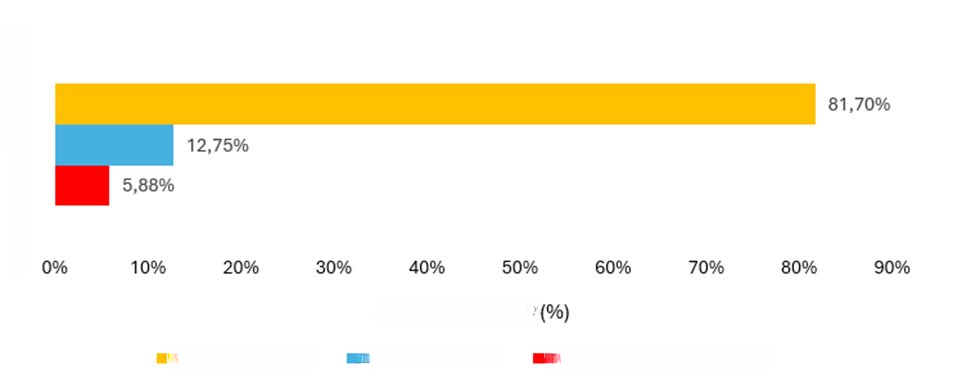
The “Complaint” category represented 9.1% (206) of the total comments, with the main dissatisfactions related to operational issues, such as product unavailability, nutritional composition, website errors, and delivery delays. The analysis revealed that these complaints were more linked to the overall experience with the company than to the content of Instagram posts. This finding suggests that dissatisfactions are associated with operational problems and not with digital communication itself. The lack of normality in the data points to the need to investigate these patterns more deeply, without necessarily implying a deficit in value, but rather in operational areas that require attention. When segmenting the 206 complaints (Figure 2), it was found that the main complaint presented was “Delayed delivery”, with 81.37% (168); followed by “Product composition”, with 5.88% (12); and “Website purchases”, with 12.75% (26). This reinforces that most dissatisfactions were linked to logistical and operational aspects, highlighting the importance of improving internal processes and supply chain management to optimize the customer experience.
Source: Original research results.
The segmentation of complaints revealed a predominant dissatisfaction related to operational issues, especially delivery delays. This pattern is corroborated by information collected on the Reclame Aqui (RA) platform, where consumers register their dissatisfactions, allowing companies to respond and resolve issues publicly. In 2023, “Company A” received 798 complaints, with a resolution rate of 93.1% and an average rating of 7.58/10. The majority of complaints, 67.29% (537), were regarding delivery delays, followed by 14.28% (114) about website issues and 2.38% (19) about product nutritional content. Comparing with 2022, when the company had 290 complaints with a resolution rate of 99.1% and an average rating of 9.01/10, it is observed that there was a significant drop in consumer satisfaction, pointing to a negative evolution in operational dynamics.
The analysis of complaints, especially those related to “Late delivery”, offers important implications for service management and customer satisfaction. According to Service-Dominant Logic[35], value co-creation between companies and consumers is central. In this context, delivery delays can be seen as failures in value co-creation, harming the customer’s perception and their satisfaction with the brand. The prevalence of these complaints underscores the importance of efficient supply chain and logistics management. Ensuring that delivery occurs according to consumer expectations is essential to align with their needs and avoid dissatisfaction. The discrepancy between expectations and quality perceptions, as observed by Parasuraman, Zeithaml, and Berry[36], is one of the main factors contributing to consumer dissatisfaction. The analysis suggests the need to improve operational efficiency and transparent communication about delivery times. Strategies to prevent delays are fundamental to optimizing the customer experience and preserving brand trust.
The “Praise” category represented 8.1% of the comments (181), suggesting a moderate level of satisfaction. However, the high dispersion of data (SD: 14.7) indicated variations in positive experiences, signaling that although there are praises, there are also areas that need improvement. Customer satisfaction, as evidenced by Oliver[37] and other scholars, is influenced by the discrepancy between expectations and perceptions, which vary according to factors such as personality, previous expectations, and past experiences[38,39,32].
This data offers the company a strategic opportunity to optimize the customer experience, promoting satisfaction and loyalty. The analysis highlights the need for a proactive approach to operational issues, especially regarding delivery delays. Managerial actions, such as benchmarking, data-driven guidance, and aligning the brand’s value proposition with customer perception, are fundamental to improving the experience and strengthening the customer relationship.
The understanding of the analyzed aspects offers the company a strategic opportunity to optimize the customer experience, promoting both satisfaction and loyalty, essential factors for competitiveness in the nutritional supplements sector. This study suggests that the analysis of digital interactions, especially on social media, be used to diagnose deficits in value delivery that are often not detected in traditional analyses. Real-time comments and feedback provide a clear view of customer needs, allowing for rapid adjustments in marketing and operations strategies. By monitoring these interactions, the company can identify and resolve critical issues, such as delivery delays and failures in communicating the value proposition. With this, the company improves its operational efficiency and strengthens the emotional connection with the customer, building a trust relationship essential for long-term loyalty and engagement.
Although the study focuses on the experiences of “Company A” customers, it is essential that the company also understands the broader market context. Customer experience (CX) is a fundamental factor for success in today’s competitive market, as it encompasses all interactions a customer has with a company, from the initial contact to after-sales service, involving cognitive, emotional, and behavioral aspects that influence satisfaction and loyalty[40]. To stand out, companies must adopt a holistic approach to customer experience. Silva et al.[41] propose a model that integrates marketing, innovation, and services, emphasizing value co-creation and the importance of understanding customer perspectives. KPMG’s research[42] also highlights that delivering meaningful value requires collaboration between cross-functional teams, processes, and technology throughout the customer journey. The six pillars of customer experience excellence—integrity, resolution, expectations, time and effort, personalization, and empathy—are essential for strengthening connections with consumers.
In this context, benchmarking, which involves comparing a company’s practices with others in the sector, can provide valuable insights based on strategic management principles[43,44], being an essential strategic tool for “Company A”. By performing benchmarking, the company identifies the best practices in the sector, not only in terms of operational efficiency but also in how its competitors engage consumers in value co-creation. This allows “Company A” to understand how competitors promote active customer participation and offer them more personalized experiences. By integrating value co-creation, benchmarking enables the company to adapt and apply best practices innovatively, aligning with consumer needs and expectations and continuously improving the quality of its offering[45,46].
Furthermore, technologies such as Artificial Intelligence (AI) and Machine Learning are also essential for companies to stand out in today’s competitive market. These technologies enable the efficient analysis of large volumes of data, allowing for automated personalization of offers and customer interactions. By integrating predictive analytics through algorithms and statistical models, companies can anticipate customer needs and preferences based on their historical purchasing patterns, which provides a more proactive and personalized approach[47].
In parallel, the continuous collection of feedback through satisfaction surveys and monitoring of online interactions offer a detailed view of customer behavior, allowing the identification of areas that require quick and effective improvements[48]. Strategies focused on customer loyalty and the intelligent use of data are fundamental to personalizing the customer experience. By combining analytical and technological practices, companies make experience management more effective, developing strategies that better meet consumer expectations, resulting in greater loyalty[49]. To ensure effective value delivery, it is crucial that the value proposition is perfectly aligned with the customer’s perception. This can directly influence consumers’ choice of the company, over its competitors[50].
This study analyzed the importance of Instagram interaction between “Company A” and its customers, focusing on identifying deficits in value delivery. Although the study focused on a single social network, it is recognized that the generalization of results may be limited, as other platforms such as Facebook and Twitter have distinct dynamics. The research indicated the need for more proactive management of digital interactions, especially in the categories of complaints and inquiries, which directly affect the perceived value of “Company A” consumers.
Complaints related to delivery delays highlight operational and supply chain management deficiencies. Timely product delivery is a basic consumer expectation, and failures in this process compromise brand value perception, harming trust and loyalty. Communication transparency, although already existing, can be improved by using tools such as order tracking systems, prompt updates on delays, and dedicated complaint channels, which could help reduce uncertainties and strengthen consumer trust.
Active engagement on social media is a crucial strategy for strengthening the connection with consumers. Creating educational content and quick responses to interactions can improve the customer experience. Furthermore, corporate social responsibility (CSR) practices, aligned with consumer values, can further enhance the brand relationship. In the digital context, this can involve nutritional education campaigns or the promotion of healthy habits on social media. By demonstrating a commitment to transparency and social well-being, the company can not only mitigate dissatisfaction but also reinforce consumer trust and loyalty. Good social marketing practices[51,35] are essential for creating a genuine connection with customers and enhancing the digital experience.
The observed variations in positive experiences highlight the importance of identifying the factors that contribute to customer satisfaction. The adoption of these initiatives can lead “Company A” to new levels of success, increasing customer loyalty and raising the standards of engagement and value delivered to consumers. Finally, it is recommended that future research delve deeper into the causes of complaints and explore how the company can optimize the perception of value by integrating multiple communication channels and adopting specific strategies for this purpose.
References
[1] Ministério da Saúde do Brasil [MS]. Coronavírus Brasil: Painel. Gov.br. Disponível em: https://covid.saude.gov.br/. Acesso em: 20 de jan. 2024.
[2] World Health Organization [WHO]. 2023. Statement on the fifteenth meeting of the IHR (2005) Emergency Committee on the COVID-19 pandemic. Disponível em: https://www.who.int/news/item/05-05-2023-statement-on-the-fifteenth-meeting-of-the-international-health-regulations-(2005)-emergency-committee-regarding-the-coronavirus-disease-(covid-19)-pandemic?adgroupsurvey={adgroupsurvey}egclid=Cj0KCQjwpompBhDZARIsAFD_Fp8PzALdfjlhZCba3fyEqoBscLv8LUCsiUnTu1x4Bn39iJ4RWuskgggaAuScEALw_wcB. Acesso em 20 de janeiro de 2024.
[3] Hoekstra J.C.; Leeflang P.S.H. 2020. Marketing in the era of COVID-19. Italian Journal of Marketing 2020(4):249-260. doi: 10.1007/s43039-020-00016-3.
[4] DiResta A.E; Williford K.T.; Cohen D.A.; Genn B.A. 2020. The impact of COVID-19 on your advertising and marketing campaigns. Hklaw.com. Disponível em: https://www.hklaw.com/en/insights/publications/2020/04/the-impact-of-covid19-on-your-advertising-and-marketing-campaigns. Acesso em: 10 de dez. 2023.
[5] Bartik AW, Bertrand M, Cullen Z, Glaeser EL, Luca M, Stanton C. The impact of COVID-19 on small business outcomes and expectations. Proc Natl Acad Sci U S A [Internet]. 2020;117(30):17656–66. http://dx.doi.org/10.1073/pnas.2006991117
[6] Fullerton, N. 2021. Instagram vs. Reality: The pandemic’s impact on social media and mental health. Pennmedicine.org. Disponível em: https://www.pennmedicine.org/news/news-blog/2021/april/instagram-vs-reality-the-pandemics-impact-on-social-media-and-mental-health Acesso em: 10 de dez. 2023.
[7] Von Abrams K. 2020. Germany Ecommerce 2020: Digital Retail Prospers in the Coronavirus Era [Internet]. EMARKETER. Disponível em: https://www.emarketer.com/content/germany-ecommerce-2020 Acesso em: 10 de dez. 2023.
[8] Czeisler, M.É.; Lane, R.I.; Petrosky, E.; Wiley, J.F.; Christensen, A.; Njai, R.; Weaver, M.D.; Robbins, R.; Facer-Childs, E.R; Barger, L.K.; Czeisler, C.A; Howard, M.E; Rajaratnam, S.M.W. 2020. Mental health, substance use, and suicidal ideation during the COVID-19 pandemic – United States. MMWR Morb Mortal Wkly Rep 69(32):1049–57. http://dx.doi.org/10.15585/mmwr.mm6932a1
[9] Balis, J. 2021. 10 truths about marketing after the pandemic. Harvard business review. Disponível em: https://hbr.org/2021/03/10-truths-about-marketing-after-the-pandemic. Acesso em: 10 de dez. 2023.
[10] Chan AKM, Nickson CP, Rudolph JW, Lee A, Joynt GM. Social media for rapid knowledge dissemination: early experience from theCOVID‐19 pandemic. Anaesthesia [Internet]. 2020;75(12):1579–82. http://dx.doi.org/10.1111/anae.15057.
[11] Zhang, L.; Liu, Y. 2020. Potential interventions for novel coronavirus in China: A systematic review. Journal of Medical Virology 92(5): 479–490. https://doi.org/10.1002/jmv.25707.
[12] Agência Nacional de Vigilância Sanitária [ANVISA]. 2018. Resolução da Diretoria Colegiada – RDC n. 243, de 26 de julho de 2018. Gov.br. Disponível em: https://bvs .saude.gov.br/bvs/saudelegis/anvisa/2018/rdc0243_26_07_2018.pdf. Acesso em: 10 de dez. 2023.
[13] Agência Nacional de Vigilância Sanitária [ANVISA]. Suplementos alimentares. Disponível em: https://www.gov.br/anvisa/pt-br/assuntos/alimentos/suplementos-alimentares. Acesso em: 10 de dez. 2023.
[14] Associação Brasileira de Indústria de Alimentos – ABIAD. 2020. Hábitos de Consumo de Suplementos Alimentares no Brasil. 2ed. Disponível em: https://abiad.org.br/2021/wp-content/uploads/2020/09/Infografico-1-Pesquisa-Suplementos-Alimentares-2020.pdf. Acesso em: 10 de dez. 2023.
[15] Lima, M. 2022. Após aquisição pela Nestlé, foodtech Puravida quer sair da bolha. Forbes Brasil. Disponível em: https://forbes.com.br/forbes-money/2022/05/apos-aquisicao-pela-nestle-puravida-quer-expandir-dentro-e-fora-do-brasil/. Acesso em 20 de janeiro de 2024.
[16] Osterwalder, A.; Pigneur, Y. 2011. Business model generation: inovação em modelos de negócios. Alta Books, Rio de Janeiro, RJ, Brasil.
[17] Rodas, C.M. 2017. Padrão de comportamento na busca de informação em mecanismo de busca: um enfoque com a tecnologia de eye tracking. Tese em Ciência da Informação (PPGCI) em Marília: Universidade Estadual Paulista “Júlio de Mesquita Filho”.
[18] Kemp, S. 2020. Digital 2020: Global digital overview. DataReportal – Global Digital Insights. Disponível em: https://datareportal.com/reports/digital-2020-global-digital-overview. Acesso em 20 de jan. 2024.
[19] Chambers, D. 2013. Social media and personal relationships: Online intimacies and networked friendship. Palgrave Macmillan, Basingstoke, UK. https://doi.org/10.1057/9781137314444.
[20] Serralha, T.F.S. 2019. Digital influencers: perceções e intenção de compra dos consumidores. Dissertação em Marketing em Lisboa: Instituto Superior de Economia e Gestão.
[21] Bruno, V.; Miret, R. 2015. Nove em cada dez consumidores virtuais consultam a internet antes de realizar uma compra. SPC Brasil. Disponível em: https://www.spcbrasil.org.br/uploads/st_imprensa/release_compras_online_offline_maio_2015_v51.pdf. Acesso em: 10 de dez. 2023.
[22] Mises, L.V. 2010. Ação Humana Um Tratado de Economia. 3ed. São Paulo: Instituto Ludwig Von Mises Brasil. Disponível em: https://d3ptueit7w3f7j.cloudfront.net/Livros/a%C3%A7%C3%A3oo+Humana+-+Um+Tratado+de+Economia.pdf. Acesso em: 20 de jan. 2024.
[23] Fraccaroli, J. 2022. Cinco principais reclamações sobre compras online. E-Commerce Brasil – Artigos e Dicas sobre comércio eletrônico. Disponível em: https://www.ecommercebrasil.com.br/artigos/reclamacoes-compras-online. Acesso em: 20 de jan. 2024.
[24] Melo Júnior, A.L.; Morais, R. 2018. Estudo de caso como estratégia de investigação qualitativa em educação. Ensino Pedagógico 2: 26–33. https://doi.org/10.14244/enp.v2i1.59.
[25] Pawlowski, C.S.; Andersen, H.B.; Troelsen, J.; Schipperijn, J. 2016. Children’s physical activity behavior during school recess: A pilot study using GPS, accelerometer, participant observation, and go-along interview. PLoS One 11(1). https://doi.org/10.1371/journal.pone.0148786.
[26] American Marketing Association [AMA]. Social Media. Disponível em: https://www.ama.org/topics/social-media/. Acesso em: 20 de fev. 2024.
[27] Ringold, D.J.; Weitz, B. 2007. The American Marketing Association definition of marketing: Moving from lagging to leading indicator. Journal of Public Policy and Marketing 26(2):251–60. http://dx.doi.org/10.1509/jppm.26.2.251
[28] Kotler, P.; Armstrong, G. 2012. Principles of Marketing. 14th ed. Prentice Hall, New Jersey, USA.
[29] Fuciu M, Dumitrescu L. From marketing 1.0 to marketing 4.0 – the evolution of the marketing concept in the context of the 21ST century. Int Conf KNOWL-BASED ORGAN [Internet]. 2018;24(2):43–8. http://dx.doi.org/10.1515/kbo-2018-0064
[30] Kotler, P.; Kartajaya, H.; Setiawan, I. 2017. Marketing 4.0 – Moving from traditional to digital. Hoboken. John Wiley & Sons, New Jersey, USA.
[31] Venciūtė, D. 2018. Social media marketing – from tool to capability. Management of Organizations: Systematic Research 79(1):131-145. doi: 10.1515/mosr-2018-0009.
[32] Kotler, P.; Keller, K.L. 2018. Administração de marketing 15ed. Pearson Education, São Paulo, SP, Brasil.
[33] Siqueira, E.D. 2020. A atuação do Marketing Digital como meio para divulgação do Marketing Social frente a pandemia de COVID-19 no Brasil. Disponível em: https://www.nucleodoconhecimento.com.br/marketing/marketing-social#google_vignette. Acesso em: 16 jan. 2025.
[34] Walther, J.B. 1992. Interpersonal Effects in Computer-Mediated Interaction: A Relational Perspective. Communication Research, 19(1):52. https://doi.org/10.1177/009365092019001003.
[35] Vargo, S.L.; Lusch, R.F. 2004. Evolving to a new dominant logic for marketing. Journal of Marketing 68(1):1–17. https://doi.org/10.1509/jmkg.68.1.1.24036.
[36] Parasuraman, A.: Zeithaml, V.A.; Berry, L.L. 1985. A conceptual model of service quality and its implications for future research. Journal of Marketing 49(4): 41–50. https://doi.org/10.1177/002224298504900403.
[37] Oliver, R.L. 1980. A cognitive model of the antecedents and consequences of satisfaction decisions. Journal of Marketing Research 17(4): 460-469. https://doi.org/10.2307/3150499.
[38] Johnson, M.D.; Fornell, C. 1991. A framework for comparing customer satisfaction across individuals and product categories. Journal of Economic Psychology 12:267–286. https://doi.org/10.1016/0167-4870(91)90016-m.
[39] Anderson, E.W.; Sullivan, M.W. 1993. The antecedents and consequences of customer satisfaction for firms. Marketing Science 12: 125–143. https://doi.org/10.1287/mksc.12.2.125.
[40] Lemon, K.N.; Verhoef, P.C. 2016. Understanding customer experience throughout the customer journey. Journal of Marketing 80(6):69-96. Disponível em: https://www.xavierquerathement.fr/wp-content/uploads/2018/07/1-Lemon-et-Verhoef-2016.pdf. Acesso em: 16 jan. 2025.
[41] Silva E.C.; Minciotti S.A. 2022. Experiência do cliente: um framework para gestão e entrega de valor aos clientes. Rev Alcance 29(2):192-207. doi: 10.14210/alcance.v29n2(mai/ago).p192-207.
[42] KPMG. Customer Experience Excellence Report 2022. Disponível em: https://assets.kpmg.com/content/dam/kpmg/sg/pdf/2023/1/customer-experience-excellence-report-2022.pdf. Acesso em: 16 jan. 2025.
[43] Davenport, T.H.; Harris, J.G. 2007. Competing on analytics: The new science of winning. Harvard Business Review Press, Boston, MA, USA. Disponível em: https://hbr.org/2006/01/competing-on-analytics. Acesso em: 20 de jan. 2024.
[44] Berry, L.L.; Parasuraman, A. 1991. Marketing services: Competing through quality. Free Press 56(2):132-134. https://doi.org/10.2307/1252050.
[45] Lyu, J.; Cao, K.; Yang, S. 2022. The impact of value co-creation behavior on customers’ experiences with and loyalty to P2P accommodations. Frontiers in Psychology 13. doi: 10.3389/fpsyg.2022.988318.
[46] Lee, H.Y.; Grinevich, V.; Chipulu, M. 2023. How can value co-creation be integrated into a customer experience evaluation? European Management Journal 41(4):521-533. doi: 10.1016/j.emj.2023.02.004.
[47] Huang, M.H.; Rust, R.T. 2018. Artificial Intelligence in Service. Journal of Service Research 21(2):155-172. https://doi.org/10.1177/1094670517752459.
[48] Sternbergh, A. 2014. Smile, you’re speaking emoji: The rapid evolution of a wordless tongue. Intelligencer. Disponível em: https://nymag.com/intelligencer/2014/11/emojis-rapid-evolution.html. Acesso em: 20 de jan. 2024.
[49] Verhoef, P.C.; Kannan, P.K.; Inman, J.J. 2015. From multi-channel retailing to Omni-channel retailing. Journal of Retailing 91(2):174-181. doi: 10.1016/j.jretai.2015.02.005.
[50] Mishra, P.; Datta, B. 2008. Consanguinity between consumer and brand personality: a review. The ICFAI University Journal of Consumer Behaviour, Punjagutta 3(3): 7-14. Disponível em: https://openurl.ebsco.com/EPDB%3Agcd%3A6%3A27159990/detailv2?sid=ebsco%3Aplink%3Ascholar&id=ebsco%3Agcd%3A34848755&crl=c. Acesso em: 20 de jan. 2024.
[51] Bititci, U.S.; Martinez, V.; Albores, P.; Parung, J. 2004. Creating and managing value in collaborative networks. International Journal of Physical Distribution & Logistics Management, 34(3/4):251–268. http://dx.doi.org/10.1108/09600030410533574.
How to cite
Ribeiro-Sousah M.A.S.; Fonseca B.F. Social network interaction as a signal of value deficit in a nutritional supplement company. Revista E&S. 2025; 6: e2024048.
About the authors
 Marco Aurélio da Silva Ribeiro-Sousah – Nutritionist and Researcher. School of Medicine of Ribeirão Preto of the University of São Paulo, FMRP-USP. Avenida Bandeirantes, 3900, USP Campus, 14049-900, Ribeirão Preto, São Paulo, Brazil
Bethania Fernandes da Fonseca – Supervising Professor. Rua Cezira Giovanoni Moretti, 580, Santa Rosa, Postal Code: 13414-157, Piracicaba/SP, Brazil