
Architecture
Management Tools
Project Management
September 12, 2023
Management and coordination of projects in architecture offices in the city of Feira de Santana (BA)
DOI: 10.22167/2675-6528-20230067
E&S 2023,4: e20230067
Erick Kervillynn Teixeira da Silva; Bruno Andrade Costa
Architecture professionals graduate from universities with little or no knowledge of administration, due to the absence of such disciplines in the curriculum of some Brazilian universities. In a study conducted by Mendes[1], it was found that, of the 42 architecture courses analyzed, 17% had no discipline related to management and project management. Among those who had graduated from courses that offered some subject related to the area, 56% stated that these disciplines made a difference in their professional lives.
Architects entering the job market after graduation very commonly manage their own businesses, becoming the central figure of the architecture office[2]. Generally, the organizational structure has directors with a background in architecture or engineering who end up representing the figure of the project manager, states Melo[2]. This is a fundamental point for the analysis of project management and coordination in architecture firms.
There is a preconceived notion among students of project management and coordination disciplines in undergraduate architecture courses that engineers are more capable professionals to deal with this type of area[3]; furthermore, academic training does not favor procedures related to office management, and the focus during training is only on technical learning[4]. It is important to emphasize that the Council of Architecture and Urbanism (CAU/BR)[5] establishes that the area of construction management and coordination is also an attribution of urban architect-planners, as provided for in article 2 of law no. 12.378, of 2010[6].
Managing projects is part of the scope of work for architecture firms[2]. A project can be defined as any temporary endeavor, with an established start and end, that aims to create a unique product, service, or result[7]. For a project to be successful, it is essential that architects know how to manage the assignments of each professional in the firm, as well as deal with deadlines, resources, and established scopes.
It is known that the construction industry is, in general, resistant to change, especially regarding the adoption and implementation of new technologies. Studies such as those conducted by Bonatto[8] show that 99% of Brazil’s construction systems have remained the same over the last 100 years. In addition to not incorporating major changes, the sector has also seen its productivity decline in the period encompassing the last century.
After the 1970s, an innovative method called “Building Information Modeling (BIM)” emerged – or construction information modeling, in a free translation – following the publication of some studies by educator Charles Eastman. Initially, it was defined as “Building Description System (BDS)”, or construction description system, and only in 1986 did it become known as BIM. The methodology aims to optimize the design, management, coordination, and execution phases through technology. BIM allows work to be carried out collaboratively and multidisciplinarily to minimize errors. Despite the enactment of federal decree no. 9,377 of 2018[9], which aims to encourage the use of this technology nationwide, by 2022 only 9.2% of companies in the field were using the BIM methodology in Brazil[10].
However, for the developed projects to meet the expectations and needs of clients and users, it is important that some management and coordination techniques and tools are adopted, which include: the feasibility of project planning and control; delivery procedures; validation of stages and deliverables; and the inclusion of the responsible team in the processes[11]. It is also valid to encourage the search for feedback from “stakeholders”, to stimulate the implementation of improvements in these processes.
An architecture and urban planning project is generally divided into phases and deliverables within the office[12]. The first stage is more generic, yet important, as it is in this phase that the aesthetic idea, the project concept, is sought to be developed. In later stages, the project has a more technical character, and it is important that the conceived ideas comply with current standards, including that the technical representation is in accordance with the Brazilian Association of Technical Standards (ABNT), so that the project can be interpreted by other professionals. It is advisable that the office can, through management, concatenate what needs to be done, who will do it, and when it will be done. At least six stages are defined, as demonstrated by Melo[2], Cambiagui, and Amá[12]:
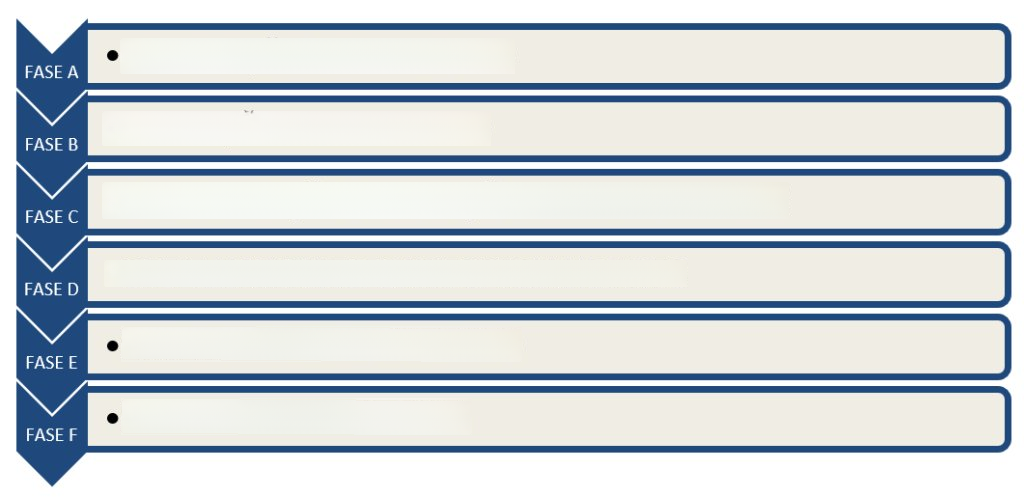
Figure 1. Project phases
Source: Prepared by the author based on AsBEA[12].
Despite the existence of this definition of phases within an architectural project, in Brazil there is no mandatory standardization[2], which means that the phases adopted in one office are not always as delimited and defined as in another. This can make project management difficult. According to Melhado et al.[13], apud Melo[2], this causes numerous deficiencies, mainly involving customer relationship, documentation failures, and problems in internal and external communication within companies.
The present study aims to analyze project management in architecture offices in the city of Feira de Santana (BA), through a survey research. Theoretical references and analyses of research evaluating the theme, as well as the practices adopted in the offices, were used as a basis.
To achieve the proposed objectives, a questionnaire was developed to evaluate the management and coordination of projects in the offices of the city of Feira de Santana (BA). The poll was developed using Google Forms and applied through email and WhatsApp tools. Data collection used intentional non-probabilistic sampling, through a link to access the survey provided in a group of architects from the city. The respondents were architects who served as project managers in their respective offices and held meetings with a certain frequency to align project management and coordination issues with the team.
The questions in the form were elaborated based on the author’s experiences and knowledge and on studies conducted by Melo[2] and Dorneles[14]; the questions aimed to create an overview of the city’s offices and to map the management and coordination of projects. The research obtained the adherence of ten architecture offices in the city of Feira de Santana (BA), whose representatives answered the following questions:

The ten responses were grouped into graphs and analyzed. The questionnaire helped to draw the following profile for the offices participating in the study: the majority (eight) had up to three employees (Figure 2), with the offices being classified as small.
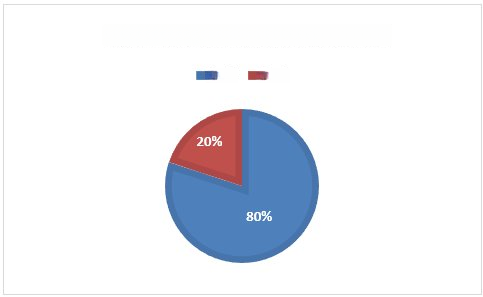
Figure 2. Number of employees
Source: Original survey results.
Seven of the responding offices reported not having a business plan or model to follow (Figure 3), stating that they lacked knowledge of tools and planning to undertake in architecture.
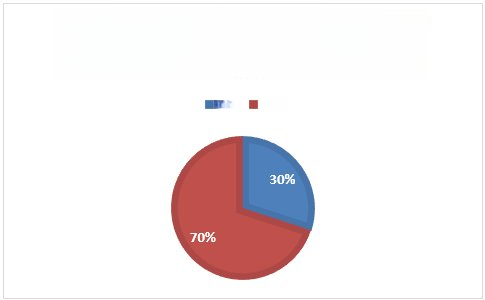
Figure 3. Does the office have a business plan or model to follow?
Source: Original research results.
Regarding the delays in project deliveries, six of the responding offices stated that the fact had already occurred (Figure 4).
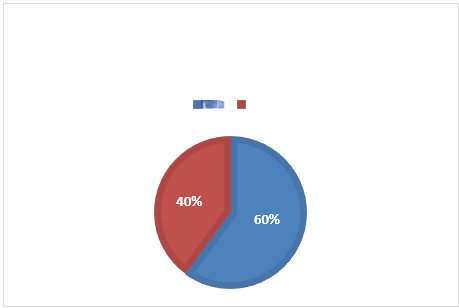
Figure 4. Have there been cases of project delivery delays?
Source: Original research results.
Eight interviewees stated that project delivery delays had never been a reason for contract cancellation by clients and suppliers (Figure 5).
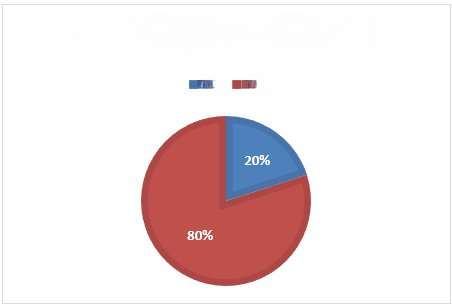
Figure 5. Some project canceled due to the delay that occurred?
Source: Original research results.
When questioned about responsibility for any delays that occurred, six of them attributed the blame to customers (Figure 6).
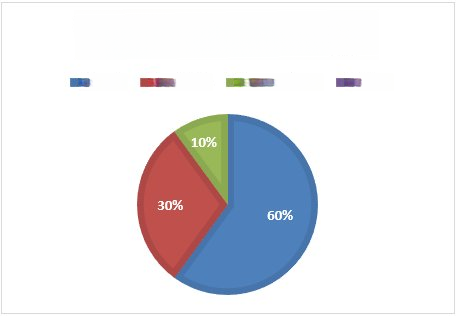
Figure 6. When delays occur, who is responsible?
Source: Original research results.
In the item that addressed deliveries and deadline management, three out of the ten responding offices stated they do not charge suppliers for deadlines (Figure 7). Lack of punctuality in meeting project delivery dates is one of the most relevant problems for project management, which often occurs due to a lack of commitment to deliveries, failures in progress control, incorrect choice of leaders, among other reasons, and can be factors responsible for poor project management in companies[15].
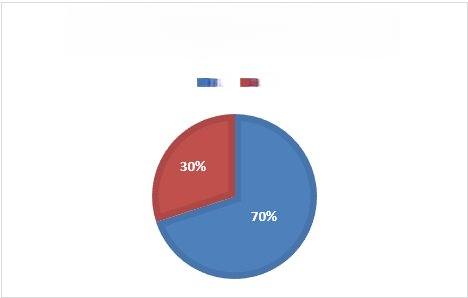
Figure 7. Are deadlines charged to suppliers?
Source: Original research results.
Seven out of ten respondents believed that the processes involving project management are intrinsically related to planning, while another three indicated they believe management is linked to control (Figure 8).
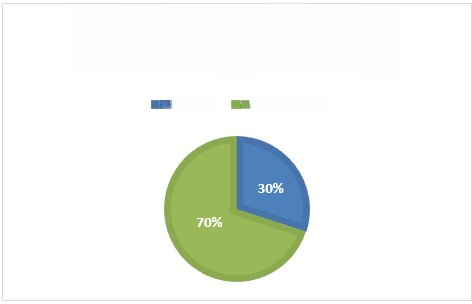
Figure 8. Project management is intrinsically related to…
Source: Original research results.
Eight of the respondents answered that they believed that more efficient project management would increase the number of office projects (Figure 9) – showing that offices presumably believed that their project management could be more efficient. In fact, some studies state that architectural projects are, most of the time, poorly understood and managed in companies, even in cases where there are multiple ongoing works[16]. The combined use of project management methodologies aligned with organizational development can improve the efficiency and effectiveness of the entire organization[17].
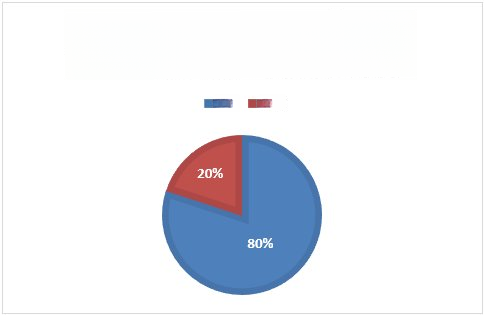
Figure 9. Do you believe that more efficient management would increase the number of office projects?
Source: Original research results.
Three of the responding offices stated that they develop the project’s work breakdown structure (WBS), an important management tool for any type of project (Figure 10). These same three had also indicated they have a business model to follow (Figure 3) and were among the four who denied having had delays in project deliveries (Figure 4). With the adoption of the WBS, it is possible to subdivide the work into smaller parts, with definition of duration for each activity, design of the correlation between stages, and delimitation of the desired control level, all in a single document[18].
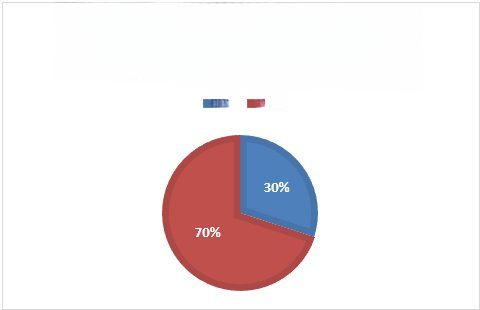
Figure 10. During the project, is any type of analytical structure, such as the WBS, developed?
Source: Original research results.
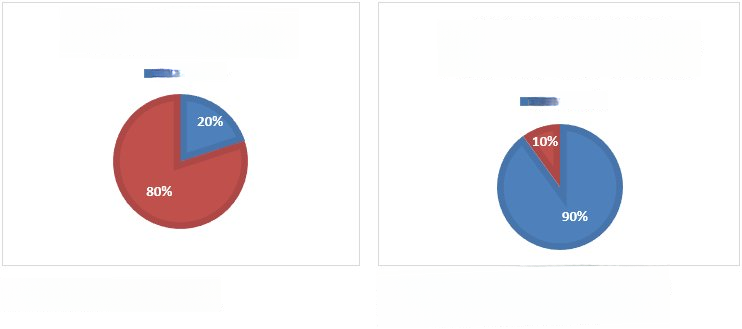
New technologies and methodologies, such as BIM, were not adopted in the projects of eight of the surveyed offices (Figure 11), despite nine out of ten respondents stating they believed BIM could improve both projects and management (Figure 12). It is a methodology that allows for the creation of digital simulations, coordinating all information of an architectural project. It is possible to state that BIM, when fully applied in a company, can optimize all its processes and bring reformulations to business standards, opening new opportunities for partnerships, strategies, clients, and employees[19].
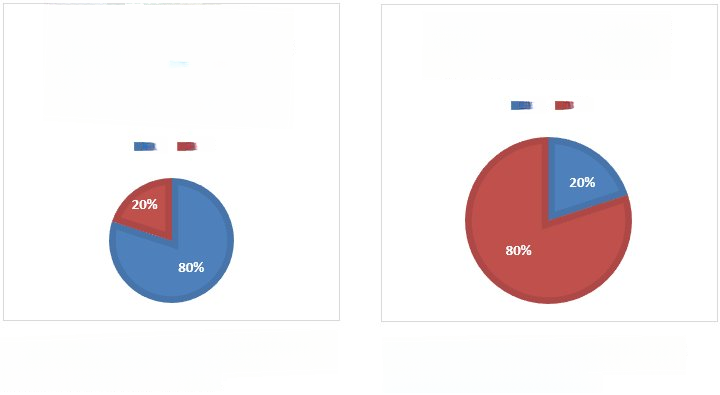
Finally, the practice of signing a service provision contract before the start of work was adopted in eight of the researched locations (Figure 13), while only two of them stated they prepare a closing statement upon project delivery (Figure 14) – these same two offices were among the three respondents who said they have a business plan (Figure 3) and prepare the Work Breakdown Structure (WBS) for projects (Figure 10). Both the service provision contract and the closing statement are important documents for delimiting the scope of the product and indicating the conclusion of the project or contract, avoiding undue future charges[11].
After analyzing the context that involves, on the one hand, the curricular grids of architecture courses in Brazil, which do not always address management disciplines, and, on the other hand, the professionals who graduate and become administrators and managers of their businesses, the following questions arise: 1) how to manage an architecture firm without having studied management?; and 2) if the real scenario of firms is architects at the forefront of their businesses, why has there not yet been a proposal for curricular restructuring in universities?
Starting from this premise, the present work presented the methodologies and tools used to investigate how project management and coordination are carried out in a sample of professionals working as project managers in architecture offices in the city of Feira de Santana (BA). The study concluded that few tools are used by the offices analyzed in this work, or that the vast majority of them do not even have a business model to follow.
Furthermore, although 80% of respondents agreed with the statement that more efficient project management would increase the number of office projects, and 90% believed that the BIM methodology could assist in this coordination, only 20% actually used it. The survey also found that two out of ten professionals working in the offices that responded to the questionnaire did not have a service provision contract before the start of project activities, and that eight of them did not formalize the project completion or service provision term, thus creating an activity with no defined beginning or end, which contradicts the basic premise of what a project is, according to PMI[7].
A suggestion for future work on this topic would be the construction of a model with recommendations of basic tools and methodologies to be implemented in architecture and engineering offices, as well as the monitoring and documentation of the implementation process in the offices, demonstrating the difficulties encountered and suggesting changes in the organization, possible gains, and process optimization.
References
[1] Lopes P.M. Análise das disciplinas de gerenciamento de cursos de arquitetura e urbanismo no Brasil e sua aplicabilidade na vida profissional [Trabalho de Conclusão de Curso]. Curitiba (PR): Universidade Tecnológica Federal do Paraná; 2018. Disponível em: < http://repositorio.utfpr.edu.br/jspui/handle/1/19153>.
[2] Melo J.P. A importância do gerenciamento da comunicação na gestão de projetos de arquitetura. In: IX Congresso de Pós-Graduação da UNIS. 2016 maio 13-14; Varginha, MG, Brasil. Varginha: Fundação de Ensino e Pesquisa do Sul de Minas; 2016. Disponível em: <http://repositorio.unis.edu.br/handle/prefix/441>.
[3] Nakamura J. Como fazer o gerenciamento de obras. Revista aU – Arquitetura e Urbanismo. 2014; 245.
[4] Vaz A.L.M.; Mello I. Gerenciamento do Escritório de Arquitetura e Interiores. Boletim do Gerenciamento. 2023; 35(35): 42-50. Disponível em: <https://nppg.org.br/revistas/boletimdogerenciamento/article/view/733>. Acesso em: 01 set. 2023.
[5] Conselho de Arquitetura e Urbanismo do Brasil (CAU/BR). Manual do arquiteto e urbanista. 1ed revista. Brasília: CAU/BR; 2015.
[6] Brasil. Lei nº 12.378, de 31 de dezembro de 2010. Regulamenta o exercício da Arquitetura e Urbanismo; cria o Conselho de Arquitetura e Urbanismo do Brasil – CAU/BR e os Conselhos de Arquitetura e Urbanismo dos Estados e do Distrito Federal – CAUs; e dá outras providências. Diário Oficial da União, 2010 dez. 31 (edição extra). Disponível em: <https://www.planalto.gov.br/ccivil_03/_ato2007-2010/2010/lei/l12378.htm>. Acesso em: 06 set. 2023.
[7] Project Management Institute (PMI). PMI Brasil. Disponível em: <https://www.pmi.org/brasil>. Acesso em: 06 fev. 2023.
[8] Bonatto H. Tecnologias inovadoras nas obras públicas: há pedras no meio do caminho. 2020. Disponível em <http://www.olicitante.com.br/tecnologias-inovadoras-obras-publicas>. Acesso em: 01 jan. 2023.
[9] Brasil. Decreto nº 9.377, de 17 de maio de 2018. Institui a Estratégia Nacional de Disseminação do Building Information Modelling. Diário Oficial da União, 2018 maio 18. Disponível em: <https://www2.camara.leg.br/legin/fed/decret/2018/decreto-9377-17-maio-2018-786731-publicacaooriginal-155623-pe.html>. Acesso em: 06 fev. 2023.
[10] Castelo, A.M.; Bezerra, I. A construção digital. Blog do Instituto Brasileiro de Economia (FGV IBRE). 2018. Disponível em: <https://blogdoibre.fgv.br/posts/construcao-digital>. Acesso em: 01 jan. 2023.
[11] Project Management Institute (PMI). Guia PMBOK®: um guia para o conjunto de conhecimentos em gerenciamento de projetos. 7ed. Newtown Square: PMI; 2021.
[12] Cambiagui H.; Amá R. Manual de escopo de projetos e serviços de Arquitetura e Urbanismo. São Paulo: Associação Brasileira dos Escritórios de Arquitetura (AsBEA); 2019. Disponível em: <http://www.manuaisdeescopo.com.br/wp-content/uploads/2019/04/Manual_Arquitetura.pdf>. Acesso em: 08 set. 2023.
[13] Melhado S.B.; Souza A.L.R.; Fontenelle E.; Aquino J.P.R.; Grilo L.M.; Franco L.S.; Mesquita M.J.; Dueñas Peña M.; Fabricio M.M.; Oliveira O.J. Coordenação de projetos de edificações. São Paulo: O nome da Rosa; 2005.
[14] Dorneles A. Gerenciamento de projetos e de escritórios de arquitetura. Revista Especialize On-line IPOG. 2016; 12(1): 1-14. Disponível em: <http://assets.ipog.edu.br/wp-content/uploads/2019/12/07015630/alessandra-dorneles-2161330.pdf>. Acesso em: 02 ago. 2023.
[15] Correa M.P.O. Maturidade em gerenciamento de projetos: sistemática que gera ganhos para as organizações. Revista Inovação, Projetos e Tecnologias (IPTEC). 2016; 4(2): 185-207. DOI: 10.5585/iptec.v4i2.61.
[16] Archibald R.D. Managing high technology programs and projects. 3ed. New Jersey: John Wiley & Sons; 2003.
[17] Pool E.T. Collaboration of organization development and project management [Dissertation]. Minneapolis (MN): University of St. Thomas; 2017. Disponível em: <https://ir.stthomas.edu/caps_ed_orgdev_docdiss/58/>. Acesso em: 06 set. 2023.
[18] Avila V.A.; Jungles A.E. Gestão do controle e planejamento de empreendimentos. Florianópolis: [s.n.]; 2013.
[19] Góes M.B.; Rioga C.L.; Campos I.L.A.; Freitas L.D.; Barbosa S.J.; Souza F.T. Benefício da implementação do método BIM e gerenciamento de obras. Revista Latino-Americana de Inovação e Engenharia de Produção. 2020; 8(14): 107-126. DOI: 10.5380/relainep.v8i14.77617.
Como citar
Silva E.K.T.; Costa B.A. Gestão e coordenação de projetos em escritórios de arquitetura na cidade de Feira de Santana (BA). Revista E&S. 2023; 4: e20230067.
Sobre os autores
Erick Kervillynn Teixeira da Silva , arquiteto. Feira de Santana (BA).
Bruno Andrade Costa, professor. Universidade Anhembi Morumbi, UAM, Brasil.
Link para download: https://cms.revistaes.com.br/wp-content/uploads/2023/09/ES_23067.pdf