
Contracts
Project Management
Public Management
Scrum
October 04, 2024
Application of Scrum for contract control in a Municipal Management in the Northeast interior
DOI: 10.22167/2675-6528-20240009
E&S 2024, 5: e202400009
Tatiane Nunes Balbino e Lorena Hernández Mastrapa
The word agile as a reference to a new approach in project management emerged in a manifesto published in 2001[1] by 17 authors, thought leaders in the software industry, who synthesized the values of all agile methods. Although the manifesto originally emerged in the software industry, its principles have spread to many other sectors, and the approach has grown in application in recent years, becoming the preferred project development method for many organizations worldwide[2]. The main differentiating factors of the agile methodology are versatility and dynamism, as it was conceived to ascertain the feasibility of executing projects in short cycles and to quickly adjust to changes based on evaluation and feedback[3].
With the demand for digital transformation in the public machine, the need for more dynamic action arose, which would respond more adequately to the changes and uncertainties involved in an innovation project. In 2020, the National School of Public Administration (ENAP) published a survey that mapped national experiences in innovation, indicating the use of agile methodologies in Public Sector Innovation Laboratories (LISP), finding that 69% of the laboratories are focused on developing innovation in management in order to promote cultural change, engagement, and transparency. The study also showed that 74% of these laboratories were concentrated in the Southeast and Center-West regions of Brazil[4].
Among the agile methods considered is Scrum, framework that generates value by addressing complex issues through adaptive solutions[5]. Based on empiricism, Scrum seeks improvement through experience and decision-making based on what is observed. The method has three well-defined empirical pillars: transparency, inspection, and adaptation.
Despite the adaptability presented by Scrum, its implementation in public institutions represents a great challenge due to the high level of complexity and the degree of bureaucracy involved in their processes, since the main difficulties faced in introducing new management practices are the lack of knowledge of the process, internal resistance to changes and the alteration of priorities in management changes.
The objective of this study was to analyze the management processes of a city hall located in the Brazilian Northeast backlands, in a city with approximately 85,000 inhabitants, responsible for managing 20 secretariats. At a time of government transition, the demand for a contract control and management system was identified, as many contracts were nearing their expiration dates and had insufficient balances, such that supply orders continued to be issued, hindering the progress of processes and the availability of services to the population.
In this scenario, the main difficulties encountered were:
- issuance of request for supply of items without checking balance and forecast in contract;
- lack of automatic update of available quantity from the record of the invoice for receipt of material or service;
- carrying out expenses in the purchasing sector without proper consultation of commitment availability at the Finance Secretariat;
- difficulty in consulting contracts in the bidding committee’s archive, slow loading of signed contracts on the transparency portal, and lack of agility in retrieving these documents for accountability to the Court of Accounts.
Among the main consequences of this situation were observed:
- absence of control over expenses incurred by the purchasing department;
- difficulty in alignment and planning between the secretariats;
- discontent with contractors and rework in the publication of contracts.
The situation could have been avoided if software had been used for the integration between the bidding committee, the procurement sector of the requesting secretariat, and the Finance Secretariat, ensuring the continuity of the contracting process from the publication of the notice, through the supply order to the commitment and payment, guaranteeing the control of deadlines and balances.
In this context, the justification for the present research was the need to make the city hall’s contract management more efficient and transparent; in addition to improving the control and monitoring of expenses resulting from the contracting of materials and services for the administration. Therefore, the specific objective of this work was the implementation of a software for managing and controlling contracts and agreements in the municipal government of the aforementioned city, seeking improvement in budget execution and greater efficiency in public service delivery, with the help of applying Scrum. With the facilitation of the Scrum master, responsible for ensuring the correct application of the agile framework, the estimated duration for each sprint item was set — an event with a fixed duration of up to one month, during which all essential work is carried out to achieve the product goal. The estimation was performed using Planning Poker, a technique that relates a possible increasing curve of uncertainty, so the larger the task, the greater the uncertainty involved. In practical terms: the team members select the simplest item to be executed and, as a reference, estimate 1 for its duration; subsequently, for each of the selected items, each team member selects a number relative to the item’s duration and shows it to the others; if there is consensus, the duration will be estimated, but if not, the extremes must justify their option, carrying out a new round, respecting a hypothetical limit of 3 rounds, after which the estimate follows the highest value. This technique is characterized as a method that promotes debate among professionals with distinct expertise. Thus, the work was divided into six sprints (Figure 1) to ensure the dynamics of execution within the planned time, achieving a total duration of 118 days.
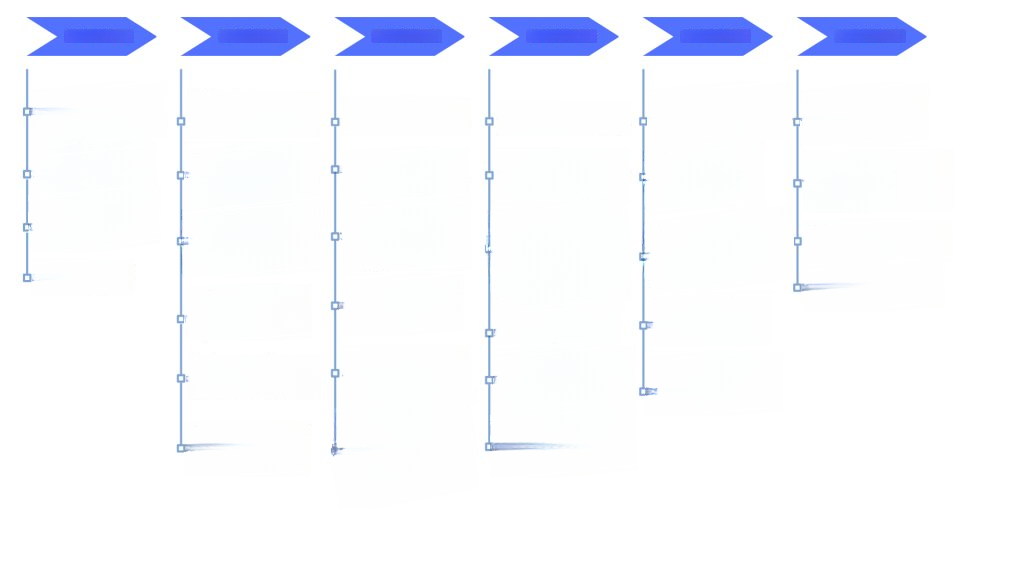
Figure 1. Sprint diagram
Source: Original project results
After planning, team appointment, and role definition, the execution of the sprints began.
- Sprint 1 (Bidding) – As it is a municipal public administration body, the objective of this sprint was to ensure the proper contracting of the software, guaranteeing compliance with current legislation for the execution of bidding processes (laws nº 8.666/1993 and nº 14.133/2021 – New Bidding and Contracts Law) [6] [7]. The bidding process begins with the preparatory phase in which the terms of reference are elaborated based on items and values listed in a price bank; followed by the elaboration and publication of a public notice that determines the conditions for participation in the tender and fully describes the material or service object of the contract. After consulting the public notice, interested companies present proposals and bids, and submit accreditation documentation, then the Bidding Committee evaluates the proposals according to criteria set in the public notice, which may be: best price; best technique or artistic content; technique and price; greatest economic return; and greatest discount. Immediately after, the process continues with the qualification phase, whose objective is to verify the documentation submitted by the participants, taking into account criteria for recognition of legal qualification, tax regularity, technical and economic-financial qualification. The process includes an appeal phase in which bidders can contest the result. And, finally, there is the approval phase, with the signing of the contract and award to the bidder with the best proposal. With the conclusion of this sprint, the team enhanced the integration and fluency in applying the agile methodology, becoming accustomed to daily alignments and adapting quickly to necessary changes.
- Sprint 2 (Software Deployment) – The main objective of this sprint was to ensure the software deployment, as well as to guarantee its correct use. To support the Scrum team members who did not master the phases of a bidding process in detail, and in order to establish a workflow that ensured the best progress of activities, a flowchart was instituted that sequenced the steps for data entry (Figure 2).
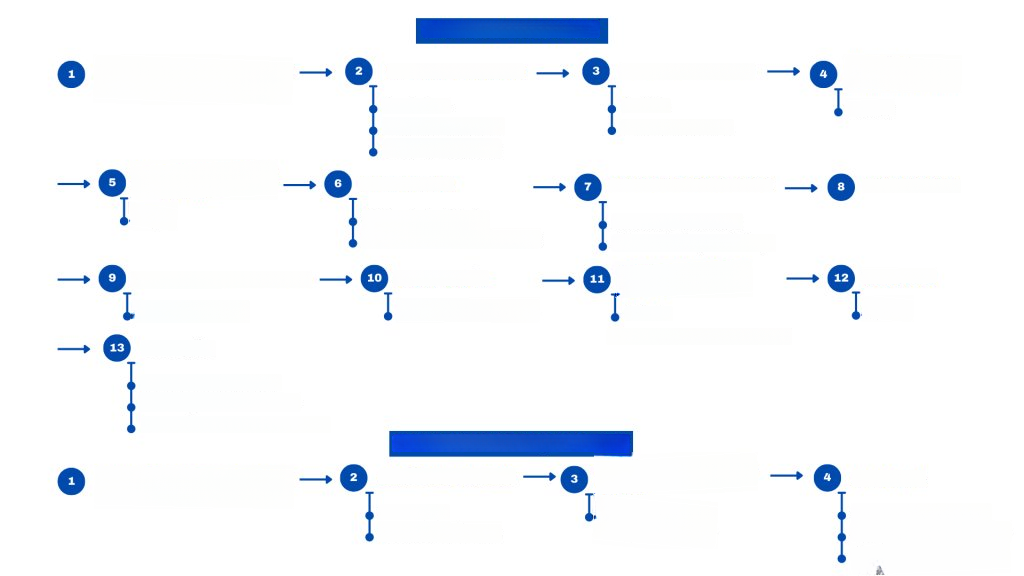
Figure 2. Data flowchart
Source: Original project results
Within this phase, it was also possible to define a new digital flow for direct purchase/contracting — a modality provided for in Law No. 14.133/21[7], in which bidding can be waived or is not exigible.
- Sprint 3 (Bidding Integration) – With mastery of the data insertion process and expanded knowledge of the bidding process, the team can scale the software deployment within the Bidding Commission to register the first ongoing processes, ensuring the digitalization of all contracting stages, and implement electronic bidding and automatic contract publication on the Transparency Portal through the new software. With the conclusion of sprint 3, it was observed that the progress of bidding processes gained agility and became more secure regarding the storage of data from participating companies in the auctions and price proposals. Consequently, the city hall increased its efficiency in publishing notices and contracts on the Transparency Portal, providing timely information to the public and thus reinforcing its credibility.
- Sprint 4 (Purchasing Integration) – The project advanced to the integration with the purchasing sector, through the implementation of the software in the purchasing and acquisitions department of the Secretariat of Administration and Planning. The sprint generated more security and control for the request process, efficiency in contact with suppliers, as well as agility in the department’s organization and increased control over spending, optimizing contract management.
- Sprint 5 (Monitoring and Expansion) – In this phase, it was possible to monitor the preliminary results of the modules already implemented. Additionally, additional fleet management and refueling request modules were installed in the Executive Office, in addition to expanding the insertion of bidding data for outsourced works and services. The implementation of new modules was the result of an adjustment made to the backlog (task list) to meet the presented demand. With the inclusion of fleet and refueling management, the sprint scheme assumed a new configuration, and seven days were added to the execution period. In Figure 3, it is possible to visualize the modifications made in red.
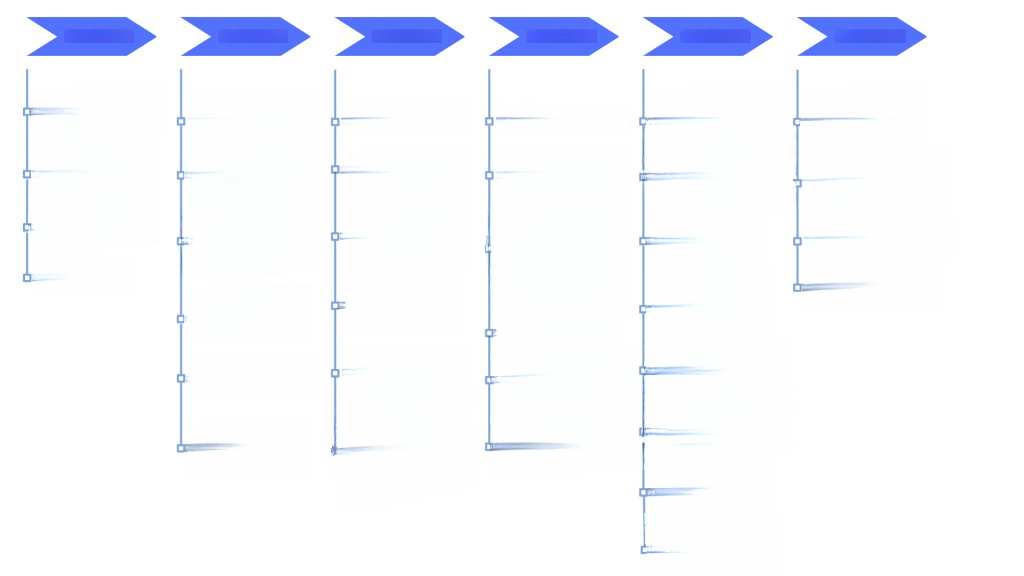
Source: Original project results
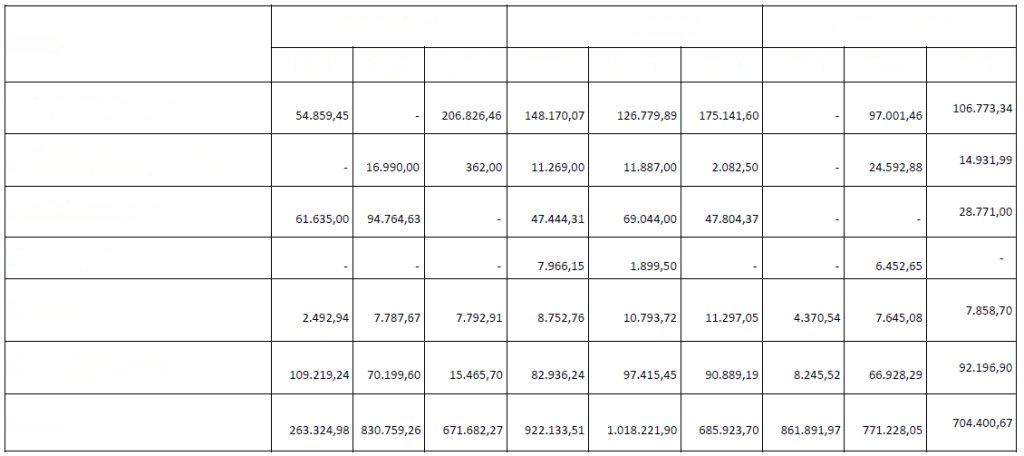
For the preliminary monitoring, expenses related to internal administration operating costs, such as consumable materials, and the contracting of legal entities to provide services to the population were selected. Considering that the monitoring was carried out after the implementation of the main control modules — during the third month of project execution and using the three months prior and the three months of the same period of the previous year as a comparison — the results can be followed in Table 1.
Source: Original project results
From the data obtained (Table 1), it was possible to observe an improvement in the purchasing flow, as the values were not concentrated but rather distributed, a result of the monthly request planning established by the new processes and by software monitoring. During the implementation period, a cost reduction was not observed, so the main objective of this phase was the organization and establishment of new processes, as well as the improvement in contract management. Regarding expenses with service contracting, an increase in investment was perceived, an effect of the expansion of garbage collection and urban cleaning services, due to improved contract management, responding more quickly to the city’s increased demand. Sprint 5 improved contract management, enhancing purchasing planning and making contracting more efficient. Consequently, the services offered to the population gained agility, overcoming one of the main challenges detected at the beginning of the project.
- Sprint 6 (Integration with Finance) – In the last phase of the project, the integration with the accounting system of the Secretariat of Finance was executed, through the connection of the already implemented modules to the financial module. It is important to highlight that compatibility between the modules was one of the requirements for the software’s contracting; the training of the Secretariat of Finance servers was also necessary, as well as the establishment of a new process for issuing purchase orders. The main objective of this phase was to guarantee the entirely digital cycle of the contracting, purchasing, and payment system.
In order to make a comparison regarding expenses, an analysis of the spending panorama was carried out, previously selected as a basis for establishing a ceiling in the purchasing plan. For the comparative analysis, the semester prior to implementation, the semester after, and the equivalent semester of the previous year were chosen, with the aim of identifying a possible reduction in spending. Table 2 presents the accumulated figures for the respective periods.
| Semester prior to implementation | Semester after implementation | Corresponding semester of the previous year | |
| Expenses | Accumulated | Accumulated | Accumulated |
| Automotive fuels / lubricants | 711.777,47 | 625.389,54 | 901.382,29 |
| Material for vehicle maintenance | 42.590,50 | 25.520,00 | 31.641,00 |
| Electrical and electronic material | 320.692,31 | 90.803,07 | 154.526,04 |
| Office supplies | 9.865,65 | 18.817,69 | 15.544,68 |
| Cleaning material and sanitization production | 48.917,05 | 41.082,95 | 72.500,16 |
| Other consumables | 466.125,42 | 278.331,20 | 198.664,98 |
| Other third-party services – legal entity | 4.392.045,62 | 4.823.672,04 | 5.213.115,12 |
Source: Original project results
Based on the data presented, a significant reduction in spending on consumable materials was identified. For the post-implementation period, the total amount spent on consumable materials was R$ 1,079,944.45, representing a reduction of 32% compared to the period before the project’s implementation, and 21% when compared to the same period of the previous year, a consequence of increased spending control and improved planning of purchases and contracts. Within the expense of consumable materials, it is important to highlight the reduction in fuel costs, showing a decrease of 12% when compared to the period before implementation, and 44% when compared to the equivalent period of the previous year, as a result of the new management and control system defined by the fuel request and fleet management modules. Regarding the expense for contracting services from legal entities, there was an increase of approximately 10% over the semester prior to implementation, and a reduction of 7% when compared to the equivalent semester of the previous year, as a result of greater assertiveness in contracting processes and improved contract management. With the execution of bidding and direct contracting processes entirely through the software, it was possible to measure time savings in the preparation and publication of notices. The procedure, which previously could take up to 15 days, is now completed in a maximum of 9 days, representing a 40% reduction in time spent on the initial phase; based on the entire process, a time saving of up to 56% is noticeable, as the bidding process could take up to 90 days, but with the application of the software, the average period for contract completion has been reduced to up to 40 days.
The project, in its entirety, was executed in 129 days, a period longer than initially planned, as it required an additional 11 days due to the need to extend the period for training and adaptation to the software. It was also necessary to include two new modules not foreseen in the preliminary plan. With the project’s completion, it was proven that Scrum generated flexibility by enabling adjustments and refinement of the backlog, thus meeting the requirements that emerged in the Sprint Review, since, in previous projects, changes in requirements, however minor, became tedious, causing disruptions in development and execution. Another result found was efficiency with routine alignment through the Daily Scrum, which made it possible to identify areas for improvement more quickly, thus providing agile realignment, making the project’s progress more fluid.
The success in the software implementation was the result of good initial planning and the adaptability generated by Scrum, which enabled the atendimento of demands that arose during the project execution, as well as agility in team integration and process development. The possibility of daily monitoring provided more assertiveness in the execution of the stages and improved the performance flow, however, it was possible to identify challenges throughout the cycle, such as the difficulty in mobilizing servers in the establishment of new processes and in the acquisition of new knowledge, as well as in the acceptance of a new management dynamic.
As a result, the project showed significant improvement in contract management, greater agility in hiring processes, and optimization of expenditure execution planning, which directly reflected in cost reduction, providing more investment in services offered to the population, with quality and speed in meeting the city’s needs. With this, the benefits of applying agile methodology in public administration projects were validated, even in smaller institutions, thus allowing for research into the feasibility of implementing innovation and agility laboratories in the management of small towns in the interior of Brazil.
References
[1] Beedle M. et al. 2001. Manifesto Ágil. Disponível em: https://agilemanifesto.org/iso/ptbr/manifesto.html. Acesso em: 12 setembro 2022.
[2] Satpathy T. 2017. Um guia para conhecimento em scrum. 3ed. VMEdu Inc., Avondable, AZ, USA.
[3] Project Management Institute (PMI). 2017. Agile Practice Guide. Project Management Institute Inc., Newtown Square, PA, USA.
[4] Escola Nacional de Administração Pública (ENAP). 2020. Caderno Laboratórios de inovação no setor público: mapeamento e diagnóstico de experiências nacionais. Disponível em: https://repositorio.enap.gov.br/bitstream/1/5112/1/69_Laboratorios_inovacao_governo_completo_final_23062020.pdf .Acesso em:12 set. 2022.
[5] Schwaber K.; Sutherland, J. 2020. O guia do scrum. Disponível em: https://www.Scrum.org/resources/Scrum-guide. Acesso em: 12 set. 2022.
[6] BRASIL. Lei n. 8666, de 21 de junho de 1993. Dispõe sobre normas para licitações e contratos da Administração Pública. Senado Federal,Brasília, 21 jun. 1993.
[7] BRASIL. Lei n. 14133, de 1 de abril de 2021. Dispõe sobre licitações e contratos administrativos. Senado Federal, Brasília, 1 abr. 2021.
How to cite
Balbino T.N; Mastrapa L.H.; Application of Scrum for contract control in a Municipal Management in the Northeast interior. E&S Journal. 2024; 5: e20240009.
About the authors
Tatiane Nunes Balbino – Project Management Specialist – Technology Directorate. Banco do Brasil – SBS Lot 32, Headquarters Building III, Block: 1 G – Asa Sul – Postal Code: 70073-901 – Brasília/DF, Brazil.
Lorena Hernández Mastrapa – Pecege – Advisor Professor. Rua Cezira Giovanoni Moretti, 580 – Santa Rosa – ZIP Code: 13414-157 – Piracicaba/SP, Brazil.