
Project Management
October 10, 2025
Project management as a strategy to mitigate delays in the import of medical equipment in Angola
Authors: Matheus Antonio Silva Oliveira and Desirée Baldin Damame
DOI: 10.22167/2675-6528-2025019
E&S 2025, 6: e2025019
Until the early 1960s, Angola did not have any higher education institution within its territory. As a consequence of a selective educational policy, the country achieved independence in 1975 with an illiteracy rate of around 85%, one of the highest in the world[1].
In his text, Curimenha[2] cites that, even after independence, Portuguese colonization produced external dependency in Angola and, with it, the craving for what is external, the contempt for local knowledge, and the stigma against the native specialist.
Therefore, the absence of autonomy in thinking/doing science and of alternative mechanisms that meet national demand – in the fields of culture, economy, technology, health, and, in particular, education — without constantly and religiously resorting to foreign sources, constitutes one of the main challenges that Angolan education needs to overcome.
Therefore, in Angola, the combination of institutional fragility, scarcity of qualified professionals, and high dependence on foreign suppliers intensifies logistical bottlenecks.
According to the minister of trade and industry[3], the lack of internal industrial competitiveness makes the country extremely vulnerable to international market instabilities and the slowness of its own customs procedures.
Recent data indicate that only 8.1% of the population has completed higher education[4], while unemployment reaches 34.2% and extreme poverty, 49.4%[5], which highlights an environment with serious technical and structural limitations.
This study applied the Plan, Do, Check & Act (PDCA) methodology, in Portuguese: plan, do, check, and act, to analyze and propose improvements in the supply chain of a company operating in Angola, which imports medical equipment for local supply.
Using project management tools, such as brainstorming, the “5 Whys” and “5W2H” analysis (What, Why, Who, Where, When, How and How much), in Portuguese: O quê, Por quê, Quem, Onde, Quando, Como e Quanto, and conducting an anonymous survey with managers working in the local territory, we sought to identify possible root causes of logistical delays and develop solutions adapted to the local context.
The study’s motivation lies in the scarcity of traditional literature and studies on effective logistic models in unstable environments, specifically applied in Angolan territory.
When researching the topic on platforms such as Google, Bing, Google Scholar, and SciELO, this gap was identified. For this reason, the practical application of project management tools was chosen to evaluate the effectiveness, in the national territory, of the solutions proposed for the problems faced by the company in which the author works.
With a qualitative and applied approach, that is, taking into account the opinion and point of view of professionals working in the field and applying solutions in practice, the study followed the four stages of PDCA: plan, do, check, and act. After its implementation, the effectiveness of the proposed solutions in this study was evaluated.
The practical application of the PDCA methodology occurred in a company operating in Angola, chosen due to the challenges faced in receiving goods within the established deadline, in the year 2025. The organization operates in the medical imaging field and has approximately 50 employees.
The study used PDCA in order to control, map, and standardize processes, with the purpose of optimizing the company’s supply chain.
Step “P”: planning
The planning phase involved three main instruments. Initially, a brainstorming session was conducted with five engineers from the company’s technical area, who work directly in the supply chain processes. The data from this stage were collected and stored on the company’s Microsoft Teams platform, in a private group.
The objective of this initial stage was to collaboratively and freely identify the main problems in the supply chain for importing medical equipment in Angola. The emerging ideas were grouped and stored on the platform and served as a basis for later in-depth studies.
Next, an anonymous qualitative survey was conducted with 30 professionals working in Angola, identified as decision-makers in the health sector, of whom 19 fully responded to the online questionnaire, made available through the Google Forms platform. The survey was structured with 12 questions (ten closed and two open-ended), as observed in Table 1 below.
The questions were elaborated by the author based on the ideas raised in the company’s internal brainstorm and dealt with variables such as years of experience in Angola, nationality, perception of local logistical challenges, impact of corruption, delivery times, level of education, and suggestions for improvement.
Table 1. Questions asked in the questionnaire
| Number | Questions |
| 1 | Do you agree to participate anonymously and have the information shared in this research used for the preparation and publication of an article? |
| 2 | What is your gender? |
| 3 | Do you work directly with supply chain in Africa? |
| 4 | What is your educational background? |
| 5 | What is your age range? |
| 6 | What is your work experience in Africa? |
| 7 | Are you a native of the country where you work or are you an expatriate? |
| 8 | Do you believe it is more difficult to work in Sub-Saharan Africa than in other locations? |
| 9 | Do you believe that corruption directly affects your work? |
| 10 | Do you usually receive the goods you order within the planned timeframe? |
| 11 | In your opinion, what are the main challenges in your day-to-day work with supply chain in Africa? |
| 12 | In your opinion, what could be done to improve the supply chain (supply chain) in your work? |
With the data from the brainstorming and the research available, the “5 whys” technique was applied, which consists of questioning five times the reason for a problem to exist, with the aim of optimizing the supply chain in Angola for the medical equipment sector and mitigating long delivery and customs clearance times. The tool allowed for a deeper causal analysis and the identification of one of the possible root causes to be solved.
Step “D”: do
Based on the collected information, an action plan was developed using the “5W2H” method, which detailed the specific actions to be performed, the responsible parties, the deadlines, the resources involved, the application sites, and the success indicators.
The action plan also included training the local team to handle bureaucratic requirements, restructuring internal import planning processes, and defining a standardized protocol for customs clearance, in accordance with the best practices of the company’s current quality management system.
Step “C”: verify
To evaluate the intervention results, three pilot import processes were defined, in which the changes were fully applied. The verification of the results occurred by comparing the average import time indicators before and after the implementation of the new logistic model.
Furthermore, a new brainstorming session was held with the same initial team, with the objective of verifying whether the previously identified bottlenecks had been resolved or required additional adjustments. This comparative analysis served as validation of the effectiveness of the adopted solution.
Step “A”: act
Based on the analysis of the results, the action of logistical centralization and the use of local logistics service providers were standardized and incorporated as an operational procedure in the company. The successful initiatives were documented for subsequent replication in other areas of the organization and in other types of medical equipment, which resulted in an iterative and continuous improvement approach.
Application phase
Step “P”: planning
After conducting the brainstorm with the company’s internal technical team, the need was determined to apply an anonymous online survey, through Google Docs, with selected managers operating in Angolan territory, in order to collect more information for the continuation of the study and perform the “5 Whys” analysis, in order to identify a possible root cause of the problem.
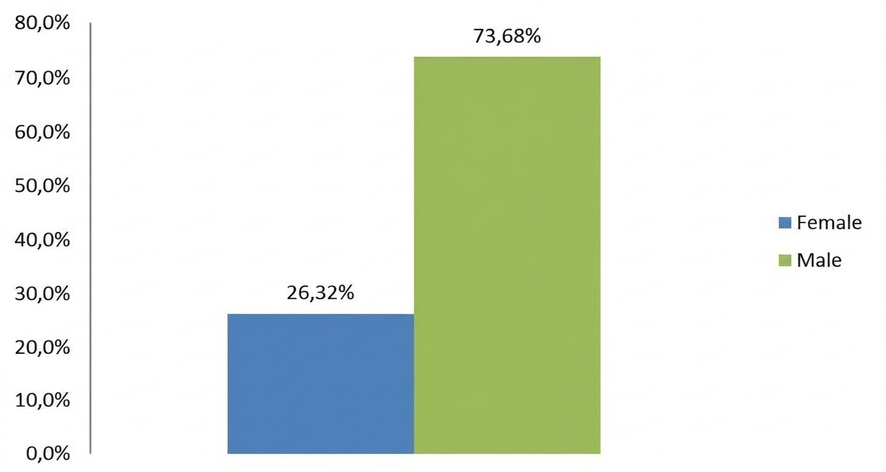
The research sample was composed mainly of men, with higher education and extensive experience in Africa, according to the gender distribution presented in Figure 1.
Source: Research data.
The graph shows us a predominance of male respondents in the analyzed scenario; however, no direct relationship was identified between the participants’ sex and the perception or description of the difficulties faced in performing the work in this study.
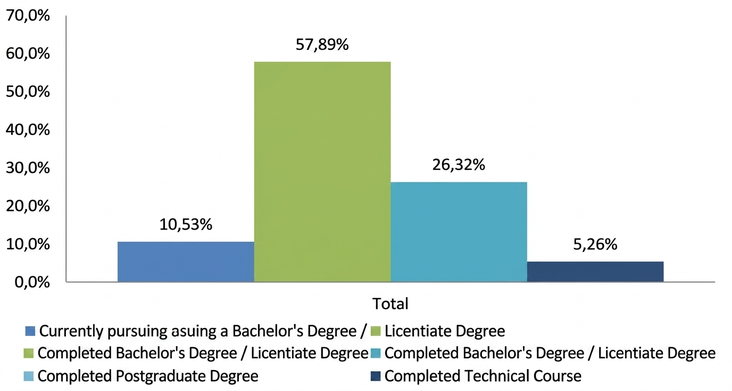
The educational attainment of the respondents indicates that 84.2% have completed higher education, which shows a disconnect between managers and the Angolan scenario mentioned in the introduction of this study, where only 8.1% of the population has higher education in Angola (Figure 2).
Source: Survey data.
In this figure, it is observed that 84.2% of respondents have completed higher education, which shows the importance of formal training to reach decision-making positions in private healthcare companies in Angola.
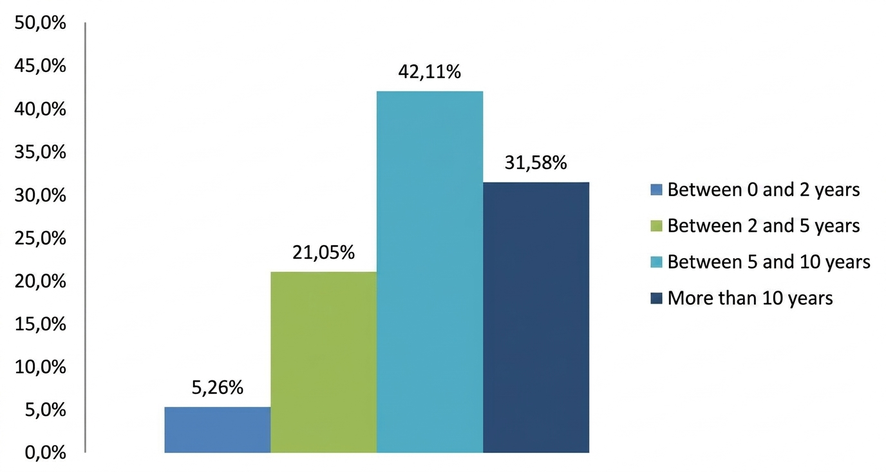
Regarding experience in the African continent, it was found that the majority of interviewees have long-term involvement with the local context (Figure 3).
Source: Survey data.
With this visual resource, it can be observed that 94.8% of respondents have been working in an African country for more than two years, of which 31.6% have been in Angola for more than ten years. This result highlights that, despite the challenges and difficulties of the local scenario, many professionals choose to remain on the continent. Prolonged presence indicates practical exposure to the functioning of the regional supply chain.
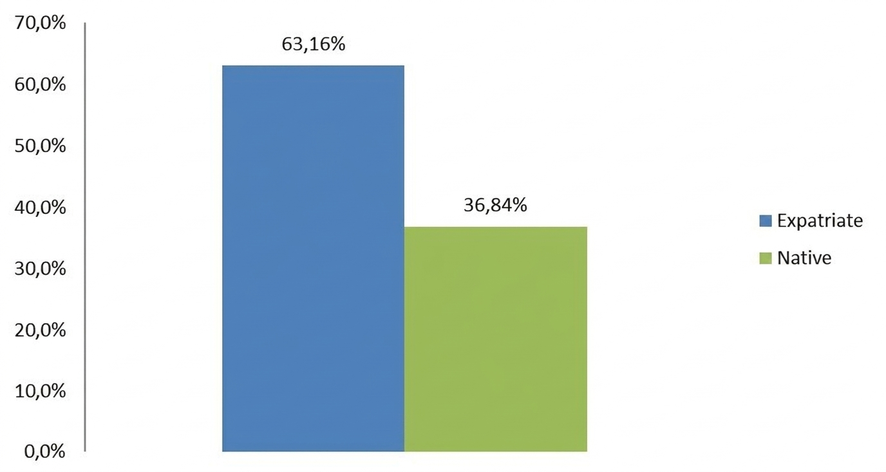
The difference between local professionals and expatriates showed that 63.2% are foreigners. This data was relevant to discuss the dependence on international know-how in logistics leadership positions (Figure 4).
Source: Survey data.
Approximately 63.2% of respondents were expatriates, while 36.8% were local professionals. This indicates a significant disparity between local and expatriate decision-makers and demonstrates that the country still relies on professionals of different nationalities for strategic positions. The predominance of expatriates highlights the need for training and retention of local talent, as discussed by Curimenha[2] in their text.
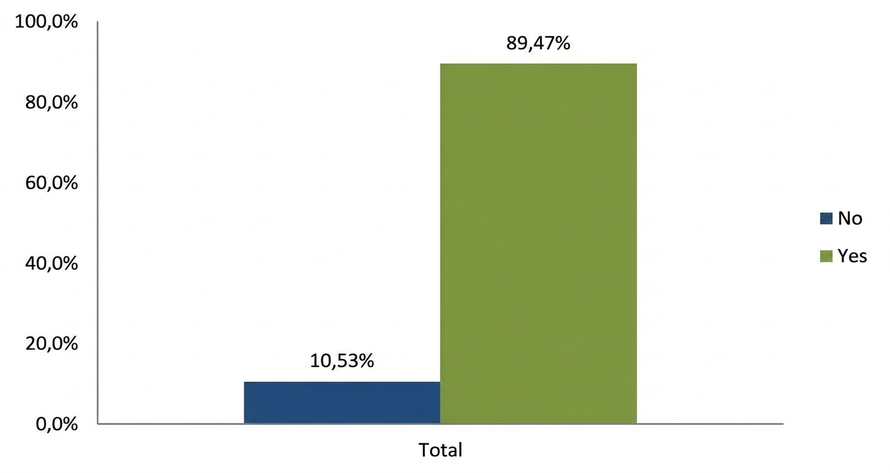
The percentage of participants who believed it was more difficult to work in Sub-Saharan Africa than in other regions is presented in Figure 5.
Approximately 63.2% of respondents were expatriates, while 36.8% were local professionals. This indicates a significant disparity between local and expatriate decision-makers and demonstrates that the country still relies on professionals of different nationalities for strategic positions. The predominance of expatriates highlights the need for training and retention of local talent, as discussed by Curimenha[2] in their text.
The percentage of participants who believed it was more difficult to work in Sub-Saharan Africa than in other regions is presented in Figure 5.
Source: Survey data.
Regarding the challenges faced, 89.5% of managers stated that it was more difficult to work in a Sub-Saharan African country than in other regions of the world. This region comprises all countries located south of the Sahara Desert. However, even with this statement, and as more than half of the interviewed professionals were expatriates, the vast majority remained in African territory for more than two years, which highlights resilience and perseverance in their positions.
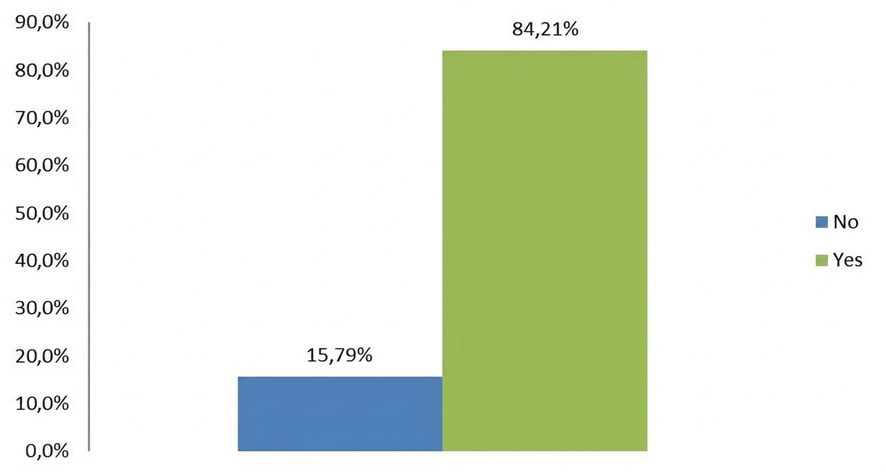
The percentage of participants who believed that corruption directly affected their work is shown in Figure 6.
Source: Survey data.
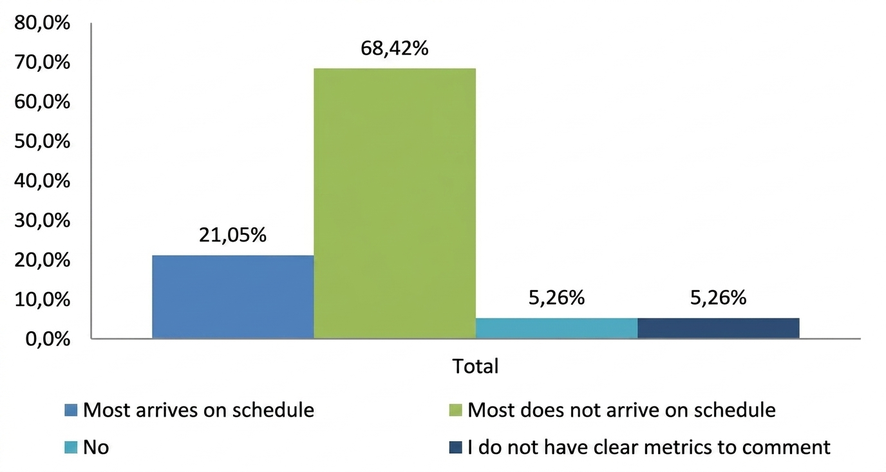
Of the respondents, 84.2% believed that corruption in Angola directly affected their professional activities. The most critical data indicates that 0% of respondents stated they received all supplies within the planned deadline, and only 21.05% reported that the majority arrive on time, which confirms the systemic dysfunction in the current logistics model for the area of hospital medical equipment (Figure 7).
Source: Survey data.
In the research, 79% of respondents agreed that they did not usually receive supplies, merchandise, or orders within the established deadlines. This highlights an endemic problem, in which the majority of participants stated they did not receive their products on the planned schedule, regardless of the company they worked for.
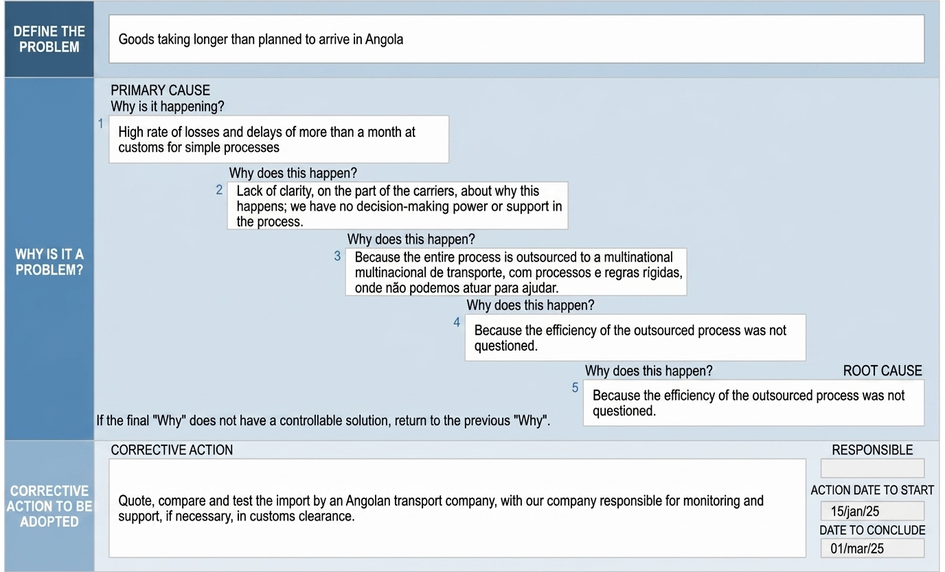
This information presented in the questionnaire responses supported the first question used in the application of the “5 Whys” technique, which pointed to the dependence on international couriers as one of the root causes of most delays.
The application of the “5 Whys” technique deepened the analysis of the causes of delays and revealed that the biggest logistical obstacle was the excessive dependence on international couriers. This dependence limited control over the customs clearance process and increased exposure to local bureaucratic failures (Figure 8).
Source: Survey data.
Based on the questionnaire feedback, the “5 whys” analysis, and the brainstorm with the engineering team of the company responsible for importing items from the manufacturer Philips Healthcare in Angola, the planning stage of the PDCA cycle identified that the centralization of the process could function as a strategy to improve the supply chain in the medium and long term in the Angolan scenario.
Currently, a large part of companies in Angola depends on third-party companies, such as DHL and FedEx, for the supply of materials, which limits the ability to implement improvements directly; this was the central theme identified after the analysis of the “5 whys”.
Causal analysis showed that the logistic structure was excessively centralized in global agents, disconnected from local reality. With the definition of the central problem, it was possible to elaborate the action plan, described in the next step. References applied in the same Angolan scenario were not found in the literature to contribute to this result.
Step “D”: do
Based on the diagnosis, a detailed “5W2H” action plan was developed, which highlighted the replacement of international couriers with local operators directly responsible for customs clearance processes.
The actions also included:
- internal team training on customs procedures;
- creation of a standardized import flow;
- implementation of direct communication protocols with local authorities.
Three pilot processes were executed with the new logistic model, focused on local action and direct control of bureaucratic bottlenecks.
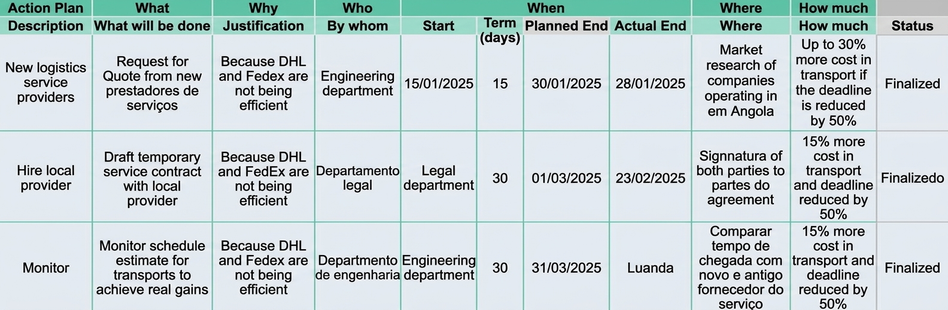
Based on the diagnosis consolidated in the previous stage, a detailed action plan was developed using the “5W2H” tool, focusing on logistical reorganization and strengthening local control over import processes. The structure of the actions taken is presented below in Figure 9.
Previously, all materials and merchandise were exclusively shipped by global couriers, such as DHL and FedEx, which operate efficiently in countries with a lower incidence of corruption, simplified bureaucratic processes, and greater clarity in procedures. However, by adopting local couriers and directly assuming the bureaucratic part, the company was able to identify specific bottlenecks and implement corrections. This included escalating issues with the governmental authorities responsible for customs clearance and acquiring knowledge about local particularities.
Source: Research data.
The matrix details activities, responsible parties, deadlines, and monitoring methods applied in the process of replacing international couriers with local operators.
Among the highlighted actions are:
- mapping of Angola’s specific customs procedures;
- replacement of global couriers by local operators;
- team training for documentary and bureaucratic handling;
- establishment of standardized import protocols.
These actions were applied in three pilot processes to test and evaluate the effectiveness of the new approach.
Step “C”: verify
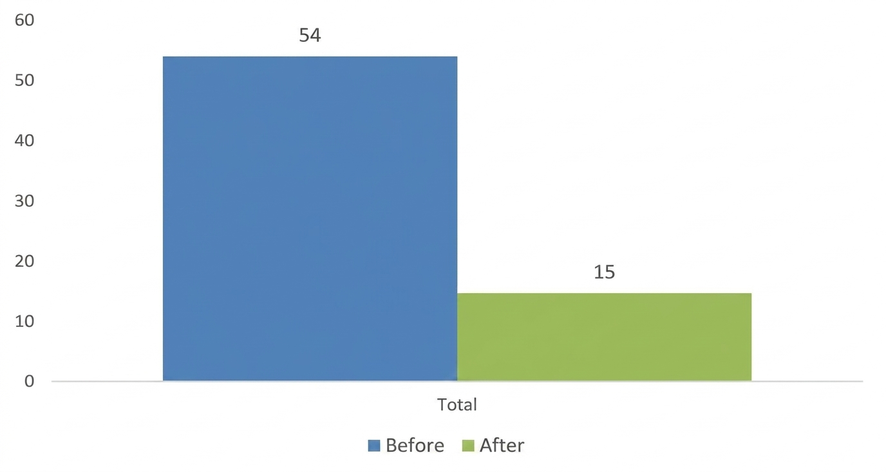
The verification of the results was carried out through a comparative analysis of delivery times before and after the implementation of the new model. The average lag time in the pilot tests dropped by 72.2% (Figure 10).
Source: Survey data.
With this, it became evident that, after analyzing the import process of three pieces of equipment using the previous method and three pieces of equipment using the new applied process, customized and smaller-scale solutions can drastically reduce the waiting time for goods in unstable and unpredictable environments such as Angola.
The transition from global couriers to local ones allowed for greater control over the processes and bureaucracies involved in importing medical equipment at the company where the study was applied. Currently, the average waiting time for parts is four weeks; the new approach should reduce it by at least two weeks in all processes and achieve up to a 72.2% reduction in certain cases, such as the one in the study.
In addition to the deadline reduction, the technical team reported:
- greater predictability in processes;
- reduction of deviations and communication failures;
- increase in document control.
The new brainstorming session indicated that certain operational bottlenecks were mitigated with the applied solution.
Step “A”: act
Based on the gains achieved, the implemented measures were standardized as the company’s operational practices through training and the creation of a document aligned with the organization’s quality management system. The replacement of international logistics operators with local partners became recommended in all new import contracts.
The supply chain analysis for the import of medical equipment in a commercial company in Angola revealed serious structural challenges, with the main logistical delays arising from the dependence on international operators poorly adapted to the local reality. The application of tools such as “5 Whys”, “5W2H”, and the PDCA methodology allowed for the diagnosis of bottlenecks and the implementation of actions that reduced the arrival time of equipment in the pilot plan by up to 72.2%, which validated the effectiveness of local logistics operators.
The standardization of good practices through PDCA strengthened the operation in the supply chain and created a replicable base for similar contexts, which promoted greater predictability and control in the process.
The study shows that personalized strategies, adapted to the local context, can be more effective than generic global models. It is recommended to deepen research in other segments of the production chain in Angola and other Sub-Saharan African countries, following the cyclical logic of PDCA, which ensures the continuous evolution of improvements.
References
[1] Liberato E. 2014. Avanços e retrocessos da educação em Angola. Revista Brasileira de Educação. 19(59):1003–1031. Acesso em: https://www.scielo.br/j/rbedu/a/Dn4CYmKD5W5dw4ygQLBCxzN/?format=pdf&lang=pt
[2] Curimenha, M.M. 2023. Investigação científica em Angola: desafios e estratégias para a autonomia nacional. Educação e Pesquisa. 1(49). Acesso em: https://www.scielo.br/j/ep/a/pTFLxzwSPNLhwPdG35jWFbD/?lang=pt
[3] Luamba M. 2023. Novo ministro do Comércio com “grandes desafios” em mãos. dw.com. Deutsche Welle. Acesso em: https://www.dw.com/pt-002/angola-novo-ministro-do-com%C3%A9rcio-e-ind%C3%BAstria-assume-desafios/a-66222837.
[4] Bento J. 2022. Taxa de escolarização no ensino superior em Angola situada em 8,1%. Angopop. Acesso em: https://www.angop.ao/noticias/educacao/taxa-de-escolarizacao-no-ensino-superior-em-angola-situada-em-8-1/.
[5] Mukuta C. 2024. Quase metade da população de Angola vive na pobreza. Voice of America. Voz da América. Acesso em: https://www.voaportugues.com/a/quase-metade-da-popula%C3%A7%C3%A3o-de-angola-vive-na-pobreza/7495227.html.
COMO CITAR
Oliveira, M.A.S.; Damame, D.B. 2025. Gestão de projetos como estratégia para mitigar atrasos na importação de equipamentos médicos em Angola. Revista E&S. 6: e2025019.
ABOUT THE AUTHORS
Matheus Antonio Silva Oliveira – Project Management Specialist. Manager of the Business Unit in Medical Imaging Equipment. Yapama Saúde LDA, Belas Business Park, Futungo de Belas, Luanda, Angola.
Desirée Baldin Damame – Master in Urban Infrastructure Systems. Advisor Professor of the Project Management MBA. Rua Marcelo Batista, 424, 11730-000, Balneário Itaoca, Mongaguá, São Paulo, Brazil.