
Project Management
November 06, 2026
The Transformation of the Collaborative Process in Architectural Projects with the Adoption of Building Information Modeling (BIM)
Alessandra Borges Barbosa; Auro de Jesus Cardoso Correia
DOI: 10.22167/2675-6528-202603638
Article derived from a Course Conclusion Work (TCC), with content based on the student’s original work and adapted to the editorial format of the E&S Magazine with the support of the ResumeAI tool, an artificial intelligence solution developed by Instituto Pecege for textual synthesis and organization.
Summary
The adoption of digital technologies has significantly altered the design dynamics in civil construction. The research analyzed how Building Information Modeling (BIM) transformed collaborative processes and interdisciplinary communication among architecture and engineering professionals in architectural projects. To this end, it used a structured questionnaire applied to professionals in the civil construction sector. It was characterized as a survey, an approach that allowed for descriptive and explanatory analyses of organizational dynamics, informational flows, and transformations in work processes. The results indicated that the methodology significantly favored project compatibility and interference detection, acted as a facilitator of technical communication, and reduced errors and rework. However, it was found that the full transition faced substantial challenges, with a lack of technical training, high implementation costs, and strong cultural resistance being highlighted. It was concluded that BIM improved the quality of deliverables but required structural changes in the teams’ organizational culture to ensure true interoperability and avoid information fragmentation.
Keywords: BIM; Collaboration; Civil construction; Interoperability; Architectural projects.
1. Introduction
In recent decades, the civil construction industry has been the stage for significant transformations, driven by the advancement of digital technologies. These innovations have reinvented professional practices and expanded the possibilities for integrating information throughout the entire lifecycle of buildings. In this scenario, Building Information Modeling (BIM) emerges as a central methodology, consolidating itself as the current expression of innovation in the sector, as highlighted by Succar (2016).
BIM is a comprehensive methodology focused on the modeling and integrated management of construction data, enabling enhanced control over geometric, technical, and managerial project information. Eastman et al. (2014) emphasize that BIM represents one of the most significant advancements for the Architecture, Engineering, and Construction sector, by enabling the creation of detailed virtual models. These models integrate essential data for planning, coordination, and execution of works, strengthening decision-making and process management, aligning with the importance of planning in the organization and management of activities, according to Goulart, Junior, and Carrijo (2018).
A crucial aspect enhanced by BIM is interoperability, defined by Eastman et al. (2014) as the capacity for seamless data exchange between diverse disciplines. This characteristic is vital to ensure the reliability and consistency of civil construction projects, positioning BIM as a strategic tool to support technical communication and the coordination of information flows during the development of ventures. Thus, BIM transcends mere three-dimensional modeling, consolidating itself as a paradigm that transforms work dynamics, communication, and relationships.
The implementation of BIM, however, requires cultural and operational changes that directly affect collaboration and data flow in projects. With the growing digitalization of processes, the use of collaborative methodologies has increased, but the transition to the BIM environment still faces substantial challenges. These challenges are related to communication, team coordination, and the cultural adaptation of professionals, impacting the quality of production and the circulation of information in architectural projects.
Despite technological advancements and the growing diffusion of BIM, the transition from traditional work models to digital collaborative environments faces significant obstacles. Difficulties in interdisciplinary communication, team coordination, and professionals’ cultural adaptation limit the full integration of information. Furthermore, there is a gap in the in-depth understanding of the impacts of this transformation on professional interaction dynamics and data sharing in architectural projects, which justifies the need to investigate how these elements interconnect.
Given this scenario, it becomes relevant to investigate how the adoption of Building Information Modeling impacts collaborative practices in multidisciplinary offices and teams. Thus, the present research is justified by the need to understand and mitigate the challenges inherent in the full integration of BIM, seeking to improve collaboration and interdisciplinary communication in the sector. The general objective of this study is to analyze how the adoption of Building Information Modeling (BIM) transforms the collaborative and communication processes among the different professionals involved in architectural projects.
2. Material and Methods
This research adopted a qualitative and exploratory approach, seeking an in-depth understanding of the transformations in collaborative and communication processes in project environments mediated by Building Information Modeling (BIM) (MINAYO, 2012; CRESWELL, 2014). It was characterized as a survey, a method suitable for studying large populations through standardized data collection, allowing for descriptive and explanatory analyses of organizational dynamics, informational flows, and transformations in work processes resulting from the implementation of BIM in architectural projects (Babbie, 2020).
Data collection was carried out using a questionnaire, applied via the digital platform Google Forms, to architects, engineers, project managers, and supervisors working on projects developed in a BIM environment (GIL, 2010; LAKATOS; MARCONI, 2017). Participant selection was intentional, considering prior experience with projects developed using the BIM methodology. The form was structured into four blocks: Participant profile (academic background, years of experience, predominant role); BIM Uses and Integration (frequency of use and perception of integration between disciplines); Communication and Collaboration (impact of BIM on communication efficiency and collaborative dynamics); and Advantages and Obstacles (productivity and cultural, technical, and financial barriers).
The data analysis followed the guidelines for qualitative processing and analysis by Babbie (2020), with steps for coding responses and discovering patterns. This procedure allowed for the conceptual categorization of information and the identification of regularities, convergences, and divergences between traditional collaborative practices and BIM-mediated work dynamics. Additionally, a comparative analysis was performed between conventional workflows and BIM-structured collaborative processes, aiming to highlight differences in communication, team coordination, project compatibility, and decision-making. Triangulation between literature review, empirical data, and comparative analysis was employed to ensure consistency and rigor in the results (CRESWELL, 2014; YIN, 2015). The results were organized and interpreted based on the theoretical framework for a comprehensive understanding of BIM’s impacts.
3. Results and Discussion
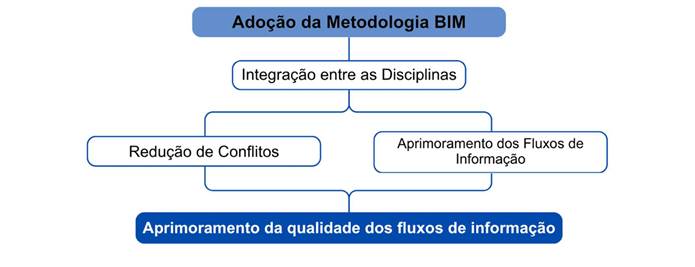
The analysis of the data, performed according to Babbie (2020), allowed the identification of patterns and divergences between traditional collaborative practices and those mediated by Building Information Modeling (BIM). It was observed that BIM favors integration between disciplines and the reduction of coordination conflicts, promoting a collaborative environment based on data-rich models, as illustrated in the systemic impacts diagram (Figure 1).
Figure 1: Cause and effect diagram of the systemic impacts of the BIM methodology in the project development cycle
Source: Authorial, 2026
The adoption of BIM has proven to be a catalyst for interdisciplinary collaboration and communication in architectural projects. Empirical evidence indicated that BIM favors integration between disciplines, reducing compatibility conflicts and improving the quality of informational flows, which corroborates Eastman’s (2014) view of BIM as a paradigm shift in workflows. The implementation of BIM requires new coordination and decision-making strategies, anticipating the resolution of complex solutions for the initial project phases, unlike the traditional process, where decisions are linear and late.
The academic profile of the respondents revealed that the sample is composed entirely (100%) of Architecture and Urbanism graduates, consolidating the architect as a central agent in the BIM workflow. Regarding experience, 44% of professionals had between 2 and 5 years, 32% less than 2 years, and 20% more than 10 years, indicating the participation of a generation already influenced by digital transformation, but also allowing for contrast with the experience of older professionals. The predominant professional role was that of design architects (68%), ratifying the centrality of this role in the BIM environment.
It was found that 80% of participants have already worked on projects in a BIM environment, while 20% have never done so. This data suggests that proficiency in BIM tools does not, in itself, guarantee an integrated BIM workflow, potentially leading to information fragmentation. The majority of participants (72%) work in the state of Rio de Janeiro, indicating a more consolidated adoption of the methodology in this region.
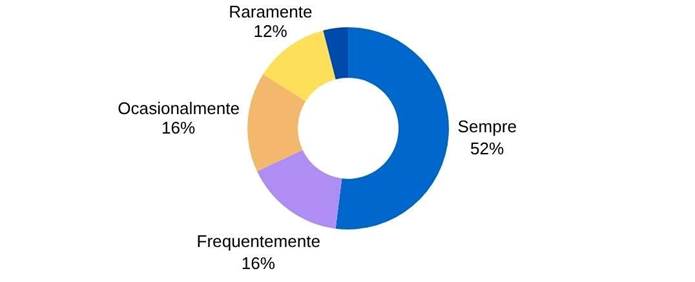
The regularity in the use of BIM software (Figure 2) indicated that 52% of participants use them always, 16% frequently, and 16% occasionally or rarely, totaling over 80% with constant use. The persistence of a group that rarely uses these tools suggests the existence of “information islands”, as described by Eastman et al. (2014), where data fragmentation compromises interoperability and full collaboration.
Figure 2: Regularity in the use of BIM Software
Source: Authorial, 2026
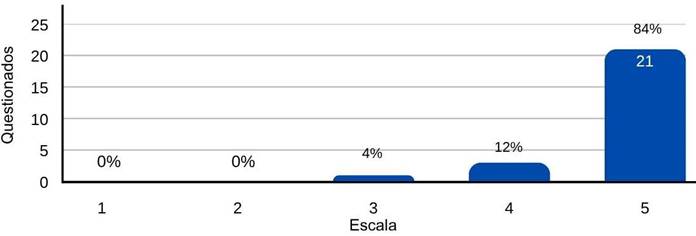
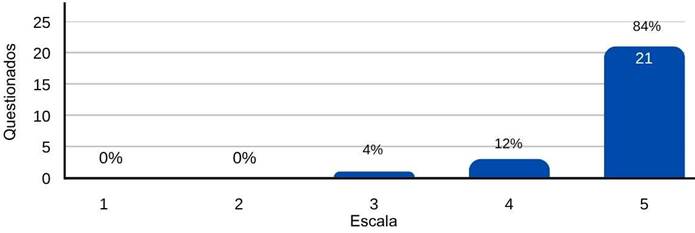
Participants demonstrated a highly favorable perception of BIM’s capability to integrate the various fronts of civil construction (Figure 3). The majority (84%) assigned the maximum score (5) and 12% assigned the score of 4, totaling over 95% who recognize BIM as a facilitator of interdisciplinary coordination. This finding validates the premise of Eastman et al. (2014) that BIM is a strategic tool for technical communication and workflow coordination, mitigating sectoral barriers.
Figure 3: Integration between disciplines involved in civil construction using BIM
Source: Authorial, 2026
The comparison between the traditional workflow and BIM (Table 1) highlighted significant disparities. In technical drawing, BIM offers parameterized and integrated three-dimensional modeling, in contrast to fragmented 2D representations. Communication in BIM is centralized in common data environments, overcoming decentralization based on static data. Information management is integrated into the building’s lifecycle, unlike the dispersed and unstructured data of the traditional method. Finally, coordination in BIM allows for automated conflict detection (Clash Detection), whereas in the traditional process it is manual and prone to errors.
Table 1. Comparison of workflows.
| Analytical Dimension | Workflow | BIM Workflow |
| Technical drawing | Fragmented and independent 2D representations. | Parametrized and integrated three-dimensional modeling. |
| Communication | Decentralized and based on static data. | Centralized in common data environments. |
Source: Authorial, 2026
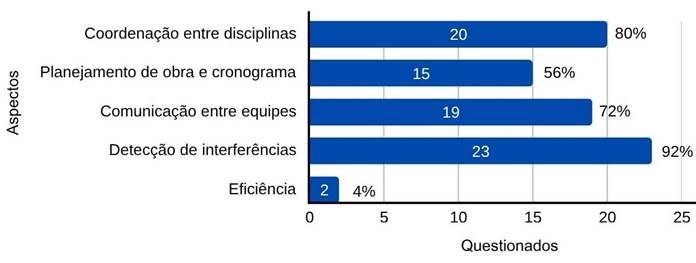
The integration processes most benefited by BIM were interdisciplinary coordination, indicated by 80% of participants, and interference detection (clash detection), with 92% of mentions (Figure 4). Communication between teams was cited by 72%, and construction planning and scheduling by 56%. This data reinforces that the main value of BIM lies in anticipating technical conflicts in the virtual modeling phase, reducing errors and uncertainties during execution.
Figure 4: Integration processes benefited by the use of BIM
Source: Authorial, 2026
The perception of BIM’s impact on communication was overwhelmingly favorable, with 64% of participants stating that the process became more efficient and direct, corroborating the view of Eastman et al. (2014). However, 20% considered communication more complex or technical, reflecting challenges in cultural adaptation and coordination. Operational difficulties, such as the need to remodel DWG files for the BIM environment, were also highlighted, evidencing obstacles to full integration.
Cooperation between teams after the adoption of BIM showed optimism, with 52% of respondents describing the environment as “moderately more collaborative” and 36% as “much more collaborative”, totaling about 90% who recognize improvements. Only 12% observed no significant changes. This suggests that BIM contributes to overcoming informational isolation, even in the face of barriers.
The most significant benefits of BIM included the reduction of errors and rework (40%), improvement in project visualization (24%), increased efficiency and productivity (20%), and more assertive decision-making (16%). These findings indicate that BIM optimizes information flows and mitigates risks, impacting both operational performance and strategic management.
The main obstacles to the implementation of BIM (Figure 5) were the lack of technical training (72%), implementation and license costs (64%), and cultural resistance to change (44%). The lack of standardization between software (32%) and the difficulty of integration between disciplines (8%) were also mentioned, highlighting that the most urgent challenges lie in technical training and organizational culture.
Figure 5: BIM Implementation Challenges
Source: Authorial, 2026
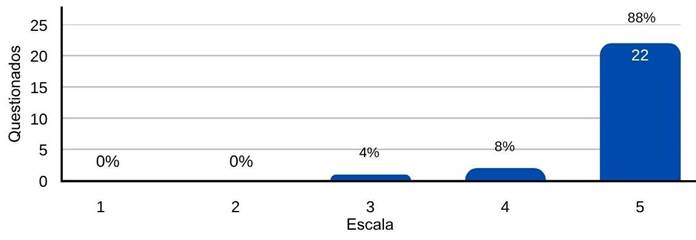
Satisfaction with the quality of architectural projects developed with BIM was high (Figure 6), with 55% of participants giving the maximum score (5) and 30% scoring 4, totaling over 80% who identify a positive impact on quality. Only 15% maintained a neutral position, with no negative evaluations. This suggests that BIM raises the technical standard and reliability of projects.
Figure 6: Evaluation of gains with BIM use
Source: Authorial, 2026
Qualitative comments highlighted that the role of management in BIM transcends the technical domain, acting as a strategic link between the project phases. The main barrier identified was the difficulty in disseminating the methodology systemically and involving other organizational spheres, such as the budgeting and construction monitoring departments. This difficulty in adoption is not restricted solely to software, but to collaborative processes between departments, reinforcing that interdepartmental isolation and cultural resistance are bottlenecks for the effectiveness of informational flows on collaborative platforms, as pointed out by Eastman et al. (2014).
In summary, the results confirmed that BIM acts as a catalyst for integration, with over 84% of professionals recognizing its facilitating role in interdisciplinary coordination and 92% highlighting automated interference detection as the most significant technical gain. The methodology overcomes the fragmentation of 2D representations, reducing errors and rework and improving the quality of deliverables. Although the profile of respondents is predominantly architects (100%) and mostly young, and 80% have already worked with BIM, the isolated use of software does not guarantee an integrated workflow. The full implementation of BIM still faces critical obstacles, such as the lack of technical training (72%), high implementation costs (64%), and cultural resistance to change (44%), which hinder departmental synergy and require structural changes in collaboration, as highlighted by Succar (2016).
4. Conclusion
This study analyzed how the adoption of Building Information Modeling (BIM) transforms collaborative processes and communication among professionals involved in architectural projects. It was found that the BIM methodology acts as a catalyst for integration, promoting a collaborative environment and enhancing interdisciplinary communication. The findings indicated that BIM significantly favored project compatibility and automated interference detection, a technical gain recognized by a significant portion of participants. It was observed that the methodology overcomes the fragmentation of two-dimensional representations, contributing to the reduction of errors and rework, in addition to providing greater assertiveness and quality to the final project deliverables. Professionals’ perception revealed that BIM is a strategic facilitator for technical coordination and information flow management, mitigating sectoral barriers and raising the technical standard of developments.
However, the full transition to the BIM environment still faces substantial obstacles, notably the lack of technical training, high implementation costs, and strong cultural resistance to change. It was identified that the isolated use of BIM software, even by experienced professionals, does not guarantee an integrated workflow, resulting in fragmented information and the persistence of “information silos”. The sample, composed entirely of architects, with a predominance of a young profile and concentrated in Rio de Janeiro, ratified the centrality of this professional in the BIM workflow, but also highlighted the need to involve other organizational spheres for complete departmental synergy. Thus, the research reiterates that BIM adoption requires structural changes in collaboration and organizational culture. For future studies, it is suggested to investigate specific strategies to mitigate cultural resistance and develop standardization protocols that facilitate organizational integration between the budgeting, planning, and execution sectors.
Bibliographic References
BABBIE, Earl. The Practice of Social Research. 15. ed. [S. I.]: Cengage Learning, 2020.
CRESWELL, J. W. Investigação qualitativa e projeto de pesquisa: escolhendo entre cinco abordagens. 3. ed. Porto Alegre: Penso, 2014.
EASTMAN, C.; TEICHOLZ, P.; SACKS, R.; LISTON, K. Manual de BIM: um guia de modelagem da informação da construção para arquitetos, engenheiros, gerentes, construtores e incorporadores. São Paulo: Bookman, 2014.
GIL, A. C. Como elaborar projetos de pesquisa. 5. ed. São Paulo: Atlas, 2010.
GOULART, L. B.; SOARES, G. C.; CARRIJO, S. A. A importância do planejamento e controle de obras. In: Anais do Colóquio Estadual de Pesquisa Multidisciplinar, v. 1, n. 1, p. 1-6, 2018.
LAKATOS, E. M.; MARCONI, M. A. Fundamentos de metodologia científica. 7. ed. São Paulo: Atlas, 2017.
MINAYO, M. C. S. O desafio do conhecimento: pesquisa qualitativa em saúde. 12. ed. São Paulo: Hucitec, 2012.
YIN, R. K. Estudo de caso: planejamento e métodos. 5. ed. Porto Alegre: Bookman, 2015.
Article originating from the Final Course Work of the Specialization in Project Management at POLI USP PRO
To learn more about the course, click here