Project Management
School Management
April 20, 2023
Implementation of agile discipline and education 3.0 in sustainable educational projects
DOI: 10.22167/2675-6528-20230008
E&S 2023, 4: e20230008
Rútilo Pinheiro de Melo Neto; Maria Paula Novakoski Perides
The major changes the world is undergoing, since the beginning of the Innovation Era in 1980, have challenged traditional teaching models. The speed at which these changes occur makes content quickly obsolete and, increasingly, professionals will be valued for their skills, such as: autonomy, creativity, attitude, ability to perform under pressure, and problem-solving. In this context, the school needs to focus on developing these competencies. Learning based on Education 3.0 is a teaching method that promotes the development of competencies and skills through new digital pedagogical practices for the elaboration of well-planned and structured activities[1].
The educational process of this methodology is based on solutions linking content, whether in-person or virtual, with technological tools to dynamize knowledge construction, in a more significant and assertive way. Science, technology, and innovation provide quality educational scientific development for all involved. It is, therefore, an active methodology that promotes student autonomy and protagonism, stimulating self-learning and critical thinking with the use of new technologies to promote innovation in education[2].
Still within this active “mindset”, “Disciplined Agile” (DA) is also an approach that seeks to use the best project management practices and tools to produce a product that adds value to customers. To this end, a “Way of Working” (WoW) must be defined, meaning the team must choose the best way to work. To assist in improving project performance, following DA principles, the system of meetings (Scrum) and organization (Kanban) can be used, along with “Think-pair-share”, “Brainstorming”, planning screen (“Team Canvas basic” – Metric), identification of strengths and weaknesses, opportunities, and threats (SWOT), organization with a “Checklist” and continuous improvement actions (“Kaizen”).
In educational projects, studying the problems and their solutions requires activities that must be developed from a common and shared target[3], with the aim of encouraging approaches to everyday problems, whether from the school community or its surroundings. Evaluating the project’s life cycle within the planned strategy with organization, execution, and monitoring of activities, provides more efficient and effective time and resource management.
Integrative projects are fundamental for the formation of expanded and complementary knowledge, skills, and attitudes, as they provide practical and multidisciplinary experience, being the foundation of integrated teaching (common and technical base). In parallel, participation in external events reinforces integrated activity for the development of this competence. Thus, Education 3.0 and “Disciplined Agile” present themselves as approaches that can contribute greatly to the conduction of integrative projects in schools, assisting in the proposal to develop students’ skills and competencies effectively.
The objective of this study was to describe the application of the concept of Education 3.0 and “Disciplined Agile” in sustainable integrative projects of the State Technical School (ETE) and in a national science fair. Specifically, the following can be highlighted: i. Analyze the interactivity among participants through pair activities, “think-pair-share”, integrative projects, and external events; ii. Evaluate the use of technology practice in Education 3.0 and Disciplined Agile in weekly and virtual meetings; iii. Monitor the dynamics of integrative projects and event editions regarding the participation and improvement of members, including sustainability in educational projects; iv. Consolidate information to obtain performance data on the use of active methodologies in the ETE under analysis; v. Propose continuous improvement actions for future integrative projects and educational events.
This case study involved two integrative projects from a wastewater treatment plant (ETE) in Pernambuco with full-time and vocational education, selected in the Technological Development (DT) category for an event, which is one of the largest Science Fairs in Brazil. In this study, the use of these approaches in two integrative projects was analyzed: a. The HL project, focused on the sustainable restructuring of a school garden with knowledge dissemination to the school community about the importance of planting fruit trees and ornamental cacti. It also sought to bring new possibilities with recycled materials for the assembly of organic gardens; b. the GS project, which aimed at the integration of students with environmental education, through technological resources to raise awareness among students in elementary school II and high school in Pernambuco. In terms of environmental protection with the application of science, technology, and innovation, as well as promoting quality education, one of the Sustainable Development Goals – SDG-04, of the United Nations[4].
In 2020, the integrated project submitted was PROJETO HL and participated in the Science Fair. This research line was composed of seven students from integrated education. For the Science Fair, the team leader chose one member for the paired development of activities for the event. In 2021, the same quantitative procedure as the previous year was applied for the elaboration of the integrated project, that is, seven new members; and, once again, the leader chose one team member to form the pair for PROJETO GS submitted for the event.
The proposition to improve the didactic-pedagogical process of the project was based on the integration of students with the DA and 3.0 education, which consisted basically of: involving active methodologies and WoW practices; monitoring student participation; and consolidating information. For the planning, execution, and control of projects, the approaches presented in Figure 1 were used, offering a set of tools (“tool kit”) to students, enabling the organization of the stages of acquired knowledge and the practice of self-management of actions, as well as assisting in the overall project management itself. This development of activities is based on virtual and technological procedures.
Thus, the continuous improvement cycle (Kaizen) proposed by the DA was adopted, which consisted of improving and perfecting the WoW, that is, adopting a change if it works; or discarding it if it does not meet expectations. In this Kaizen context, the models of the tools used to manage the project are included: Trello/Kanban, SWOT, Checklist, and Team Canvas Basic – Metric. Continuous improvement is the act of applying a series of “loops” to improve the WoW over time, guiding the orientation to help teams identify techniques that will likely work in a given context. This significantly increases the percentage of successful experiments and, therefore, increases the overall improvement rate of the learning process[5].
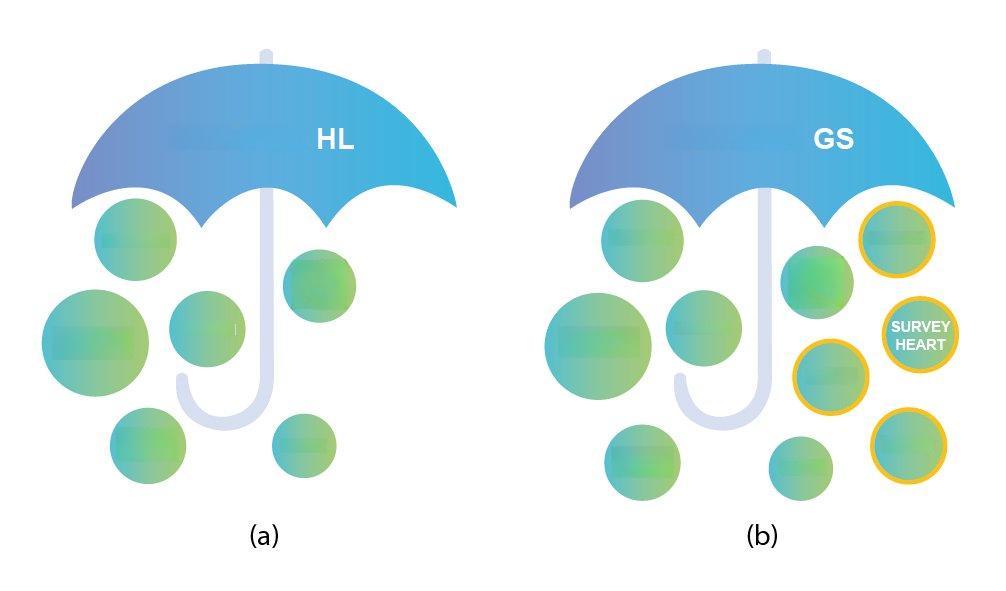
Figure 1. Approaches used in the integrative projects and science fair editions in the base years: (a) 2020 and (b) 2021 of events
Source: Prepared by the author.
The exploratory research was based on the application of questionnaires for the collection of qualitative evaluation data on the application of active methodologies in the ETE under study. For this purpose, the participants in this research were defined as professionals from the state technical school unit, who worked on integrated projects, life projects, external scientific events, and/or educational management projects; as well as, the high school technical students participating in the integrated projects HL (2020) and GS (2021) and the national science fair, simultaneously.
To reach the target audiences, two academic research questionnaires were developed, available from February 4, 2022, to February 13, 2022. The first was applied to ETE professionals and consisted of 16 questions, 15 closed-ended and one open-ended, covering the respondent’s general data, self-assessment, active methodology assessment, and institution assessment. The second focused on students from the same ETE, as participants in the aforementioned projects, and contained 18 questions, 16 closed-ended and two open-ended, with sections for respondent’s general data, facilitator teacher assessment, active methodology assessment, and self-assessment. With the data obtained from the questionnaires, partial and total performance measurement was carried out on the use of active methodologies, applying the scale (0 to 5) to indicate totally disagree, partially disagree, indifferent, partially agree; and, totally agree.
Questionnaire 1 aimed to collect information regarding the perception of ETE professionals who worked with projects, obtaining 20 responses. The first question addressed the identification of job title and role of the respondents at ETE, and in summary, the survey identified the participants as: 75% from common and technical base teachers; and 25% management team. Revealing that, among the participating teachers, the majority were from the technical base, representing 55%. Regarding the type of project applied, 75% of teachers responded that they worked with integrating projects and only 10% with scientific projects for external events.
From the self-assessment stage, regarding the commitment to the integration of new learning technologies and engagement with the proposed digital practices, all respondents agreed with the propositions. Regarding the ability to arouse interest in new project practices, 90% agreed and 10% responded indifferent. From the active methodology evaluation stage, regarding the use of active methods for project development, all agreed on the application. Among the active methodologies applied in the projects, the institutional “Google Classroom” and “Google Forms” stand out, both achieving 90% of the responses. With regard to the application time of active methodologies in the ETE under study, 55% of the responses were from 1 to 3 years.
Still in the stage, all respondents agreed that they obtained positive results by applying the active methodology for agility and engagement in the project’s actions. Regarding the effectiveness of virtual platforms, 75% of respondents agreed, with 90% agreeing that there was engagement to strengthen active methodologies in projects. From the stage about the institution’s evaluation, 80% of respondents stated that the technological resources met the needs, in contrast, regarding the issue of broadband access, 80% of respondents agreed with the difficulty in developing “online” practices for project development.
The total performance, from the partial and total performances of questionnaire 1 applied with teachers and management team, pointed to a total yield of 81%, specifying the stage of self-assessment and active methodology assessment, the achieved indices were 92% and 86%, respectively. For the stage of the institution’s assessment in terms of technological resources and broadband connection, it achieved a performance of 55%.
According to the responses from professors and management staff, the most applied active methodologies in the projects were the institutional “Google Classroom” and “Google Forms”, indicating that few professors apply specific project tools, and consequently, are unaware of the potential to add value to deliverables. The respondents stated that they obtained positive results with the application of the methodologies and intend to continue using them, with more than half of the respondents having used active methodology for less than 3 years, coinciding with the period when the use of digital tools became mandatory due to the pandemic situation. Regarding the effectiveness of virtual platforms and engagement, the majority of respondents agreed that they were welcomed and participated in the process. Concerning broadband access, the majority of respondents agreed on the difficulty of developing “online” project development practices due to the lack of technological resources. This fact was minimized after the research was conducted, as the “professor conectado” program distributed “notebooks” and provided assistance for internet access to permanent professors, including contracted professors, as well as the management team.
Questionnaire 2, the students participating in the integrated projects and external event, totaling four respondents, namely, two students from the second year of the integrated HL Project and two students from the first year of the integrated GS project. Regarding the facilitator professor’s evaluation, all students from the HL and GS projects agreed that the professor was committed to the insertion of new technologies and digital practices, provided mechanisms for data collection and joint decision-making throughout the project.
Regarding the evaluation of the active methodology, the students of the HL and GS project agreed that the virtual platform (Trello/Kanban) was functional for understanding the project phases, as well as for adding agility and engagement to the actions. They also agreed that the virtual meetings (“on-line” meetings, Scrum type) were effective in the project development.
For the members of the HL project, they agreed that access to broadband for online project practices was difficult, and one of them disagreed that the technological resources met all the needs. Whereas for the components of the GS project, it was not significant, regarding the difficulty of access to broadband at ETE, and there was no agreement on the supply of technological resources in relation to all needs. According to the evidenced calculations, regarding the partial and total performance of questionnaire 2, applied to the integrated technical high school students involved with the integrative project and external event, a total performance of 86% was achieved, and breaking down stage I of the facilitator professor’s evaluation, a yield of 96% was achieved, regarding stage III, the student’s self-evaluation was 82%. For stage II, the evaluation of the active methodology and technological resources and connection had a yield of 79%.
Regarding the facilitator professor’s evaluation, all students from the HL and GS projects agreed that the professor was committed to the insertion of new technologies and positively evaluated the results of using active methodologies, reinforcing the positioning of teacher engagement in the process. Students from the HL and GS projects agreed that the virtual platforms (Trello/Kanban) were functional for understanding the project phases, as well as for adding agility, organization, and order to actions. They also agreed that the dynamics of virtual meetings (online meetings, Scrum type) were effective in the project’s development.
For the members of the HL project in 2020, participants agreed that access to broadband for “online” project practices was difficult, and one of them disagreed that technological resources met all needs. For the components of the GS project in 2021, half partially agreed and the other half were indifferent. Regarding the difficulty of accessing broadband at ETE, half of the respondents disagreed that technological resources supplied all needs, showing a tendency for improvement in the need for digital resources, but indicating that this is still a limiting factor.
Thus, with the consolidation of knowledge through active methodologies tools, it is expected that students increase their engagement in research, including through the application of new technologies for practical assimilation of theoretical knowledge, currently studied in the integrated teaching of ETE. The tools of education 3.0 and DA will provide greater dynamism and technological impetus for questioning and learning, student protagonism at the center of learning, contextualization of knowledge, improvement of skills for problem-solving, as well as the development of competencies such as logical, creative, and analytical thinking aspects of projects. It is worth noting that the research results pointed to a low utilization of important active methodologies tools, such as “Design Thinking”, Gamification, “Project Based Learning”, indicating opportunities for improving this process through more training in active methodologies for teachers, discussion forums, and sharing of experiences, including, as a proposition, approaches between institutions.
References
[1] Sassaki C. Educação 3.0: Uma proposta pedagógica para a educação. 2019. Disponível em: <https://orientaeducacao.files.wordpress.com/2019/02/educac3a7c3a3o-3.0-uma-proposta-pedagc3b3gica.pdf>.
[2] Cavalcante A.N.; Lira G.V.; Cavalcante Neto P.G.; Lira R.C.M. 2018. Análise da produção bibliográfica sobre problem-based learning (PBL) em quatro periódicos selecionados. Revista Brasileira Educação Médica. 2018; 42(1).
[3] Walker A.; Leary H.; Hmelo-Silver C. E.; Ertmer P. A. Essential Readings in Problem-Based Learning. West Lafayette (IN): Purdue University Press. 2015.
[4] Organização das nações unidas. Objetivo de Desenvolvimento Sustentável: 4 – Educação de qualidade. 2021. Disponível em: <https://brasil.un.org/pt-br/sdgs/4>. [5] PMI. Foundation for Business Agility: Disciplined Agile. 2021. Disponível em: <www.pmi.org/disciplined-agile>.
Como citar
Melo Neto R.P.; Perides M.P.N. Implementação do discipline agile e educação 3.0 em projetos educacionais sustentáveis. Revista E&S. 2023; 4: e20230008.
Sobre os autores
Rútilo Pinheiro de Melo Neto, Professor na Secretaria de Educação do Estado de Pernambuco, Especialista em Gestão de Projetos, Recife, PE, Brasil
Maria Paula Novakoski Perides, Doutora em Administração, Gerente de Projetos Senior, São Paulo, SP, Brasil.
Link para download: https://cms.revistaes.com.br/wp-content/uploads/2023/04/23008.pdf