Marketing
November 26, 2025
YouTube Shopping, TikTok Shop and the value chain of brands, creators, and consumers
Convergence between content and commerce on social media is reshaping consumption
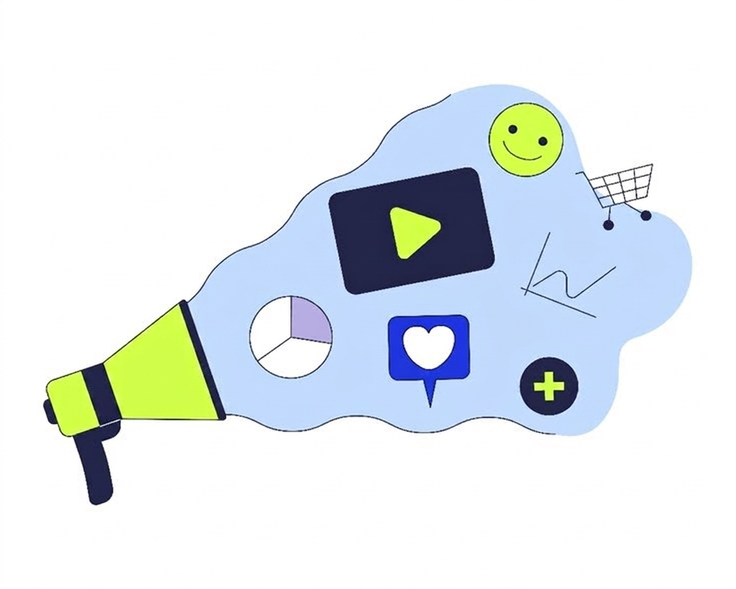
The convergence between content and commerce is a new topic, which I have already discussed a few times here. The fact is that this duo (shopping + entertainment) is redesigning the way people consume. In recent years, video platforms like YouTube and TikTok have ceased to be spaces dedicated exclusively to entertainment or informal education to become an environment for commercial transactions.
The expansion of social commerce, a model in which the buying journey takes place within social networks, represents an advance that alters not only the consumer journey, but also the role of brands, the monetization model of content creators, and the very organization of digital retail. We cannot deny that we are facing a commercial revolution.
The arrival of YouTube Shopping in Brazil, in partnership with Mercado Livre and Shopee, and the consolidation of TikTok Shop in 2025 reinforce this scenario. Both initiatives allow products to be tagged in videos, live streams, and shorts (in YouTube’s case), so that the purchase is completed without the user leaving the content. This integration transforms the video into a showcase with recommendations, reviews, and a point of sale. Consumption becomes simultaneous to the content experience , blurring the lines between discovery and acquisition.
To understand the weight of this phenomenon, it is necessary to observe the Brazilian context. The country remains among the largest consumers of social networks and videos in the world. According to the Digital 2025: Brazil survey, YouTube reaches 144 million monthly users in Brazil. TikTok, on the other hand, continues to grow at an accelerated pace, especially among young adults and small businesses, which use the platform as a driver of visibility and sales. The same report points to 91.7 million Brazilian users on TikTok.
To the cultural factors are added structural characteristics: high smartphone penetration, marketplace maturity, and a historical predisposition to influence as a driver of purchasing decisions. Social commerce finds in this scenario a unique combination of scale, attention, and behavior.
The maturation of this ecosystem reveals two complementary logics. TikTok Shop operates strongly in the territory of algorithmic discovery. Cycles are fast. The purchase tends to be connected to emotion, mood, spontaneous testing, and the creator’s performance. Trends, demonstrations, and live streams structure an environment where desire and purchase converge in time. YouTube Shopping, on the other hand, operates on another layer of the journey. Long videos, tutorials, unboxings, and reviews deepen understanding, reduce uncertainties, and build trust before the decision. The alliance with marketplaces accelerates technological integration and positions the platform as a link between search, content, and transaction. The platforms are very well understanding the power of content creators in front of the audience.
These transformations directly affect brands. The first change occurs in the sales funnel, which ceases to be linear. The sequence of knowing, considering, and buying now happens within the same experience. The cost of customer acquisition tends to decrease when the creator already has a community aligned with the offered solution. Communication becomes dependent on continuous content, more educational and less focused on isolated campaigns and one-off advertisements.
Furthermore, the integration between marketing operations, technology, and logistics becomes indispensable. Social commerce generates demand peaks during live broadcasts and requires real-time inventory updates, competitive delivery times, and automated management. The logic ceases to be purely digital and also becomes operational. It is pure commerce happening.
Consumer behavior also transforms. The purchase becomes contextualized and immediate. The user no longer needs to open tabs, copy links, or search for the product later. The same platform where they heard recommendations and observed usage becomes a channel for completion. The process reduces friction and tends to increase conversion. Trust shifts from corporate institutions to individuals and communities. This changes a lot in the consumption process. The creator figure acts as a mediator of the decision, reducing information asymmetries and expanding the sense of security in the purchase.
For content creators, the impact is significant. The possibility of monetization expands beyond ads and advertising partnerships. The creator approaches the role of a business partner and becomes an agent of the sale. This movement strengthens a layer of the creative economy that has been growing in recent years: small and medium creators who convert through trust and thematic affinity, not just reach. The demand for more precise metrics and conversion indicators also tends to value more technical, demonstrative, and educational narratives, in addition to traditional influence formats.
These changes pressure retail to restructure its operations chain and strategies. Social commerce intensifies the importance of integrated systems. Inventory platforms need to dialogue with marketplaces and content platforms. Brazilian retail is advancing towards a “phygital” environment, that is, the permanent fusion between the physical and the digital. The store ceases to be a place and becomes a flow.
As the convergence between video and commerce consolidates, it becomes evident that social commerce platforms are not just marketing extensions, but part of the sales infrastructure. Content now participates in the value generation chain and the product presentation logic. The presence of creators, previously seen as communication, is converted into a strategic link between purchasing decisions and brand experience.
The combination of YouTube Shopping and TikTok Shop paves the way for a hybrid model where discovery and depth operate together. It also indicates a broader cultural shift. The Brazilian consumer identifies with personal narratives, digital communities, and informed recommendations. Brands that wish to remain competitive will need to integrate channels, invest in context-based content, and establish consistent relationships with creators.
The trend is that this new phase of social commerce brings companies, creators, and consumers closer in the same operational environment. The experience ceases to be segmented and becomes continuous. Purchases begin to reflect not only needs but also belonging, lifestyle, and a collective interpretation of value. The phenomenon represents not an aesthetic change, but a functional one. Merchants and brands that recognize this transition and reorganize their sales logic tend to occupy a privileged space in the competitive landscape of the coming years.
The ongoing transformation redefines the role of digital platforms and ushers in a new generation of consumption, guided by content, data, and communities. The evolution of retail in Brazil inevitably involves social commerce and creators as fundamental agents in this process.