
Strategy
Financial Management
Innovation
November 08, 2024
Artificial intelligence in financial markets
By using technical indicators, models can predict possible price trends and market movements
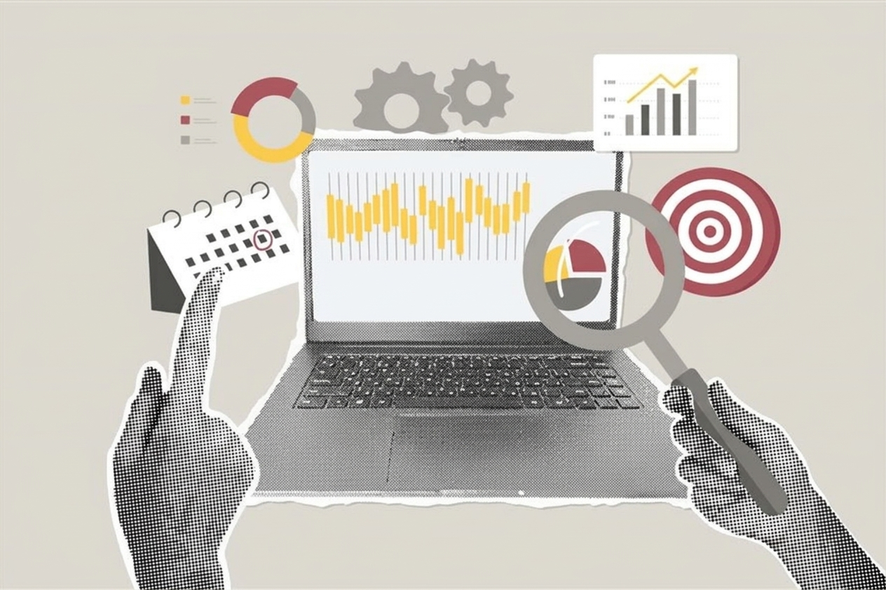
In recent years, artificial intelligence(AI) has been modifying the financial markets in an impressive way. From algorithms that assist in decision-making to systems that completely automate operations, the use of AI is revolutionizing the way financial assets are traded. This technology offers quick and accurate solutions, allowing investors and institutions to track and respond to market fluctuations in real time (Dakalbab et al., 2024).
With the advancement of technology, several AI techniques focused on the financial market have emerged, each with its own advantages and specific applications. Among them are neural networks, a supervised learning method inspired by the functioning of the human brain. These networks are composed of layers of artificial “neurons” that process information in an interconnected way, collaborating to identify patterns in large volumes of data. Neural networks are particularly useful in identifying trends and predicting asset price movements, offering essential support for traders and investors seeking to make more informed and effective decisions.
Besides neural networks, there is reinforcement learning, a more modern technique that learns through trial and error. In reinforcement learning, the algorithm interacts with the financial market environment, testing different strategies and learning from the rewards or penalties received. This technique allows the algorithm to optimize its decisions over time, adapting to market conditions. This continuous adaptation allows reinforcement learning to adjust to constant market changes, making it a valuable tool for both short-term trading and long-term investments.
Benefits
One of the great benefits of AI in the financial market is the ability to analyze historical data and identify patterns. By using technical indicators, such as moving averages or relative strength indexes (RSI), AI models can predict possible price trends and market movements. The analysis of historical data and the identification of patterns allow investors to identify potential buying and selling moments, making more rational decisions and based on concrete information, instead of relying solely on intuition or speculation.
Beyond data analysis, AI has brought automation to the world of finance. With algorithms that execute buy and sell orders autonomously, trading strategies have become faster and more efficient. This type of automation allows operations to be performed in fractions of a second, reducing emotional impact on decisions and taking advantage of opportunities that, manually, might go unnoticed. Thus, AI enables more consistent trading based on rigorous analysis.
AI has also brought the possibility of personalizing financial strategies according to the profile and objectives of each investor. By analyzing market behavior and asset response to different variables, AI algorithms can adjust investment strategies in real-time, seeking to optimize performance and manage risks in a personalized way. Thus, both individual investors and large institutions can use models that consider their specific needs, increasing the precision and efficiency of operations.
The Future
The future of artificial intelligence in financial markets is full of possibilities. With the continuous advancement of machine learning technologies and access to growing volumes of data, AI tools have the potential to make financial operations more secure, fast, and personalized. This continuous revolution is in its early stages, but it promises to transform how people trade, manage risks, and make financial decisions. Thus, AI not only enhances investor performance but also opens new avenues for innovations across the financial sector.
| To access the references of this text click here |
Who wrote this column
José Erasmo Silva