
Organizations
Mental Health
Psychological Safety
April 05, 2024
Psychological safety in organizations: a perspective from the current scenario
DOI: 10.22167/2675-6528-20230122
E&S 2024, 5: e20230122
Amanda Dechen Silva; Alessandra Demite Gonçalves de Freitas
Since its emergence, management has sought to understand and study the aspects that impact organizational results, which has given rise to numerous theories, research, and experiments. According to Krausz[1], among the different assets of a successful business, the people who integrate into it are the most important.
Mary Parker Follet, the first woman to be considered an authority in management and a pioneer in the approach to motivation from an organizational perspective[2], highlighted, in 1924, through her studies, the importance of understanding human relations and analyzing social and psychological factors in organizations[3]. Later, in 1965, the term “psychological safety” emerged, which would become an essential factor in the development of teams worldwide[4].
To further contribute to the finding made in the last century that human relations make all the difference in organizational contexts, Google — considered one of the largest companies in the world[5] and chosen as the best company to work for eight times in a period of 11 years[6] — conducted a study that considered 180 teams, whose main objective was to investigate what constitutes a truly efficient team. Through it, researchers discovered that a high-performance team is defined much more by how its members interact with each other than by who is part of the team[7]. According to Granato[8], one of the study’s major conclusions was the importance of psychological safety, which emerged as the main driver of high-performance teams.
A reference in this field and recognized as the biggest influencer in the Human Resources area in the world in 2019[9], Amy Edmondson defined psychological safety as a shared belief among team members that they are safe with their peers to take risks and act vulnerably as part of the group[10]. It is important to emphasize that psychological safety should not be seen as an organizational goal, but rather as a necessary condition for trust among collaborators and team members to develop and for them to actually achieve their objectives[11]. Edmondson[12] addresses the topic with different examples, which in this study will be divided into four aspects: a) safety in expressing oneself; b) safety in interacting; c) safety in learning; and d) safety in belonging.
The safety in expressing oneself can be understood as the confidence that team members feel when speaking up, proposing ideas, and even questioning the status quo. In the study conducted by Google researchers, it was found that when all team members spoke, the team was more successful than when only one or a few members expressed themselves in meetings[13].
Interaction safety, on the other hand, relates to the members’ ability to give and receive feedback, engage in difficult conversations, or even ask for help. According to Baker[14], there are workplaces where asking for help can lead to negative consequences. This practice can harm team performance, as instead of developing, the person spends a large part of their time in a professional environment where pressure and anxiety are constant, undermining their potential. This type of feeling can be linked to “burnout”, classified by the World Health Organization (WHO) as a work-related health problem[15].
According to Whiting[16], active learning is one of the ten most important skills for the professional environment; in this sense, the security in learning should be even more valued. The individual feels safe and in a learning environment when stimulated to experiment and innovate and when realizing that their way of acting will not put their identity and integrity at risk[17].
Finally, there is also the security of belonging, which refers to the individual’s feeling of being part of the group, without fear of being rejected or harmed. Hardingham[18] argues that this feeling is part of a basic human need and that teamwork contributes to satisfying it.
This is in agreement with what has increasingly been researched regarding diversity and inclusion in organizations[19]. As Davidson and Ferdman[20] argue, inclusion can be understood as the perception of acceptance of people within the organizational context, that is, when an individual feels welcome and valued. Likewise, diversity — which goes beyond race or gender, encompassing age range, histories, educational level, roles, and others[21] — can positively impact a team, as the skills of the people involved sometimes complement each other, in order to achieve the organization’s objective with greater assertiveness[22].
Given this scenario, it is important to understand the influence that the external world has on organizations. According to Souza Júnior et al.[23], concepts such as VUCA world (volatile, uncertain, complex, and ambiguous) and BANI world (brittle, anxious, non-linear, and incomprehensible) help in understanding the daily business transformations, but they do not rule out the need for studies that evaluate multiple perspectives.
Given this, this study aimed to understand the perception of Brazilian professionals about the psychological safety of the work environment in the current scenario, through an opinion poll. The chosen approach was quantitative, which prioritizes the compilation and analysis of data generated from factors and phenomena, being used as a research methodology in different areas[24]. Because of this, the sample was not limited to a specific audience and included professionals from different sectors. An anonymous questionnaire was used with the objective of preserving the identity of the respondents.
According to Lakatos and Marconi[25], there are different strategies that help in identifying characteristics of a given audience or sample. The data collection instrument chosen in this research was the application of a questionnaire, composed of 25 multiple-choice questions, through the Microsoft Forms tool. According to Gunther[26], in addition to profiling the interviewees, a questionnaire can collect other information, such as geographic location data, gender, age group, and income, and can also include more specific questions, such as opinions, attitudes, preferences, values, and motivations. These variables were explored in the questionnaire applied in this study, within the context of psychological safety.
The questions used in section two of the questionnaire were based on previous research — including the previously cited experiment conducted by Google in 2013 —, whose results demonstrated that psychological safety is the primary factor for achieving success among teams[7].
According to Edmondson[12], creator of the methodology used by organizations worldwide in their research, the answers found through the application of the questionnaire may be surprising, revealing the true culture of organizations. For the present research, the response alternatives were updated from the original version used by Edmondson[12], adopting the options “true” and “false” instead of using the Likert scale. Fávero and Belfiore[27] warn about the incorrect use of Likert scale variable analysis, which can be categorized as arbitrary weighting. Furthermore, Guy and Norvell[28] argue that the neutral option present in Likert scales induces questionnaire respondents to choose this alternative, as the tendency of most participants is to avoid extremes, and this can harm the accuracy and reliability of studies. Another relevant point is that questionnaires should not be tiring for participants. Therefore, it is preferable that questions are made available easily and quickly, which is optimized by the use of dichotomous response types[29].
The online questionnaire was shared through two tools: the WhatsApp messaging application and the LinkedIn social network, the latter having been chosen for its focus on professional matters and its constant growth trend[30]. The data from the 292 responses were tabulated in the Excel program, and the quantitative variables regarding the sample profile were analyzed and graphically represented. The research also used descriptive statistics as a methodology for analyzing the obtained data, in order to describe and synthesize the main observed characteristics[27]. For the other variables, calculations of mean, standard deviation, and others were not applied, as they were qualitative data, for which these analyses would not be appropriate[27].
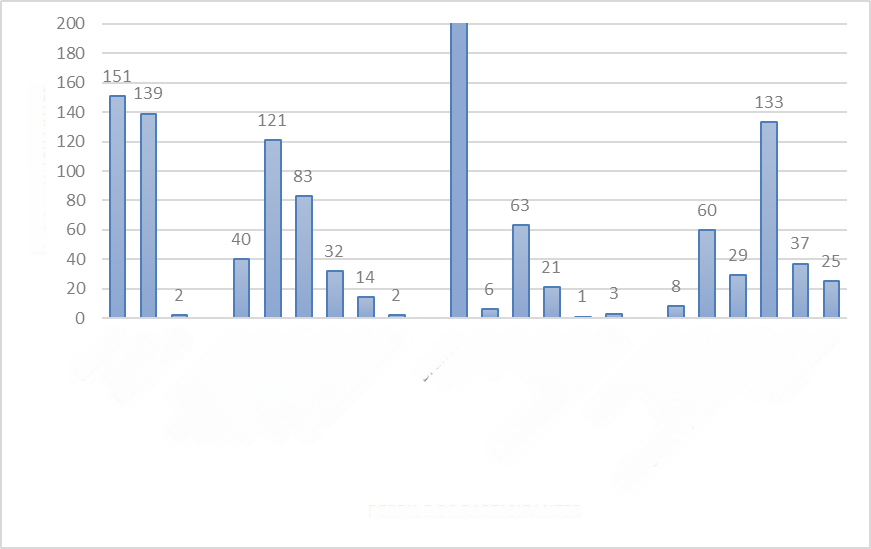
The sample was, for the most part, within the 25 to 34 age group. Participation was homogeneous between men and women, with only two individuals identifying as “non-binary”. Regarding color, participants were questioned based on the classification indicated by the Brazilian Institute of Geography and Statistics (IBGE); an option with the alternative “prefer not to answer” was also offered, which was selected by three respondents. In the rest of the sample, 198 identified as white, and 63 as brown (Figure 1).
Source: Original survey data.
Note: (*) Enrolled or completed
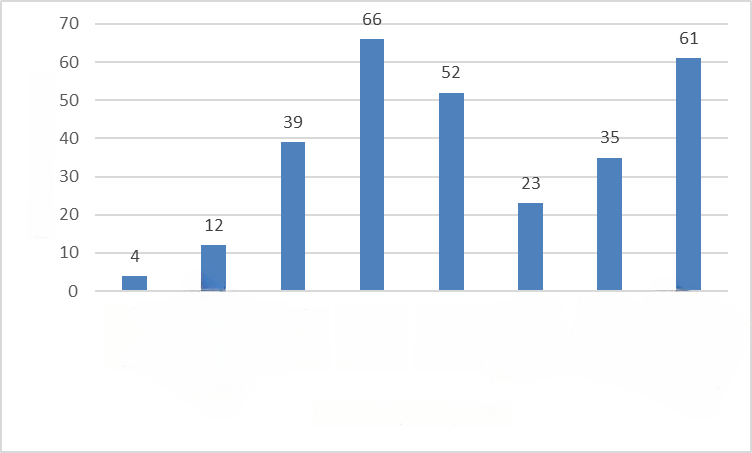
In terms of educational attainment, the sample had 133 people with postgraduate lato sensu (in progress or completed); the lowest participation was from high school students, with eight respondents (Figure 1). To assess the socioeconomic level, individual monthly income was asked, based on the Brazilian minimum wage, set at R$ 1,212 at the time of this study[31]. Only 12 people reported having an income lower than one minimum wage, while 66 respondents stated they had an income ranging between two and four minimum wages (Figures 1 and 2).
Source: Original survey data.
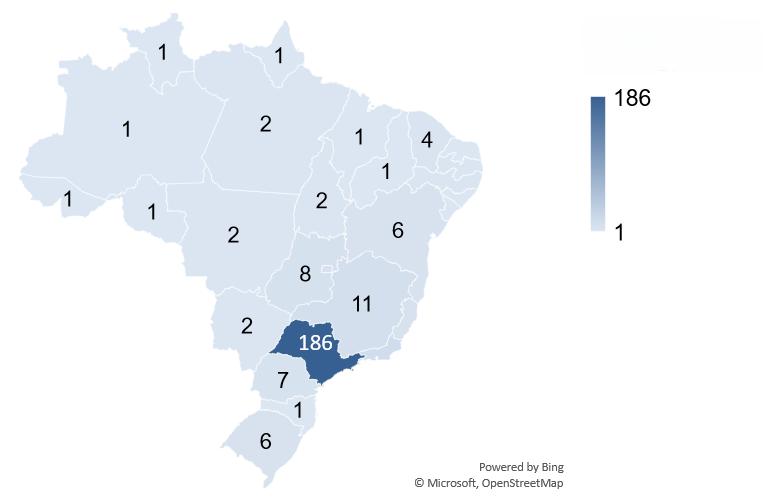
In terms of geographical location, the Southeast region stood out the most (Figure 3).
Source: Original research data.
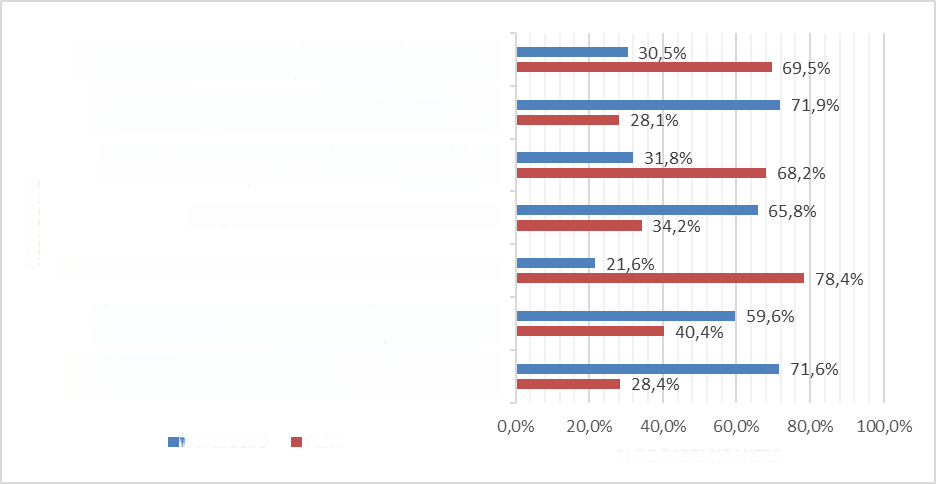
To understand the perception of the psychological safety theme among respondents, seven questions were asked. The first addressed the team members’ reaction in case someone made a mistake, to which 30.5% of respondents answered that the mistake could be used against the person who made it (Figure 4). Each organization has environmental characteristics that influence this perspective, however, according to Freitas[32], organizational climate is one of the decisive factors. For example, if management is too permissive or if there is exacerbated competition among members, the result can be moral harassment, which encompasses the organizational, individual, and social spheres. In this scenario, Porto[33] highlights the complexity of tolerance, which stands out as an urgent attitude in current society. On the other hand, it is also necessary that, in addition to preparing leaders and their teams for the situation after the event considered an error, leadership also understands the reasons why it happened. Livio[34] reinforces the importance of constant training and feedback evaluations for management improvement.
Source: Original survey data.
The second question investigated the participants’ evaluation of their team’s ability to bring up difficult problems and issues; 71.9% of respondents said this is possible in their organizations (Figure 4). In the last decade, a paradigm shift has been possible, partly influenced by the covid-19 pandemic[35], which has opened space for management models that encourage employee participation in decision-making. Costa[36] emphasizes that communication is essential for teamwork and the success of an organization, and dialogue between an employee and their leader can bring about significant changes and innovations.
In the third question, the differences between team members were also addressed. Almost 69% of respondents denied rejection among people for not being similar (Figure 4). Although Katzenbach and Smith[37] highlight that the most important characteristic for a team is discipline and not unity, diversity has also appeared in research worldwide as a crucial factor for team success, even contributing to increasing organizations’ profitability[38].
Another issue addressed was the safety to take risks within teams. Loenert[39] points out that high-performance teams have leaders who encourage their collaborators to take risks towards growth and development, in order to act strategically. For individuals to consider the idea of risk, trust becomes practically a requirement, and vulnerability is part of this process. Approximately 66% of respondents said they believed their teams felt safe to take risks (Figure 4).
An applied example of the effects of trust in the professional environment is the ability to ask peers for help. Among the research participants, 78.4% responded that it was not difficult to seek help from team members (Figure 4). Baker[14] considers asking for help as a skill that can transform a professional’s career. Situations involving conflicts of interest between team members can lead individuals to resist proposals and changes, according to Rezende et al.[40].
Another part of the questionnaire asked whether team members would deliberately act in a way to undermine an individual’s efforts. The results showed that 40.4% of participants felt that other members might act this way (Figure 4). Although competition is inherent in humans, it can often be viewed ambiguously: while it can bring negative consequences, in some cases it also contributes to people seeking personal achievements, by sharing and exchanging with others who are on their own quests[41].
To achieve objectives and goals, the development of skills in the professional sphere has been receiving increasing attention[42]. Among the study respondents, 72% considered that their unique skills and talents were valued (Figure 4). The work contributes to satisfying basic human needs, such as survival and social connection[43]. Therefore, it is important for leaders to know how to reconcile talents and processes, preventing “burnout”[44].
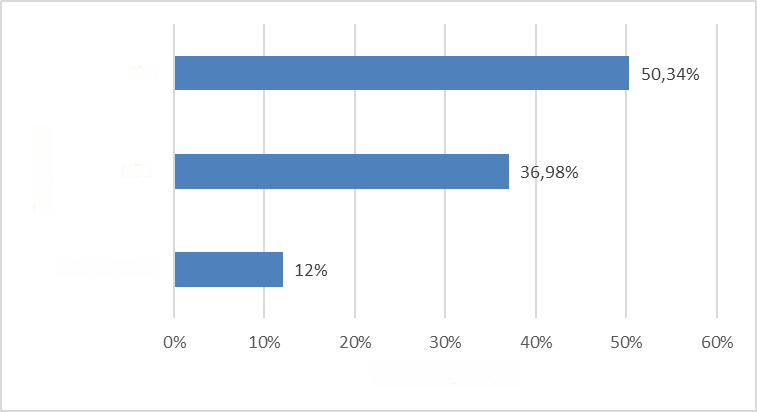
To prevent work environment-related illnesses, the implementation of psychological safety practices can be an allied initiative. Half of the participants (50.34%) in the sample stated that organizations had initiatives that promoted the creation of a feedback culture, with greater tolerance for errors and differences, encouragement of creativity and risk-taking, encouragement of active listening and inclusion in decision-making (Figure 5). Judging by the research, therefore, there is still ample room to work on this concept, as 36.98% of respondents stated they had not observed such initiatives in their organizations, and another 12% did not know how to comment on the topic (Figure 5). According to Ulrich[45], the Human Resources area is in a moment of simplifying complexity, and two of the premises of this movement focus on developing human capacity and promoting collaboration, actions that have a direct link to the topic of psychological safety.
Source: Original survey data.
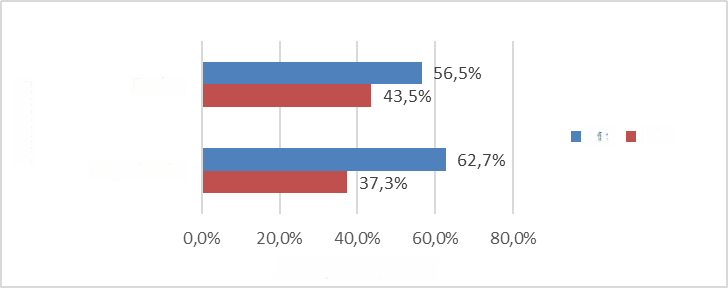
Although diversity in its different facets contributes to business sustainability, almost 38% of respondents indicated that organizations did not have diversity incentive actions (Figure 6). To understand the scope of this topic, it was also asked whether there was diversity in the team in which the individual was inserted, and, this time, the number of negatives was slightly higher, being 43.5% of the responses. This shows that, although diversity exists in organizations, it is not present in all teams. Diversity can assist organizations in problem-solving, promote creativity and innovation, develop organizational flexibility, among other benefits[46].
Source: Original research results
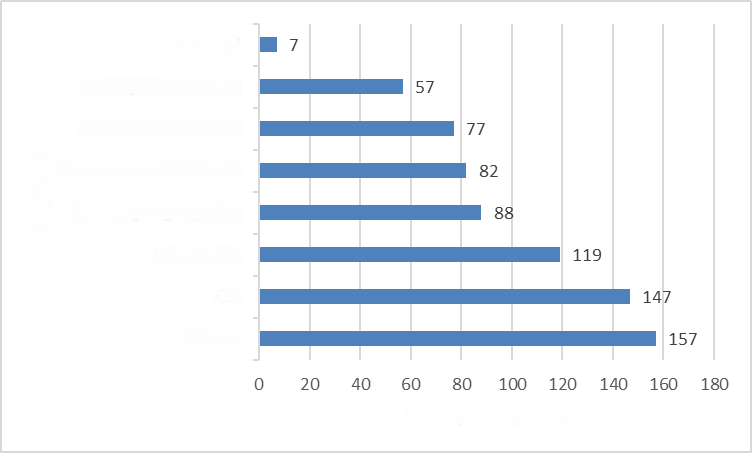
Hanashiro and Carvalho[21] address the concept of diversity beyond race, ethnicity, and gender, by emphasizing variables such as function, tenure in the organization, geographical origin, age, among others. In this sense, participants were asked what type of diversity they found in their organizations (Figure 7), and the options gender, color, and age group were the ones that received the most responses.
Only 28% mentioned the participation of people with disabilities (PwD) in their organizations (Figure 7). Silva and Barbosa[47] argue that there is a big difference between organizations that truly want to apply diversity and those that just want to comply with laws, which even involves the welcoming and adaptation of the physical and corporate environment[48].
Source: Original research data.
Note: (*) The “others” item includes: (1) where I work there is no diversity; (2) foreigners; (3) all, very calm; (4) sexual orientation; (5) sexuality; (6) religion.
Along the same lines, the economic condition also appeared as a little-explored variable by the organizations of the research participants (Figure 7). Economic inequality can be seen as a social problem that begins in the educational formation of individuals, viewed as a historical problem[49] that highlights the involvement of variables such as gender and race, and therefore emphasizes the importance of quota programs, for example[50].
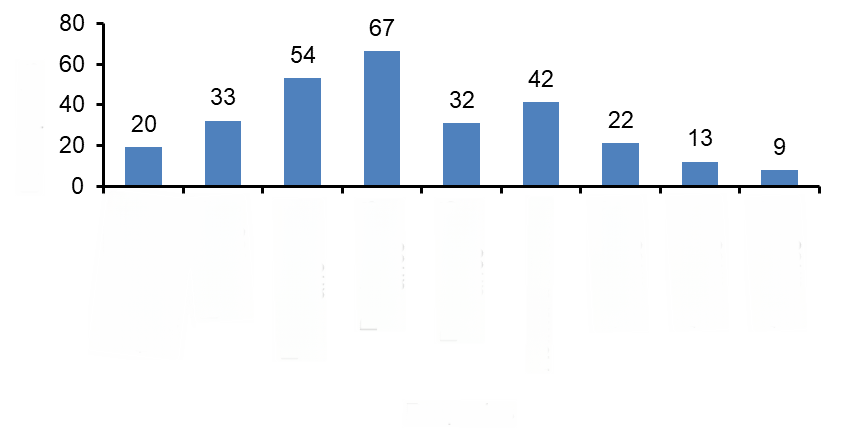
Regarding the inquiry about time in the organization, 67 people reported having between one and three years of affiliation, constituting the majority of responses (Figure 8).
Source: Original research data.
Note: (*) Answered according to the respondent’s last professional experience.
According to a study by the business consulting firm Deloitte[51], items such as diversity, inclusion, tolerance, and flexibility can be decisive in retaining talent, especially “millennials” (born between 1984 and 1995) and generation Z (born between 1995 and 2009). The consulting firm’s study showed that almost 61% of generation Z participants intended to leave their jobs within two years, compared to 43% of “millennials”.
Returning to the scope of this research, another focus of investigation was the issue of leadership. The questionnaire included a question about the participants’ proximity to leadership, and only 11 people had no direct contact with their leaders (Figure 9).
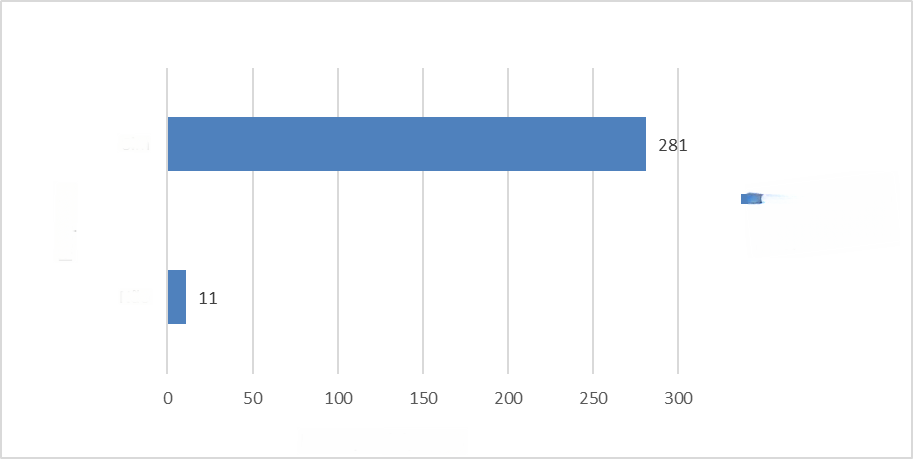
Source: Original survey data.
According to Espírito Santo[52], a leader’s influence can even impact employee motivation, who, when they perceive the dedication and effectiveness of leadership, tend to have positive perceptions and higher levels of well-being, demonstrating the importance of team proximity to their managers. Finally, one of a leader’s great challenges is to mediate between the members of their team and also promote psychological safety[53].
This study sought to understand the perception of psychological safety in Brazilian organizations in the current scenario through the perspective that professionals from different areas have regarding the topic. The research sample participants were familiar with the concept, and half of the organizations (50.4%) they represented had practices to foster psychological safety. However, it became clear that there is room to better explore initiatives related to psychological safety and, moreover, to increase diversity in institutions and teams. Although only 21.6% of respondents indicated that asking for help from other team members was not difficult, 40.4% responded that someone on the team would deliberately act to undermine efforts. In this sense, developing teamwork combined with the theme of psychological safety can bring benefits to organizations.
References
[1] Krausz R.R. Trabalhabilidade. São Paulo (SP): Nobel; 1999.
[2] Fontana C.G.C. Modelos organizacionais e teorias. São Paulo (SP): Editora Senac; 2020.
[3] Campelli C.R. A contribuição do enfoque integrativo de Mary Parker Follet à ciência da administração [Dissertação]. Florianópolis (SC): Universidade Federal de Santa Catarina; 1986. Disponível em: https://bdtd.ibict.br/vufind/Record/UFSC_29dabd38b6f71dcbe77e5bda662f8390
[4] Edmondson A.C.; Lei Z. Psychological safety: The history, renaissance, and future of an interpersonal construct. Annual Review of Organizational Psychology and Organizational Behavior. 2014; 1(1): 23-43. DOI: 10.1146/annurev-orgpsych-031413-091305.
[5] Statista. The 100 largest companies in the world by market capitalization in 2021. 2022. Disponível em: https://www.statista.com/statistics/263264/top-companies-in-the-world-by-market-capitalization. Acesso em: 13 fev. 2022.
[6] Fortune. The 100 best companies to work for. 2014. Disponível em: https://fortune.com/best-companies/2017/. Acesso em: 13 fev. 2022.
[7] Rozovsky J. re:Work Google. The five keys to a successful Google team. 2015. Disponível em: https://rework.withgoogle.com/blog/five-keys-to-a-successful-google-team/. Acesso em: 20 fev. 2022.
[8] Granato L. Exame. Pesquisa do Google mostra o principal fator dos times de alta performance. 2020. Disponível em: https://exame.com/carreira/pesquisa-do-google-mostra-o-principal-fator-dos-times-de-alta-performance/. Acesso em: 13 fev. 2022.
[9] Muller-Heyndyk R. HRMI 2019: Amy Edmondson tops list of influential thinkers. HR Magazine. 2019. Disponível em: https://www.hrmagazine.co.uk/content/other/hrmi-2019-amy-edmondson-tops-list-of-influential-thinkers. Acesso em: 13 fev. 2022.
[10] Edmondson A.C. Psychological safety, trust, and learning in organizations: A group-level lens. In: Kramer R.M.; Cook K.S. (eds.). Trust and distrust in organizations: Dilemmas and approaches. New York (NY): Russell Sage Foundation; 2004. p. 239-272.
[11] Neeley T. A revolução do trabalho remoto. São Paulo (SP): Benvirá; 2021.
[12] Edmondson A. The fearless organization. Hoboken (NJ): John Wiley & Sons; 2019.
[13] Duhigg C. The New York Times Magazine. What Google learned from its quest to build the perfect team. 2016. Disponível em: https://centre.upeace.org/wp-content/uploads/2020/09/7.1-what-google-learnt.pdf. Acesso em: 13 fev. 2022.
[14] Baker W. Peça!: como a habilidade de pedir ajuda pode transformar sua carreira. São Paulo (SP): Saraiva Educação SA; 2020.
[15] Almeida E. 2022. OMS inclui o Burnout na lista de doenças do trabalho. Universidade Federal de Minas Gerais. Disponível em: https://ufmg.br/comunicacao/noticias/oms-inclui-a-sindrome-de-burnout-na-lista-de-doencas-do-trabalho. Acesso em: 10 maio 2022.
[16] Whiting K. These are the top 10 job skills of tomorrow — and how long it takes to learn them. World Economic Forum. 2020. Disponível em: https://www.weforum.org/agenda/2020/10/top-10-work-skills-of-tomorrow-how-long-it-takes-to-learn-them/. Acesso em: 13 fev. 2022.
[17] Silva N. As interseções entre cultura e aprendizagem organizacional. Convergencia. Revista de Ciencias Sociales. 2001; 8(26): 55-76.
[18] Hardingham A. Trabalho em equipe. São Paulo (SP): Nobel; 2000.
[19] Bennett J.M. Intercultural competence: Vital perspectives for diversity and inclusion. In: Ferdman B.M.; Deane B.R. (eds.). Diversity at work: The practice of inclusion. 33ed. New York (NY): John Wiley & Sons; 2014. p. 155-176.
[20] Davidson M.N.; Ferdman B.M. Inclusion: What can I and my organization do about it. The Industrial-Organizational Psychologist. 2002; 39(4): 80-85.
[21] Hanashiro D.M.M.; Carvalho S.G. Diversidade cultural: panorama atual e reflexões para a realidade brasileira. REAd — Revista Eletrônica de Administração. 2005; 11(5): 1-21. Disponível em: https://www.redalyc.org/pdf/4011/401137448001.pdf.
[22] Finamor A.L.N.; Costa F.R.; Cardoso M.A.F.; Cunha N.M.M. Construção de equipes de alto desempenho. 1ed. Rio de Janeiro (RJ): Editora FGV; 2015.
[23] Souza Júnior A.P.; Bergamo Filho C.; Oliveira L.C.A. Modelo híbrido: evolução na gestão empresarial para eficiência e inovação ágil. Rio de Janeiro (RJ): Brasport; 2021.
[24] Gil A.C. Como elaborar projetos de pesquisa. 4ed. São Paulo (SP): Atlas; 2002.
[25] Lakatos E.M.; Marconi M.A. Fundamentos de metodologia científica. 5ed. São Paulo (SP): Atlas; 2003.
[26] Günther, H. Como Elaborar um Questionário. Planejamento de Pesquisa nas Ciências Sociais UnB. 2003; 01: 01-15. Disponível em: https://www.ufsj.edu.br/portal2-repositorio/File/lapsam/Texto_11_-_Como_elaborar_um_questionario.pdf.
[27] Fávero L.P.; Belfiore P. Manual de análise de dados. Rio de Janeiro (RJ): Elsevier; 2017.
[28] Guy R.F.; Norvell M. The neutral point on a Likert scale. The Journal of Psychology. 1977; 95(2): 199-204. DOI: 10.1080/00223980.1977.9915880.
[29] Chagas A.T.R. O questionário na pesquisa científica. Administração on-line. 2000; 1(1): 25.
[30] Nery B. LinkedIn atinge 51 milhões de usuários no Brasil e receita global cresce 27%. 2021. Disponível em: https://mundoconectado.com.br/noticias/v/19973/linkedin-atinge-51-milhoes-de-usuarios-no-brasil-e-receita-global-cresce-27. Acesso em: 13 fev. 2022.
[31] Ministério da Economia (ME). Salário mínimo será de R$ 1.212 a partir de janeiro de 2022. 2021. Disponível em: https://www.gov.br/economia/pt-br/canais_atendimento/imprensa/notas-a-imprensa/2021/dezembro/salario-minimo-sera-de-r-1-212-a-partir-de-janeiro-de-2022. Acesso em: 15 maio 2022.
[32] Freitas M.E.D. Quem paga a conta do assédio moral no trabalho? RAE-eletrônica. 2007; 6(1): 1-7. DOI: 10.1590/S1676-56482007000100011.
[33] Porto L.C.G. Uma teoria sobre tolerância. Curitiba (PR): Editora Appris; 2022.
[34] Livio M. O líder disruptivo. Rio de Janeiro (RJ): Editora Autografia; 2021.
[35] Souza O.; Janeiro R.; Silva P.S.L. Espaço, tempo e relacionamentos na pandemia: elaborações. Revista de Psicanálise da SPPA. 2021; 28(3): 669-694.
[36] Costa D. Não existe gestão sem comunicação. Porto Alegre (RS): Dublinense; 2022.
[37] Katzenbach, J. R.; Smith, D. K. 2002. Equipes de alta performance: conceitos, princípios e técnicas para potencializar o desempenho das equipes. 4ed. Elsevier, São Paulo, SP, Brasil.
[38] Myers A. O valor da diversidade racial nas empresas. Estudos afro-asiáticos. 2003; 25(3): 483-515. DOI: 10.1590/S0101-546X2003000300005
[39] Loenert M.A. Motivação e liderança: um trabalho em equipe nas organizações. Revista Eletrônica de Ciência Administrativa. 2002; 1(2): 1-8. DOI: 10.5329/RECADM.20020102003
[40] Rezende F.P.; Freitas F.O.; Oliveira Silva E.A.T. Cultura organizacional e resistência a mudança. In: Anais do VIII Simpósio de Excelência em Gestão e Tecnologia; 2011. Resende, RJ, Brasil. p. 1-16.
[41] Park R.E.; Burgess E. Competição, conflito, acomodação e assimilação. Revista Brasileira de Sociologia da Emoção. 2014; 13(38): 129-139.
[42] Antunes L.; Spadoto M. Soft Skills – Vol. 2: habilidades do futuro para o profissional do agora. São Paulo (SP): Literare Books; 2021.
[43] Blustein D.L. The importance of work in an age of uncertainty: The eroding work experience in America. New York (NY): Oxford University Press; 2019.
[44] San Miguel C.S.P.B. Liderança tóxica: impacto na síndrome de Burnout e na intenção de saída [Dissertação de Mestrado], Lisboa: Instituto Superior de Economia e Gestão; 2020. Disponível em: https://www.repository.utl.pt/handle/10400.5/20737.
[45] Ulrich D. HRD Connect. Dave Ulrich: 5 HR competencies (and actions) to enable renewal through human capability. 2022. Disponível em: https://www.hrdconnect.com/2022/02/28/dave-ulrich-5-hr-competencies-and-actions-to-enable-renewal-through-human-capability/. Acesso em: 03 mar. 2022.
[46] Fleury M.T.L. Gerenciando a diversidade cultural: experiências de empresas brasileiras. Revista de Administração de Empresas. 2000; 40: 18-25. DOI: 10.1590/S0034-75902000000300003.
[47] Silva M.A.; Barbosa M.A.C. Políticas públicas voltadas para inclusão de PcD no mercado de trabalho. Pensamento & Realidade. 2021; 36(1): 75-89. DOI: 10.23925/2237-4418.2021v36i1p.75-89.
[48] Lima Junior E.M.D. Visão da pessoa com deficiência (PcD) no mercado de trabalho. Assis (SP): Fatec Assis; 2021. Disponível em: http://ric.cps.sp.gov.br/bitstream/123456789/7447/1/ARTIGO%20-%20Eduardo%20Mendes%20de%20Lima%20J%c3%banior.pdf. Acesso em: 10 maio 2022.
[49] Rocha-de-Oliveira S. Inserção profissional: perspectivas teóricas e agenda de pesquisa. Revista Pensamento Contemporâneo em Administração. 2012; 6(1): 124-135. DOI: 10.12712/rpca.v6i1.11087
[50] Frias L. As cotas raciais e sociais em universidades públicas são injustas? Revista Direito, Estado e Sociedade. 2014; 41: 130-156. DOI: 10.17808/des.41.157
[51] Deloitte. Millennial Survey 2018. 2018. Disponível em: https://www2.deloitte.com/pt/pt/pages/about-deloitte/articles/Millennial-Survey-2018.html. Acesso em: 29 ago. 2022.
[52] Espírito Santo D. O impacto da eficácia da liderança no bem-estar em contexto laboral: o papel mediador das emoções [Dissertação de Mestrado]. Lisboa: Instituto Superior de Gestão; 2022. Disponível em: https://comum.rcaap.pt/handle/10400.26/41441#:~:text=Os%20resultados%20demonstraram%20que%20a,sua%20tend%C3%AAncia%20manifestar%20emo%C3%A7%C3%B5es%20negativas.
[53] Pereira T.M. A influência da liderança e da partilha de conhecimento na eficácia de equipas: o papel moderador da segurança psicológica [Dissertação]. Lisboa: Instituto Universitário de Lisboa; 2020.
Como citar
Silva D.A.; Freitas A.D.G. Segurança psicológica nas organizações: uma perspectiva do cenário atual. Revista E&S. 2024;5: e20230122.
Sobre os autores
Amanda Dechen Silva , Profissional Associado – Instituto de Pesquisa e Educação Continuada em Economia e Gestão de Empresas – Pecege – Rua Cezira Giovanoni Moretti, 580 – Santa Rosa – CEP: 13414-157 – Piracicaba/SP, Brasil.
Alessandra Demite Gonçalves de Freitas, Associate Professional – Institute for Research and Continuing Education in Business Economics and Management – Pecege – Rua Cezira Giovanoni Moretti, 580 – Santa Rosa – Postal Code: 13414-157 – Piracicaba/SP, Brazil.
Download link: PDF