
Tax Management
September 10, 2026
ITR Delegated Oversight: Discouragement of Agreements, Impacts on Revenue Collection, and Procedural Disinterest of the Union
Fernanda Prata Moreira Ribeiro; Fernanda Alves Cordeiro
DOI: 10.22167/2675-6528-202602217
Article derived from a Final Course Work (TCC), with content based on the student’s original work and adapted to the editorial format of the Revista E&S with the support of the ResumeAI tool, an artificial intelligence solution developed by the Pecege Institute for textual synthesis and organization.
Abstract
The Rural Land Tax (ITR), under the Union’s jurisdiction, can have its inspection and collection delegated to Municipalities and the Federal District. This work examined municipal adherence to these agreements and their impact on revenue collection, analyzed whether procedural obstacles for Municipalities to forward demands to federal agencies discouraged the celebration of agreements, and evaluated the Union’s procedural interest in ITR litigation under delegation, in light of the Eclectic Theory of Action, as well as the effectiveness of the constitutional directive to discourage unproductive properties. The research used a case study, based on official data and reports from the Brazilian Federal Revenue Service and legal doctrinal references. The results indicated low municipal adherence to the agreements, with almost 75% of municipalities without an agreement. ITR revenue collection, even when fully transferred, did not justify municipal investments, and the Union’s continued procedural action discouraged the continuity of adjustments. It was found that the Union lacked procedural interest in these demands, given the negligible representation of ITR in federal revenue collection and the absence of economic-financial benefit, which prevented the effective fulfillment of the constitutional directive to discourage rural unproductivity. It was concluded that legislative modifications are necessary for the ITR to achieve its revenue collection and social function objectives.
Keywords: Collection; Efficiency; Inspection; ITR; Municipalities.
1. Introduction
The Rural Land Tax (ITR) is a federal tax, according to article 153, item VI, of the Federal Constitution (Brazil, 1988). Its nature is clearly extrafiscal, aiming to stimulate productivity and discourage the maintenance of unproductive rural properties, through progressive rates that vary according to the land’s extent and degree of utilization. A relevant characteristic is the mandatory transfer of half of the revenue to the Municipalities where the property is located (Brazil, 1988).
Constitutional Amendment No. 42, of 2003, introduced the possibility of delegating the collection and inspection of ITR to Municipalities and the Federal District that express interest. This delegation occurs through an agreement, and, once agreed upon, the entirety of the ITR revenue becomes the property of the contracting entities. In these cases, there is a transfer of active tax-raising capacity, although the tax competence remains with the Union (Alexandre, 2025; Velloso, 2012).
However, the general regulation, established by Decree No. 6,433/2008, stipulates that procedural matters, both administrative and judicial, remain under the responsibility of the Federal Revenue of Brazil and the Attorney General’s Office of the National Treasury, even during the validity of the agreement (Brazil, 2008). This maintenance of procedural action within the federal sphere generates significant obstacles, as the affiliated Municipalities lack direct collection instruments and are subordinate to the Union’s actions for the effectiveness of revenue collection (Brazil, 2008; Gama, 2021).
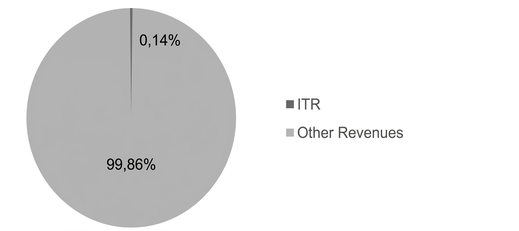
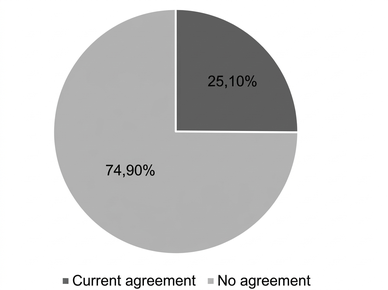
The low representativeness of the ITR in federal revenue collection, corresponding to approximately 0.14% of the total in 2025 (Brazil, 2025a), indicates that the expenditure of administrative and fiscal apparatus by the Union for its collection and oversight is economically uninteresting. This situation, added to procedural obstacles, discourages municipal adherence to agreements, resulting in only 25.1% of Brazilian municipalities having active agreements (Brazil, 2026a). Such a scenario compromises the efficiency of ITR management and, consequently, the fulfillment of its constitutional objective of discouraging unproductive properties.
Given the complexity and challenges inherent in the delegated inspection of the Rural Property Tax (ITR), which directly affect revenue collection and the effectiveness of the rural property’s social function, it becomes imperative to investigate the reasons for low municipal adherence to agreements and the implications of the current procedural structure. This study aims to analyze municipal adherence to the inspection and collection activities of the ITR, verify whether the procedural obstacles faced by Municipalities discourage the celebration of agreements, evaluate the Union’s procedural interest in litigating ITR demands in the event of delegation of active tax capacity, in light of the Eclectic Theory of Action, and examine whether the constitutional objective of discouraging the maintenance of unproductive properties is effectively met.
2. Material and Methods
The research is characterized as a case study of an applied nature, developed through the analysis of official data and reports, in addition to legal doctrinal reference. The objective was to examine the Rural Property Tax (ITR) and its repercussions from a procedural legal perspective, considering the delegation of active tax-gathering capacity to Municipalities.
The study was conducted based on information from a large Brazilian municipality, located in the metropolitan region of Belo Horizonte, Minas Gerais, with a rural area of approximately 18% of the total territory, which did not have an active agreement with the Union for the inspection and collection of ITR (Brazil, 2017). Two official reports from the Federal Revenue of Brazil were analyzed: a consolidated report on federal revenue collection for December 2025 and another specific report on ITR collection and the panorama of agreements entered into with the Union until November 2025.
Additionally, the Eclectic Theory of Action, by Enrico Tullio Liebman, was used as a theoretical-legal framework to analyze the administrative and judicial procedural interest of the Union in delegating the administrative-fiscal function of the ITR to Municipalities.
3. Results and Discussion
The constitutional framework of the Rural Land Tax (ITR), introduced by Constitutional Amendment No. 42 of 2003, establishes the non-fiscal nature of the tax, aiming to discourage the maintenance of unproductive properties. To this end, the rates are progressive, varying according to the total area of the property and the degree of utilization, as detailed in Table 1.
Table 1. ITR Rates
| Total property area | Greater than 80 | Greater than 65 up to 80 | Greater than 50 up to 65 | Greater than 30 up to 50 | Until 30 |
|---|---|---|---|---|---|
| Up to 50 | 0,03 | 0,20 | 0,40 | 0,70 | 1,00 |
| Greater than 50 up to 200 | 0,07 | 0,40 | 0,80 | 1,40 | 2,00 |
| Greater than 200 up to 500 | 0,10 | 0,60 | 1,30 | 2,30 | 3,30 |
| Greater than 500 up to 1,000 | 0,15 | 0,85 | 1,90 | 3,30 | 4,70 |
| Greater than 1,000 up to 5,000 | 0,30 | 1,60 | 3,40 | 6,00 | 8,60 |
| Above 5,000 | 0,45 | 3,00 | 6,40 | 12,00 | 20,00 |
Source: Brazil, 1996
The ITR rates vary from 0.03% for small productive properties to 20% for larger properties with low utilization. It was observed that the tax amounts tend to be negligible in most rural properties. Furthermore, the Federal Constitution provides for ITR immunity for small plots, provided that the owner does not own another property, with criteria defined by Law No. 9.393/1996.
A central point is the delegation of active tax-levying capacity to Municipalities, which can opt for the inspection and collection of ITR. In these cases, the full collection of the tax becomes the property of the Municipalities, in contrast to the general rule of a 50% revenue transfer. However, the regulation, such as Decree No. 6.433/2008, establishes that the procedural, administrative, and judicial action remains under the responsibility of the Union, through the Federal Revenue of Brazil and the Attorney General’s Office of the National Treasury.
Federal tax collection of ITR in 2025 totaled R$4,149,000,000.00, representing approximately 0.14% of the total amount of Union revenues (R$2,886,875,000,000.00). This percentage highlights the low representativeness of the tax in the federal revenue scenario, as illustrated in Graph 1.
Graph 1. Federal revenue in 2025
Source: Brazil, 2025a
The delegation of active tax capacity to Municipalities is justified, in part, by the low economic interest of the Union in spending administrative and fiscal resources for the collection and inspection of the ITR. Data from the Federal Revenue of Brazil, as of February 2026, indicated that 1,401 out of 5,571 Brazilian municipalities had a current agreement for the inspection and collection of the ITR. This means that 25.1% of Brazilian municipalities have an active agreement, while 74.9% do not have one or have ended the partnership, as shown in Graph 2.
Graph 2. Municipalities with ITR agreement
Source: Original survey data and Brazil, 2026a
The distribution of active agreements is not regionally homogeneous. The South and Southeast regions concentrate the largest part, with 459 and 453 agreements, respectively, totaling about 65% of the national total. The Center-West ranks third with 353 agreements (25.2%), while the North (92 agreements, 6.6%) and Northeast (44 agreements, 3.1%) show lower adherence, as detailed in Table 2.
Table 2. Current ITR agreements by region
| Region | Current agreements | Percentage |
|---|---|---|
| South | 459 | 32,8 |
| Southeast | 453 | 32,3 |
| Midwest | 353 | 25,2 |
| North | 92 | 6,6 |
| Northeast | 44 | 3,1 |
| Grand Total | 1.401 | 100 |
Source: Original survey data and Brazil, 2026a
This regional asymmetry can be attributed to structural limitations and lower administrative capacity in the North and Northeast regions, which hinder compliance with the requirements for activating the agreement (RFB IN No. 1,640/2016). The South and Southeast regions, in turn, lead due to greater economic development and administrative infrastructure.
The analysis of a large municipality in the metropolitan region of Belo Horizonte, which does not have an active agreement, revealed two main disincentives to the celebration of agreements: i) the collection, even in its entirety, did not justify the investment in administrative and technological infrastructure; and ii) the procedural link with the Union created an obstacle in the management of the tax. The collection of ITR in this municipality remained relatively stable throughout the period examined, even after the termination of the agreement in January 2020, with no significant change in the revenue level, as shown in Table 3.
Table 3. Collection of ITR in a large municipality in Minas Gerais
| Year | Agreement status | Collection |
|---|---|---|
| 2019 | Current | 171.215,08 |
| 2020 | Reported | 106.754,57 |
| 2021 | Reported | 116.215,51 |
| 2022 | Reported | 127.252,39 |
| 2023 | Reported | 154.452,88 |
| 2024 | Reported | 122.853,23 |
| 2025 | Reported | 115.570,02 |
Source: Brazil, 2025b
In the year the agreement was in effect (2019), the revenue was R$171,215.08, a value that did not significantly differ from the amounts recorded in subsequent years, which ranged between R$106,754.57 and R$154,452.88. These fluctuations were considered ordinary and not a structural effect of the agreement’s existence, indicating that the delegation did not translate into a significant increase in revenue.
The procedural aspect was the second circumstance that led to the denunciation of the agreement. Even with the delegation of fiscal functions, the Union maintains responsibility for administrative and judicial litigation. This implies that the Municipality, upon identifying irregularities or non-compliance, needs to involve the Union for the procedural stages, creating a triangularization that lengthens the state’s response time, weakens the effectiveness of collection, and empties the logic of delegating the active tax capacity. The Municipality’s proximity to the taxpayer, which could facilitate inspection and updating of values, is compromised by this institutional dependence.
The calculation basis for the ITR, which excludes improvements and permanent crops, and the inadequacy of the federal inspection structure to periodically update the cadastral data and the tax parameters, contribute to the maintenance of outdated bases and, consequently, to undertaxation. Although Municipalities, through the agreement, can identify outdated areas, inadequate bare land values, and the degree of utilization, the need for intermediation with the Federal Government can lead to loss of information and procedural discontinuity.
In this context, the Brazilian Federal Revenue Service has sought to encourage the signing of agreements, recognizing municipal action as a means to increase revenue collection. The intention is for Municipalities to review the values of bare land, a central element in correcting revenue collection distortions.
The procedural issue of the ITR, with its restricted scope to the federal sphere, discourages the agreement of adjustments and interferes with revenue. From the perspective of Enrico Tullio Liebman’s Eclectic Theory of Action, the procedural interest of the Union in ITR lawsuits, during the validity of agreements, is questionable. This is due to several factors: the active subject of the tax is altered to the Municipalities; in similar situations (such as withholding income tax from public servants and social security contributions), the procedural ownership belongs to the collecting entity; ITR revenue represents less than 1% of federal revenue, and the Union does not hold a share of the amount collected through agreements; the performance of the National Treasury Attorney General’s Office is restricted to litigation with higher patrimonial value, rarely reached by the ITR; incipient oversight may encourage non-compliance; and Municipalities sometimes use indirect coercion mechanisms for ITR collection, distorting legality.
The delegation of administrative-fiscal activity of ITR to Municipalities, without modifications in the legislation that encompass procedural, administrative, and judicial management of demands, prevents the ideals of satisfactory collection, fulfillment of the social function of rural property, and effective use of rural areas from being fully achieved. Territorial proximity and the possibility of more efficient inspection in mapping and updating rural values suggest that ITR revenue would be higher with more agreements and swifter, more direct municipal action.
4. Conclusion
This study sought to analyze municipal adherence to agreements for the inspection and collection of the Rural Land Tax (ITR), as well as the factors that discouraged their celebration and the effectiveness of the tax’s social function. A low adherence of Brazilian municipalities to the agreements was found, with almost 75% of federative entities without an active agreement. It was observed that the collection of the ITR, even when fully transferred to the contracted municipalities, did not prove sufficient to justify investments in administrative and technological infrastructure. Additionally, it was identified that the maintenance of procedural, administrative, and judicial action, under the exclusive responsibility of the Union, created significant obstacles, discouraging the continuity and celebration of new adjustments. It was also found that the Union lacked procedural interest in these demands, in light of the Eclectic Theory of Action, given the negligible representation of the ITR in federal revenue and the absence of direct economic-financial benefit.
The absence of procedural interest from the Union and the obstacles faced by municipalities have compromised the effective fulfillment of the constitutional directive to discourage the maintenance of unproductive rural properties. The main contribution of this work lies in highlighting the need for legislative modifications that allow affiliated municipalities to assume the procedural, administrative, and judicial management of ITR demands. Such readjustment is fundamental for the tax to achieve its collection and social function objectives, leveraging municipal proximity to the taxpayer for more efficient oversight and faster cadastral updates. Without these changes, the ideals of satisfactory collection, social function of rural property, and effective use of rural areas will remain unachieved, suggesting the urgency of future studies focused on legislative reform proposals that empower municipalities in the integral management of ITR.
Bibliographic References
Alexandre, R. 2025. Direito tributário. 19ed. Juspodivm, Salvador, BA, Brasil.
Brasil. 1988. Constituição da República Federativa do Brasil de 1988. Diário Oficial da União, Brasília, 5 out. 1988. Disponível em: http://www.planalto.gov.br/ccivil_03/Constituicao/Constituicao.htm. Acesso em: 1 fev. 2026.
Brasil. 1996. Lei n. 9.393, de 19 de dezembro de 1996. Dispõe sobre o Imposto sobre a Propriedade Territorial Rural – ITR, sobre pagamento da dívida representada por Títulos da Dívida Agrária e dá outras providências. Diário Oficial da União, Brasília, 20 dez. 1996. Disponível em: http://www.planalto.gov.br/ccivil_03/LEIS/L9393.htm. Acesso em: 1 fev. 2026.
Brasil. 2008. Decreto n. 6.433, de 15 de abril de 2008. Institui o Comitê Gestor do Imposto sobre a Propriedade Territorial Rural – CGITR e dispõe sobre a forma de opção de que trata o inciso III do § 4o do art. 153 da Constituição, pelos Municípios e pelo Distrito Federal, para fins de fiscalização e cobrança do Imposto sobre a Propriedade Territorial Rural – ITR, e dá outras providências. Diário Oficial da União, Brasília, 16 abr. 2008. Disponível em: https://www.planalto.gov.br/ccivil_03/_ato2007-2010/2008/decreto/d6433.htm. Acesso em: 1 fev. 2026.
Brasil. 2017. Instituto Brasileiro de Geografia e Estatística (IBGE). Censo agropecuário 2017: Betim, Minas Gerais. Disponível em: https://cidades.ibge.gov.br/brasil/mg/betim/pesquisa/24/76693. Acesso em: 9 fev. 2026.
Brasil. 2025a. Receita Federal do Brasil (RFB). Análise da arrecadação das receitas federais: dezembro de 2025. Centro de Estudos Tributários e Aduaneiros, Brasília, 2025. Disponível em: https://www.gov.br/receitafederal/ptbr/centrais-de-conteudo/publicacoes/relatorios/arrecadacao-federal. Acesso em: 1 fev. 2026.
Brasil. 2025b Receita Federal do Brasil (RFB). Arrecadação do imposto territorial rural (ITR) por município. Receita Federal do Brasil, Brasília, 2025. Disponível em: https://www.gov.br/receitafederal/pt-br/acesso-a-informacao/dados-abertos/receitadata/arrecadacao/arrecadacao-itr-por-municipio/itr-municipios.xlsb/view. Acesso em: 3 fev. 2026.
Brasil. 2026a. Receita Federal do Brasil. Consulta de informações do ITR. Brasília, Receita Federal do Brasil. Disponível em: https://servicos.receita.fazenda.gov.br/servicos/termoitr/controlador/controleConsulta.asp. Acesso em: 9 fev. 2026.
Gama, C. K. Fiscalização e cobrança do ITR pelos municípios: aspectos práticos controversos. Revista Direito Tributário Atual, São Paulo, Instituto Brasileiro de Direito Tributário – IBDT, n. 49, ano 39, p. 184–199, 3º quadrimestre 2021. Disponível em: https://revista.ibdt.org.br/article/download. Acesso em: 1 fev. 2026.
Velloso, A. P. 2012. Constituição tributária interpretada. 2ed. Livraria do Advogado, Porto Alegre, RS, Brasil.
Article originating from the Course Conclusion Work of the Specialization in Tax Management of the MBA USP/Esalq
To learn more about the course, click here and access the MBX Academy platform