
School Management
June 09, 2023
Special Regime for Non-Face-to-Face Activities and vulnerability
DOI: 10.22167/2675-6528-20230035
E&S 2023,4: e20230035
Emanuel Alves Anastácio
Initiated in December 2019, in Wuhan, located in China, the “coronavirus disease” (COVID-19) virus spread rapidly across all continents, leading the World Health Organization (WHO) to declare in Jan. 2020, that the outbreak of this disease constitutes a Public Health Emergency of International Concern (the highest level of WHO alert) and to declare a pandemic in Mar. 2020[1]. Brazil altered its situation shortly thereafter, with the request of the Ministry of Health, which issued Ordinance No. 188, decreeing a National Public Health Emergency[2].
This pandemic brought several consequences: besides general health problems, it also caused educational, social, cultural, political, economic, and daily life consequences, due to the transformations in the ways of life of societies, being modified by social distancing, physical isolation, and mobility restrictions[3]. Due to this context, it is estimated that worldwide almost one billion students were left without classes for a certain time and/or in unusual adverse conditions. In the Brazilian scenario, 20 million students were left without classes for some time and eight million and 700 thousand did not have access to classes. Furthermore, five million and 100 thousand were left without access to education as a whole during the period[4].
To solve this problem, the use of technologies was proposed, through online platforms for students to access video lessons and digital content[4]. Remote teaching and distance education (EAD) are not synonyms. Remote teaching is an educational model that has the same principles as face-to-face education, using the traditional teaching approach, the professor’s oral exposition, while the student merely receives information; the term remote defines this situation of displacement from the face-to-face environment to the virtual one. Students who study in remote teaching have been in this model because of the emergency caused by the pandemic[5].
Now, in the distance learning model, there is an educational preparation. There are several qualified professionals related to distance education, such as: content professors, educational designers, illustrators, educational tutors, among others. The distance learning student chooses to study in this model, their profile has autonomy and a motivation that led them to opt for this educational model[5].
Remote teaching is an emergency activity that provided content to students on a provisional basis during the current pandemic[5]. The teacher-student relationship is different in this teaching, as it requires resources, equipment, and technological tools that are not available to students and teachers[5]. Thus, remote teaching was and is being a challenge for both teachers and school professionals, as well as for students.
The challenges faced by faculty and students during remote learning are varied, but they mainly refer to the use of digital tools and platforms, and difficulties in creating methodologies and pedagogical activities during remote classes. This is because professors are accustomed to the in-person teaching system, in which the encounter between professors and students occurs within the classroom and the school space[6]. Teaching requires the professor to constantly reflect on their pedagogical practice, as it is from reflection that they improve and change reality[7].
In May 2020, remote learning, titled the Special Regime for Non-Face-to-Face Activities (REANP), began in the State Education Network of Minas Gerais, created by the State Secretariat of Education of Minas Gerais (SEE-MG), due to the pandemic. It was a teaching alternative so that students would not be left without studies and was in effect during the 2020 school year, from May to January 2021. Based on this context, the objective of the present work was to analyze the REANP in 2020 and the impacts of the pandemic related to vulnerability in a school in Belo Horizonte (MG), based on its documents, seeking to identify the school’s actions in overcoming the challenges of remote learning.
The school is located in a neighborhood in the Northeast Region of Belo Horizonte and operates in three shifts. In the year 2020, in the morning shift, there was one 1st-grade class, four 2nd-grade classes, and three 3rd-grade classes (with a total of 267 students); in the afternoon shift, there were five 1st-grade classes (194 students in total); and in the evening shift, one 1st-grade class, one 2nd-grade class, and another 3rd-grade class. The Youth and Adult Education (EJA) modality was offered with two 1st-grade classes, two 2nd-grade classes, and one 3rd-grade class (a sum of 245 students).
In 2010, according to data from the Belo Horizonte City Hall[8], the neighborhood where the school of study is located had a population of 9,534 inhabitants and 2,773 households. Furthermore, the neighborhood also has nine housing complexes and two favelas and villages[8]. Regarding the 2012 Health Vulnerability Index (IVS) (which is based on parameters of sanitation, housing, education, income, social aspects, and public services), the area has medium levels. As for the 2016 Urban Quality of Life Index (IQVU) (which is based on parameters of supply, culture, education, sports, housing, urban infrastructure, environment, health, urban services, and urban security), the neighborhood is located in a Planning Unit (UP) with also medium values[8]. Thus, it is noted that the median position is not alarming, but it presents many challenges for improvement.
Before the pandemic, the school historically accumulated several problems and obstacles. Several factors reflect and interfere with the failure of basic education students in face-to-face learning, such as: lack of social awareness of their role and planning; lack of commitment from families and local society in the educational process of their children and younger ones; lack of future prospects for students; lack of social formative awareness from the institution; lack of assistance and transfers from bodies at the most varied political levels[9]. Add to this problems of a personal, social, and family nature and, also, low student performance. All these problems extend to the “online”[4] spheres.
Highlighting the lack of investments, this forges permanent crises that are used as precepts to justify social policies, mainly unequal ones (such as cuts in education, health, social security, salaries, among others). Therefore, its objective is to legitimize and justify the concentration of wealth and boycott measures to avoid them[6].
To exemplify these processes, in the school territory of the school under study, there are only two libraries accessible to the community as a whole (with reasonable conditions and rare usage frequency); two Basic Health Units (UBS) (with good conditions and unknown frequency); a public space for sports and/or leisure activities (with good conditions and high usage frequency); no public space for internet access and no public space for cultural activities. Due to being in a risk area, school events and festivities occur only internally and are not open to the entire public[8].
The school, founded in 2010, was built through the efforts and appeals of neighborhood communities, mainly from housing complexes, favelas, and nearby villages, which lacked a High School. Therefore, it was necessary to read the school’s Political Pedagogical Project (PPP) and School Regulations (RE) to understand its actions and motivations.
The approach chosen for this study was qualitative, as it allowed the researcher to have a comprehensive view of the collected data to interpret them[10]. Qualitative research is descriptive and seeks to understand and interpret the phenomena researched without quantifying them[11]. The nature addressed was basic and had a descriptive objective, because it includes universal interests and truth, without the researcher needing to foresee a practical application, as well as creating knowledge contributing to the scientific field[12].
The methodological procedure used for the research was documentary analysis, with the PPP, the RE, and the Final Minutes of Class Council (AFCC) from the 21 existing classes in 2020 at the school being collected. For data analysis, content analysis was chosen because it allows for a deeper understanding. With this, this methodology provides for analyzing the characteristics of messages through various communication analysis techniques[13]. The Term of agreement was signed by the school’s administration in May 2021, corroborating the research.
The 2020 PPP was finalized at the end of 2020 and the 2019 version did not contain any information about the use of digital technologies. In the 2020 model, some information about the REANP was added. Here, facts in the school’s PPP that will be analyzed were highlighted. Much data is still not included in it, which is justified by its recentness.
The school in its document states that the institution is in complete precariousness, that is, precariousness of its surroundings and of itself, with constant shortages of structures, materials, technologies, family structure, and employment. Making the specific challenges more complex and highlighted by the pandemic.
The document proposes that the school meet the demand of its students, bringing them into a motivating technological insertion for educational interactions, but which do not occur. With the current pandemic, students were forced to have this insertion, but, as they did not have it before, they were not prepared for the “online” system.
This is proven by the school’s perception of a reality of misery, social injustice, and dissatisfaction, which prevent students from following and understanding this evolutionary process, as well as having access to technological tools and developing the necessary skills to be fully included in this global technological aspect. The translation of this occurs with the general difficulty in mastering “online” technologies and educational processes.
Lack of life and professional prospects, resources, and family participation increases students’ disinterest, leading to high school dropout rates, which were aggravated by the pandemic. Due to being in a precarious location, the recurring challenges are combating violence, drugs, exclusion, and the excessive valuation of “having” rather than “being”.
The PPP highlights the Socioeconomic Index (ISE), with a score of 53.53, which on the one hand points to a partial result, as students do not expose their private lives due to shame; but on the other hand, it demonstrates a poor score. The score attributed to the school was 4 for performance in the school community. This result below the median level is justified by the fact of little or no community participation. The losses are for everyone.
Furthermore, the PPP states that there is generally a lack of values such as empathy, solidarity, respect for norms and individuals, concerning all the actions required there. Selfish aspects worsen the lack of mutual help among colleagues, hindering learning.
The documentary contribution raises great dissatisfaction, for not being and not achieving satisfactory integration and not having satisfactory commitments with the community and family. With the low adherence of these, the school resorts to the Tutelary Council and the Reference Center for Social Assistance (CRAS), however, it does not have the expected result.
One of the main conditions for this low adherence is the socioeconomic status and low educational level of the family members, making them feel uncomfortable and/or without prospects for their lives and future, for their children, and for the community as a whole. Furthermore, their adjacent areas lack adequate equipment and infrastructure, interfering with the full development of the community.
The family is considered the representation and fundamental part of the student’s success, meaning their academic and consequently life success or failure. Thus, it is necessary to include the parents-school-students partnership and they should be a unit, for the attribution of effective educational work[14].
For effective school performance to exist, the family needs to be part of the student’s educational process, to be present in their child’s school life. The school and the family have the objective of educating for life in the world. However, the family and the school have differences, in which each family has its specificities and the school has its characteristics with its methodology to teach various contents to form citizens[15]. But the school cannot walk alone, it needs the family. Thus, the family-school relationship is fundamental for the construction of learning in students and for the promotion of an education that forms citizens.
It is highlighted that without this integration, education suffers a major setback. Students and education professionals feel unsupported, demotivating everyone in this process. At the end of the PPP, the problems and actions to overcome them are reported. However, these actions are superficial. The lack of seeking students’ reality will be addressed by disciplinary projects and extracurricular activities that focus on the surrounding environment and its problems, and identify students with problems and assist them. This is not enough; actions need to consider the specificities of each student, addressing their issues also in classes and in general activities, with lectures, games, and the like.
The lack of integration among family members will be improved through meetings and individualized support, in addition to family awareness. Similarly, it is not enough. These applications are mandatory and the most basic. More intense actions are also necessary, which seek to converse, draw attention to, and motivate family members and the community. As raised in the previous subtopic, family, work, religion, and the street are also educational spaces. Thus, the school needs to participate more in the community and hold classes in the community.
Regarding the REANP, its use is exceptional, as long as the state of emergency persists. The actions taken were the adaptation to the REANP; creation of groups on social networks – “Facebook”, “Instagram”, “Whatsapp”, and “Google Classroom”; establishment of an effective communication method with servers and pedagogical staff; monitoring of attendance, access to virtual interaction tools, and student learning during the period of non-face-to-face classes; and the adaptation of the PPP and the RE.
There is an approach in line with norms and laws, to minimize the negative impacts on students. There is a constant attempt to reach students, alternating between various social networks and forms of communication, using the best ones that students and their families choose.
On the one hand, it addresses students’ realities, using what facilitates them. On the other hand, it accentuates inequalities because many of them do not have these networks or aids. There is a lack of greater understanding and actions regarding realities, as well as searches for manual methods such as going to the student’s residence to establish more effective communication with the family.
The RE was also implemented from the CF 1988 and the LDB 1996, also being a guide for management, raising the past, the present and the future. It is normative in character, having its basis in the PPP and also standardizing it, seeking school-society-community integration[16].
The school’s RE was not and still is not finalized, and there was no information about technological resources or remote learning. In the model finalized at the end of last year, some information about the REANP was added. Here, facts in the school’s RE were highlighted. Focusing on the principles, there is an emphasis on education being a duty of the family and the State, however, as previously stated in the PPP, this family and State support, which does not invest sufficiently, does not occur. Another fact raised that does not occur is the emphasis on equality of conditions for access and school retention, valuing extracurricular experience, in addition to the link between school education, work, and social practices.
The problem with schooling lies in admission and not in expulsion, as it needs to be universal in its access and equal in its conditions. However, in Brazil, it occurs before and during entry and during the stay, as social problems prevail. These problems include poverty, lack of basic sanitation, healthcare, food, housing, etc. The educational problems that have been occurring for years in the country have an institutional basis. Democracy, the guarantee of rights, and education for all in the country are still recent, due to the 1988 Constitution, thus, it is still immature and unequal. The nation as a whole needs to evolve[17].
Mainly if the fact of adopting alternatives that do not listen to and integrate the diverse layers, groups, and communities that make up the school is taken into account. Being authoritarian, harmful, and unequal. The lack of access to equipment, “internet”, and environments necessary for a good education is a major challenge and a structural problem[4].
Regarding the valorization of the student to the detriment of work, this also does not occur. The reality of the students is not addressed by the school; their characteristic socioeconomic and sociocultural aspects are abandoned, not aligning with reality. The social issues highlighted by the PPP previously are merely emphasized, not addressed. The high dropout rate denotes this and the lack of connection between theory and civic practice. As they feel the school does not assist them and needs support, the job market becomes more attractive. The school’s role in the process of development and improvement of community quality of life, which does not occur, was also highlighted. The school is also precarious, along with all the infrastructures and equipment existing there.
It was argued, above all, that one of the school’s roles is to empower students to experience and position themselves in a world of constant and frequent sociocultural and technological changes, but this does not happen. This is because they were not previously stimulated for this, and with the pandemic, these problems were increased and accumulated.
Regarding the REANP, information related to the pandemic was included. All laws that guide this process affirm that it will last as long as the period of emergency and the implementation of measures to prevent contagion and face the pandemic remain in evidence. It highlights the Special Teleworking Regime with the same systems. The text is divided into all school professionals and their attributions, which are similar to in-person work, but “online”.
Regarding the students, the reorganization of the school calendar was addressed, encompassing all activities, to minimize losses for students, with the fulfillment of the minimum mandatory workload and the achievement of educational and learning objectives. The activities are mediated or not by Information and Communication Technologies (ICT) or Digital Information and Communication Technologies (DICT).
The REANP is organized as follows: Tutored Study Plans (PETs), School Connection, and Se Liga na Educação. The PETs are booklets containing activities for all school subjects divided into four weeks for each subject. The PETs were developed by SEE-MG.
The REANP caused several controversies last year, as the SEE-MG did not consult the schools, and did not have a dialogue with the teachers for the creation of the remote teaching model. Thus, abandonment was noted with the adaptations of the various realities composed in the schools and their respective communities. The SEE-MG simply instituted the REANP without listening to the needs and realities of each state school in Minas Gerais. They created PETs without listening to the teachers, it was a decision without dialogue with school diversity[18].
Conexão Escola is an application also created by SEE-MG with the objective of communicating between students and their teachers. Now, the Se Liga na Educação program features short recorded lessons on content for students in the state education network of Minas Gerais, broadcast by Rede Minas and made available on the SEE-MG website titled Estude em casa.
The Conexão Escola application did not work during the year 2020. Several times teachers and students complained about the application’s functionality. In this year 2021, Conexão Escola 2.0 was created, which continues to have instability failures, as well as other problems, for example, students do not use the application, many do not have access to the “internet” and when they do, it is often of very poor quality[18].
The school, facing its difficulties, could not do anything different. In addition to all the access difficulties its students have, they also became hostages to the poor functionality and applicability of this system. Thus, the school’s only attempt was to seek out the students who had no contact.
However, in the analysis of the RE, it was found that the insertion of assignments regarding REANP was sufficient for all its professionals, with the exception of teachers, but the same does not happen with students. Teachers, who were also not prepared for the “online” system, did not receive assignments or help on how to teach their classes. The focus on students also did not occur. With lack of preparation and access, there is a lack of incentives, teaching, and among other things. Thus, in REANP, the aim is to minimize the impacts of the pandemic, but it ends up perpetuating the problems and worsening the impacts.
The pandemic caused quantitative and qualitative changes in ways of living and in education. On one hand, new and interesting relationships were created, recreated, destroyed, re-signified, such as affective relationships, professional relationships, and enmities. On the other hand, many people had to learn to live remotely, losing relationships of physical space and time, but gaining with the cybernetic, with cyberspace, and let’s say even with a cybertime; families had to live together daily, awakening or increasing various conflicts; distancing from loved ones; total breakdown or continuity of essential activities[19].
Cyberspace and a kind of cybertime are a form of shared space and time not in a physical space, but in a space created from internet networks, “online”. It is possible, feasible, potentially capable of integrating and articulating people, all their relationships, and everything that exists outside and inside the digital field. Social networks, games, search platforms, relationship platforms, browsers, among others, make up this entire system[20]. This system, composed of other systems, connects people around the world in the same space-time compass.
Thus, in learning with these networks, the class, the classroom, and education are located wherever there are computers, notebooks, cell phones, “internet”, radio, telephone, satellite, etc. When students connect to this network, what their senses reach from these is a world of knowledge.
It is necessary to highlight that the diverse media can and should be used, in addition to traditional classes. What is most effective is the complete and complex integration between pedagogical work, school spaces and school times, also of cyberspace and cybertime, with different media and platforms, and, with motivating and innovative mediations from teachers and students. Thus, a new distribution of times and spaces for learning is created, didactic dynamics, in which students can be constant active actors and with a humanistic education[21]. However, it does not happen like this.
A first impact regarding the pandemic felt by students is the lack of the school’s physical space and the environment for exchanges[22]. Because of the COVID-19 pandemic, gatherings cannot occur to avoid transmitting the disease, as in-person teaching will only resume when the pandemic is under control[2].
People of any age, group, identity, cultures, classes, and among others, live in diverse environments. In these environments, they develop diverse relationships with other people or with the environment itself. And in these relationships, they create and modify their identities. Students not only lose the physical space of the school, but all the relationships attributed to their living and belonging to it. Merely being enrolled and attending classes is not enough for them to belong or feel they belong to the school. Deep relationships, interactions, correlations, a perspective of the past, present, and future that shaped and marked the school are needed. Thus, in an “online” manner, students lose the physical reference of the school and, therefore, do not feel they belong or are part of it[4].
Thus, how to study without the physical space of the school? The current school model has been formatted since the 19th century. Divided into classes, grades, classrooms, by age, traditional teaching, with factory-like times and rhythms, etc. So, how to study without the time related to the school space?
There are three types of temporalities in school, the so-called: “khronos”, “aión”, and “kairós”. “Khronos” is seen as the time of the school, with its established rules and schedules for the institution’s operation, for example, the school calendar and the times of each expected event for the school academic year. “Aión” is the time of experience and the duration of learning in the present moment. The third time is called kairós, which means the time of opportunity that provides educational learning experiences among people, it is the time known as qualitative[22].
Therefore, one hypothesis is that the second effect felt by students is the loss of the notion of time due to the physical isolation between people, caused by the COVID-19 pandemic. This creates a sense of imprisonment and, in the educational field, provides a sensation and experience of suspended time[22].
Experiences and lived experiences build, in various ways, a kind of lens that anyone uses to see the world, that is, they are their views and interpretations of the world, reading and accessing it[23][24]. These worldviews are also defined as points of view that give shape to meanings. Thus, when losing their frame of reference for space and time, the student also loses their frame of reference for identity. People create their identities when they relate to other people, creating a series of sensations and emotions[24].
The diverse socioeconomic and cultural inequalities that characterize the country constantly and strongly determine the conditions of access to the “internet” and electronic devices. The general problem of the “internet” that the country faces is raised here. In the year 2020, there were 150 million “internet” users, reflected in 81% of the population aged ten years or older who have “internet” at home. According to the National Household Sample Survey (PNAD)[25], 15 million households would not have access to the “internet”, that is, 20.9% of Brazilian households do not have this privilege. In 79.1% of residences as a whole, the only means of access to the “internet” is the mobile phone, and often there is only a single device in the residence, shared by all members. The TICKids OnlineBrasil[26] survey indicates that three million people in the group including children and adolescents do not have access to the “internet”, which is 11% of them. Added to this is the fact that within these three million, one million and 400 thousand have never accessed the “internet”.
In the proper school, these data are not available. However, the difficulty in access was highlighted, based on the data previously discussed, through informal conversations, and by other data that will be presented shortly. However, this occurs with more inequalities in the lower socioeconomic classes. Households concentrated in class C (families with total incomes above four and up to ten minimum wages, thus, incomes are between R$4,401 and R$11,000) have 91% internet usage. Meanwhile, classes D and E (class D includes families with total incomes above two and up to four minimum wages, therefore, incomes are between R$2,201 and R$4,400; class E includes families with total incomes of at most two minimum wages, thus, incomes are up to R$2,200) have 64%[27].
Such a problem is still inferred from the fact that “internet” bills are a large monthly expense, in addition to their low quality[4] (Pereira and Barros, 2020). Furthermore, this inequality is also reflected in the data that 90% of households in classes D and E connect to the “internet” solely via mobile phone[27]. This interferes with the fact that mobile phones can hinder the use of certain tools for carrying out school activities[4].
It thus becomes utopian, paradoxical, and a dilemma, an individual digital inclusion, mainly for the lower classes[4]. It is the only possible and available format, but they accentuate and worsen inequalities[17]. Table 1 shows the final results of the students for the academic year 2020. The data was based on the assembly of administrative procedures in 2020, from the AFCC.
Table 1. Final results of the classes of the studied school in the academic year of 2020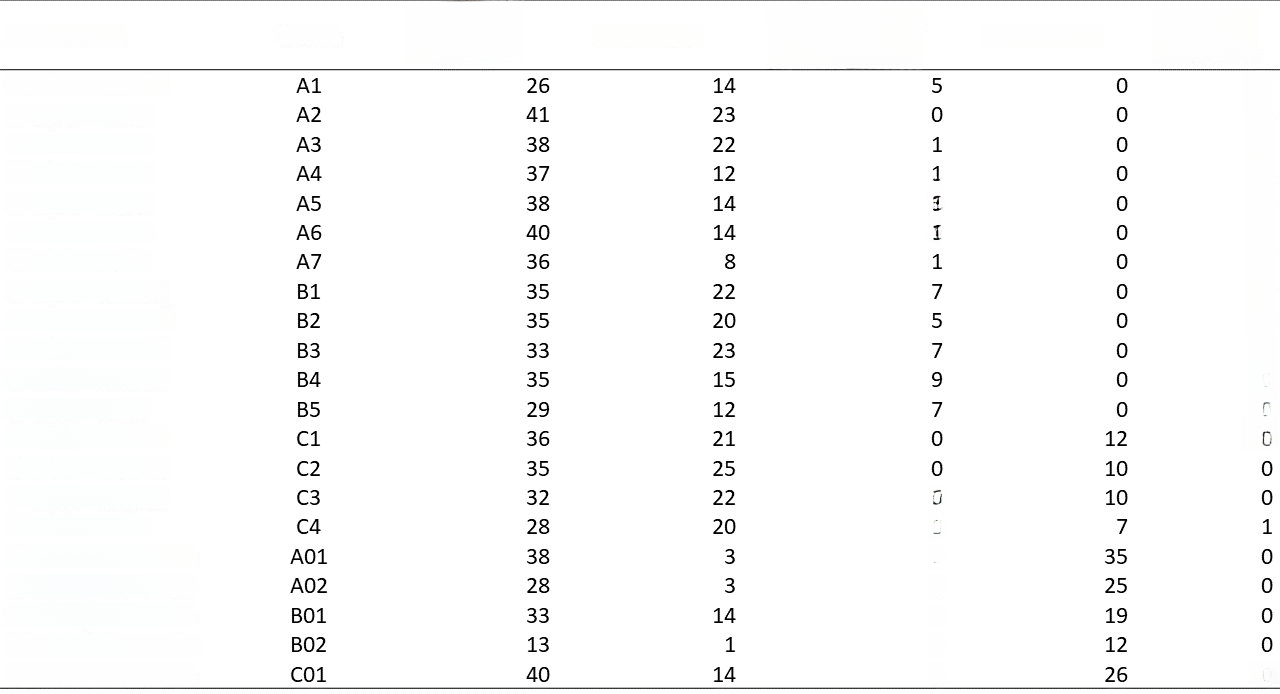 Source: Prepared by the author.
Note: Final minutes of the class council of the classes in 2020
Table 1 allowed us to visualize that the total number of students enrolled in the year 2020 was 706 students, with the total result being as follows: 322 students were approved, 46 approved with continued progression (summing to 368, i.e., 52.12% approval), 156 failed, and 182 students with a dropout profile (summing to 338, i.e., 47.87% failure). It is necessary to emphasize that students with a dropout profile were de-enrolled at the end of the academic year. A high failure rate is noted, almost half of the students. Remembering that of these 332 students, 156 participated in the academic year but did not achieve the minimum grade of 60 points in the subjects and 75% of the workload. As for the other 182 students, the school could not contact them. The active search occurred during the academic year, but with outdated registrations, they could not contact the students’ guardians.
There is a pattern in these previously raised relationships. There was a high rate of dropouts among 1st-year students (out of 256 students, 138 are dropouts, meaning 53.9% of the total). These students all come from other schools that offer Middle School. In the 2nd-year classes, the dropout profile also stands out, although with small numbers (out of 167 students, 40 are dropouts, meaning 23.9% of the total). There is a considerable level of failures in the 3rd-year classes (out of 131 students, 39 are failures plus 4 with dropout profiles, meaning 32.8% of the total). And finally, from the EJA classes, the greatest alteration of data appears, thus prevailing inequality (out of 152 students, 117 are failures, meaning 76.9% of the total).
This high number of dropouts in EJA can be explained precisely by the emergence of working or seeking some livelihood for the family during the pandemic. EJA, even in previous times, was already characterized by having a strong concentration of people who work during the day and study at night[4]. This was aggravated by social isolation. Many families lost their jobs and thus sought other ways to support themselves or bring food home. Therefore, studies become non-prioritized activities.
Many student registrations had outdated phone numbers, and families did not seek out the school for information regarding remote learning. One of the school’s strategies was to use “WhatsApp” groups for each grade level, including supervision, vice-direction, and students. A “Facebook” page and an “Instagram” page were created to find students, as their registration data was outdated. This strategy was beneficial as it facilitated closer relationships among the various stakeholders, through different social networks, according to their preferences and usage.
Some professors used “WhatsApp”, but emphasizing that the state did not provide work equipment for the professors during remote teaching. The cell phones and computers used for communication with students belong to the professors themselves. At no point did the professors and the coordination obtain material resources to work on the REANP.
Another strategy used was the active search that the school coordination should carry out throughout the year to find students with whom contact had been lost. The active search was conducted through phone calls based on the information contained in each student’s enrollment record, searching for students through social media such as “Facebook” and “Instagram”, and finally, letters were sent to the students’ residences. Many students did not have a phone, “internet”, or only had one mobile phone in the house, making it difficult to carry out activities and contact them. They generally did not have a computer at home. Therefore, this strategy did not yield many benefits. Some were found and returned to their studies, but the 182 considered to have dropped out were not found or did not wish to study at REANP.
After this entire search throughout the 2020 academic year, the guidance from SEE-MG, based on Memorandum number five, was to change their registration, classifying students with a dropout profile as having left the program. It is noted that the school, throughout the entire academic year, searched for the 182 students with a dropout profile. However, even using various mechanisms, they were unable to find some students, and others did not wish to return to their studies in the remote learning format. Therefore, it is very important to have a cooperative relationship between the family, the community, the school, and the various communication channels so that the student can develop.
Although many students started the PET activities, several ended up dropping out of school, as they need to work to help their parents at home, because they lost their jobs during the pandemic, or were affected in various ways by health problems and discouragement. The great difficulty in contacting these families throughout the months of 2020 is detrimental. The family is the educator, it is the child’s first contact with education[28]. Therefore, it is significant for the family to be present in the matters of their children’s formal schooling. The school needs the support of families to work together in the educational process of the students.
In education, especially in public education, we see a lack of technological resources and teacher training for the use of such resources. Therefore, during the COVID-19 pandemic, social inequalities became evident. For the educational development of students, teachers can use various technologies, such as ICT or ICTD.
ICTs are equipment or means for processing information to transmit communication between human beings, which arrived during the Information Revolution[29]. An ICT is verified as an example in the classroom, the use of television as a teaching resource. Now, ICTs have the “internet” and the computer as instruments and equipment[30]. As an example of ICTs in school we have: computers, mobile phones, “tablets” and “notebooks”.
Before the pandemic, cell phones and computers were not as present in the daily lives of teaching staff as instruments for mediating information for the teaching and learning process. Unfortunately, before this alarming state of environmental-hygienist crisis, technological advancements were little utilized by education, not being a priority and becoming obsolete. Thus, accumulating these, it causes discouragement, lack of prospects, further triggering the previously raised processes. Added to the lack of access to “internet” or equipment to access it, it causes enormous discomfort and setbacks[4].
In the aforementioned school, from the field experiences, it was noted that the ICT used by teachers were for taking attendance and for creating the lesson plan, sending “e-mail” or doing a browser search on the “internet”. In this current historical moment, cell phones and computers are part of all the teaching work during emergency remote teaching.
At the present moment, ICTs are used, especially to respond to students via “e-mail” or message via “Whatsapp”, “Facebook” or “Instagram”, to send activities or clarify students’ doubts through “Google Classroom” and to hold pedagogical meetings via “Google Meet”. The use of ICTs is present in all moments of the teacher’s daily life during the pandemic.
However, numerous difficulties arise in using these, stemming from the fact that many teachers do not master the access platforms. Solutions should be provided in any form of teaching, such as courses, classes, texts, on any platform to assist professionals and students in their use. A major error of REANP was to start from the principle that all professionals and students have easy access to and use of ICTs, which does not align with reality[18].
The difficulties are from the whole set, as it is a relatively new event for most people. Thus, teachers, school professionals, students, parents, the community and society as a whole, in addition to the various problems caused, also have several difficulties.
Teachers end up being blocked due to challenges in formulating their classes, as the space-time and dynamics are different, they lack experience and compete with other actors[20], such as the so-called “youtubers”, “bloggers”, “vloggers”, “instagrammers” or “tiktokers”. These are characterized by people who use these important means of communication and social networks, who dominate the platform and the “internet”, being more attractive. They use great feats with humor to teach, and the teacher loses their attention to them.
It should be noted that throughout the 2020 academic year, teachers at REANP did not receive equipment to work from their homes. They did not receive cell phones, tablets, computers, or internet funding. Simply nothing. They used and are using their own personal equipment to work in remote teaching. They learned to do video editing, post assembly, among other resources, without any continuing education offered. Thus, in addition to this, they have to deal with the dissatisfaction of parents, who do not accept the way of working, difficulties in accessing platforms, or difficulties and denial in teaching their children.
For quality remote teaching, students and teachers should have access to “internet” and quality equipment. However, the reality was not this. Most students in this school have a cell phone at home, but there is only one cell phone, and it belongs to the parents. The need for reflection on the reality of public schools during remote teaching in 2020 is evident. So, how to offer quality education without the minimum necessary resources?
Caution must be exercised, as the post-crisis period will be marked by further degradation of public services (if that is even possible), as they tend to continue and accumulate, being justified by the impacts of the pandemic. A problem, especially in the short term, is that people, seeking to secure something concrete, will regress entirely to old activities, which, even if they seem monotonous and are bad, are now light, seductive, and the delight of the population[6]. In this way, inequalities, problems, and injustices also accompany them.
However, on the other hand, will the return to the past not be equally beneficial to everyone? The search is for a new articulation between social, political, cultural, economic, educational, and civilizational processes, seeking a more humble and human humanity in all processes. A profound epistemological, paradigmatic, ideological, and cultural alteration is needed. Creating a common sense, free from all possible quarantines, pandemics, inequalities, and segregations. Indeed, after all, the lack of access, freedom, and among others, that is, the quarantine, is just one of the others that constitute the current unequal system. All this also applies to the educational environment.
From the school’s perspective, having access to the “internet” inside or outside of it would not solve all problems, because, in the first place, minimum conditions must be created for students to also be able to enter school, study and remain[18]. Thus, the post-pandemic period cannot be thought of solely in terms of technological education, as the range of problems that precede it are greater. This will be the future of the school, but it does not have to be its only change.
School should prepare for life. But what life does it prepare in this way? Inequalities, disinterest, erroneous changes are noted, being reflected in the lives of citizens themselves. According to PNAD (2020), the main reasons listed for school dropout are the need to work and lack of interest. Thus, it is noted once again that school is not preparing them for life, it is not an interesting space. A problem that has been occurring since the 17th century. School is not the only one in the role of excluding inequality, but it is a very important agent, whether in the perpetuation, amplification, reduction, and breaking of it[17].
A fair school is one of the biggest options in the post-pandemic[17] era. To be inclusive. However, if these changes do not occur, it will continue to be exclusive, with the false idea of meritocracy, continuing with the same problems, from the past, present, and future. Before changing its structure, it is necessary to rethink its role and identity, in addition to its humanization.
However, it cannot be denied that the pandemic, while highlighting inequalities, shows the strengths and weaknesses of Brazilian education and, mainly, how to get out of this situation. Therefore, its lessons cannot be restricted to the adoption of new school models and/or pedagogical processes, because these will inevitably happen, they have only been brought forward.
The school in general should, needs to, and has to be more technological, virtual, and make use of diverse online tactics, preparing teachers for the use of ICT and ICTD. Furthermore, it needs to add to the PPP and the RE ways to deal with and overcome the new, the unexpected, and the crisis, seeking digital tools and adaptations to reality. However, this only masks the school’s deep-seated problems.
In the school covered, it would be no different. Although the PPP and the RE report a certain use of technologies, it is done superficially, as highlighted previously, and also, it does not occur in practice. Thus, the difficulty is doubled in this situation.
As foreseen by the PPP and the RE of the object of study, all agents involved must be part of the construction, maintenance, and continuity of the school. The school and the residential and family environment have merged and amalgamated into just one. Thus, their relationships have become more intertwined and dependent, requiring democratic, egalitarian, affective, and realistic management of the diverse realities proposed. This does not happen, as school, community, and family are disconnected.
The actions should have been carried out in their entirety before the pandemic. With the emphasis given to school documents, the school is aware of its insufficiency in integration, but only regrets it, not seeking to change or propose new actions, it just repeats more of the same. Thus, they do not learn from their mistakes and tend to perpetuate them.
The challenges posed by this emergency have incited and demonstrated, once again, an essential characteristic of education: it must always reinvent itself. In the current and especially post-pandemic phase, a movement to go beyond content-based teaching needs the greatest efforts. Other methodologies, technologies, and practices were urgently experimented with in education as a whole, which also need to be updated to foster creativity, authorship, autonomy, collaboration, etc. among teachers and students, as any and all education professionals[19].
This moment would tend to strengthen the social bond between all components of the school. Although the impacts are positive and negative, the goal is always to maximize the former and minimize the latter. It requires a constant direct and open communication channel between them. Thus, despite this chaos, we have the opportunity to seek to improve education, through the correct, good and interesting use of digital technology means[20].
At school, the bond was not strengthened and the negative impacts predominated. With the socioeconomic difficulties prior to the pandemic, they were aggravated from them, worrying families even more. Studies take a backseat, as the primary need is to survive, without work, the ills of the system. Unfortunately, these impacts were not resolved.
Will these effective changes configure new ways for school education? There is a crisis in school and education. The school is losing its meaning. It is, therefore, a matter of creating collective conditions and forms to think, rethink, create, recreate, build, rebuild, as well as administer, assume, and use new ways of thinking and also acting, the different and diverse forms and functions of school work, new forms, activities and paths, perspectives, creating and recreating new spaces and times, such as the class hour, co-participation in learning, curricular dynamics, important knowledge, which are updated as society changes and has its vision of the future[21].
Added to this are the new contours that must be assumed and the training of education professionals and educational policies must also be rethought, and new forms of pedagogical relationships. Thus, to begin this search, it is necessary to mobilize people who are aware and also convinced of these problems, of their historical-cultural-temporal-spatial and also future exhaustion, to alter them, seeking to break their perpetuation.
Chaos is a power for challenges to become creativity. Just as the universe and all its parts tend towards chaos, but it is this chaos that governs everything[19]. A similar effect occurs with education and school. The chaos that has dismantled all consolidated foundations and brought several crises at the same time, is the guiding path to rethink these structures and seek an ever better future, always guided by the pursuit of better citizens.
It is therefore argued that education to improve in Brazil needs to be, in a first moment, totally fair and inclusive, and not just have punctual changes, such as the introduction of new technologies in all its means and processes. In a second moment, it needs to adapt more quickly to the reality and context of the students.
In summary, the pandemic altered the entire dynamics of daily life, and many of these dynamics could not be moved to the “online” environment. Both teachers and students in general lacked these preparations. The aforementioned school followed and adhered to all norms, but reality differs from laws.
The school’s teachers and students had difficulties in integration and learning, which, even though guided by the PPP and the RE, did not achieve greater efficiency. Before the pandemic, complex realities already existed, which were also imported into the online environment, leaving vulnerability in all aspects. These cases are reflected in the AFCC data by the large number of students who failed and/or dropped out, mainly due to working to help their families during this delicate time.
The mere shift from a physical to an online environment only accentuated inequalities and did not provide quality education. Even when trying to minimize these impacts, the actions were in vain. Social problems are structural and will take decades to be resolved; simple actions only mask the true issue. As happened with education.
The alternatives raised here to avoid these impacts are to use all possible communication channels, social networks, and platforms to convey information. Due to difficulties in reaching certain students, seek out students from your class who are closer to them to report their last whereabouts, and thus, conduct a home visit. In addition to going personally to the respective domiciles. The negative impacts would not be completely diminished, but they would be attenuated. Furthermore, support and partnerships from other sectors and institutions are needed, as the school cannot act alone.
The school is an institution that forms citizens for living in society, based on its laws, pedagogical contributions, and regulations. However, the shock to structures caused by COVID-19, revealed the fact that the school was not prepared for the formation of social living. Schools in critical situations, such as those located in vulnerable areas, feel the negative impacts even more. The aforementioned school, which was the object of study, despite citations about the need to change the context and situation of the community where it is located, does not create deep actions necessary for overcoming this first crisis, aggravated by the second crisis of the current pandemic. The search for adaptation to REANP, which is already born with problems, accentuates educational inequalities, denying the specific context of each school unit. The large number of failures is the result of the poor combination of social and political factors. Knowing, identifying, and criticizing reality is the first step towards the pursuit of emancipatory and just education.
References
[1] World Health Organization (WHO). Painel do Coronavírus da OMS (COVID-19). World Health Organization; 2021. Disponível em: <https://covid19.who.int>.
[2] Brasil. Recomendação N 061, de 03 de setembro de 2020. Recomenda que a retomada das aulas presenciais só ocorra depois que a pandemia estiver epidemiologicamente controlada e mediante a articulação de um plano nacional que envolva gestores e a sociedade civil. Brasília, DF; 2020. Disponível em: <http://conselho.saude.gov.br/recomendacoes-cns/1355-recomendac-a-o-n-061-de-03-de-setembro-de-2020>.
[3] Malta D.C.; Szwarcwald C.L.; Barros M.B.A.; Gomes C.S.; Machado I.E.; Souza Júnior P.R.B.; Romero D.E.; Lima M.G.; Damacena G.N.; Pina M.F.; Freitas M.I.F.; Werneck A.O.; Silva D.R.P.; Azevedo L.O.; Gracie R. A pandemia da COVID-19 e as mudanças no estilo de vida dos brasileiros adultos: um estudo transversal. Epidemiologia e Serviços de Saúde. 2020; 29(4): 7-13. Disponível em: <https://doi.org/10.1590/S1679-49742020000400026>.
[4] Pereira M.D.; Barros E.A. A educação e a escola em tempos de Corona Vírus. Scientia Vitae. 2020; 9(28): 1-7. Disponível em: <http://www.revistaifspsr.com/v9n2817.pdf>.
[5] Joye C.R.; Moreira M.M.; Rocha S.S.D. Educação a Distância ou Atividade Remota Emergencial: em busca pelo elo perdido da educação escolar em tempos de COVID-19. Society and Development. 2020; 9(7).
[6] Santos B.S. A cruel pedagogia do vírus. Coimbra, Portugal: Almedina; 2020. Disponível em: <https://www.abennacional.org.br/site/wp-content/uploads/2020/04/Livro_Boaventura.pdf>.
[7] Freire P. Pedagogia da autonomia: saberes necessários à prática educativa. São Paulo (SP): Paz e Terra; 2011.
[8] Prefeitura de Belo Horizonte (PBH). BHMap. 2021. Disponível em: <https://bhmap.pbh.gov.br/v2/mapa/idebhgeo#zoom=4&lat=7804617.53088&lon=617897.8201&baselayer=base&layers=bairro_oficial>.
[9] Nobre F.E.; Sulzart S. O papel social da escola. Revista Científica Multidisciplinar Núcleo do Conhecimento. 2020; 3(8): 103-115. Disponível em: <https://www.nucleodoconhecimento.com.br/educacao/tempos-de-pandemia>.
[10] Chizzotti A. 2003. Pesquisa em ciências humanas e sociais. 6ed. São Paulo (SP): Cortez; 2003.
[11] Lira B.C. O passo a passo do trabalho científico. 2ed. Petrópolis (RJ): Vozes; 2014.
[12] Silveira D.T.; Córdova F.P. A pesquisa científica. In: Gerhardt T.E.; Silveira D.T. Métodos de pesquisa. Porto Alegre (RS): Editora da UFRGS. 2009; p. 31-42.
[13] Baldin L. Análise de conteúdo. São Paulo (SP): Editora Edições 70; 2011.
[14] Ribeiro M.A.; Caldeira P.M.Q.; Alvarenga S.O.; Alvarenga G.N. 2015. Escola e família: uma aproximação necessária. Revista Espaço Acadêmico. 2015; 5(1): 72-86. Disponível em: <https://multivix.edu.br/wp-content/uploads/2018/07/revista-espaco-academico-v05-n01-artigo-06.pdf>.
[15] Parolin I. Professores formadores: a relação entre a família, a escola e a aprendizagem. Curitiba (PR): Pulso Editorial; 2005.
[16] Molin I.R.A.; Alves F.L. Regimento escolar: um espaço democrático. In: Governo do Estado do Paraná. Os desafios da escola pública paranaense na perspectiva do professor PDE; 2013.
[17] Trezzi C. A educação pós-pandemia: uma análise a partir da desigualdade educacional. Dialogia. 2021; (37): 1-14. Disponível em: <https://multivix.edu.br/wp-content/uploads/2018/07/revista-espaco-academico-v05-n01-completa.pdf>.
[18] Oliveira B.R.; Oliveira A.C.P.; Jorge G.M.S.; Coelho J.I.F. Implementação da educação remota em tempos de pandemia: análise da experiência do Estado de Minas Gerais. Revista Ibero-Americana de Estudos em Educação. 2021; 16(1): 84-106. Disponível em: <https://periodicos.fclar.unesp.br/iberoamericana/article/view/13928>.
[19] Souza E.P. Educação em tempos de pandemia: desafios e possibilidades. Cadernos de Ciências Sociais Aplicada. 2020; 17(30): 110-118. Disponível em: <https://periodicos2.uesb.br/index.php/ccsa/article/view/7127/5030>.
[20] Machado P.L.P. Educação em tempos de pandemia: O ensinar através de tecnologias e mídias digitais. Revista Científica Multidisciplinar Núcleo do Conhecimento. 2020; 8(6): 58-68. Disponível em: <https://www.nucleodoconhecimento.com.br/educacao/tempos-de-pandemia>.
[21] Gatti B.A. Possível reconfiguração dos modelos educacionais pós-pandemia. Estudos Avançados. 2020; 34(100): 29-41. Disponível em: <https://www.scielo.br/j/ea/a/7M6bwtNMyv7BqzDfKHFqxfh/?format=pdf&lang=pt>.
[22] Kohan W.O. Tempos da escolar em tempo de pandemia e necropolítica. Práxis Educativa. 2020; 15: 1-9. Disponível em: <https://revistas2.uepg.br/index.php/praxiseducativa/article/view/16212>.
[23] Freire P. Pedagogia do oprimido. São Paulo (SP): Paz e Terra; 1974.
[24] Hall S. A identidade cultural na pós-modernidade. 11ed. Rio de Janeiro (RJ):DP&A; 2006.
[25] Instituto Brasileiro de Geografia e Estatística (IBGE). Pesquisa Nacional por Amostra de Domicílios Contínua (PNAD) – sinopse 2018; 2018. Disponível em: <https://www.ibge.gov.br/estatisticas/sociais/trabalho/9171-pesquisa-nacional-por-amostra-de-domicilios-continua-mensal.html>.
[26] Centro Regional de Estudos para o Desenvolvimento da Sociedade da Informação (CETIC). TIC Kids Online Brasil; 2020. Disponível em: <https://cetic.br/pesquisa/kids-online>.
[27] Comitê Gestor da Internet do Brasil (CGIB). Brasil tem 152 milhões de pessoas com acesso à internet. Agência Brasil; 2021. Disponível em: <https://agenciabrasil.ebc.com.br/geral/noticia/2021-08/brasil-tem-152-milhoes-de-pessoas-com-acesso-internet>.
[28] Oliveira C.B.E.; Araújo C.M.M. A relação família-escola: intersecções e desafios. 2010. Disponível em: <https://www.scielo.br/j/estpsi/a/CM3Hj6VLtm7ZMxD33pRyhkn/?lang=pt>.
[29] Ramos S. Tecnologias da informação e comunicação. 2010. Disponível em: <https://docplayer.com.br/877920-Tecnologias-da-informacao-e-comunicacao.html>.
[30] Marinho S.P.P.; Lobato W. Tecnologias digitais na educação: desafios para a pesquisa na pós-graduação em educação. Belo Horizonte (MG): Colóquio de Pesquisa em educação; 2008.
Como citar
Anastácio E.A. Regime Especial de Atividades Não Presenciais e a vulnerabilidade. Revista E&S. 2023; 4: e20230035.
Sobre os autores
Emanuel Alves Anastácio, Pedagogo, Especialista em Gestao Escolar e em Educação Básica na Rede Pública Estadual de Ensino do Estado de Minas Gerais, Belo Horizonte, MG, Brasil.
Link para download: https://cms.revistaes.com.br/wp-content/uploads/2023/06/23035.pdf